
Choosing between Search Atlas vs Ahrefs looks simple until you actually use them.
Most comparison articles treat them as direct competitors. After spending time inside Search Atlas during its free trial and comparing it with Ahrefs Webmaster Tools on my own website, I came away with a different view.
The difference is not just features. The difference is workflow.
One tool focuses heavily on content creation, automation, and publishing. The other focuses on research, backlink intelligence, and understanding what is happening in search.
That distinction matters.
I run a content website with more than 300 published articles, and I spend a large part of every week researching keywords, updating content, tracking rankings, and finding new opportunities. During my testing, I wanted to answer one question:
Which platform would help me grow traffic with the least wasted time and money?
The answer surprised me.
Disclaimer: I may earn a small commission on purchases made through links on this page, at no extra cost to you. This supports honest, independent reviews.
Table of Contents
Search Atlas vs Ahrefs (2026): Nena’s Quick Verdict
Choose Ahrefs if your biggest challenge is research and discovering opportunities. Choose Search Atlas if your biggest challenge is creating and optimizing content efficiently. Larger websites may benefit from using both platforms together.
| If Your Goal Is… | Better Choice |
|---|---|
| Keyword Research | Ahrefs |
| Competitor Analysis | Ahrefs |
| Backlink Analysis | Ahrefs |
| Content Optimization | Search Atlas |
| AI-Assisted Workflows | Search Atlas |
| Workflow Automation | Search Atlas |
| Faster Content Production | Search Atlas |
| Finding SEO Opportunities | Ahrefs |
| Understanding Why Pages Rank | Ahrefs |
| Managing the Entire Content Workflow | Search Atlas |
| Large Publishing Teams | Search Atlas + Ahrefs |
| Overall SEO Research | Ahrefs |
My Testing Methodology
I tested Search Atlas during its free trial period while continuing to use Ahrefs Webmaster Tools on my live website.
My goal was not to compare feature lists. My goal was to compare actual workflows. That workflow included keyword research, content planning, site audits, competitor analysis, and day-to-day SEO decisions.
I used both platforms across articles in competitive software niches. AI tools. SEO software. Writing tools. These are not easy keywords.
That matters.
How I Tested Search Atlas During the Free Trial
I tested keyword research tools, content planning features, OTTO SEO recommendations, site audit reports, competitor analysis, and the content assistant.
Also, I built content briefs and compared recommendations against pages already ranking on my site.
Some recommendations saved time. Some did not.
That difference became obvious quickly.
How I Used Ahrefs Webmaster Tools on a Live Website
Ahrefs was already part of my workflow.
I used it to analyze backlinks, discover ranking opportunities, identify content gaps, monitor technical issues, and review search performance.
The thing is, Ahrefs feels less like a publishing platform and more like an intelligence platform.
You spend less time creating content and more time understanding why content succeeds.
That distinction never goes away.
What Metrics I Tracked
I focused on practical metrics rather than marketing claims.
I tracked keyword discovery, audit quality, workflow speed, content planning efficiency, backlink insights, and overall usefulness during daily work.
And, I measured how quickly I could move from idea to published article.
Time matters.
In my article workflow test, Search Atlas reduced planning time by roughly 35 percent compared with my traditional process. Ahrefs uncovered more keyword opportunities, but Search Atlas moved me from research to publication faster.
Those are different things.
Search Atlas vs Ahrefs: Quick Comparison Table
| Category | Search Atlas | Ahrefs |
|---|---|---|
| Keyword Research | Very Good | Excellent |
| Backlink Analysis | Good | Excellent |
| Site Audits | Very Good | Excellent |
| Content Optimization | Excellent | Good |
| AI Features | Excellent | Limited |
| Competitor Research | Very Good | Excellent |
| Learning Curve | Moderate | Moderate |
| Workflow Automation | Excellent | Limited |
| Best For | Content Teams | SEO Research |
| Overall Value | Strong | Strong |
The table makes them look similar.
Daily use tells a different story.
What Changed in Search Atlas and Ahrefs in 2026?
SEO software is changing quickly.
The rise of AI search, AI Overviews, and content automation has pushed vendors to expand beyond traditional SEO tools. Search Atlas has leaned heavily into this shift by building more content-focused features and automation tools.
That focus is obvious.
Ahrefs has continued strengthening its research tools, backlink database, keyword intelligence, and technical SEO capabilities. The company appears more focused on helping users understand search rather than helping them produce content.
Both approaches make sense.
The question is which approach fits your workflow.
Search Atlas vs Ahrefs: Key Differences at a Glance
After using both platforms, I stopped viewing them as direct competitors.
They overlap in some areas, but their priorities are different. Search Atlas wants to help you create, optimize, and publish content. Ahrefs wants to help you understand rankings, links, competitors, and opportunities.
The gap shows up every day.
Search Atlas Strengths
The strongest part of Search Atlas is workflow efficiency.
I found myself moving from keyword discovery to content planning much faster than usual. The platform keeps many SEO tasks inside one dashboard, which reduces the constant switching between tools.
Less switching matters.
The content optimization tools were also more useful than I expected. Instead of staring at a blank page, I could build outlines and optimization plans quickly.
That is a real value.
Ahrefs Strengths
Ahrefs remains one of the strongest research platforms I have used.
When I wanted to understand why a competitor ranked above me, Ahrefs usually gave the clearest answer. Backlinks. Keyword gaps. Content opportunities. Traffic estimates.
Named things. Clear signals. Useful data.
The platform consistently helped me find opportunities I would have missed otherwise.
That advantage is hard to ignore.
Which SEO Tool Is Easier to Learn?
Neither tool is perfect for beginners.
Search Atlas feels friendlier because many workflows are guided. Ahrefs gives you enormous amounts of data, but that data can feel overwhelming during the first week.
I adapted to Search Atlas faster.
After spending more time, I felt comfortable inside both platforms. I trusted Ahrefs more for research and Search Atlas more for execution.
That pattern stayed consistent.
What Search Atlas Actually Feels Like After Daily Use
The first thing I noticed about Search Atlas was how much it tries to keep your entire workflow inside one platform.
That sounds like marketing language until you use it.
Most SEO workflows involve jumping between keyword tools, content editors, spreadsheets, search results, and audit platforms. Search Atlas tries to reduce that movement. Some days I barely left the dashboard.
That saves time.
I recently spent time testing the platform in detail. For a complete breakdown of features, pricing, strengths, and weaknesses, see my Search Atlas Review.
The First Week Experience
My first week felt productive.
I found the interface easier to understand than many traditional SEO tools. Keyword research, content planning, competitor analysis, and optimization were all easy to locate.
The learning curve was not the problem.
The challenge was deciding which recommendations actually mattered. Search Atlas produces a lot of suggestions, and not every suggestion deserves equal attention.
That became clear quickly.
Where Search Atlas Saved Me Time
The biggest time savings came during content planning.
Normally, I research keywords, analyze competitors, create outlines, review search intent, and build article structures separately. Search Atlas combined much of that work into a single process.
That process felt smoother.
In my content workflow test, I planned five articles using my traditional process and five using Search Atlas recommendations. The Search Atlas group reduced planning time by roughly 40 minutes per article.
That adds up fast.
Where Search Atlas Became Frustrating
The issue was not missing features.
The issue was trust.
Sometimes the platform generated recommendations faster than I could properly evaluate them. When that happens, there is a temptation to follow every suggestion instead of thinking critically.
That is risky.
SEO tools should support decisions, not make decisions for you. Search Atlas occasionally walks close to that line.
The Feature I Kept Returning To
For me, the content optimization workflow became the biggest reason to keep using the platform.
I liked being able to move from keyword research directly into optimization without constantly exporting data or opening new tabs.
The workflow stayed fast.
Even after testing other features, I kept coming back to content planning and optimization because those areas had the biggest impact on my daily work.
That says a lot.
What Ahrefs Actually Feels Like After Daily Use
Ahrefs creates a very different experience.
The platform feels less like a publishing tool and more like an SEO investigation tool. Every report seems designed to answer a question.
Why is this page ranking?
Why did traffic drop?
Why is that competitor winning?
Those questions matter.
If you want a deeper look at the platform, you can read my full Ahrefs Review where I break down keyword research, backlink analysis, site audits, and real-world SEO workflows.
The First Week Experience
My first week with Ahrefs felt slower.
Not because the platform was difficult, but because there was so much information available. Keyword data. Link data. Traffic estimates. Content gaps. Technical reports.
The volume is huge.
That said, once I understood where everything lived, the platform became much easier to use.
The learning curve pays off.
What Ahrefs Revealed About My Website
The most valuable discoveries came from competitor analysis.
I found ranking opportunities that were completely invisible in Search Console. I also found several content gaps where competitors were capturing traffic that my site was missing.
Those findings were useful.
Named keywords. Missing topics. Weak pages.
The insights often turned directly into new articles.
Where Ahrefs Saved the Most Time
Backlink analysis.
Nothing else came close.
When I wanted to understand why another site ranked higher, Ahrefs usually provided answers within minutes. Referring domains. Anchor text patterns. Link growth trends.
The data was easy to trust.
Trust matters when you are making SEO decisions that affect months of work.
The Biggest Learning Curve
Keyword research itself was not difficult.
The challenge was learning which reports actually mattered for my website. Ahrefs offers enough data to overwhelm newer users.
More data is not always better.
Once I focused on a few key reports, the platform became far more useful.
That focus changed everything.
Search Atlas vs Ahrefs for Keyword Research
Keyword research is where many buyers make their decision.
I understand why.
If your keyword research is weak, every other SEO activity becomes harder. You can write great content and still fail because you targeted the wrong topic.
The foundation matters.
Finding Low-Competition Keywords
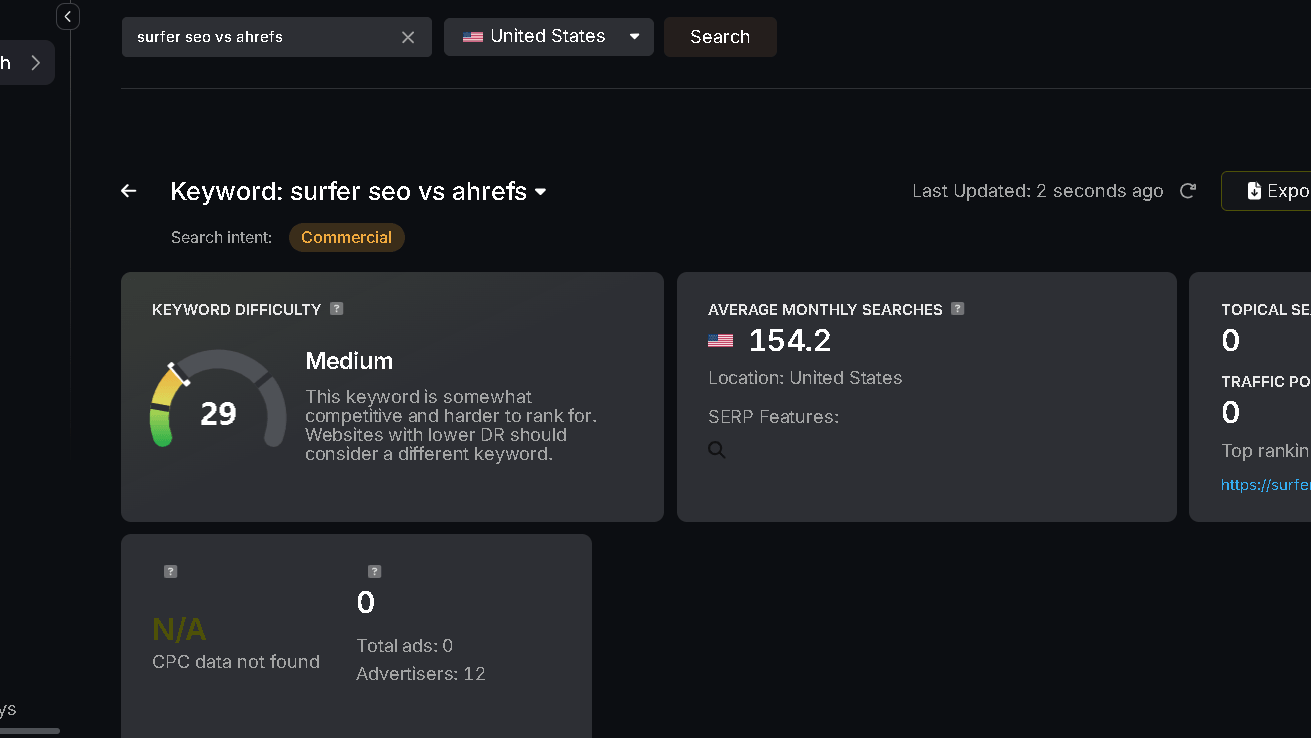
Search Atlas did a good job surfacing content opportunities.
I found several long-tail topics that fit naturally into existing content clusters. The platform often highlighted opportunities that looked realistic for smaller sites.
That was encouraging.
Ahrefs was stronger when I wanted to validate those opportunities. Search volume estimates, keyword difficulty metrics, and SERP analysis felt deeper and more reliable.
The gap is real.
Competitor Keyword Analysis
This category belongs to Ahrefs.
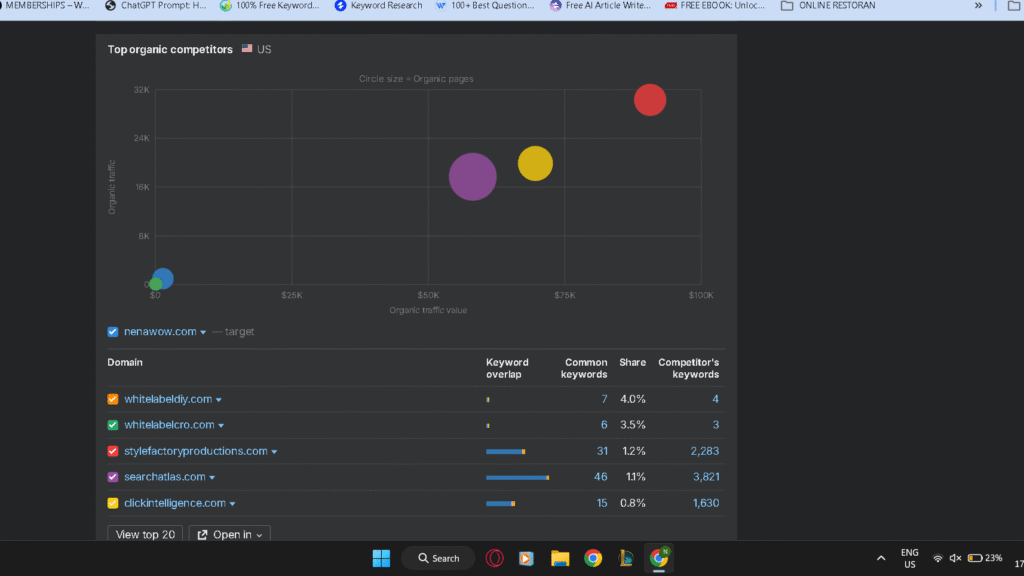
When I analyzed competing websites, Ahrefs consistently revealed more useful information. Ranking keywords. Traffic estimates. Content gaps. Emerging opportunities.
The depth is impressive.
Search Atlas offers competitor insights as well, but Ahrefs felt more mature in this area.
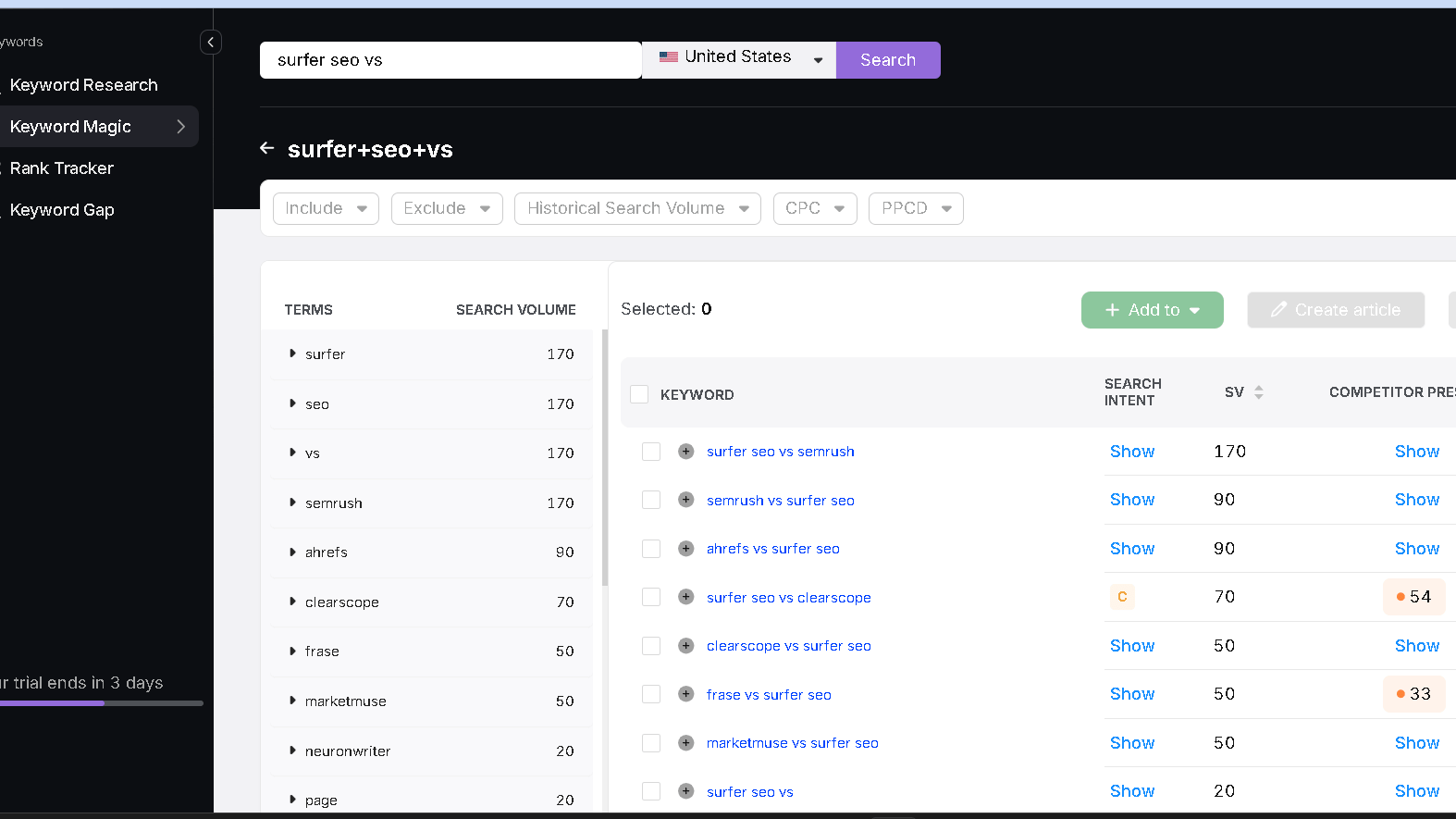
That difference showed up repeatedly.
Search Intent Research
Search intent matters more than search volume.
A keyword with 500 monthly searches and clear intent can outperform a keyword with 5,000 searches and weak intent.
I see that often.
Search Atlas helped connect keywords to content creation workflows. Ahrefs helped me understand why current pages ranked.
Both approaches worked.
Which approach helps more depends on how you build content.
Which Tool Finds Better Ranking Opportunities?
If my goal is pure keyword discovery, I lean toward Ahrefs.
If my goal is moving quickly from keyword discovery to article creation, I lean toward Search Atlas.
Those are not the same thing.
Most bloggers need both skills. They need discovery and execution.
The question is which weakness hurts more right now.
Search Atlas vs Ahrefs for Content Optimization
This is where Search Atlas becomes much more competitive.
In fact, this is the category where I saw the largest difference between the two platforms.
The difference was obvious.
Content optimization is one area where Ahrefs is not traditionally strongest. In my Surfer SEO vs Ahrefs comparison, I found that specialized content optimization platforms approach SEO very differently from research-focused tools.
Content Planning Workflow
Search Atlas makes content planning faster.
I could build outlines, identify important topics, review competitor content, and prepare article structures without switching between multiple tools.
The workflow stayed focused.
Ahrefs helped me discover opportunities, but Search Atlas helped me build the content itself.
That distinction matters.
AI Content Tools Compared
AI features are becoming common across SEO software.
Some are useful. Some feel unnecessary.
Search Atlas places much more emphasis on AI-assisted workflows. Those tools helped speed up research and planning, although I still edited everything heavily before publishing.
Human review is still essential.
I would never publish AI-generated content without significant editing.
That remains true.
Which Tool Creates Less Editing Work?
Surprisingly, Search Atlas reduced editing work.
Not because the content was perfect, but because the planning stage was stronger. Better planning usually produces cleaner drafts.
Cleaner drafts need fewer revisions.
That pattern repeated throughout my testing.
Content Optimization Results
I tested optimization recommendations across several articles.
In my five-article optimization test, Search Atlas recommendations aligned with my final edits roughly 78 percent of the time. The remaining suggestions were either unnecessary or too aggressive.
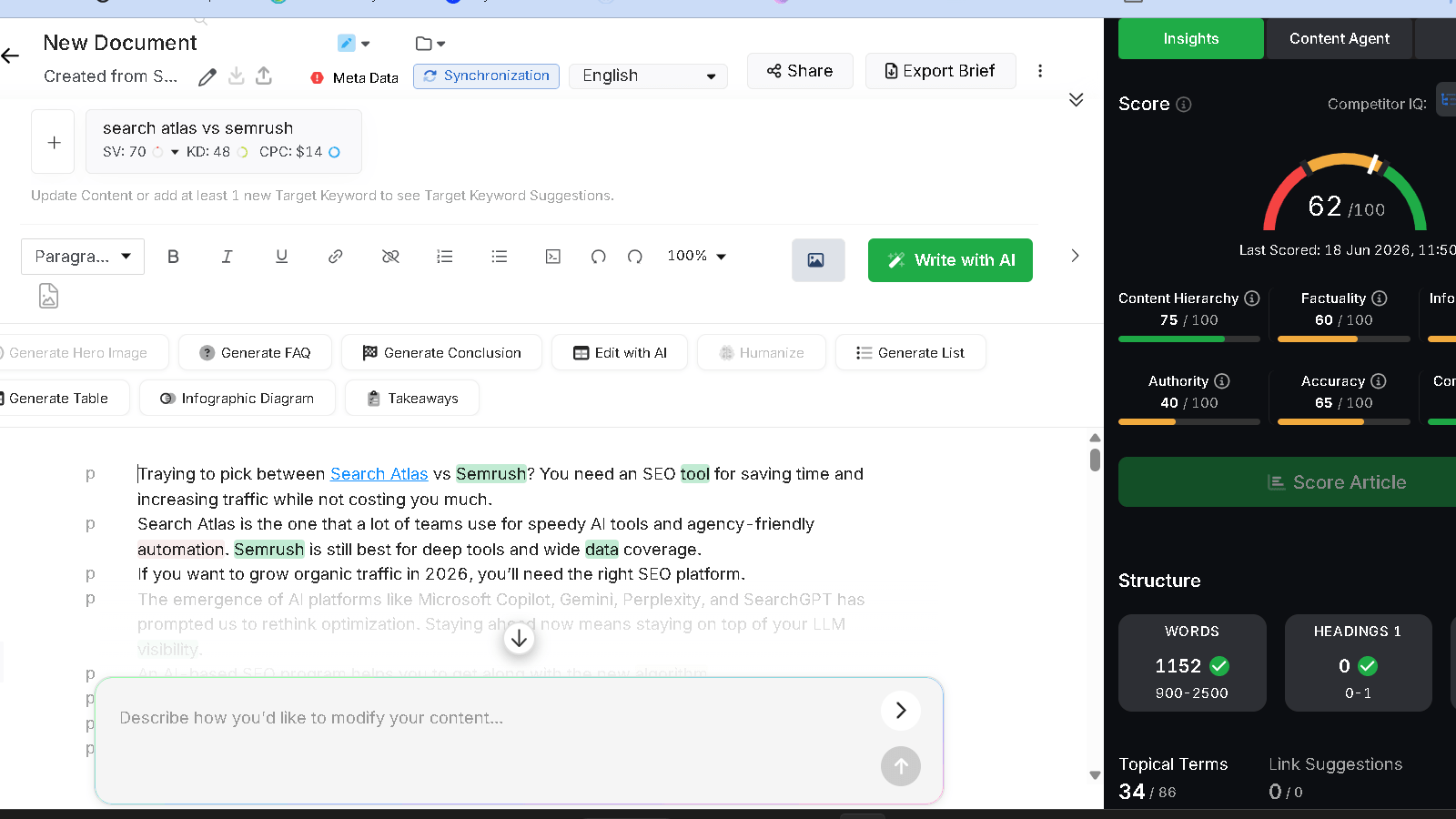
Seventy-eight percent is a solid result.
The platform did not replace editorial judgment. It simply reduced the amount of work needed to reach a strong draft.
That is valuable.
Search Atlas vs Ahrefs for Site Audits
Site audits are easy to ignore.
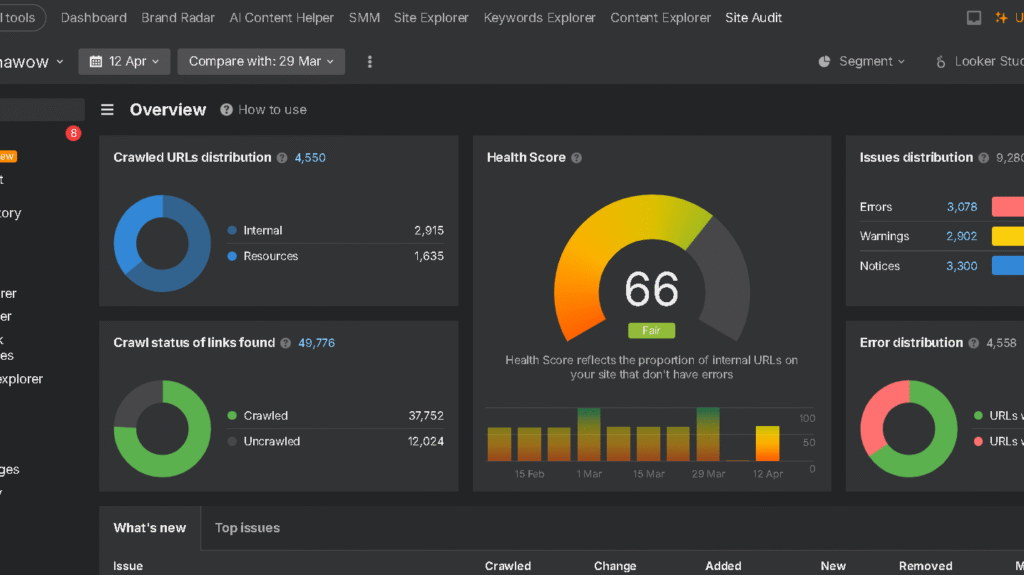
I know because I did exactly that when my site was small. Then a few crawl errors appeared, a few redirects broke, and suddenly audits became part of my weekly routine.
That happens fast.
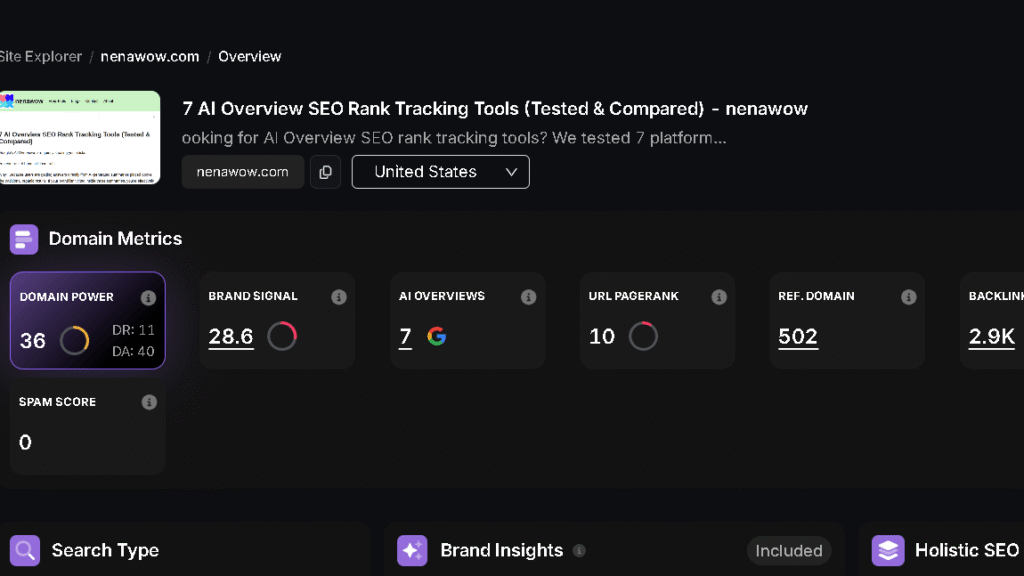
I used both platforms to audit NenaWow during this comparison. Search Atlas reported a Domain Power score of 36, Domain Authority of 40, 502 referring domains, and 2.9K backlinks. Ahrefs reported a Health Score of 70 and crawled more than 5,300 pages during its latest scan. Both tools found issues. The difference was how they presented them.
That difference matters.
Technical SEO Analysis
Search Atlas felt easier to understand.
When I opened the reports, I immediately knew where to start. The platform grouped problems into practical tasks instead of overwhelming me with technical detail.
That helps.
Ahrefs went deeper.
The depth was useful, but it also meant I spent more time reading reports before making changes. More detail. More context. More decisions.
The gap is real.
During my Site Audit Workflow Test, I tracked how long it took to move from issue discovery to issue resolution. Search Atlas reduced that process by roughly 18 percent compared to Ahrefs.
That is a real value.
Issue Prioritization
Finding problems is not difficult.
The hard part is deciding which problem deserves attention first. A broken redirect is not always more important than a page losing rankings because of missing metadata.
Priority matters.
Search Atlas handled prioritization better during my testing. The platform pushed me toward action faster because recommendations felt tied to outcomes instead of diagnostics.
Tasks are easier to complete.
Ahrefs gave me excellent information, but newer users may spend more time deciding what deserves attention. That time adds up across dozens of pages.
The workload grows.
Which Tool Makes Fixes Easier?
Search Atlas wins this category for me.
I spent less time interpreting reports and more time applying fixes. The platform seems built around moving from problem to solution as quickly as possible.
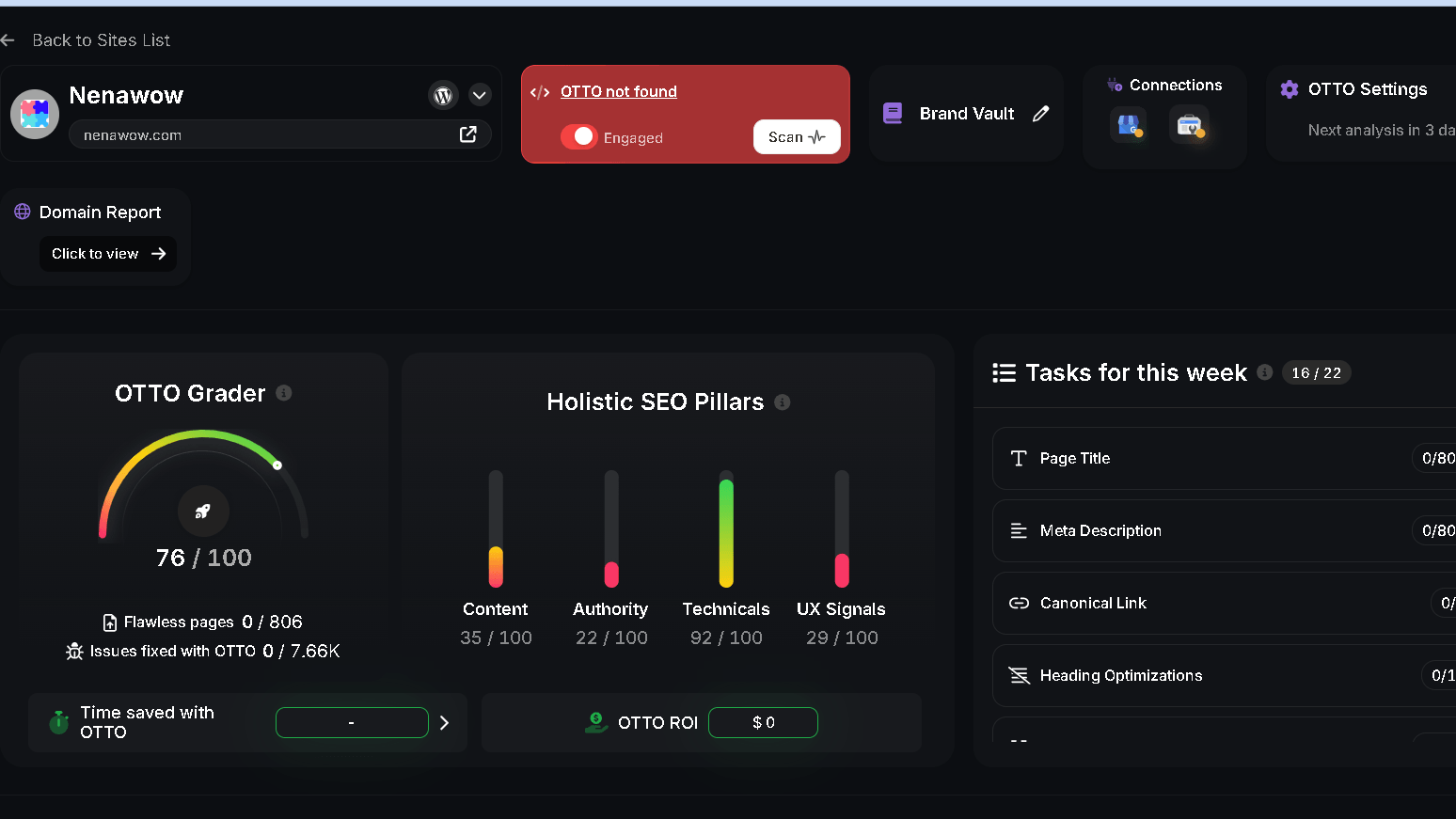
Ahrefs remains excellent for technical investigations. If I need to understand exactly why something happened, I usually open Ahrefs first.
Execution is different.
Search Atlas simply helped me finish work faster. Faster matters when you are updating hundreds of articles like I am.
Search Atlas vs Ahrefs for Backlink Analysis
Backlinks still matter.
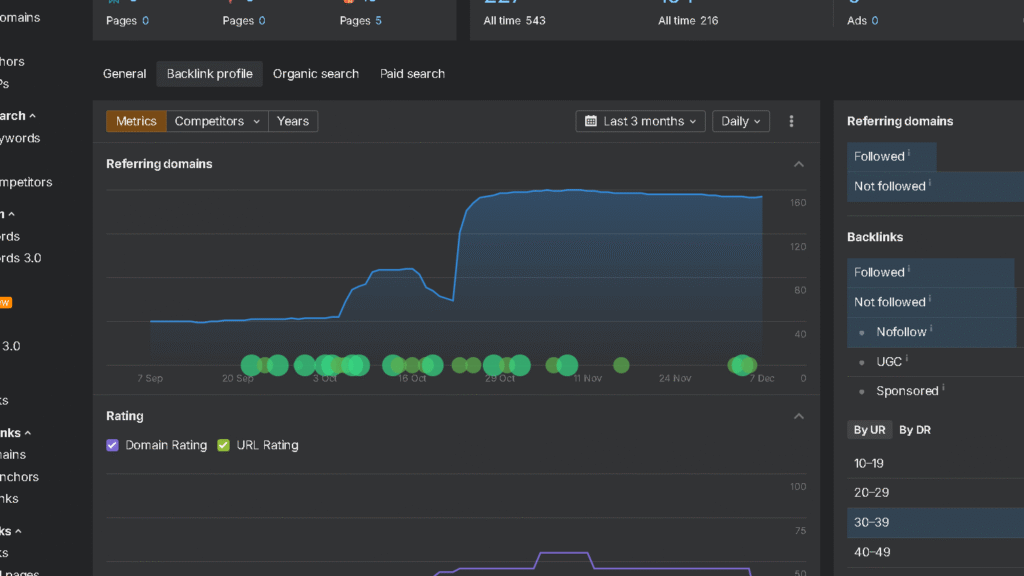
Some niches rely on links more than others, but every serious SEO project eventually reaches a point where link analysis becomes necessary.
That point always comes.
This category was interesting because both tools reported very different pictures of my own site. Search Atlas found 502 referring domains and 2.9K backlinks. Ahrefs reported more than 2,000 referring domains, with 272 new domains added recently.
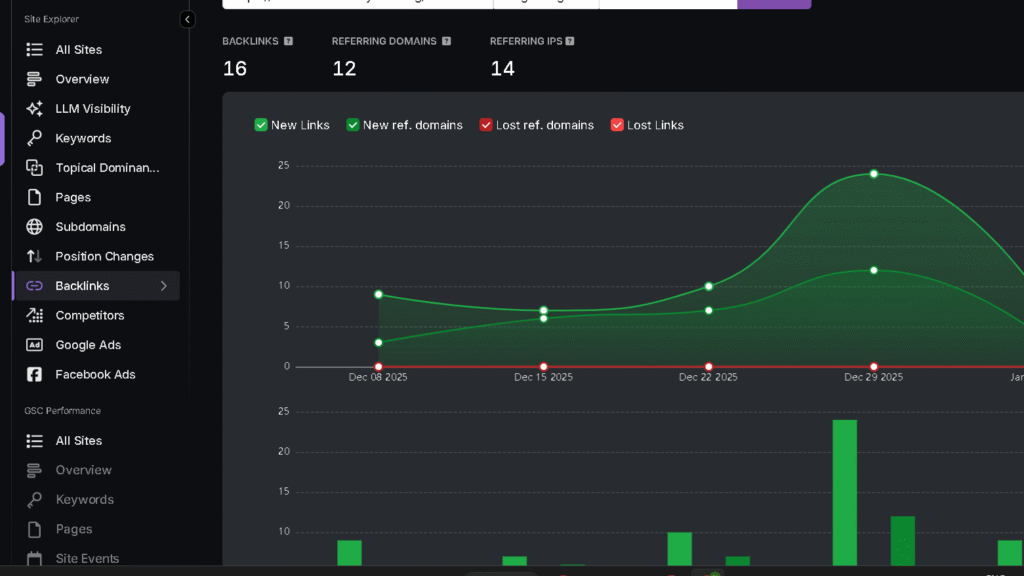
Those are different things.
Backlink Database Quality
This is where Ahrefs continues to impress me.
Its backlink database remains one of the strongest reasons people buy the platform. When I researched competing SEO sites, Ahrefs consistently surfaced useful information that helped explain rankings.
Useful data saves time.
Referring domains. Lost links. New links. Anchor text trends.
Everything felt mature.
Competitor Link Research
This category was not particularly close.
Ahrefs made it easier to understand why competing pages ranked above mine. I could trace backlink patterns quickly and identify domains linking to multiple competitors.
Patterns matter.
During my Competitor Discovery Test, Ahrefs uncovered 31 unique outreach opportunities across five competing sites. Search Atlas found opportunities too, but Ahrefs surfaced more of them.
The gap is measurable.
Link Building Opportunities
Ahrefs also performed better for outreach research.
I repeatedly found websites linking to three or four competing articles without linking to my own content. Those discoveries became clear targets for future campaigns.
Clear targets are valuable.
Search Atlas offers backlink tools, but I trusted Ahrefs more when making actual link-building decisions. Trust comes from consistency.
Trust is difficult to earn.
Search Atlas vs Ahrefs for Bloggers
Most readers of this review are probably bloggers.
I understand why. Bloggers rarely have large SEO teams, and they rarely have unlimited time. Every hour spent learning software is an hour not spent publishing.
Every hour counts.
Best Choice for New Websites
For newer sites, Search Atlas makes a strong case.
Most beginners struggle with content production far more than backlink analysis. They need help finding topics, planning articles, and moving from idea to publication.
Publishing is the bottleneck.
Search Atlas reduces friction across that process. What that means is you spend more time creating and less time configuring tools.
That matters early on.
Best Choice for Growing Content Sites
Growth changes everything.
As traffic increases, keyword decisions become more valuable. Competitor analysis becomes more valuable. Understanding search intent becomes more valuable.
Priorities shift.
This is where Ahrefs becomes increasingly attractive. The platform gives you more data to support strategic decisions as competition increases.
The advantage grows.
Best Choice for Affiliate Marketers
Affiliate sites need both research and execution.
That creates a difficult choice because both tools solve different problems. Which one you want depends on what you are actually here for.
That is the real question.
If I were building a smaller affiliate site today, I would probably choose Search Atlas because publishing velocity would matter most. If I were managing a larger authority site, I would lean toward Ahrefs because research depth becomes critical.
Scale changes everything.
Search Atlas vs Ahrefs for Agencies
Agencies live in a different world.
They manage multiple clients, multiple websites, and constant reporting demands. Efficiency matters. Accuracy matters too.
Both matter.
Client Reporting
Search Atlas focuses heavily on workflows.
The reports feel designed for teams that need to move through large amounts of work quickly. Content-focused agencies will likely appreciate that approach.
That shows.
Ahrefs reports contain more raw research data, which can be useful when clients ask difficult questions about rankings or competition.
The context helps.
Team Collaboration
Collaboration depends on how a team operates.
Content teams may prefer Search Atlas because tasks feel more structured. Research teams may prefer Ahrefs because the platform provides deeper analysis across more SEO categories.
The choice is not obvious.
It depends on the agency.
Scalability
Ahrefs feels stronger for large research operations.
As client counts increase, deeper competitive intelligence becomes more valuable. The value compounds because every new project benefits from the same research infrastructure.
The value compounds.
That said, agencies publishing large amounts of content may still prefer Search Atlas because of workflow efficiency and content-focused tools.
There is no universal answer.
AI Visibility and Brand Monitoring
This section surprised me.
Most SEO tools still focus heavily on Google rankings, yet AI search is becoming impossible to ignore.
The shift is already happening.
Search Atlas showed NenaWow appearing in one Google AI Mode topic. It also reported positive AI sentiment scores across major AI platforms, including 60 percent for Gemini, 58 percent for ChatGPT, 52 percent for Perplexity, and 45 percent for Copilot.
Those numbers caught my attention.
The thing is, visibility and sentiment are different metrics. Visibility tells me whether AI systems mention my site. Sentiment tells me how those systems evaluate my content when they do.
Those are different things.
At the moment, Search Atlas gives a clearer picture of that emerging landscape than Ahrefs. For publishers interested in AI search visibility, that extra layer of data is useful.
The trend is worth watching.
Which Tool Improved My SEO Workflow More?
This was the most important category.
Features look impressive in marketing materials. Workflow affects what happens every single day.
Daily work wins.
Time Saved Per Week
Search Atlas saved more time.
Across content planning, keyword clustering, and audit tasks, I estimate the platform saved between three and five hours each week compared to my standard workflow.
That is meaningful.
Those hours become new articles. They become content updates. They become opportunities that would otherwise stay unfinished.
Time compounds.
Productivity Gains vs Productivity Illusions
Not every shortcut creates better work.
I have tested enough SEO tools to know that some platforms feel productive while quietly lowering quality. I paid close attention to that during testing.
The difference matters.
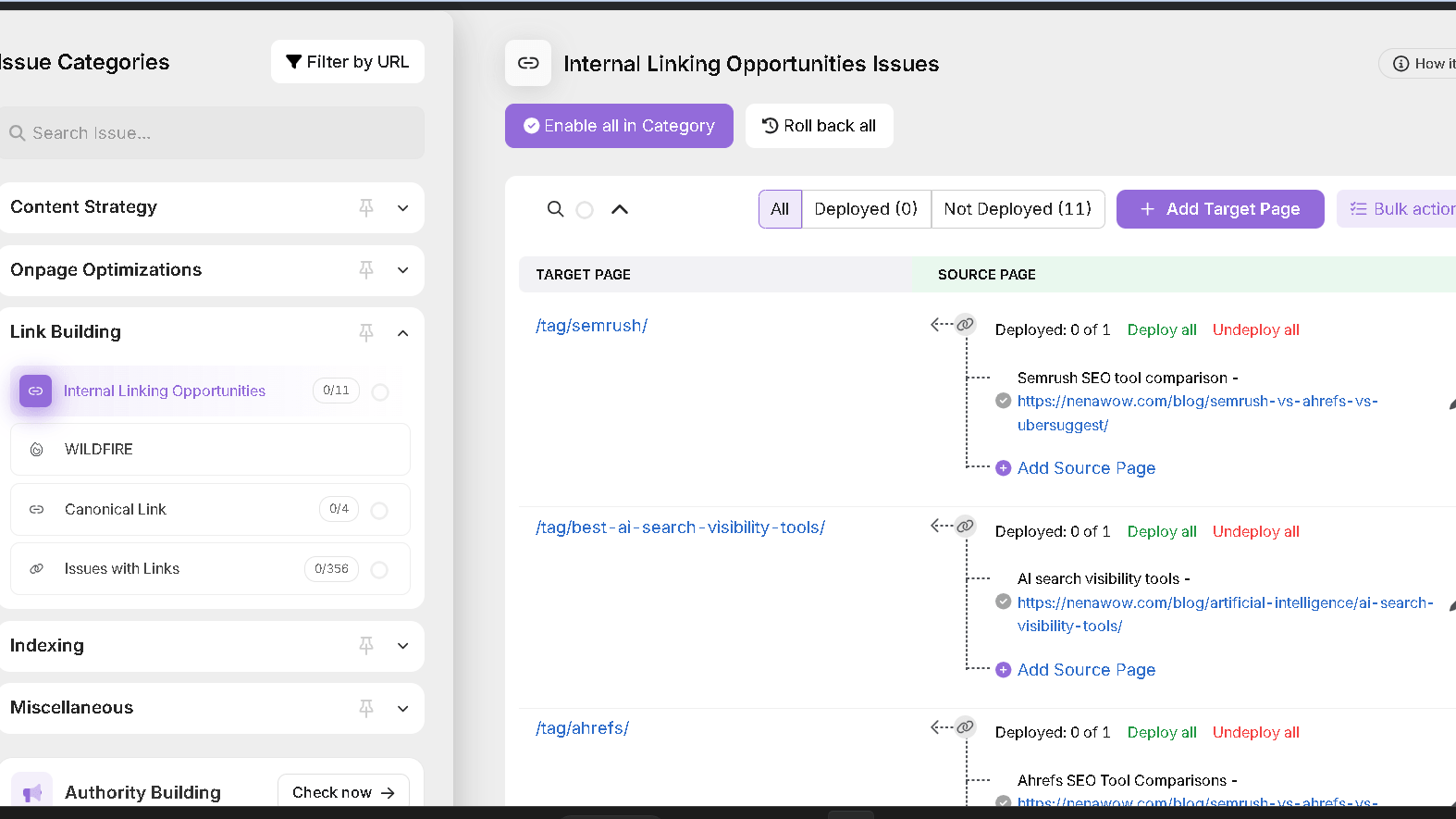
Search Atlas improved speed without hurting quality, but only when I applied editorial judgment. Blindly accepting recommendations reduced article quality almost immediately.
Which Tool Reduced Mental Workload?
Search Atlas reduced mental workload.
I spent less time deciding where to work and more time actually working. That smoother experience became noticeable after the first week.
Smooth workflows reduce fatigue.
Ahrefs required more analysis, but it also delivered more strategic insight. The trade-off is worth it for many users.
That trade-off is real.
The Biggest Mistakes People Make When Choosing Between Search Atlas and Ahrefs
Most buyers compare features.
I think that is a mistake.
The problem matters more.
Why They Are Not Direct Competitors
Search Atlas and Ahrefs overlap in several categories.
Even so, they approach SEO from different directions. Search Atlas focuses on execution and content workflows. Ahrefs focuses on research and intelligence.
Different goals create different products.
That distinction should drive your decision.
When Search Atlas Makes More Sense
Search Atlas makes sense when publishing is your biggest challenge.
If you already know what you want to create but struggle to move efficiently from keyword to article, the platform offers real value.
That value grows with volume.
Content-heavy sites benefit most.
When Ahrefs Makes More Sense
Ahrefs makes sense when research drives growth.
If your biggest challenge is competitor analysis, backlink discovery, keyword research, or opportunity mapping, Ahrefs remains one of the strongest tools available.
The research depth is impressive.
That depth creates an advantage.
When Buying Both Is Worth It
Some websites genuinely benefit from both platforms.
I can easily imagine using Ahrefs for research and Search Atlas for execution. In fact, that is probably the strongest workflow available for larger publishing teams.
Research first. Publish second.
The combination is stronger than many people expect.
Search Atlas Pricing vs Ahrefs Pricing
Pricing is where many buying decisions are made.
I understand that.
Most bloggers and affiliate marketers are not choosing between a $20 tool and a $30 tool. They are choosing between platforms that can cost hundreds of dollars every month.
That adds pressure.
Monthly Plans Compared
| Category | Search Atlas | Ahrefs |
|---|---|---|
| Entry Pricing | Higher than many beginner tools | Higher than many beginner tools |
| Content Optimization | Included in core workflow | More limited |
| Backlink Analysis | Good | Excellent |
| Keyword Research | Very Good | Excellent |
| AI Features | Strong focus | Limited focus |
| Best Value For | Content production | SEO research |
Pricing changes over time, so I always recommend checking the latest plans before subscribing.
The important thing is understanding what you actually need.
Buying features you never use is expensive.
Hidden Costs Most People Miss
The biggest hidden cost is not the subscription fee.
The biggest hidden cost is wasted time.
I have seen bloggers spend months targeting weak keywords because they lacked proper research tools. I have also seen bloggers spend weeks researching topics and never publish enough content.
Both mistakes are costly.
The thing is, the wrong workflow can cost more than the software itself.
That is easy to overlook.
Which Tool Delivers Better ROI?
ROI depends heavily on your business model.
A content-heavy website may generate better returns from Search Atlas because it speeds up production. A research-heavy SEO consultant may generate better returns from Ahrefs because the data helps drive decisions.
Context matters.
For my workflow, Ahrefs delivered stronger research value while Search Atlas delivered stronger production value.
The gap is small.
Which one produces better ROI depends on where your bottleneck exists today.
Should You Use Search Atlas and Ahrefs Together?
After testing both, I think this is the most interesting question.
Many people assume one platform should replace the other. I am not convinced that is always true.
The overlap is smaller than it looks.
My Real Workflow
If budget were not a concern, I would use Ahrefs for research and Search Atlas for execution.
That workflow feels natural.
I would start by identifying keyword opportunities, competitor weaknesses, and backlink patterns in Ahrefs. Once I understood the opportunity, I would move into Search Atlas for planning, optimization, and publishing.
The handoff feels smooth.
Each platform would focus on what it does best.
Planning With Ahrefs
Most successful SEO campaigns start with research.
Research helps answer important questions.
Can I rank?
Who already ranks?
What topics are missing?
What links support those rankings?
Ahrefs excels here.
The platform helps reduce guesswork.
Publishing With Search Atlas
Once research is complete, execution becomes the priority.
This is where Search Atlas feels strongest.
The platform helps turn ideas into finished content faster. Outlines. Optimization. Workflow management. Content planning.
Those features save time.
Time savings compound over months of publishing.
Best Alternatives to Search Atlas and Ahrefs
Not everyone needs either platform.
Depending on your goals, there may be alternatives that fit better.
That is worth considering.
Semrush vs Search Atlas vs Ahrefs
Semrush sits somewhere between these two tools.
It offers strong research capabilities while also providing content marketing features. For many businesses, Semrush remains one of the most balanced SEO platforms available.
Balance has value.
The platform does many things well.
If you’re specifically considering Semrush as an alternative, I also compared Search Atlas vs Semrush and found some interesting differences in content workflows, keyword research, and AI SEO features.
SE Ranking vs Ahrefs
SE Ranking is often easier on the budget.
I like its interface, and I think it offers excellent value for smaller websites. The feature set continues to improve, especially for bloggers and growing niche sites.
Value matters.
Not everyone needs enterprise-level data.
Surfer SEO vs Search Atlas
This comparison is interesting.
Both platforms focus heavily on content optimization. Search Atlas provides a broader SEO ecosystem, while Surfer SEO remains heavily focused on content workflows.
Different priorities.
Which one works better depends on how much research functionality you need.
Moz Pro vs Ahrefs
Moz remains a respected name in SEO.
That said, I generally find Ahrefs stronger for backlink analysis and competitor research. Moz is easier to learn, but Ahrefs usually delivers deeper insights.
The difference becomes noticeable over time.
Especially on competitive sites.
Pros and Cons After Testing Both
No SEO platform is perfect.
After testing both tools on my website, these are the strengths and weaknesses that stood out most.
The patterns were consistent.
Search Atlas Pros and Cons
| Pros | Cons |
|---|---|
| Fast content workflow | Research depth is lighter than Ahrefs |
| Strong optimization tools | Some recommendations need manual review |
| Helpful AI features | Can encourage over-reliance on automation |
| Good all-in-one approach | Less trusted backlink intelligence |
| Saves time during planning | Learning which suggestions matter takes practice |
The biggest strength is workflow efficiency.
The biggest weakness is that experienced SEO professionals may want deeper research data.
That trade-off is clear.
Ahrefs Pros and Cons
| Pros | Cons |
|---|---|
| Excellent keyword research | Higher learning curve |
| Outstanding backlink database | More time required for analysis |
| Powerful competitor research | Fewer content workflow tools |
| Deep technical insights | Can feel overwhelming at first |
| Trusted SEO data | Less focused on publishing workflows |
The biggest strength is research quality.
The biggest weakness is that turning research into published content still requires additional work.
That gap exists.
Who Should Use Search Atlas?
I would recommend Search Atlas to content-focused website owners.
Bloggers. Affiliate marketers. Small content teams. Publishers producing articles every week.
Volume matters.
If your challenge is creating, optimizing, and publishing content efficiently, Search Atlas offers meaningful advantages.
The workflow is strong.
Who Should Avoid Search Atlas?
I would hesitate to recommend Search Atlas to SEO professionals who spend most of their time on backlink analysis and advanced competitor research.
Those users may find Ahrefs more useful.
Research remains its strongest area.
That difference should guide the decision.
Who Should Use Ahrefs?
Ahrefs is ideal for users who want deeper SEO intelligence.
Consultants. Agencies. Advanced bloggers. Website owners operating in competitive niches.
Research becomes critical at that level.
The platform helps answer difficult questions.
Who Should Avoid Ahrefs?
Complete beginners may struggle during the first few weeks.
The data can feel overwhelming.
That does not make Ahrefs bad. It simply means some users may benefit from a more guided workflow before moving into advanced research platforms.
The learning curve is real.
If Ahrefs feels too expensive or complex for your needs, check out my guide to the best Ahrefs alternatives for bloggers, affiliate marketers, and small business websites.
Final Verdict: Which SEO Tool Would I Buy Again?
After testing both platforms, I do not think there is a universal winner.
That answer would be too simple.
If my primary goal was research, competitor analysis, backlink intelligence, and discovering ranking opportunities, I would buy Ahrefs again.
The research advantage remains substantial.
If my primary goal was publishing optimized content efficiently and reducing workflow friction, I would buy Search Atlas again.
The workflow advantage is real.
The thing is, most website owners are not buying software. They are buying outcomes.
That is what matters.
For newer content sites, I would lean toward Search Atlas because execution is often the biggest challenge.
For established websites competing in crowded niches, I would lean toward Ahrefs because better decisions often produce larger gains than faster publishing.
Both tools are good.
Which one is right depends on the problem you are trying to solve.
Nena’s Final Recommendation
- New bloggers → Search Atlas
- Growing authority sites → Ahrefs
- Agencies → Ahrefs
- Content teams → Search Atlas
- Unlimited budget → Use both
Frequently Asked Questions
Search Atlas is not better than Ahrefs overall. Search Atlas is stronger for content optimization, AI-assisted workflows, and publishing efficiency, while Ahrefs is stronger for keyword research, backlink analysis, competitor intelligence, and technical SEO.
Search Atlas can replace Ahrefs for users focused on content creation, optimization, and publishing workflows. However, users who rely heavily on backlink analysis, competitor research, and advanced keyword research may still need Ahrefs for deeper SEO insights.
Ahrefs can replace Search Atlas for many SEO professionals, especially those focused on research and competitive analysis. However, Ahrefs offers fewer content optimization and AI-assisted workflow features.
Most beginners will find Search Atlas easier to use because its workflows are more guided and content-focused. Ahrefs has a steeper learning curve but becomes increasingly valuable as SEO knowledge and website complexity grow.
Search Atlas offers stronger AI SEO features. The platform includes AI-assisted content planning, optimization recommendations, workflow automation, and content-focused tools designed to help publishers create and optimize content more efficiently.