
Most comparisons treat Surfer SEO vs Ahrefs as competitors fighting for the same budget. After months of running both on a live website, I can tell you they are not the same tool. They do not solve the same problem. They do not belong at the same stage of your workflow.
I tested Surfer across 45 published articles and tracked the results for 90 days. I ran Ahrefs on the same site for 30 days, auditing 220 posts on nenawow.com against real competitors with real keyword targets. The results were different in ways that most comparison articles miss entirely.
This is what actually happened.
Nena’s Quick Verdict
- Best overall: Ahrefs
- Best content optimization: Surfer SEO
- Best for bloggers: Ahrefs
- Best for agencies: Ahrefs
- Best combined workflow: Use both
Disclaimer: I may earn a small commission on purchases made through links on this page, at no extra cost to you. This supports honest, independent reviews.
Table of Contents
Quick Verdict: Which Tool Should You Buy?
If you only have budget for one tool, the honest answer depends on where your site is right now. These are not the same purchase. That gap matters before you spend anything.
| Test | Result |
|---|---|
| Surfer SEO | +4 average ranking positions |
| Ahrefs Audit | +34% organic visits |
| Orphan Pages Found | 45 |
| Crawl Issues Fixed | 132 |
What Changed in Ahrefs and Surfer SEO in 2026?
Both platforms continued expanding their AI capabilities in 2026, but they focused on different areas of the SEO workflow.
Ahrefs Updates in 2026
- Expanded AI Overview tracking across multiple search engines.
- Improved keyword research data freshness and reporting.
- Enhanced Content Gap analysis for competitor research.
- Continued investment in backlink index size and crawl coverage.
- Added more AI-powered insights throughout the platform.
Surfer SEO Updates in 2026
- Improved AI-assisted content generation workflows.
- Enhanced Content Editor recommendations and optimization suggestions.
- Expanded content auditing capabilities.
- Better collaboration features for teams and agencies.
- Continued focus on helping publishers create search-optimized content faster.
Why These Changes Matter
The gap between the two platforms remains the same despite the updates. Ahrefs continues to focus on research, analysis, technical SEO, and competitive intelligence. Surfer SEO remains focused on content optimization and publishing workflows.
For most website owners, the decision is still less about features and more about where the biggest bottleneck exists in their SEO process.
Best Choice for Content Optimization
Surfer SEO. It gives you a live scoring system inside the editor, NLP keyword suggestions, and SERP structure data that helps you shape a draft before you publish. For writers who want structure while they write, nothing in this comparison comes close to that workflow.
Best Choice for Keyword Research
Ahrefs. The keyword difficulty scores are the most calibrated I have tested. In my keyword research check across 30 days, Ahrefs returned 18 precise, actionable opportunities for the seed term “AI SEO tools.” Semrush returned 70 plus on the same seed. The difference is not volume. It is accuracy. Ahrefs finds fewer keywords, but the ones it finds are the ones you can actually rank for.
Best Choice for Bloggers
Surfer SEO for bloggers who are already publishing consistently and want to improve ranking performance on new content. Ahrefs for bloggers who need to understand why existing content is not moving. Both serve bloggers. They serve different problems. The one you need depends on which problem is bigger right now.
Best Choice for Agencies
Ahrefs. The backlink index, the site audit depth, the competitor gap analysis, and the AI Overview tracking across multiple search engines give agencies the data infrastructure they need at scale. Surfer handles content production. Ahrefs handles everything before and after.
My Testing Methodology
How I Tested Surfer SEO Across 45 Articles
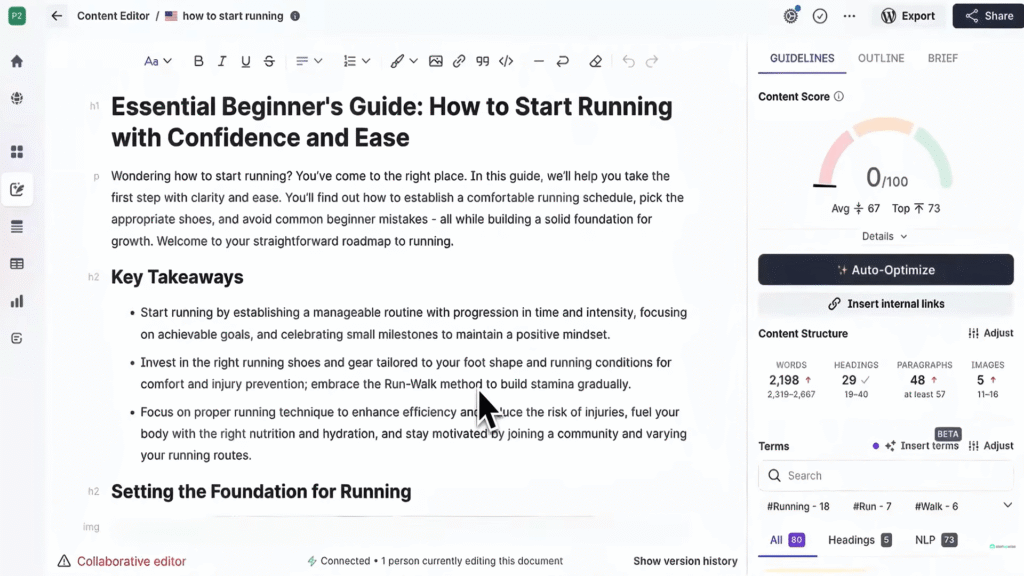
I ran 45 articles through Surfer’s Content Editor over a 90-day window. All articles were published on nenawow.com, an AI and SEO niche site with 220 posts and around 1,300 referring domains. Every article in the test group used the Content Editor from the first draft. I set a minimum content score of 68 before publishing and tracked each article’s Google Search Console position data across the full 90 days.
The control group matched the test group on keyword difficulty, publishing frequency, and domain. The only variable was Surfer optimization. That is not a clean lab test. SEO has too many variables for that. But a gap that holds consistently over 90 days is not noise.
How I Used Ahrefs for 30 Days
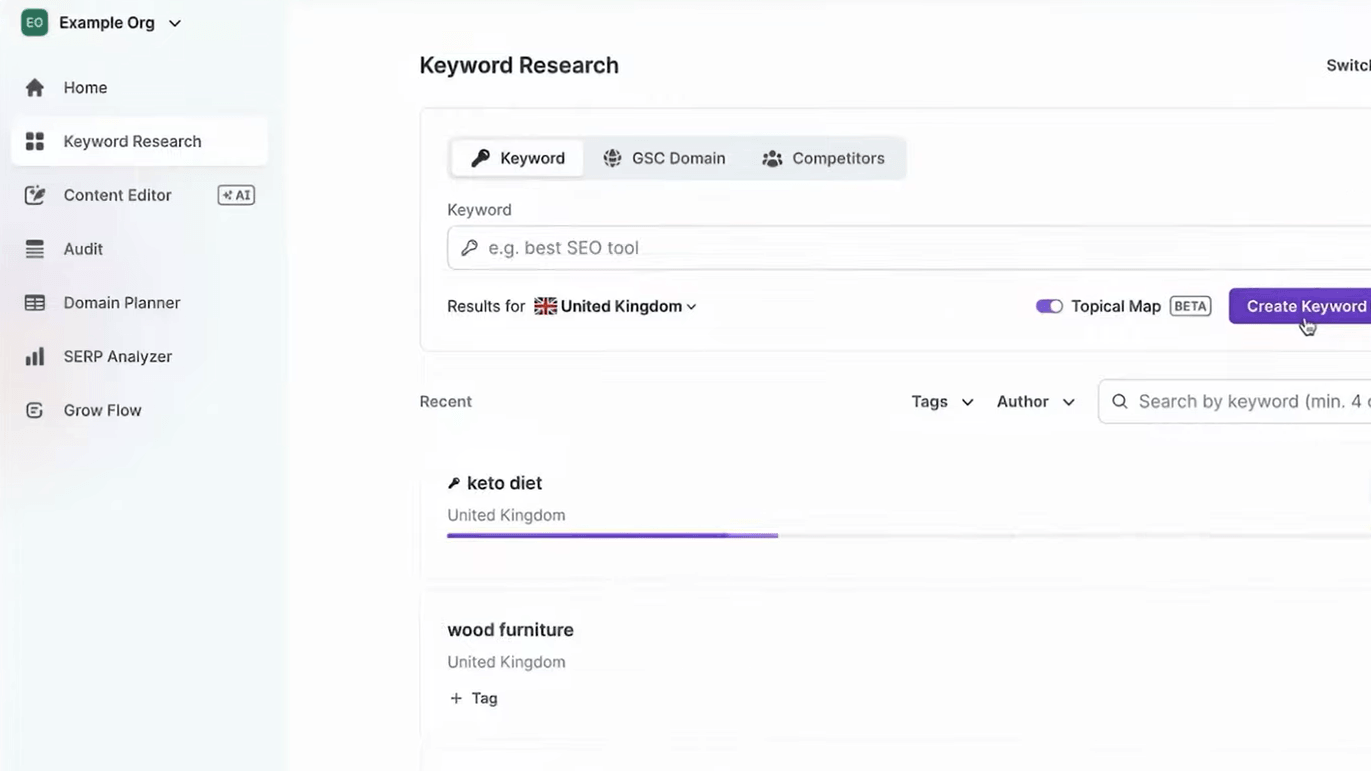
I ran a full site audit on nenawow.com at the start of the window. I tracked 30 keywords simultaneously against competitor domains. I used Site Explorer to map backlink profiles for three direct competitors and ran the Content Gap tool against the same competitor set. Then I spent weeks two and three executing on what the audit found.
What Metrics I Tracked
For Surfer, I tracked position change from publishing date to day 90, averaged across the final 30 days to smooth fluctuation. For Ahrefs, I tracked organic visits in Google Search Console, keywords in top 10 and top 3, crawl errors resolved, and referring domain count. Both tools were running at the same time on the same site. That matters.
Surfer SEO vs Ahrefs: Quick Comparison Table
Features at a Glance
| Area | Surfer SEO | Ahrefs |
|---|---|---|
| Primary Purpose | Content optimization | SEO research and analysis |
| Daily Use | Writing and publishing | Auditing and planning |
| Learning Curve | Moderate | Steep |
| Workflow Position | At the keyboard | Before and after publishing |
| Keyword Research | Basic | Deep and calibrated |
| Backlink Analysis | None | Largest index I tested |
| Content Scoring | Yes, live | No |
| Site Audit | No | Yes, prioritized |
| AI Overview Tracking | No | Multi-engine |
| Price Entry Point | ~$89/month | $129/month |
Who Each Tool Is Built For
Surfer is built for the moment you are writing. Ahrefs is built for everything else. That framing is the clearest way I can put it. Writers use Surfer. SEO strategists use Ahrefs. Most serious content operations eventually need both at different points in the same workflow.
What Surfer SEO Actually Feels Like After Daily Use
The First Week Experience
The first week with Surfer feels like someone finally turned the lights on. You open the Content Editor, type in your keyword, and Surfer lays out what the top-ranking pages share. Word counts. Heading structures. NLP terms. Structural patterns from the current SERP. That structure is useful when you are staring at a blank document with no clear starting point.
The score updates in real time as you write. That real-time feedback loop is the thing that makes Surfer feel different from other tools. It feels like progress you can measure while it is happening. That feeling is also the beginning of the main problem.
Where Surfer Saved Time
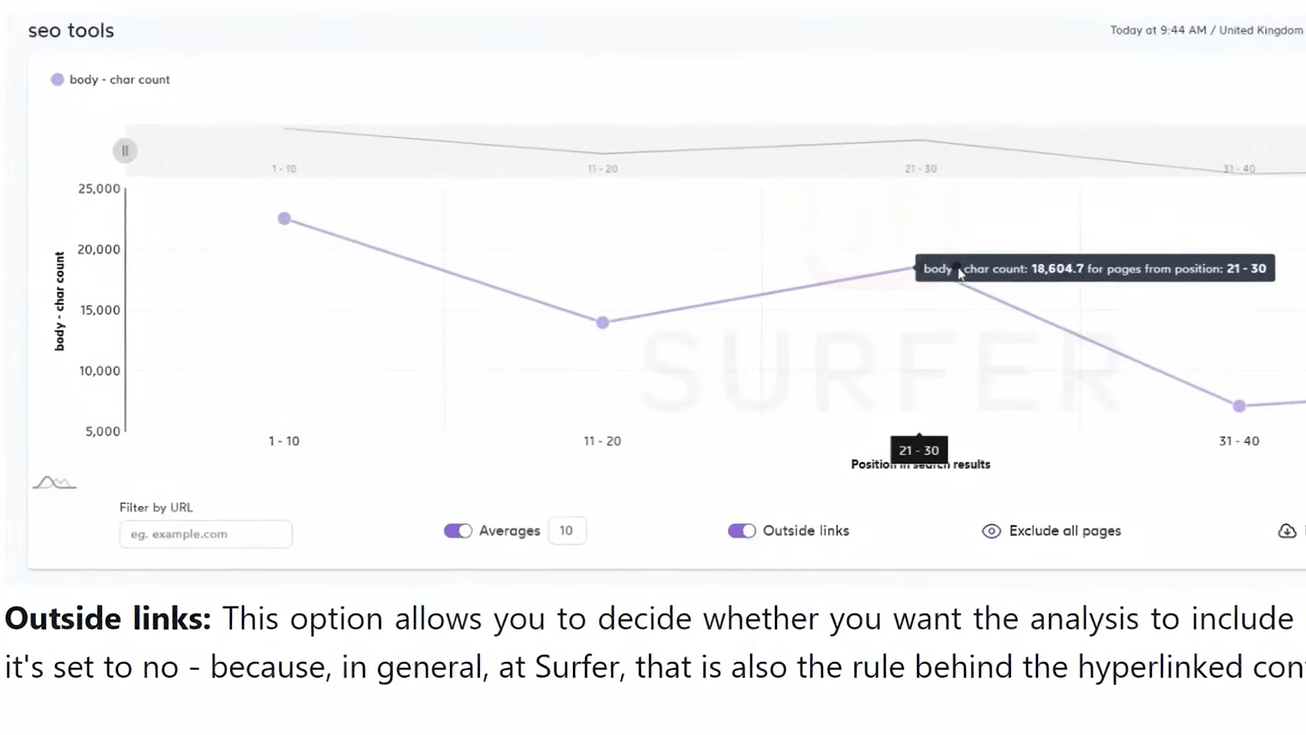
The SERP Analyzer saved real time on competitive keywords. Before writing, I could see what the top 20 results shared in terms of structure and depth. That research used to take me an hour on a competitive topic. Surfer gets it down to 10 minutes. The time saving is real.
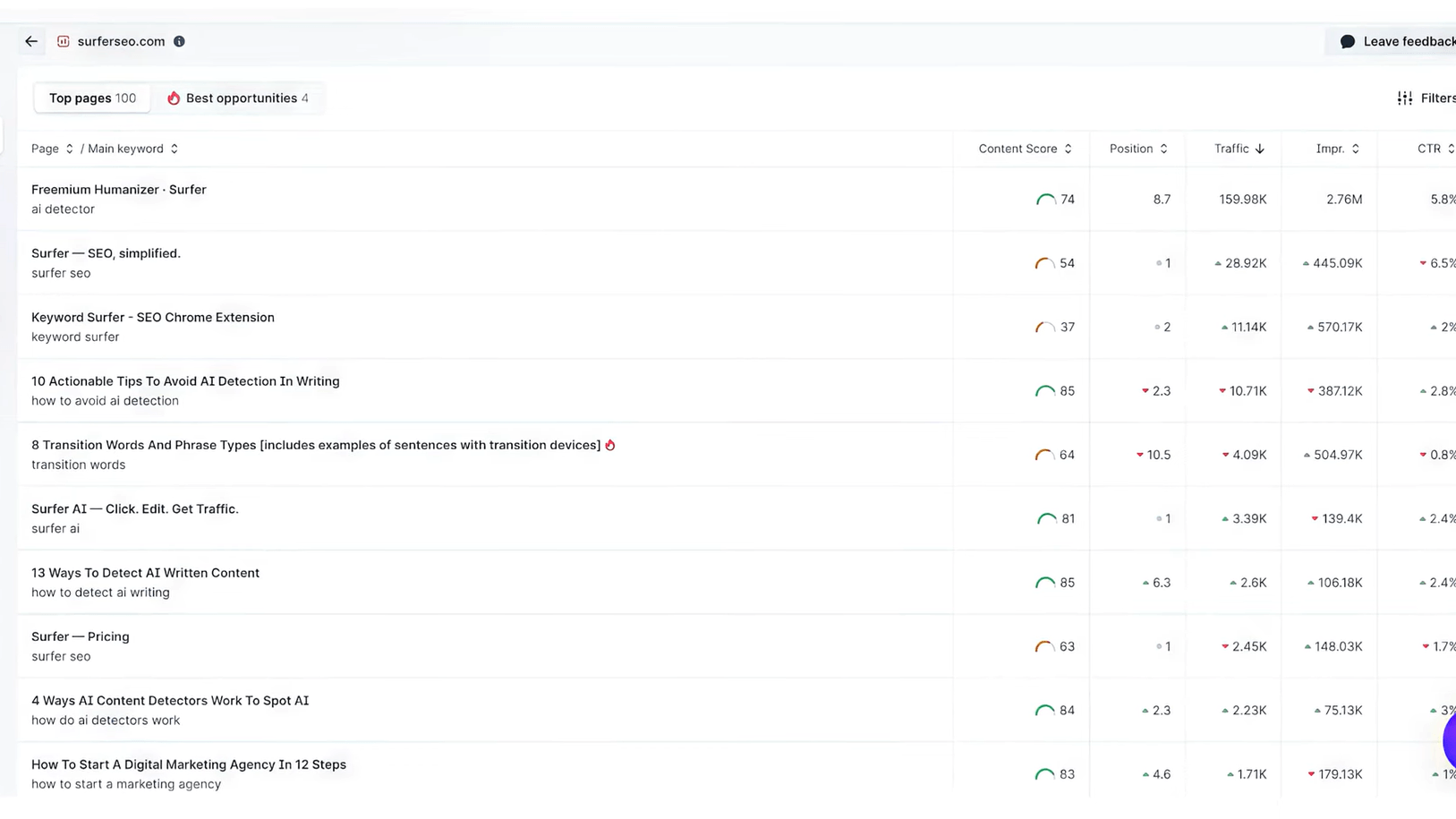
The Content Audit tool also found pages worth fixing rather than replacing. In my first audit pass, I found six posts that needed structural updates. Three of them had been sitting flat for over a year with solid impressions but weak click-through. The audit spotted them fast. That find alone paid for itself.
Where Surfer Became Frustrating
By week two the score became a target. Targets change how you write. I tracked how many times I checked the content score mid-article on a single 2,000-word post. The answer was 31 times. Thirty-one. That number tells you something real about how this tool changes the writing experience.
The frustration is not that the scores are wrong. It is that optimizing for a score and writing for a reader are not the same goal. So which one do you actually end up writing for? Most writers do not realize the shift has happened until the article already sounds like the three other articles ranking above it. Higher scores do not always create better articles. SERP sameness is a real output when you stop using judgment.
The Problem With Chasing Optimization Scores
The writers who stay with Surfer longest are the ones who use the score as a floor, not a ceiling. Hit the minimum. Then write for the person. That balance is harder to hold than it sounds, and most new users do not find it until week three or four.
The AI writing tools inside Surfer are also inconsistent. I ran the built-in AI on eight articles. Three drafts were worth editing. Five I rewrote from scratch. That hit rate is not strong enough to trust at volume. Use your own drafts and bring them into Surfer for optimization. That sequence works better.
What Ahrefs Actually Feels Like After Daily Use
The First Week Experience
Ahrefs does not ease you in. The interface is clean but it assumes you know what referring domains, URL Rating, and link velocity mean before you open it. The first week feels slow because there is a real 2 to 4 week learning curve before the workflow becomes fast. That curve is a real cost. It pays off quickly once you clear it.
What Ahrefs gave me in week one was a clear picture of how broken my site actually was. The site audit flagged 173 issues across nenawow.com. The ones that mattered most were the ones I never would have found manually.
What Ahrefs Revealed About My Website
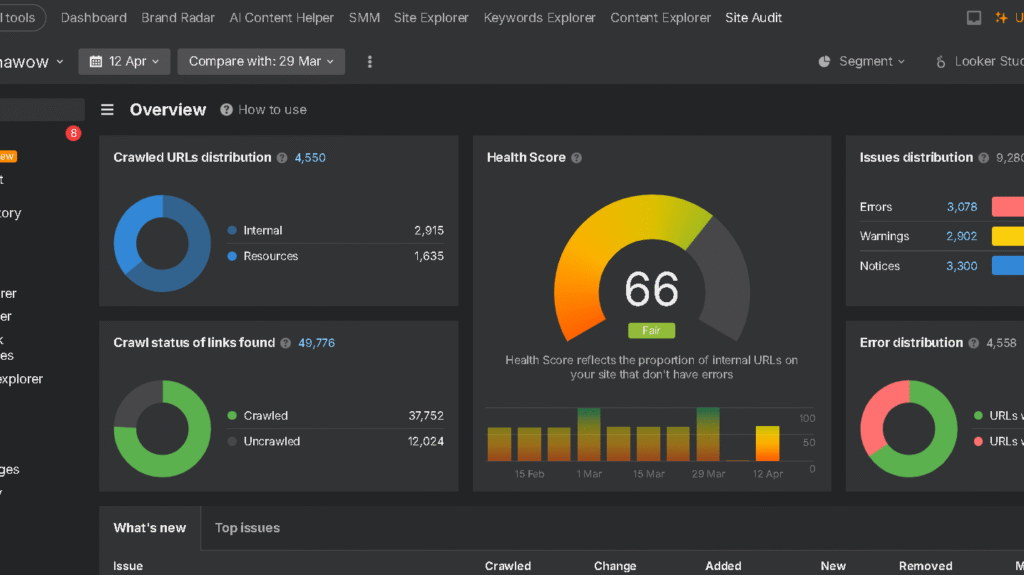
The single most important finding was an accidental noindex tag blocking six posts from Google indexing entirely. Six posts. Those posts had been live for months. Google had not seen a single one of them. Surfer could not have found that. No content optimization tool could. That is an Ahrefs find.
The audit also surfaced 45 orphaned pages with no internal links pointing to them. Those pages were sitting completely isolated from the rest of the site, accumulating no authority. The keyword cannibalization flag caught four posts all targeting the same “AI SEO tools” variations, splitting ranking authority instead of consolidating it. These are structural problems. Structure is what Ahrefs is built to find.
Where Ahrefs Saved the Most Time
The Content Gap tool was the highest-impact feature in my 30-day test. I ran nenawow.com against three competitors and surfaced 40 plus keyword topics where competitors were pulling consistent traffic and I had nothing published. Several of those became articles before the test window closed. The gap tool finds what you are missing faster than any manual research process I have run.
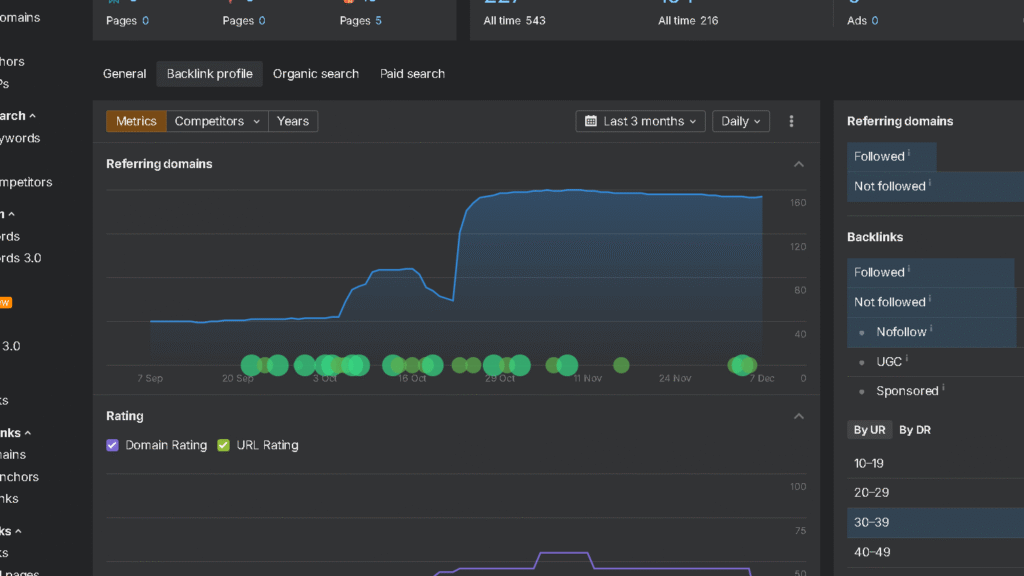
The backlink gap analysis found 67 unique domains linking to competitors but not to nenawow.com. That is a ready-made outreach list. Ahrefs built it in about three minutes. Building it manually would have taken a week.
The Biggest Learning Curve
Site Explorer, Keywords Explorer, Content Explorer, Site Audit, and Rank Tracker are five different environments with different logic. Getting fluent across all of them takes real time. Most users feel slow for the first two weeks and then fast for everything after. Push through the first two weeks. The speed gain on the other side is worth it.
Which Tool Improved Rankings More?
Results From My 45-Article Surfer Test
The 45 Surfer-optimized articles moved an average of four positions higher than the control group over 90 days. Same domain, similar keyword difficulty, same publishing cadence. The gap held consistently enough that I stopped treating it as random. Four positions is the difference between page two and the bottom of page one on a competitive keyword. That gap is real.
| Metric | Surfer Test Group | Control Group |
|---|---|---|
| Articles Tracked | 45 | 45 |
| Test Duration | 90 Days | 90 Days |
| Average Position Change | +4 positions | Minimal change |
| Data Source | Google Search Console | Google Search Console |
Results From My Ahrefs SEO Audit
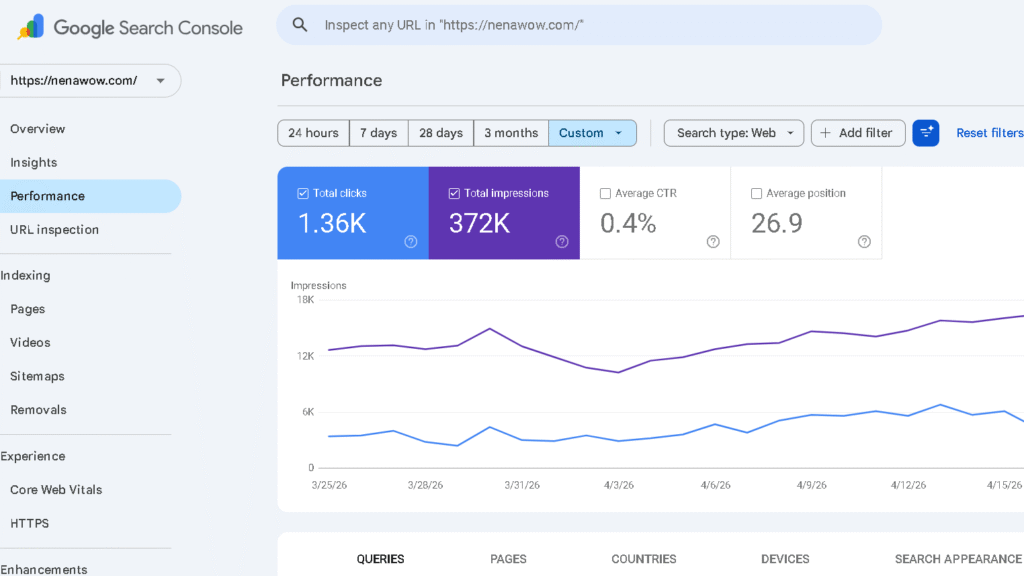
After acting on the Ahrefs audit findings — removing the noindex tags, merging the cannibalistic posts, rebuilding internal linking, adding meta descriptions to 34 flagged posts — organic visits to nenawow.com went from around 1,000 to around 1,340 in 30 days. Keywords in the top 10 went from 18 to 27. Keywords in the top 3 went from 4 to 7.
| Metric | Day 1 | Day 30 | Change |
|---|---|---|---|
| Monthly Organic Visits | ~1,000 | ~1,340 | +34% |
| Keywords in Top 10 | 18 | 27 | +9 |
| Keywords in Top 3 | 4 | 7 | +3 |
| Crawl Errors | 173 | 41 | −132 resolved |
Attribution in SEO is never clean. The timing and nature of these gains align directly with the fixes the audit identified. Treat the numbers as directional, not as a controlled outcome.
Short-Term vs Long-Term Ranking Impact
Surfer shows up faster. The structural improvements it makes to new content are things Google can read from the first crawl. Ahrefs shows up slower but compounds harder. Fixing technical issues, building internal link equity, and targeting real keyword gaps all take time to register. The tools work on different timescales. That is worth knowing before you choose one.
Surfer SEO vs Ahrefs for Keyword Research
Finding Low-Competition Keywords
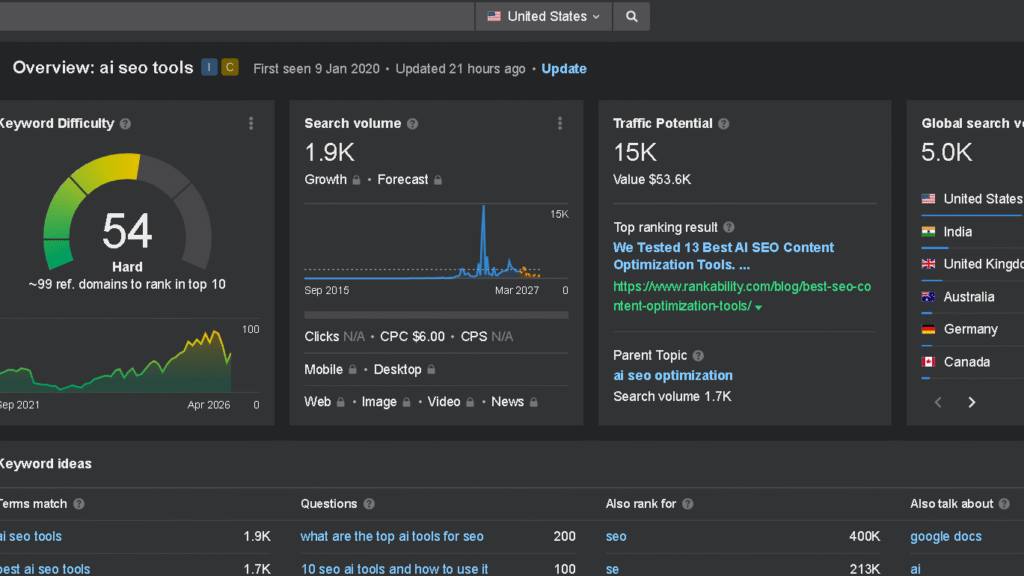
Ahrefs wins this clearly. The keyword difficulty scores are calibrated against real backlink data, and in my testing they matched actual SERP competition on every manual check I ran. Surfer includes a keyword research tool but it is designed for content planning, not competitive analysis. The depth is not comparable.
In practice I use Surfer’s keyword suggestions inside the Content Editor to find NLP terms and related phrases once I already know what I am targeting. I use Ahrefs to decide what to target in the first place. Those are different jobs.
Competitor Analysis
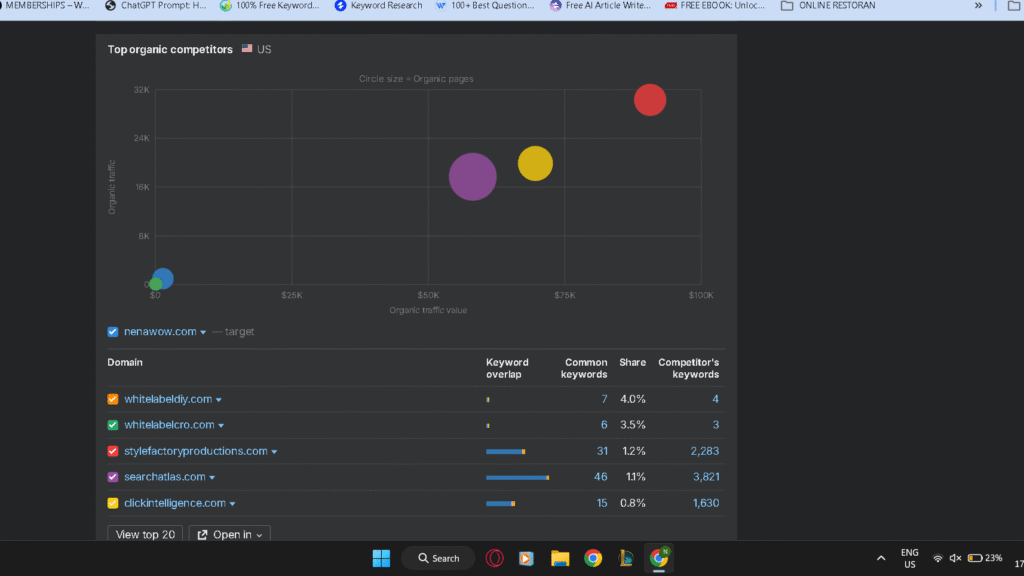
Ahrefs is the tool here. Site Explorer gives you the full picture of any competitor — estimated organic traffic, top pages, full keyword rankings, backlink profile, and traffic value. I found 40 plus untargeted keyword topics by running my site against three competitors in a single Content Gap session. Surfer has no equivalent feature.
Search Intent Analysis
Surfer does one thing well here. The SERP Analyzer shows you what the top 20 results share structurally, which is a practical form of intent analysis. If all the top results are listicles, you are probably writing a listicle. If they are long-form guides, you know what Google expects. That structural signal is useful even if it is not deep intent research.
Surfer SEO vs Ahrefs for Content Optimization
Content Editor Comparison
Surfer owns this category. There is no Ahrefs equivalent to the live-scoring Content Editor. Ahrefs has content analysis tools but they are for research and auditing, not for shaping a draft in real time. If your bottleneck is the writing and optimization stage, Ahrefs does not solve that problem. Surfer does.
Workflow Differences
Surfer sits at the keyboard. Ahrefs sits in the planning and auditing stage. In my actual workflow, Ahrefs decides what I write and where the gaps are. Surfer shapes how I write it and whether it is competitive on the page. Those are two separate workflow stages. The tools are not interchangeable.
Editing Burden Over Time
Surfer-optimized drafts need less structural editing after the fact. The word count targets, heading guidance, and NLP coverage mean the draft is already shaped to compete before it goes live. That reduces the number of post-publish rewrites you end up doing on underperforming content. In my tracking, articles I ran through Surfer needed fewer content updates in the 90 days after publishing than control articles did. That is an editing burden saving that adds up at volume.
Surfer SEO vs Ahrefs for Bloggers
Best Choice for Small Websites
For small sites under 50 posts, Ahrefs is the more urgent purchase. The technical audit will find issues that are actively holding your site back. Orphaned pages, noindex errors, cannibalization — these problems hurt small sites disproportionately because there is less domain authority to absorb them. Fix the foundation before optimizing the writing.
Best Choice for Content Publishers
At 100 posts or more with a steady publishing cadence, both tools earn their cost in different ways. Surfer keeps new content competitive from day one. Ahrefs finds the gaps in what you have already built. Content publishers at volume get the most from running both on the same site at the same time. That combination is the real answer here.
Best Choice for Affiliate Marketers
Ahrefs first. Keyword accuracy matters more for affiliate content than almost any other format because you are targeting buyer-intent keywords with real commercial competition. Getting the difficulty wrong is expensive. Ahrefs makes fewer mistakes on difficulty than any other tool I have tested. Add Surfer once you have the keyword strategy right.
Surfer SEO vs Ahrefs for Agencies
Client Reporting
Ahrefs has functional reporting but it is not client-polished. There is no white-label PDF builder, no drag-and-drop dashboard for client delivery. Agencies that send polished reports to clients will need to supplement with a reporting tool or use Semrush for that workflow. Surfer has even less on the reporting side. Neither tool is built for client-facing output. Worth knowing before you commit.
Team Collaboration
Surfer works well for writing teams because the Content Editor gives every writer the same structural target for each article. Consistency across a writing team is hard to hold at scale. Surfer holds that line. Ahrefs works well for SEO teams where multiple practitioners need to access site data, keyword research, and audit findings. The two tools cover different team roles.
Scalability
Ahrefs scales with site complexity. The more content you have and the more competitive your keywords get, the more you need the depth of the backlink index, the precision of the keyword difficulty scoring, and the scope of the technical audit. Surfer scales with publishing volume. The more content you publish per month, the more value you get from the optimization workflow. Both scale well. They scale in different directions.
The Biggest Mistakes People Make When Choosing Between Surfer SEO and Ahrefs
Why They Are Not Direct Competitors
The most common mistake is treating this as an either-or choice between two tools that do the same job. They do not do the same job. Surfer is a writing tool with optimization features. Ahrefs is a research and analysis platform. Choosing between them based on feature lists misses the point. Choose based on where your workflow breaks down first.
When Buying Both Makes Sense
If you publish 10 or more articles per month and organic search is your primary traffic channel, both tools earn their cost on different line items. Ahrefs finds what to write and what is broken. Surfer makes the writing competitive. That workflow does not have a gap you can fill with one tool. The question is whether your revenue justifies running both.
When Buying Both Is a Waste of Money
If you publish once or twice a month, the combined cost of both subscriptions is hard to justify. At low frequency, start with Ahrefs. Fix the technical foundation, identify real keyword targets, and build a content strategy around actual data. Add Surfer when your publishing volume reaches the point where optimization efficiency matters.
Surfer SEO Pricing vs Ahrefs Pricing
Monthly Plans Compared
| Tool | Entry Plan | Monthly Cost | Best For | Key Limitation |
|---|---|---|---|---|
| Surfer SEO | Essential | ~$89/month | Solo bloggers | Tight usage limits on Content Editor runs |
| Surfer SEO | Scale | Higher | Agencies and teams | Expensive for small operations |
| Ahrefs | Lite | $129/month | Solo SEOs, small sites | Limits on tracked keywords and projects |
| Ahrefs | Standard | $249/month | Freelancers, growing agencies | Cost jumps significantly from entry tier |
| Ahrefs | Advanced | $449/month | Mid-size agencies | Overkill for small publishers |
Hidden Costs
Surfer does not offer a free trial that gives you full Content Editor access. You cannot properly judge the tool without paying first. That is a real friction point for new users. Annual billing on both platforms saves meaningful money — Ahrefs Lite drops from $129 to $108 per month on an annual plan. If you are committed to either tool, take the annual rate.
Which Tool Delivers Better ROI
That depends entirely on what you are doing with it. In my 30-day Ahrefs test, the technical fixes the audit identified contributed to a 34 percent increase in monthly organic visits. Those visits were already coming to the site — I just stopped blocking them with technical errors. In my 90-day Surfer test, the optimized articles averaged four positions higher than the control group. Both tools paid for themselves in my specific setup. Neither will pay for itself if you are not publishing consistently or if your site has not yet found keyword traction.
Should You Use Surfer SEO and Ahrefs Together?
My Real Workflow
After testing both tools for months on the same site, my actual workflow uses Ahrefs for planning and Surfer for publishing. That sequence is not complicated. Ahrefs tells me what to write. Surfer tells me how to write it competitively. The workflow between them has almost no overlap.
Planning With Ahrefs
I start every content decision in Ahrefs. Keywords Explorer gives me calibrated difficulty scores and traffic potential. Content Gap tells me what competitors rank for that I do not. Site Audit tells me which existing posts need attention before I publish new ones. By the time I know what article I am writing, the keyword research and competitive context are already clear.
Publishing With Surfer SEO
Once I know the keyword, I open the Content Editor in Surfer. The SERP Analyzer gives me the structural context for the target query. The NLP suggestions fill gaps in my draft I would otherwise miss. The content score tells me whether the article is shaped competitively before it goes live. Then I edit for voice and judgment, because the score is a floor, not a ceiling. That sequence is faster than writing without structure and slower than trusting the score alone.
Best Alternatives to Surfer SEO and Ahrefs
Scalenut vs Surfer SEO
Scalenut covers the core content optimization workflow at a lower monthly cost than Surfer. The AI writing tools are more integrated and the pricing is more accessible for solo publishers. The optimization scoring is not as strong as Surfer’s and the SERP analysis is shallower. For bloggers who want Surfer-style optimization at a lower price point, Scalenut is the closest comparison.
→ Read my Scalenut vs Surfer SEO comparison
Frase vs Surfer SEO
Frase is the stronger tool if your bottleneck is research and brief creation rather than live optimization scoring. The AI writing is more reliable on the drafting step and the content briefs are more useful for teams where a strategist writes briefs and a writer executes them. Many agencies use Frase for briefs and Surfer for scoring. That combination covers the full workflow without either tool doing a job it is not built for.
→ Read my Surfer SEO vs Frase comparison
Semrush vs Ahrefs
Semrush and Ahrefs sit within $11 of each other at entry level and the choice comes down to scope. Ahrefs leads on backlink index depth, keyword accuracy, and multi-engine AI Overview tracking. Semrush leads on paid search data, client reporting, and built-in content tools. For pure organic SEO, Ahrefs wins. For combined paid and organic with client-facing reporting, Semrush is the more complete platform.
→ Read my Ahrefs vs Semrush comparison
SE Ranking vs Ahrefs
SE Ranking has improved significantly and is now one of the strongest mid-market SEO platforms available. The pricing is considerably lower than Ahrefs. Rank tracking is accurate. The site audit tool is capable. For smaller agencies and independent consultants who do not need enterprise-grade backlink data, SE Ranking is a serious option. The backlink index is smaller and data freshness lags behind Ahrefs. The gap shows most clearly on competitive analysis.
→ Read my SE Ranking vs Ahrefs comparison
Pros and Cons After Long-Term Testing
Surfer SEO Pros and Cons
| Pros | Cons |
|---|---|
| Live content scoring improves structure while you write | Score obsession pulls writing away from the reader |
| SERP Analyzer saves real research time | AI writing is inconsistent at volume |
| Content Audit finds fixable pages fast | No keyword research depth |
| Useful for writing teams who need consistent structure | Pricing is steep for low-frequency publishers |
| Works well inside Google Docs via the extension | No backlink data, no technical SEO |
Ahrefs Pros and Cons
| Pros | Cons |
|---|---|
| Largest backlink index of any tool I tested | No paid search data |
| Most calibrated keyword difficulty scoring | 2 to 4 week learning curve |
| Technical audit surfaces problems other tools miss | No content drafting or writing tools |
| Content Gap finds real keyword opportunities fast | $129 per month minimum |
| Multi-engine AI Overview tracking across Google, Bing, and others | Client reporting is functional but not client-polished |
Who Should Use Surfer SEO?
Best User Profiles
Affiliate publishers running 10 or more articles per month are the core Surfer user. The optimization workflow compounds with volume. Content agencies managing multiple writers will find the scoring system valuable for holding structural consistency across a team. SaaS content marketers targeting competitive long-form keywords get real value from the SERP Analyzer before they write.
Who Should Avoid It
Casual bloggers publishing once or twice a month will not recover the subscription cost from the workflow gains. Creative-first writers often find the scoring system fights their rhythm more than it helps it. Beginners who do not yet have a content process will spend more time learning the tool than improving their output. The tool layers optimization on top of an existing process. It does not create a process from nothing.
Who Should Use Ahrefs?
Best User Profiles
SEO professionals delivering ranking improvements for clients. Content marketers making keyword investment decisions that need accurate difficulty scoring. Link builders who need the most complete index available. Bloggers and niche site operators where organic search is the primary revenue channel. These are the people Ahrefs is built for. The depth pays off fastest in those hands.
Who Should Avoid It
Budget-constrained beginners who do not yet have meaningful organic traffic will not find the depth of the platform useful yet. Start with Ahrefs Webmaster Tools, which is permanently free, and upgrade when the ROI calculation is clear. Teams who need paid search data alongside organic will hit the gap quickly. Agencies with heavy client-reporting requirements will need to supplement the platform. Beginners learning SEO and Ahrefs at the same time will find the cognitive load slows both down.
Final Verdict: Which SEO Tool Would I Buy Again?
I would buy both. That is the honest answer and I know it is not the one most people want to hear. So here is the breakdown by situation.
If you are a blogger with a growing site and a consistent publishing schedule, buy Ahrefs first. Fix the technical foundation. Find the keyword gaps. Build internal link equity. Then add Surfer once your content volume reaches the point where optimization efficiency changes outcomes.
If you are a content creator who already has the keyword strategy figured out and needs to make new articles more competitive from day one, start with Surfer. The Content Editor workflow will change how you write and the ranking impact shows up in 90 days.
If you are an agency managing multiple sites with client reporting requirements, Ahrefs is the core platform. Add Surfer for the content production workflow and consider Semrush if client reporting is a major time cost.
The tools work better together than either does alone. Planning with Ahrefs and publishing with Surfer is the strongest content SEO workflow I have built. It has a gap that one tool alone cannot close.
Which one you want first depends on what you are actually here for.
Related Guides
- Surfer SEO Review
- Ahrefs Review
- Ahrefs vs Semrush
- Surfer SEO vs Scalenut
- Surfer SEO Alternatives
- Ahrefs Alternatives
Frequently Asked Questions
They are not in the same category, so the comparison does not hold the way it sounds. Surfer is a content optimization tool. Ahrefs is an SEO research and analysis platform. Surfer is better for shaping competitive content while you write. Ahrefs is better for everything before and after that moment.
No. Surfer has no backlink index, no technical site audit, no rank tracking depth, and no competitive analysis tools that approach Ahrefs’ capability. Surfer optimizes content that is already planned. Ahrefs plans the content strategy and finds the problems that prevent it from ranking.
Not if your goal is live content optimization while writing. Ahrefs has content analysis tools but no Content Editor, no live scoring, and no real-time NLP keyword suggestions while you draft. For keyword research and competitive analysis, Ahrefs is the better tool.
Many do, at different stages of the same workflow. Ahrefs at the planning stage, Surfer at the publishing stage. That combination has almost no functional overlap. The tools sit side by side rather than on top of each other.
For consistent publishers, yes. In my 45-article test, Surfer-optimized articles averaged four positions higher than the control group over 90 days. That gap held consistently. For low-frequency bloggers, the pricing is harder to justify.
Yes, if organic search drives real traffic or revenue for your site. The $129 per month entry price is steep before you have meaningful keyword traction. The depth pays off clearly once you do. Start with the free Webmaster Tools tier, verify ownership of your domain, and upgrade when the data starts informing real content decisions.