
This is a hands-on Ahrefs review.
Ahrefs has been the default recommendation for serious SEO practitioners for years. With Semrush expanding aggressively and newer tools closing the data gap, the real question in 2026 is whether that reputation still holds.
I tested it directly. Thirty days, a real niche site — nenawow.com, 220 posts, ~1,000 monthly organic visits — running Ahrefs simultaneously with Semrush and Ubersuggest. Same keywords and competitors. Same crawl settings. Here’s what the data actually showed.
Quick Answer: Ahrefs is still the strongest organic SEO tool in 2026. Largest backlink index tested. Most precise keyword difficulty scoring. Best multi AI Overview tracking available. The trade-offs: no paid search data, learning curve, and a minimum $129/month price.
Disclosure: This article contains affiliate links. I may earn a commission if you purchase through these links at no extra cost to you. All tools were independently tested over 30 days on a live website. Opinions are my own.
Table of Contents
Ahrefs Review: Quick Verdict
Ahrefs is the organic SEO benchmark. Largest backlink index. Most accurate keyword difficulty. Most advanced AI Overview tracking across multiple search engines. It is not a full marketing suite — no paid search, no CRM, no social tools. For pure organic search, nothing tested came close.
| Category | Ahrefs Rating |
|---|---|
| Keyword Research | ⭐⭐⭐⭐⭐ |
| Backlink Analysis | ⭐⭐⭐⭐⭐ |
| Technical Site Audit | ⭐⭐⭐⭐½ |
| Rank Tracking | ⭐⭐⭐⭐½ |
| Competitor Analysis | ⭐⭐⭐⭐⭐ |
| AI Overviews Tracking | ⭐⭐⭐⭐⭐ |
| Content Tools | ⭐⭐⭐ |
| Ease of Use | ⭐⭐⭐½ |
| Value for Money | ⭐⭐⭐⭐ |
What Is Ahrefs?
Ahrefs launched in 2011 as a backlink tool. It has since expanded into a full organic SEO platform: keyword research, technical auditing, rank tracking, content analysis, and competitive intelligence. One thing hasn’t changed — it stays exclusively focused on organic search.
That tight focus is a deliberate trade-off. Every development cycle goes into core SEO data quality rather than peripheral features. For an SEO professional whose growth lever is organic rankings, that’s an advantage. For a marketing team that needs paid search data alongside organic, it becomes a gap Semrush fills.
Who Is Ahrefs Built For?
Right fit:
- SEO professionals and consultants delivering organic ranking improvements
- Content marketers making keyword-based investment decisions that require accurate difficulty scoring
- Link builders who need the most comprehensive index available
- Bloggers and niche site operators where SEO is a primary revenue channel
- Organic-focused agencies that handle reporting separately
Not the right fit:
- Complete beginners who need a guided, low-pressure interface
- Marketers running paid and organic channels from one platform
- Solo bloggers on tight budgets still building early traffic
- Teams requiring white-label client reporting with polished PDF delivery at scale
Ahrefs Pricing Plans (2026)
| Plan | Monthly | Annual (per month) | Best For |
|---|---|---|---|
| Lite | $129 | $108 | Solo SEOs, small sites |
| Standard | $249 | $208 | Freelancers, growing agencies |
| Advanced | $449 | $374 | Mid-size agencies, in-house teams |
| Enterprise | Custom | Custom | Large agencies, enterprises |
Free option: Ahrefs Webmaster Tools — permanently free, no credit card, no expiry. Real Ahrefs data (site audit, backlink monitoring, organic keyword reporting) for any domain you verify. Outperforms most paid entry-level tools. Ahrefs Lite and Semrush Pro ($139.95/month) sit within $11 of each other. Ubersuggest costs $12/month or $120 as a lifetime purchase — a gap that directly reflects the data depth difference.
👉 Verify current Ahrefs pricing before purchasing
What I Tested and How
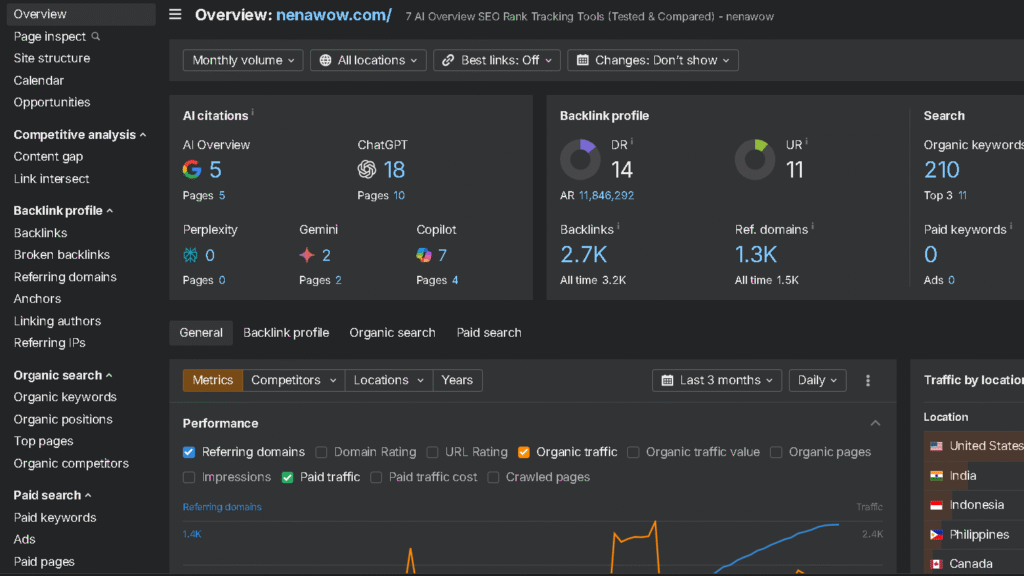
nenawow.com — AI and SEO niche, two years old, 220 posts, ~1,300 referring domains, no paid traffic. Large enough to stress-test the platforms. Small enough to audit completely.
One caveat: data gaps between tools tend to be more pronounced on smaller sites and may narrow on high-authority domains with tens of thousands of backlinks. Treat proportional differences as directional, not definitive at enterprise scale.
Over 30 days:
- 30 identical keywords tracked simultaneously across all three rank trackers
- Same seed terms run through each keyword research tool
- Same three competitor domains analyzed through each backlink tool
- Full site audits run on identical crawl settings
- Content gap analysis run against the same competitor set
Keyword Research
Keywords Explorer pulls from billions of keywords across 170+ countries. Each seed term returns: search volume with seasonal trends, keyword difficulty scored against real backlink data, clicks estimates, parent topic traffic potential, SERP history, and a full breakdown of ranking pages with estimated monthly traffic.
The parent topic feature consistently redirects content strategy toward higher-value targets that most keyword tools miss. Instead of targeting a narrow exact-match phrase, Ahrefs identifies the broader query actually driving the most traffic to pages ranking for your seed term.
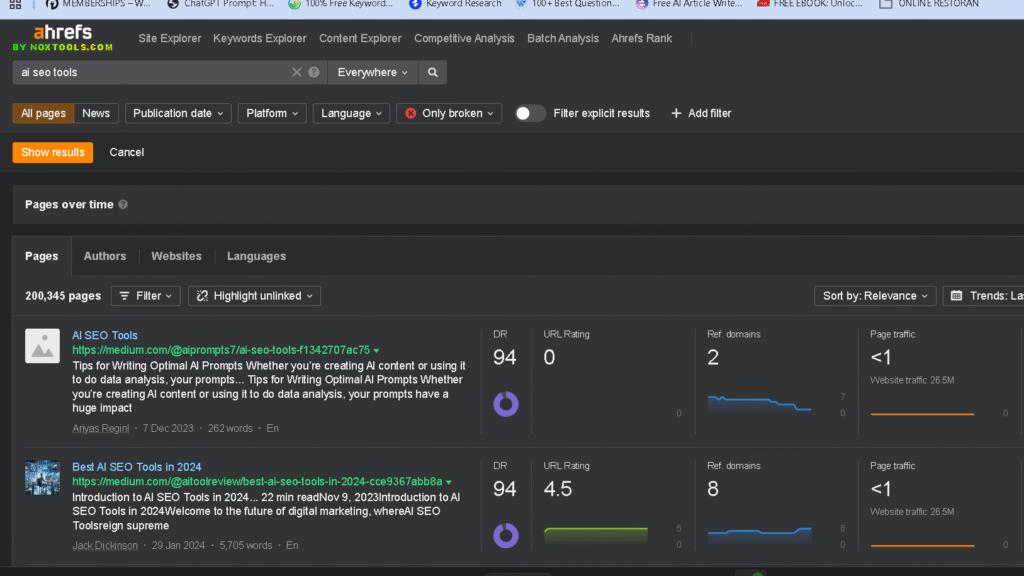
Searching “AI SEO tools” returned 18 actionable keyword opportunities. Every difficulty score held up when I cross-checked against real SERPs. Semrush returned 70+ for the same seed. Ubersuggest returned 5 after filtering out miscalibrated suggestions.
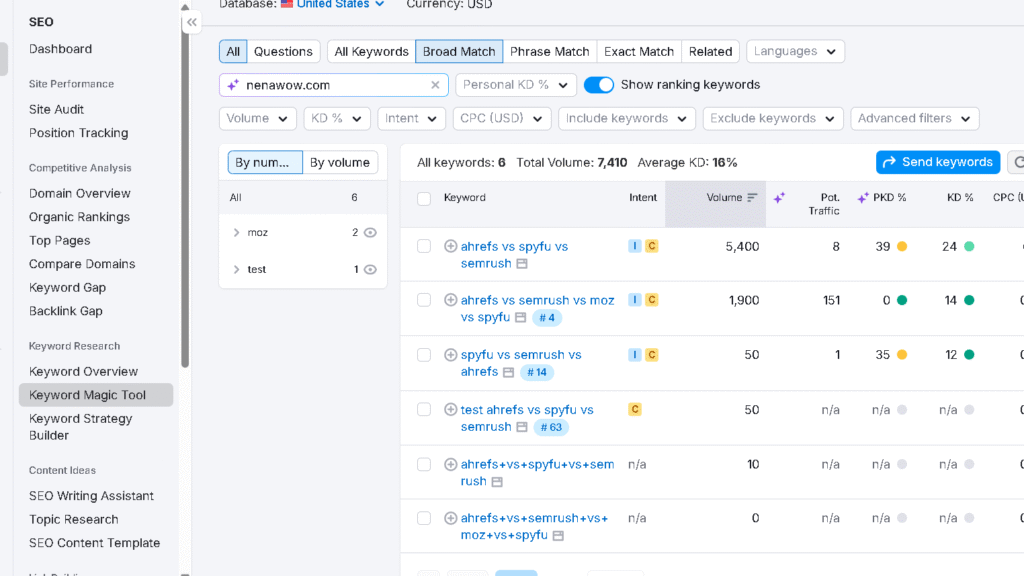
Semrush casts a wider net. Ahrefs filters aggressively for realistic difficulty. For experienced SEOs making real content investments, calibration matters more than volume.
| Tool | Keyword Opportunities Found | Difficulty Calibration |
|---|---|---|
| Ahrefs | 18 | Accurate vs. real SERP |
| Semrush | 70+ | Accurate vs. real SERP |
| Ubersuggest | 5 | Optimistic vs. real SERP |
One clear gap: no CPC data, no ad competition scores, no paid SERP previews. Semrush is the better platform if paid search is part of your scope.
Winner: Ahrefs for organic precision. Semrush for combined paid/organic research.
Backlink Analysis
This is Ahrefs’ sharpest competitive edge — and the numbers made it concrete.
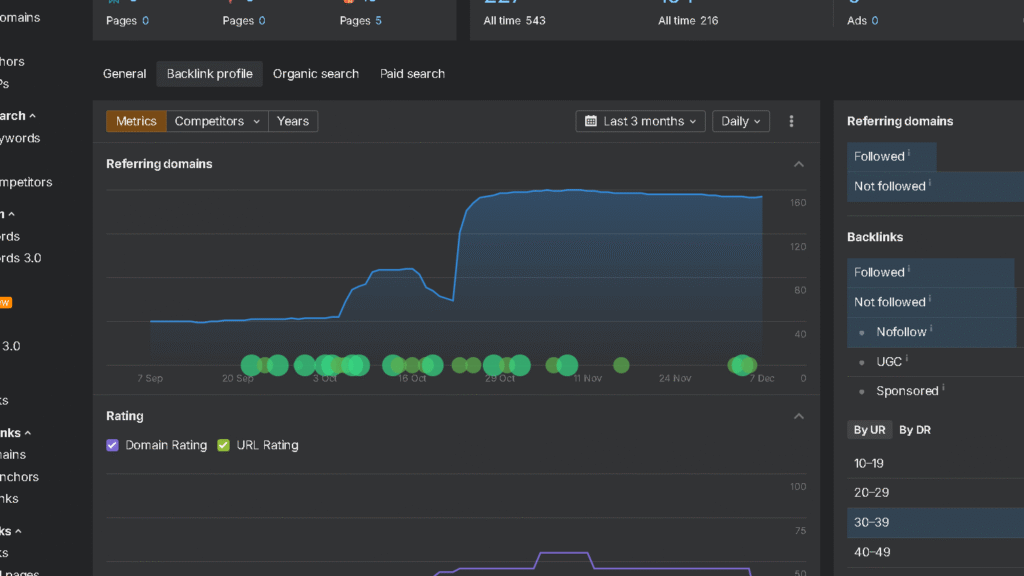
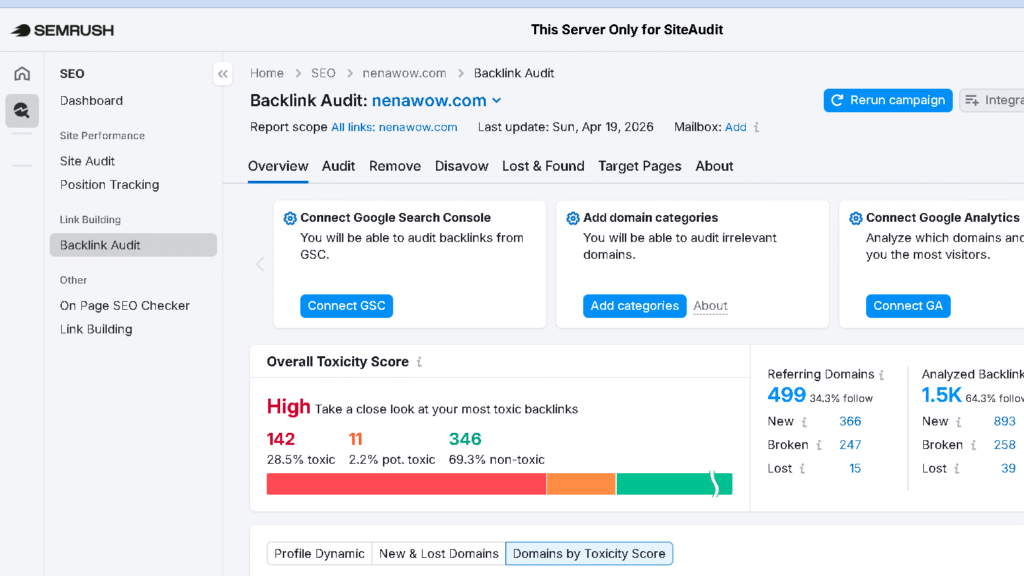
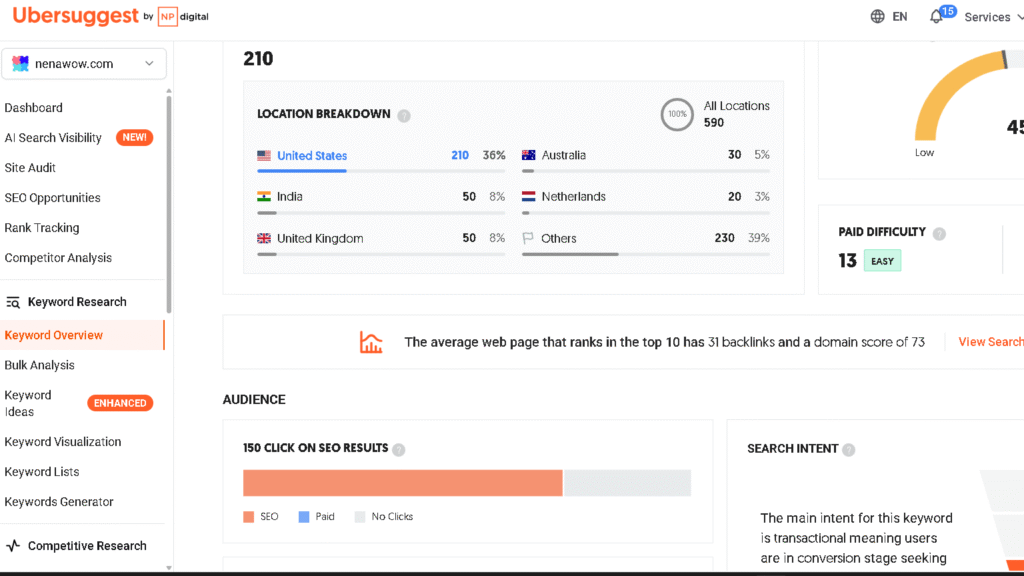
Site Explorer returned 2,700 backlinks across 1,300 referring domains on nenawow.com. Semrush found 1,500 backlinks and 499 referring domains. Ubersuggest found 878 backlinks and 358 referring domains. Same site. Same crawl window.
| Tool | Backlinks Found | Referring Domains Found |
|---|---|---|
| Ahrefs | 2,700 | 1,300 |
| Semrush | 1,500 | 499 |
| Ubersuggest | 878 | 358 |
Every link I could independently verify appeared in Ahrefs. Several confirmed referring domains were absent from Semrush. Nearly two-thirds of referring domains were missing from Ubersuggest entirely. For competitive link analysis, that gap changes the strategy.
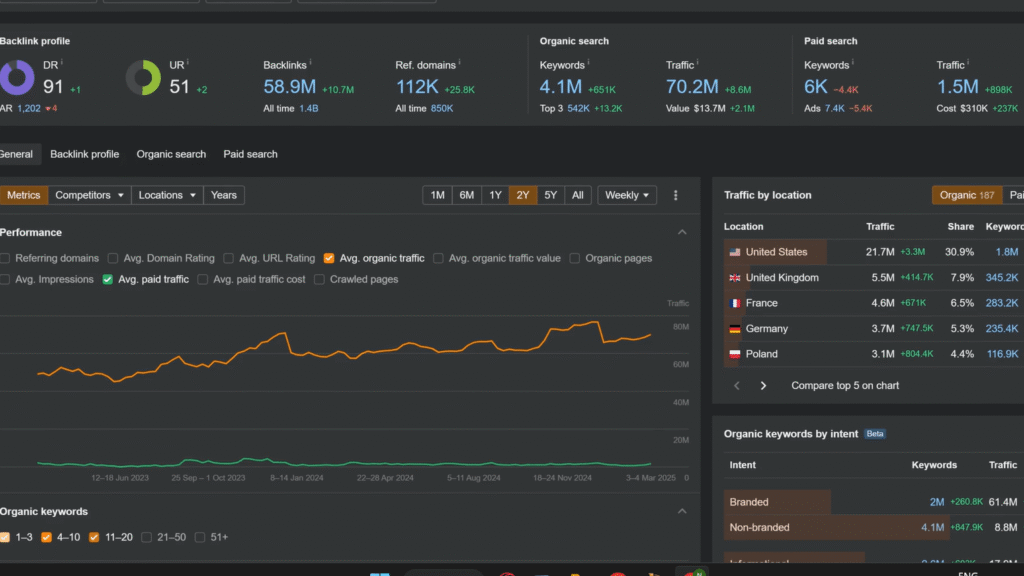
Beyond index size, Site Explorer surfaces: historical domain gain/loss tied to ranking movements, anchor text distribution, new vs. lost link tracking, dofollow/nofollow breakdown, and link type classification. The competitor backlink gap analysis found 67 unique domains linking to competitors but not to nenawow.com. Semrush found 41. Both are actionable — but Ahrefs’ larger index produces the more complete opportunity map.
Winner: Ahrefs. Not close.
Site Audit
Site Audit crawled nenawow.com and returned 173 issues: 52 errors, 62 warnings, 59 notices.
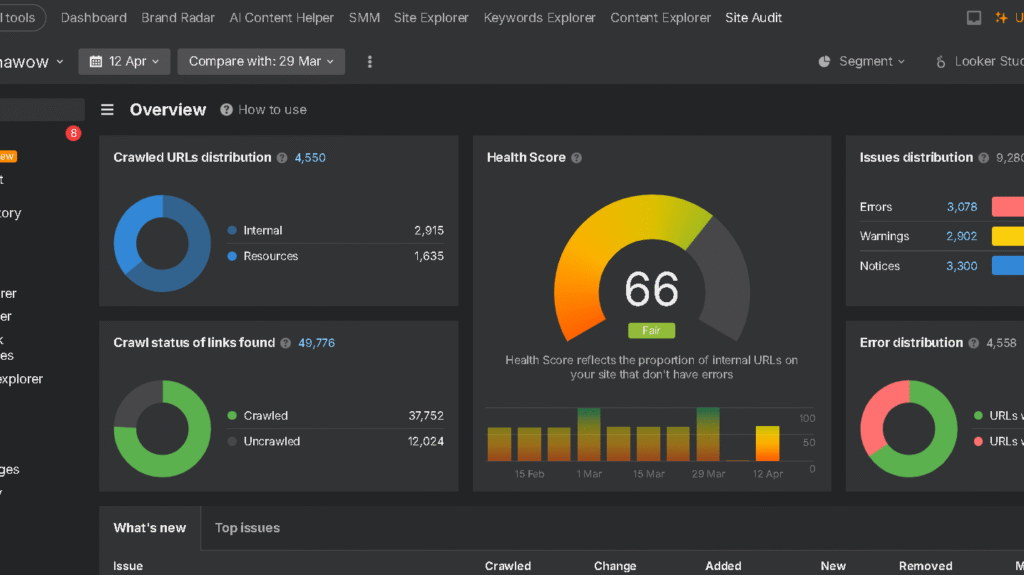
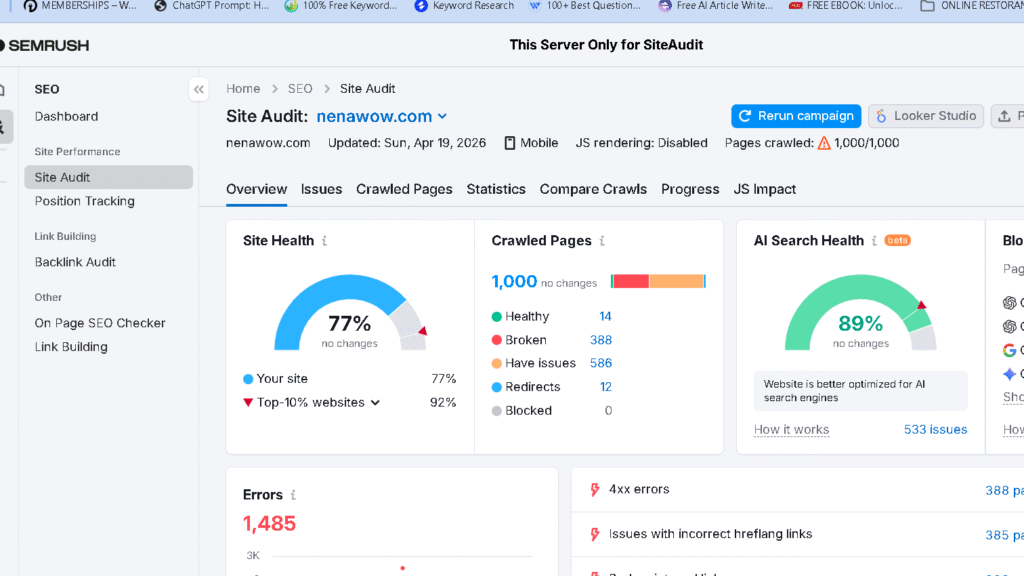
Against Semrush’s 1,485 errors and 2,333 warnings on the same site, that looks modest. The difference isn’t coverage — it’s methodology. When 34 posts share the same meta description problem, Ahrefs reports one categorized issue. Semrush logs 34 separate errors. Both are accurate. Ahrefs is faster to act on. Semrush provides the exhaustive itemization some technical practitioners prefer.
The five highest-impact findings from the Ahrefs audit:
- Accidental noindex tag blocking 6 posts from Google indexing — the single most important fix of the entire test
- Keyword cannibalization across four posts all targeting “AI SEO tools” variations, splitting authority instead of consolidating it
- Three crawl efficiency issues actively limiting how Googlebot moved through the site
- 45 orphaned pages with no internal links (Semrush found 92; Ubersuggest found 0)
- Internal link equity map revealing which posts were accumulating authority and which sat completely isolated
| Tool | Issues Flagged | Errors | Orphaned Pages | Internal Link Map |
|---|---|---|---|---|
| Ahrefs | 173 | 52 | 45 | ✅ |
| Semrush | 3,818 combined | 1,485 | 92 | ✅ |
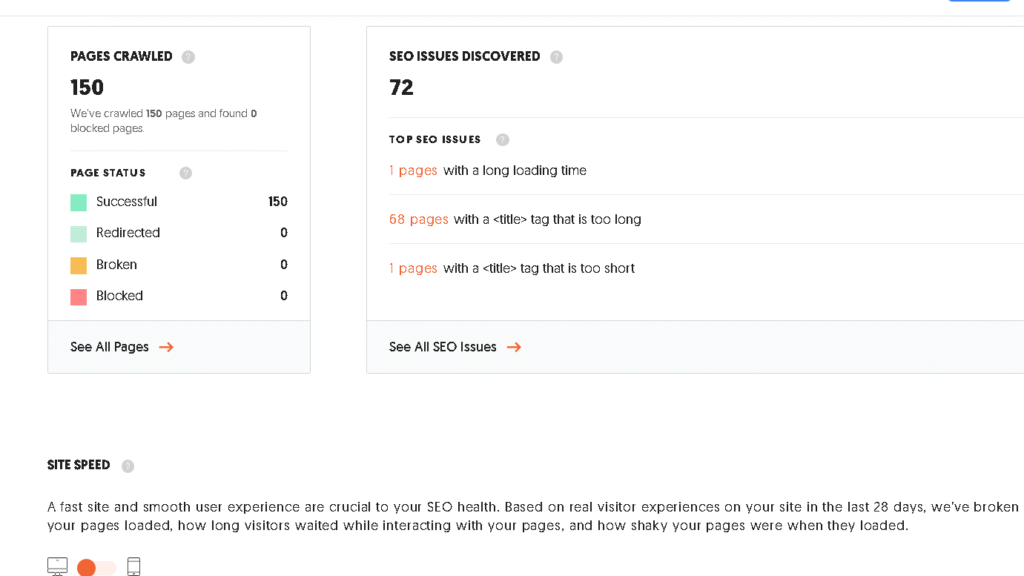
| Ubersuggest | 72 | — | 0 | ❌ |
Ubersuggest flagged 72 issues — every one of which also appeared in Ahrefs. The crawl efficiency problems, orphaned pages, and internal linking visualization didn’t surface in Ubersuggest at all.
Winner: Ahrefs for prioritized, actionable auditing. Semrush for maximum issue depth on complex sites.
Rank Tracking
Ahrefs Rank Tracker updated daily throughout the test. Position data held within 1–2 spots of GSC consistently — identical accuracy to Semrush, tighter than Ubersuggest’s 1–3 position variance on its slower update cycle.
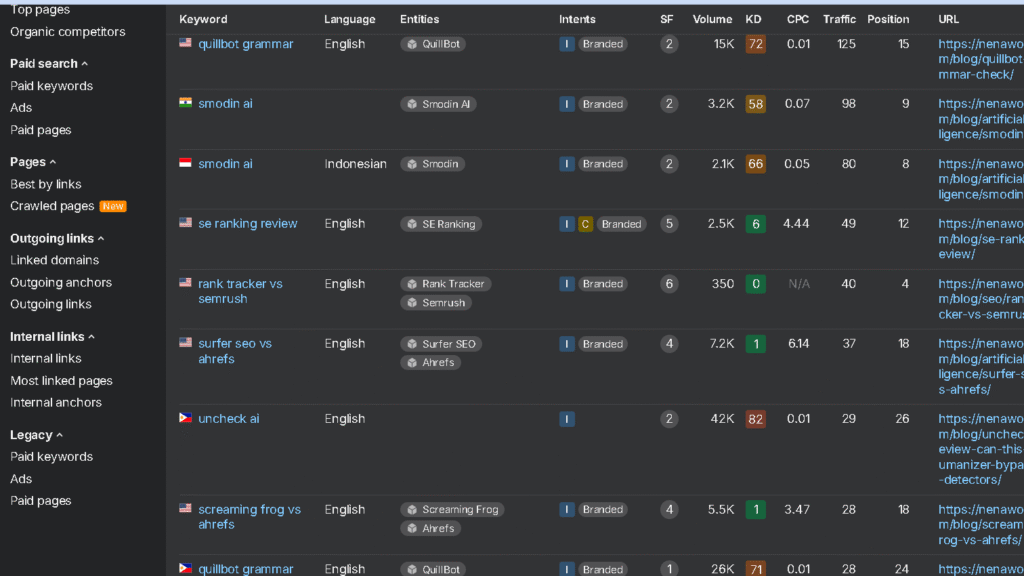
The differentiator isn’t position accuracy. It’s SERP context. For every tracked keyword, Ahrefs surfaces which SERP features are active — featured snippets, PAA boxes, video carousels, AI Overviews, local packs — and whether your site owns them. Ranking #3 in a clean SERP is a different situation than ranking #3 beneath a featured snippet and two PAA boxes. Ahrefs makes that distinction visible for every tracked keyword.
During the test, several keywords where nenawow.com held positions 4–6 were delivering minimal clicks because AI Overviews occupied the top of the page. That insight came entirely from Ahrefs. Neither Semrush nor Ubersuggest surfaced it as clearly.
| Metric | Ahrefs | Semrush | Ubersuggest |
|---|---|---|---|
| Update frequency | Daily | Daily | Every 3–7 days |
| SERP feature tracking | ✅ Full | ✅ Full | ❌ Limited |
| Accuracy vs. GSC | Within 1–2 positions | Within 1–2 positions | Within 1–3 positions |
Semrush’s Visibility Score and automated weekly reporting give it a workflow edge for client-facing teams. Ahrefs wins on SERP intelligence.
Winner: Tie on accuracy. Ahrefs for SERP feature context. Semrush for reporting automation.
Competitor Analysis
Site Explorer is the hub. Drop in any competitor domain: estimated organic traffic, top pages by traffic, full keyword rankings, backlink profile, and traffic value — what that organic traffic would cost to replicate through paid ads.
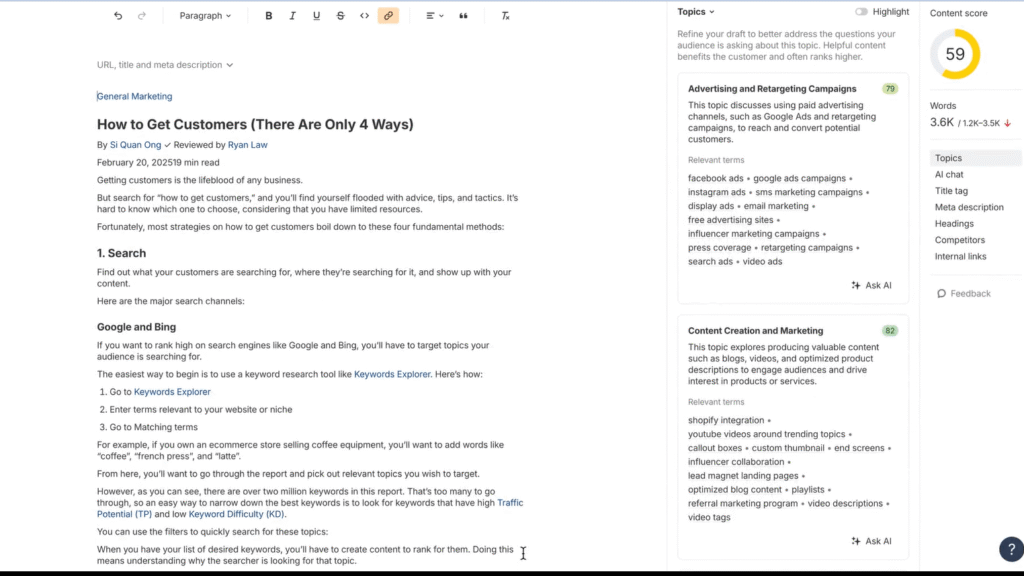
The Content Gap tool was the highest-impact feature in this test. Running nenawow.com against three competitors at once surfaced 40+ keyword topics with zero current presence on my site. These were topics where competitors were pulling consistent traffic and I had nothing published. Several became articles before the test window closed.
Where Semrush holds a genuine advantage: Traffic Analytics uses clickstream data to estimate competitor traffic across all acquisition channels — organic, paid, direct, referral, social — not just organic search. For understanding a competitor’s full acquisition strategy, that breadth is useful. For organic-only competitive intelligence, Ahrefs’ data depth is the stronger input.
| Tool | Competitor Backlink Gaps Found | Content Gap Depth |
|---|---|---|
| Ahrefs | 67 unique domains | Deep, organic-focused |
| Semrush | 41 unique domains | Deep + paid channels |
| Ubersuggest | Not available | Basic |
Winner: Ahrefs for organic SEO. Semrush if paid channel intelligence matters.
Content Tools & AI Overviews
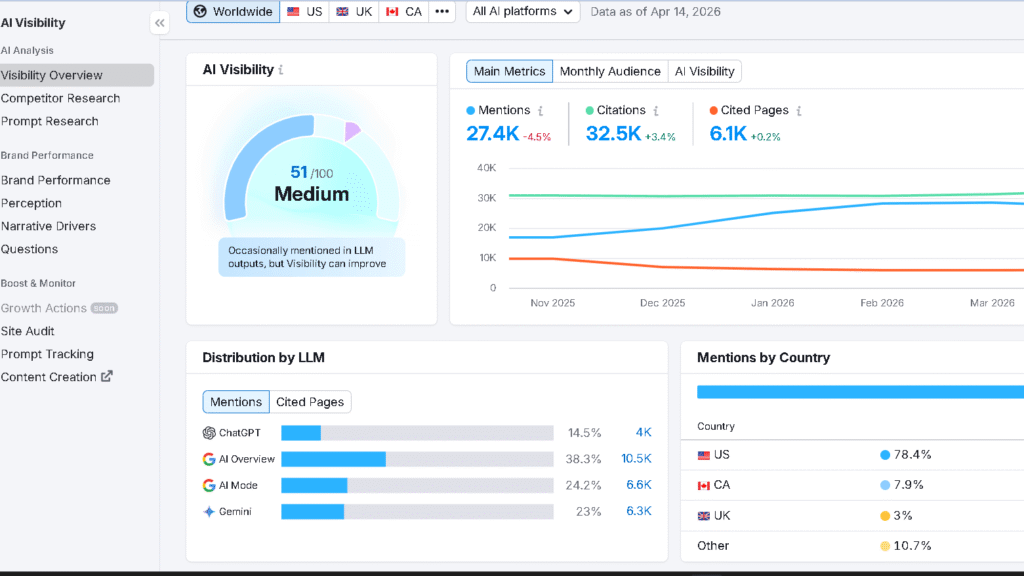
Ahrefs now tracks AI Overview appearances across multiple search engines — Google, Bing Copilot, and other generative surfaces — showing which of your ranked keywords trigger AI-generated snippets and whether your content is cited. During the test, it identified 6 keywords where nenawow.com was appearing in AI Overviews. None of this existed in GSC. Semrush confirmed some appearances but focuses primarily on Google. Ubersuggest offered surface-level data with no competitive context.
This matters more than it sounds. Ranking at position 1 while absent from the AI Overview above it produces completely different traffic outcomes. Ahrefs is currently the only tool in this comparison tracking that dynamic across multiple engines.
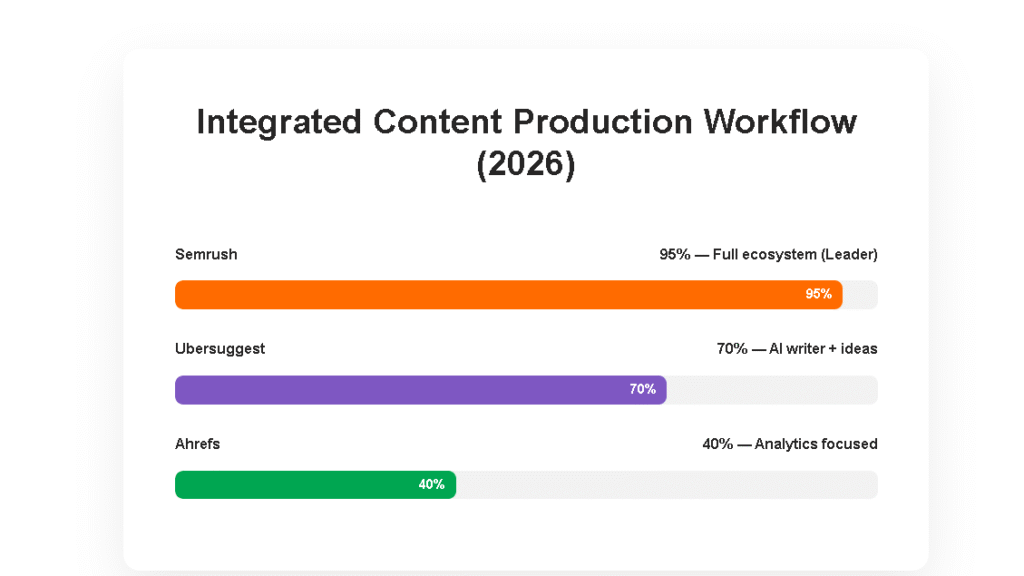
Content Explorer searches billions of indexed pages filtered by Domain Rating, traffic, backlinks, and social engagement. It’s a research tool — content angles, link targets, trending topics — not a writing assistant. Ahrefs has no native AI drafting tools. No Writing Assistant, no ContentShake equivalent. For teams that want research and production in one platform, Semrush fills that gap.
Winner: Ahrefs for multi-engine AI tracking. Semrush for integrated content production workflow.
Ease of Use
Ahrefs is not beginner-friendly. It doesn’t try to be.
The interface is clean, not cluttered — but it assumes SEO knowledge. Terms like referring domains, DR, URL Rating, and link velocity appear without explanation. Getting comfortable across Site Explorer, Keywords Explorer, Content Explorer, Site Audit, and Rank Tracker takes 2–4 weeks for most users. After that, the workflow is fast. Heavy users consistently move through competitor research, content gap analysis, and keyword planning faster in Ahrefs than in any alternative.
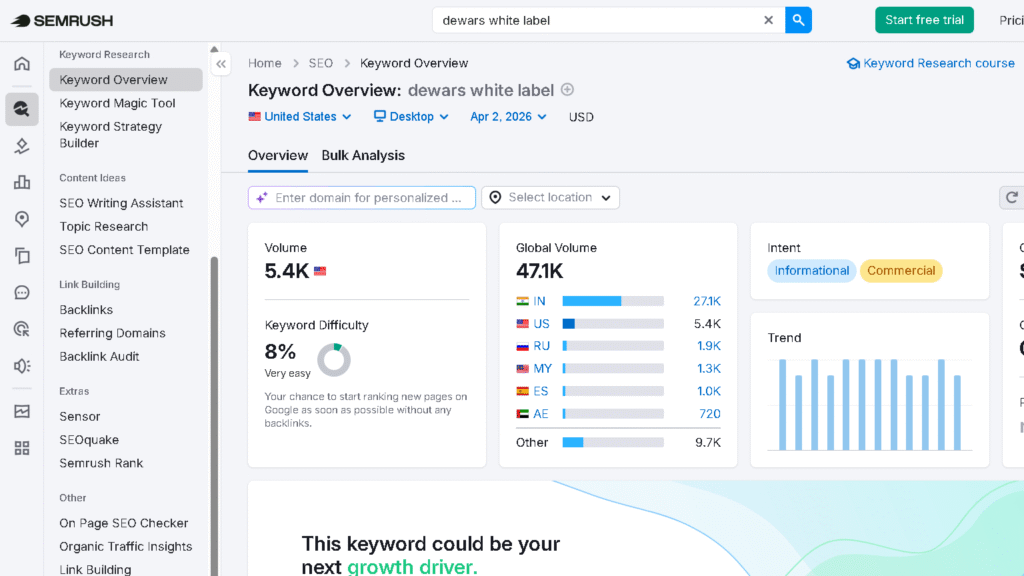
Semrush offers more guided onboarding at first login. Ubersuggest explains terminology inline and delivers most tasks in 2–3 clicks. For someone learning SEO fundamentals simultaneously, the extra cognitive load in Ahrefs is a real cost.
Bottom line: Beginners should start elsewhere. Experienced SEOs will find the initial friction pays off quickly in workflow speed.
Real Results: 30-Day Test Data from nenawow.com
Data collected April 2026. Baseline: 220 posts, ~1,000 monthly organic visits.
| Finding | Ahrefs | Semrush | Ubersuggest |
|---|---|---|---|
| Referring domains found | 1,300 | 499 | 358 |
| Backlinks found | 2,700 | 1,500 | 878 |
| Technical issues flagged | 173 (prioritized) | 1,485 errors + 2,333 warnings | 72 |
| Orphaned pages identified | 45 | 92 | 0 |
| Keyword opportunities (AI SEO tools) | 18 | 70+ | 5 |
| Competitor backlink gaps found | 67 unique domains | 41 unique domains | Not available |
| Rank tracking accuracy vs. GSC | Within 1–2 positions | Within 1–2 positions | Within 1–3 positions |
| Organic traffic estimate | 1,200 | — | 1,269 |
| AI Overview appearances tracked | 6 keywords | Available | Not surfaced |
What I Did With the Data
Weeks 1–2 were diagnostic. Ahrefs surfaced the noindex tag blocking 6 posts from Google entirely — absent from Ubersuggest’s audit, buried in Semrush’s larger issue volume. It identified keyword cannibalization across four “AI SEO tools” posts splitting authority instead of consolidating it. The orphaned pages report revealed 45 posts isolated from the internal link graph.
Weeks 2–3 were execution:
- Removed the noindex tag from 6 posts — highest-priority fix of the entire test
- Merged four cannibalistic posts into one piece with 301 redirects on deprecated URLs
- Added meta descriptions to 34 high-priority flagged posts
- Resolved 3 broken internal links
- Rebuilt internal linking to push equity toward the consolidated post
- Published 3 new articles targeting keyword gaps from Content Gap analysis
- Updated 2 existing posts with ranking traction but thin content depth
Day 30 Outcomes
| Metric | Day 1 | Day 30 | Change |
|---|---|---|---|
| Monthly organic visits | ~1,000 | ~1,340 | +34% |
| Keywords in top 10 | 18 | 27 | +9 keywords |
| Keywords in top 3 | 4 | 7 | +3 keywords |
| Crawl errors | 173 | 41 | −132 resolved |
| Referring domains | 358 | 371 | +13 new |
| AI Overview appearances | Not tracked | 6 keywords | New visibility |
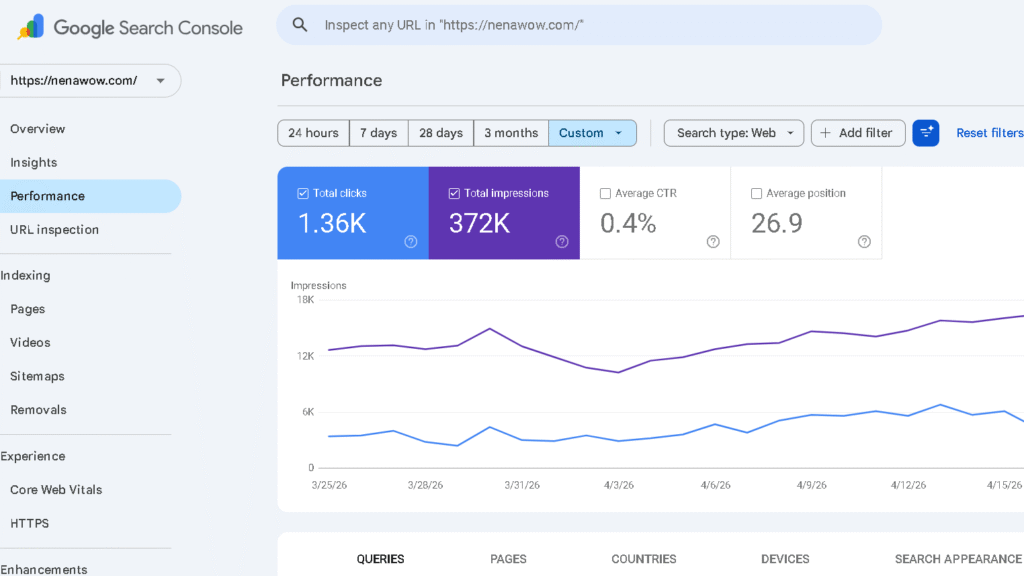
Attribution in SEO is never perfectly isolated. The timing and nature of these improvements align directly with the technical fixes identified in the Ahrefs audit. Treat the numbers as directional signals, not controlled experiment outcomes.
Ahrefs vs. Semrush
Priced within $11 of each other at entry level. The choice comes down to scope.
| Category | Ahrefs | Semrush |
|---|---|---|
| Backlink index | Largest (2,700 on test site) | Large (1,500 on test site) |
| Keyword opportunities | 18 (conservative, calibrated) | 70+ (broader, similarly accurate) |
| Paid search data | ❌ | ✅ Native |
| AI Overview tracking | Multi-engine | Google-focused |
| Content writing tools | ❌ Analysis only | ✅ ContentShake AI, Writing Assistant |
| Client reporting | Basic | ✅ White-label, drag-and-drop |
| Link outreach workflow | ❌ Third-party required | ✅ Built-in |
| Technical audit | Prioritized, actionable | Exhaustive, highest raw volume |
| Entry price | $129/month | $139.95/month |
- Pure organic SEO → Ahrefs
- Paid + organic + client reporting → Semrush
Ahrefs vs. Ubersuggest
The price gap is large. The data gap is larger.
| Category | Ahrefs | Ubersuggest |
|---|---|---|
| Referring domains found | 1,300 | 358 |
| Backlinks found | 2,700 | 878 |
| Technical issues flagged | 173 (prioritized) | 72 (subset of Ahrefs findings) |
| Orphaned pages identified | 45 | 0 |
| Keyword difficulty calibration | Accurate | Optimistic |
| AI Overview tracking | Multi-engine | Basic, Google only |
| Rank tracking updates | Daily | Every 3–7 days |
| Price | From $129/month | From $12/month or $120 lifetime |
Every issue Ubersuggest flagged appeared in Ahrefs. The reverse was not true. The noindex tag, crawl efficiency issues, and orphaned pages — the highest-impact findings of the test — were invisible in Ubersuggest. Ubersuggest is a legitimate starting point. The ceiling becomes obvious fast in competitive environments.
Who Should NOT Use Ahrefs
Budget-constrained beginners. $129/month is hard to justify before you have meaningful organic traffic. The depth you’re paying for won’t be useful until your site is competing for real keywords. Start with Ahrefs Webmaster Tools (free), upgrade when the ROI calculation is clear.
Paid search and social teams. Organic-only. No ad intelligence, no CPC analysis, no social listening. Semrush is the practical alternative.
Agencies with heavy client reporting requirements. Ahrefs’ reporting works but lacks Semrush’s white-label PDF builder and drag-and-drop customization. Client-facing workflows require more manual assembly.
Teams needing built-in content production. No AI writing tools, no brief generator, no writing assistant. Semrush or a dedicated writing platform fills this.
Complete beginners. The learning curve is real. If you’re learning SEO and learning Ahrefs simultaneously, the cognitive load will slow both down. Start with Ubersuggest, graduate to Ahrefs when you know what you’re looking for.
Ahrefs Pros and Cons
Pros
- Largest backlink index tested — 2,700 backlinks, 1,300 referring domains vs. 499 (Semrush) and 358 (Ubersuggest) on the same site
- Most accurate keyword difficulty — scores matched real SERP competition in every manual check during 30 days of testing
- Best multi-engine AI Overview tracking — Google, Bing Copilot, and emerging generative surfaces; Semrush covers Google only
- Prioritized site audit — 173 well-categorized issues with the highest-impact crawl problems surfaced first
- Powerful content gap analysis — 40+ untargeted keyword opportunities found; 67 competitor referring domain targets identified
- Daily rank tracking with full SERP feature context — distinguishes rankings above vs. below AI Overviews and featured snippets
- Permanently free Webmaster Tools tier — real Ahrefs data for verified domains, no time limit
Cons
- No paid search data — genuine gap for anyone running PPC alongside organic
- 2–4 week learning curve — assumes prior SEO knowledge throughout
- Limited white-label reporting — functional, but not client-polished
- No built-in content drafting — purely analytical platform
- Price — $129/month minimum before the depth pays off
- Backlink advantage narrows at enterprise scale — most pronounced on small to mid-authority sites
Alternative to Ahrefs: How It Compares to Other Tools
Ahrefs vs Moz Pro
Moz Pro has lost significant ground over the past few years. In 2026, it sits in a different category entirely. Moz’s backlink index is notably smaller and slower to update. Keyword difficulty scoring is useful but less nuanced than Ahrefs’ Traffic Potential metric. However, Moz Pro is considerably cheaper, with stronger local SEO features and a more beginner-friendly interface. If you’re earlier in your SEO journey or focused on local search, Moz is worth considering as an alternative to Ahrefs.
Ahrefs vs Mangools
Mangools is a budget-friendly option that bundles keyword research, rank tracking, backlink analysis, and SERP analysis. For bloggers and solo marketers, it functions as a capable research tool. But, backlink data depth falls well short of what Ahrefs delivers for competitive analysis.
Ahrefs vs Ubersuggest
Ubersuggest positions itself as a budget alternative but doesn’t hold up under scrutiny for competitive work. Backlink data is significantly less comprehensive, and data provided by this platform lacks the reliability needed for strategic decision-making. For low-competition niches on tight budgets, it’s functional — but it’s not like Ahrefs in terms of depth or accuracy.
Ubersuggest alternative seekers will find that Ahrefs offers a significantly more powerful and reliable platform for serious SEO research.
Ahrefs vs SE Ranking
SE Ranking has improved dramatically in recent years. It is now one of the strongest mid-market SEO platforms available in 2026. Budget-conscious teams will find it compelling. That said, its backlink index is smaller than Ahrefs. Data freshness also lags behind. Competitive research lacks the depth of Site Explorer.
The price, however, is significantly lower. Rank tracking is accurate. The site audit tool is capable. The interface is clean and approachable. Smaller agencies and independent consultants tend to find it a good fit. If your budget is limited and you don’t need enterprise-grade backlink data, SE Ranking is a solid alternative to Ahrefs.
Ahrefs vs Alternatives (2026 Overview)
| Tool | Best For | Backlink Database | Keyword Research Depth | Ease of Use |
|---|---|---|---|---|
| Ahrefs | Competitive SEO, agencies, serious marketers | ✅ Largest & fastest-updating | ✅ Advanced (Traffic Potential, SERP depth) | Moderate learning curve |
| Moz Pro | Beginners & local SEO | ❌ Smaller & slower | Good KD, less nuanced | ✅ Beginner-friendly |
| Mangools | Bloggers & solo marketers | Limited depth | Good for low-competition research | ✅ Very easy |
| Ubersuggest | Tight budgets & basic SEO | Significantly limited | Basic & less reliable | ✅ Simple interface |
| SE Ranking | Small agencies & consultants | Smaller than Ahrefs | Strong mid-tier | ✅ Clean & approachable |
Final Verdict
Ahrefs is the best pure SEO tool available in 2026. For organic keyword research, backlink analysis, competitive intelligence, technical auditing, and AI Overview tracking, nothing in this comparison performed better.
Buy Ahrefs if:
- Organic search is a primary growth channel
- Content decisions depend on accurate difficulty scoring
- Link building requires the most complete index available
- Multi-engine AI Overview tracking matters as generative search expands
- The subscription is justified by ranking-driven revenue — for your site or clients
Choose Semrush instead if paid search is part of your scope, client reporting is a significant time cost, or you want integrated content drafting tools.
Start with Ahrefs Webmaster Tools (free) if you’re not ready for $129/month. Real Ahrefs data for your own site at no cost. When competitive backlink intelligence and calibrated keyword difficulty start driving real decisions — and they will — upgrading is a clear calculation.
Frequently Asked Questions
Yes — if organic search drives meaningful traffic or revenue for your site. If you’re a beginner or hobby blogger, start with the free Webmaster Tools and upgrade when the ROI is clear.
Depends on your focus. Ahrefs leads on backlink index depth, keyword accuracy, and multi-engine AI Overview tracking. Semrush leads on paid search integration, client reporting, and built-in content tools. Choose based on your primary workflow, not brand preference.
Yes. Ahrefs Webmaster Tools is permanently free — no credit card required. It includes site audit, backlink monitoring, and organic keyword data for any domain you verify ownership of.
Difficulty scores matched real SERP competition consistently across 30 days of manual checks. Both Ahrefs and Semrush significantly outperform Ubersuggest, which produced optimistic difficulty ratings that didn’t hold up against actual search results.
It has the largest index of the three tools tested — 2,700 backlinks and 1,300 referring domains found on the test site, compared to 499 referring domains in Semrush and 358 in Ubersuggest. A larger index means more complete competitive profiles and more actionable link-building targets.
Yes, across Google Search, Bing Copilot, and other generative surfaces. Semrush covers Google only. As AI-powered search fragments across platforms, multi-engine coverage is increasingly significant for accurate rank tracking in 2026.
It’s not the easiest starting point — the interface assumes existing SEO knowledge and carries a real 2–4 week learning curve.