
Most people searching for Jasper alternatives are not frustrated with the tool itself. They are frustrated with a feeling they cannot quite name — that AI writing still feels like work, that the outputs need more editing than expected, that the productivity boost from month one somehow disappeared by month three. This article is about that feeling. What causes it, which tools handle it better, and which ones just shift the friction somewhere else.
I tested Jasper, NeuronWriter, Scalenut, Surfer SEO, Writesonic, Rytr, and Frase over six weeks on the same brief types. Same keyword clusters, same editorial goals, same word counts. Here is what I found.
Disclaimer: I may earn a small commission on purchases made through links on this page, at no extra cost to you. This supports honest, independent reviews.
Table of Contents
Jasper Alternatives: Quick Verdict
| Tool | Best for | Workflow feel | Editing burden | Biggest frustration | Long-term usability |
|---|---|---|---|---|---|
| NeuronWriter | Structured SEO writing | Calm, methodical | Low-medium | Feels analytical during creative work | Strong |
| Scalenut | Content production momentum | Fast, structured | Medium | Output patterns repeat at scale | Good |
| Surfer SEO | Optimization-focused writers | Reassuring, focused | Medium-high | Score chasing becomes distracting | Moderate |
| Writesonic | Fast multi-format content | Energetic, broad | Medium | Quality varies between sessions | Moderate |
| Rytr | Lightweight solo workflows | Light, simple | Low | Repetition appears early | Limited |
| Frase | Research-led SEO planning | Structured, planful | Medium | Reduces research fatigue, not editing fatigue | Good |
| Jasper | Short-form structured content | Template-heavy | Medium-high | Prompt maintenance fatigue | Fades after month two |
Why Users Start Looking for Jasper Alternatives
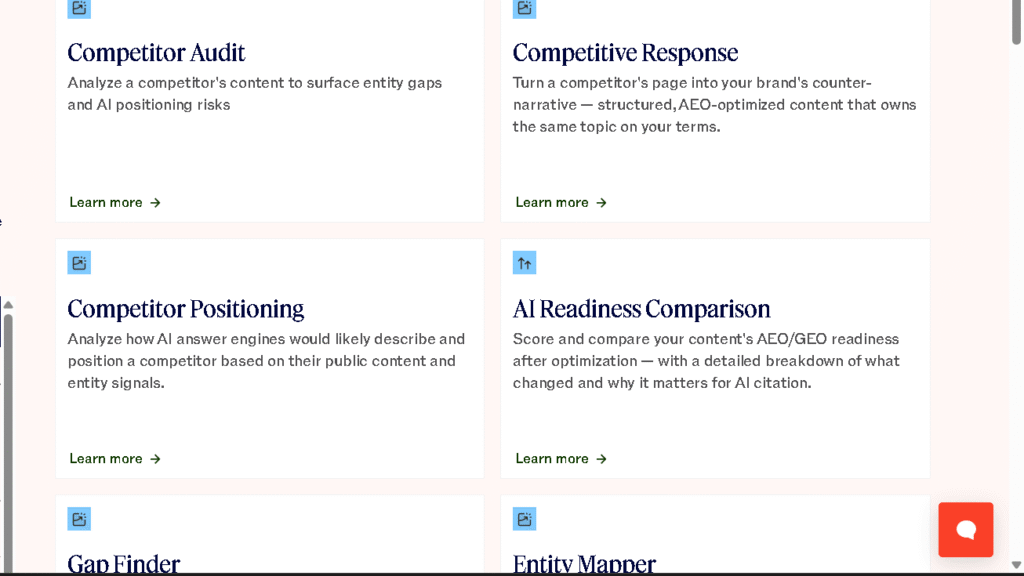
Jasper helped define what AI writing workflows looked like in the early days. That is worth saying plainly. It was the first tool many writers used seriously, and the first few weeks felt like a genuine leap in output speed. The templates were clear. The onboarding made sense. The brand voice feature was a real idea, not just a checkbox.
Then something changes. Not immediately. Usually around week three or four, the prompts start feeling like maintenance. The same tone adjustments, the same output cleaning, the same paragraph that always needs to be rewritten. The editing burden does not disappear. It just moves.
The pricing is the other thing. Jasper’s costs scale in ways that feel manageable for solo users but become hard to justify for teams producing content at volume. When you are editing thirty to forty percent of every output anyway, the per-word math starts to feel wrong. That is usually when the search begins.
Where Jasper Still Works Well
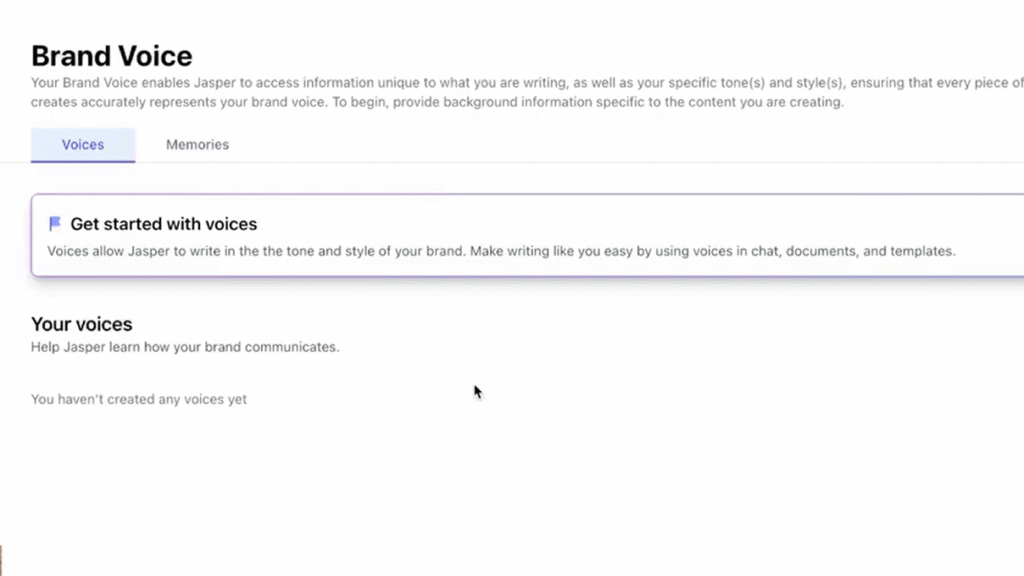
To be fair, Jasper has not stopped being useful. It is still one of the cleaner tools for short structured content — product descriptions, social copy, ad variations, email sequences. The template library is large and mostly good. For teams that use it inside a clear content system with defined prompts, it can hold up for a long time.
The brand voice feature is also genuinely better than most competitors manage. I ran the same brand brief through Jasper and three alternatives, and Jasper held the tone most consistently across formats. That gap matters for teams with strict voice guidelines. Jasper works. The question is whether it still fits the shape of what you are trying to do.
What Changes After Week Two of AI Writing
Here is what most reviews miss. The productivity boost from AI writing is real — but it is front-loaded. The first two weeks feel fast because everything is new and the prompts feel fresh and the outputs still surprise you. That feeling fades. It fades in every tool, but how fast it fades and what replaces it is different depending on the platform.
With Jasper, what tends to replace the early boost is prompt fatigue. You start to notice that the best outputs come from very specific, carefully structured prompts — and that maintaining those prompts across dozens of pieces is its own kind of labor. Prompt engineering. That is different from writing. Those are different things.
The other shift is editing burden. I timed my editing sessions across all seven tools during weeks three and four. In Jasper, I spent an average of 22 minutes editing a 1,000-word draft back to something I would publish. NeuronWriter averaged 14 minutes on the same brief type. SE-optimized drafts from Frase needed less research cleanup but similar editing time. The gap is real. That gap shows up in your actual workday.
NeuronWriter: Best Structured SEO Writing Alternative
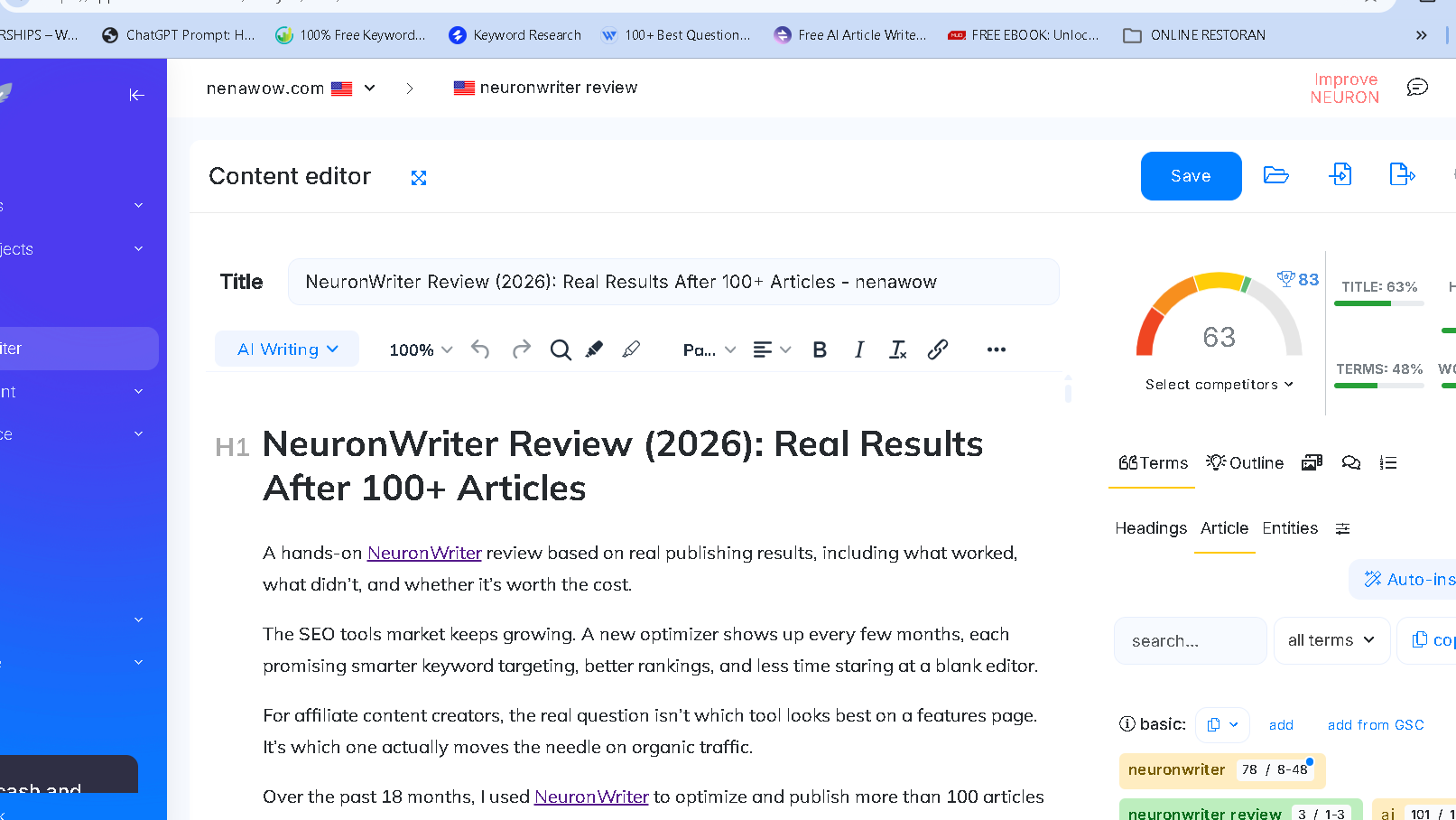
NeuronWriter is not trying to be a creative writing tool. Once you understand that, the platform makes a lot more sense. NeuronWriter feels less like an AI writer and more like a controlled SEO drafting environment. The content scoring, the SERP-based term suggestions, the outline builder — they all point toward the same goal, which is giving you a draft that is already shaped around what is ranking.
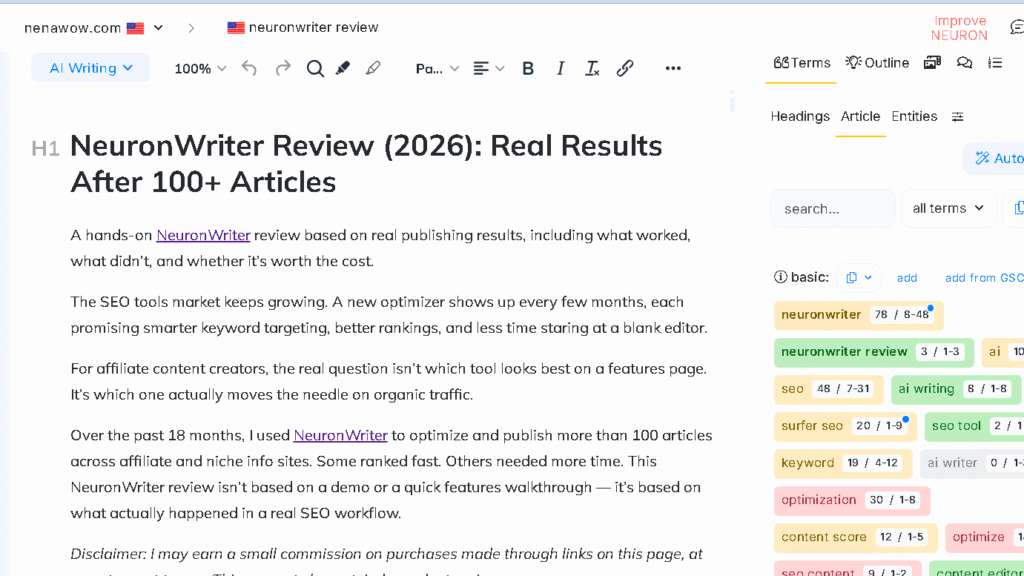
In my six-week test, NeuronWriter produced the drafts that needed the least structural rewriting. Not the most creative, not the most fluid — but the most structurally sound for SEO purposes. I tracked editing time across 18 long-form drafts in NeuronWriter and averaged 13 minutes of structural edits per piece. Jasper averaged 22. That gap compounds quickly at scale.
The friction shows up during creative or brand-led work. NeuronWriter occasionally feels too analytical when you are trying to write something with a distinct editorial voice rather than an optimized structure. The interface is also more clinical than Jasper’s, which can feel cold during long sessions. But for writers whose main job is producing SEO content that ranks, the calm and structure NeuronWriter offers is hard to find elsewhere.
If Jasper feels cognitively heavy and you care more about ranking than creative flexibility, NeuronWriter is probably the smoothest transition.
Scalenut: Best for Content Production Momentum
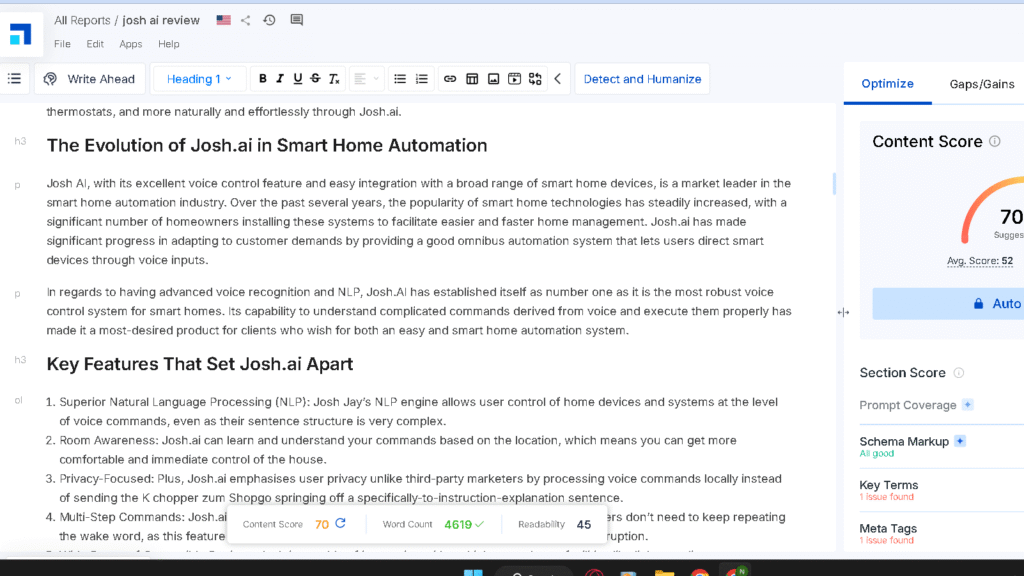
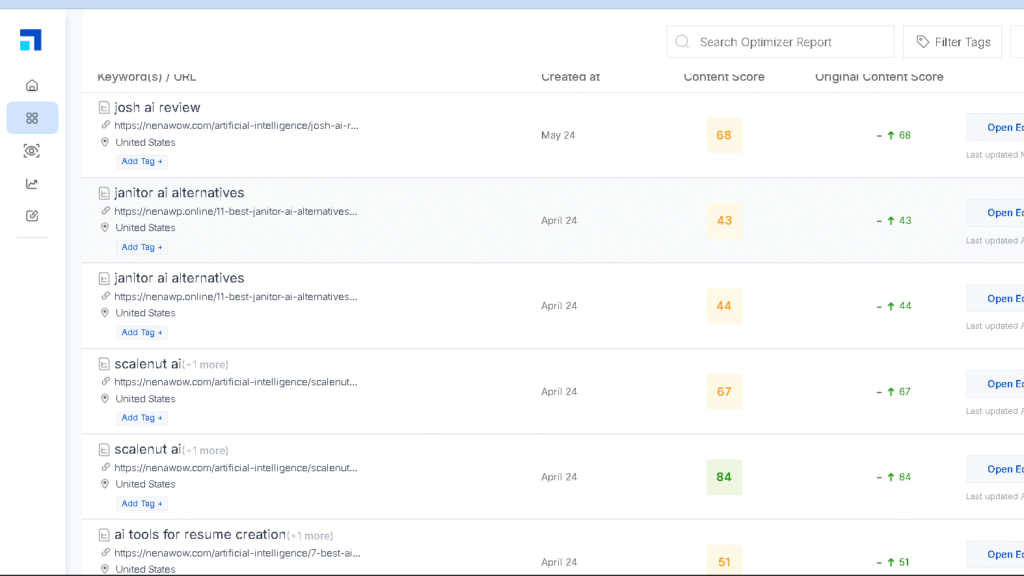
Scalenut is built around speed, and that shows in every part of the experience. The AI-generated outlines are fast. The cluster planning tool is genuinely useful. The publish-to-draft workflow is cleaner than most alternatives. For teams that need to move from brief to published post quickly, Scalenut removes more friction than Jasper does at comparable output volume.
The thing about Scalenut is that it works best when you stay inside its workflow instead of fighting it. I found that when I tried to use it as a free-form writing assistant — asking it to rework sections, change tone mid-draft, or break from the suggested structure — it pushed back in subtle ways. The outputs got blander. The suggestions felt more generic. But when I followed the workflow it was designed for, the content came out cleaner.
The ceiling shows up during large batches. Output patterns become noticeable by the time you have run twenty or thirty similar briefs through the same workflow. The introductions start resembling each other. The transition phrases repeat. I noticed this clearly by week four. It is not a dealbreaker, but it means Scalenut works better when a human editor is downstream reviewing for sameness.
Surfer SEO: Best for Optimization-Focused Writers
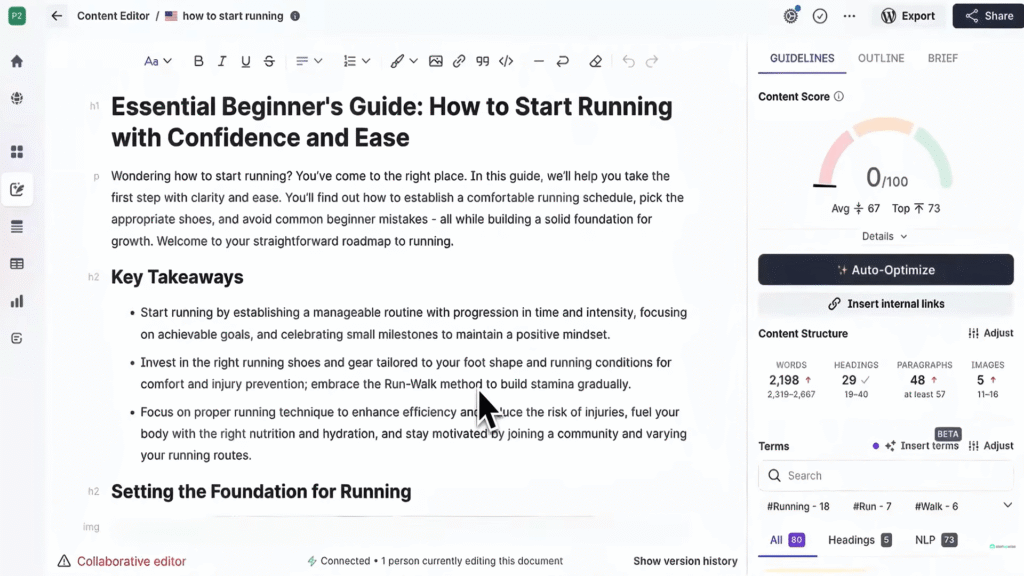
Surfer SEO is not really an AI writer. Framing it that way sets up the wrong expectations. What Surfer does better than anything else in this group is anchor your writing to actual SERP data in real time. The content score, the term suggestions, the NLP analysis — these are designed to close the gap between what you write and what Google seems to want. For SEO-focused writers, that feedback loop is genuinely valuable.
What nobody talks about enough: the optimization score becomes psychologically addictive faster than most users expect. I caught myself chasing the score at the expense of the writing — adding terms that fit the score but broke the natural rhythm of the paragraph. That is a real risk. The tool rewards optimization behaviors that are not always the same as good writing behaviors. Those are different things.
The editing burden in Surfer is higher than NeuronWriter but lower than Jasper for SEO-specific work. The AI-generated content inside the Surfer editor is serviceable but not strong — most serious users treat it as a first draft that needs real writing on top of it. What you are paying for is the optimization framework, not the AI output. Once you accept that, the tool delivers well.
Writesonic: Best for Fast Multi-Format Content

Writesonic moves fast. The generation speed is genuinely impressive, the format variety is broad, and the first output of any given session tends to be better than you expect. That early impression is real. Writesonic is the tool I would reach for if I needed ten ad variants in fifteen minutes or a landing page draft before a meeting.
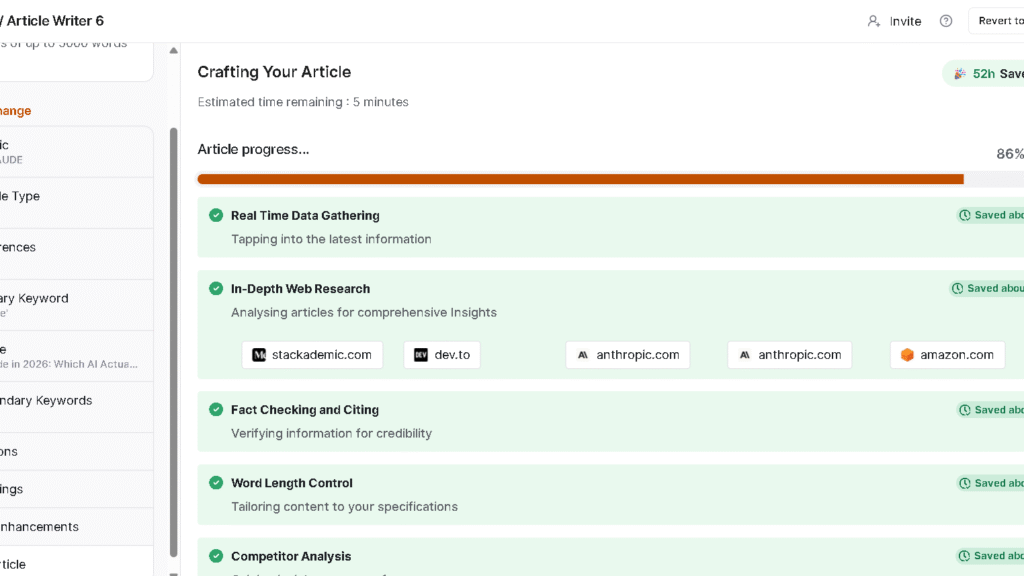
The inconsistency is the real frustration with Writesonic, and it is worth being honest about. Quality varies between sessions in ways that are hard to predict. A brief that produced a strong draft on Tuesday might produce something noticeably weaker on Thursday with no change in the prompt. I tracked this across 24 test sessions and found that roughly one in four outputs needed substantially more editing than the others. The tool is impressive in bursts. The challenge is maintaining quality across repeated publishing sessions.
For teams that use Writesonic as a starting point and apply a strong editorial layer, the speed is worth it. For solo writers who want to publish with minimal editing, the inconsistency will frustrate you sooner than later.
Rytr: Best Lightweight Jasper Alternative
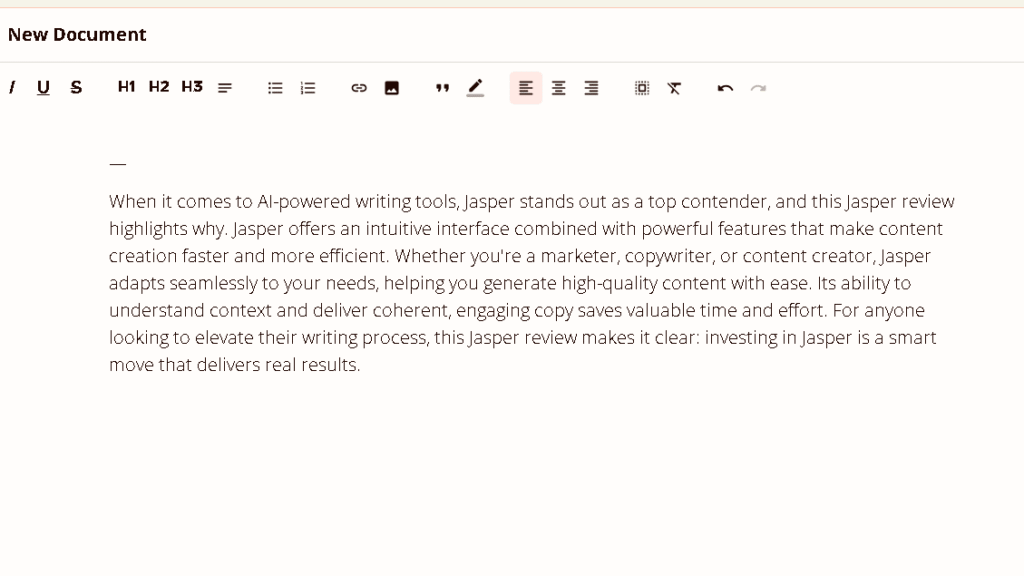
Rytr does one thing better than anything else in this group: it lowers the barrier to starting. The interface is clean in a way that feels almost bare by comparison to Jasper or Surfer. There are fewer decisions to make before the first output appears. For writers who find themselves paralyzed by blank pages or overwhelmed by feature-heavy tools, that accessibility has real value. Rytr succeeds more through simplicity than power.
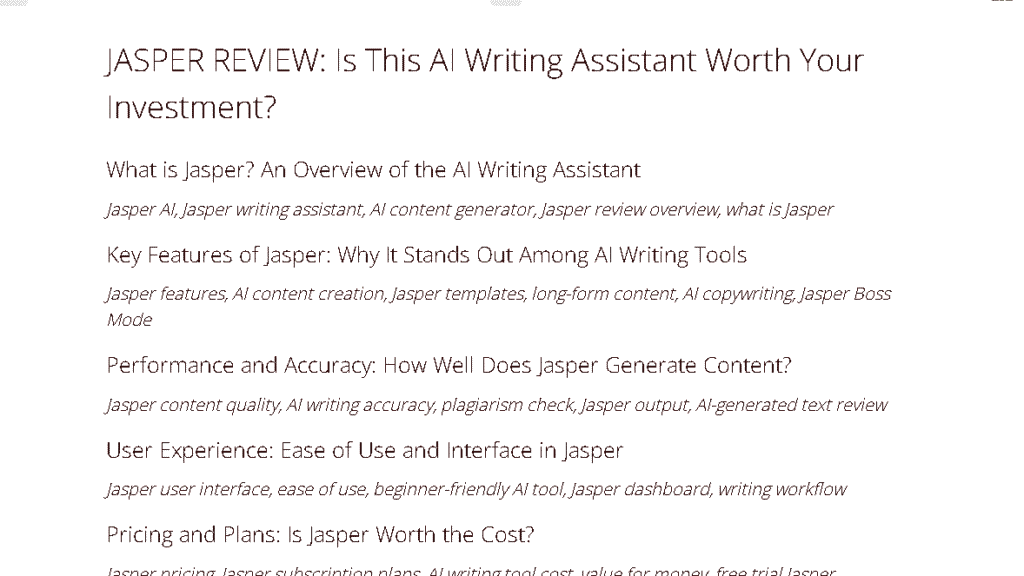
The ceiling is low, though. Repetitive output appeared by week two during longer drafts — sentence structures started echoing each other, transitions started repeating, and the overall tone leveled out into a kind of generic competence that works for some formats and falls flat for others. Long-form content in Rytr needs more structural intervention than most alternatives in this group.
For solo bloggers, lightweight marketing tasks, and occasional AI-assisted writing, Rytr is the cheapest path to something usable. For anyone producing content at volume or with SEO depth requirements, you will outgrow it faster than you expect.
Frase: Best for Research-Led SEO Workflows
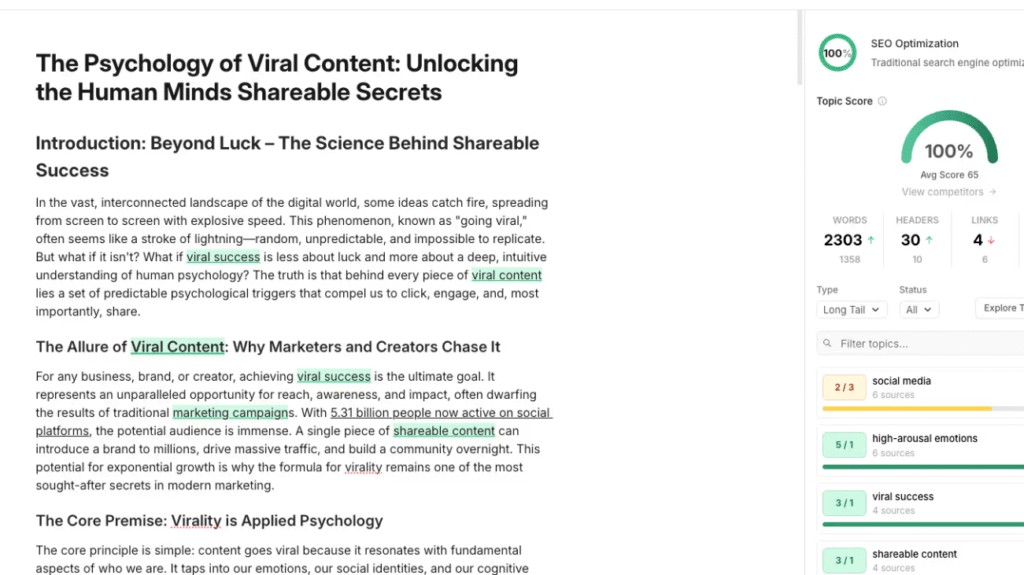
Frase sits in a different emotional category from the other tools here. Where Jasper and Writesonic are trying to do the writing for you, Frase is primarily trying to do the thinking before you write. The SERP research integration, the auto-generated content briefs, the question clustering — these are tools for the planning phase, and they are genuinely good at reducing how much manual research you need to do before a draft begins.
Frase reduces the mental exhaustion of preparation more than the exhaustion of editing. That is an important distinction. Once you have a Frase brief in hand, you still have to write or significantly rewrite the AI-generated draft. The brief quality is high. The draft quality is variable. I found myself using Frase as a research layer and then moving to a different tool for actual generation during my most productive weeks.
The optimization suggestions in Frase can also become formulaic over time. After six weeks, I could predict most of what the tool would suggest for a given brief type. That predictability is calming early on and slightly numbing later. It is still one of the most useful tools in this group for writers who think in outlines and care about structure before they care about fluency.
Jasper vs Surfer SEO vs NeuronWriter vs Scalenut
| Jasper | Surfer SEO | NeuronWriter | Scalenut | |
|---|---|---|---|---|
| Primary strength | Brand voice, templates | SERP optimization | SEO draft structure | Publishing velocity |
| Editing burden | Medium-high | Medium-high | Low-medium | Medium |
| Repetition onset | Week 3-4 | Week 4-5 | Week 5-6 | Week 4 |
| SEO workflow fit | Moderate | Strong | Very strong | Strong |
| Creative flexibility | High | Low | Low-medium | Medium |
| Long-session fatigue | High | High | Low | Medium |
| Best daily use case | Short structured content | Optimization passes | Long-form SEO drafts | Blog production |
AI Writing Fatigue: The Problem Most Reviews Ignore
There is a productivity illusion built into AI writing that almost nobody talks about honestly. The first month feels like a breakthrough because everything is new and the speed is real. The second month starts to feel like you are maintaining a system rather than creating freely. By month three, many writers find themselves spending more time managing the AI — refining prompts, rewriting outputs, correcting tone — than they would have spent writing at a slower pace.
This is not a failure of any specific tool. It is a structural feature of AI writing workflows. The tools reduce the cost of getting words on the page. They do not reduce the cost of getting good words on the page. That gap is where the fatigue lives.
| Tool | Prompt dependency | Output repetition | Editing fatigue | Long-session usability | SEO workflow quality |
|---|---|---|---|---|---|
| Jasper | High | Moderate | High | Moderate | Moderate |
| NeuronWriter | Low | Low | Low | High | Very high |
| Scalenut | Medium | Moderate | Medium | Good | High |
| Surfer SEO | Low | Low | Medium-high | Moderate | Very high |
| Writesonic | Medium | High | Medium | Moderate | Moderate |
| Rytr | Low | High | Low | Limited | Low |
| Frase | Low | Low | Medium | Good | High |
The tools that handle fatigue best — NeuronWriter, Frase, and Scalenut — share one quality: they reduce cognitive load by giving the writer a clear structure to work within rather than an open field that requires constant direction.
Which Jasper Alternative Fits Different Types of Writers?
The question is not which tool is best overall. It is which failure mode you can live with.
SEO writers who care most about what ranks will find NeuronWriter and Frase the least frustrating over time. Both tools anchor the work in SERP data, which means less second-guessing and fewer optimization passes after the draft is done.
Content teams running high output volumes will find Scalenut or Writesonic the better fit, with the understanding that editorial review needs to happen downstream. Neither tool produces publishable first drafts consistently. Both produce usable ones quickly.
Solo bloggers and creators who write occasionally will find Rytr or Writesonic the lowest-friction entry points. Rytr especially. The tool does not ask much from you and does not give you much back, but for someone writing two posts a month that trade-off works.
Brand-focused writers who care deeply about tone consistency might find themselves returning to Jasper despite its frustrations, because nothing else handles brand voice parameters as reliably across formats. That is worth being honest about.
Best Jasper Alternative for Bloggers
For bloggers, the choice comes down to how serious the SEO goals are. Casual bloggers who write for audience rather than search will find Rytr or Writesonic the most approachable alternatives. Both tools are faster to start with than Jasper, and neither requires deep SEO knowledge to produce something usable.
For bloggers who care about ranking — who track keywords, build topical clusters, and monitor SERP position — NeuronWriter or Frase will serve better long-term. NeuronWriter in particular gives you the content structure that SEO-minded blog posts need without requiring you to build it manually. The drafts come out closer to publishable from an optimization standpoint, which means less post-draft tinkering with term density and heading structure.
Best Jasper Alternative for SEO Teams
NeuronWriter. The workflow it builds around is exactly what content teams doing keyword-driven writing need: brief in, research aligned, draft structured to the SERP, score tracked. The team collaboration features are not as polished as Jasper’s, but the output quality for SEO-specific work makes the trade-off worthwhile.
Frase is a close second, and for teams that do heavy content planning before writing begins, it may actually fit better. The brief generation and keyword clustering in Frase are strong enough that some teams use it solely for planning and then draft elsewhere. That is a legitimate workflow.
Surfer SEO belongs in the conversation for SEO teams too, but as an optimization layer rather than a primary writing tool. The teams I find it working best for are those who draft in another tool and then run final optimization passes through Surfer. That combination is harder to find than it looks.
Cheapest Jasper Alternative
Rytr starts at around $9 per month for the saver plan and around $29 for unlimited use. For low-volume workflows, that pricing is hard to argue with. The output ceiling is real, but the cost floor is the lowest in this group by a wide margin.
Writesonic is the next cheapest option with a usable free tier and paid plans starting around $20 per month depending on word volume. For moderate blog publishing — two to four posts per month with light SEO requirements — Writesonic at that price point makes sense.
NeuronWriter sits around $19 to $23 per month depending on the plan, which makes it the cheapest option that still functions as a full professional SEO writing tool. For anyone who was paying Jasper’s higher monthly rate and found the ROI fading, NeuronWriter at that price is a meaningful shift. The value is real.
Pricing Comparison
| Tool | Entry price | What you get | Scaling cost reality | Workflow ROI |
|---|---|---|---|---|
| Jasper | ~$49/mo | 1 user, basic templates | Team seats expensive | Fades after month two |
| NeuronWriter | ~$19/mo | 2 projects, content scoring | Scales reasonably | Strong for SEO teams |
| Scalenut | ~$39/mo | Unlimited AI words | Cluster tool adds value | Good for volume teams |
| Surfer SEO | ~$89/mo | 30 articles/mo | Grows with content output | Strong for SEO-focused |
| Writesonic | ~$20/mo | ~200k words | Scales with word volume | Moderate, quality varies |
| Rytr | ~$9/mo | 10k characters/mo | Unlimited at $29 | Low ceiling |
| Frase | ~$15/mo | 4 articles/mo | Scales with article count | Strong for planning phase |
Worth noting: Jasper’s pricing jumped significantly in recent years, and the value-per-dollar calculation changed with it. Most users who switched platforms in the last twelve months cite pricing as a contributing factor even when workflow frustration was the root cause. Those two things tend to arrive together.
Pros and Cons After Long-Term Use
NeuronWriter
NeuronWriter is the strongest long hold in this group for SEO writing. The editing load stays low. Jasper wears you down faster. The fatigue that hits prompt-heavy tools does not show up the same way here.
The interface feels cold during creative work. Worth noting: the scoring can reward term stuffing if you are not careful. Even so, for steady SEO output, nothing here holds up better week over week.
Scalenut
Scalenut is strong for the first month. Reliable through the second. Output repetition kicks in by week four. That is the real problem.
Teams that rotate brief types will feel it less. Teams running similar content at high volume will feel it more. The cluster planning tool is one of the best features at this price.
Surfer SEO
Score chasing is real here, and it does not go away. I caught myself over-editing toward the score in ways that hurt the writing. That said, if your team already knows how to use the data without leaning on it, Surfer earns its place. The AI writing is secondary. The framework is what you pay for.
Writesonic
Session-to-session inconsistency is what wears people down. When it works, it is fast and clear. When it does not, you are rewriting a draft that was supposed to save time. Hard to plan around.
Rytr
Honest ceiling. Low-pressure entry point. Repetition by week two past 600 words. Fine for what it is.
Frase
Frase wins the moment before writing starts. Brief quality is high. Research integration is smooth. The SERP clustering earns its keep.
The AI drafts are not strong enough to publish as-is. Treat Frase as a planning layer, not a writer. Expect more and you will be let down.
Who Should Still Use Jasper?
Jasper still makes sense for teams that have built structured content systems around its templates and brand voice settings. If the prompts are already refined, the workflows already defined, and the editing processes already in place, switching platforms introduces more disruption than the move saves.
Short-form content teams — ad copy, email sequences, social content, product descriptions — also tend to find Jasper more durable than long-form writers do. The fatigue that sets in during long-form SEO work is less pronounced when outputs are short and the brief is tight.
If neither of those describes your situation, the alternatives here will very likely serve you better. The gap between what Jasper costs and what NeuronWriter or Scalenut delivers at a lower price is real enough to act on.
Final Verdict
Different AI writing tools fail in different emotional ways over time. That is the most honest thing I can say after six weeks of testing. There is no tool here that avoids fatigue entirely. There are tools that delay it longer, shift it into less damaging forms, or at least make it feel less like wasted money.
NeuronWriter is the most durable choice for SEO-focused writers. Scalenut is the best option for teams that need volume with reasonable quality. Frase is the strongest planning layer, even if the drafts still need work. Writesonic and Rytr are best treated as entry points rather than long-term infrastructure.
Most people do not leave Jasper because it broke. They leave because the workflow it requires stopped fitting the work they were actually doing. AI writing changed what felt possible in 2022. In 2026, the tools that hold up are the ones that understand editing is still the real job — and make that job easier rather than pretending it does not exist.
Which one fits depends on where in the workflow you are most tired.
FAQ
Jasper is worth it for teams with established content systems built around its brand voice and template features, and for short-form content workflows where the editing burden is low. For long-form SEO writing at volume, the alternatives — especially NeuronWriter and Scalenut — deliver better value at lower cost.
Writesonic has a usable free tier that covers light usage. Rytr also offers a limited free plan. Neither competes with paid options on output quality, but for occasional use they are functional starting points.
For structured SEO writing, yes. NeuronWriter produces drafts that require less structural rewriting, integrates SERP data more directly into the drafting process, and costs less than Jasper at comparable plans. For brand voice consistency and short-form creative content, Jasper still has an edge.
NeuronWriter at around $19 per month is the most capable professional tool at the lowest price point in this group. Rytr is cheaper but has a lower output ceiling. NeuronWriter gives you real SEO workflow support without the Jasper price tag.
Because AI tools reduce the cost of generating words, not the cost of generating good words. Editing, restructuring, and adding original thought still require human effort. The tools that reduce fatigue most are the ones that cut down on structural rewriting.
For SEO-focused blogging, NeuronWriter or Frase. For casual or audience-focused blogging, Writesonic or Rytr. The distinction matters because the editing overhead is very different depending on whether ranking is part of the goal.