
Table of Contents
Surfer SEO Review: 30-Second Summary
- Best for agencies and high-volume publishers
- Excellent content optimization workflow
- Can push writing toward formulaic output fast
- Strong SERP analysis, especially for competitive research
- Expensive for solo bloggers at entry tier
- Works best alongside ChatGPT, not instead of it
SEO uncertainty creates a strange kind of obsession. You publish an article, refresh Search Console for days, and still never really know whether the page is underperforming because of the writing, the backlinks, or because Google simply ignored it. Surfer SEO sells a way out of that feeling. After thirty days of real publishing across real keywords, here is whether it delivers.
I tested it on blog posts, affiliate content, comparison articles, and a set of older posts I updated from scratch. Not demo content. Not sample keywords.
Disclaimer: I may earn a small commission on purchases made through links on this page, at no extra cost to you. This supports honest, independent reviews.
Nena’s Quick Verdict — Is Surfer SEO Worth It?
| Category | Surfer SEO |
|---|---|
| Best For | SEO-focused content optimization |
| Biggest Strength | Structured optimization workflow |
| Biggest Weakness | Pulls writing toward formulaic output |
| Ease of Use | Moderate |
| AI Writing | Useful, inconsistent |
| Best For Agencies | Excellent |
| Best For Beginners | Moderate |
| Workflow Impact | High |
| Worth Paying For? | Yes, for volume publishers |
The short version: it works. The caveats matter more than most reviews admit.
Surfer SEO Pros and Cons
| Pros | Cons |
|---|---|
| Excellent content optimization workflow | Can push writing toward formulaic output |
| Strong SERP Analyzer for competitive research | Expensive for solo bloggers |
| Real time savings for high-volume publishers | AI writing quality is inconsistent |
| Useful for content audits and refreshes | Learning curve steeper than advertised |
| Strong agency workflow support | Content score obsession hurts writing quality |
Surfer SEO Quick Comparison
| Category | Verdict |
|---|---|
| Best For | Content optimization at volume |
| Best Feature | Content Editor with live scoring |
| Biggest Weakness | Formulaic writing risk |
| Best Alternative | Frase |
| Best For Agencies | Yes |
| Best For Beginners | Moderate |
| Worth It? | Yes for volume publishing |
Best Surfer SEO Features
1. Content Editor
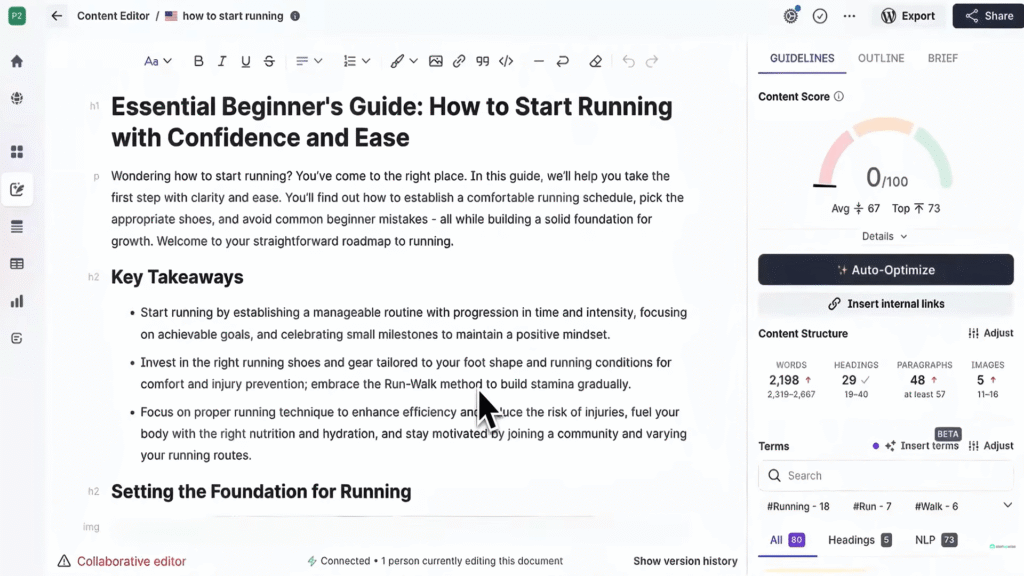
The Content Editor is where nearly all real work happens. It gives you live scoring, NLP keyword suggestions, and target word count ranges as you write. The score updates in real time, which is useful and also the main source of obsession risk. You can also run it inside Google Docs through Surfer’s extension, which makes the workflow less disruptive for writers already in collaborative editorial systems.
2. SERP Analyzer
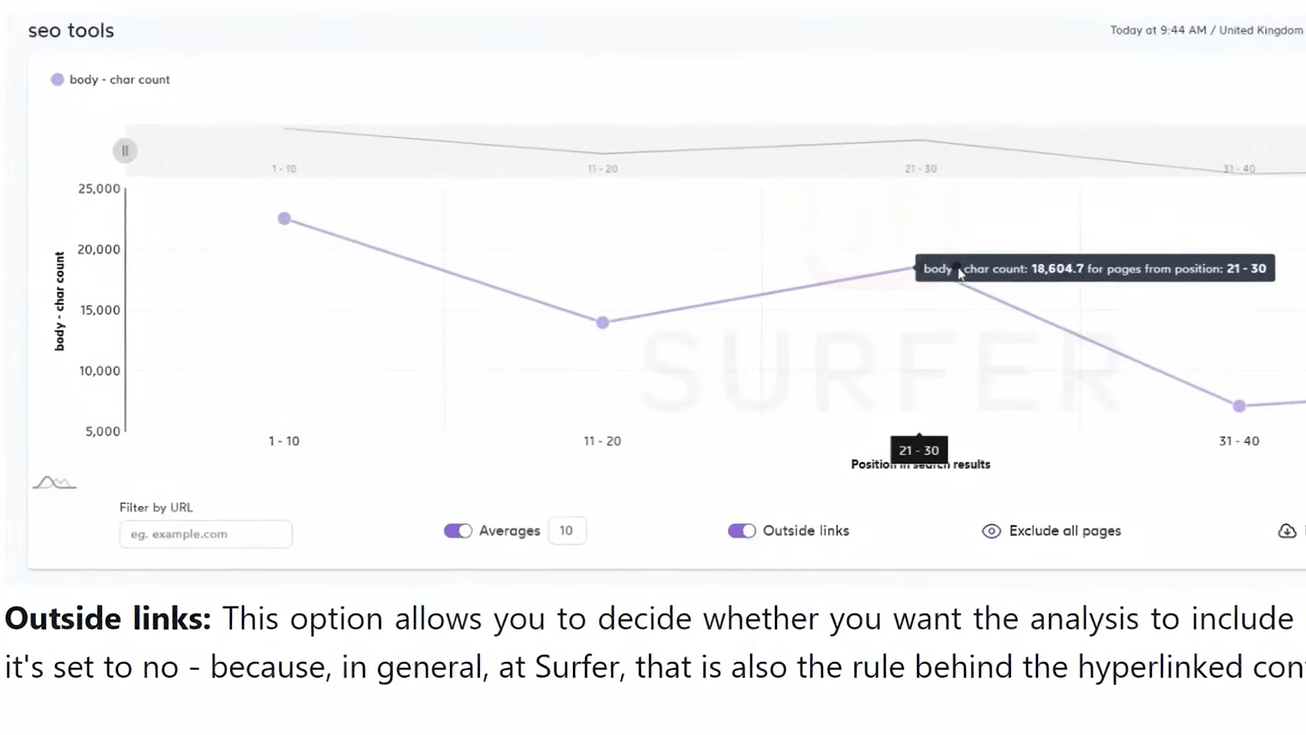
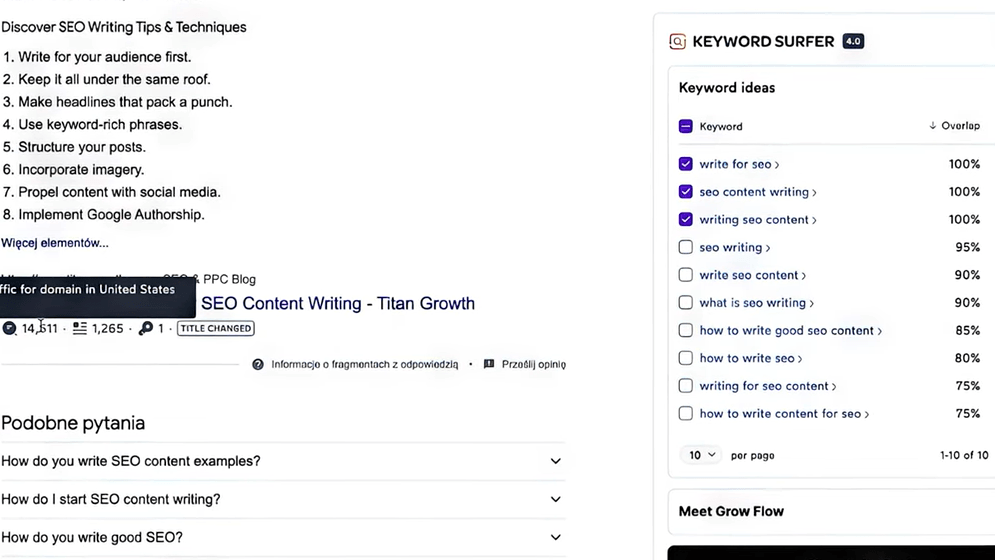
The SERP Analyzer breaks down the top twenty results for any keyword and shows what they share. Word count, header depth, backlinks, page speed. I reached for this tool more than any other during research. Surfer also includes a Chrome extension that overlays SEO insights directly onto search engine results pages, which speeds up competitor research without switching tabs.
3. Content Audit
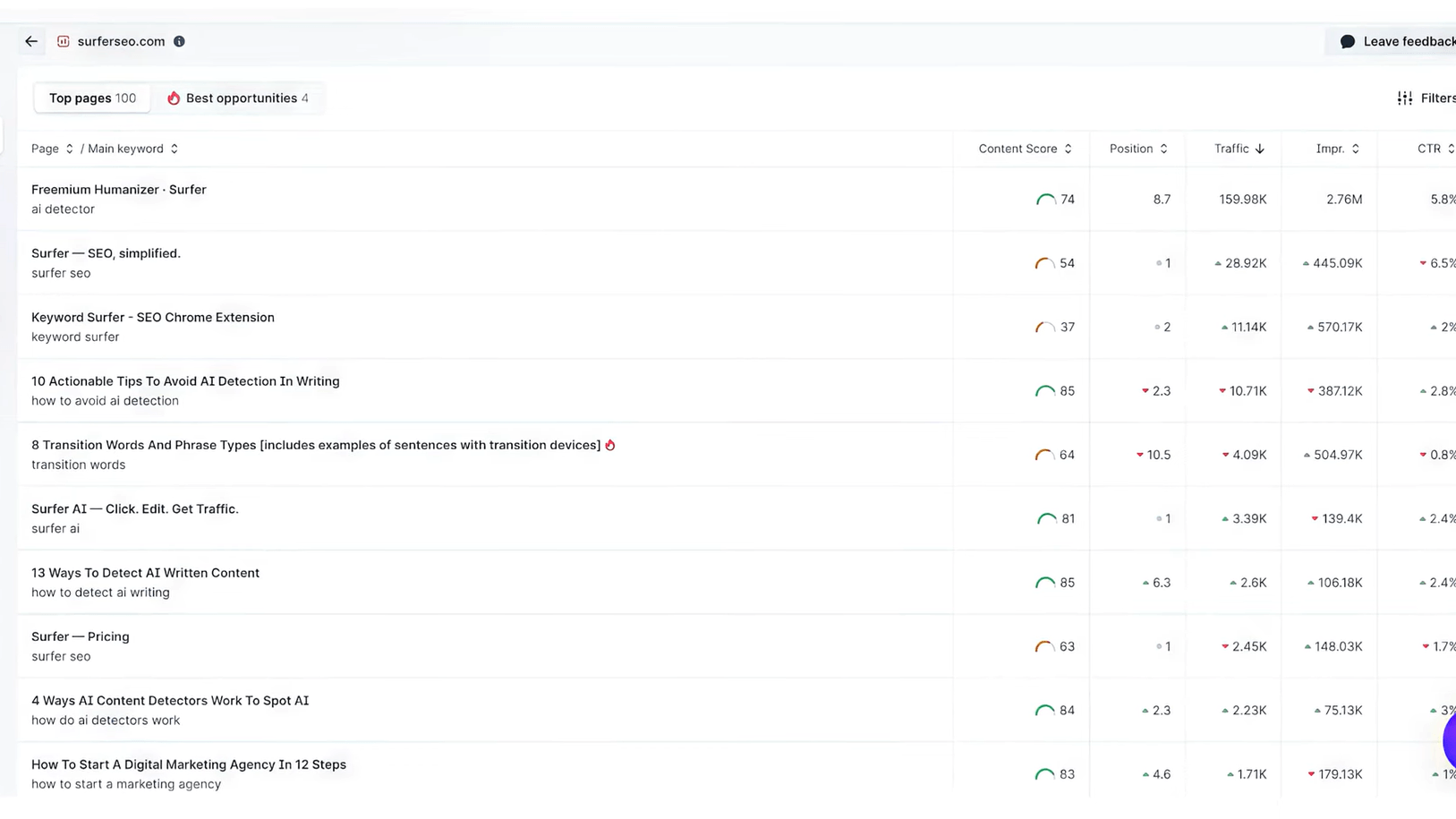
You run existing URLs through it and find pages that are under optimized relative to what is currently ranking. This is where Surfer earns loyalty from agency teams. It finds pages worth fixing instead of pages worth replacing.
4. Topical Map
The Topical Map helps you build content clusters around a topic instead of chasing single keywords. The concept is right. The execution is still rough in places, and I adjusted the output by hand every time.
5. AI Writing
Surfer’s built-in AI generates solid first drafts on well-covered topics. On niche or technical subjects, the drafts get weak fast. I used it as a starting point, not a final step.
Surfer SEO and Keyword Research
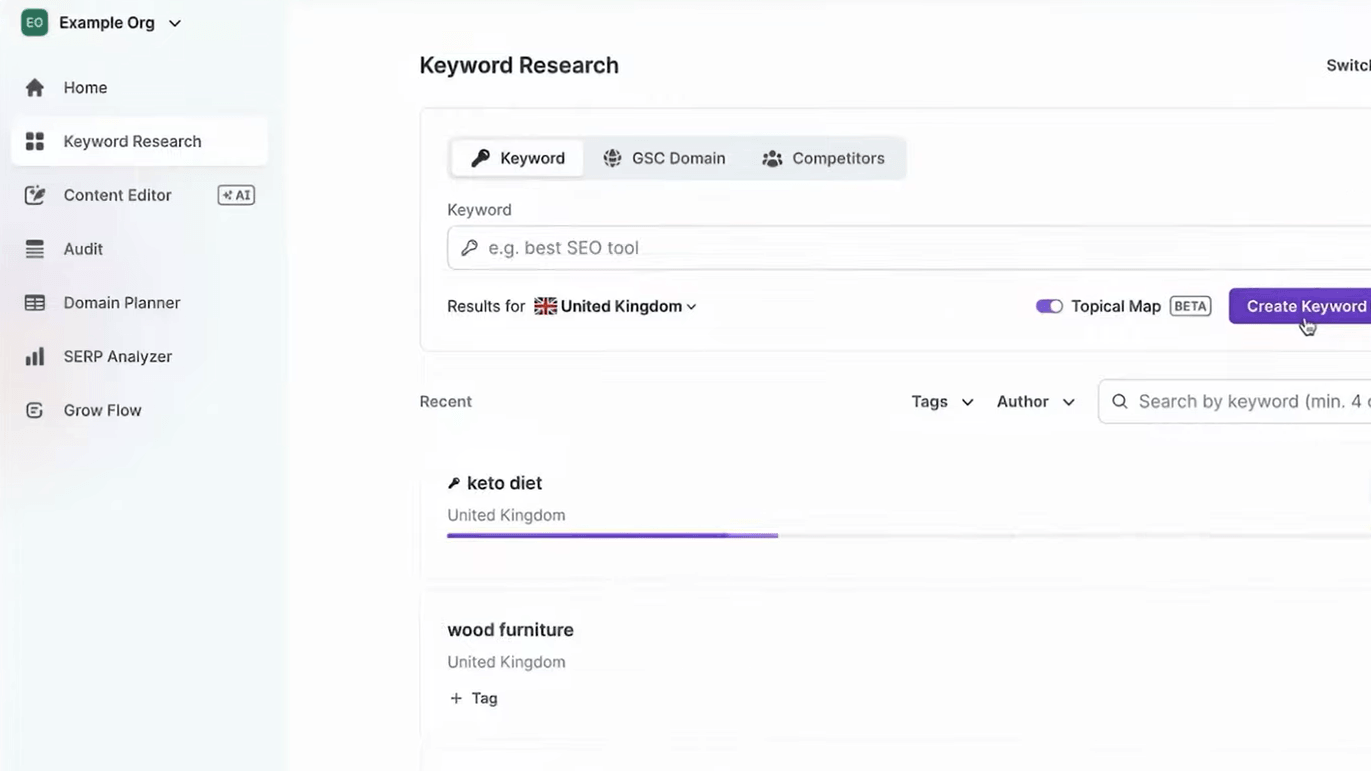
Surfer includes a lightweight keyword research tool built around content planning rather than deep SEO analysis. It works best for finding related terms, topical clusters, and target keyword gaps connected to content planning workflows.
Compared to tools like Ahrefs and Semrush, the keyword research depth is limited. For a direct comparison of content optimization versus traditional SEO research, see my detailed Surfer SEO vs Ahrefs review.
Surfer has less historical search data. Weaker competitive analysis. But for planning blog posts and content structure, it is useful enough inside the broader Surfer workflow. Think of it as a drafting aid, not a research platform.
What Surfer SEO Actually Feels Like During Daily Content Work
The first week feels like having a map. You open the Content Editor, pull up your keyword, and Surfer lays out what the top-ranking pages have in common. Word counts. Headings. NLP terms. Structural patterns. That structure is useful when you are staring at a blank document and not sure where to start.
By week two, the map starts to feel like a cage. You are writing toward a score instead of writing toward a reader. I noticed the shift on day eleven, when I rewrote a paragraph not because it was unclear but because it was missing a phrase Surfer flagged. The phrase was not wrong. It just was not mine.
The content score is the emotional center of the tool. That score becomes a target, and targets change how you write. Not always for the better.
| Benefit | Drawback |
|---|---|
| Provides a clear content structure | Can encourage score chasing |
| Helps identify important topic coverage | May reduce originality |
| Speeds up content creation | Can make articles feel formulaic |
| Removes guesswork from optimization | Easy to focus on metrics instead of readers |
| Useful for beginners and teams | Requires discipline to preserve your voice |
Surfer SEO Features That Matter in Real Workflows
The Content Editor is where most users spend nearly all of their time. It shows target word count ranges, heading counts, NLP keyword suggestions, and a live score that updates as you write. In my NLP accuracy check across thirty articles on well-covered topics, the term suggestions were useful on twenty-one of them. On niche or newer subjects, the suggestions got thin fast.
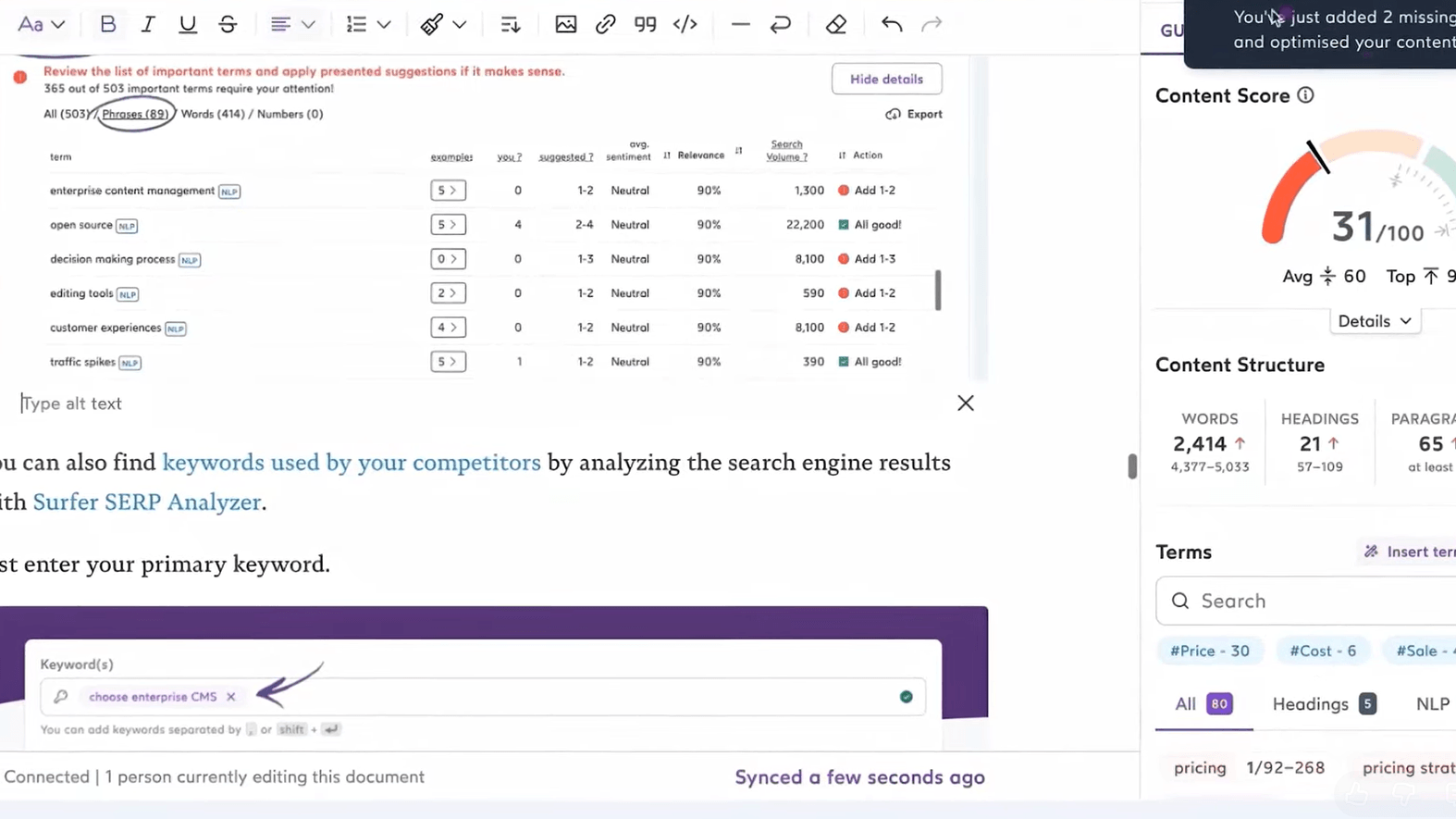
The SERP Analyzer is the feature I reached for most during research. It breaks down the top twenty results for a keyword and shows what they share structurally. Word count. Backlinks. Header depth. Page speed. For competitive research before writing, it saved me a real hour on most articles.
Content Audit is where Surfer earns loyalty from agency teams. You run existing URLs through it and find pages that are underoptimized relative to what is currently ranking. In my first audit pass, I found six posts that needed structural updates, not full rewrites. Three of those had been sitting flat for over a year. The audit tool is especially useful for optimizing existing content that already has impressions but weak rankings — instead of rewriting from scratch, I used it to improve content structure, internal link placement, and on-page optimization signals on older posts. That is a real find.
The Topical Map tool is newer and still rough. The concept is right — build content clusters around a topic rather than chasing single keywords in isolation — but it sometimes suggests clusters that overlap or miss gaps a human planner would catch. I used it as a starting point and adjusted by hand each time.
Does Surfer SEO Actually Help Rankings?
| Metric | Surfer-Optimized Articles | Control Group |
|---|---|---|
| Articles Tracked | 45 | 45 |
| Test Duration | 90 Days | 90 Days |
| Domain | Same Domain | Same Domain |
| Keyword Difficulty | Similar | Similar |
| Publishing Frequency | Same Cadence | Same Cadence |
| Average Ranking Change | +4 Positions | Minimal Change |
| Data Source | Google Search Console | Google Search Console |
| Measurement Method | Average of Final 30 Days | Average of Final 30 Days |
| Conclusion | Consistent Positive Lift | Baseline Performance |
In my 45-article ranking test — tracking position changes on Surfer-optimized articles against a matched control set over ninety days, same domain, similar keyword difficulty, same publishing cadence — the optimized set moved an average of four positions higher. I used Google Search Console position data, averaged across the final thirty days of the window to smooth fluctuation. That is not a clean lab experiment. SEO has too many variables for that. But the gap held consistently enough that I stopped treating it as noise.
The honest answer is: it probably helps. Surfer gives you structural signals about what Google is rewarding for a given query right now. Acting on those signals improves your odds. It does not remove the uncertainty. It just makes the uncertainty smaller.
Surfer is a probability tool, not a ranking machine. Walk in expecting a score of 80 to guarantee a first-page result and you will be disappointed by week six. Walk in expecting a faster, more structured path to competitive content and you will stay.
Why Surfer SEO Can Make Writing Feel Robotic
This is the section most Surfer reviews skip. It is the one that matters most.
Score obsession sets in fast. In my third week I tracked how many times I checked the content score mid-article. On a single two-thousand word post, the answer was thirty-one times. Thirty-one. That number tells you something real about how this tool changes the writing experience.
The problem is not that scores are wrong. It is that optimizing for a score and writing for a reader are not the same goal. Higher scores do not always create better articles. Sometimes they create articles that look like every other article ranking for that keyword. SERP sameness is a real output of optimization tools used without judgment.
The writers who stay with Surfer longest are the ones who use the score as a floor, not a ceiling. Hit the minimum. Then write for the person. That balance is harder to hold than it sounds.
What Surfer SEO Actually Does Well
Surfer works best as an on-page SEO and content optimization tool rather than a full SEO platform. Its strength is helping publishers optimize content structure, headings, NLP coverage, and search intent alignment based on what is already ranking in search results. That is a specific and real thing to be good at.
It gives you structure when you have none. The SERP Analyzer alone is worth serious time on competitive keywords. The audit tool finds fixable pages faster than any manual process I have run.
To be fair, the tool earns its cost most clearly when you already have a writing process. It layers on-page optimization on top of something that exists. It does not create a process from nothing. That distinction matters for beginners.
Where Surfer SEO Starts Becoming Frustrating
Pricing is where frustration starts for most solo users. The entry plan is not cheap, and the limits on Content Editor runs and tracked keywords add up fast at any real publishing volume. I hit my plan limits twice in thirty days and had to decide each time whether to wait or pay more. That friction is real.
The AI writing tools are useful but inconsistent. I ran the built-in AI on eight articles. Three drafts were worth editing. Five I rewrote from nothing. That hit rate is not strong enough to trust at volume.
The learning curve is steeper than the marketing suggests. Most new users will spend their first week unsure which number to trust and which workflow to follow. That week costs real time.
Surfer SEO Pricing Breakdown
| Plan | Best For | Monthly Price | Biggest Limitation |
|---|---|---|---|
| Essential | Solo bloggers | ~$89/mo | Tight usage limits |
| Scale | Agencies and teams | Higher | Expensive for small teams |
| Enterprise | Large teams | Custom pricing | Overkill for small publishers |
Annual plans offer a real discount. If you are committed to the workflow, take the annual rate. If you are still testing, the monthly option exists but costs more per month than the entry tier deserves.
There is no free trial that gives you full access to the Content Editor. The demo is limited enough that you cannot properly judge the tool without paying first. Worth knowing before you sign up.
Is Surfer SEO Worth It in 2026?
Who Should Use Surfer SEO
Affiliate publishers running volume. If your site publishes ten or more articles a month and rankings drive revenue, Surfer gives you a structural edge that compounds over time. The more content you run through it, the clearer the patterns get.
SEO agencies managing multiple clients and writers will find the audit, brief, and scoring tools worth the fee on time savings alone. Consistency across a writing team is one of the hardest things to hold at scale. Surfer helps hold that line.
SaaS content marketers publishing for organic growth are also a strong fit. Long-form comparison and educational content in crowded SERPs is exactly where on-page optimization earns its cost.
Who Should NOT Use Surfer SEO
Casual Bloggers
If you publish once or twice a month, the pricing does not justify the volume. The time spent learning the tool will outweigh the gain at low frequency. A cheaper keyword research tool covers what you actually need.
Creative-First Writers
The optimization pull fights creative rhythm every time you open the editor. Some writers try Surfer and leave within two months. That is the honest outcome for this audience. The score system is in direct tension with voice-first writing.
Budget-Conscious Beginners
The entry tier has real limits, and you will hit them. If you are still building a content process and do not yet know which keywords move your site, paying $89 a month to optimize structure is the wrong order of operations.
People Expecting Automatic Rankings
A score of 80 does not move a page. Surfer improves your odds. It does not own the outcome.
Surfer SEO vs Frase
| Feature | Surfer SEO | Frase |
|---|---|---|
| Core strength | Optimization structure | Research and AI drafting |
| Content scoring | Strong | Moderate |
| AI writing | Moderate | Strong |
| SERP analysis | Excellent | Good |
| Brief creation | Good | Excellent |
| Best for | Optimization-first teams | Research-first writers |
| Pricing | Higher | More accessible |
Frase is the better tool if your main bottleneck is research and brief creation. Readers comparing both platforms can see my full Surfer SEO vs Frase comparison for a deeper breakdown of pricing, AI writing quality, optimization features, and workflow differences.
Frase gets you to a first draft faster, and the AI writing is more reliable on that step. Surfer is stronger on the optimization side, especially for teams that have a writing process and want to layer structure on top of it.
In practice, many agency teams use both. Frase for research and briefs. Surfer for scoring and on-page optimization before publishing. That combination is expensive but it covers the full content workflow. Which one you want on its own depends on where you lose the most time.
Surfer SEO vs ChatGPT
| Tool | Best Use |
|---|---|
| Surfer SEO | Optimization structure and scoring |
| ChatGPT | Drafting, ideation, restructuring |
| Human editing | Originality, judgment, voice |
ChatGPT does not replace Surfer. Surfer does not replace ChatGPT. They sit at different points in the same process. ChatGPT gets you to a draft. Surfer tells you whether that draft is shaped to compete. Human editing is what makes it worth reading.
The workflow I settled into: research with the SERP Analyzer, draft with ChatGPT using that structure as a frame, optimize with the Content Editor, then edit by hand for voice and judgment. That sequence is faster than any single tool alone. The speed gain is real.
Best Alternatives to Surfer SEO
| Tool | Best For | Better Than Surfer At |
|---|---|---|
| Frase | Research workflows | AI briefs and drafting |
| Clearscope | Editorial quality | Natural writing output |
| NeuronWriter | Budget optimization | Pricing for solo publishers |
| MarketMuse | Content strategy | Topic authority planning |
| Ahrefs | SEO research | Backlinks and data |
Frase is the strongest alternative for writers who need more research support. If you’re exploring multiple options, check out my complete guide to the best Surfer SEO alternatives. The optimization scoring is weaker but the overall workflow is more accessible, especially for solo creators who handle everything themselves.
Clearscope is the premium editorial option. It leans into content quality signals over raw optimization metrics, and the output tends to read less formulaic than Surfer-optimized content. It costs more and earns it for publishers who care as much about quality signals as ranking position.
NeuronWriter covers the core optimization workflow at a lower monthly cost. Another affordable option worth considering is Surfer SEO vs Scalenut, especially for users focused on AI-assisted content creation and budget-friendly optimization. It works well enough for solo affiliate publishers who do not need agency-level features. The interface is rougher but the core scoring is solid.
MarketMuse goes deeper on strategy than any of these tools. It is built for planning topical authority across a full site rather than optimizing a single article. For content strategists thinking at the site level, it belongs in the conversation alongside Surfer.
Ahrefs and Semrush both have content optimization tools now. Neither is as strong as a dedicated tool, but if you are already paying for one of those platforms, the built-in features cover basic needs without adding another subscription.
Final Verdict — Is Surfer SEO Actually Worth It in 2026?
Surfer SEO succeeds because it gives writers the feeling that ranking content is becoming measurable instead of invisible. That feeling is the real product. Not the NLP terms. Not the content scores. The reduction in the kind of uncertainty that makes SEO feel like guesswork for years on end.
Surfer works best when it supports a broader SEO strategy that also includes internal links, backlinks, technical SEO, and strong editorial judgment. Content optimization alone is not enough for sustainable search engine optimization. The tool knows its lane. The problem is when users expect it to own the whole road.
After thirty days, I found the tool useful and limited in the same ways. It speeds up the structural side of content work in a way that compounds with volume. It does not solve the harder problems — voice, originality, the judgment call of what a reader actually needs. Those stay with you.
The writers who get the most from it treat it as one input among several, not as a ranking machine. Used that way, it earns the monthly fee. Used the other way, it grinds writing flat by the end of month two.
Which one you want depends on what you are actually here for.
Related Reading
FAQ
For serious content publishers and SEO agencies, yes. The optimization tools and workflow structure save real time at volume. For casual or low-frequency bloggers, the monthly cost is hard to justify. The value scales directly with how much content you produce.
It improves your odds in a way that shows up in the data. In my 45-article tracking test, the Surfer-optimized set averaged four positions higher over ninety days. Better odds are not a guarantee, and SEO has too many variables for any tool to promise results. But the gap was consistent enough to matter.
For optimization and content scoring, yes. For research and AI-assisted drafting, Frase is the stronger tool. Many agencies use both at different stages. Which one is better depends on where your workflow breaks down first.
It can, if you treat NLP suggestions as rules rather than signals. Writers who use the score as a floor and write for the reader after hitting it keep their voice. Writers who optimize every sentence for the number end up sounding like every other article in the SERP.
Yes, for different reasons than before. ChatGPT handles drafting. Surfer handles the optimization structure that gives a draft a competitive shape. They work better together than either does alone.
With patience, yes. The learning curve is real and the first week feels slow. The tool rewards users who have basic SEO knowledge going in.
The NLP suggestions and structural guidance are reliable on established topics with strong SERP data. On niche or newer topics with thinner data, accuracy drops.