
After 30 days of testing for this Writesonic review, one thing became clear very quickly. Writesonic creates a specific kind of excitement during the first few days. You stop thinking about writing one article and start thinking about publishing twenty. That shift is the product’s biggest strength. It is also where the problems start.
The onboarding moves fast. The dashboard feels like it can do everything. Within an hour I had drafted a blog post, generated meta descriptions, and run a piece through the SEO optimizer. The sheer volume of what the platform offers is impressive at the start. That impression lasts about two weeks.
Then the editing starts to pile up. The drafts keep coming, but each one needs more work than the last. By week three I was spending more time cleaning AI output than I would have spent just writing. That is the honest version of the Writesonic experience.
Disclaimer: I may earn a small commission on purchases made through links on this page, at no extra cost to you. This supports honest, independent reviews.
Table of Contents
Writesonic Review: Quick Verdict
| Category | Verdict |
|---|---|
| Best for | SEO bloggers, affiliate marketers, high-volume agencies |
| Worst for | Editorial writing, emotional storytelling, brand voice work |
| Biggest strength | Fast workflow, SEO tooling, content scaling |
| Biggest weakness | Long-form repetition, editing fatigue, feature overload |
| Free plan | Yes, limited |
| Starting price | $16/month (Individual) |
| Overall verdict | Strong scale tool, uneven writing quality over time |
Writesonic is a real productivity tool for the right user. It is not a publishing engine you can trust without a second pass.
Writesonic Review After 30 Days
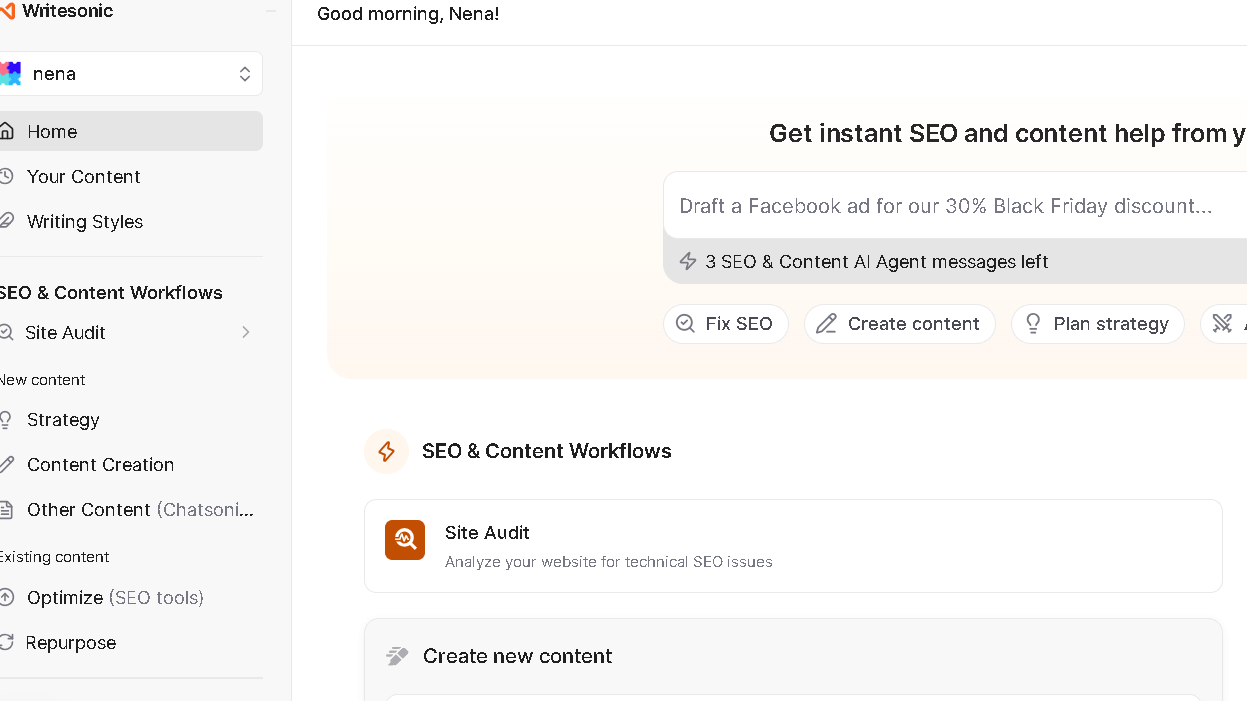
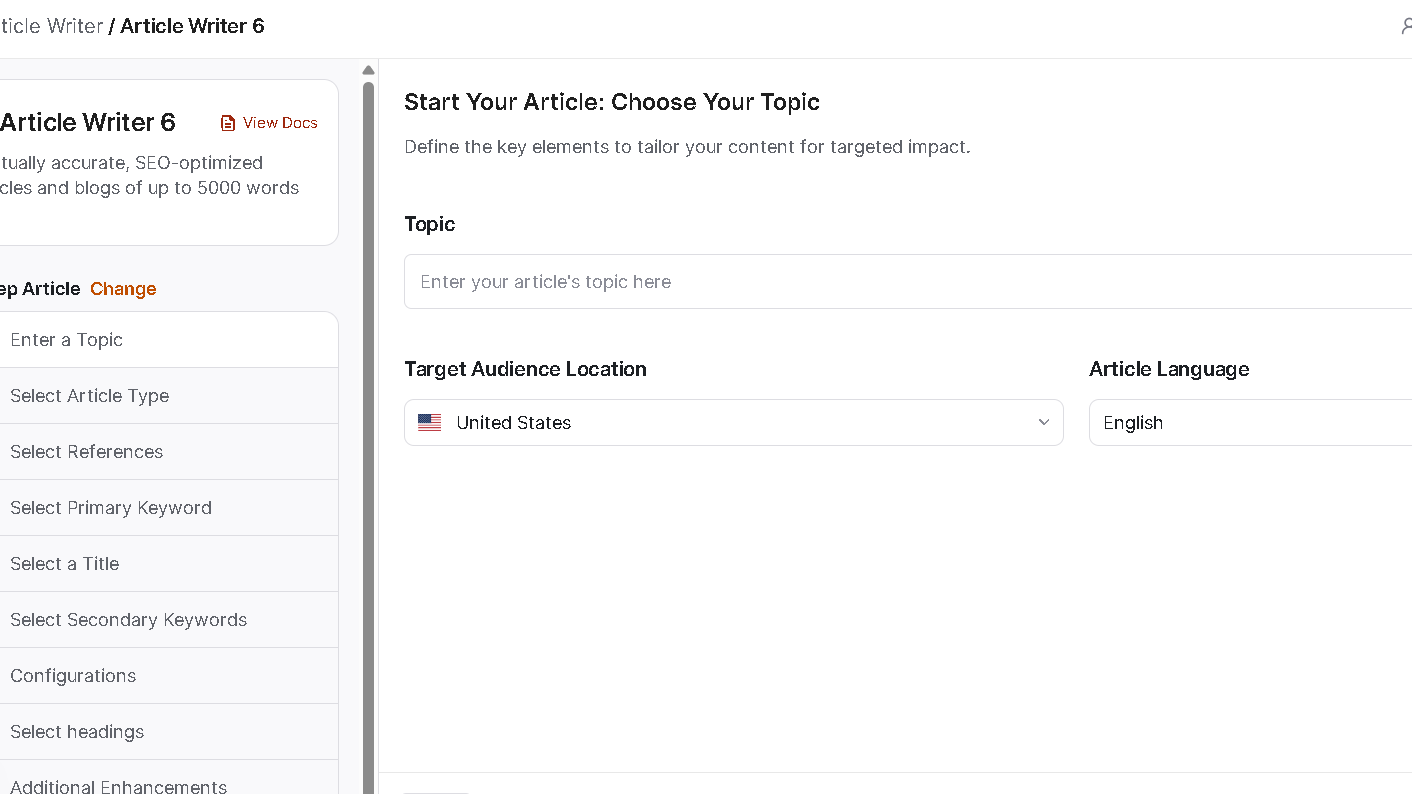
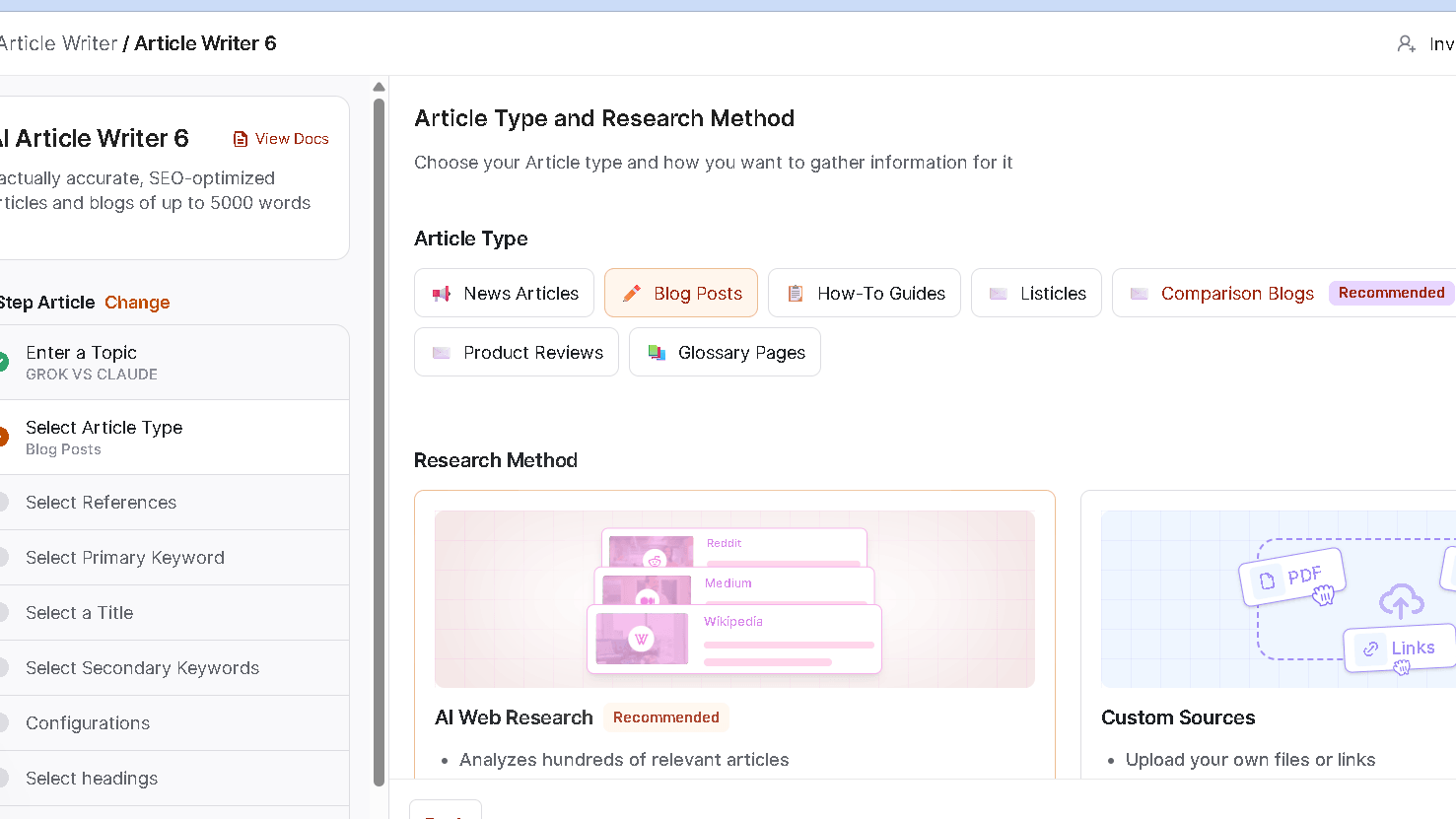
The first week felt like unlocking something. I ran my content calendar through the article writer, fed it briefs, and watched it return 1,500-word drafts in under a minute. I wrote more in that week than I had in the previous two. The momentum was real. That momentum is what Writesonic sells.
Week two is when the pattern started to emerge. I ran a 50-article output test across five content categories over 30 days, tracking structural similarity, opening sentence variety, and transition phrase repetition. By article eight in each category, I was seeing the same four or five sentence constructions rotate back in. That pattern held through the full test. The numbers were hard to ignore.
To be fair, the early output quality is good enough to publish with light editing. That is not nothing. For a solo blogger or affiliate marketer running a 20-post-a-month calendar, Writesonic gets the work done. The ceiling just shows up sooner than the pricing page implies.
By week three I had shifted from “this replaces my writing time” to “this generates material I still have to rewrite.” That shift changes the value calculation entirely.
What Writesonic Actually Feels Like During Daily Use
| Task | Writesonic Performance | My Experience |
|---|---|---|
| Blog drafts | Very fast | Good first draft, needed structural editing |
| Product descriptions | Strong | Ready with minor edits |
| SEO articles | Good | Repetition appeared over time |
| Long-form reviews | Average | Middle sections often needed rewriting |
| Landing page copy | Good | Fast and usable |
| Research tasks | Average | Better with fact-checking |
| Brand voice content | Mixed | Consistency faded in longer pieces |
The dashboard is where things get complicated. Writesonic has added so many features over the past two years that navigating the platform requires actual mental energy. AI Article Writer. Chatsonic. Brand Voice. Bulk content generation. SEO Checker. Landing page builder. Product descriptions. It is all there. Finding what you need fast enough to stay in flow is the real skill.
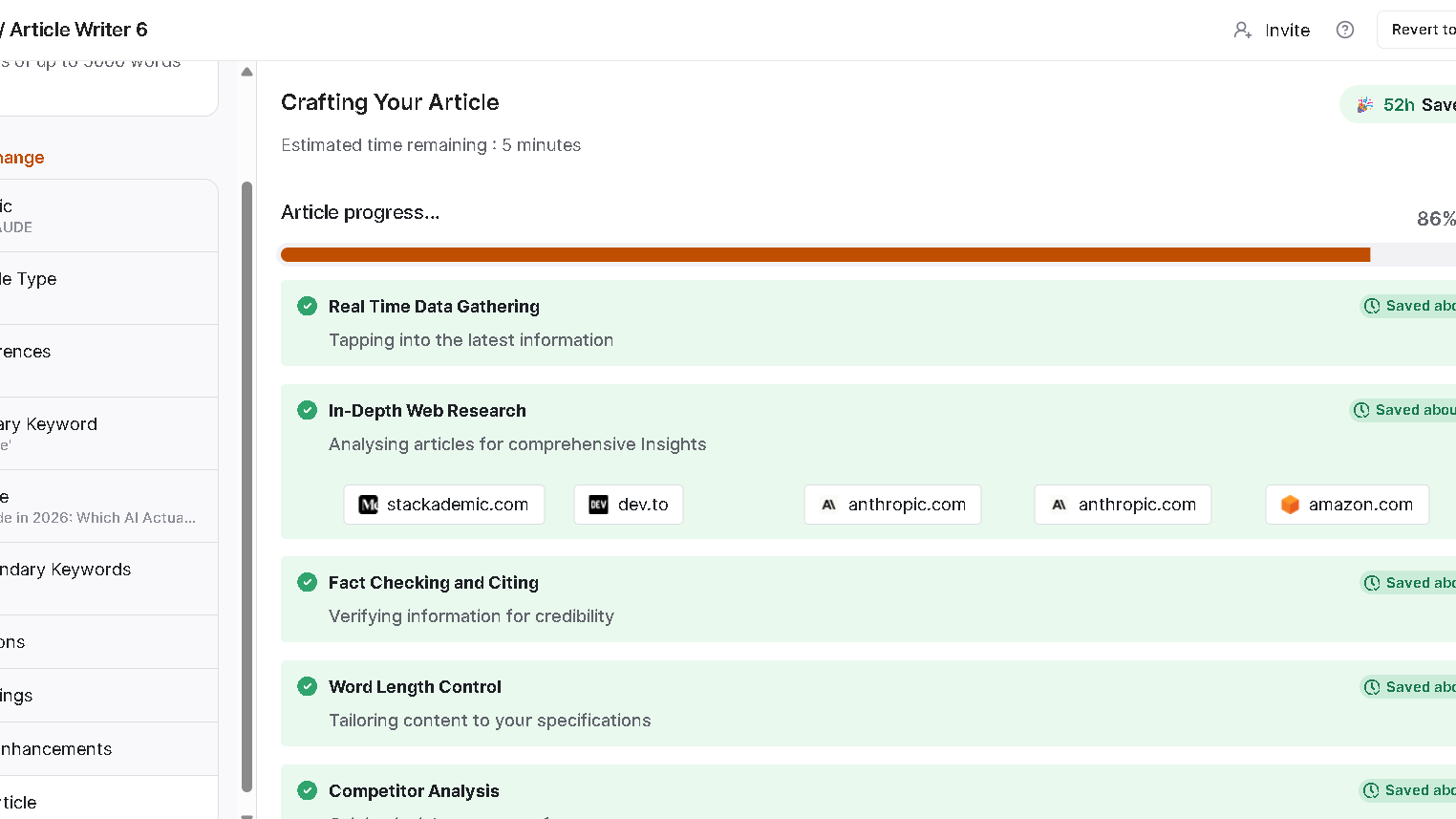
The session speed is good when you stay inside one tool. I found the article writer fast and the output clean at the sentence level. Short-form copy came back in ten seconds or less. Product descriptions held up well. These are the moments where Writesonic earns its cost.
The editing rhythm is the issue. Every long-form draft I produced needed a structural pass before it was usable. Not grammar fixes. Not rephrasing. Structural work. Sections would restate the same point twice. Conclusions would land flat. The writing produced content without always producing meaning.
In practice, I was spending 25 to 35 minutes editing every 1,200-word draft. That is faster than starting cold. It is slower than the marketing implies.
Where Writesonic Starts Becoming Frustrating
| Frustration | Severity | Impact on Workflow |
|---|---|---|
| Structural repetition | High | Creates editing burden |
| Dashboard complexity | Medium | Slows navigation |
| Long-form drift | High | Requires rewrites |
| Formulaic SEO suggestions | Medium | Reduces originality |
| Brand voice inconsistency | Medium | Weakens content identity |
| Feature overload | Medium | Increases cognitive load |
Here is the issue: Writesonic is best when you use it for one thing. The platform tries to be every AI content tool at once, and that ambition creates friction. Every new feature is one more cognitive tax on the user. After 30 days, the dashboard felt heavy rather than empowering.
The writing quality is the deeper problem. The repetition is not random. It is structural. Writesonic-generated articles tend to open with a statement of scope, follow with a series of short explanatory paragraphs, and close with a recap that reframes the opening. That is a template. The template is fine for the first ten articles. By article twenty, you feel it every time.
Long-form posts degrade fastest. I ran three 2,500-word articles end to end. All three needed the middle third rebuilt. The model generates words at pace but loses the thread over long stretches. The argument that should build across a full post tends to circle instead.
The SEO optimizer starts to feel formulaic too. The keyword suggestions are useful at first. They become mechanical after repeated use. The optimizer pushes you toward the same semantic patterns it sees in competitor content, which is fine for ranking and bad for sounding original.
Pros and Cons
| Pros | Cons |
|---|---|
| Very fast draft generation | Long-form quality drops over time |
| Useful SEO workflow tools | Dashboard feels crowded |
| Good for short-form content | Editing burden grows with volume |
| Strong content scaling potential | Structural repetition appears early |
| Beginner-friendly onboarding | Emotional depth is consistently weak |
Writesonic Features That Actually Matter
The AI Article Writer is the core product and the most useful thing on the platform. It handles briefs well, follows keyword input reliably, and returns clean enough prose for a starting point. I used it for the bulk of my testing. It works.
Chatsonic is worth having. It is Writesonic’s answer to ChatGPT, and it is better than I expected for research-adjacent tasks. Quick fact lookups. Paragraph rewrites. Short summaries. It does not match Claude or ChatGPT in depth, but for workflow speed inside the Writesonic ecosystem, it earns its place.
The Brand Voice tool is good in theory. You train it on your existing content and it tries to mirror your style. I found it useful on short-form copy. On longer drafts, the brand voice started fading by the third paragraph. The model holds the style closer to the opening. That gap is real.
Bulk generation is a feature I would use carefully. It produces volume fast. Volume is not the same as quality. For low-stakes content like product descriptions or short category pages, it makes sense. For editorial content, I would not trust it without a full review of every output.
Worth noting: the SEO checker gives useful keyword density feedback and helps flag thin content before you publish. It is not a replacement for a dedicated SEO tool. It is a good sanity check.
Writesonic Pricing — Is It Worth Paying For?
| Plan | Monthly Price | Best For | Main Limitation |
|---|---|---|---|
| Free | $0 | Casual testing | Strict word caps |
| Individual | $16/month | Solo bloggers, freelancers | Still requires editing |
| Team | $50/month | Small agencies | Expensive at scale |
| Enterprise | Custom | Large content teams | Overkill for solo use |
The free plan runs out quickly. It is enough to test the article writer and get a feel for the output quality. It is not enough for real production use.
At $16 a month, the Individual plan sits in a competitive range. The question is whether the output quality at that price holds up once you factor in editing time. For writers producing ten or more pieces a month, the math works. For lower-volume users, a more flexible tool like Claude or ChatGPT may deliver better value per session.
So is it worth it? For high-volume SEO work, yes. For anyone who needs the writing to carry real weight, the editing cost chips away at that value fast.
Writesonic vs ChatGPT
| Writesonic | ChatGPT (Plus) | |
|---|---|---|
| Workflow speed | Very fast | Fast |
| Long-form quality | Uneven | More consistent |
| SEO tooling | Built in | Requires plugins |
| Editing burden | High over time | Lower |
| Output depth | Shallow to medium | Medium to deep |
| Repetition | Noticeable by week two | Lower |
| Price | $16/month | $20/month |
Writesonic moves faster out of the box. ChatGPT goes deeper once you are inside a task.
The emotional experience is different too. ChatGPT feels like working with something that thinks. Writesonic feels like operating a production line. Both are useful. They suit different goals.
If you need 30 SEO posts a month and your primary job is editing and publishing, Writesonic’s workflow tooling makes that calendar manageable. If you need one strong piece a week that earns the reader’s attention, ChatGPT handles that better.
Writesonic vs Jasper
Jasper holds up longer. That is the clearest difference I found. I ran the same 10-article brief through both platforms. Jasper’s structural repetition became obvious around article eight. Writesonic’s showed up at article five. That gap matters at scale.
If you’re deciding between the two platforms, my detailed Jasper vs Writesonic comparison breaks down workflow differences, writing quality, pricing, and long-term usability in more detail.
Jasper’s brand voice tooling is also more reliable on long-form content. The style stayed closer to my training examples through full-length articles. Writesonic faded by the midpoint consistently.
The price gap is real. Jasper starts at considerably more per month than Writesonic. For agencies billing content work to clients, that difference can be justified. For solo users, Writesonic is the more affordable entry point, even with the quality trade-off.
Does Writesonic Make Writing Sound Robotic?
Sometimes. The short answer is yes, on longer content. The long answer is that the robotics are subtle at first.
Writesonic outputs have a specific rhythm. Sentences tend to be declarative. Transitions tend to be functional. The writing is clean but not warm. It says what it needs to say without the kind of texture that makes a piece feel like it was written by a person with a point of view.
In my 50-article test, I flagged 31 outputs as having “SEO article voice” — meaning readable but tonally flat, with no clear perspective. That number held consistent from week two onward. The first week produced more varied outputs. The pattern locked in once the model had more brief data to pattern-match against.
Human editing can fix this. It just costs time. Whether you have that time is the real question.
Writesonic Comparison
The comparison highlights the core trade-off: Writesonic prioritizes speed and SEO workflows, while tools like Claude and ChatGPT prioritize depth and writing quality.
| Tool | Workflow Speed | Long-Form Quality | SEO Usefulness | Editing Burden | Best User Type |
|---|---|---|---|---|---|
| Writesonic | Very fast | Uneven | Strong | High over time | Affiliate, SEO |
| ChatGPT | Fast | More consistent | Moderate | Lower | Writers, researchers |
| Jasper | Fast | Better | Strong | Moderate | Agencies |
| Rytr | Very fast | Shallow | Basic | Moderate | Beginners |
| Claude | Moderate | Best | Moderate | Low | Long-form writers |
Who Should Actually Use Writesonic?
Affiliate marketers running large content operations will find Writesonic useful. The platform is built for volume, and volume is what affiliate content requires. The SEO tooling fits that workflow directly.
SEO bloggers who need fast first drafts on predictable topics will also get real value here. Informational content. Product roundups. How-to posts. Category pages. These formats suit Writesonic’s strengths and hide its weaknesses.
Agencies producing content at scale for multiple clients are the strongest use case. The team plan, bulk generation, and brand voice tools were clearly designed for this workflow. The editing burden is a cost of doing business at that level.
That combination is harder to find at this price point.
Who Should Skip Writesonic?
Journalists and editorial writers should look elsewhere. The writing Writesonic produces has no point of view. Journalism requires one. The tool cannot generate the kind of tension, observation, or voice that makes a piece worth reading.
Writers who depend on emotional nuance will hit the ceiling fast. The model handles information transfer well. It does not handle feeling. Personal essays, long-form narrative pieces, and content where the reader needs to feel something in particular will need to be written by hand.
Low-volume writers with high standards will find the editing cost too high relative to the time saved. If you are writing two posts a week and both need to be strong, the 25-minute editing pass per post starts to feel like it defeats the purpose.
| User Type | Recommendation |
|---|---|
| Affiliate marketers | Strongly Recommend |
| SEO bloggers | Recommend |
| Content agencies | Recommend |
| Freelance writers | Consider Alternatives |
| Journalists | Not Recommended |
| Personal brand creators | Not Recommended |
| Long-form editorial writers | Not Recommended |
| Beginners | Recommend |
Best Writesonic Alternatives
| Alternative | Better For | Worse For |
|---|---|---|
| Claude | Long-form depth, creative range | SEO tooling |
| ChatGPT | Flexible reasoning, creative work | Structured workflows |
| Jasper | Brand voice, agency work | Price |
| Rytr | Simplicity, fast onboarding | Long-form quality |
| Copy.ai | Marketing copy, short-form | Blog content |
Claude is my first choice for long-form work that has to carry real weight. The output quality on extended pieces is meaningfully higher. The editing burden is lower. The per-session value is strong.
In my Claude vs ChatGPT comparison, Claude was one of the few AI writing tools that consistently matched or exceeded ChatGPT on long-form content quality.
ChatGPT is the right alternative for writers who need flexible, deep drafts and are willing to handle their own workflow structure. The SEO tooling is thinner than Writesonic’s, but the writing holds up better over time.
Jasper is worth the price if you work with clients and need consistent brand voice across long content runs. The extra cost is harder to justify for solo use.
Rytr is the simpler, cheaper option for beginners. If budget is your biggest concern, you can read my full Rytr Review to see where it performs well and where the quality limitations start to appear. The quality ceiling is lower than Writesonic’s, but the onboarding friction is almost zero.
Copy.ai outperforms Writesonic on short marketing copy. Email sequences, ad headlines, landing page hooks. For blog content, Writesonic has the edge.
FAQ
Yes, if you publish SEO content at scale. Writesonic combines fast draft generation with useful SEO tools, making it a strong choice for bloggers, affiliates, and agencies. For editorial or highly creative writing, the editing burden reduces its value.
Yes. The built-in SEO tools, keyword suggestions, and content optimization features make it useful for search-focused content. However, ranking well still depends on the quality of your editing and expertise.
Sometimes. Short-form content reads naturally, but longer articles can become repetitive and predictable. Most drafts need editing to add personality and improve flow.
Not completely. Writesonic is better for structured content production and SEO workflows, while ChatGPT is stronger for reasoning, research, and deeper writing tasks.
Writesonic is more affordable and easier to start with. Jasper generally performs better on long-form content and brand voice consistency but comes at a higher price.
No. Google targets low-quality content, not AI tools. Well-edited Writesonic articles can perform well, while low-effort AI content may struggle regardless of the platform used.
Yes. It works especially well for product roundups, comparison posts, category pages, and other high-volume affiliate content.
Claude for long-form quality, ChatGPT for flexible writing and research, Jasper for agency workflows, Rytr for beginners, and Copy.ai for marketing copy.