
This Jasper AI review starts with a simple observation: Jasper AI feels impressive immediately. Most AI writing tools do. The harder question is whether the workflow still feels helpful once you are editing article 20 instead of article two, and whether the platform is solving your actual problem or adding a new layer of complexity on top of the one you already had.
I ran Jasper for 30 days across blog content, short marketing copy, and email sequences. I set up the brand voice system properly, used the templates, tracked editing time and factual accuracy across 40 articles. This is what that testing looked like in practice.
Table of Contents
Jasper AI Review: Quick Verdict
| Category | Verdict |
|---|---|
| Workflow structure | Excellent |
| Brand voice consistency | Strong for teams, limited for solo users |
| Editing burden | Moderate — lower than most, not zero |
| Long-form quality | Good short-form, formulaic in long-form |
| Solo publisher value | Mixed |
| Team and agency value | High |
| Price-to-value for individuals | Hard to justify above $39/month |
Jasper is a content operations layer built on top of OpenAI and Anthropic models. It does not have its own proprietary AI. What you are paying for is the scaffolding around those models — brand voice controls, marketing templates, team workflows, campaign builders. That is a useful product for a specific buyer. It is an expensive product for everyone else.
Jasper AI Review After 30 Days
The first thing to understand about Jasper in 2026 is what it has become. It started in 2021 as a ChatGPT-style AI writing assistant aimed at any content creator who wanted faster drafts. It has since repositioned itself as an enterprise marketing platform. The brand voice system, team governance features, campaign builder, and multi-channel workflow tools are all aimed at content teams with three or more writers, not at solo publishers drafting blog posts on weekends.
That repositioning matters because it changes who the product is actually designed for. The features that make Jasper valuable at a marketing agency with five writers managing three brand accounts are not the same features that justify $49 a month for a solo affiliate publisher. The platform has narrowed. The marketing has not kept up with that narrowing, which is why there is a persistent mismatch between what Jasper promises in its ads and what most individual users find when they sit down and start generating content.
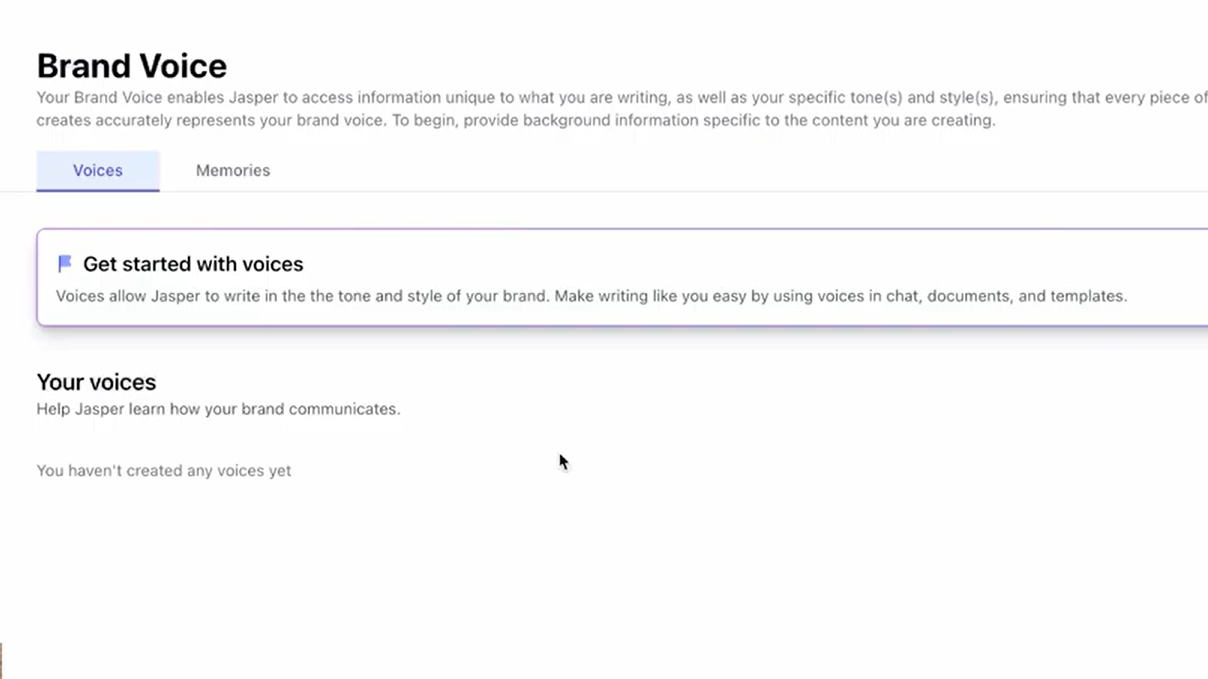
I set up the brand voice system on day one. The setup requires uploading at least ten pieces of existing content — ideally more — plus a written description of tone, formality level, and vocabulary preferences. That process took about 45 minutes and the result was a brand profile that genuinely shaped subsequent output in a noticeable way. The consistency was better than I expected. The limitation became clear by week two.
Jasper learns how you sound. It does not learn what you know. That distinction is the most important thing to understand about the brand voice feature, and it is the thing most reviews do not name clearly.
What Jasper AI Actually Feels Like During Daily Use
The dashboard is cleaner than most competing tools. Documents, templates, brand voice settings, campaigns, and knowledge assets are organized in a way that becomes intuitive after a few days. There is a learning curve, especially if you want to use the full feature set, but the interface itself is well-designed once you settle into it.
What Jasper Reduces vs What Jasper Still Requires
The reality of daily use after the novelty wears off
✅ What Jasper Reduces
- Blank-page anxiety
- Prompt-writing effort
- Content structure decisions
- Brand voice inconsistency
- Short-form content creation time
- Daily decision fatigue
❌ What Jasper Still Requires
- Specific product information
- Human expertise
- Fact verification
- Prompt refinement
- Long-form editing
- Editorial judgment
Jasper removes many small decisions from the writing process, but it does not remove responsibility. As articles get longer, the work shifts from creating content to reviewing, verifying, and refining it.
Most users start with the template library. Jasper includes more than 50 templates covering blog outlines, email sequences, ad copy, product descriptions, and social content. The real benefit is not the templates themselves. It is the reduction in decision fatigue. Instead of figuring out how to prompt an AI for a cold email, you start from a structure already designed for that task.
The prompting burden does not disappear, though. Any content that needs specific details, examples, or product knowledge still requires careful input. By week three I found myself reusing the same prompt additions across projects. The extra work was small, but it never fully went away.
The bigger issue appears in long-form content. Jasper tends to favor clear topic sentences, three-point lists, and familiar transitions. Early on that structure feels helpful. After a dozen articles, the pattern becomes easier to spot. By article 25, I was editing out recurring phrases almost automatically. The problem was not poor quality. The problem was predictability. What felt efficient at first gradually created a new editing task: removing the fingerprints of the template before readers noticed them.
Jasper’s Brand Voice System: Useful but Overestimated
What Jasper Learns vs What It Doesn’t Learn
The most important limitation of Jasper’s Brand Voice system
✅ What Jasper Learns Well
- Brand tone and personality
- Preferred vocabulary
- Sentence structure patterns
- Formality level
- Writing style consistency
- Voice alignment across teams
❌ What Jasper Cannot Learn
- Original expertise
- Industry experience
- Client insights
- First-hand testing
- Unique perspectives
- Human judgment
Jasper can learn how your brand sounds, but it cannot learn what your business knows. Voice can be automated. Expertise still comes from the person behind the keyboard.
The brand voice system is Jasper’s strongest feature and one of the few that consistently delivers on its promise. For teams with multiple writers, maintaining a consistent tone is harder than it sounds. Different people naturally write with different levels of formality, sentence structures, and vocabulary choices. Over time, even detailed style guides tend to be ignored or interpreted differently. Jasper solves part of that problem by embedding the voice profile directly into the content generation process.
In my testing, the consistency was genuinely impressive. The platform now supports training on video and audio content alongside written examples, which helps it capture tone more effectively than most competitors. Compared to ChatGPT’s custom instructions, the results felt more reliable because the voice settings are built into the workflow rather than depending on every user remembering to load the correct prompt.
The limitation appears once expectations become too ambitious. Jasper can learn how your brand sounds, but it cannot learn what your business knows. It can imitate tone, preferred vocabulary, and writing style. It cannot contribute original experience, industry expertise, or unique insights from real client work. Those things still have to come from the person behind the keyboard.
That distinction matters because many users expect brand voice to solve a broader content problem than it actually can. Jasper starts from a better position than a blank prompt, but it does not remove the need for human judgment or expertise.
One statistic from Jasper’s own 2026 marketing research stood out to me: only 41 percent of marketers using AI tools said they could clearly prove ROI. For a company selling AI-powered marketing workflows, that is a surprisingly modest number. It suggests that even the best AI systems still require careful implementation before their value becomes obvious.
The Real Problem Appears During Editing
The editing burden is what this review is really about. Not the generation speed. Not the template count. The honest accounting of what happens after the draft lands in your editor.
| Period | Average Editing Time | Main Issue |
|---|---|---|
| Week 1 | 12–15 minutes | Minor cleanup |
| Week 2 | 15–18 minutes | Repetitive phrasing appears |
| Week 3 | 18–22 minutes | Structural edits increase |
| Week 4 | 20–25 minutes | Formulaic patterns become obvious |
| After 30 Days | 22+ minutes | Editing becomes normalized |
The difference between Jasper’s short-form and long-form output became obvious during testing. For short-form content such as emails, ads, and product descriptions, Jasper consistently saved time. Most drafts needed only minor tone adjustments and fact-checking before they were ready to use. This is where the template system and brand voice controls create the most value.
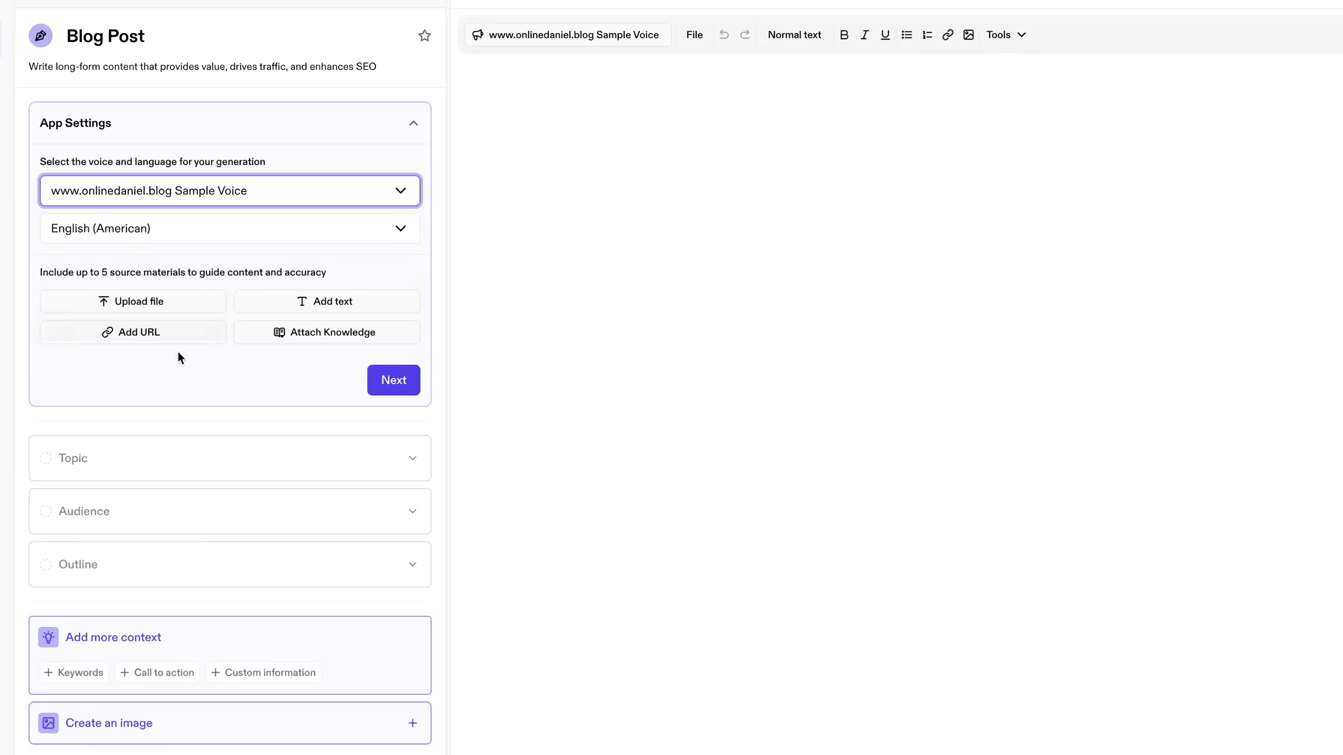
Long-form content was different. The drafts arrived faster, but the editing burden grew with article length. Several of my longer pieces required structural changes, including moving sections, cutting repetitive content, and rewriting transitions that followed predictable patterns. The problem was not poor writing. The problem was formulaic writing. After enough articles, the structure became easy to spot.
Factual accuracy also required attention. Like most AI tools, Jasper occasionally produced outdated statistics, questionable references, or confident claims that needed verification. I found factual issues in multiple drafts, making fact-checking a necessary part of the workflow rather than an optional final step.
The bigger issue appeared over time. The mistakes did not become less common. I simply became more accustomed to them. By the end of the month, I was accepting issues that I would have edited more aggressively during the first week. That normalization is one of the hidden costs of using AI at scale.
Can Jasper AI Actually Reduce Content Workload?
Yes, for a specific type of workload. Short-form marketing copy — ad scripts, email sequences, product descriptions, social captions, cold outreach — is where Jasper delivers the clearest and most consistent time savings. The templates are purpose-built for these formats, the brand voice consistency reduces tone-correction passes, and the output length is short enough that structural problems do not accumulate.
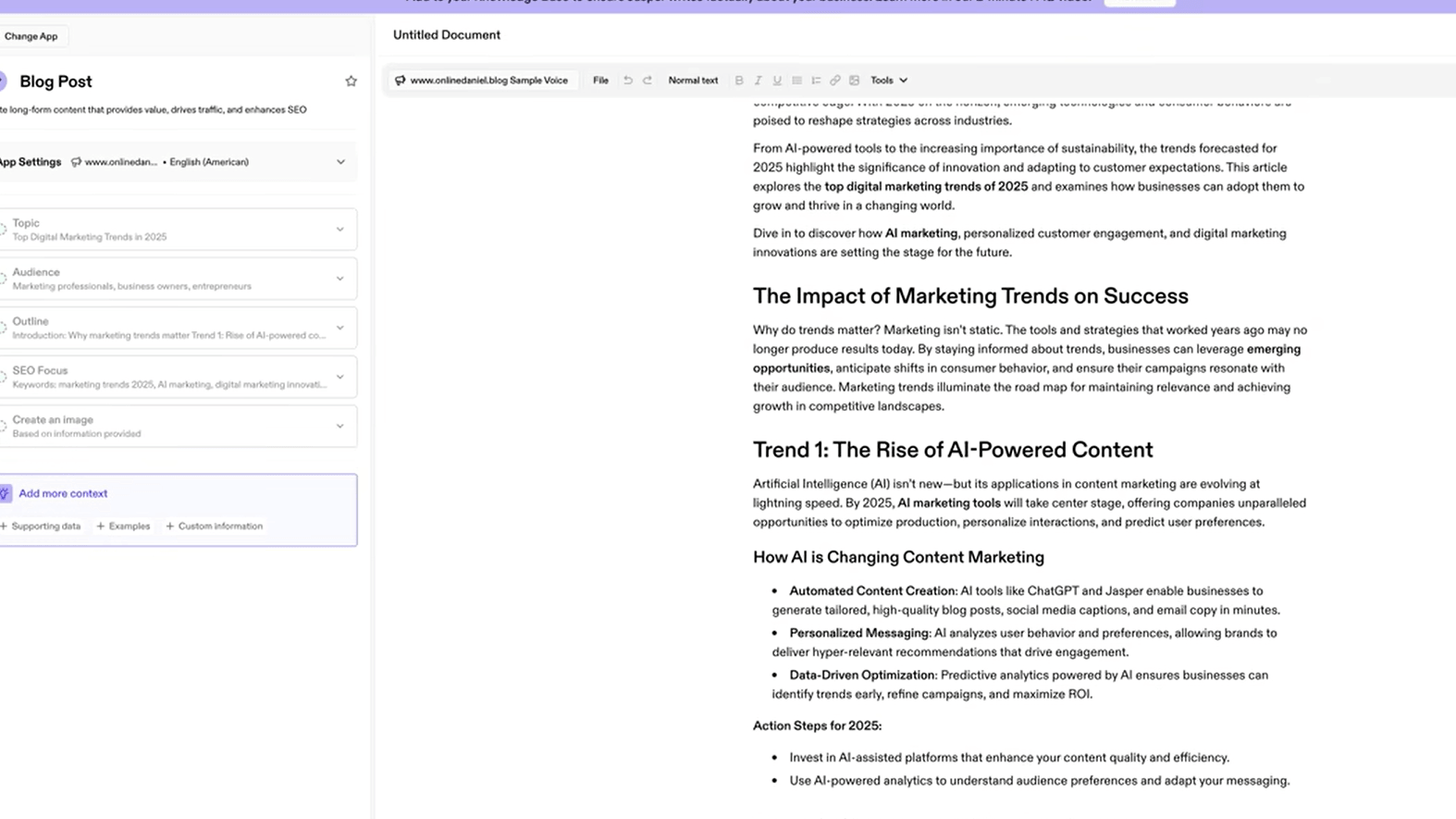
For blog content and long-form articles, the workload reduction is real but smaller than the marketing suggests. The draft arrives faster. The structure is better than a blank page. The editing still takes time, and for longer pieces it takes more time than the generation saved if you are working alone.
The campaign builder is the most interesting development in Jasper’s 2026 feature set. You describe a campaign goal, target audience, key messages, and channels, and Jasper generates coordinated content across email, social, ad copy, and landing page simultaneously. The strategic alignment across channels was genuinely impressive in my testing — pieces that referred to the same offers in the same language without manual coordination. One reviewer noted the output required around 30 percent revision, which matches what I found. The campaign builder saves planning time more than it saves writing time.
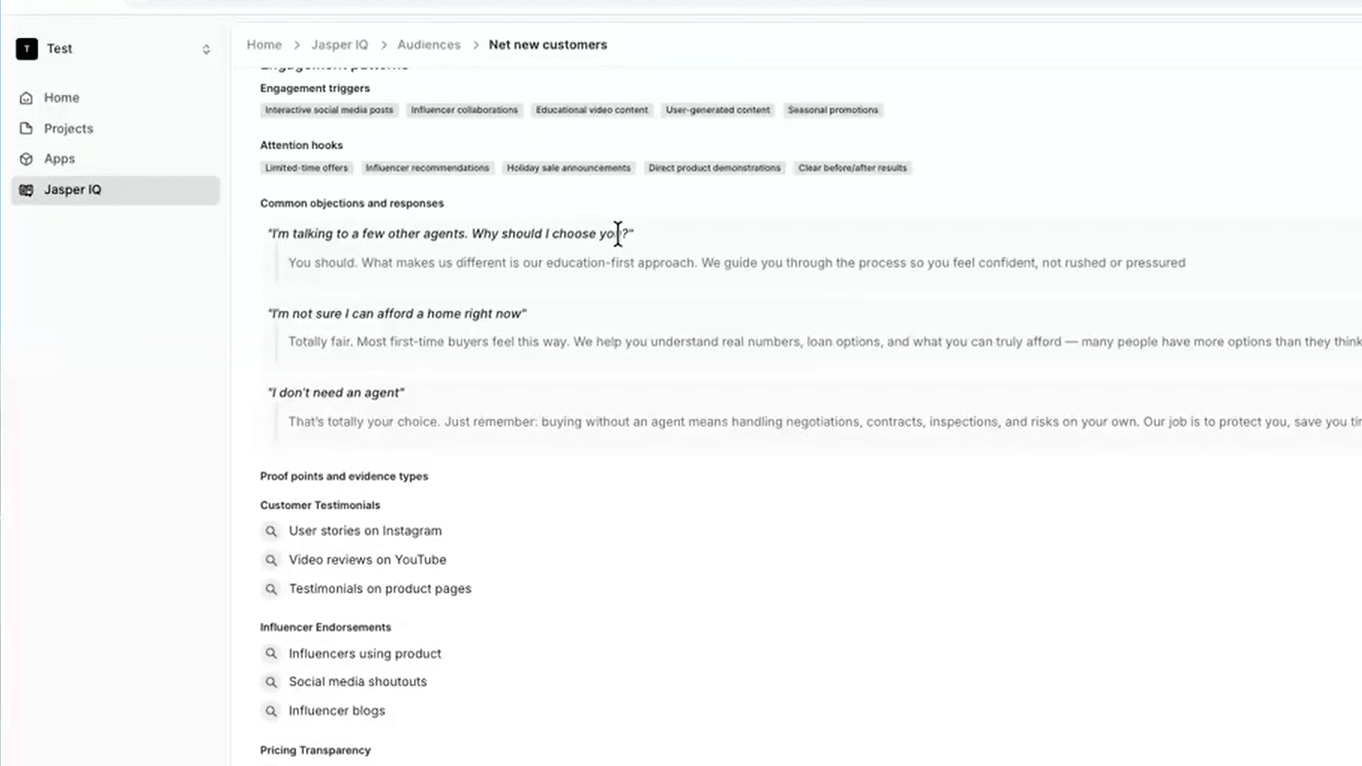
What Jasper does not do is reduce the need for human judgment about what to say, to whom, and why. It reduces the effort of saying it correctly once you have made those decisions. That is a real value. It is a narrower value than most users expect going in.
Jasper AI for SEO Content
Jasper no longer offers the Surfer SEO integration that was once a major part of its workflow. As a result, SEO publishers now need to handle optimization separately, whether through dedicated SEO platforms, content optimization tools, or their own research process.
In practice, this changes the workflow more than it changes the writing quality. Jasper remains a content creation platform rather than a complete SEO solution. Keyword research, competitive analysis, content gap discovery, and optimization decisions still happen outside the editor. For teams already using specialized SEO tools, this separation is not a major problem. For users hoping to manage the entire publishing workflow in one place, it adds an extra step.
The broader SEO reality has not changed. Google does not penalize content simply because AI helped create it. What Google’s quality systems continue to target is thin, repetitive, and low-value content published at scale. This is where Jasper’s long-form limitations become relevant. Left largely unedited, the output can develop predictable patterns and formulaic structures that reduce originality over time.
Edited content is a different story. When Jasper output is combined with original insights, real-world experience, fact-checking, and strong editorial review, it can perform just as well as content written through any other workflow. The tool itself is not the deciding factor. The quality of the final article is.
Jasper AI for Teams and Agencies
This is where Jasper’s value proposition is clearest and most defensible. The brand voice engine, the knowledge asset library, the shared document workspace, and the team governance features together solve a real problem that ChatGPT cannot solve without significant technical overhead: multiple writers producing content that sounds like it came from one voice, without every writer needing to load a system prompt and hope everyone else is loading the same one.
For agencies managing multiple brands, the ability to maintain separate voice profiles per client is operationally significant. Switching between brand contexts in Jasper is a menu selection. In ChatGPT it is a new conversation with a new system prompt and no enforcement that the next writer uses the same one. That friction compounds across a team working quickly.
The seat-based pricing creates its own friction at scale. At $69 per seat per month on the Pro plan, a team of five costs $345 a month before any enterprise negotiation. That is meaningful but not prohibitive for an agency where content production is a core revenue activity. Where it becomes hard to justify is for teams where Jasper usage varies significantly by member — some heavy users, some occasional — because the per-seat cost does not flex with actual usage.
Jasper’s own data from their 2026 marketing report is worth noting here: only 41 percent of marketers using AI tools say they can prove ROI from them. For teams evaluating a $345-a-month subscription, that ROI uncertainty is the real decision variable.
Is Jasper’s ROI Easy to Prove?
| Observation | What It Means |
|---|---|
| 41% of marketers report being able to prove AI ROI | Most teams still struggle to measure the real business impact of AI tools |
| Jasper Pro costs around $69 per seat per month | A five-person team can spend roughly $345 per month before enterprise pricing |
| Brand voice and team governance are Jasper’s biggest differentiators | These features create value that is harder to replicate with basic AI tools |
| Content generation alone is easy to replace | ChatGPT, Claude, and other tools can produce similar drafts at a lower cost |
| ROI depends on usage consistency | Teams that use Jasper daily are more likely to justify the subscription |
| The biggest risk is paying for unused structure | Expensive workflow features lose value if only a few team members use them |
Bottom line: Jasper’s value is easiest to justify when brand consistency across multiple writers is a real business problem. For smaller teams and solo publishers, the cost savings from cheaper AI tools often outweigh Jasper’s workflow advantages.
What Changes After Publishing 30-Plus Articles
| Early Experience | After 30 Articles |
|---|---|
| Templates feel helpful | Templates become visible |
| Output feels fresh | Patterns become noticeable |
| Editing feels light | Structural editing grows |
| Brand voice feels impressive | Knowledge limitations become obvious |
| Workflow feels faster | Trade-offs become clearer |
The clearest change is that the template structure becomes visible in a way it was not at the start. When every blog post opens with the same kind of orienting paragraph, moves through three main sections with the same transition language, and closes with the same summary structure, you start recognizing the shape of the output rather than reading the content. That recognition is a problem for editorial quality control. It is also a problem for readers who encounter multiple pieces from the same site — the consistent structural fingerprint of the template becomes audible across the archive.
The second change is expectation drift. By article 30, the standards I applied at article five had shifted. This is not a Jasper-specific problem. It happens with any AI tool used at volume. What Jasper-specific about it is that the template structure creates a consistency that makes the drift harder to notice. The pieces feel finished because they follow the correct pattern. They may not actually be finished in the ways that matter for the reader.
The third change is harder to quantify but worth naming. After 30 days of generating and editing Jasper output, I found myself thinking about what the template would produce for a given topic before thinking about what I would actually want to say about it. That is a subtle inversion of the writing process that becomes more pronounced the more you use the tool. It is not a reason to avoid Jasper. It is a reason to use it as a starting point rather than a destination.
Jasper AI Pricing
| Plan | Monthly Billing | Annual Billing | Key Features |
|---|---|---|---|
| Creator | $49/month | $39/month | 1 user, 1 brand voice, 50+ templates, 50 knowledge assets, email support |
| Pro | $69/month | $59/month | Up to 5 users, 3 brand voices, 10 knowledge assets, team collaboration, Canvas editor |
| Business | Custom | Custom | Unlimited brand voices, API access, SSO, dedicated support, custom workflows |
Note: There is no permanent free tier. A 7-day free trial is available on Creator and Pro plans. Jasper raised prices by over 300 percent for existing customers in 2023 with minimal notice — that pricing history is documented on Trustpilot and G2 and remains a trust issue for users evaluating long-term platform commitment.
The honest pricing analysis: Creator at $39 a month on annual billing is defensible for content publishers producing more than 20 articles a month where the brand voice setup genuinely reduces tone-correction passes. For casual users or anyone who can prompt ChatGPT or Claude effectively, $39 a month buys a template library you do not need.
Pro at $59 a month is where Jasper starts delivering its full value proposition, and it is the plan that requires a team to justify the cost. The additional brand voices, collaboration features, and team workflow tools make it a different product from Creator. The per-seat pricing makes it grow fast.
Jasper AI vs ChatGPT
| Jasper AI | ChatGPT Plus |
|---|---|
| Structured marketing workflows | Flexible general-purpose prompting |
| Brand voice enforcement across teams | Custom instructions per user, no enforcement |
| 50+ purpose-built templates | No templates, prompt from scratch |
| $49–$69/month per seat | $20/month per user |
| No free tier | Free tier available |
| Formulaic in long-form | Higher ceiling on prose quality |
If you’re deciding specifically between these two tools, my Jasper vs ChatGPT comparison goes deeper into workflow differences, pricing, editing burden, and which platform delivers better value after long-term use.
Both Jasper and ChatGPT run on OpenAI’s models, plus Anthropic’s Claude models for some tasks. You are not buying better AI when you buy Jasper. You are buying the platform layer around the AI. For teams that need that layer — brand controls, workflow automation, multi-user governance — the price premium has operational justification. For individuals who can build their own prompting habits, the premium is paying for structure they do not need.
ChatGPT’s main weakness in team contexts is context loss. You explain the brand voice in one session and it forgets in the next. Every new conversation is a blank slate, and maintaining consistency across a team using shared ChatGPT accounts is a manual discipline problem, not a technical solution. Jasper solves that specific problem. That solution costs $29 to $49 more per seat per month than ChatGPT Plus.
Pros and Cons
Jasper AI Pros
| Strength | Detail |
|---|---|
| Brand voice consistency | Genuinely reduces tone-correction editing for teams |
| Template library | 50+ marketing-specific formats reduce prompt engineering burden |
| Campaign builder | Multi-channel content from a single brief, strong strategic alignment |
| Short-form quality | Ad copy, email sequences, product descriptions are strong |
| Team governance | Multi-user brand voice enforcement is hard to replicate cheaply |
Jasper AI Cons
| Weakness | Detail |
|---|---|
| Long-form is formulaic | Structural patterns accumulate in articles over 1,500 words |
| No real-time web access | Factual errors require verification on every output |
| No free tier | 7-day trial only; commitment required before meaningful testing |
| Expensive for solo users | $49/month for one brand voice is hard to justify for low-volume use |
| Pricing trust issue | 2023 price hike of 300%+ with minimal notice; still tracked by users |
Who Should Actually Use Jasper AI
| User Type | Fit | Why |
|---|---|---|
| Solo Blogger | Moderate | Expensive for one person |
| Affiliate Marketer | Moderate | Templates help, cost hurts |
| Content Agency | Excellent | Brand voice solves real problems |
| Marketing Team | Excellent | Workflow structure matters |
| Freelance Writer | Good | Depends on volume |
| Enterprise Team | Excellent | Governance features justify cost |
Jasper makes genuine sense for marketing teams of three or more people producing brand content at scale, where voice consistency across writers is a documented problem with documented cost. Agencies managing multiple client brands, content departments where multiple contributors need to produce copy that sounds like one voice, and enterprise operations with compliance requirements around brand communication — these are the users Jasper was designed for.
For high-volume solo bloggers publishing 20 or more articles a month in a consistent niche, the brand voice feature and template library reduce enough editorial overhead to justify the Creator tier at $39 a month. That case is real but requires honest accounting of actual time savings against the subscription cost.
Who Should Probably Avoid Jasper AI
Solo publishers producing fewer than 15 articles a month will struggle to justify the cost against alternatives. A well-configured Claude or ChatGPT workflow can often produce stronger long-form content at a lower cost. My ChatGPT vs Claude comparison explores where each platform performs better for writing, research, and long-term productivity. The gap is not in the underlying AI.
Advanced prompt users — anyone who has built detailed system prompts, custom GPTs, or Claude projects around their writing workflow — will find Jasper’s structured approach more limiting than liberating. The templates are a shortcut for people who do not want to think about prompting. For people who already think about it well, templates are a constraint.
Users who need original long-form analysis, technical depth, or content that carries E-E-A-T weight through demonstrated expertise will find that Jasper cannot provide those things. Jasper learns how you sound. It cannot learn what you know. That distinction matters most for content that is supposed to rank because of what it says, not just how it says it.
Why Some Publishers Eventually Move Back to ChatGPT
The pattern is consistent enough to be worth naming. A publisher or small team subscribes to Jasper, builds a workflow around the templates and brand voice system, and then hits a wall around month four or five. The wall is usually one of three things.
First, the templates start feeling like constraints. Once you know what you want to generate, the structured workflow that felt helpful at the start begins to feel like extra steps between you and the output. The flexibility of a blank ChatGPT conversation becomes appealing again.
Second, the brand voice requires ongoing maintenance. New content examples need to be uploaded as the brand evolves. Voice guidelines need updating as the team’s approach shifts. Knowledge assets need refreshing. Each of these is a small task. Collectively they become a system to manage on top of the content system you were trying to simplify.
Third, the math changes. After a few months of comparing actual editing time and actual output quality against what Claude or ChatGPT produces with good prompting, the premium for Jasper’s scaffolding becomes harder to justify unless the team features are genuinely in daily use. For solo users this happens faster. For teams it depends on how deeply the workflow integrations have been built.
That migration back is not a failure of Jasper. It is a sign that the platform found its real ceiling for that user. Jasper is most valuable in a specific and narrow window: after a content operation has outgrown raw AI prompting but before it has built the internal systems and prompting discipline to replace the structure Jasper provides.
Best Alternatives to Jasper AI
ChatGPT Plus — $20 a month. Better raw prose quality for long-form with careful prompting. No brand voice enforcement across teams, but strong flexibility for individual users. Free tier available for testing.
Claude Pro — $20 a month. Better long-form coherence than Jasper in most comparisons. No marketing-specific templates, but higher ceiling on prose quality and factual reasoning. Strong for content that needs to carry analytical depth.
Writesonic — $39 a month on the annual Individual plan. Built-in SEO Checker and real-time web access make it a stronger choice for SEO-first solo publishers. Output quality variance is wider than Jasper. Lower brand consistency controls.
In my Writesonic review, I found it particularly useful for SEO-focused publishing because of its built-in web access and optimization tools, although output quality was less consistent than Jasper’s.
Copy.ai — Free tier available. Strong for short-form marketing copy at lower price points. Has moved toward sales automation workflows. Less suited for long-form publishing than Jasper.
Koala AI — From $9 a month. Purpose-built for SEO article generation. Closer to Writesonic’s use case than Jasper’s, with a lower entry price for solo publishers who need volume on informational content.
Notion AI — Integrated into Notion’s workspace. Useful for teams already using Notion for content management who want AI assistance without a separate subscription. Less specialized than Jasper but lower friction for existing Notion users.
Teams already using Notion may prefer an integrated workflow instead of a dedicated AI writing platform. My Notion AI vs ChatGPT comparison explores whether keeping AI inside your workspace is more productive than switching between separate tools throughout the day.
| Tool | Best For | Approx. Cost |
|---|---|---|
| Jasper AI | Teams needing brand voice governance | $39–$69/month per seat |
| ChatGPT Plus | Flexible prompting, general tasks | $20/month |
| Claude Pro | Long-form quality, factual depth | $20/month |
| Writesonic | SEO-first solo publishing | $39/month (annual) |
| Copy.ai | Short-form, free starting point | Free–$49/month |
| Koala AI | Bulk SEO article generation | From $9/month |
Is Jasper AI Worth It in 2026?
For the right buyer, yes. The brand voice system is the strongest version of that feature available in an AI writing platform. The campaign builder is a genuine workflow improvement for multi-channel marketing operations. The template library reduces prompt engineering burden for teams that do not want to develop that skill internally.
The right buyer is specific: a content team of three or more people, producing 15 or more pieces of content per month, where brand consistency across writers is a real and costly problem. At that scale, Jasper’s platform infrastructure delivers operational value that is hard to replicate with cheaper tools and prompting discipline alone.
For everyone outside that description — solo publishers, small teams with strong prompting habits, anyone producing fewer than 15 pieces a month — Jasper is paying for infrastructure aimed at a larger operation. Claude Pro or ChatGPT Plus at $20 a month produces equivalent or better raw output for the writing tasks most individual users actually need.
So is it worth it? Match the tool to your bottleneck. If your bottleneck is brand consistency across a team, Jasper solves it. If your bottleneck is output quality or editing burden for a solo workflow, the cheaper tools close the gap.
FAQ
For teams producing large volumes of branded content, yes. Jasper’s biggest advantages are its brand voice controls, team collaboration features, and structured marketing workflows. For solo publishers who are comfortable using ChatGPT or Claude, the value is less obvious. Much of what Jasper does can be replicated with strong prompting and a lower-cost tool.
More human than basic AI prompting, but not consistently human enough to avoid detection in long-form content. The output is clear and polished, but recurring structures and transitions become easier to spot as article length increases. Short-form content generally performs better.
For marketing workflows, brand consistency, and team use, Jasper has an advantage. For flexibility, general-purpose tasks, and overall value, ChatGPT is usually the stronger choice. The better tool depends on the workflow.
Yes, but not without editing. Content that includes original insights, verified facts, and human review can rank well. The tool itself is not the deciding factor. The quality of the final article is.
Jasper performs well for short-form marketing content. Long-form articles require more cleanup because recurring patterns become noticeable over time. Overall editing effort is moderate.
No. Jasper can learn how your brand sounds, but it cannot provide original expertise, real-world experience, or unique insights. Human knowledge remains the most valuable part of the content.