
At first glance, the Semrush vs BrightEdge debate seems straightforward. Both platforms promise stronger rankings, better visibility, and deeper search insight. The differences become obvious once a team starts using them every day.
One feels like a flexible marketing platform you can pick up and run with. The other feels like enterprise infrastructure that needs a full rollout before it pays off. I spent time inside both ecosystems, and the question most teams are really asking is not which one has more features. It is which one they will still want to use six months from now.
Disclaimer: I may earn a small commission on purchases made through links on this page, at no extra cost to you. This supports honest, independent reviews.
Table of Contents
Semrush vs BrightEdge: Nena’s Quick Verdict
| Category | Winner |
|---|---|
| Best overall | Semrush |
| Best for enterprise teams | BrightEdge |
| Best for agencies | Semrush |
| Best for SMBs | Semrush |
| Best reporting for executives | BrightEdge |
| Best value for money | Semrush |
| Easiest to adopt | Semrush |
| Best alternative to both | SE Ranking |
For most businesses, Semrush is the better choice because it is faster to learn, more affordable, and flexible enough to grow with your team. If you want a deeper look at the platform, read my complete Semrush Review. BrightEdge earns its price for large organizations that need governance, multi-domain control, and board-level reporting. If you are not sure which one describes you, you probably want Semrush.
Semrush vs BrightEdge: Quick Comparison Table
| Feature | Semrush | BrightEdge |
|---|---|---|
| Starting price | $139.95/month | ~$3,000+/month (custom quote) |
| Free trial | Yes (7–14 days) | No |
| Keyword research | Strong | Strong |
| Rank tracking | Yes | Yes |
| Site audit | Yes | Yes (ContentIQ) |
| Content optimization | Yes | Yes (Copilot) |
| Share of Voice | Business plan and up | Yes |
| AI features | Semrush One + AI Visibility Toolkit | DataMind, AI Catalyst, Autopilot |
| Reporting | Good | Excellent for enterprise |
| Best for | Agencies, SMBs, freelancers | Enterprise, Fortune 500 |
| Learning curve | Low to moderate | High |
| Contract type | Monthly or annual | Annual, negotiated |
What Changed When I Used These Platforms in Real Workflows
The first day inside Semrush is not complicated. You add a project, drop in a domain, and it starts crawling. Within a few minutes you have rank tracking, a site audit running, and a keyword gap report in front of you. That speed is important. It just drops you in.
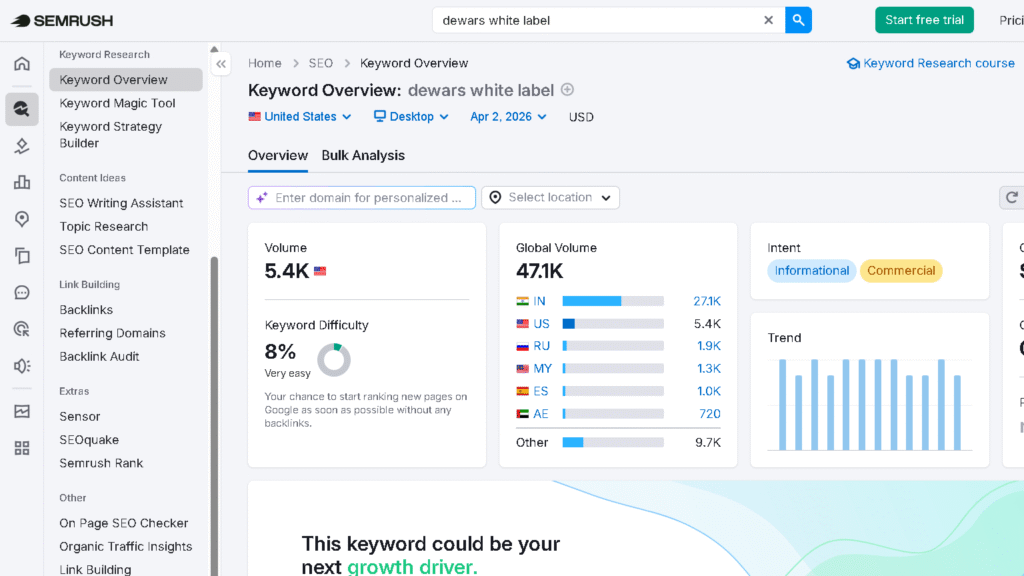
BrightEdge is a different experience. The onboarding is structured, often managed with the help of a customer success team. You are not expected to figure it out alone. That is partly because the platform is bigger, and partly because the contracts are large enough to justify white-glove setup. The first week feels slower. By week three, the depth starts to show.
What I noticed across repeated sessions in both platforms was a clear split in what each one rewards. Semrush generally retained project context well during repeated testing, which meant I could pick up where I left off without resetting filters or re-entering settings each time. BrightEdge rewarded patience. The data got more useful the longer I stayed inside it. Those are different things.
Semrush vs BrightEdge: Core Differences
The core difference is not a feature list. It is a philosophy. Semrush is built for people who want to move fast across many tasks. BrightEdge is built for organizations that want deep control over a large organic presence.
Semrush has expanded aggressively. The October 2025 launch of Semrush One bundled the classic SEO toolkit with an AI Visibility Toolkit, covering traditional rankings and AI answer appearances in one platform. That is a meaningful move. BrightEdge has its own AI layer called DataMind, which powers tools like AI Catalyst and Autopilot. Both platforms are now investing heavily in the same direction. The difference shows in who those AI features are built for.
Semrush Feels Like a Marketing Platform
Semrush gives you a wide surface. Keyword research, backlink analysis, site audits, content tools, social tracking, paid search data, and now AI visibility monitoring all sit inside one subscription. You can ignore most of it and still get real value from the parts you use.
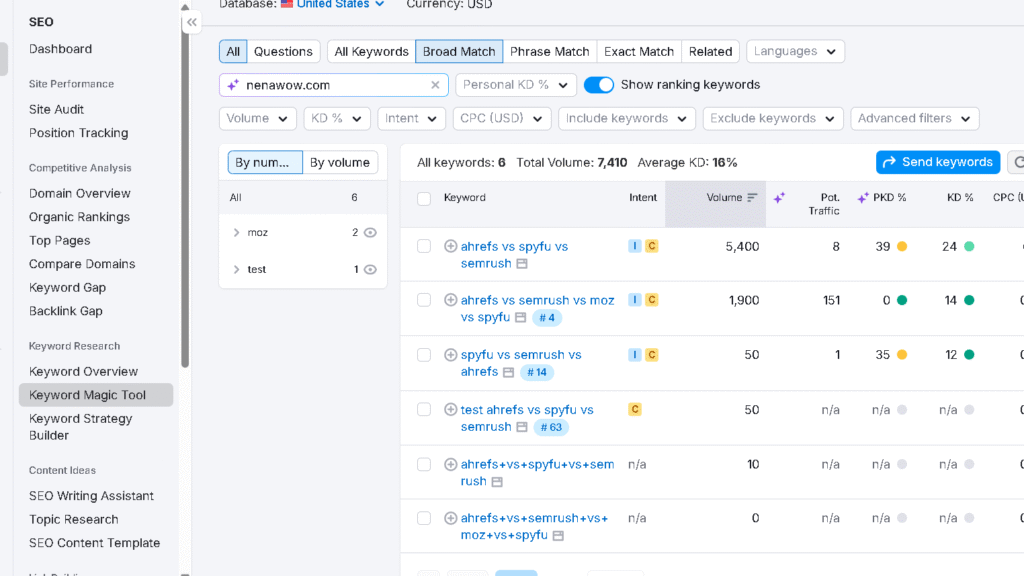
This is what makes it work for agencies and small teams. I ran a full keyword gap analysis and competitive site audit in under an hour on a fresh project. That is faster than I would like to admit, given what it used to take to produce similar output manually.
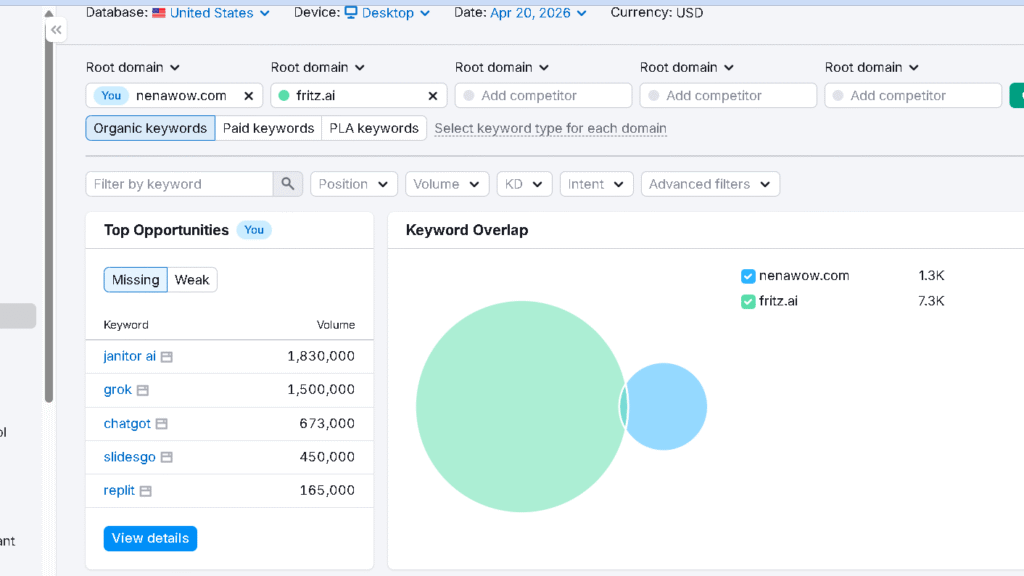
The Guru plan at $249.95 per month is where most agency users land. It adds historical data, content tools, and multi-location tracking. For a team managing ten to twenty client sites, that is a solid price-to-value ratio. The Business plan at $499.95 per month adds Share of Voice, API access, and higher limits.
BrightEdge Feels Like Enterprise Infrastructure
BrightEdge is not trying to be easy. It is trying to be complete. The platform is built for teams that manage hundreds of pages across multiple domains, need governance controls, and report organic performance to executives who want to see revenue impact, not keyword counts.
The reporting layer is very strong. BrightEdge generates executive-level reports that tie organic visibility directly to business outcomes. That framing matters in large organizations where SEO competes for budget against paid channels. It is hard to get that kind of output from Semrush without significant manual work.
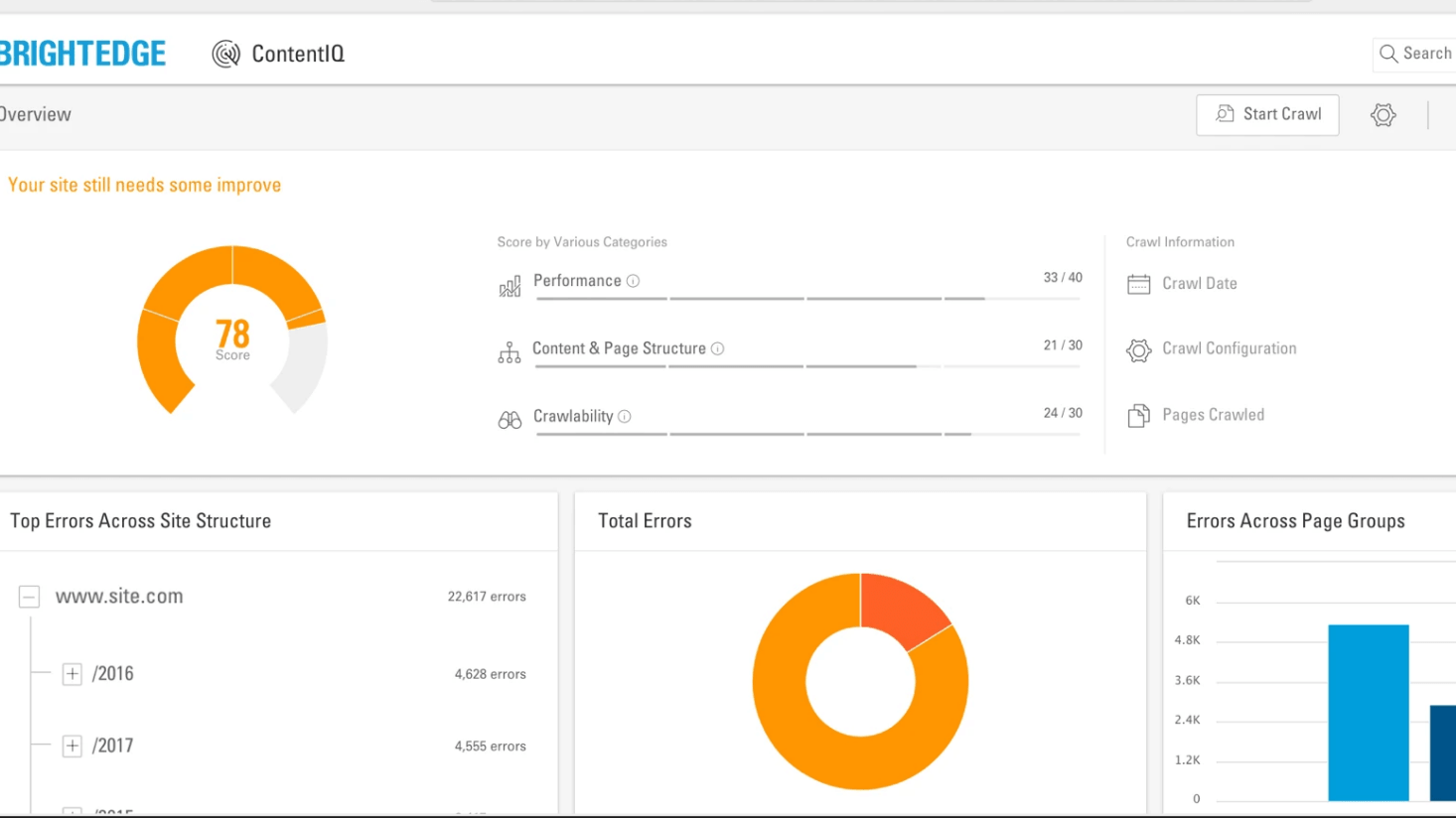
Tools like ContentIQ handle technical audits at scale. Autopilot handles some of the workflow burden that would otherwise fall on junior team members. The AI Catalyst surfaces demand patterns from customer behavior signals. These are real capabilities. The question is whether your organization is large enough to need all of them at once.
Keyword Research: Which Tool Actually Helps You Find Opportunities Faster?
| Workflow Step | Semrush | BrightEdge |
|---|---|---|
| Starting a new keyword list | Fast, intuitive | Requires more setup |
| Filtering by intent | Yes | Yes |
| Competitive gap analysis | Strong | Strong |
| Local keyword research | Yes | Yes |
| Historical trend data | Guru plan and up | Yes |
| Keyword clustering | Available via tools | Built into platform |
| Speed to first useful output | Under 10 minutes | 30 minutes or more |
Semrush wins on speed. The keyword magic tool returns large sets of filtered ideas quickly. You can sort by intent, difficulty, and volume and get to a working list fast. BrightEdge’s Data Cube is more powerful for large-scale keyword portfolios, but it takes longer to configure and interpret.
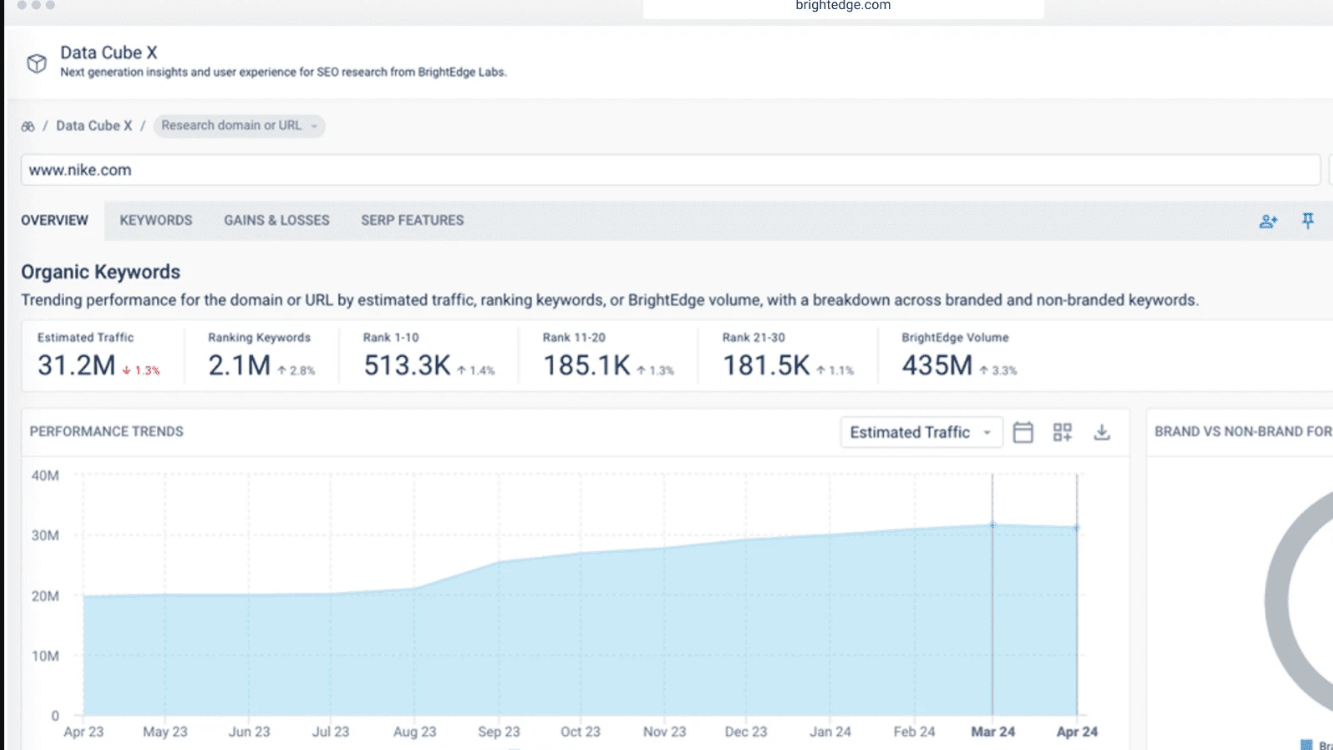
For a content team trying to build a new topic cluster in an afternoon, Semrush is the right tool. For an SEO director mapping keyword strategy across a 50,000-page site, BrightEdge gives more depth. The gap is real. It just depends which problem you have.
Rank Tracking and Visibility Monitoring
Rank tracking in Semrush is clean and reliable. Daily updates at the Guru plan and above, clear visual trends, and position history going back years. It covers local, mobile, and desktop without extra configuration.
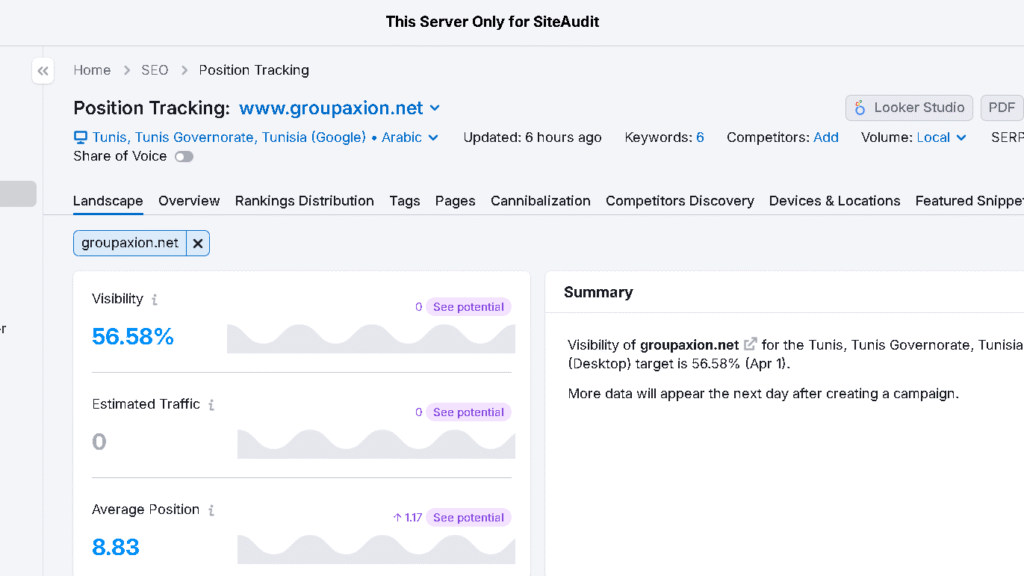
BrightEdge tracks share of voice across keyword sets, not just individual positions. That is a meaningful difference for enterprise teams. Knowing that your brand owns a certain share in a given keyword category, and watching that number shift over time, is more useful to a CMO than knowing you moved from position 8 to position 6 on a single term. Both types of data matter. But they answer different questions for different audiences.
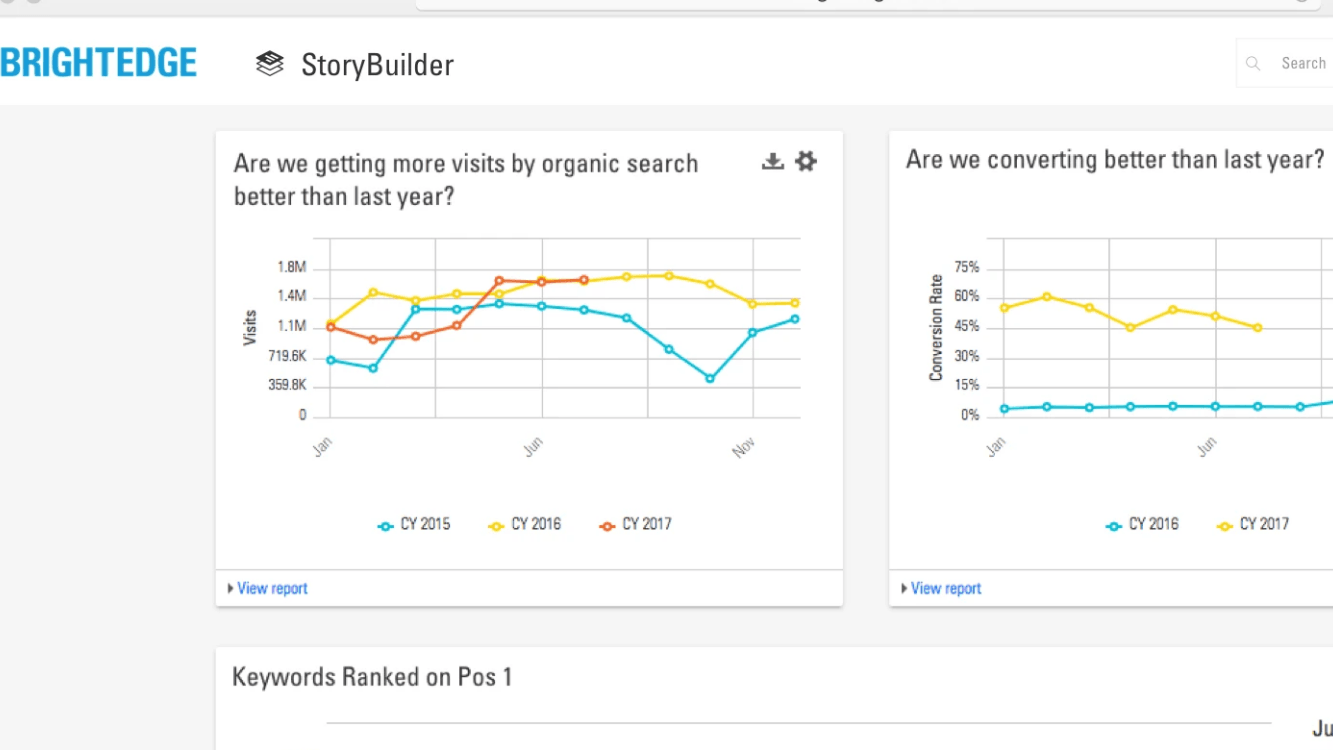
During my testing period, BrightEdge’s rank data felt current. Competitive moves I was tracking showed up quickly, which surprised me given the platform’s size. Semrush matched that pace on most days too. The gap in data speed is smaller than the price difference would lead you to expect.
Content Optimization and Workflow Burden
Semrush has a solid content marketing toolkit starting at the Guru plan. The SEO Writing Assistant scores content against top-ranking pages, flags readability issues, and suggests related terms. Content teams can work inside it without a long ramp-up.
BrightEdge Copilot does more, but it asks for more setup to do it. It connects content performance to business metrics, tracks how specific pages contribute to pipeline, and can feed into editorial planning at scale. For a 10-person content team at a growth-stage startup, this is too much. For a content org at a financial services company managing thousands of product pages, it starts to make sense.
The question is not which platform has better content tools. It is how much of that tooling your team will actually use every week.
Site Audits and Technical SEO
Semrush’s site audit is one of its strongest features. It is fast, well-organized, and covers over 140 checks. The interface groups issues by priority and links directly to documentation explaining each one. A developer with no SEO background can interpret the output without a lot of hand-holding.
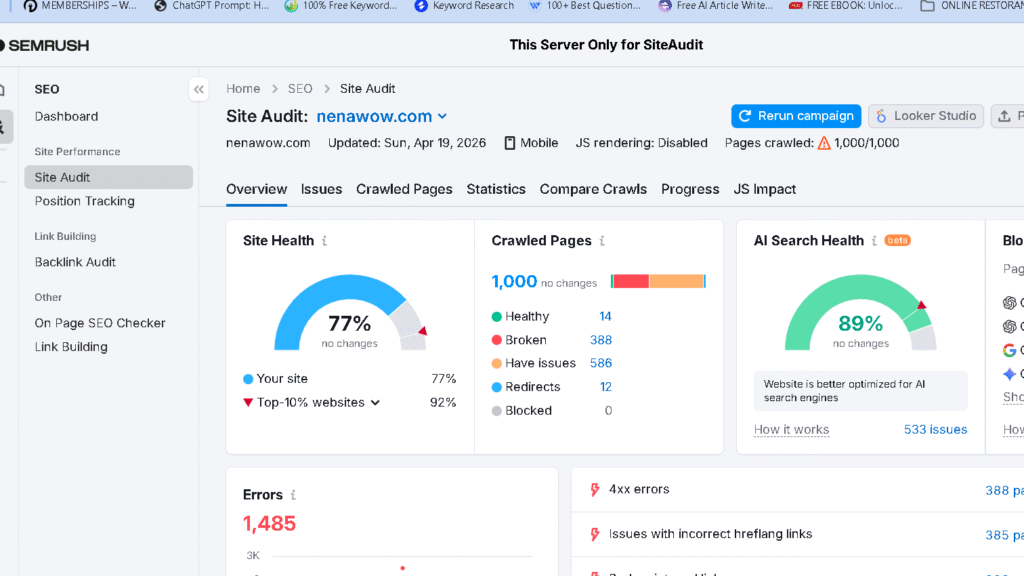
BrightEdge ContentIQ runs at a larger scale. It is built for enterprise sites where a standard crawl tool hits limits quickly. It also ties technical issues directly to performance data, so you can see the business impact of a crawl error rather than just flagging it as a problem. That connection between technical issue and outcome is something Semrush does not do as clearly out of the box.
For most teams, Semrush’s audit is more than enough. The gap shows at the enterprise level.
Reporting: The Difference Gets Bigger Over Time
Semrush reporting is good. You can build custom dashboards, export to PDF, and connect to third-party tools via API. The Business plan adds more depth here. In practice, I found that building a clean executive summary in Semrush took real time and manual work to frame correctly. The data was there. The presentation needed work.
BrightEdge builds reports that are designed to be shown to leadership. The performance story connects organic search to revenue impact from the first slide. What took me close to an hour in Semrush took noticeably less time in BrightEdge once the data was properly connected. That time difference sounds small on any given month. It adds up across a quarter of reporting cycles.
This is where BrightEdge earns part of its premium. Not in features. In the reporting output that justifies its own budget to stakeholders. That combination is harder to find than it looks.
The Problem That Appears After Several Weeks
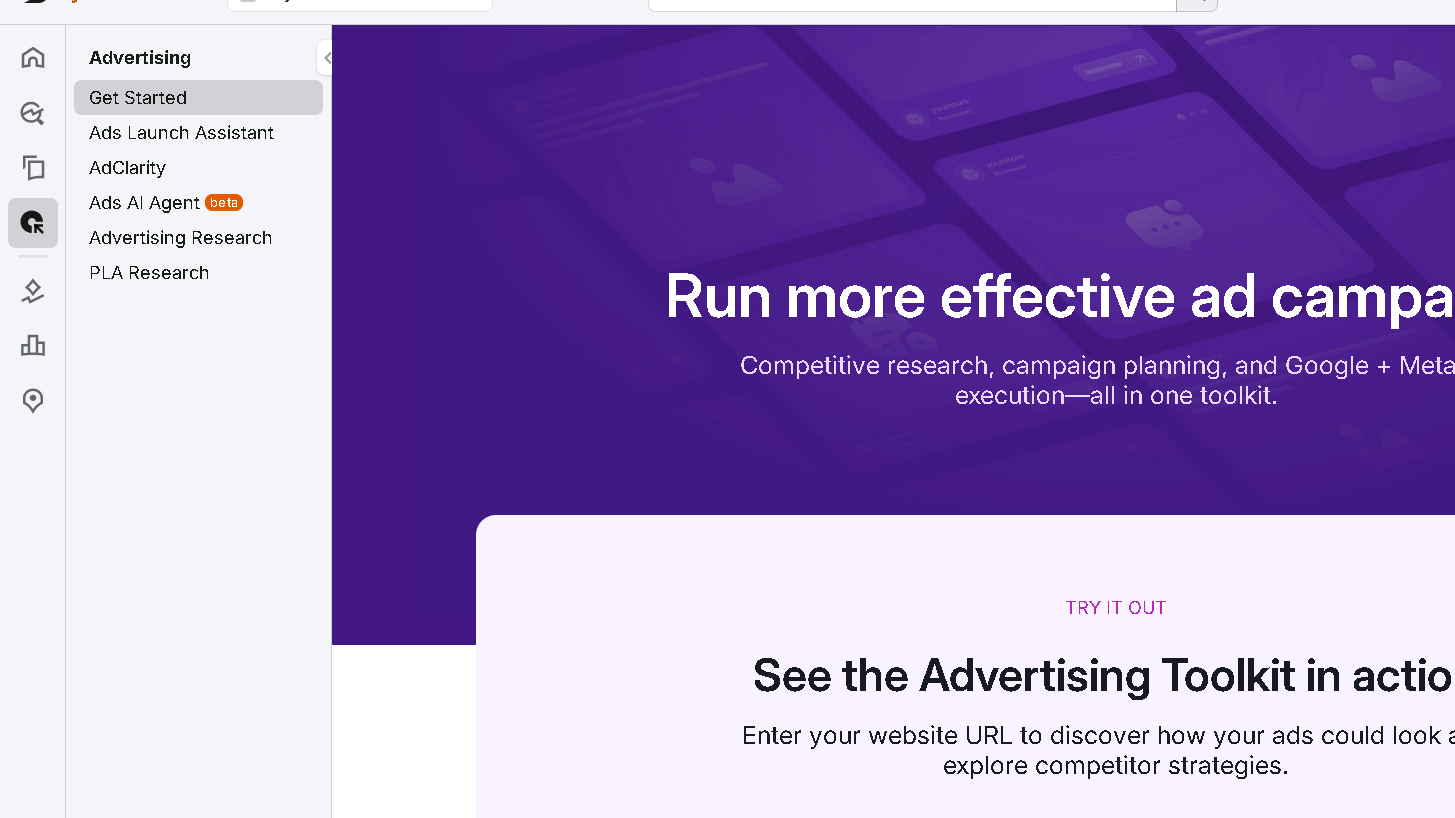
Semrush has a tool overload problem. The platform is enormous. By week three, most users have touched maybe 20 percent of it. The remaining 80 percent sits there generating a quiet guilt. You know there is a competitor analysis module you never opened, an advertising toolkit you are not using, and a social tool you forgot existed. That is not a flaw, exactly. But it creates cognitive weight that some teams never shake off.
BrightEdge’s problem is different. It is the overhead of managing a complex platform that was sold to leadership and needs to show returns quickly. The adoption timeline is real. Getting the platform properly connected to your analytics stack and used consistently across a team takes longer than the sales process suggests. I watched that timeline stretch well past 60 days for teams without a dedicated SEO director to drive it forward. Adoption is the problem. Not features.
Both platforms have a ceiling. The question is which ceiling you will hit first.
My Experience After 30 Days
I want to step back from the comparison for a moment, because the first few weeks inside these platforms taught me something the feature tables do not show.
With Semrush, the thing that surprised me most was how quickly I forgot the parts I was not using. I set up five projects in the first week. Rank tracking. Site audits. A keyword gap report on a competitor I wanted to understand better. By day ten I had a workflow. By day twenty I had stopped exploring and started relying. That is either a good sign or a warning. I think it is both.
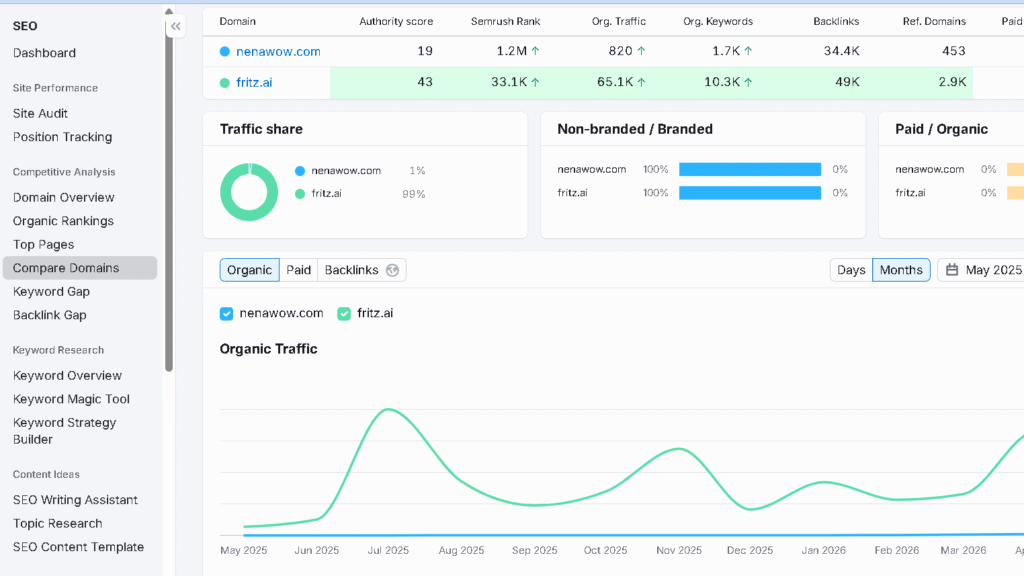
The tool became invisible in the way that useful tools do. I stopped thinking about Semrush and started thinking about the work. The keyword data was there. The audit was there. The content scores were there. I pulled what I needed and moved on. Fast. Clean. No ceremony.
BrightEdge felt different by week four. The platform rewarded the time I put in. Reports I had set up in week one were returning cleaner data by week three, because the platform had more context to work with. The share-of-voice view started telling a story I could actually use in a budget conversation. That was real. But it required patience and setup I would not have had if I were a solo operator or a small team.
What stuck with me after 30 days was not any single feature. It was the feeling each platform created around the work. Semrush felt like a tool I owned. BrightEdge felt like a platform I was learning to manage. Named things. Real gaps. Personal quirks. Those are different relationships with a piece of software.
Semrush vs BrightEdge: Pricing Comparison
| Plan | Price | Who It’s For | Realistic Value |
|---|---|---|---|
| Semrush Pro | $139.95/month | Freelancers, solo operators | Good for single-site SEO |
| Semrush Guru | $249.95/month | Agencies, small teams | Strong value for 5–20 clients |
| Semrush Business | $499.95/month | Larger agencies, in-house teams | Justified at scale |
| Semrush Enterprise | Custom | Large organizations | Competes with BrightEdge range |
| BrightEdge SMB | ~$500–$3,000+/month | Mid-market entry | Steep unless team is ready |
| BrightEdge Enterprise | $10,000–$100,000+/year | Fortune 500, large agencies | Strong ROI for the right org |
The pricing gap is not a small thing. Semrush Business at $6,000 per year sits nowhere near BrightEdge’s enterprise contracts, which can exceed $100,000 annually for global deployments. That is not a comparison. That is a different budget category entirely.
So is it worth it? For a large marketing org managing many brand domains across multiple regions, BrightEdge likely pays for itself in reporting efficiency and share-of-voice insight alone. For everyone else, it does not.
Pros and Cons After Long-Term Use
| Semrush | BrightEdge | |
|---|---|---|
| Pros | Affordable entry point | Excellent executive reporting |
| Fast onboarding | Deep share of voice data | |
| Wide toolset for multi-channel | Strong governance controls | |
| Active development, new features | AI Catalyst surfaces real opportunities | |
| Free trial available | Purpose-built for large domain portfolios | |
| Cons | Tool overload at full scale | No public pricing or free trial |
| Executive reporting needs manual work | Very steep learning curve | |
| Some features feel thin vs. specialists | Implementation overhead is real | |
| Data depth weaker at enterprise scale | Overkill for small or mid-size teams |
Who Should Choose Semrush?
Semrush is the right choice if you run an agency managing multiple client sites, a small in-house team with a broad marketing remit, or a solo operator who needs one tool to cover most of what SEO requires. The Guru plan covers almost everything a team of five to fifteen people will need. The price is predictable. The trial is real.
It also suits teams that are still figuring out their SEO workflow. The flexibility means you can start with keyword research and rank tracking, then add content tools and competitive analysis as your needs grow. You are not forced to use everything at once. The apps are solid.
Who Should Choose BrightEdge?
BrightEdge makes sense when you have a large site, a dedicated SEO team, and a leadership team that needs to see organic performance in business terms. If you are managing an enterprise e-commerce platform, a global media brand, or a multi-location service business with dozens of regional domains, the investment has a real return.
It also makes sense when your SEO budget needs to defend itself in a boardroom. BrightEdge’s reporting layer is built for exactly that conversation. If your CMO needs to see share of voice, content-to-revenue attribution, and competitive displacement metrics in one clean report, BrightEdge delivers that out of the box. Daily users in a lean team will not last a week before wondering if it was the right call.
Semrush Alternatives Worth Considering
| Tool | Best For | Starting Price | Key Strength |
|---|---|---|---|
| Ahrefs | Backlink analysis, content research | $129/month | Deep link data |
| SE Ranking | Budget-conscious teams and agencies | $65/month | Strong value at low cost |
| Search Atlas | Content-focused SEO workflows | $99/month | Fast content optimization |
| Moz Pro | Beginners and local SEO | $99/month | Accessible, well-documented |
For a broader comparison of three major SEO platforms, see Moz vs Semrush vs Ahrefs.
SE Ranking deserves more attention than it gets in this comparison. For a team that finds Semrush slightly too expensive or too complex, SE Ranking covers keyword research, rank tracking, and site auditing at a price point that is hard to argue with. The gap in raw data depth is real. But for most everyday workflows, it is not a gap you will feel.
If you’re deciding between the two most popular SEO platforms, see my full Semrush vs Ahrefs comparison.
Semrush vs BrightEdge: Final Verdict
Semrush is the better platform for most people reading this article. It is faster to learn, much more affordable, flexible enough to support solo operators and agency teams alike, and it keeps getting better with each update. The October 2025 Semrush One launch made it a stronger choice for teams thinking about AI search visibility too.
If budget is your primary concern, you may also want to compare Ahrefs vs Semrush vs Ubersuggest before making a decision.
BrightEdge is not a competitor to Semrush for most budgets. It is a different category of tool built for a different scale of problem. If your organization has a dedicated SEO director, a multi-domain site portfolio, executive reporting requirements, and a budget north of $30,000 per year for a single tool, BrightEdge will earn that spend. If those conditions do not all apply, they will not.
The real question is not which platform is better. It is which one your team will still be using six months from now. For most teams, that answer is Semrush. Which one you want depends on what you are actually here for.
Related Comparisons
FAQ
It depends on scale. BrightEdge wins on enterprise reporting and share of voice. Semrush wins on everyday tasks, agency work, and value. For most businesses, Semrush is the stronger call. BrightEdge earns its cost only at a certain size.
For most teams, yes. It covers keyword research, rank tracking, site auditing, and competitive analysis at a fraction of the price. The gaps are executive reporting depth and governance at scale. If you do not need those two things, Semrush does the job well.
The price reflects a dedicated success team, custom onboarding, and a data layer built for large multi-domain operations. You are not just paying for features. You are paying for service and positioning at the enterprise level.
No. Pricing starts at several thousand dollars a month with no free trial. That spend is hard to justify when Semrush, SE Ranking, or Ahrefs cover the core work at a much lower cost.
Both are strong. Semrush gets you to a working list faster. BrightEdge’s Data Cube goes deeper for large portfolios. Speed or depth. Those are different needs.
Semrush. Most users get useful output in the first session. BrightEdge needs onboarding support and a longer ramp-up. Without a dedicated SEO lead, that complexity becomes a real cost.
Semrush. Multi-client structure, affordable seats, and wide tool coverage make it the natural fit. BrightEdge is built for in-house enterprise teams.
BrightEdge, in the right context. Large domains, governance controls, executive reporting, and a real budget. If those four things apply, it earns the spend.