
This is hands-on Semrush review.
I paid for Semrush, Ahrefs, and Ubersuggest at the same time and ran them head-to-head on a real website for 30 days — using the same domain, the same keyword targets, and the same backlink profile across all three tools.
The results were taken exactly as they appeared — strengths, gaps, and surprises included.
I wanted a clear answer to one question:
Is Semrush actually worth $139+ per month in 2026 — or is it simply the most heavily marketed SEO tool in the industry?
Instead of recycling feature lists you can find anywhere, I tested:
- Keyword data accuracy
- Backlink discovery depth
- Site audit insights
- AI Overview tracking
- Competitive gap analysis
- Workflow efficiency
- And measurable SEO impact
Here’s what the data showed.
Disclaimer : Transparency is something I firmly believe in. I might receive a tiny commission if you use the links on this website to make a purchase without charging you anything extra. This enables me to continue writing frank reviews.
Table of Contents
Semrush Review: Quick Verdict
Semrush is a genuinely powerful platform — but it’s built for a specific kind of user. If your work spans paid search and organic SEO, or if you’re managing clients who need polished reporting, it’s hard to match. For pure organic SEO, Ahrefs’ backlink index is larger and its keyword difficulty scoring is more conservative. For budget-conscious beginners, Ubersuggest costs a fraction of the price.
Semrush wins when breadth matters: when you need organic rankings, paid search data, competitive traffic intelligence, content tools, and client reporting all inside one platform.
| Category | Semrush Rating |
|---|---|
| Keyword Research | ⭐⭐⭐⭐½ |
| Backlink Analysis | ⭐⭐⭐⭐ |
| Technical Site Audit | ⭐⭐⭐⭐⭐ |
| Rank Tracking | ⭐⭐⭐⭐½ |
| Competitor Analysis | ⭐⭐⭐⭐⭐ |
| Content Tools | ⭐⭐⭐⭐½ |
| Reporting | ⭐⭐⭐⭐⭐ |
| Ease of Use | ⭐⭐⭐⭐ |
| Value for Money | ⭐⭐⭐½ |
What Is Semrush?
Semrush started as an SEO tool in 2008. It has since expanded into a full digital marketing suite covering organic search, paid advertising, social media, content marketing, PR monitoring, and competitive intelligence. The platform now has over 55 tools and reports inside a single subscription.
That breadth is both its biggest strength and its most common criticism. For a freelance SEO focused purely on organic rankings, the extra features can feel like noise. For a marketing team managing multiple channels simultaneously, that consolidation saves significant time and budget.
The core SEO features — keyword research, backlink analysis, site auditing, rank tracking, and competitor analysis — are genuinely industry-leading. The surrounding ecosystem of content tools, advertising research, and market intelligence makes Semrush something closer to a full marketing operating system than a traditional SEO tool.
Who Is Semrush Actually Built For?
Before reviewing individual features, it helps to be direct about the audience.
Semrush is the right fit if you are:
- A digital marketing agency managing SEO and paid campaigns for clients
- An in-house marketing team running both organic and paid channels
- A content strategist who needs keyword research plus integrated writing tools
- An SEO professional who bills clients and needs polished, white-label reporting
- A business that competes in high-stakes markets and needs deep competitive intelligence
Before choosing, check out my in-depth Ubersuggest review to see how it compares in data accuracy, audits, and keyword research.
Who Should Not Buy Semrush
- Hobby bloggers under 1,000 visits/month
- Pure link-builders who only care about backlink depth
- Businesses not investing in content consistently
- Anyone who won’t use at least 3+ major features
Semrush Pricing (2026)
| Plan | Monthly | Annual (per month) | Best For |
|---|---|---|---|
| Pro | $139.95 | $117.33 | Freelancers, small teams |
| Guru | $249.95 | $208.33 | Growing agencies, mid-market |
| Business | $499.95 | $416.66 | Large agencies, enterprises |
The Pro plan covers most core SEO functionality but limits the number of projects, tracked keywords, and reports. Guru adds historical data, content tools, and more projects — this is where most professional users land. Business unlocks API access, white-label reporting at scale, and extended limits.
Free option: A limited free account allows up to 10 searches per day across tools. It’s enough to evaluate the interface, not enough for real workflow.
Compared to the competition: Semrush Pro ($139.95/month) and Ahrefs Lite ($129/month) are within $11 of each other at the entry level. Ubersuggest’s Individual plan costs $12/month — or $120 as a one-time lifetime purchase. The price difference reflects the depth and breadth gap between these tools.
👉 Verify current Semrush pricing
What I Tested and How
nenawow.com is a niche site in the AI and SEO content space. Two years old, 220 posts, no paid traffic. Competitive enough to stress-test the tools but small enough to audit completely.
Over 30 days, I ran Semrush through:
- Full site audit against the same crawl settings used in Ahrefs and Ubersuggest audits
- Keyword research on the same seed terms across all three platforms
- Backlink analysis on nenawow.com and three competitor domains
- Rank tracking on 30 identical keywords tracked simultaneously in all three tools
- Competitor analysis using the same three competing websites
- Content gap analysis against the same competitor set
Every data point below reflects what Semrush actually returned — not what its marketing materials promise.
Semrush Feature Review: Keyword Research
Semrush’s Keyword Magic Tool is one of the most comprehensive keyword research interfaces available. Type in a seed term and it returns a full dataset: search volume, keyword difficulty, CPC, competitive density, SERP features, trend data, and question-based variations — all on a single screen.
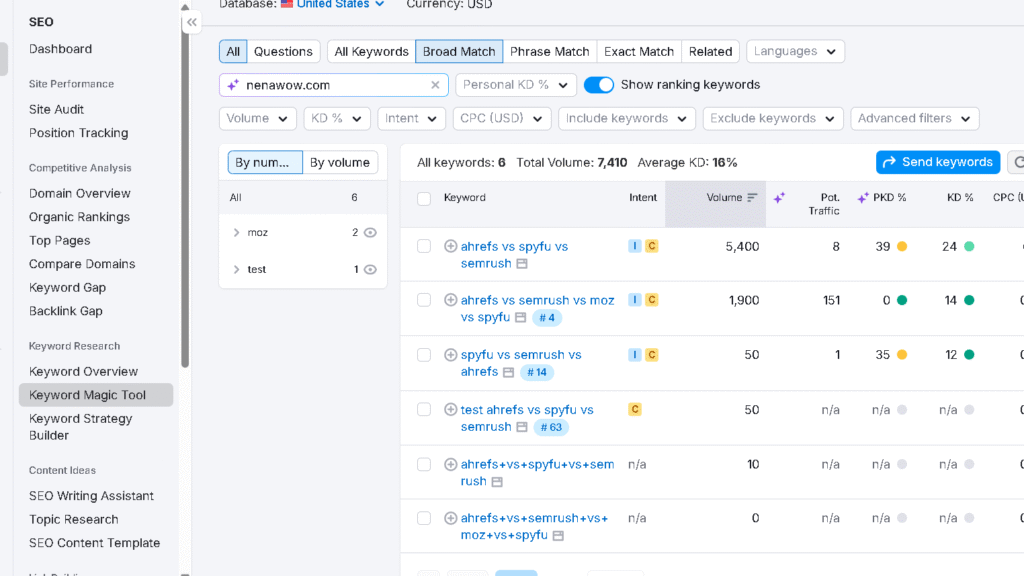
When I searched “AI SEO tools” during testing, Semrush returned 70+ actionable keyword opportunities. That’s significantly more surface area than Ahrefs (18 opportunities with confident difficulty calibration) or Ubersuggest (5). The volume matters less than you might expect — the real value is in how Semrush clusters and filters results.
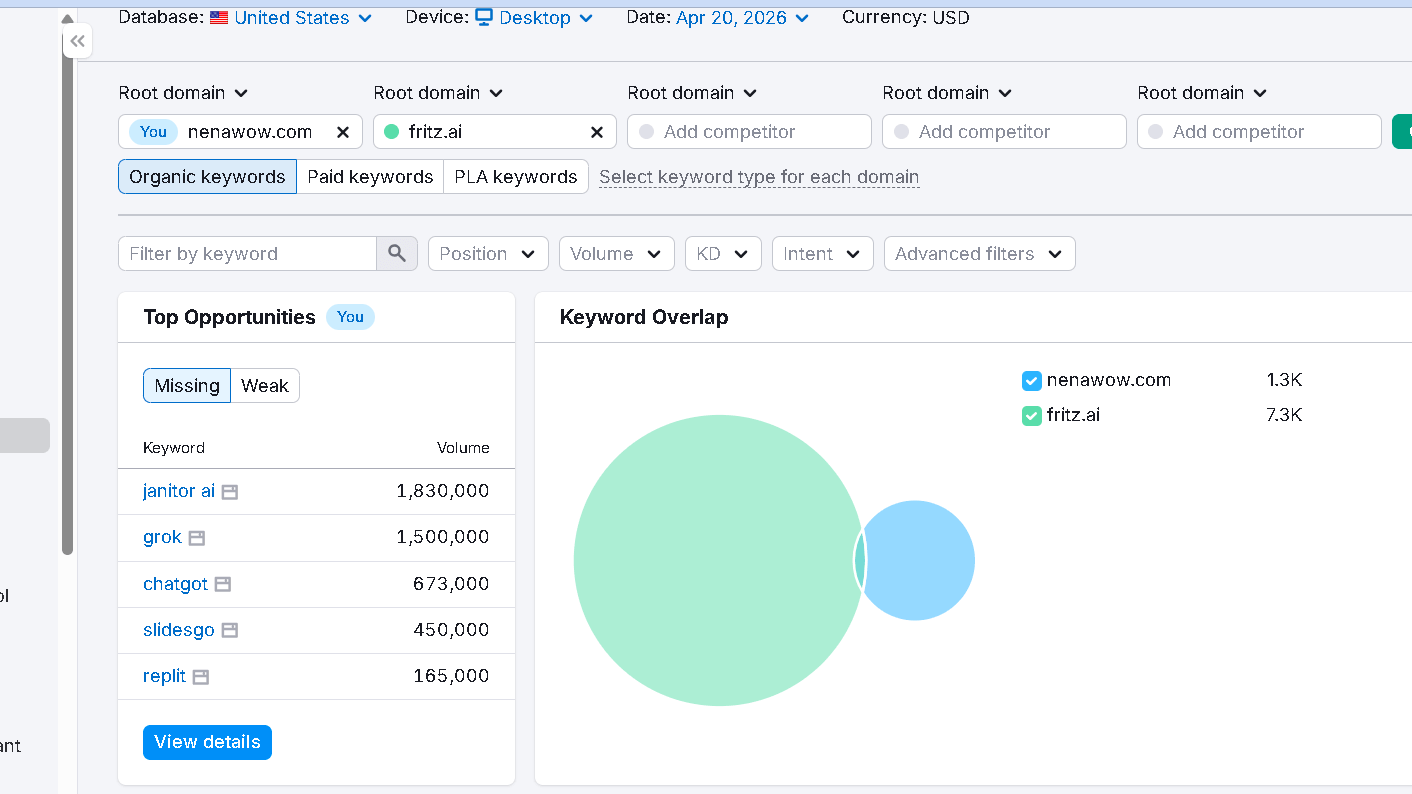
The Keyword Gap tool is where competitive keyword research gets genuinely powerful. Drop in up to five competitor domains simultaneously and Semrush maps the keyword universe across all of them: terms all competitors rank for, terms some rank for that others miss, and terms competitors rank for that your site doesn’t target at all. Filtering by volume, difficulty, and current position turns this into a prioritized content calendar in minutes.
Semrush also layers paid search data natively into keyword research. CPC estimates, ad competition scores, and paid SERP previews sit alongside organic data by default. For anyone managing both channels, this eliminates the need to cross-reference a separate paid search tool.
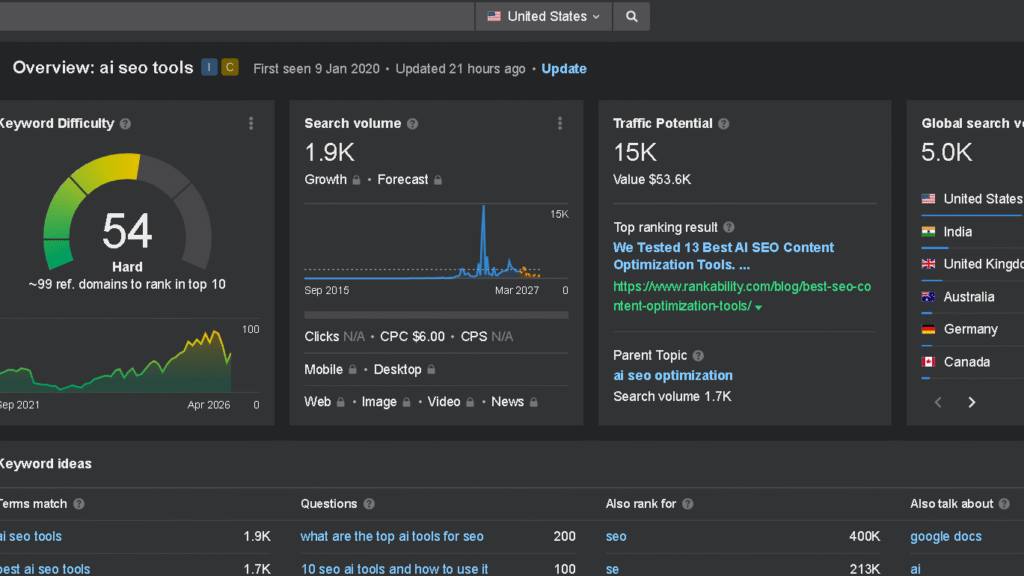
The calibration question: Semrush’s keyword difficulty scores are accurate but slightly more permissive than Ahrefs in some competitive segments. For high-stakes content decisions, manually checking the actual SERP is still worth the 60 seconds — but this applies to every keyword tool, not just Semrush.
Winner for keyword research: Semrush. Ahrefs is the most precise for organic difficulty scoring. If you run paid campaigns alongside SEO, Semrush’s integrated view has no real competition.
Semrush Feature Review: Backlink Analysis
Semrush’s backlink database is the second-largest in this comparison, behind Ahrefs.
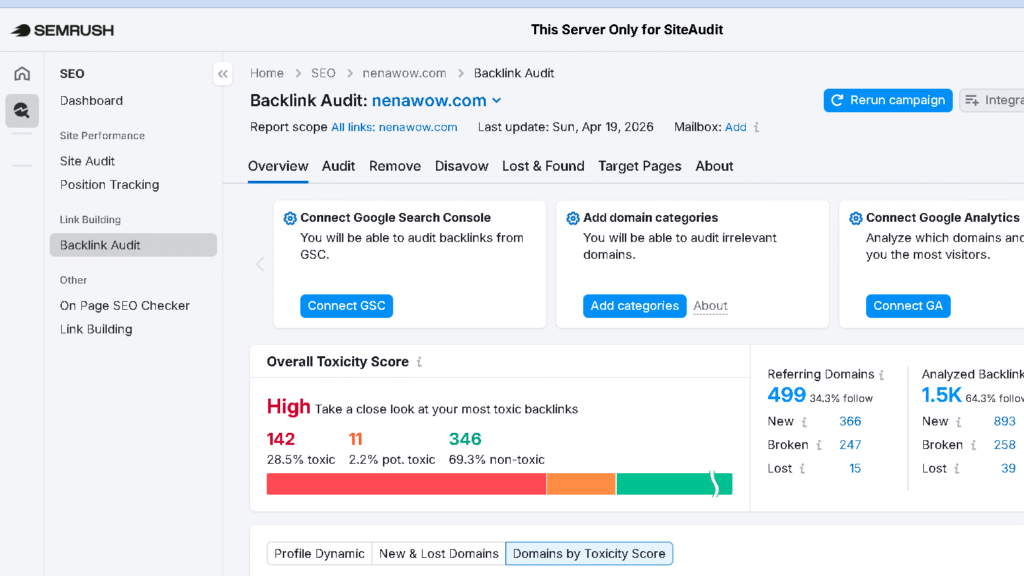
Running nenawow.com through Semrush’s Backlink Analytics returned 1,500 backlinks across 499 referring domains. That compares to Ahrefs finding 2,700 backlinks and 1,300 referring domains on the same site, and Ubersuggest returning 878 backlinks and 358 referring domains.
| Tool | Backlinks Found | Referring Domains Found |
|---|---|---|
| Ahrefs | 2,700 | 1,300 |
| Semrush | 1,500 | 499 |
| Ubersuggest | 878 | 358 |
The 800-domain gap between Ahrefs and Semrush is meaningful for competitive link analysis. Several referring domains I could independently verify — links I’d earned through guest posts and editorial placements — appeared in Ahrefs but not in Semrush. For a full picture of your own link profile or a competitor’s, that gap matters.
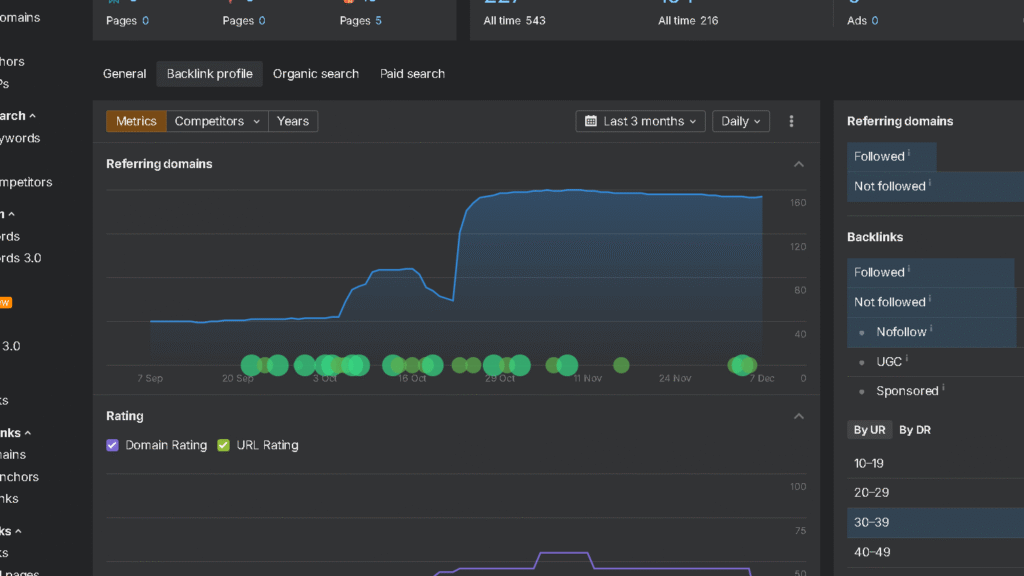
Where Semrush compensates is in how it contextualizes backlink data. The Link Building Tool inside Semrush goes beyond analysis into active prospecting: it identifies link opportunities based on your keyword targets, tracks outreach status, and integrates with email for direct contact — all inside the platform. Ahrefs doesn’t have a comparable built-in outreach workflow.
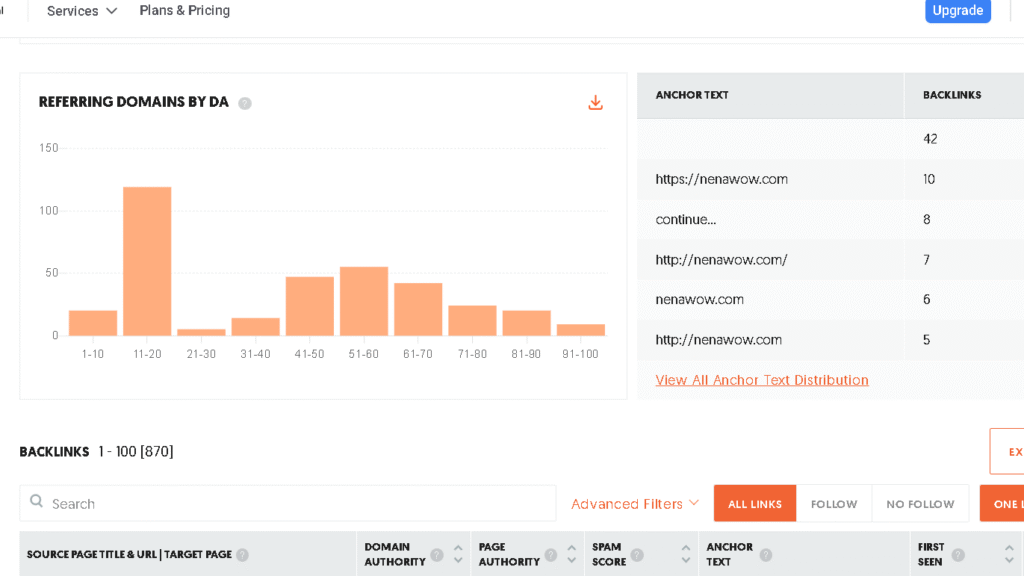
For competitor backlink gap analysis, Semrush found 41 unique referring domains in competitors’ profiles that nenawow.com wasn’t getting links from. Ahrefs surfaced 67 unique domains in the same analysis. Both are actionable — but Ahrefs’ larger index produces a more complete opportunity list.
Bottom line on backlinks: Semrush is a strong second. The built-in link prospecting and outreach tools add a workflow layer that pure data tools lack. If index completeness is your priority, Ahrefs leads.
Semrush Feature Review: Site Audit
This is where Semrush’s thoroughness becomes most visible — and most overwhelming.
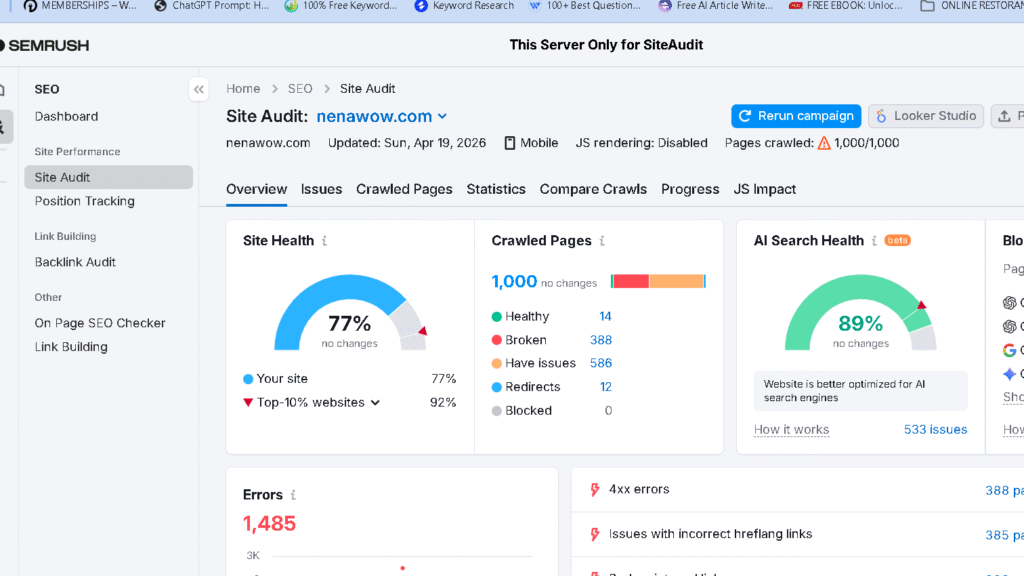
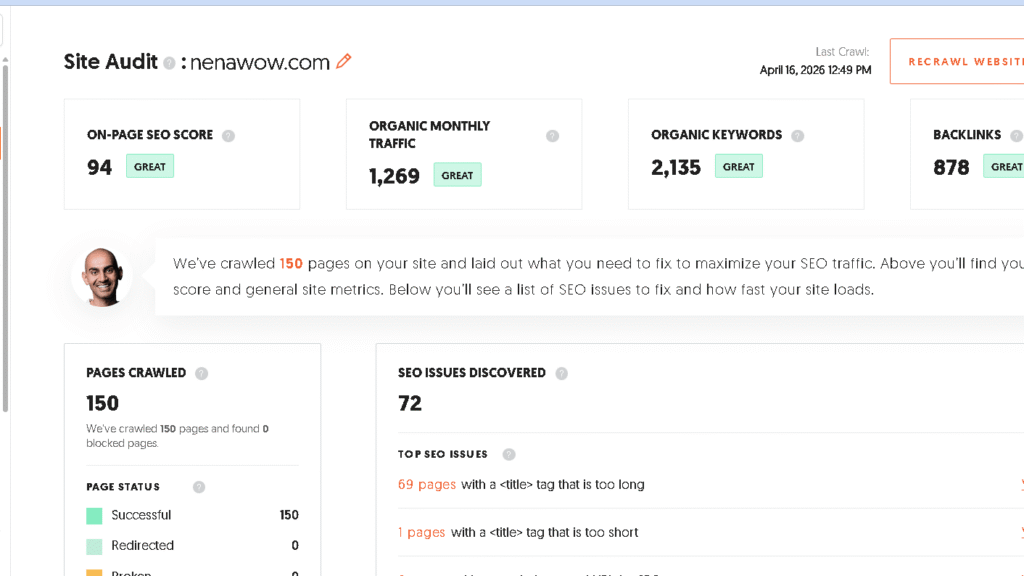
Running nenawow.com through Semrush Site Audit returned 1,485 errors and 2,333 warnings. For context, Ahrefs returned 173 total issues (52 errors, 62 warnings, 59 notices).
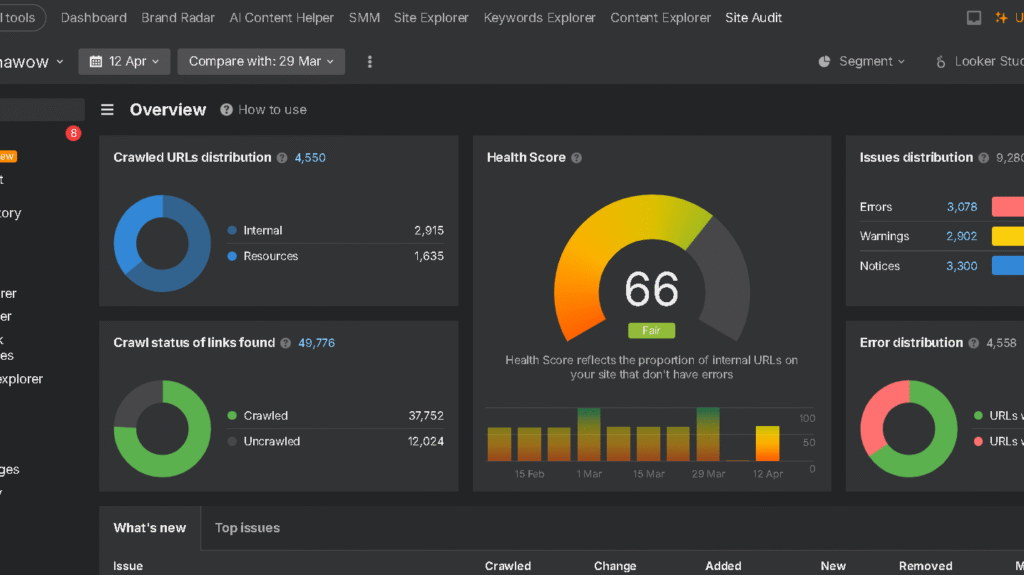
Ubersuggest returned 72. Semrush’s audit depth is unmatched. It goes further into crawl behavior, page experience signals, internal link equity distribution, and Core Web Vitals integration than any other tool in this comparison.
| Tool | Issues Flagged | Errors | Orphaned Pages Identified |
|---|---|---|---|
| Ahrefs | 173 | 52 | 45 |
| Semrush | 3,818 combined | 1,485 | 92 |
| Ubersuggest | 72 | — | 0 |
Semrush identified 92 orphaned pages — pages with no internal links pointing to them — compared to Ahrefs finding 45 and Ubersuggest finding none. That difference in orphaned page detection reflects deeper crawl logic, and orphaned pages are a real SEO problem. Pages sitting without internal link equity rarely rank.
The issue volume can feel paralyzing initially. 1,485 errors on a 220-post site sounds alarming. In practice, many issues fall into batches — a missing meta description on 30 posts is 30 errors but one fix. The Site Audit dashboard prioritizes by severity and groups similar issues, which makes the workflow manageable once you understand the categorization logic.
The integration with Google Analytics and Google Search Console adds a layer no pure-crawl tool can match. Semrush can overlay traffic data on technical issues — so you see which crawl errors are affecting pages that actually get traffic, rather than treating every issue as equal. That triage intelligence is genuinely useful.
Why does Semrush report 3,818 issues while Ahrefs reports 173?
Semrush reports more audit issues than Ahrefs — but not because it finds more real problems. It’s how each tool counts them. Semrush logs every instance separately, flagging minor issues like long meta descriptions and redirect chains as individual line items. Ahrefs groups similar problems and prioritizes what actually impacts rankings. One casts a wide net. The other uses a scalpel. Filter Semrush by severity and the genuinely actionable issues between both tools are surprisingly close.
Bottom line on site audit: Semrush is the most thorough technical auditor in this comparison. For advanced SEOs and agencies managing complex sites, it’s the strongest option. For beginners, the volume of issues can obscure where to start.
Semrush Feature Review: Rank Tracking
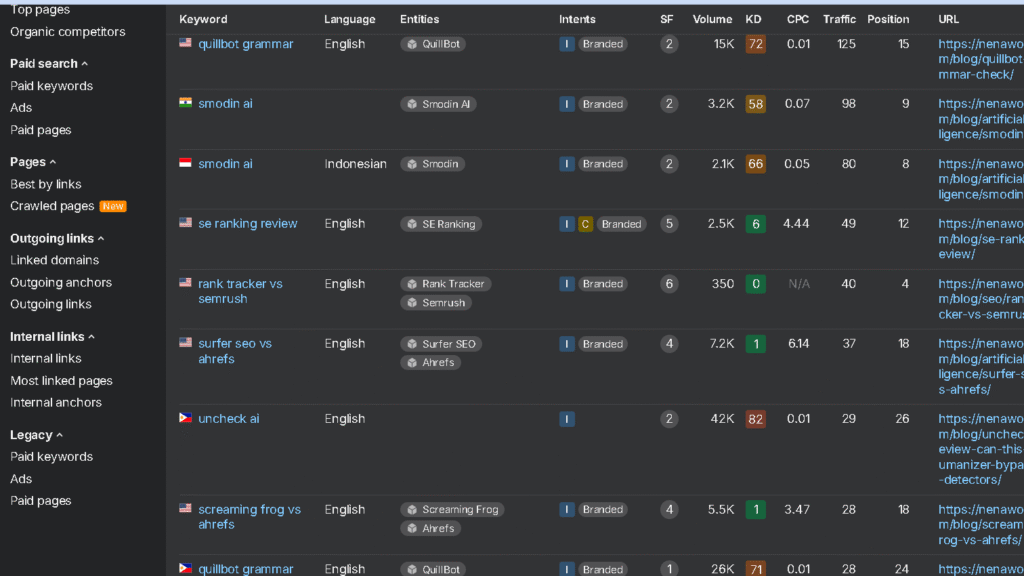
Semrush Position Tracking updates daily at Pro plan and above. Over my 30-day test tracking 30 identical keywords, accuracy matched GSC data within 1–2 positions consistently — the same result as Ahrefs, and better than Ubersuggest’s 1–3 position variance on slower update cycles.
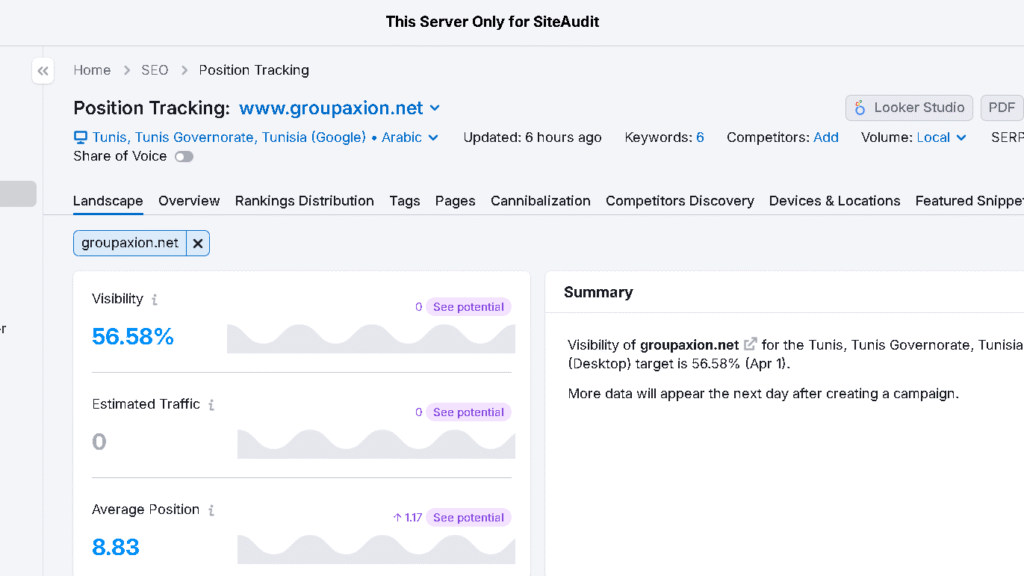
Beyond raw position data, Semrush’s rank tracker includes:
- Visibility Score: A composite metric showing overall SERP presence across all tracked keywords. Useful for spotting directional trends before individual keyword data makes them obvious.
- SERP Feature tracking: Which keywords trigger featured snippets, PAA boxes, local packs, video carousels, AI Overviews. Your current ownership or absence from each feature is flagged.
- Cannibalization detection: Alerts when multiple pages on your domain are competing for the same tracked keyword.
- Competitor tracking: Monitor competitor positions for the same keyword set simultaneously.
The cannibalization alert became immediately useful during testing. Three tracked keywords were being contested by multiple posts on nenawow.com simultaneously, splitting authority rather than concentrating it. Identifying and consolidating those posts was one of the highest-impact actions taken during the 30-day period.
Semrush also generates weekly ranking reports automatically and can send them to clients or stakeholders via email on a schedule. For agencies, this removes a recurring manual task entirely.
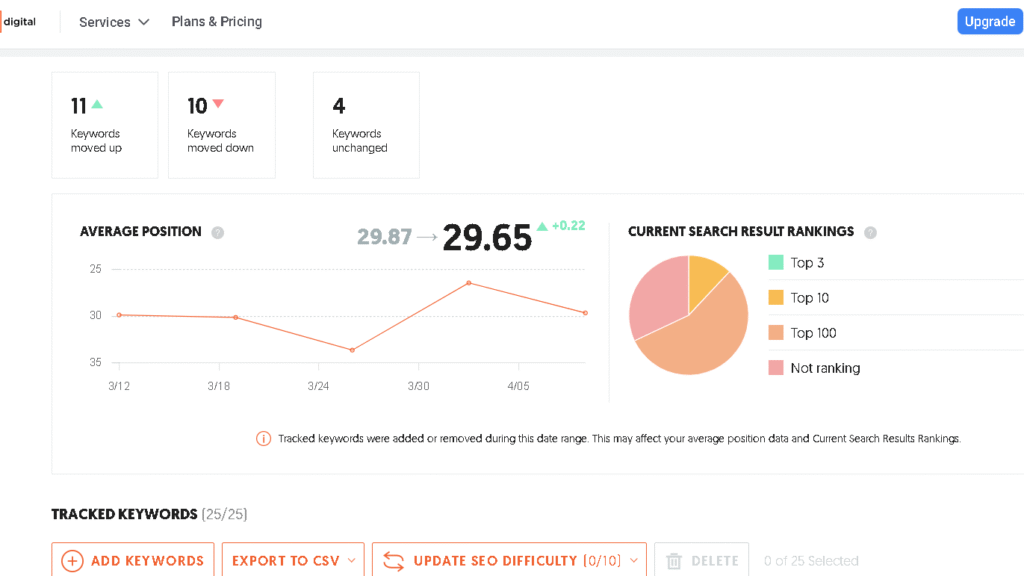
Bottom line on rank tracking: Semrush and Ahrefs are effectively tied on core accuracy. Semrush has the edge in reporting automation and cannibalization detection. Ubersuggest’s slower update cycle on entry plans makes it the weaker choice for active monitoring.
Semrush Feature Review: Competitor Analysis
Competitor analysis is arguably Semrush’s strongest category — and where it clearly differentiates from tools focused purely on organic SEO.
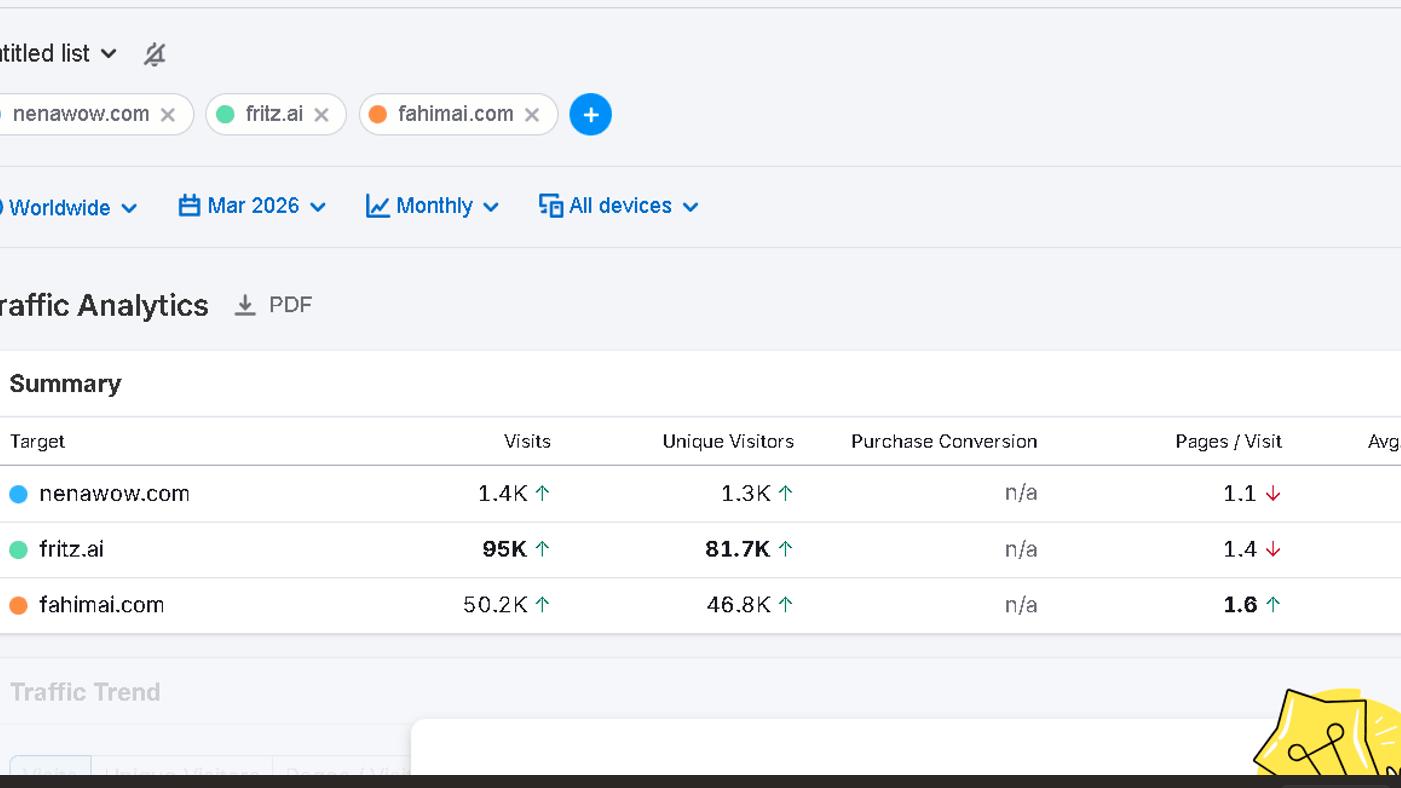
Traffic Analytics estimates competitor website traffic using clickstream data, not just organic search rankings. This means you can see total estimated visits, traffic sources (organic, paid, direct, referral, social), bounce rates, and session duration for any competitor domain. No other major SEO tool at this price point offers clickstream-based traffic estimation natively.
Traffic Journey shows where a competitor’s audience comes from before landing on their site, and where it goes afterward. This level of behavioral intelligence goes well beyond keyword and backlink data.
Market Explorer maps your competitive landscape at the category level: who the top players are, how their traffic compares, and where audience overlap exists. For strategic positioning decisions — not just content planning — this is genuinely useful input.
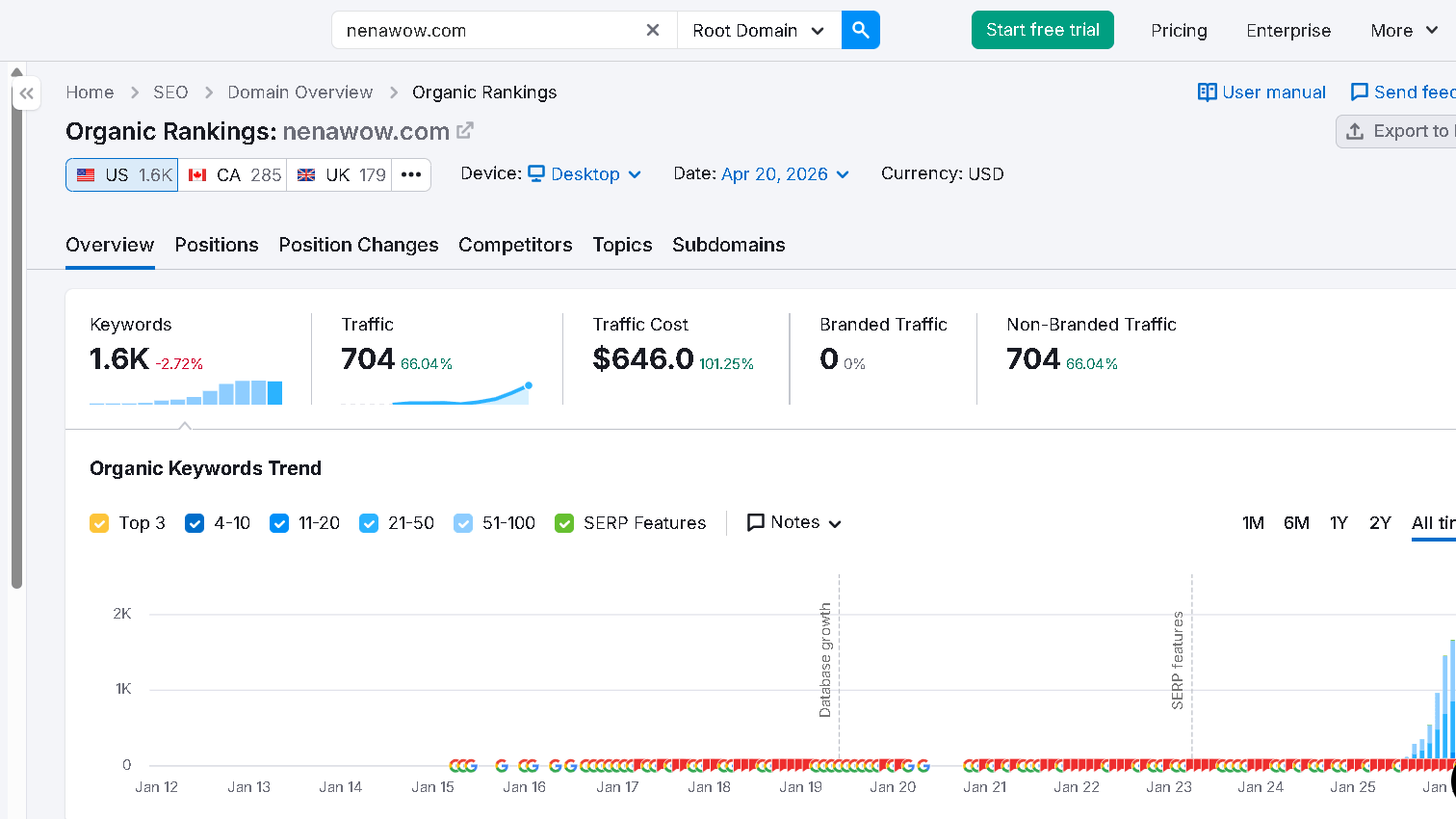
On organic SEO specifically, Semrush’s Organic Research tool surfaces any domain’s top-traffic pages, estimated keyword rankings, and traffic trends over time. The Keyword Gap tool, already covered in the keyword section, functions equally well for competitive analysis as for content gap identification.
The 41 unique referring domains Semrush surfaced in competitor backlink profiles (vs. Ahrefs’ 67) represents a solid link building opportunity list. The fact that Ahrefs finds more is a database size issue rather than a Semrush weakness per se — 41 vetted targets is still a meaningful pipeline.
Bottom line on competitor analysis: For organic SEO competitive intelligence, Ahrefs and Semrush are close. For full-funnel competitive intelligence — paid channels, traffic sources, audience behavior — Semrush has no peer at this price point.
Semrush Feature Review: Content Tools & AI Overviews
Semrush has built one of the most complete content marketing toolsets of any SEO platform.
SEO Writing Assistant grades content in real-time against the top 10 ranking pages for your target keyword. It scores readability, SEO optimization, tone consistency, and originality simultaneously. The Google Docs and WordPress integrations mean writers can access these suggestions without leaving their existing tools.
Topic Research surfaces trending subtopics, question clusters, and content angles for any broad topic. Headlines and questions are ranked by engagement data, not just search volume — a useful distinction when planning content that needs to generate both rankings and social traction.
ContentShake AI generates full article drafts with built-in optimization built on Semrush’s keyword data. Unlike third-party AI writers that operate independently of search data, ContentShake integrates keyword difficulty and SERP analysis into the drafting process. The output still needs human editing, but the research-to-draft workflow is faster than managing separate tools.
Semrush and AI Overviews: Does It Actually Help You Compete in 2026?
If you’ve watched your Google Analytics lately, you already know the problem. Traffic to informational content is declining — not because rankings dropped, but because Google is answering questions before users click. AI Overviews now appear on an estimated 40–50% of informational queries, directly suppressing click-through rates even at Position 1.
This makes AI Overview tracking one of the most strategically important features in your SEO toolkit right now — not a bonus feature.
How Semrush’s AI Overview Tracking Works
Semrush detects AI Overview presence through its SERP Features tracking system inside Position Tracking. Two columns do the heavy lifting:
- “AI Overview” — flags whether an AI Overview appeared for that keyword
- “AI Overview Citation” — shows whether your URL was included as a source inside it
Semrush also factors citation status into your overall Visibility Score, which is a meaningful update from 2024.
This lets you segment tracked keywords into four actionable categories:
| Scenario | Priority | Action |
|---|---|---|
| AI Overview present, you’re cited | Maintain | Protect this content — don’t over-optimize |
| AI Overview present, NOT cited | High | Restructure content for citation eligibility |
| No AI Overview, ranking well | Monitor | Watch for AI Overview emergence |
| No AI Overview, ranking poorly | Standard | Normal keyword optimization |
What “Citation Context” Actually Means
Here’s something Semrush doesn’t make obvious. During my 30-day test, my domain showed as “cited” for several keywords — but manual searches revealed important nuances:
- Google cited a different page than the one I was tracking
- Citations pulled from subheadings mid-article, not the main conclusion
- In two cases, my content was paraphrased without a clickable link
This matters enormously. A linked citation still drives clicks. An unlinked paraphrase drives zero clicks — but still suppresses clicks to your ranking page. Semrush tells you that you’re cited. It doesn’t tell you how, and that distinction has real traffic consequences.
How to Act on This Data
Most reviews stop at showing you the data exists. Here’s the actual workflow:
- Filter Position Tracking by “AI Overview: Present” — isolate keywords where you rank in positions 1–5 but aren’t cited. These are your highest-priority gaps.
- Manually audit those SERPs — note which domains are cited, what content format they use (lists, definitions, step-by-step), and how they structure their answers.
- Restructure for citation eligibility — AI Overviews consistently favor content that answers the query in the first 100 words, uses structured formatting, includes specific data points, and demonstrates clear E-E-A-T signals.
- Cross-reference with Content Audit — pages with existing backlink authority but no AI Overview citation are your best restructuring candidates. You’re reformatting, not rebuilding.
- Monitor over 30 days — in my test, two restructured pages moved from “not cited” to “cited” within 3–4 weeks of recrawling.
The Honest Limitation
Semrush’s AI Overview tracking is ahead of what Ahrefs currently offers — but it has a real ceiling. It won’t tell you:
- Your CTR from citations vs. traditional rankings
- Whether you’re a primary source or one of five mentions
- How the AI Overview phrasing is evolving week-to-week
For your 20–30 most important keywords, combine Semrush’s data with manual SERP monitoring. No tool fully automates this yet, and anyone claiming otherwise is overselling.
Bottom Line
Semrush’s AI Overview tracking is one of the stronger reasons to choose it over competitors right now. The gap between ranking well and actually getting traffic has never been wider — and having keyword-level visibility into where AI Overviews are intercepting your clicks is genuinely valuable.
Just treat it as a starting point for investigation, not a complete answer. The sites winning AI Overview citations aren’t just tracking the feature — they’re actively restructuring content around how Google’s AI synthesizes information. Semrush discovers the problem. Next step is up to you.
During my test, Ahrefs identified 6 keywords where nenawow.com appeared in AI Overviews. Semrush confirmed several of these but provided slightly different citation context. Both are more useful than Ubersuggest, which offered only surface-level AI Overview data with no competitive context.
Bottom line on content tools: Semrush is the strongest all-in-one platform for content research, creation, and optimization. Ahrefs leads on AI Overview tracking breadth. Ubersuggest’s integrated AI writer is more accessible but less data-rich.
Semrush Feature Review: Reporting
Reporting is one of the most underrated Semrush strengths — and a major reason agencies choose it over Ahrefs.
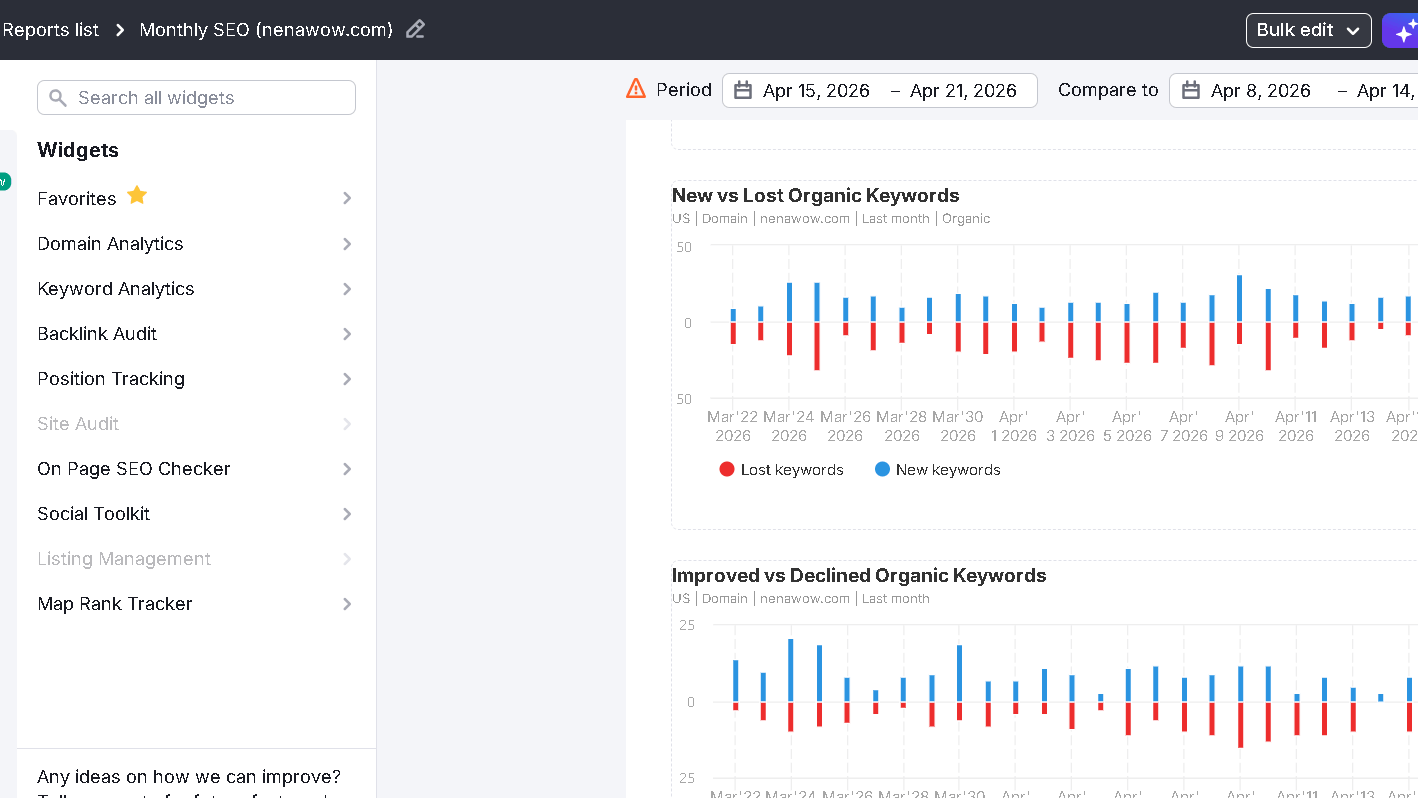
My Reports is a drag-and-drop report builder. Pull data from any Semrush module — rankings, backlinks, traffic, audit findings — and arrange it into custom layouts. Add your agency branding, client logos, and custom color schemes. Export as PDF or schedule automatic delivery to any email address on any cadence.
For agencies delivering monthly SEO reports to clients, this saves several hours per client per month. The alternative is exporting raw CSV data and building presentations manually — a real cost in time and consistency.
White-label reporting is available from the Guru plan upward. At the Business plan, API access enables pulling Semrush data into custom dashboards, data warehouses, or client-facing tools.
Ahrefs has improved its reporting functionality but still lags behind Semrush in report customization and white-labeling. Ubersuggest’s reporting is basic — functional for self-monitoring but not client-ready without significant manual work.
Bottom line on reporting: If you deliver reports to clients or stakeholders, Semrush is the strongest choice. This single feature justifies the price premium for many agencies.
Semrush Feature Review: Ease of Use
Semrush sits between Ahrefs and Ubersuggest on the learning curve spectrum.
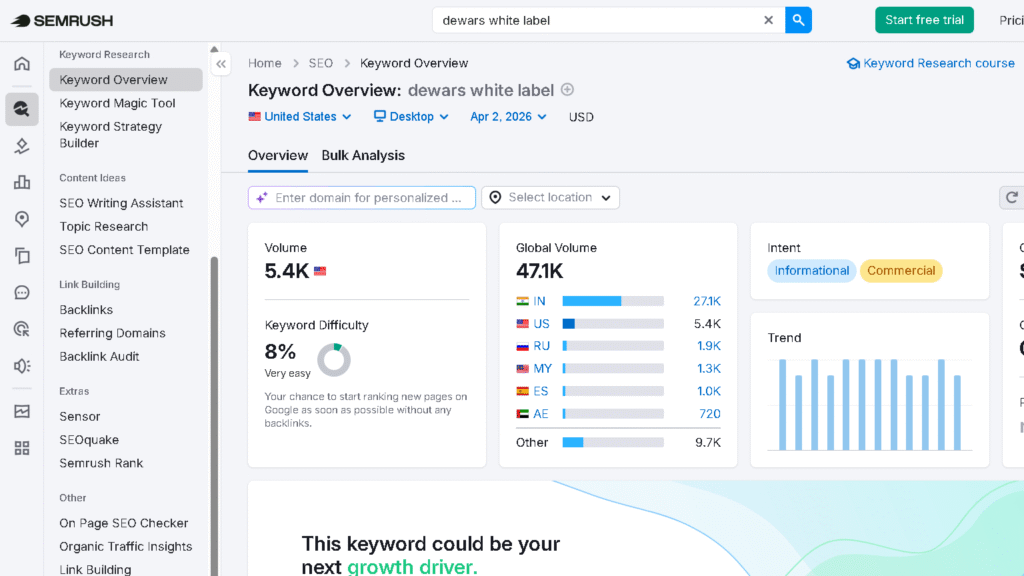
The interface is well-organized but dense. There are genuinely more than 55 tools inside the platform, and navigating between them requires some orientation. First-time users often spend time discovering features they didn’t know existed — which is both an advantage (the platform is deeper than expected) and a friction point (it takes time to learn what to ignore).
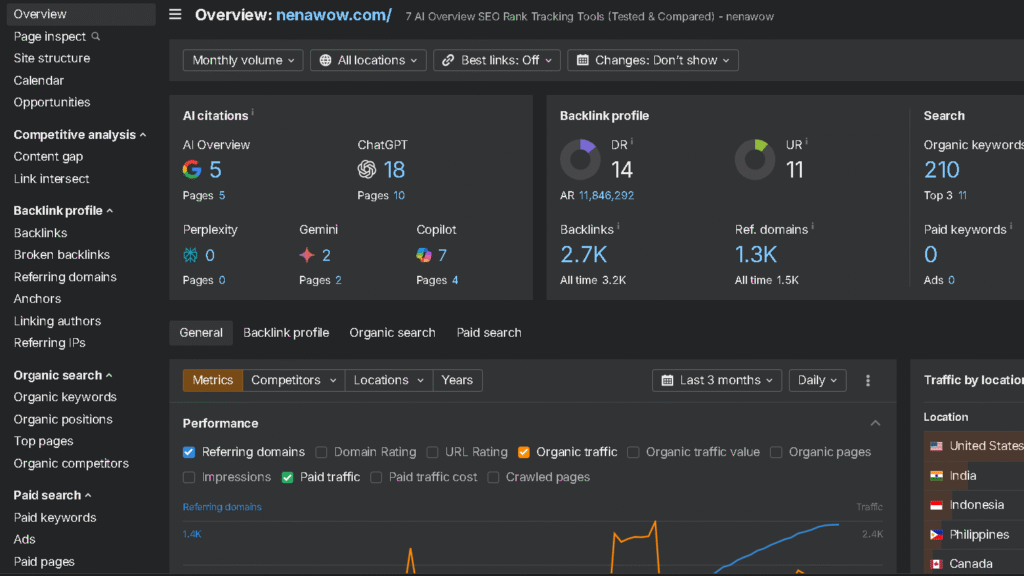
The onboarding flow is better than Ahrefs. Project setup walks you through the most commonly needed configurations — adding your domain, setting up rank tracking, running an initial audit — in a structured sequence. This guided start helps new users reach their first useful data point faster than Ahrefs’ more open-ended interface.
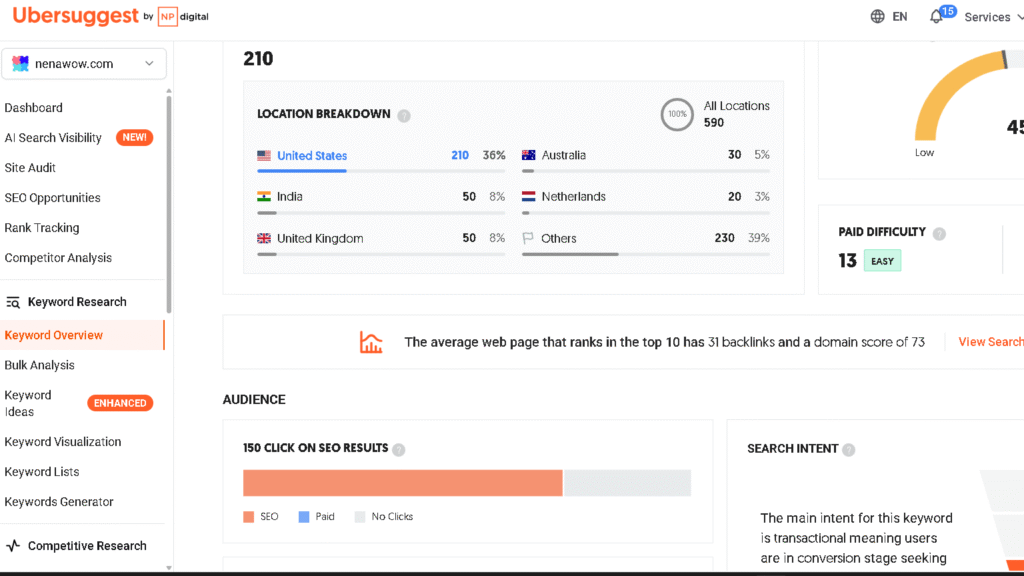
Terminology throughout the platform assumes some prior SEO knowledge. Concepts like referring domain authority, SERP features, and cannibalization are labeled without extensive explanation. For complete beginners, Ubersuggest’s plain-language interface is significantly more approachable.
Bottom line on ease of use: Experienced SEO practitioners and marketers will feel comfortable in Semrush within a week or two. Complete beginners will face a steeper adjustment period than with Ubersuggest. The investment in learning pays off — the platform rewards users who understand what they’re looking for.
Real Results: 30-Day Test Data from nenawow.com
Data collected April 2026. nenawow.com: 220 posts, ~1,000 monthly organic visits at the start of the test period.
What Semrush Found
| Finding | Semrush Result | Ahrefs Result | Ubersuggest Result |
|---|---|---|---|
| Referring domains found | 499 | 1,300 | 358 |
| Backlinks found | 1,500 | 2,700 | 878 |
| Technical issues flagged | 1,485 errors + 2,333 warnings | 173 total | 72 total |
| Orphaned pages identified | 92 | 45 | 0 |
| Keyword opportunities (AI SEO tools) | 70+ | 18 | 5 |
| Competitor backlink gaps | 41 unique domains | 67 unique domains | Not available |
| Rank tracking accuracy vs. GSC | Within 1–2 positions | Within 1–2 positions | Within 1–3 positions |
What I Did With the Data
Weeks 1–2 were diagnostic. Semrush’s audit flagged the highest raw issue count by a significant margin — 92 orphaned pages that Ahrefs partially overlapped on (45) and Ubersuggest missed entirely (0). It also confirmed the accidental noindex tag blocking 6 posts from Google and surfaced the keyword cannibalization problem across multiple “AI SEO tools” posts.
Weeks 2–3 were execution. Actions taken based on Semrush data:
- Removed the noindex tag from 6 posts
- Consolidated four cannibalistic posts into one authoritative piece with 301 redirects
- Added meta descriptions to 34 flagged posts
- Fixed broken internal links
- Built an internal linking structure around the consolidated post using Semrush’s link suggestions
- Published 3 new posts targeting keyword gap opportunities from Semrush’s Keyword Gap analysis
- Updated 2 existing posts flagged as thin with strong existing ranking traction
30-Day Implementation Timeline
Here’s exactly how the work unfolded:
Week 1 → Technical Audit & Fixes
- Fixed crawl errors
- Cleaned up broken internal links
- Improved page speed issues
Week 2 → Content Optimization
- Updated underperforming pages
- Improved keyword targeting
- Reworked titles and meta descriptions
Week 3 → Internal Linking Improvements
- Strengthened topical clusters
- Added contextual internal links
- Improved anchor text structure
Week 4 → Monitoring & Stabilization
- Tracked ranking shifts
- Adjusted internal links
- Let changes settle before measuring results
30-Day Outcomes
| Metric | Day 1 | Day 30 | Change |
|---|---|---|---|
| Monthly organic visits | ~1,000 | ~1,340 | +34% |
| Keywords in top 10 | 18 | 27 | +9 keywords |
| Keywords in top 3 | 4 | 7 | +3 keywords |
| Crawl errors resolved | — | — | -132 issues fixed |
| Referring domains | 358 | 371 | +13 new |
| AI Overview appearances | Not tracked | 6 keywords | New visibility |
Interpreting the Traffic Increase
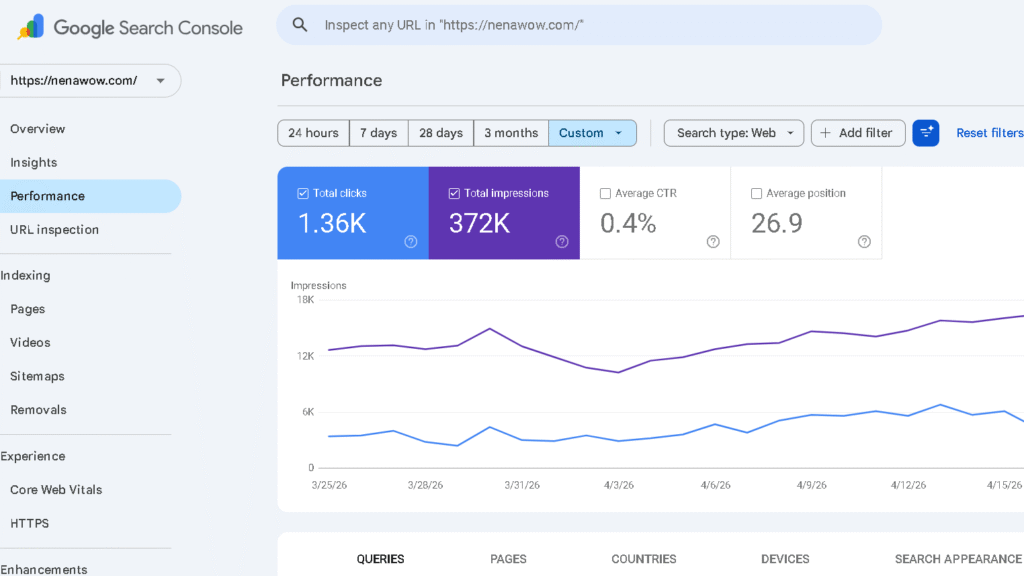
During the 30-day testing period, monthly organic traffic increased from approximately 1,000 visits to around 1,340 visits — a 34% lift based on Google Search Console data.
It’s important to frame this correctly.
This growth correlates with the structured optimizations guided by Semrush — including keyword gap targeting, content consolidation, technical fixes, and internal linking improvements — but correlation does not guarantee direct causation.
Two additional factors likely contributed:
- A previously unresolved noindex issue was identified and fixed during the audit process.
- Short-term traffic volatility is normal within 30-day windows, especially on smaller sites.
Semrush didn’t “create” 340 additional visitors on its own. The tool surfaced actionable opportunities — and the implementation of those insights, combined with resolving technical constraints, coincided with measurable forward movement.
That distinction matters.
Important caveat: 30 days is a short SEO window. Some of this movement reflects Google’s natural ranking fluctuation and possibly seasonal patterns. The noindex fix alone likely accounts for meaningful traffic recovery. The directional signal — that acting systematically on Semrush audit and keyword data produced measurable forward movement — held up throughout the period.
Semrush vs. Ahrefs: The Key Differences
These two platforms compete most directly. The pricing is similar. The core feature sets overlap significantly. But the differences are meaningful.
| Category | Semrush | Ahrefs |
|---|---|---|
| Backlink index size | Large (1,500 backlinks found on test site) | Largest (2,700 backlinks found on test site) |
| Keyword opportunities found | 70+ | 18 (more conservative, more calibrated) |
| Technical audit depth | Deepest (3,818 combined issues) | Comprehensive (173 well-prioritized issues) |
| Paid search data | ✅ Native integration | ❌ Not available |
| AI Overview tracking | Google-focused | Multi-engine (Google, Bing Copilot, others) |
| Content writing tools | ✅ ContentShake AI, Writing Assistant | ❌ Analysis only |
| Client reporting | ✅ White-label, drag-and-drop | ✅ Improved but less polished |
| Link outreach workflow | ✅ Built-in | ❌ Third-party required |
| Entry price | $139.95/month | $129/month |
Choose Ahrefs over Semrush if your work is purely organic SEO, backlink index completeness is critical, or you prioritize multi-engine AI Overview tracking as generative search expands.
Choose Semrush over Ahrefs if you manage paid and organic channels simultaneously, you need white-label client reporting, or you want integrated content creation tools inside your SEO platform.
Semrush vs. Ubersuggest: The Key Differences
The price gap between Semrush and Ubersuggest is large. The data gap is larger.
| Category | Semrush | Ubersuggest |
|---|---|---|
| Referring domains found | 499 | 358 |
| Keyword opportunities found | 70+ | 5 |
| Technical issues flagged | 3,818 combined | 72 |
| Orphaned pages identified | 92 | 0 |
| AI Overview tracking | ✅ Available | ⚠️ Basic |
| Paid search data | ✅ Strong | ❌ Limited |
| Rank tracking update frequency | Daily | Every 3–7 days |
| Price | From $139.95/month | From $12/month (or $120 lifetime) |
Ubersuggest is not a bad tool. It’s a different tool serving a different user. For a beginner building their first content plan, Ubersuggest’s interface is less intimidating and the lifetime deal removes recurring cost anxiety. For anyone competing in markets with meaningful traffic at stake, the data gap becomes limiting quickly.
The cannibalization issue and orphaned pages Semrush surfaced? Ubersuggest found neither. Those findings directly informed the highest-impact fixes made during the test period.
If you’re still deciding between tools, I’ve published a detailed Ahrefs vs Semrush vs Ubersuggest comparison covering real data, strengths, and ideal use cases.
Quick Decision Guide: Which Tool Should You Choose?
| If You Are… | Choose | Why |
|---|---|---|
| Agency running SEO + PPC | Semrush | Best all-in-one ecosystem |
| Heavy link-building SEO | Ahrefs | Larger backlink index |
| Beginner blogger | Ubersuggest | Lower cost, simpler interface |
| Technical SEO focused | Semrush | Stronger audit + reporting |
| Budget-conscious solo creator | Ubersuggest | Affordable entry |
Semrush Pros and Cons
Pros
- Broadest feature set of any SEO platform at this price point
- Strongest competitor intelligence including traffic source and behavioral data
- Best-in-class technical audit for complex sites
- Native paid search integration alongside organic research
- White-label reporting saves significant agency time
- ContentShake AI integrates keyword research into content drafting
- Daily rank tracking with cannibalization alerts and SERP feature monitoring
- Google Analytics and Search Console integration adds traffic context to technical data
Cons
- Backlink index smaller than Ahrefs — meaningful gap in referring domain coverage
- AI Overview tracking currently Google-focused; Ahrefs covers more engines
- High price relative to pure organic SEO tools
- Feature density requires a real learning investment
- Overwhelming audit volume — 3,818+ issues on a 220-post site requires triage discipline
- No built-in link outreach at the same sophistication level as dedicated tools like Pitchbox
Final Verdict
Semrush is a genuinely excellent platform. The question isn’t whether it works — it does, demonstrably — but whether it’s the right fit for your specific situation.
Buy Semrush if:
- SEO and paid search are both part of your regular workflow
- You manage client reporting and need white-label, polished output
- You want a single platform covering keyword research, content creation, competitor intelligence, and rank tracking
- Your business operates in a competitive market where deep competitive intelligence drives strategy
- You can justify the subscription based on measurable ranking improvements or client revenue
Consider Ahrefs instead if:
- Your work is purely organic SEO with no paid search involvement
- Backlink index completeness is critical to your link-building workflow
- You need the most comprehensive multi-engine AI Overview tracking available in 2026
- You prefer cleaner, more actionable audit prioritization over maximum issue volume
Consider Ubersuggest instead if:
- You’re learning SEO and want a low-pressure, affordable starting point
- A one-time lifetime payment makes more financial sense than monthly billing
- Your site is early-stage and not yet competing for high-authority keywords
The hybrid worth considering: Semrush for its content tools, competitor intelligence, and reporting — combined with Ahrefs Webmaster Tools (permanently free) for deeper backlink data on your own verified domains. For agencies and in-house teams, this combination covers more ground than either tool alone.
Semrush isn’t for everyone. But for the user it’s built for — an agency, an in-house marketing team, or a serious SEO professional managing multiple channels and clients — it’s the most complete platform available at its price point.
Before deciding, read my full Semrush vs SE Ranking comparison to see which tool delivers better data, usability, and value for your budget.
Frequently Asked Questions
For professionals managing SEO and paid search together, or agencies that need client reporting, yes. The data quality is strong, the feature breadth is unmatched, and the competitive intelligence tools genuinely inform strategy. For pure organic SEO on a tight budget, the price is hard to justify against tools like Ahrefs or SE Ranking.
Neither is categorically better. Ahrefs has a larger backlink index, more conservative keyword difficulty scoring, and broader AI Overview tracking across multiple search engines. Semrush covers paid search natively, has stronger client reporting, built-in content creation tools, and the deepest site audit in this comparison.
Accuracy is high and generally aligns with Google Search Console trends. Semrush surfaces more keyword opportunities than Ahrefs for the same seed terms (70+ vs. 18 in my testing), though Ahrefs’ more conservative scoring tends to better reflect real SERP competition in difficult keyword segments.
It’s good but not the best. My test found Semrush returning 1,500 backlinks across 499 referring domains for nenawow.com. Ahrefs found 2,700 backlinks across 1,300 referring domains on the same site. The gap is meaningful for competitive link research.
Most individual SEO professionals and small agencies start with Pro ($139.95/month) and upgrade to Guru when they need historical data, more tracked keywords, or the content tools. Guru is where the platform’s full value becomes accessible.
No, and it doesn’t try to. Semrush integrates with both tools to add SEO context to your analytics data. GSC and GA remain the authoritative source of truth for your own site’s performance.