
I signed up for MorningScore because I wanted to test its GEO feature. That is what the landing page sells hardest, and it is the part of SEO software I care most about right now. This MorningScore review comes from running it on a real site, and what I found was more interesting than I expected — and not entirely in the way the marketing suggests.
Table of Contents
MorningScore Review: Quick Verdict
MorningScore is a solid all-in-one SEO tool aimed at bloggers, small businesses, and affiliate marketers who want clean data without the learning curve of Semrush or Ahrefs. The keyword research is useful. The website lookup feature is genuinely good. The Missions system makes it easy to know what to do next. That said, the GEO feature was still processing when I wrapped up testing, so I cannot give it a full score yet. If the AI visibility reporting delivers on what the platform promises, this becomes a much stronger buy. Right now, it earns 4.1 out of 5.
What Is MorningScore?
MorningScore is a Danish-built SEO platform that launched in 2019. It covers keyword research, rank tracking, backlink analysis, SEO health audits, competitor tracking, and AI content writing. More recently, it has added GEO scoring, GPT tracking, and Google AI Overview monitoring. The idea is to put all of that in one place with an interface simple enough that you do not need to be an SEO professional to use it.
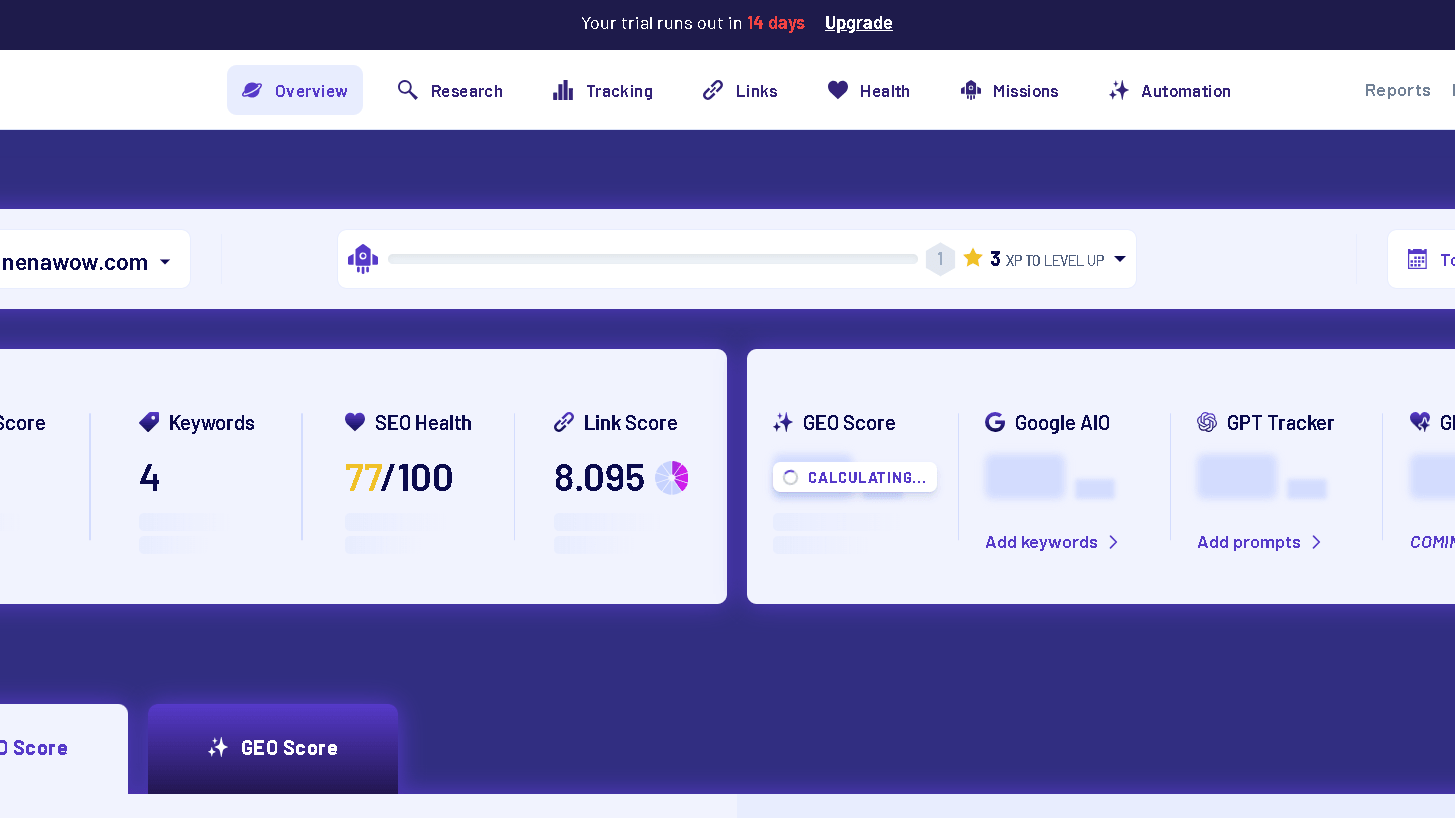
The platform takes a gamified approach. You earn XP points for completing SEO tasks. You level up. It sounds gimmicky, but in practice the Missions system is one of the better ways I have seen a tool communicate priorities to someone who is still learning. That said, the game layer is optional — you can ignore the XP entirely and just use the data.
MorningScore Pricing
MorningScore offers four paid plans. There is a 14-day free trial with no credit card required.
| Plan | Monthly Price | Keywords | Websites |
|---|---|---|---|
| Lite | $69/mo | Up to 200 | 1 |
| Business | $99/mo | Up to 500 | 10 |
| Pro | $159/mo | Up to 1,500 | 20 |
| Premium | $299/mo | Unlimited | Unlimited |
Annual billing gives you two months free. There are no hidden fees. For most bloggers and small site owners, the Business plan at $99 a month covers what they need. The Lite plan at $69 feels a little thin given the keyword cap — 200 keywords fills up fast on an active site.
How I Tested MorningScore
About My Website
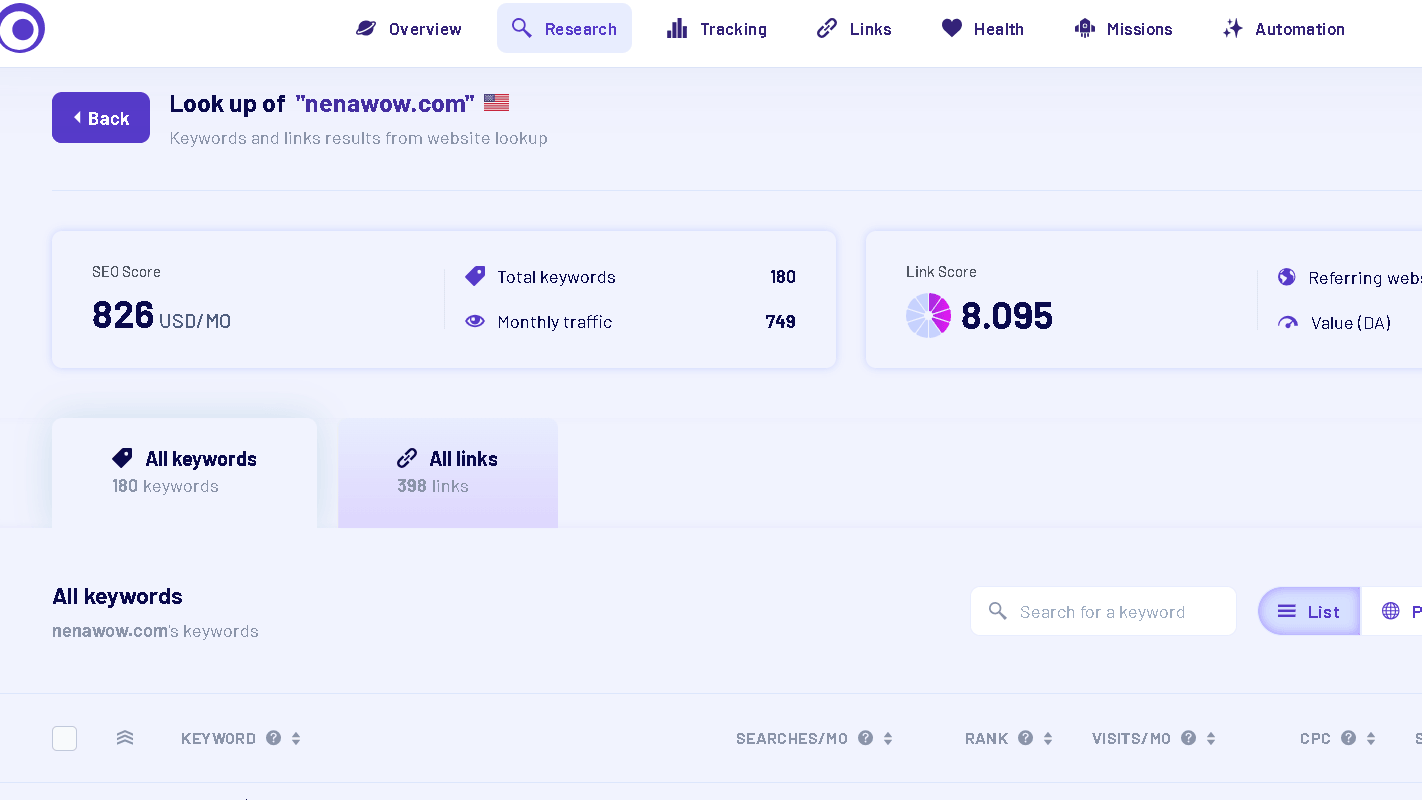
I ran MorningScore on nenawow.com, which has more than 300 published articles. The site covers AI tools, SEO software, and productivity platforms. It has a Domain Rating of around 11 and sits in a space where keyword competition is real but not brutal. That made it a good test case — enough content to surface meaningful audit results, but not so authoritative that every metric looks flattering by default.
Testing Methodology
I ran the full site audit, set up rank tracking, tested keyword research with live queries, used Website Lookup on a competitor site, and ran Rank Writer on a real topic I wanted to cover. I also set up GEO tracking and left it running. Then, I took notes on what loaded fast, what loaded slow, and what did not finish at all.
Why I Wanted to Test the GEO Feature
The site had 815 landing pages detected by the audit. I wanted to know how many of those were showing up in AI-generated answers. That question matters more every month for content sites.
MorningScore’s GEO dashboard promises a score, a breakdown by platform, and tracking over time — all inside the same tool I use for rank tracking. Getting that data in one place rather than paying for a separate GEO platform is exactly the kind of consolidation worth testing.
If you’re just getting started with AI visibility, I recommend reading my guide on How to Check AI Visibility for Free, where I walk through several free tools and explain how to establish a baseline before investing in paid monitoring platforms.
MorningScore Dashboard Overview
First Impressions
The dashboard loads fast. That is the first thing I noticed. Most SEO platforms make you wait while they pull data. MorningScore gives you a working view within a few seconds — and that speed held up consistently across my sessions, not just on the first login.
User Interface and Ease of Use
Navigation sits in a left sidebar. Each section is one click away. I did not lose time looking for things, which is not something I can say about Semrush when I first used it. Setup to first data view took me under ten minutes. For a full-feature SEO platform, that is fast.
Keyword Research Features
Finding New Keyword Opportunities
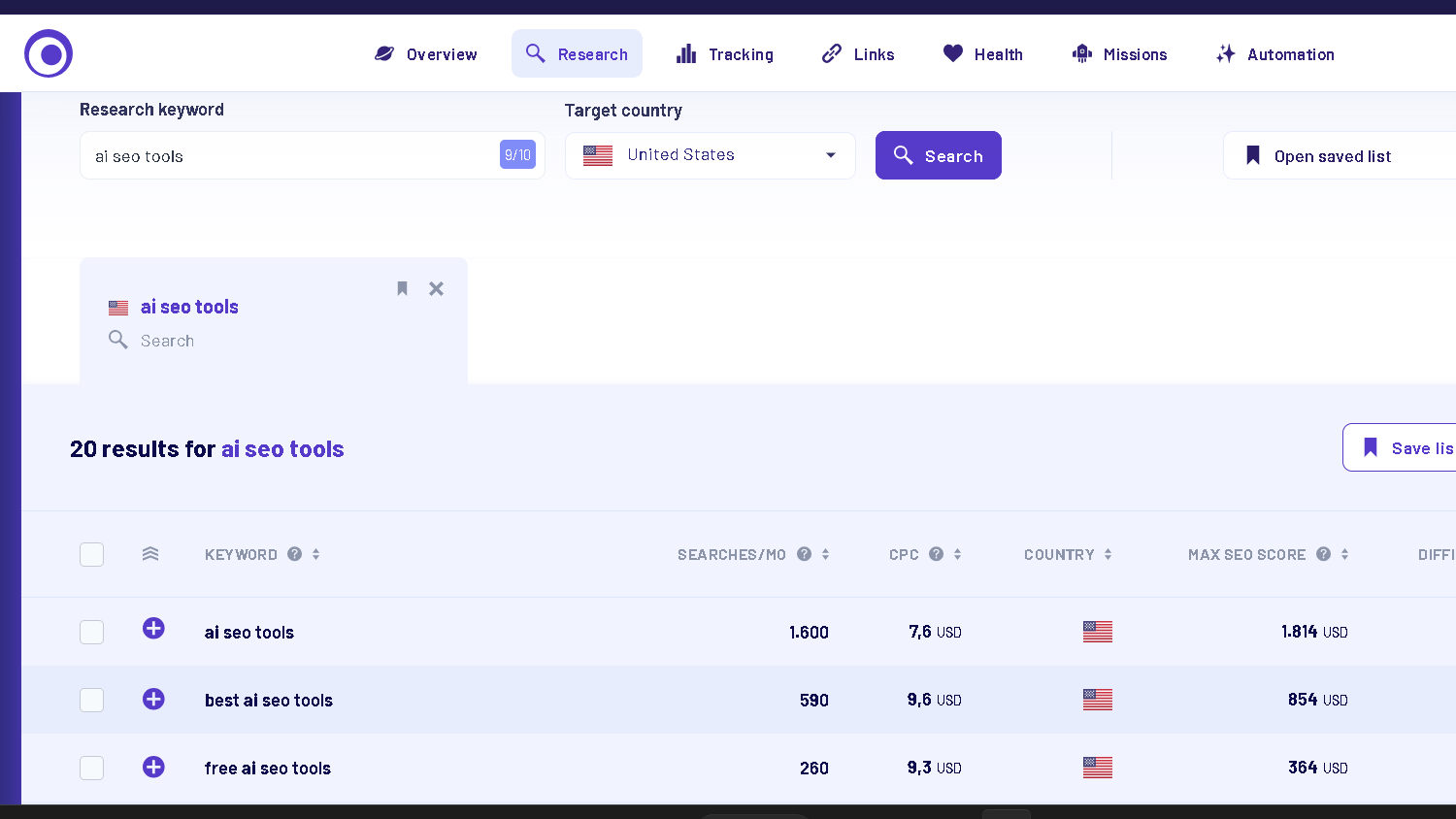
Keyword research in MorningScore covers the basics well. You get search volume, CPC, difficulty, and country targeting. The interface is simple — type a seed phrase, get a list, filter it. It works without friction, and friction is what kills keyword research sessions on slower tools.
AI SEO Tools Keyword Research Example
I ran a test query for “AI SEO Tools.” MorningScore returned a clean set of results. “AI SEO Tools” came in at 1,600 searches per month. “Best AI SEO Tools” showed 590. “Free AI SEO Tools” showed 260. Those numbers matched what I see in Semrush within a reasonable margin. More importantly, the difficulty scores felt honest — they did not dramatically undersell hard keywords the way some smaller tools do to make their data look more actionable.
My Thoughts on Keyword Data Quality
To be fair, the database is smaller than Semrush or Ahrefs. You will notice that on niche queries. Some long-tail keywords showed no data where Semrush had at least a volume estimate. For broad research and content planning, it is enough. For deep competitive keyword analysis, you will hit the ceiling sooner than you would on a bigger platform. That is a real tradeoff.
Rank Tracking and Keyword Monitoring
Tracking Existing Rankings
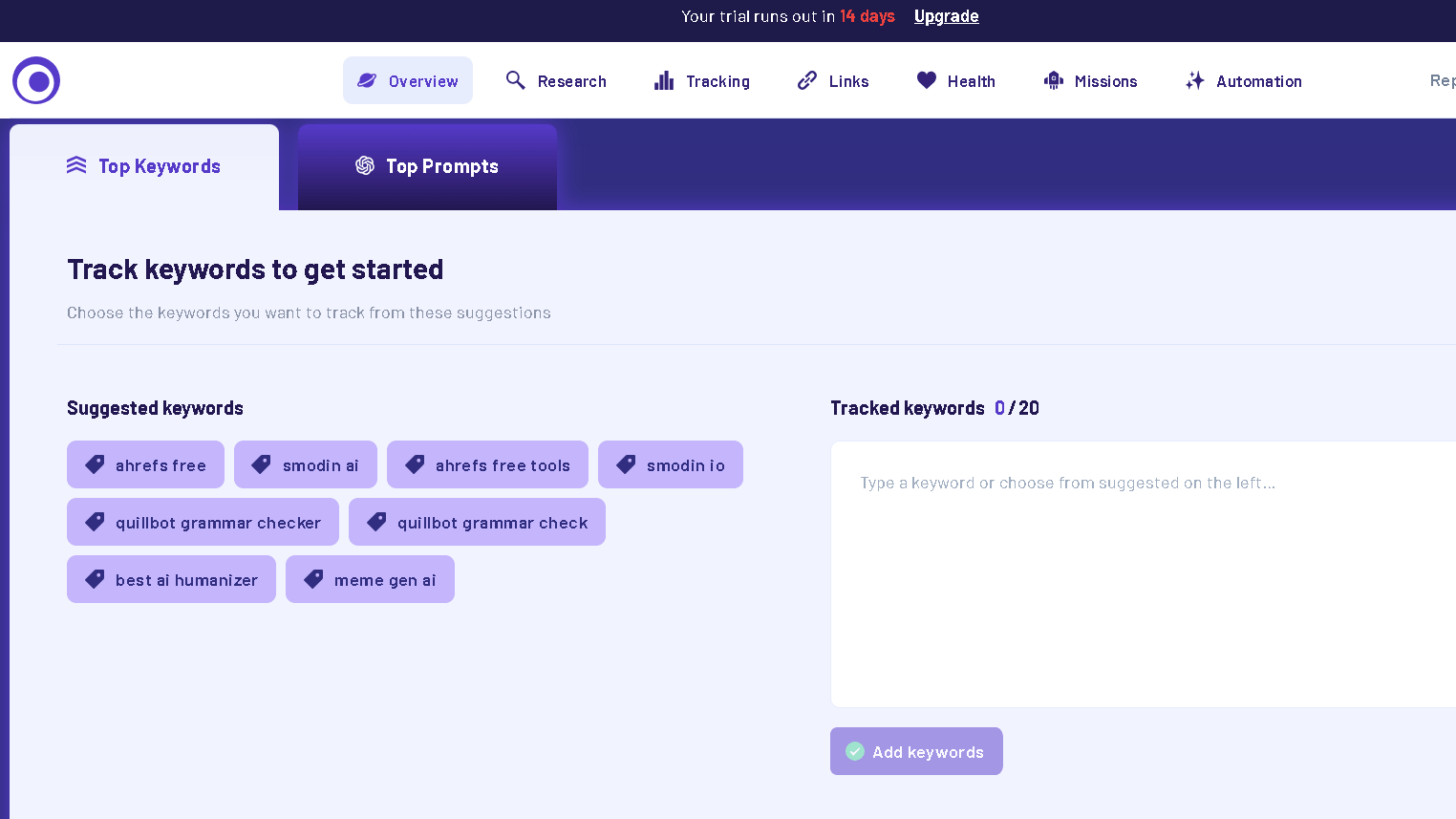
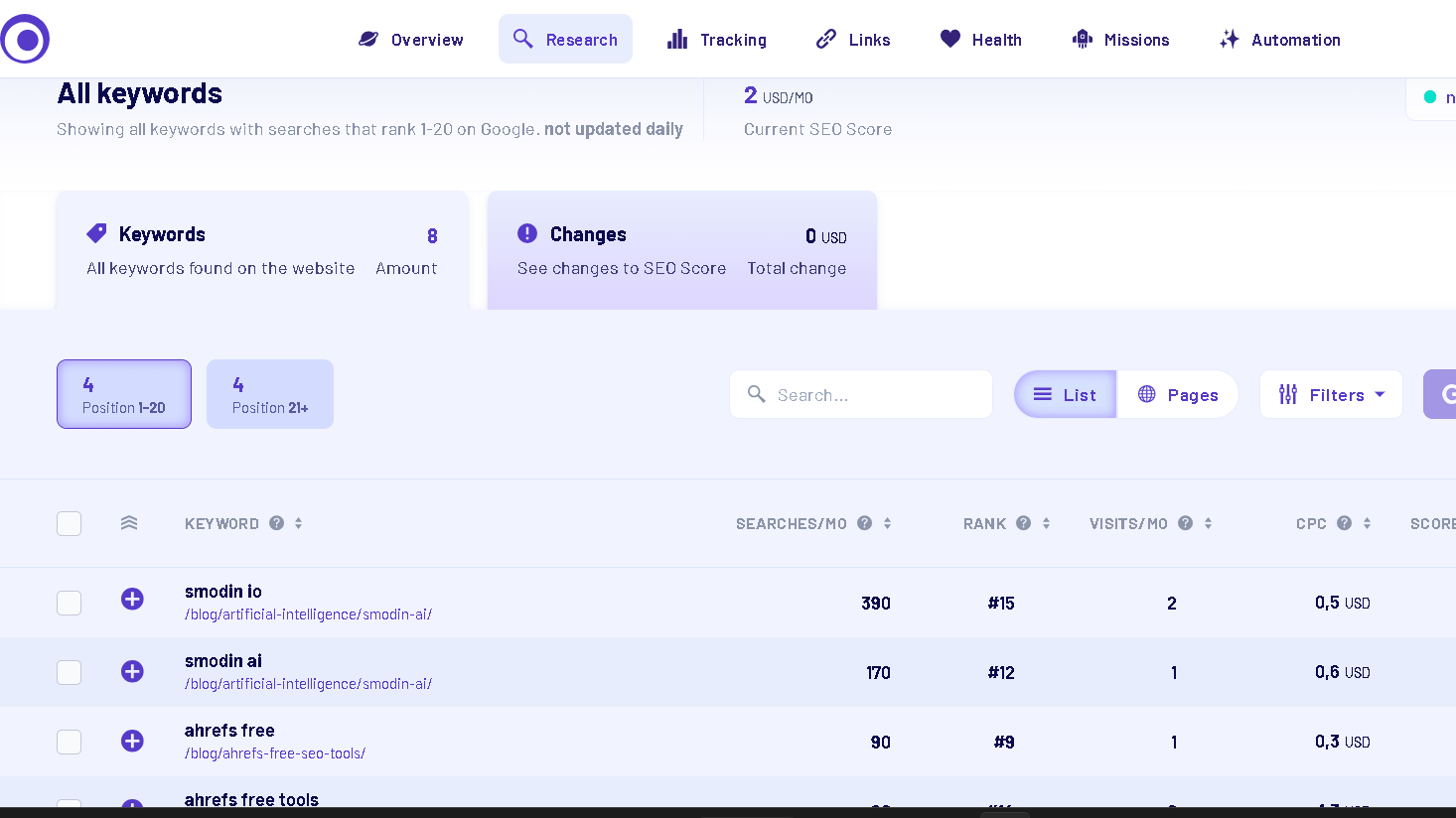
Rank tracking is one of the core features and it worked well during my test. Rankings updated daily. The view is clean — you see movement at a glance without having to dig through menus. I added 40 keywords from the site and the data populated quickly. The turnaround felt fast for a tool at this price point.
Automatic Keyword Discovery
This was one of the features that surprised me. MorningScore pulled in keywords the site already ranks for without me having to enter them manually. It surfaced: Ahrefs Free, Ahrefs Free Tools, Smodin AI, Smodin IO, QuillBot Grammar Checker, and Best AI Humanizer. Every one of those matched actual content on the site. That kind of automatic discovery is something most tools at this price point make you do yourself.
Website Lookup Feature
Analyzing Competitor Websites
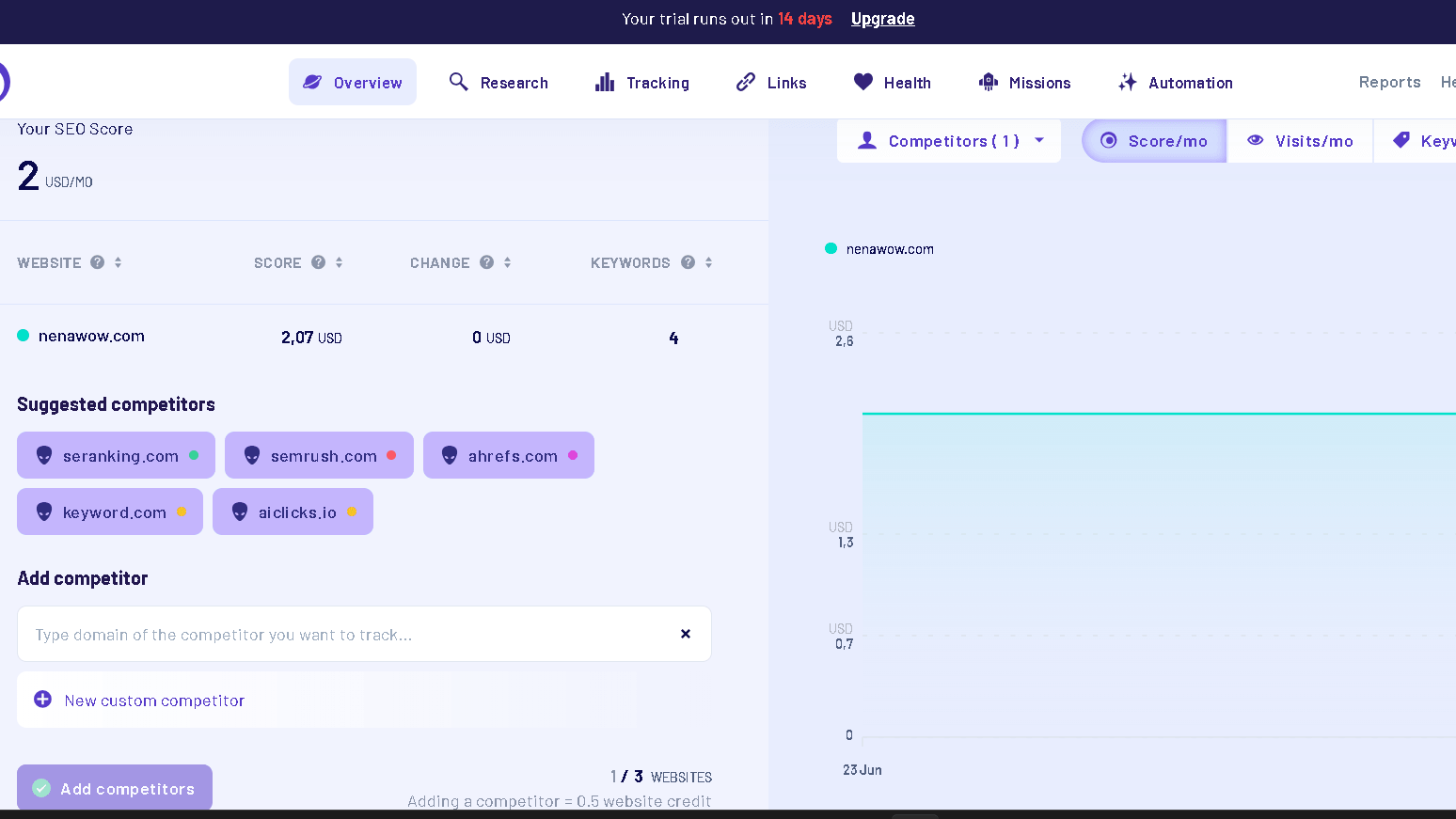
Website Lookup lets you drop in any domain and get an instant read on its ranking keywords, estimated traffic, referring websites, and authority score. No project setup required. No waiting. It just drops you in.
Fritz.ai Example
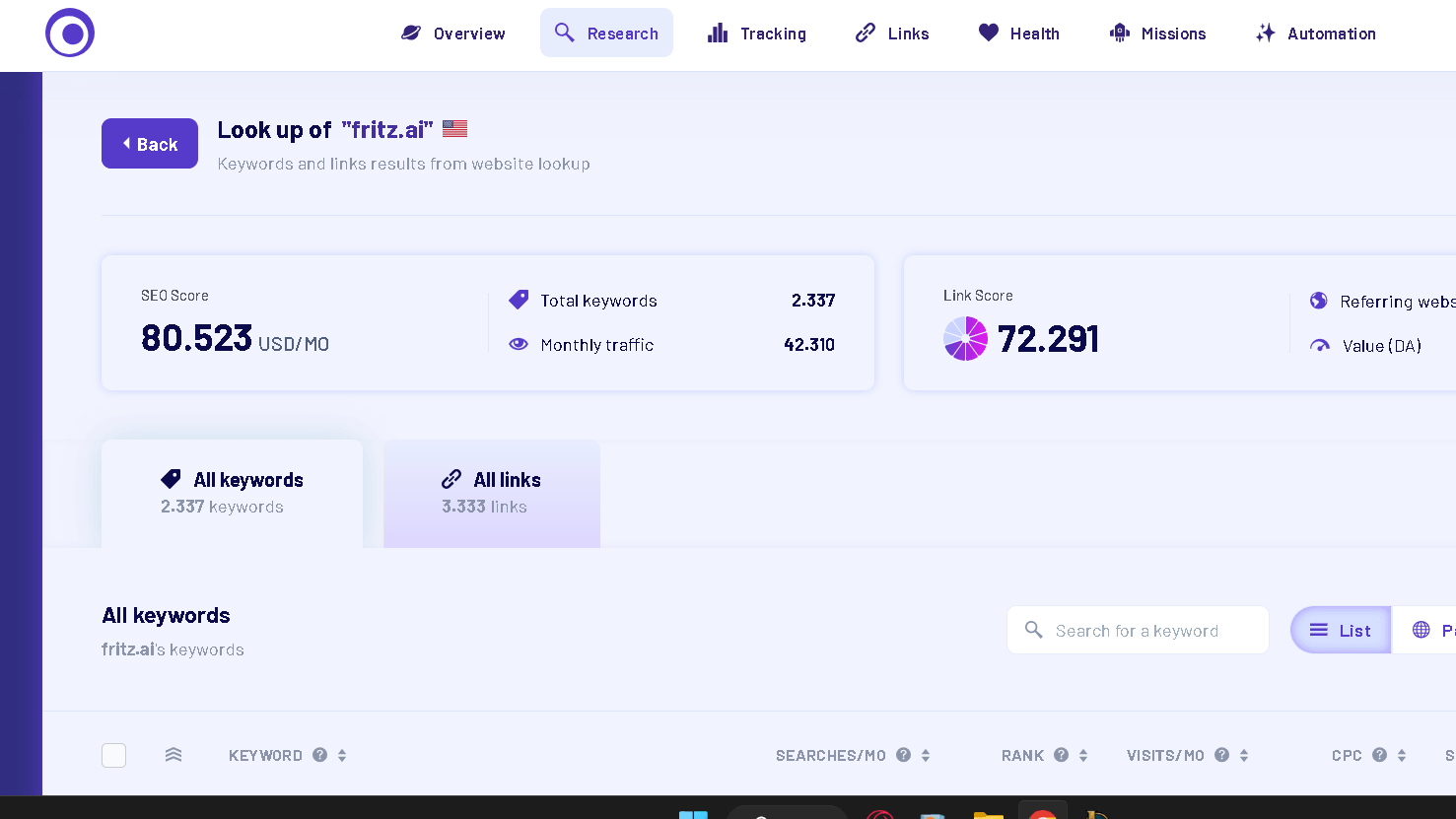
I used fritz.ai as a test subject. MorningScore estimated 2,337 ranking keywords, 42,310 monthly visits, 3,333 referring websites, a Link Score of 72, and an authority score of 51. I cross-checked those numbers against what I know from other tools. The traffic estimate felt slightly high, but the keyword count and referring domain count were in a plausible range. The data seems to refresh on demand rather than pulling from a static cache, which the platform says accounts for slower first loads — you get current numbers rather than month-old snapshots.
Why Website Lookup Was One of My Favorite Features
In practice, this is one of the most useful things in the platform. You can size up any competitor in under a minute without leaving your dashboard or setting up a new project. For affiliate marketers who track multiple competing sites, that speed is real value. It is the kind of feature that saves time in small amounts that add up.
SEO Health Audit
SEO Health Score Results
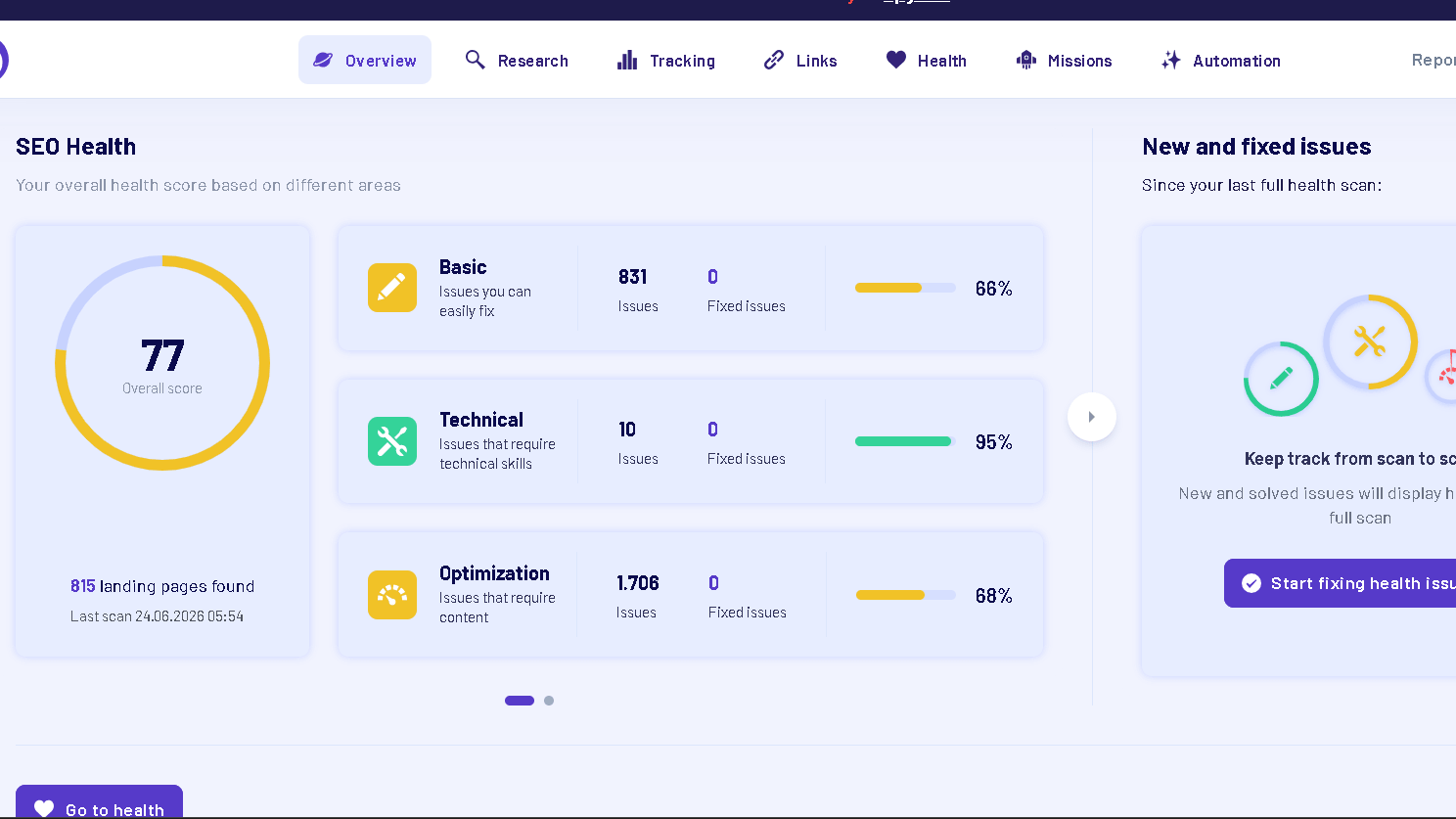
MorningScore gave nenawow.com a Health Score of 77 out of 100. The audit detected 815 landing pages. It flagged 831 basic issues, 10 technical issues, and 1,706 optimization issues. Those numbers sound alarming until you look at the breakdown. Most of the flags are content and optimization issues, not broken infrastructure — and that distinction matters.
Technical SEO Findings
The Technical SEO score came in at 95 percent. That was the most encouraging result in the whole audit. For a site built and managed without a developer, hitting 95 on technical SEO means the foundations are solid. I was not expecting that number, and it shifted how I read the rest of the audit.
Optimization Opportunities
The 1,706 optimization issues are where the real work is. Most of them are content-level: thin meta descriptions, missing schema, internal linking gaps. For a 300-article site, that list is not unusual. The audit gives you enough to prioritize without dumping everything on you at once.
What Surprised Me Most
The gap between the technical score (95 percent) and the overall health score (77 out of 100) tells you something useful. The site is technically sound. The drag is content optimization. That gap is actually actionable information — and MorningScore surfaced it clearly without me having to build a custom report. I found that easier to interpret than comparable audit outputs I have seen in other tools.
Competitor Tracking
Suggested Competitors
MorningScore automatically suggested Semrush, Ahrefs, SE Ranking, Keyword.com, and AIClicks as competitors. Every one of those is genuinely relevant to the site’s content. I did not prompt it with any of those names. It figured that out from the domain alone, which tells you the topic detection is working well.
Monitoring Competing Websites
Competitor tracking lets you watch keyword movements and traffic changes over time. The view is simple — key metrics side by side, no custom report required. Simple is the right call here. Most users checking competitor data want a quick read, not a full analysis session, and the layout respects that.
How It Compares to Other SEO Platforms
The honest answer is that MorningScore sits below Semrush and Ahrefs on raw data depth, but above most of what you find at the $69-to-$99 price point. SE Ranking is the closest real comparison. MorningScore wins on interface speed and the Missions system. SE Ranking wins on keyword database size. Which one you want depends on what you are actually here for.
MorningScore Missions
What Are SEO Missions?
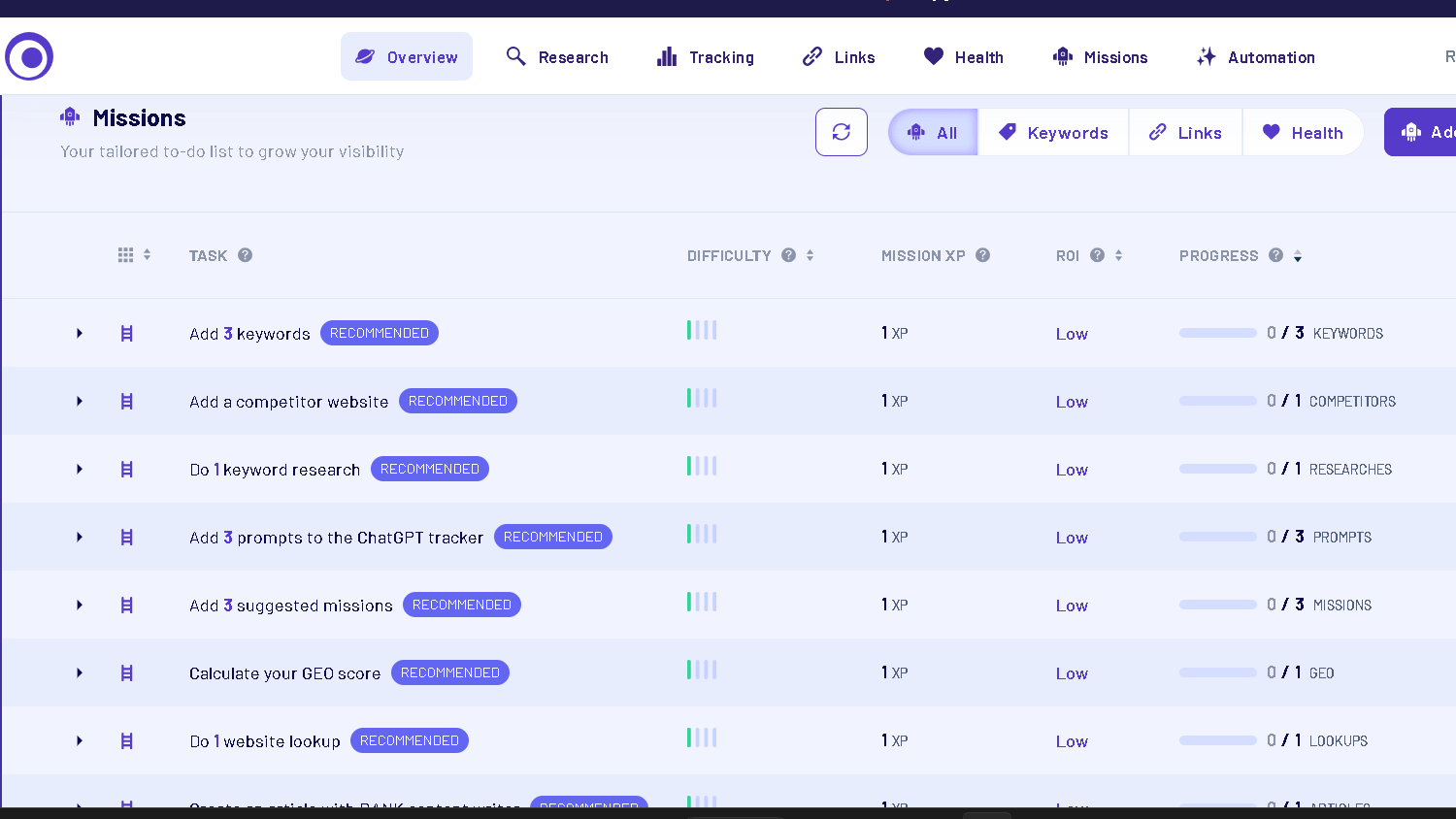
Missions are suggested tasks the platform thinks will move the needle for your site. During my testing, MorningScore recommended: add keywords, add competitors, run keyword research, configure ChatGPT tracking, calculate your GEO score, and run a website lookup. Each mission has a clear action, a reason it matters, and an XP reward when you complete it. The XP is optional. The task list is not.
Why Beginners Will Like This Feature
The thing is, most SEO tools give you data and leave you to figure out what to do with it. That is fine if you already know SEO. If you are still learning, it is paralyzing — you open a dashboard full of numbers and close the tab ten minutes later having done nothing. Missions solve that problem directly. They give you a list, a reason, and a clear next step. That is rare at this price point.
Testing MorningScore Rank Writer
Creating an Article About AI Visibility Tools
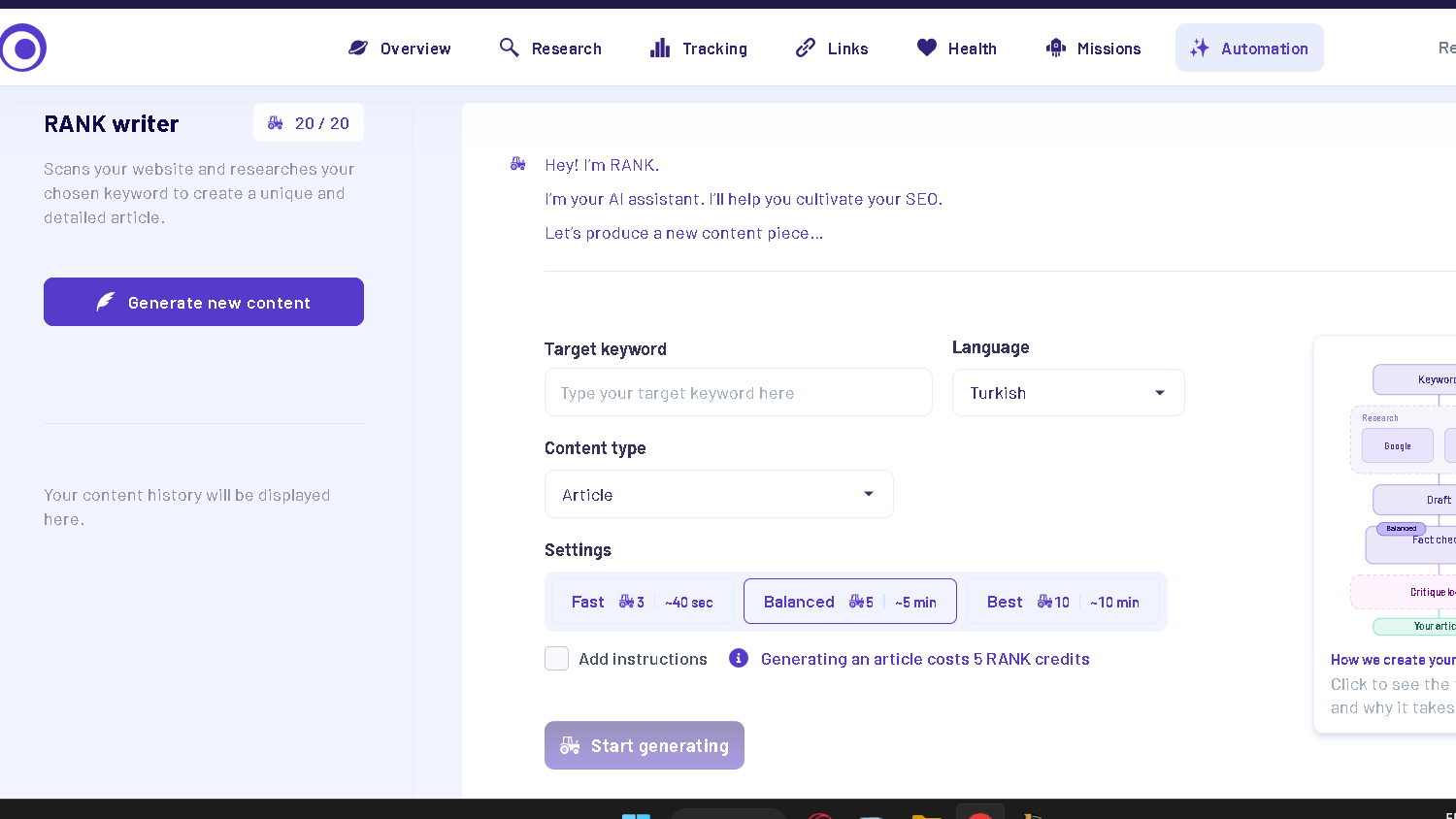
I tested Rank Writer using the keyword “Best AI Visibility Tools.” I gave it custom instructions: SEO-focused, reference real tools, keep filler low, make it practical. Why? I wanted to see how it handled a topic where generic output would be obvious — AI visibility is a space I know well enough to spot lazy content fast.
Content Quality Analysis
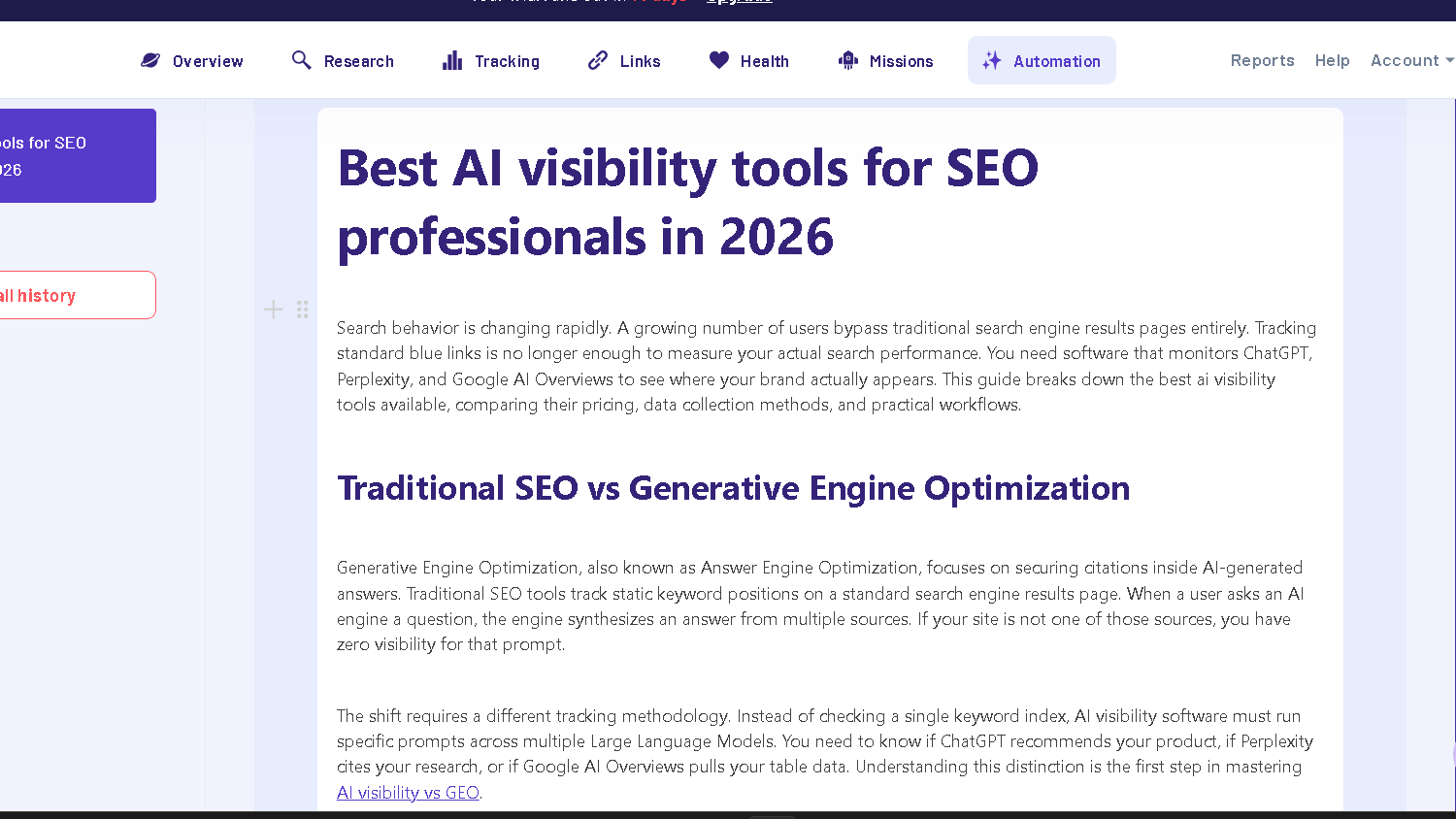
The article came back with a solid structure. It explained GEO correctly. It differentiated AI visibility from traditional SEO, which most generic AI writers get wrong or skip entirely, and it referenced real tools by name. The output was above average compared to most built-in AI writers I have tested — better structure, more accurate terminology, less padding. That is not a low bar in this category.
What Rank Writer Did Well
The structure was clean and logical. The terminology was accurate. It referenced real tools rather than inventing names, which is the failure mode I see most often in built-in AI writers. The subheadings were usable. The opening paragraph did not waste time.
Where It Still Needs Improvement
It lacked original insight. It lacked anything that felt like first-hand testing. The prose was competent but flat — competent in the way a summary feels competent when you needed an argument. You would need to rewrite a meaningful chunk of it before publishing, mostly to add specificity and a real point of view. Useful as a first draft. Not as a finished product.
MorningScore GEO and AI Visibility Features
GEO Score
The GEO Score promises to tell you how visible your brand is in AI-generated answers. MorningScore queries ChatGPT and other AI platforms using prompts relevant to your site and tracks whether you appear in the output. The score is an aggregate of those checks across multiple prompt sets. That is the right approach — single-prompt checks are too noisy to be useful on their own.
One metric MorningScore includes is AI share of voice, which measures how often your brand appears compared to competitors. I explain this concept in more detail in AI Share of Voice Explained, including how to interpret changes over time.
MorningScore is only one option. If you want to compare it with free and paid alternatives, see my complete NenaWow AI Visibility Tools guide covering AI visibility checkers, monitoring platforms, and GEO software.
GPT Tracker
GPT Tracker runs specific prompt sets and logs whether your site gets cited. The idea is to show you which of your topics or pages are getting picked up by AI and which are not. That is genuinely useful data for a content site. Useful data, if it arrives.
Tracking citations is only part of the equation. If you also want to understand why AI assistants cite some pages and ignore others, read What Makes Content More Likely to Be Cited by AI?, where I break down the content signals that increase citation likelihood.
Google AI Overview Tracking
This feature monitors whether your pages appear in Google’s AI Overview results. Given that AI Overviews are now a real traffic factor for content sites, having that tracked inside your SEO tool rather than checked manually makes sense. The feature is there. I just have not seen it deliver output yet.
My Experience During Testing
Here is the issue: the GEO score calculation was still in progress when I wrapped up testing. The dashboard showed all the right sections — GEO Score, GPT Tracker, Google AI Overview Tracking, GEO Health — but the final analysis had not completed. For a site with 815 detected landing pages, the processing load appears to be real. I have this section marked to update once the report finishes. I cannot score a feature I have not seen deliver output, and I will not pretend otherwise.
MorningScore Pros and Cons
Pros
Fast, clean interface that held up consistently across my sessions. Website Lookup is one of the best quick-competitor tools I have used at this price. Keyword discovery is automatic and accurate — it surfaced six relevant terms without any manual input from me. The audit result was clear and easy to act on. Rank Writer output was above average compared to most built-in AI writers. Missions give beginners a clear action list rather than just a data dump. AI visibility features are included in the plan price, not sold as an add-on.
Cons
The GEO analysis was too slow to complete during my testing — that is the biggest open question on the platform right now. The keyword database is smaller than Semrush or Ahrefs and you will feel that on niche long-tail queries. AI-generated content still needs a real edit before it is publishable. Some authority metrics need more context for new users to interpret correctly — the score alone does not tell you what to do with it.
MorningScore vs Semrush
| Feature | MorningScore | Semrush |
|---|---|---|
| Price | ✔ | ✖ |
| Keyword Database | ✖ | ✔ |
| Ease of Use | ✔ | ◐ |
| GEO Features | ✔ | ✔ |
| Learning Curve | ✔ | ✖ |
Keyword Research
Semrush wins on volume. Its keyword database is one of the largest available, and long-tail coverage runs deeper than what MorningScore offers. That said, for most content planning at the small-site level, MorningScore’s data is good enough. The gap matters more when you are doing deep competitive research across hundreds of keywords — that is when you will notice what is missing.
Website Analysis
Both tools do competitor analysis well. MorningScore’s Website Lookup is faster and easier to get into. Semrush’s Domain Overview is more detailed and more accurate on traffic estimates. For a quick read, MorningScore wins. For a deep read, Semrush is still the better tool.
AI Visibility Features
This is where MorningScore is trying to stand apart. Semrush has added some AI visibility tracking, but MorningScore has built GEO scoring, GPT tracking, and Google AI Overview monitoring into its core product. If those features work as described, MorningScore wins this category at a lower price. I am reserving final judgment until my GEO report completes — but the intent is right.
This difference matters because strong Google rankings do not automatically translate into AI citations. I explain why that happens in Why Your Site Ranks But Gets No AI Citations.
Pricing Comparison
MorningScore starts at $69 a month. Semrush starts at $139.95 a month. For the keyword and audit features at each entry price, MorningScore offers real value at the low end. The gap closes as you move up to professional-tier plans, where Semrush’s data depth becomes harder to ignore.
Who Should Use MorningScore?
Bloggers
If you run a content site with one to five websites and want clean keyword data, daily rank tracking, and a tool that tells you what to work on next, MorningScore is worth the $99 a month. The learning curve is low. The output arrives fast.
Affiliate Marketers
The Website Lookup feature alone is useful for affiliate sites tracking multiple competitors. Combined with automatic keyword discovery and a clean rank tracker, it covers the core workflow without requiring you to become an SEO expert first. That is the right fit for this audience.
Small Businesses
The Missions system makes MorningScore a strong pick for small business owners who handle their own SEO without a dedicated team. It gives you a clear action list rather than a wall of data. That is rare and worth something.
SEO Professionals
That said, if SEO is your full-time work and you need deep keyword data, large crawl limits, and detailed competitor analysis, MorningScore will feel limited. It is not built for agency-scale work. The keyword cap on even the Pro plan is one clear sign of that.
Who Should Avoid MorningScore?
Anyone running more than 20 websites at scale will hit the ceiling quickly. Agencies handling large client rosters will find the data depth insufficient. Anyone whose primary reason to sign up is the GEO feature should wait — not because the feature is bad, but because I have not seen it complete on a large site yet, and I would rather you see real test data before spending money on that basis. Mine will follow once the report finishes.
Is MorningScore Worth It?
For bloggers and affiliate marketers in the $69 to $99 range, yes. The core SEO tools work. The interface is fast. The Missions system adds something most tools do not offer. The AI visibility features could push this to a clear recommendation if they deliver. Right now, MorningScore is a good all-in-one tool for small sites that is building toward something more interesting. That is a fair place to be.
Nena’s Quick Verdict
I went in expecting to test a GEO tool. What I found was a well-built SEO platform with GEO features still maturing. The Website Lookup, automatic keyword discovery, and 77-out-of-100 health audit were all strong. The Rank Writer output was better than I expected from a built-in AI writer. The GEO score processing ran too long to complete during testing, and I will not pretend that is not a flag. It is a flag.
If you are running a small content site and want an SEO tool that is fast, clean, and does not require a learning curve, MorningScore earns the trial. That combination is harder to find than it looks.
Frequently Asked Questions
Is MorningScore a Good Alternative to Semrush?
For small sites and bloggers, yes. MorningScore costs less and is easier to get into at the entry level. Semrush has a larger keyword database and deeper reporting. If you run a professional SEO operation, Semrush is still the stronger tool. For one to five sites, MorningScore is worth trying on the free trial first.
Does MorningScore Track AI Visibility?
Yes. It includes a GEO Score, GPT Tracker, and Google AI Overview tracking across its paid plans. These monitor how often your site appears in AI-generated answers from ChatGPT, Gemini, and related platforms. During my testing, the GEO report was still processing on a large site, so expect some wait time on first run.
How Accurate Is MorningScore?
Reasonable for keyword volume and rank tracking. Traffic estimates from Website Lookup felt slightly high in my testing. Keyword volumes I checked against Semrush were in a workable range for planning. Do not treat the authority scores as definitive without cross-checking.
Does MorningScore Have an AI Writer?
Yes. It is called Rank Writer. I tested it on “Best AI Visibility Tools” and the output was above average for a built-in AI writer. Structure and terminology were solid. It still needs editing before publish — add specificity, real observations, a point of view. Useful draft tool. Not a one-click solution.
Can MorningScore Track Google AI Overviews?
Yes. It monitors whether your pages appear in Google’s AI Overview results. Meaningful feature given how much AI Overviews now affect traffic. My results had not completed yet, but the feature is set up and running.
Is MorningScore Worth the Price?
At $69 to $99 a month, yes — for the right user. Bloggers and small business owners will find the value is real. Agencies and professionals who need deep data will outgrow it fast. Know which category you are in before you sign up.