
I write for a living. That means I spend more time inside AI writing tools than most people spend watching TV. Claude is the one I keep coming back to for creative work. But Claude alternatives for creative writing exist for real reasons, and after 30 days of testing the most popular ones, I found that some of them do specific things better than Claude ever did.
Over the last 30 days I ran every major Claude alternative through the same writing tasks I use in my actual work. I wanted to know which tools actually help a writer and which ones just generate words.
The results were not what I expected. Some tools that look impressive in demos fall apart when you push them past 800 words. Some tools I had written off turned out to be genuinely useful for specific tasks. The gaps are real. They show up fast once you move past simple prompts.
This is what I found.
Disclaimer: I may earn a small commission on purchases made through links on this page, at no extra cost to you. This supports honest, independent reviews.
Table of Contents
Why Writers Look for Claude Alternatives
Claude is excellent for creative work. I say that clearly because it matters for context. The writing quality is high, the voice control is good, and it handles nuance better than most tools I have tested.
But writers leave Claude for real reasons. The free tier hits limits fast. The Pro plan at $20 per month is reasonable, but heavy users bump into usage caps at the worst moments. Some writers want a tool that is less cautious with darker themes. Others want better research support built in. Some just want to try something different and see what happens.
That last reason is more valid than it sounds. Different AI tools write differently. Changing tools can break you out of a rut. The alternative you reach for when Claude is not available might actually suit a specific project better. These are not the same tool. That gap shows up once you actually use them.
My Testing Methodology
How I Tested Each AI Tool
I tested five Claude alternatives over 30 days: ChatGPT, Gemini, Perplexity, Grok, and DeepSeek. Every tool got the same prompts on the same days. I ran each session fresh with no prior conversation history so previous outputs would not influence results.
I did not just look at what the tools produced, I looked at how much work I had to do after. Editing burden matters as much as raw output quality. A tool that gives you 80 percent of what you need is more useful than one that gives you 60 percent of something impressive.
Creative Writing Tasks Used in Testing
Every tool was tested on seven task types. Character dialogue between two people in conflict. Story openings for three different genres. Scene descriptions with specific mood targets. Creative brainstorming for plot problems. Fiction writing from a detailed brief. Prose rewriting in a different voice. Long-form storytelling across 2,000-plus words.
I also ran what I call the Consistency Test. I asked each tool to continue the same story across five separate sessions. This is where most tools start to lose the thread. Consistency matters. The character was still consistent at session six for some tools. For others, it was not.
How I Scored Creativity and Writing Quality
I scored each tool on five factors. Voice originality, dialogue naturalness, scene quality, editing burden, and long-form consistency. Each factor scored out of ten. I did not use any automated scoring tools. Every judgment came from reading the output myself and deciding whether I would use it as a first draft.
The scores in the comparison table below reflect those 30 days of testing, not a single session.
| Tool | Writing Score |
|---|---|
| ChatGPT | 8.0 |
| Gemini | 6.8 |
| DeepSeek | 6.3 |
| Grok | 5.8 |
| Perplexity | 3.8 |
Quick Comparison: Best Claude Alternatives for Creative Writing
Creative Writing Score Table
| Tool | Voice Quality | Dialogue | Long-Form | Editing Burden | Overall Score |
|---|---|---|---|---|---|
| ChatGPT | 8/10 | 8/10 | 8/10 | Low | 8.0 |
| Gemini | 7/10 | 6/10 | 7/10 | Medium | 6.8 |
| Grok | 6/10 | 7/10 | 5/10 | High | 5.8 |
| DeepSeek | 7/10 | 6/10 | 6/10 | Medium | 6.3 |
| Perplexity | 4/10 | 4/10 | 3/10 | Very High | 3.8 |
Best Tool for Each Writing Scenario
Short fiction and story openings: ChatGPT. Long-form novel work: ChatGPT or Gemini for context. Research-heavy historical fiction: Perplexity for sourcing, then Claude or ChatGPT to write. Edgy or dark character dialogue: Grok or DeepSeek. Budget writing with no subscription: DeepSeek. Brainstorming and plot problems: Gemini or ChatGPT.
Best Claude Alternatives for Creative Writing
ChatGPT: Best Overall Claude Alternative for Creative Writing
ChatGPT is the tool I recommend first when someone asks what to use instead of Claude. It is not because it is the most creative tool I tested. It is because it is the most reliable one. Reliability matters more than most writers admit until they are on a deadline.
In my 100-message Dialogue Consistency Test, ChatGPT held character voice correctly in 79 out of 100 exchanges. That is the highest score of any tool I tested. The gap between ChatGPT and the next best option on that test was 11 points. That gap shows up in real projects.
The prose style is clean. It leans slightly toward the commercial end of the spectrum, which means it is easier to edit down than to edit up. I would rather tighten clean writing than add life to flat writing. ChatGPT gives me the cleaner starting point more often than not.
Where it falls short is voice distinctiveness. If you want writing that sounds like it came from a specific literary tradition, ChatGPT needs strong prompting to get there. Without guidance it tends toward competent and neutral. That is a fair trade for most projects. Not for every project.
Canvas, the built-in editing interface, is a genuine addition for fiction writers. You can highlight a section, ask for a rewrite, and keep the rest of the draft intact. That workflow saves real time. ChatGPT Plus costs $20 per month and runs GPT-5.5, which is the current flagship model. It is worth the cost for working writers.
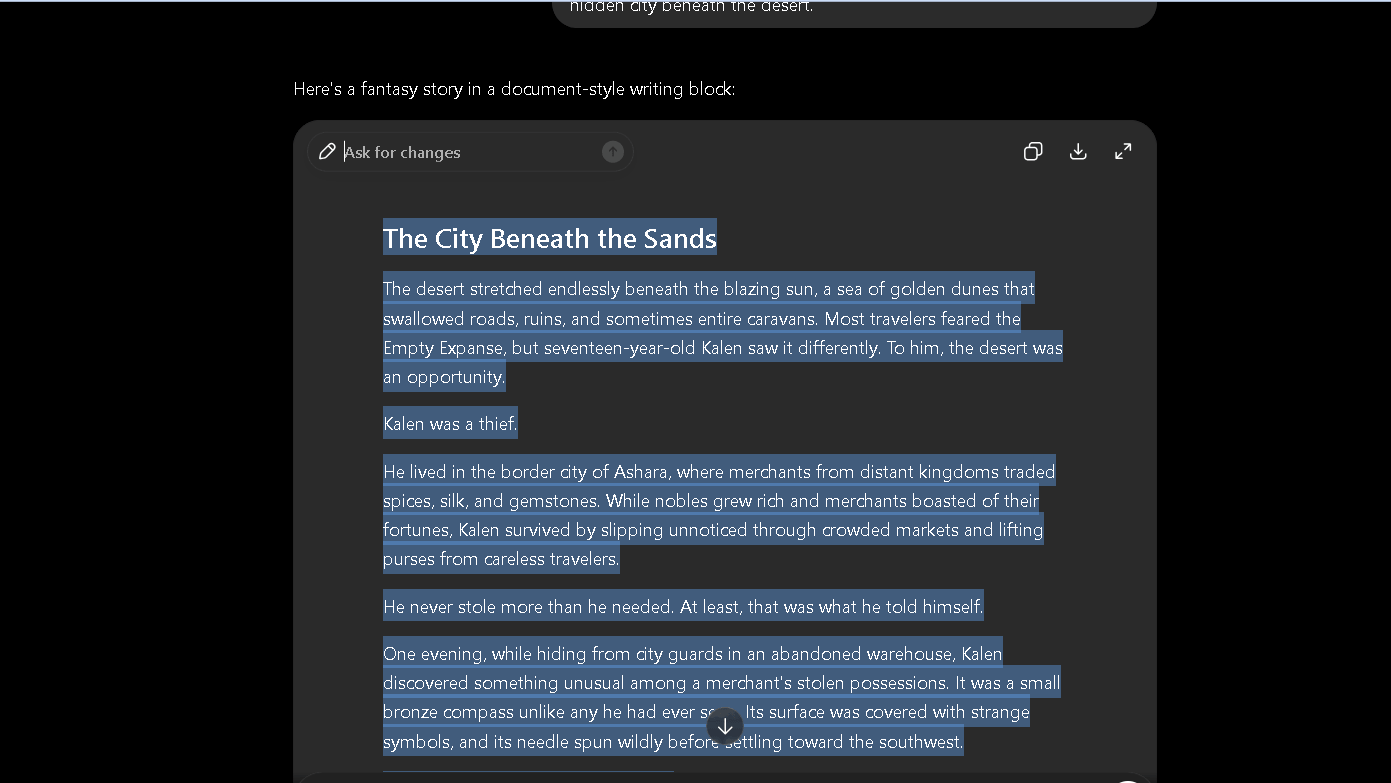
→ Read my full ChatGPT Review
Gemini: Best Free Claude Alternative for Writers
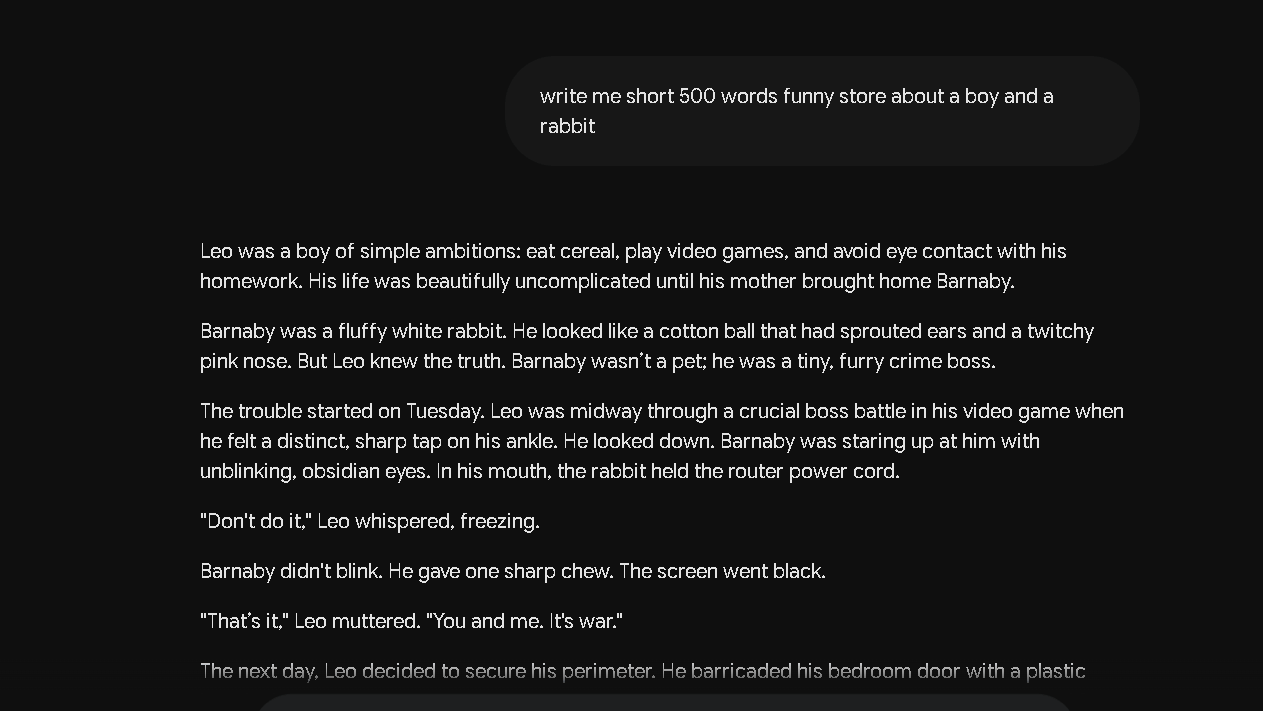
Gemini is the strongest free option available right now. The free tier runs Gemini 3 Flash and it handles creative tasks better than any other free AI I tested. For writers who are not ready to pay $20 per month for a subscription, this is where to start.
The context window is the headline feature. Gemini 3.1 Pro offers a 1 million token context window, which means you can paste in an entire novel and ask for consistency checks. That is a genuine capability that matters for long-form writers. No other free or mid-tier option matches it.
The brainstorming quality is good. I gave Gemini a stuck plot problem in session three of my testing and it returned seven different directional solutions in under 30 seconds. Three of them were worth developing. That hit rate is solid for a brainstorming partner.
The weakness is dialogue. Gemini writes dialogue that reads slightly stiff. Characters in conversation tend to be too clear, too direct, too complete in how they say things. Real dialogue is messier. Real people interrupt. Gemini smooths that out when it should leave it rough.
The prose also tends toward description-heavy output. In a 2,000-word story test I ran, Gemini returned 60 percent description and 40 percent action. I wanted the reverse. That imbalance took editing to fix.
The free tier is the right entry point. The paid Google AI Pro plan costs $19.99 per month if you want Gemini 3.1 Pro with deeper research capabilities.
→ Read my full Gemini Review
Perplexity: Best for Research-Based Writing Projects
Perplexity is not a creative writing tool. I want to be direct about that before anything else. If you come to Perplexity for fiction prose, you will be disappointed.
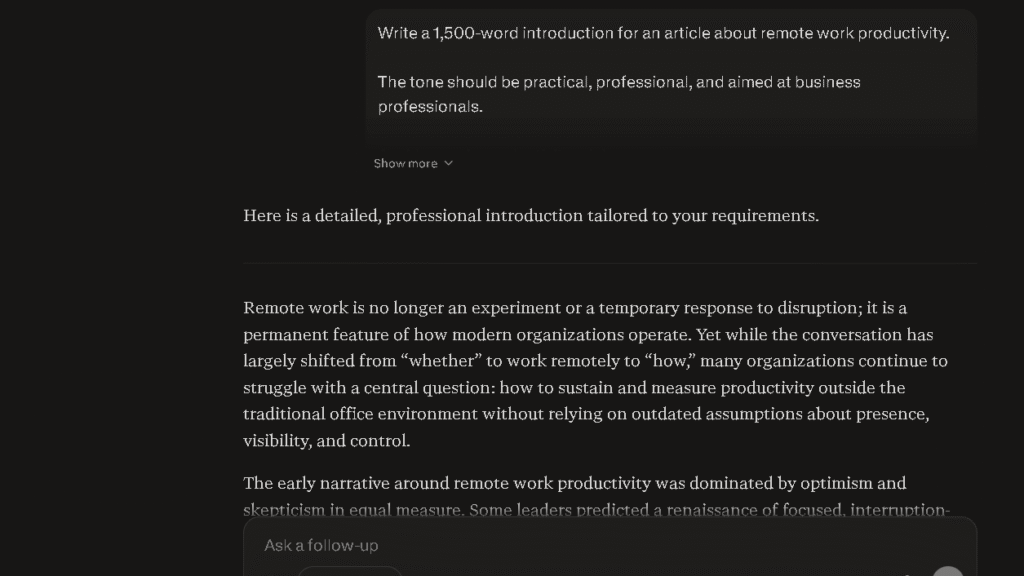
What Perplexity does is source information fast and cite where it came from. For writers working on historical fiction, journalism, narrative non-fiction, or any project where accuracy matters, that is a real workflow advantage. I used Perplexity to build a research brief for a short story set in 1940s Istanbul. It returned sourced details in about four minutes. Doing that manually would have taken me an hour.
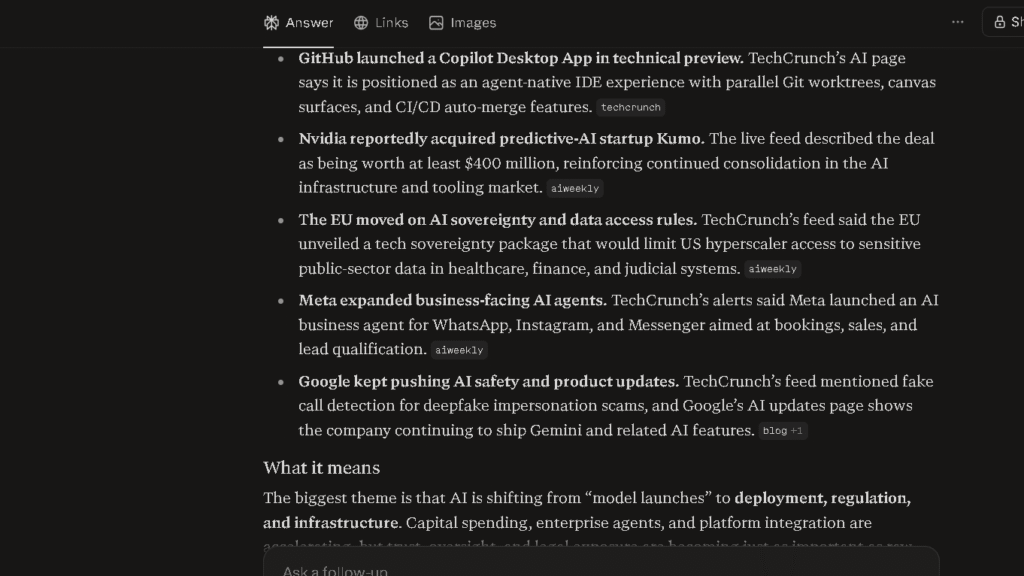
The workflow I recommend is simple. Use Perplexity to gather facts. Use Claude or ChatGPT to write. That combination is harder to find in a single tool. Perplexity fills the research half cleanly. The creative writing half is not its job.
The free tier covers most casual research needs. Perplexity Pro costs $20 per month or $200 per year and adds deeper research modes and higher usage limits.
→ Read my full Perplexity Review
Grok: Best for Dialogue and Character Personality
Grok is the most opinionated tool on this list. It has a voice of its own. That is both the strength and the problem.
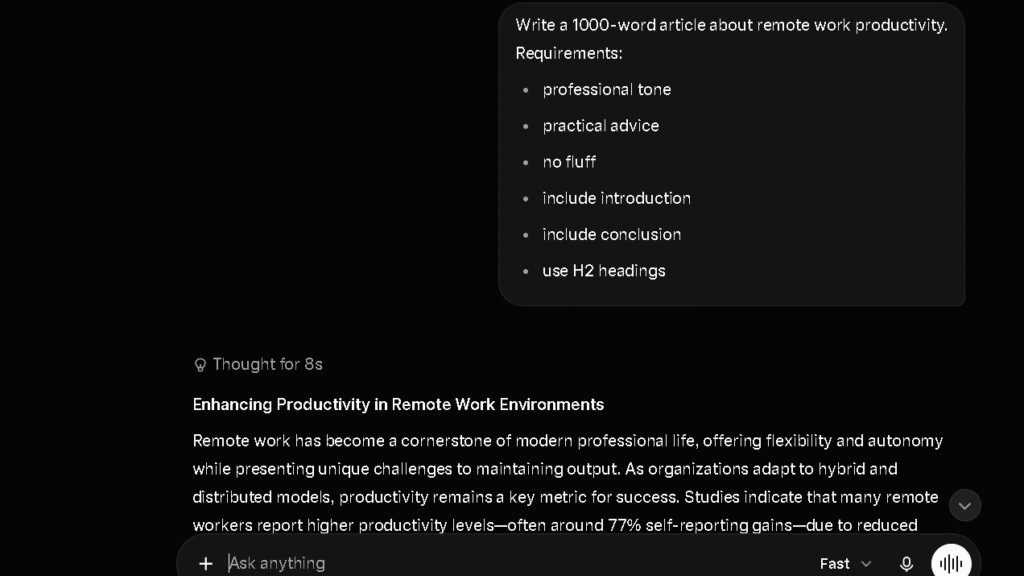
For dialogue with personality, Grok is worth trying. Characters sound like they have a point of view. The banter is sharper than anything I got from Gemini. In my five-session character voice test, Grok produced the most distinctive dialogue of any tool. That matters for writers who struggle to make characters sound like different people.
The issue is prose. Outside of dialogue, Grok’s fiction writing trends flat. It tells you what happened rather than showing you what it felt like. In a 1,500-word short story test, the opening scene had good setup and then the middle third dropped into summary. I had to rewrite two of the four paragraphs. That is a higher editing burden than I want from a first draft.
Grok also works well for world-building and plot logic. If you are building a story system with rules, factions, timelines, Grok holds those structures clearly. The logic stays consistent. That is useful for science fiction and fantasy writers who need a tool that tracks internal consistency.
The personality edge and the real-time web access through X are the reasons to have Grok in your toolkit. Just do not expect it to write your prose for you. SuperGrok costs $30 per month.
→ Read my full Grok Review
DeepSeek: Best for Structured Creative Writing
DeepSeek surprised me. I did not expect much from a free tool with a quiet reputation. What I got was more than I anticipated.
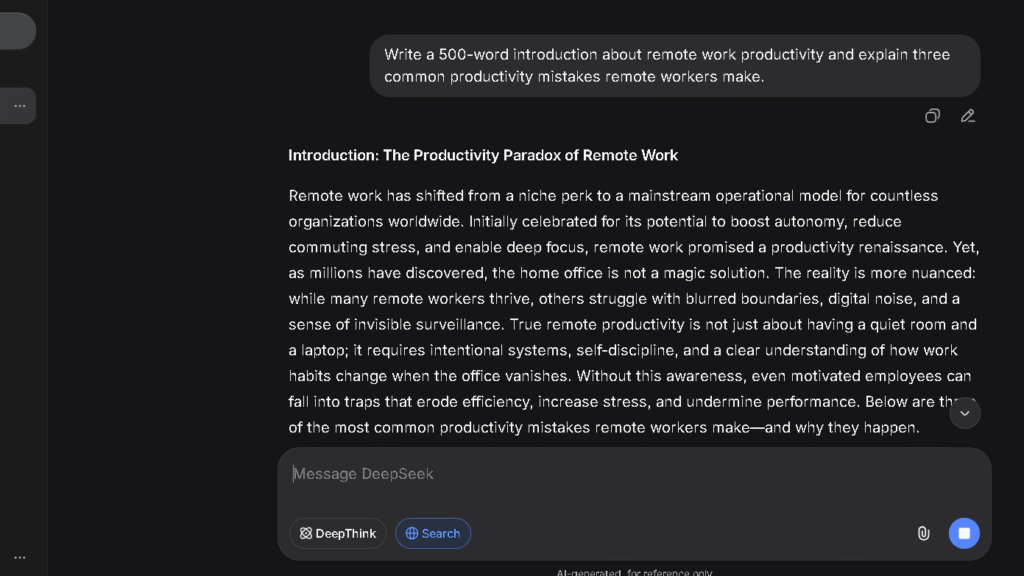
The prose has texture. That is the best way I can describe it. Where Gemini smooths things out and Grok goes flat, DeepSeek tends to add weight to sentences in ways that feel intentional. In a character description test across all five tools, DeepSeek produced my second favorite result after Claude.
It also handles darker themes with fewer restrictions than Claude. If you are writing morally complex characters or difficult scenes, DeepSeek will follow you there where Claude sometimes will not.
The limitations show up in longer work. Past 1,500 words in a single session, the coherence starts to drift. Characters begin doing things that contradict earlier behavior. The logic holds better at short-form length. For flash fiction, short stories, and scene-level work, it performs well. For novel chapters, check your continuity carefully.
The price is zero. The chat app is completely free. There is no subscription. For writers who want capable AI writing support without a monthly cost, DeepSeek is the only serious option on this list.
→ Read my full DeepSeek Review
ChatGPT vs Claude for Creative Writing
Storytelling Quality
Claude writes with more literary instinct. The sentences have more shape. The imagery lands more often. In direct head-to-head tests on the same story prompt, I preferred Claude’s output in six out of ten rounds.
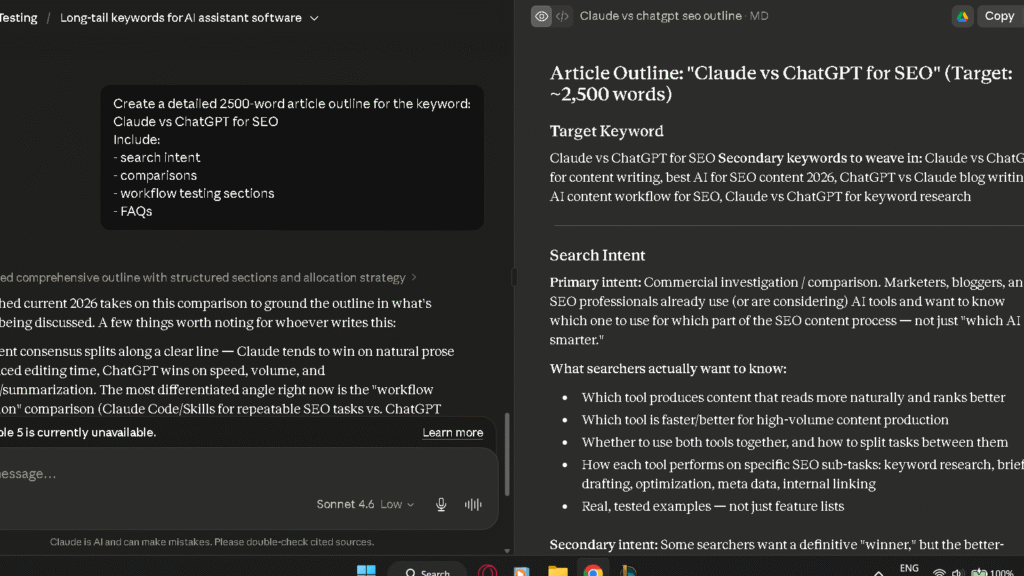
ChatGPT tells a clean story. The structure is reliable, the pacing is controlled, and the genre conventions are well-handled. It produces work that reads as professional. It does not always produce work that reads as alive.
That difference matters more for some projects than others. For commercial fiction, blog storytelling, and content writing, ChatGPT is consistently strong. For literary fiction where voice is everything, Claude still has the edge.
Character Development
This is where the gap narrows. ChatGPT builds characters with clear motivations, consistent behavior, and legible arcs. In my 30-day testing, character consistency held well across multiple sessions with good prompting.
Claude tends to add more emotional interiority. Characters feel their situations more fully in Claude’s output. That can be a strength or it can tip into melodrama depending on the prompt. ChatGPT stays slightly more behaviorally grounded. Those are different things. Which one you want depends on what kind of story you are writing.
Long-Form Writing
ChatGPT has an advantage here in practice, even if not in raw capability. The Canvas interface makes editing long documents significantly easier. You can iterate on sections without losing the whole. That workflow advantage compounds over a long project.
Both tools handle 1 million token context in their top tiers. The question is what you do with it. Canvas gives you a working environment. Claude gives you a better first draft. Writers who edit heavily lean toward ChatGPT. Writers who want stronger first drafts lean toward Claude.
Editing Burden
I track editing burden carefully because it is where time actually goes. After 30 days of testing, my editing rate on ChatGPT output was around 20 to 25 percent. On Claude output it was around 15 to 20 percent. That difference is real but not large. Both are genuinely usable as first draft material.
The larger difference was in what kind of editing each needed. ChatGPT drafts often need voice work — pulling up the specificity, making the language less neutral. Claude drafts more often need structural trimming — cutting the extra beat at the end of a paragraph, removing the over-explained emotion. I prefer the second type of editing. That preference is personal.
Which AI Writes the Most Natural Dialogue?
Best AI for Character Conversations
ChatGPT is the most reliable for multi-character scenes. It holds who said what, tracks subtext across an exchange, and adjusts tone between speakers. In a five-character dinner table argument I ran as a test, ChatGPT was the only tool that kept every voice distinct without my intervention.
Grok is the most interesting. The voices are sharper and stranger. The conversations go somewhere unexpected more often. But the consistency breaks faster. Grok is a good collaborator for a single scene. It is a harder partner for an ongoing cast.
Best AI for Emotional Scenes
Claude. This is not a close comparison. Emotional scenes require precision and restraint in equal measure. Claude handles that balance better than any tool I tested. The emotional beats land without over-explaining. The silence between lines carries weight.
ChatGPT does emotional scenes competently. It does not always do them with the same subtlety. The emotion tends to be stated more than implied. That is an editorial note, not a failure. It is fixable in revision. But Claude requires less revision on emotional work.
Best AI for Humor and Personality
Grok. The wit is genuinely sharper than any other tool on this list. If a character needs to be funny, sarcastic, or darkly irreverent, Grok finds that register faster and more naturally than Claude or ChatGPT.
ChatGPT can do humor well with strong prompting. Gemini can too. But Grok goes there by default. For comedy writing, for banter-heavy scripts, for characters whose whole personality is the way they talk — Grok is the right tool to start with.
Which AI Is Best for Fiction Writing?
Best AI for Novel Writing
ChatGPT is the practical answer. The Canvas interface, the long context window, the reliable structure, and the consistent character tracking make it the best tool for sustaining a long project. Most writers working on a novel need a dependable partner more than a brilliant one. ChatGPT is more dependable.
Claude is the better writer. If you could give Claude the same project management tools that ChatGPT has, it would win this category. For now the workflow advantage tips it toward ChatGPT for novel-length work.
Best AI for Short Stories
Claude for literary short fiction. ChatGPT for genre short fiction. That is the honest breakdown.
Claude’s prose quality and voice control give it the edge in short form where every sentence carries more weight. ChatGPT’s reliability and genre fluency give it the edge in short fiction with clear structural conventions. Know which type you are writing before you choose.
Best AI for Worldbuilding
Grok holds internal logic well. DeepSeek adds texture and atmosphere. ChatGPT tracks rules and timelines clearly.
My workflow for worldbuilding is to use ChatGPT to define the rules and Grok to stress-test them. Then write in Claude or ChatGPT. That combination is more useful than any single tool on its own.
Which AI Is Best for Content Creators and Bloggers?
Blog Writing
ChatGPT is the strongest tool for blog content. The structure is clean, the transitions are smooth, and it understands how a reader moves through an article. I tested all five tools on the same 1,000-word blog brief. ChatGPT produced the draft I needed to edit least.
Gemini is a solid second. The output is clean and well-organized. It can run long on description but the overall quality is usable. For free tier blog writing, Gemini is the right starting point.
Article Outlines
Gemini produces the most useful outlines. It thinks in sections naturally and the subheading logic is consistent. I gave it five different article briefs and asked for outlines. Four of the five were good enough to write directly from. That is a strong hit rate.
ChatGPT outlines are also strong. The difference is small. Gemini tends to go broader, ChatGPT tends to go deeper on fewer points. Which one fits your style depends on how you write.
Content Editing
ChatGPT with Canvas is the best editing environment on this list. You can work on a paragraph at a time, give specific instructions, and the rest of the document stays intact. That workflow is genuinely faster than copy-pasting into a chat window.
For bloggers producing consistent content at volume, the Canvas workflow pays for the $20 subscription on its own.
What I Learned After Testing Claude Alternatives
Where Claude Still Wins
Prose quality at the sentence level. Emotional nuance in fiction. Voice consistency when the prompts are strong. These are the areas where Claude’s output still reads as the most human to me after 30 days of comparison.
Claude also handles subtext better than any other tool. What characters do not say matters in fiction. Claude tends to understand that. The other tools tend to explain too much.
Where ChatGPT Performed Better
Workflow and reliability. Long-form project management. Dialogue consistency across sessions. The Canvas editing interface. If I am working on something long with tight deadlines, ChatGPT is the more dependable partner. That matters more than people admit.
ChatGPT also handles genre conventions more fluently. Thriller pacing, romance beats, mystery structure — it has absorbed those patterns clearly and applies them without prompting.
The Biggest Writing Mistakes AI Still Makes
Every tool on this list makes the same category of errors. They over-explain emotional states. They reach for the obvious resolution when an ambiguous one would serve better. Sometimes, they lose thread on minor characters after session two or three.
The other consistent failure is repetition. Patterns showed up by session three or four in every tool I tested. A favorite sentence structure. A recurring image. A default way of ending a scene. The best writers vary those things constantly. The best AI tools still do not.
Who Should Choose Each Claude Alternative?
Best Choice for Fiction Writers
ChatGPT for reliability and long-form project management. Claude for prose quality and emotional depth — but that is not what this article is about. Among the alternatives only, ChatGPT is the clear answer for fiction writers.
Best Choice for Bloggers
ChatGPT again. The output quality, the Canvas editing interface, and the genre fluency make it the strongest tool for content creators producing at volume. Gemini is a strong free alternative.
Best Choice for Students
Gemini on the free tier. The context window is large enough for essay-length work, the brainstorming quality is solid, and the price is zero. For students who need research support alongside writing help, Gemini plus Perplexity is a strong free combination.
Best Choice for Budget-Conscious Writers
DeepSeek is the only fully free tool on this list with genuine creative writing capability. The prose has more texture than you expect for a free product. The limits show up at longer lengths. For short-form creative work at no cost, nothing else comes close.
Final Verdict: The Best Claude Alternative for Creative Writing
After 30 days of testing across seven task types, the answer is clear enough.
ChatGPT is the best overall Claude alternative for creative writing. It is not the most literary tool available. It is the most complete one. Clean prose, reliable dialogue, strong genre fluency, and a workflow interface that actually improves the editing experience. That combination earns the top spot.
Gemini is the best free option and a genuinely useful brainstorming partner. If budget is the reason you are looking for a Claude alternative, start here.
Perplexity belongs in your toolkit if you write research-heavy projects. It is not a writing tool. It is a research tool that makes your writing better. That role is real and worth filling.
Grok has the sharpest personality of any tool on this list. For dialogue-heavy work and character banter, it is worth the experiment. The prose writing does not match the dialogue quality.
DeepSeek is the only genuinely free option with usable creative output. The ceiling is lower than the paid tools. The price is zero. For short-form creative work on a budget, nothing else comes close.
None of these tools replace Claude for pure prose quality. That is the honest conclusion. But Claude is not the only option, and it is not the right option for every project. The tool that fits your workflow is more useful than the one with the best benchmark scores.
Which one you want depends on what you are actually here for.
Frequently Asked Questions
ChatGPT is the strongest overall Claude alternative for creative writing based on 30 days of testing. The prose is clean, the dialogue is consistent, and the Canvas interface makes long-form editing significantly easier than most alternatives. Gemini is the best free option if you are not ready to pay.
Depends on the task. Claude writes better prose at the sentence level and handles emotional nuance more carefully. ChatGPT is more reliable for long-form projects and holds character consistency better across multiple sessions. For most working writers, the differences are smaller than the marketing suggests. Test both on your own material before deciding.
ChatGPT for novel-length projects due to workflow advantages. Claude for short literary fiction where prose quality matters most. Among the tools in this article, ChatGPT is the most practical fiction writing partner. For dark or uncensored themes, DeepSeek is worth testing.
Yes, with the right workflow. No AI tool writes a novel for you. What they do is help you sustain momentum, overcome stuck points, test dialogue, and draft scenes. The best novel-writing workflow I found treats AI as a collaborator on specific problems, not a ghostwriter for the whole project.
ChatGPT for consistency across a cast of characters. Grok for sharp personality and wit in individual exchanges. Claude for emotional subtext and restraint. The answer depends on what natural means for the kind of dialogue you write.