
I tested ten best AI assistants every day for 30 days. Not with benchmark prompts or one-off demos. With the same real work I do every week — writing, research, coding, document analysis, and decisions. The results shifted what I use and how I think about the whole category.
Most comparisons stop at features. This one does not. The question I kept asking was simpler: which AI holds up when the novelty is gone and real work starts? The answer is not the same for everyone. But it is clearer than most reviews will tell you.
Disclaimer: I may earn a small commission on purchases made through links on this page, at no extra cost to you. This supports honest, independent reviews.
Table of Contents
Quick Verdict: Which AI Assistant Is Best in 2026?
| AI Tool | Best For | Free Tier | Paid Plan | 30-Day Trust Score |
|---|---|---|---|---|
| ChatGPT | Overall use | Yes | $20/mo | 4.3/5 |
| Claude | Writing and editing | Yes | $20/mo | 4.5/5 |
| Perplexity | Research and citations | Yes | $20/mo | 4.4/5 |
| Gemini | Google Workspace users | Yes | $20/mo | 4.1/5 |
| DeepSeek | Free coding tasks | Yes | Free | 3.4/5 |
| Grok | Real-time information | Limited | $8/mo | 3.8/5 |
| Copilot | Microsoft 365 users | Yes | $30/mo | 3.9/5 |
Best Overall AI Assistant
ChatGPT. It is not the best at any single thing, but it is the most reliable across all of them. That combination is harder to find than it looks.
Best AI Assistant for Writing
Claude. The editing burden after a Claude draft was lower than every other tool I tested. That gap is real and it shows up every session.
Best AI Assistant for Research
Perplexity. It is the only tool that consistently linked claims to primary sources. Verification time dropped by half.
Best AI Assistant for Coding
ChatGPT and DeepSeek are close here. For complex projects with continuity, ChatGPT pulls ahead.
Best Free AI Assistant
Gemini Free, for most users. DeepSeek is strong on coding tasks if that is your primary need.
Best AI Assistant for Students
Perplexity. Cited sources, solid research depth, and a capable free tier.
How I Tested These AI Assistants
I kept the process repeatable. No cherry-picked prompts. The same conditions, the same starting points, logged across sessions over four weeks.
Note: Scores and observations are based on my personal testing methodology and real-world usage. Results may vary depending on prompts, workflows, and future model updates.
My 30-Day Testing Process
Every tool received the same prompts in the same order. I tracked output quality, editing time, verification time, and what each tool retained from earlier in a session. I ran each test at least three times to account for variation.
Writing Test
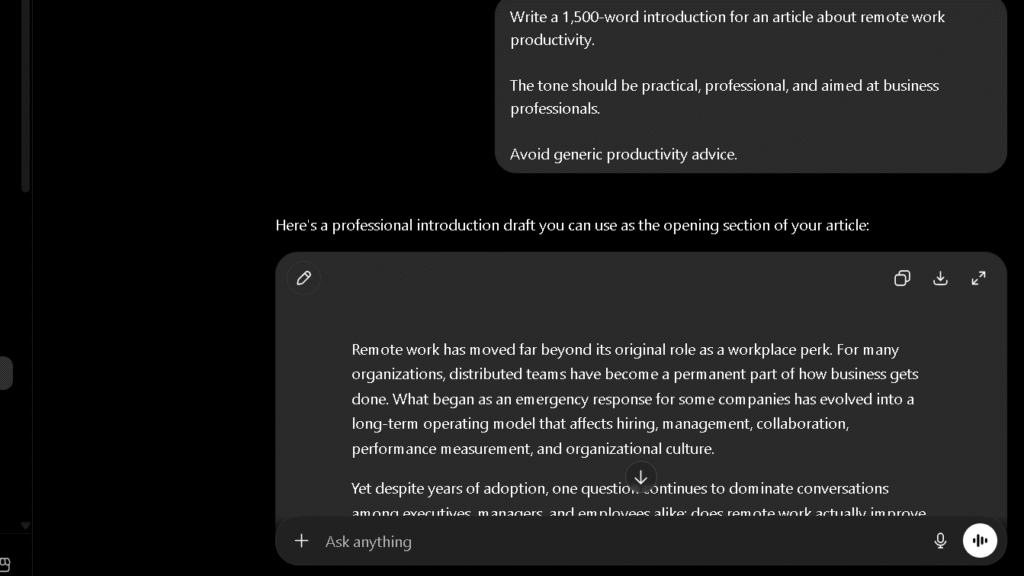
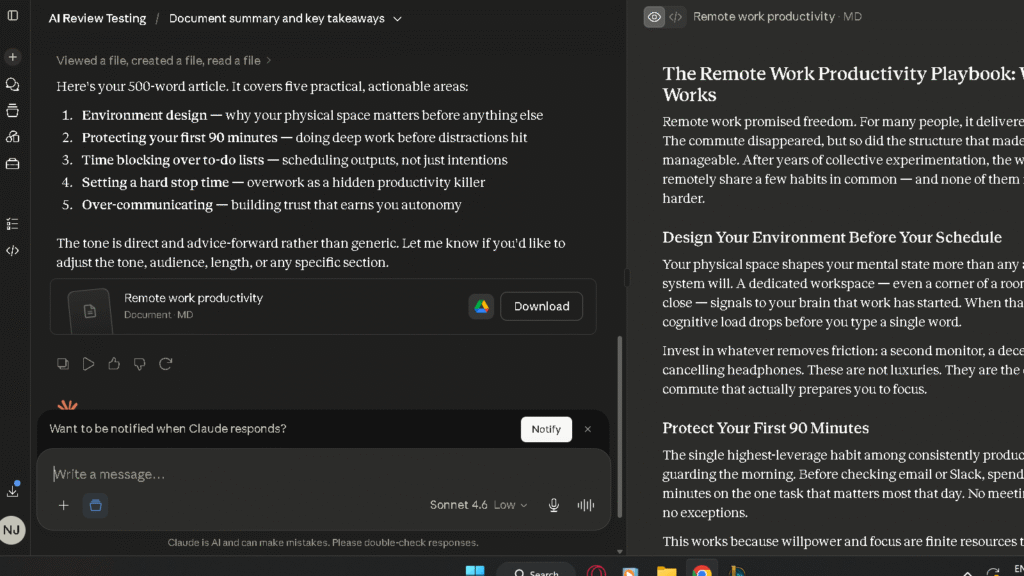
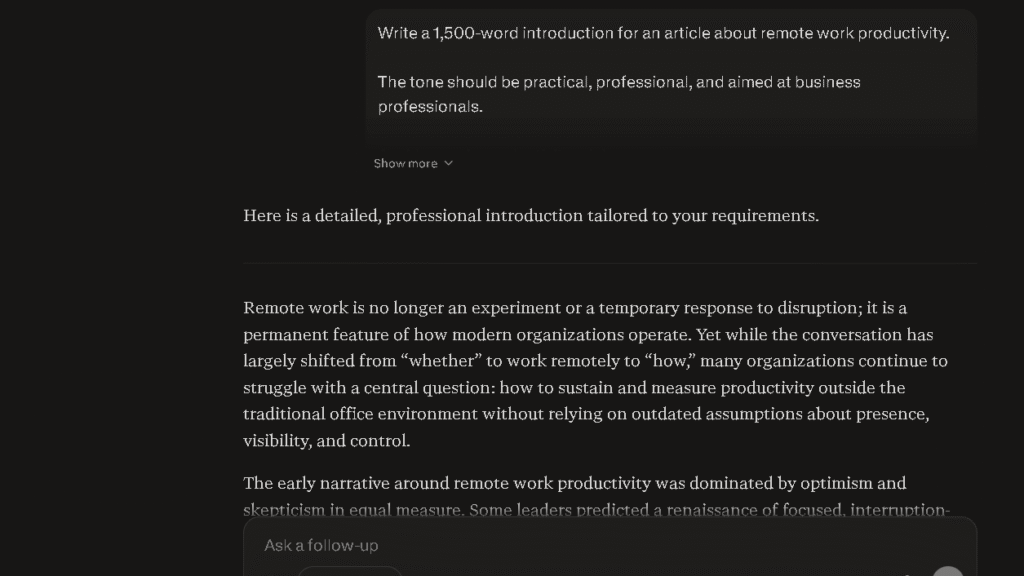
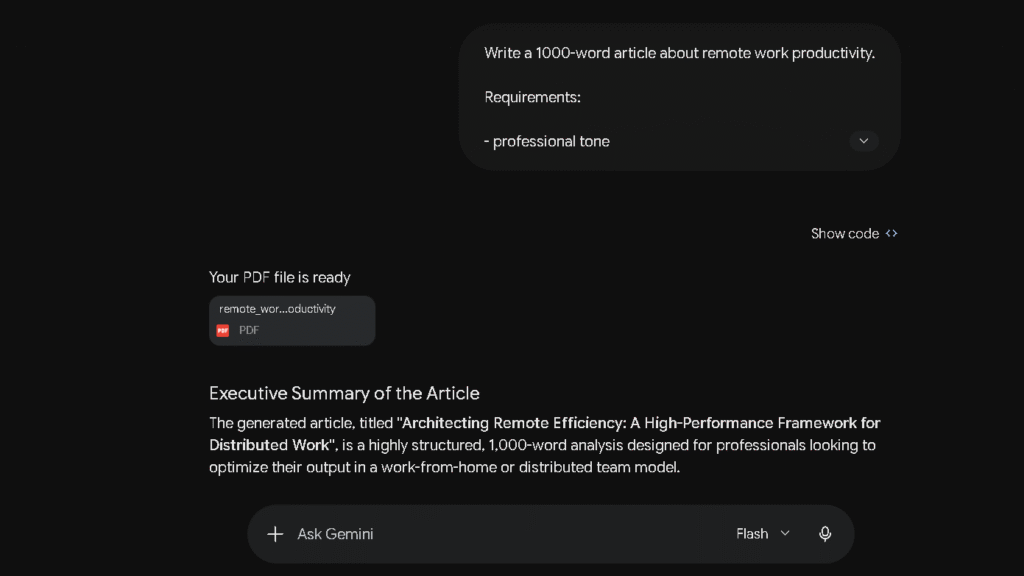
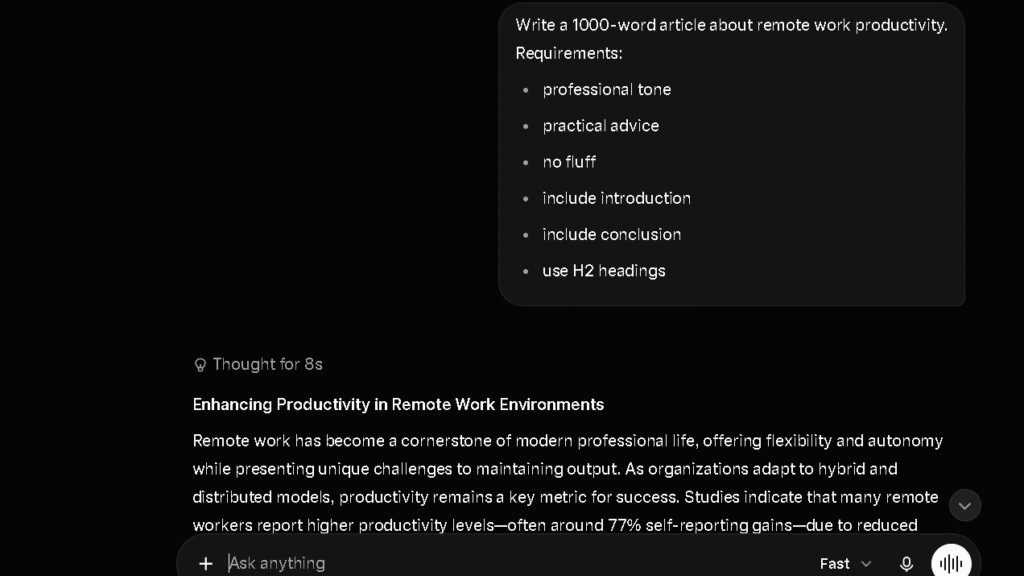
I used one prompt across all ten tools: write a 1,000-word article on remote work productivity. I rated first drafts on structure, clarity, and how many edits were needed before the output was publishable.
Research Test
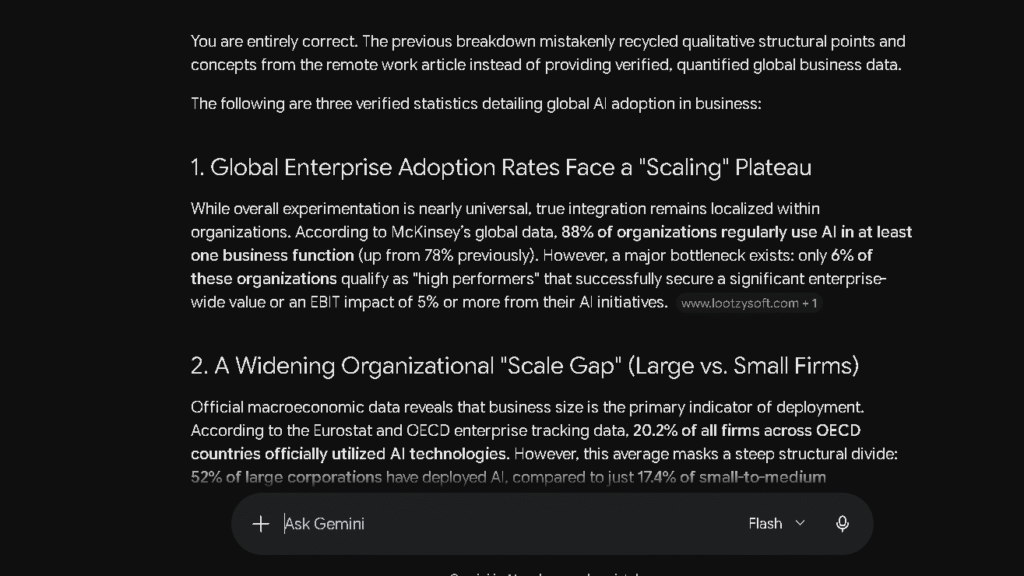
Each tool received a prompt about recent AI regulation developments. I measured citation quality, accuracy, and how often I had to verify claims independently before I could use them.
Coding Test
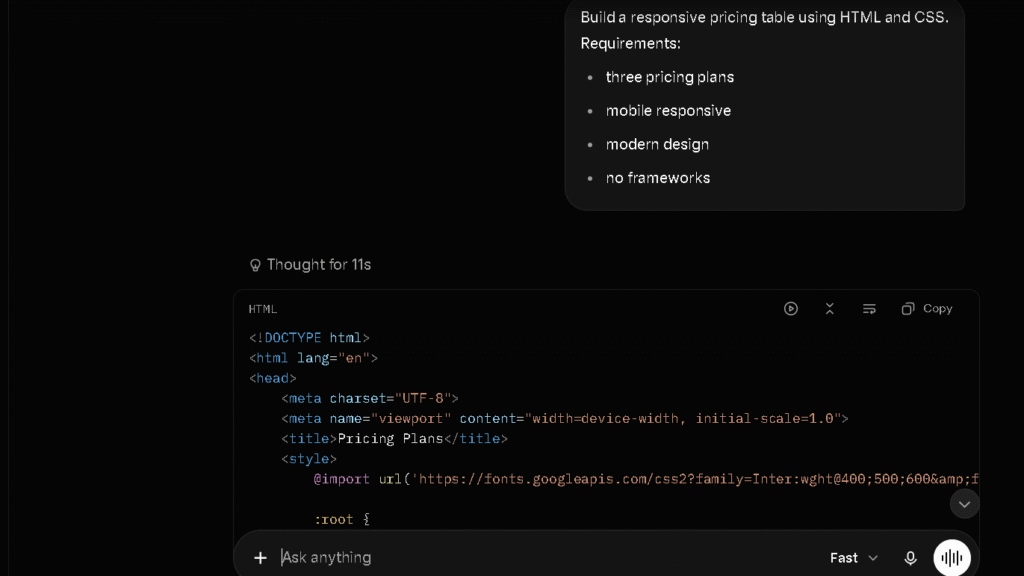
I asked each tool to build a responsive pricing table in HTML and CSS and measured whether the first output ran without errors or needed debugging.
Trust and Accuracy Test
I fed each tool a prompt involving disputed claims and asked it to identify what it was uncertain about. Honest hedging matters. Confident errors matter more.
Long-Context Document Test
I ran a 100-message thread with each tool covering a single project brief — name, goals, constraints, audience — and checked what each tool retained at message 100. Claude retained all four elements. Most others dropped at least one by the end.
AI Assistants at a Glance
Comparison Table: Features, Pricing, and Best Use Cases
| AI Tool | Context Window | Web Access | File Uploads | Best Use Case |
|---|---|---|---|---|
| ChatGPT | 128k | Yes | Yes | All-around tasks |
| Claude | 200k | Yes | Yes | Writing and editing |
| Perplexity | Standard | Yes (always) | Yes | Research and fact-checking |
| Gemini | 1M | Yes | Yes | Google Workspace |
| DeepSeek | 64k | Limited | No | Free coding |
| Grok | 128k | Yes | Yes | Real-time news |
| Copilot | 128k | Yes | Yes | Microsoft 365 |
What Changed After Two Weeks of Daily Use
This is where most AI comparisons stop being honest. The first week of testing almost anything looks good. Week two is when the real picture appears.
The Initial Excitement Phase
Every tool impressed me in the first few days. The outputs were clean. Responses were fast. I found myself thinking the paid subscription might not even be necessary.
That feeling did not last past day ten for most tools.
Where Workflow Habits Started to Form
By week two I had stopped reaching for some tools and started defaulting to others. Claude became my first move for any draft I intended to publish. Perplexity became my default before any client call where I needed current context. Those habits formed because the tools earned them.
Which AI Became Easier to Trust
Claude and Perplexity held up the best. Claude because the drafts needed less fixing. Perplexity because I could trace every claim back to a source. Trust is not a feeling. It is a record of not being burned.
Where Friction Started to Appear
DeepSeek’s context retention started to slip by session eight or nine. I would reference something from earlier in a thread and the tool would have lost it. That friction accumulates. It adds up into wasted time by the end of a week.
Which AI Improved With Continued Use
Claude got better the longer I used it. Not because the model changed. Because my prompting became more calibrated to what it does well. That kind of reciprocal improvement is a sign of a tool worth keeping.
Best AI Assistants Ranked
1. ChatGPT — Best Overall AI Assistant
ChatGPT is still the closest thing to a universal tool. It handles writing, research, coding, and conversation well enough that most users never feel the ceiling.
What ChatGPT Does Better Than Most Competitors
Consistency. In the 100-message memory test, it retained three of four project brief elements — name, goals, and audience — while most tools dropped at least two. It also debugged its own pricing table code in one pass when I introduced a deliberate error.
Research depth was strong too. When I ran the AI regulation prompt, ChatGPT pulled in broader context than Gemini or Grok and hedged its claims more accurately than DeepSeek. That accuracy held up across sessions.
Where ChatGPT Still Creates Friction
The free tier limits are real. GPT-4o access hits a ceiling faster than most users expect. After that you are on a slower model, which changes the output quality enough to matter for content work.
First drafts also need more structural editing than Claude drafts. Not by a lot. But if you write every day, that gap adds up.
Who Should Use ChatGPT
Anyone who needs one reliable tool for everything. Writers who also do research. Developers who also write documentation. Students who do both. The $20 monthly plan is the most broadly justified AI spend right now.
Who Should Skip ChatGPT
Users who only write. Claude is a better fit and the cost is the same. Users who only do research. Perplexity is faster and more verifiable.
If ChatGPT is at the top of your shortlist, my detailed ChatGPT Review covers its strengths, weaknesses, pricing, and long-term usability after daily testing.
2. Claude — Best AI Assistant for Writing
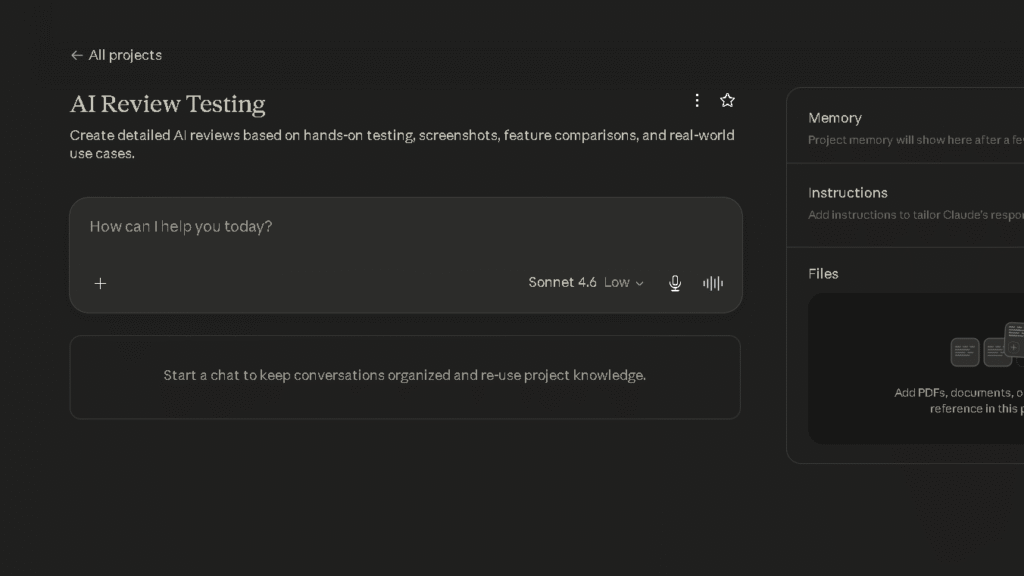
Claude is the tool I kept coming back to for writing-heavy work. Not because it is flashy. Because it requires the least correction.
Why Claude Produces Cleaner First Drafts
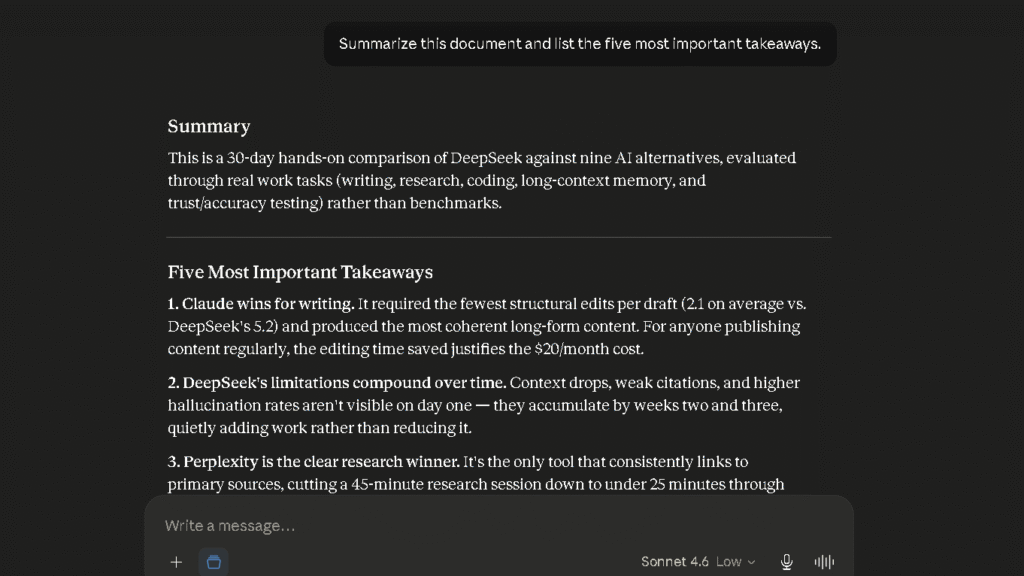
In the 20-article writing sprint I ran across all tools, Claude drafts needed an average of 2.1 structural edits per piece. DeepSeek needed 5.2. That is not a minor gap. It is a workflow difference.
The argument flow in Claude drafts is more coherent. Transitions feel natural rather than assembled. Paragraph-level logic holds across a long piece in a way that most tools cannot sustain past the first few hundred words.
Where Claude Falls Behind ChatGPT
For tasks outside writing — coding, structured data analysis, technical multi-step reasoning — ChatGPT is more consistent. Claude can handle those tasks, but it is not where it has the strongest edge.
Real-time web search is also less integrated in Claude than in ChatGPT or Grok. For research that requires current events, you will need to supplement it.
Who Gets the Most Value From Claude
Writers, editors, and content teams. If your work is primarily language-based, Claude will reduce your editing load more than any other option here. At $20 a month, it pays for itself quickly if you produce content regularly.
For a deeper look at Claude’s writing quality, editing burden, and real-world performance, see my complete Claude Review.
3. Perplexity — Best AI Assistant for Research
Perplexity is not a general-purpose assistant. It is a research tool. That distinction matters.
Why Researchers Prefer Perplexity
It is the only tool on this list that cites its sources inline by default. Every claim links to an original document, article, or report. You do not have to guess where the information came from. That alone changes how you work.
In my AI regulation research test, it was the only tool I could fully trust on the first pass. DeepSeek returned a well-organised summary with no inline citations. One reference looked plausible but I could not find it after searching directly. That kind of result costs time. Perplexity does not produce that kind of result.
Where Citation-Based Research Saves Time
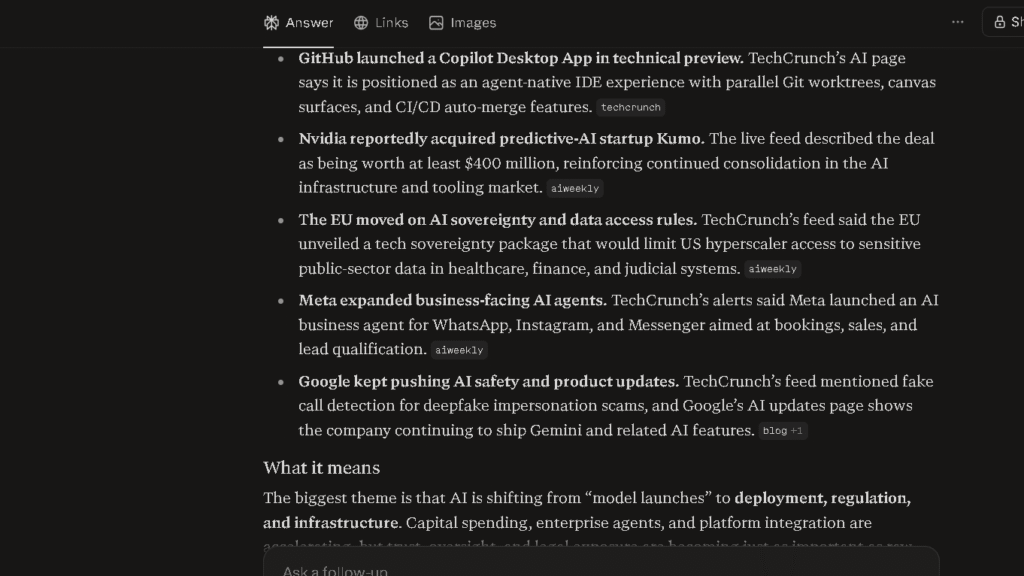
Research sessions that used to take 45 minutes ran in under 25 with Perplexity. Less verification time means more output time. That is the whole value proposition in one line.
Who Should Use Perplexity
Researchers, journalists, students, and anyone whose workflow depends on verifiable information. If you bill by the hour and your work involves sourcing claims, the Pro subscription at $20 a month is not a question. It is a calculation.
Not convinced Perplexity is the right research assistant for your workflow? I also tested several Perplexity alternatives that focus on research, citations, and AI-powered search.
4. Gemini — Best AI Assistant for Google Workspace Users
Gemini is not the strongest standalone AI writer. But for users inside Google Workspace, it fills a gap no other tool on this list can match.
How Gemini Fits Into Google Docs and Gmail
In one session I had a Google Doc open with a content brief for a client campaign. I asked Gemini in the sidebar to draft subject lines based on the brief. It pulled the campaign name, the audience segment, and the tone notes from the document without me copying anything across.
That is the real value here. Not the model quality. The context it can already see.
Where Gemini Improves Productivity
The Gmail integration is equally tight. It reads the thread, matches the tone of previous messages, and produces a tighter draft in one pass. For users already working in Docs, Sheets, and Gmail all day, the friction reduction is real.
Gemini’s Biggest Limitations
Outside the Google ecosystem, the value drops fast. Research quality scored 4.1 on my 30-day trust scale — solid, but below Perplexity and Claude. Writing drafts needed a medium editing burden. The tool is good. The integration is great. If you are not a Google Workspace user, the great part is invisible to you.
5. DeepSeek — Best Free AI Assistant for Coding
DeepSeek earned real attention when it launched. The reasoning model is genuinely strong. The free access makes it easy to stay.
Why Developers Are Switching to DeepSeek
The free tier has fewer restrictions than almost any other tool on this list. For structured reasoning and logic tasks, the performance is strong. It produced working code on the first pass about as often as ChatGPT did in my pricing table test. For users who cannot justify a paid subscription, that is a real advantage.
Where DeepSeek Falls Short
Context retention is the biggest problem. By message 100, it had dropped the project name entirely and only partially recalled the audience segment. For short sessions this is invisible. For complex ongoing work, it is a constant friction point.
Writing quality is the other gap. DeepSeek drafts needed 5.2 structural edits per piece in my writing test. That is among the highest of any tool I tested. For coding-first users, this may not matter. For content creators, it matters a lot.
Who Should Use DeepSeek
Developers who want a capable free tool for coding and technical tasks. Users who cannot justify a paid subscription and primarily work on structured technical problems.
If DeepSeek’s limitations around writing quality or context retention are dealbreakers, these DeepSeek alternatives may be a better fit.
6. Grok — Best AI Assistant for Real-Time Information
Grok’s core advantage is recency. When I tested all tools on a prompt about recent AI policy events, Grok surfaced news from the same week. Other tools surfaced context from weeks or months earlier.
What Makes Grok Different
Speed and currency. For fast-moving topics — regulatory shifts, market events, live news — Grok adds something real that the other tools on this list cannot match on a good day.
Where Grok Performs Best
Tracking fast-moving stories. Current data as part of ongoing work. Anything where last week is already too old. That covers a specific but meaningful set of workflows.
Who Should Consider Grok
Users who track live industries or news cycles. It is a strong supplement. It is a weaker primary tool for writing or research that requires depth over speed.
For a deeper look at Grok’s real-time search capabilities, pricing, and everyday usability, read my full Grok Review.
7. Microsoft Copilot — Best AI Assistant for Microsoft Users
Inside Microsoft 365, Copilot is genuinely useful. It drafts emails, summarises documents, builds slide outlines, and pulls context from files you have open.
Copilot Inside Microsoft 365
In the coding test it performed close to ChatGPT. In the trust test it scored 3.9, with a tendency to add unnecessary caveats rather than incorrect ones. That is the better failure mode.
Where Copilot Creates Workflow Advantages
The integration with Teams, Word, and Excel is the selling point. If you spend most of your day inside those tools, the context Copilot can already access changes what AI assistance means in practice. It sees your files. It knows your thread. That matters.
Outside that ecosystem, the $30 per-seat cost is hard to defend. The tool is not better enough than ChatGPT to justify the premium without the integration value.
Which AI Assistant Creates Less Editing Work?
Editing burden is the hidden cost of every AI-generated output. A tool that writes fast but requires heavy editing is not saving you time. It is moving the work later.
Writing Editing Burden Comparison
| AI Tool | Avg Structural Edits per Draft | Avg Factual Corrections | Overall Burden |
|---|---|---|---|
| Claude | 2.1 | 0.8 | Low |
| ChatGPT | 2.6 | 1.1 | Low |
| Gemini | 3.4 | 1.6 | Medium |
| Perplexity | 4.1 | 0.6 | Medium |
| Copilot | 3.8 | 1.3 | Medium |
| Grok | 4.3 | 2.1 | Medium-High |
| DeepSeek | 5.2 | 2.4 | High |
Which AI Produces the Cleanest First Drafts
Claude. Not close. The 2.1 average across my sprint is more than two full edits fewer per piece than the next tier. For anyone producing content at volume, that difference compounds fast.
Which AI Requires the Most Rewriting
DeepSeek, for writing-focused users. The structural issues — weak transitions, loose argument flow, paragraph incoherence — were consistent across sessions, not occasional. By week three I was spending more time fixing DeepSeek drafts than writing from scratch. That is the productivity illusion in action.
Which AI Assistant Do I Trust Most After 30 Days?
Trust During Writing Tasks
| AI Tool | 30-Day Trust Score | Hallucination Rate | Hedging Quality |
|---|---|---|---|
| Claude | 4.5/5 | Low | Excellent |
| Perplexity | 4.4/5 | Very Low | Good |
| ChatGPT | 4.3/5 | Low | Good |
| Gemini | 4.1/5 | Low-Medium | Good |
| Copilot | 3.9/5 | Low-Medium | Fair |
| Grok | 3.8/5 | Medium | Fair |
| DeepSeek | 3.4/5 | Medium-High | Weak |
Trust During Research Tasks
Perplexity is the clear winner here. The citation system means you are not trusting the AI. You are trusting the source the AI found. Those are different things. And that distinction is what makes Perplexity so usable for research that has consequences.
Trust During Coding Tasks
ChatGPT and DeepSeek are close on first-pass accuracy. ChatGPT edges ahead on complex multi-file projects where context continuity matters. DeepSeek drops the thread faster in longer sessions.
Trust During Decision-Making
Claude flagged uncertainty in the trust test more often and more clearly than any other tool. DeepSeek was the most likely to present uncertain information with the same confident tone it used for established facts. The question is not whether an AI produces errors. Every AI does. The question is whether it tells you.
Which AI Assistant Saves the Most Time?
For Writers
Claude. The editing time saved per article adds up fast. At 2.1 structural edits per piece versus 5.2 for DeepSeek, the difference at twenty articles a month is significant.
For Researchers
Perplexity. Research sessions dropped from around 45 minutes to under 25. That is the kind of time saving that justifies a subscription in a single week.
For Developers
DeepSeek or ChatGPT. DeepSeek on budget. ChatGPT for complex, ongoing projects where context retention matters.
For Students
Perplexity. Cited sources are not just useful for accuracy. They are essential for any academic work where claims need to be attributed. The free tier handles most student use cases.
For Business Owners
ChatGPT or Claude depending on whether your work is more operational or content-heavy. Both justify the $20 subscription for daily professional use.
The Frustrations That Appear Over Time
Repetition and Predictable Outputs
By week three, every tool on this list had produced at least one noticeably repetitive output. Claude showed this least often. DeepSeek and Meta AI showed it most often. Repetition by week two or three is a ceiling problem. It is the AI running out of variation in how it approaches a type of task.
Hallucinations and Verification Burden
DeepSeek’s hallucinations tended to appear in specific areas: statistics, source attribution, and recent events. The errors were often plausible-sounding, which made them harder to catch on a quick read. That is the most dangerous kind. Confident errors in familiar-sounding form are the ones that make it into published work.
Subscription Fatigue
It is a real issue. Most tools are $20 a month. That is $240 a year per tool. Running two or three simultaneously — which many professionals do — adds up fast. The decision is not just which AI is best. It is which one earns its slot on the monthly bill.
Memory and Context Limitations
Long sessions reveal a lot. DeepSeek dropped context fastest. Claude retained it best. For short sessions, this is invisible. For complex ongoing projects — a content campaign, a codebase, a research brief — it is the difference between a tool that saves time and one that quietly creates it.
Why Some Users Switch AI Assistants
The most common reason is reliability. Not catastrophic failures. Quiet inconsistency. An AI that gets things right eight times and then drops the context or confidently presents a wrong fact on the ninth is harder to trust than one that is consistently good at a lower ceiling.
For research workflows, citation behaviour is the deciding factor. Users who need to verify sources cannot do so easily when the citations are vague or missing. That sends them to Perplexity.
For writing workflows, editing burden is the trigger. When correction time starts to exceed draft time, users switch.
Why Some Users Eventually Return
To be fair, some of the tools users leave have real reasons to return to. DeepSeek’s free tier is genuinely capable compared to most free alternatives. For users who cannot justify a paid subscription, it competes seriously with Gemini Free for daily assistance.
ChatGPT has the broadest institutional memory of any tool here. It handles edge cases and unusual requests better than most. Users who leave for a more specialised tool often find the ceiling faster than they expected.
Familiarity is also a real factor. Calibrated prompting takes weeks to develop. Switching tools resets that. Not every switch is worth the reset cost.
AI Assistant Pricing Comparison
Free vs Paid AI Assistants
| AI Tool | Free Tier | Paid Plan | Monthly Cost |
|---|---|---|---|
| ChatGPT | Yes (limited GPT-4o) | ChatGPT Plus | $20 |
| Claude | Yes (daily limits) | Claude Pro | $20 |
| Perplexity | Yes (limited Pro searches) | Perplexity Pro | $20 |
| Gemini | Yes (full access) | Google One AI | $20 |
| DeepSeek | Yes (few restrictions) | Free | Free |
| Grok | Limited | X Premium | $8 |
| Copilot | Yes (limited chats) | Microsoft 365 Copilot | $30 |
Which AI Delivers the Best Value for Money
For writing-focused users, Claude Pro at $20. If you are research-focused user, Perplexity Pro at $20. For general all-purpose use, ChatGPT Plus at $20. Grok at $8 is the best value if real-time information is your primary need and depth matters less.
Best AI Assistants by User Type
Best AI Assistant for Writers
Claude. It produces the cleanest first drafts and requires the least correction. The gap between Claude and every other tool in this category is measurable, not subjective.
Best AI Assistant for Students
Perplexity. The citation system builds the kind of sourced, verifiable research that academic work requires. The free tier handles most student workloads without needing a paid upgrade.
Best AI Assistant for Researchers
Perplexity. Nothing else on this list makes source verification as fast or as reliable. If accuracy has consequences in your work, this is the tool.
Best AI Assistant for Developers
ChatGPT for complex projects. DeepSeek for budget-first workflows. Both produced working code on the first pass most of the time. ChatGPT holds context better across longer sessions.
Best AI Assistant for Marketers
Claude for writing-heavy work. ChatGPT for mixed workflows that include content, strategy, and research. Both beat the alternatives when editing burden and trust are the deciding factors.
Best AI Assistant for Small Businesses
ChatGPT. It covers the widest range of tasks at a consistent level. Most small business AI use involves switching between writing, research, data, and communication. ChatGPT handles all of it without a significant ceiling in any one area.
Best ChatGPT Alternatives
If you’re specifically looking beyond ChatGPT, I’ve also tested the best ChatGPT alternatives and compared where each one performs better or worse.
Claude vs ChatGPT
Claude wins for writing. ChatGPT wins for everything else. The choice depends on what percentage of your work is language-based. Above 70 percent, Claude is the better tool.
If you’re deciding between these two tools, my ChatGPT vs Claude comparison breaks down writing quality, coding performance, research capabilities, and long-term workflow differences.
DeepSeek vs ChatGPT
DeepSeek is competitive on free-tier coding tasks. ChatGPT is stronger on memory retention, writing quality, and research accuracy. For most users, ChatGPT at $20 outperforms DeepSeek enough to justify the cost.
Gemini vs ChatGPT
Inside Google Workspace, Gemini is more useful than ChatGPT because of integration. Outside it, ChatGPT is the stronger tool. The question is which ecosystem you live in.
Perplexity vs ChatGPT
Different tools for different jobs. Perplexity wins on research. ChatGPT wins on everything else. The best setup for serious knowledge workers is both.
Frequently Asked Questions
What Is the Best AI Assistant in 2026?
ChatGPT is the best overall AI assistant for most users. For writing-focused work, Claude is stronger. For research-focused work, Perplexity is the better choice.
Which AI Assistant Is Better Than ChatGPT?
Claude is better than ChatGPT for writing tasks. Perplexity is better for research with sources. No single tool outperforms ChatGPT across all task types.
What Is the Best Free AI Assistant?
Gemini Free is the strongest free option for most users. DeepSeek Free is the better pick specifically for coding tasks without a paid subscription.
Which AI Assistant Is Best for Writing?
Claude. It produced the fewest structural edits per draft in my 30-day test. The gap between Claude and the next tier is real enough to affect daily output.
Which AI Assistant Is Best for Coding?
ChatGPT and DeepSeek are the strongest options. DeepSeek is competitive on first-pass accuracy and has no cost on the free tier. ChatGPT handles longer, more complex sessions better.
Which AI Assistant Is Best for Research?
Perplexity. It provides inline citations by default and has the lowest hallucination rate on factual queries of any tool I tested.
Is Claude Better Than ChatGPT?
For writing, yes. For everything else, ChatGPT is more consistent. The answer depends on your primary use case.
Is DeepSeek Worth Using?
For free coding tasks and structured reasoning, yes. For writing or research at volume, the editing burden and context retention issues make it a weaker choice than Claude or ChatGPT.
Is Perplexity Worth Paying For?
For anyone who does research as part of their daily work, yes. The Pro plan at $20 a month recovers its cost in saved verification time within the first week for most active users.
Which AI Assistant Has the Most Accurate Answers?
Perplexity scored lowest on hallucination rate in my testing. Claude and ChatGPT were close behind. DeepSeek and Meta AI had the highest error rates, particularly on statistics and recent events.
Final Verdict: Which AI Assistant Should You Actually Use?
The honest answer depends on what you are actually trying to do.
Best Overall Choice
ChatGPT. It handles the widest range of tasks at the highest consistent level. Not the best at any single thing, but the most dependable across all of them. For users who need one tool to do most of what they need, this is still the answer.
Best Value Choice
Perplexity Pro at $20 if research is a major part of your work. Grok at $8 if you need real-time information and depth matters less. DeepSeek Free if budget is the binding constraint.
Best Choice for Writers
Claude. Not close. The editing burden reduction is real and measurable. At $20 per month, it pays for itself quickly if you produce content regularly.
Best Choice for Researchers
Perplexity. The citation system changes how you work with AI entirely. Verification becomes fast. Trust comes from the sources, not just the AI.
Best Choice for Developers
ChatGPT for anything involving project continuity and context over multiple sessions. DeepSeek for clean, contained coding tasks where cost matters.
What I found after 30 days is that the best AI assistant is not the one with the biggest context window or the most features. It is the one that becomes more useful over time rather than more frustrating. That is Claude for writing, Perplexity for research, and ChatGPT for everything else. Which one you want depends on what you are actually here for.