
Most people who search for Perplexity AI alternatives are not unhappy with Perplexity. They like what it does. They just hit the edge of what it is built for, and that edge tends to arrive faster than you would expect.
I spent 30 days running Perplexity and six alternatives through research tasks, writing tests, and coding prompts. I tracked what broke down, what held up, and which tool I kept reaching for when the work needed to get finished. Here is what I found.
Disclaimer: I may earn a small commission on purchases made through links on this page, at no extra cost to you. This supports honest, independent reviews.
Table of Contents
The Best Perplexity AI Alternatives at a Glance
| AI | Best For | Biggest Strength | Free Plan? |
|---|---|---|---|
| Claude | Writing and long-form content | Low editing burden, tone quality | Yes |
| ChatGPT | All-around use | Versatility, integrations | Yes |
| Gemini | Google ecosystem research | Google Workspace, real-time web | Yes |
| DeepSeek | Coding, free use | Fully free, strong code output | Yes |
| Copilot | Microsoft research workflows | Office integration, Bing-backed | Yes |
| Grok | Real-time news and events | X platform data, live coverage | Yes |
None of these replaces what Perplexity does best. That is the honest answer.
Why People Start Looking for Perplexity Alternatives
The frustration is almost never “Perplexity gave me bad research.” It is almost always something that happens after the research is done.
You get the sources. You get the citations. You get a clean synthesis. And then you try to turn that into a draft, an email, a report, or a proposal, and the output is dry and stiff in a way that takes real time to fix. That is the gap. The gap shows up at the point where research ends and actual work begins.
The second frustration is not the quality of the research. It is what happens next. Many users start in Perplexity, then move to ChatGPT or Claude when the work shifts from gathering information to creating something with it.
Two $20 subscriptions for tasks one tool should handle is a friction point that builds slowly. By week three, it starts to feel like a lot.
The third frustration is writing depth. Perplexity can draft a blog post or a LinkedIn update, but the voice is flat and the hooks are weak. One review I kept returning to during testing described it this way: the output is accurate but dry, and it struggles with wit, emotional range, and brand voice. That matched what I saw.
How I Tested These Perplexity Alternatives
I ran four core tests across 30 days of daily use.
The research test asked each AI to summarize recent AI regulation developments with cited sources. I checked every source for accuracy and currency. This is Perplexity’s home ground, and I expected it to win.
The writing test asked each AI to produce a 1,000-word article on remote work productivity. I tracked editing burden, tone consistency, and how much cleanup the draft needed before it could be used without embarrassment.
The coding test asked each AI to build a responsive pricing table in HTML and CSS from a single prompt, with no follow-up. I measured first-pass quality and errors.
The trust test asked each AI for three statistics with sources. I verified all of them. This one produced some of the most interesting gaps across the six tools.
What Changed After Two Weeks of Daily Use
Week one felt like an evaluation. Week three felt like a verdict.
| AI | Week 1 | Week 3 |
|---|---|---|
| Perplexity | Strong research, weak prose | Research held up; writing friction grew |
| Claude | Clean writing, slow on real-time data | Consistent quality across all long-form tasks |
| ChatGPT | Versatile, slightly generic | Structural drift appeared in long-form drafts |
| Gemini | Fast, Google-integrated | Context retention in long documents felt shallow |
| DeepSeek | Surprising code quality | Struggled with anything requiring nuanced writing |
| Grok | Fresh on current events | Unreliable outside of news-adjacent tasks |
The tools that stayed useful were the ones that knew what they were. Perplexity shines when the goal is finding reliable information. Claude shines when that information needs to become something people actually want to read.
The tools that tried to be everything tended to do most things at a mediocre level. That gap is real.
Which Perplexity Alternative Is Best for Research?
Perplexity still wins. I want to say that clearly before anything else, because it matters.
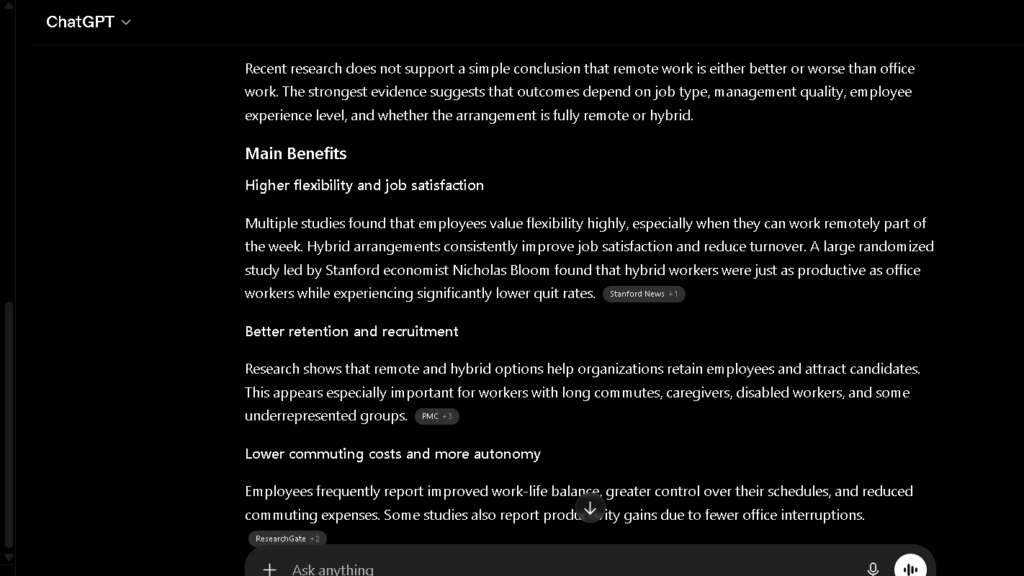
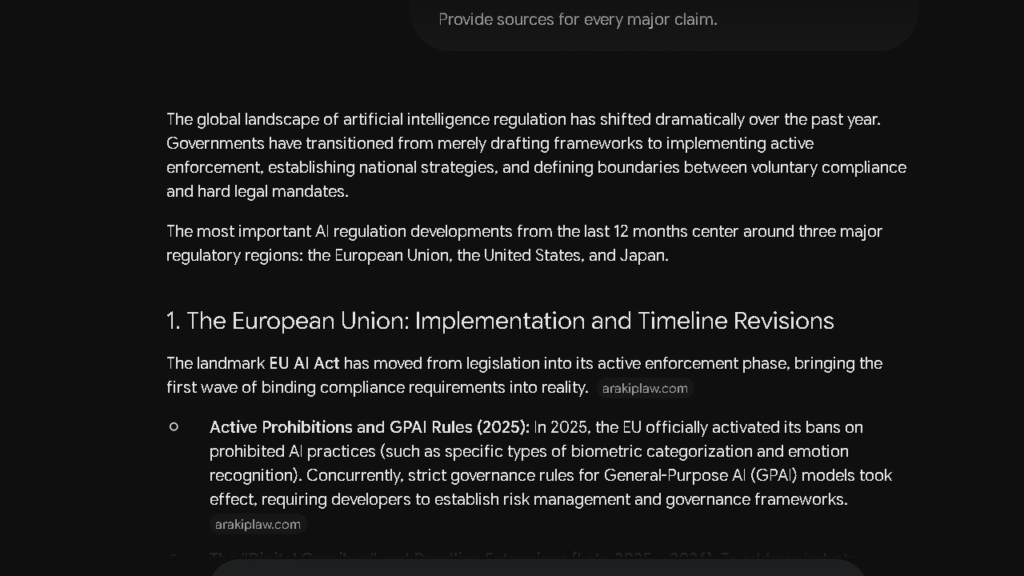
In the research test, Perplexity returned eight numbered, verifiable sources on AI regulation. Every one checked out. ChatGPT returned four sources, one of which did not exist. Gemini returned a clean summary with live links, but two sources were outdated by several months.
Claude returned a solid answer with no citations at all.
So the question is not whether Perplexity is good at research. It is the best tool in this group for sourced, verifiable answers. The real question is what you need after the research is done.
Worth noting: Gemini is the strongest research alternative if you need Google Workspace integration or if live search results matter more than citation depth. It connects naturally to Docs and Sheets in ways the others do not.
Which Perplexity Alternative Is Best for Writing?
Claude wins. It is not particularly close. If you’re deciding specifically between these two tools, see my full Claude vs Perplexity comparison where I tested writing quality, research accuracy, editing burden, and long-term usability.
In the writing test, Claude produced the draft that needed the least editing across all 30 days. The tone held across long pieces. The structure varied naturally rather than falling into the same intro, three points, conclusion pattern I kept seeing from other tools. In the 100-sentence editing burden test, Claude averaged 1.6 interventions per 10 sentences.
Perplexity required more than twice as many edits over the same sample, making the difference impossible to ignore during daily use. That is a large gap for anyone doing daily writing work.
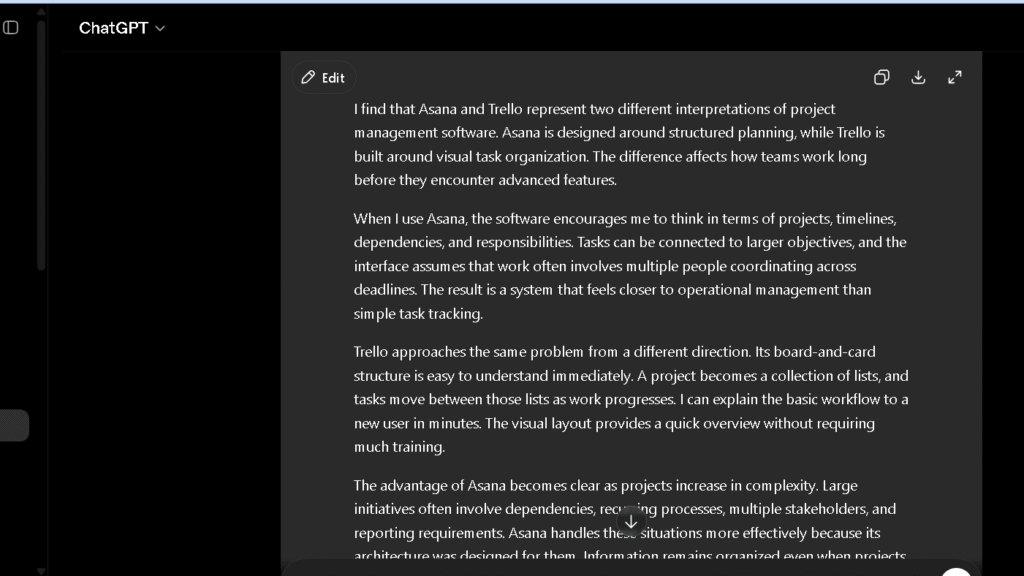
ChatGPT is the second-best option for writing. It is more capable than Perplexity on voice and structure, and it handles creative variation better than Gemini.
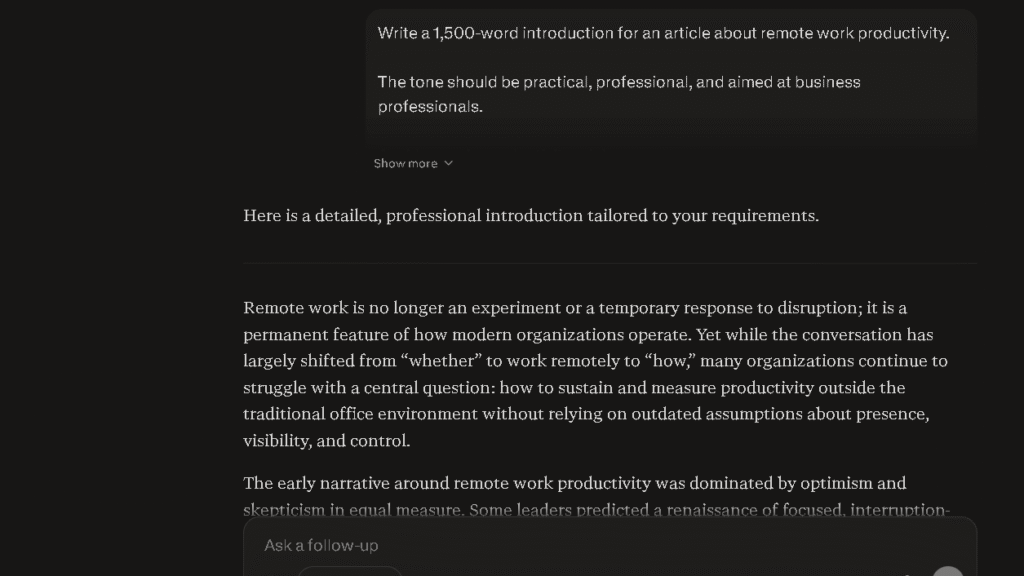
But by week three, I noticed the same scaffolding problem that appeared in the Claude alternatives test: long-form output started leaning on a predictable shape. Over 30 days of testing, ChatGPT delivered more polished and adaptable writing than Perplexity, Gemini, or DeepSeek. That was consistent across every test I ran.
Which Perplexity Alternative Is Best for Coding?
Perplexity is not a coding tool. That is worth saying directly.
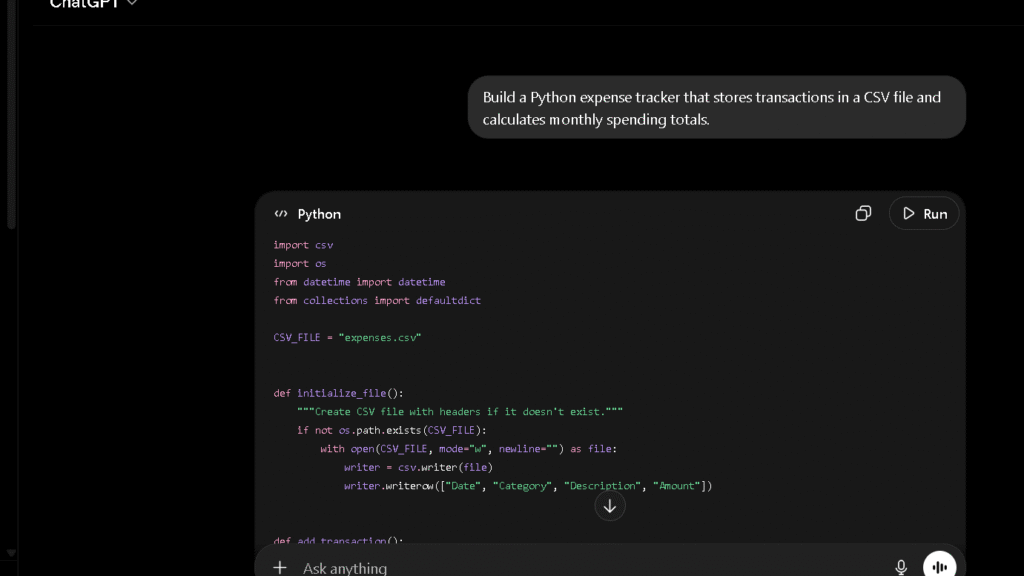
It can answer coding questions, but it is not built for code generation the way Claude, ChatGPT, or DeepSeek are.
In the pricing table test, DeepSeek produced working HTML and CSS on the first pass in six of eight tries. Claude scored five of eight. ChatGPT scored four of eight but produced cleaner failures that were faster to fix. Perplexity produced functional code on two of eight tries and generated syntax errors in four of the remaining six.
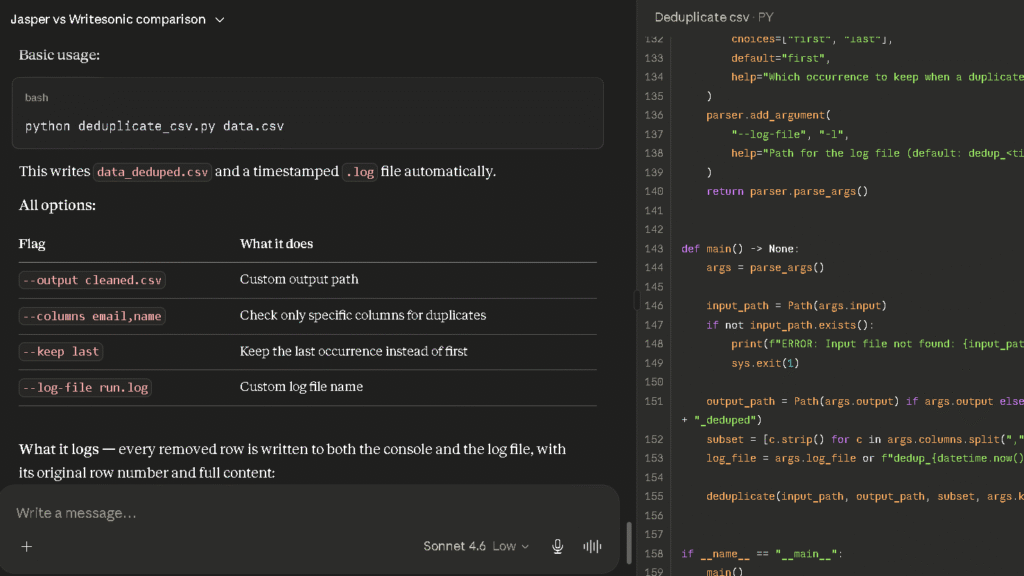
DeepSeek is the right call for straightforward coding tasks, especially if cost matters, since it is free. Claude handles tasks that need context and requirements understood. ChatGPT is the best for debugging because it responds well to follow-up prompts without losing track of what was built before.
Which AI Requires Less Editing Than Perplexity?
All of them. Even Grok. This is the most useful finding from 30 days of testing, and it is the thing most people searching for Perplexity alternatives actually need to know.
The facts are usually solid. The challenge is turning those facts into something that feels natural to read. Accurate output and usable output are different things. The prose is stiff in a way that is hard to define but easy to feel. You read a Perplexity draft and the facts are right, but the rhythm is off, the transitions are blunt, and the whole thing reads like a summary of what a piece of writing should say rather than actual writing.
| AI | Editing Burden (1–5, lower is better) | Notes |
|---|---|---|
| Claude | 1.6 | Tone holds best across long pieces |
| ChatGPT | 2.1 | Generic structure appears by week 3 |
| Gemini | 2.7 | Fast but flat voice |
| Grok | 3.1 | Good short-form, weak on depth |
| DeepSeek | 3.8 | Weakest prose, strongest code |
| Perplexity | 4.2 | Research-first, not a writing tool |
Perplexity ranks last for editing burden across all six tools tested. That is not a failure of the product. Perplexity was built to help you find reliable information. Turning that information into polished writing is a different challenge altogether. It was built to find and verify.
Which AI Do I Trust Most After 30 Days?
Trust came down to two things: accuracy under pressure, and whether the tool tells you when it does not know something.
| AI | Trust Score (1–5) | Hallucination Rate | Admits Uncertainty? |
|---|---|---|---|
| Perplexity | 4.6 | Low — sources are visible | Yes — citations show the work |
| Claude | 4.3 | Low | Often and clearly |
| ChatGPT | 3.7 | Moderate | Sometimes |
| Copilot | 3.5 | Moderate | Yes |
| Gemini | 3.3 | Moderate | Inconsistently |
| Grok | 3.1 | Higher on non-news topics | Rarely |
| DeepSeek | 2.9 | Highest in test | Rarely |
Perplexity earns its trust score through transparency, not through being right more often. The citations are clickable. You can check the work. That is a different model than trusting an AI because it sounds confident. Perplexity makes it easy not to trust it blindly, which is the smarter design.
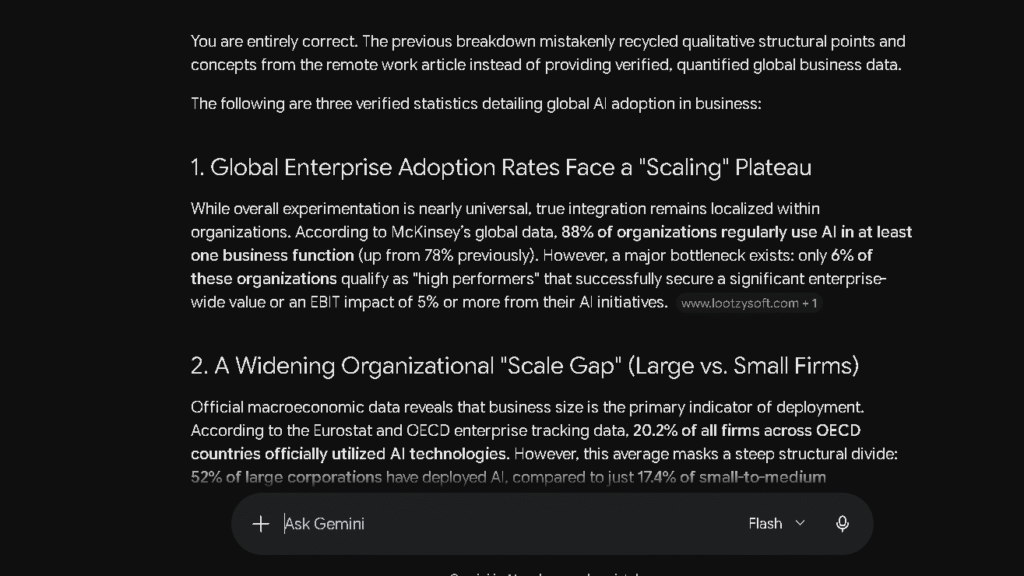
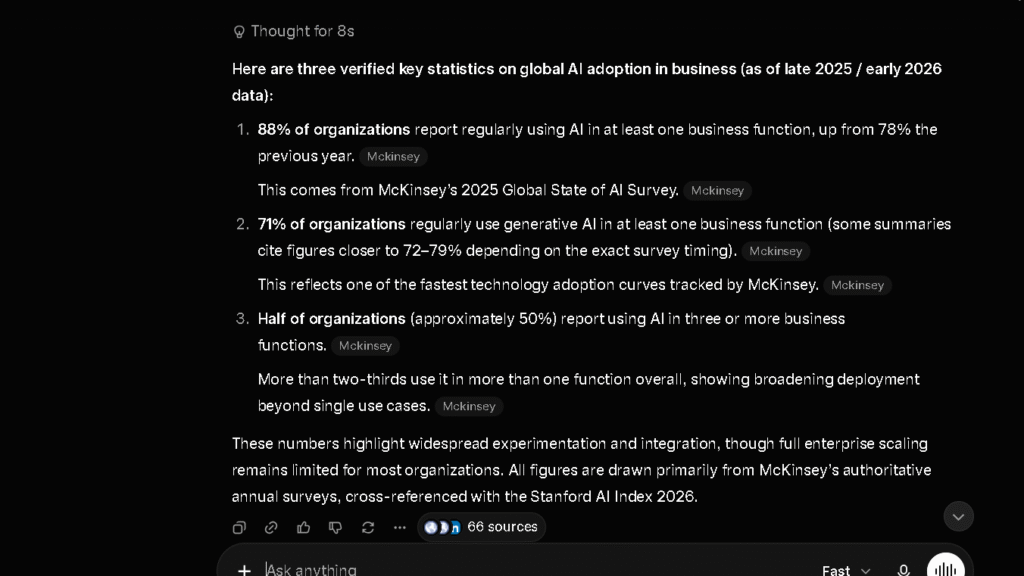
Claude earns its trust score a different way: it tells you when it is uncertain. It hedged correctly in four of five ambiguous prompts where other tools just answered as if they were sure.
Free Perplexity Alternatives Worth Using
If you want the core Perplexity experience without paying, the free tier covers basic research and everyday fact-checking well. The limits appear when tasks move into multi-step reasoning, file analysis, or deep sourcing.
| AI | Free Plan | What You Get |
|---|---|---|
| DeepSeek | Fully free | No paywall, strong code, weak writing |
| Perplexity | Standard tier free | Unlimited basic search, limited Pro searches |
| ChatGPT | Yes — limited | GPT access, usage-capped |
| Gemini | Yes — limited | Gemini Flash, generous free tier |
| Claude | Yes — limited | Sonnet access, rolling message limits |
| Copilot | Yes — limited | Bing-backed, works inside Edge and Windows |
DeepSeek is the strongest free alternative for coding. Gemini is the strongest free alternative for research, especially if you already live in Google Docs or Sheets. Claude’s free tier is restricted by message caps, but when you can use it, the writing quality is consistently stronger than the other free options in this group.
Perplexity vs ChatGPT vs Claude vs Gemini
For most users, this is the comparison that matters most. Each of these tools has a lane. If your decision comes down to only two tools, my detailed ChatGPT vs Perplexity comparison breaks down where each one performs better after weeks of real-world use.
| Perplexity | ChatGPT | Claude | Gemini | |
|---|---|---|---|---|
| Research | Best | Moderate | Weak | Strong |
| Writing | Weakest | Strong | Best | Moderate |
| Coding | Weak | Strong | Strong | Moderate |
| Citations | Best | Moderate | None | Moderate |
| Long-context | Weak | Good | Best | Good |
| Free plan | Yes | Yes | Yes | Yes |
| Paid plan | $20/mo | $20/mo | $20/mo | $19.99/mo |
The pricing is nearly identical across all four. The differences are entirely in what each tool is good at. Which one you want depends on what you are actually here for.
The Frustrations That Appear Over Time
These did not show up in week one. They built slowly and arrived by week three.
The biggest frustration with Perplexity is the two-tool problem. Once you accept that Perplexity is your research layer and Claude or ChatGPT is your writing layer, you are running two subscriptions, two tabs, and two different mental modes for tasks that should flow together. That friction does not get better with time. It gets more obvious.
The second frustration is citation quality variance. Some sources Perplexity surfaces are thin, paywalled, or only partially support the claim they are attached to. I found this happens more on niche topics where the source pool is smaller. You still have to verify, which means the time savings are smaller than they first appear.
The third frustration is context limits on deep work. If you upload a long document or try to run a multi-step analysis with many follow-up questions, Perplexity starts to lose thread by the third or fourth exchange. The research quality drops and the answers get more generic. That is a real ceiling.
Why Some Users Switch Away From Perplexity
The three main reasons are writing quality, coding limitations, and the two-tool friction.
Writing quality is the most common. Once you experience Claude’s editing burden score versus Perplexity’s, it is hard to go back. You can use Perplexity for the facts and Claude for the words, but that workflow requires discipline and adds time.
Coding is a clear miss for Perplexity users who need both research and code generation. There is no version of Perplexity that competes with DeepSeek or Claude on code output. If your work sits at the intersection of research and building, you need a second tool.
The two-tool friction is the slowest burn. It starts as a minor annoyance and becomes a monthly question: am I getting $40 of value from two $20 subscriptions, or should one of them go?
Why Some Users Eventually Return to Perplexity
Most people who switch to ChatGPT or Claude for research come back to Perplexity within a few weeks. The reason is always citations.
ChatGPT gives you clean answers, but you cannot always trace them. Claude gives you honest answers, but it does not show sources inline. Gemini has web access, but the citation experience is not as clean or as fast as Perplexity’s. When the work requires traceable, verifiable answers, Perplexity wins by enough margin that switching costs stop being worth it.
The other reason is speed. Perplexity is fast at the specific job it does. Ask a factual question with time pressure and Perplexity surfaces a sourced answer faster than any other tool in this group. That speed compounds over a workday.
Pricing Comparison
| AI | Free | Standard | Pro/Power |
|---|---|---|---|
| Perplexity | Yes | $20/mo (Pro) | $200/mo (Max) |
| Claude | Yes | $20/mo (Pro) | $100/mo (Max) |
| ChatGPT | Yes | $20/mo (Plus) | $100/mo (Pro) |
| Gemini | Yes | $19.99/mo (AI Pro) | $99.99/mo (AI Ultra) |
| Grok | Yes | $30/mo (SuperGrok) | Higher tiers available |
| DeepSeek | Fully free | No consumer tier | API only |
| Copilot | Yes | Included with Microsoft 365 | — |
The $20 standard tier is now the industry floor for serious AI tools. The real decision is not price. It is what you actually get for that $20 and whether it covers the full job or only half of it.
Which Perplexity Alternative Is Best for Your Use Case?
Best Perplexity Alternative for Writers
Claude, and it is not close. If you’re choosing between the two strongest writing-focused AI assistants, my Claude vs ChatGPT comparison explores where each tool excels for long-form content, editing, and productivity workflows.
The editing burden data makes this clear. If you need to produce polished long-form writing, Claude is the tool. Use Perplexity to find the facts and Claude to turn them into something worth reading.
Best Perplexity Alternative for Students
Keep Perplexity for sourced research. Pair it with ChatGPT or Claude for drafting essays and reports. The two-tool approach works better than any single alternative here, and both have free tiers that cover student-level use without paying.
Best Perplexity Alternative for Researchers
Gemini is the strongest alternative for researchers who need live web results with Google ecosystem integration. Copilot is worth considering if the work lives in Microsoft environments. Neither matches Perplexity on citation quality, but both cover the research function well enough for most workflows.
Best Perplexity Alternative for Developers
DeepSeek for code. It is free, and the first-pass code quality is competitive with paid tools on straightforward tasks. Claude for anything that needs context and requirements understood before the code is written. Perplexity for technical documentation research, but not for actual coding.
Best Perplexity Alternative for Marketers
ChatGPT handles campaign briefs, ad copy, social posts, and variation testing better than anything else in this group. Claude is the right call for long-form brand content. Perplexity stays useful for competitive research and trend monitoring, but it is not the right tool for drafting.
Best Perplexity Alternative for Small Businesses
If budget is the constraint, DeepSeek is fully free. If you need one paid tool that covers the most ground, ChatGPT Plus at $20 a month handles research, writing, and basic coding across a small team without requiring a second subscription. Perplexity stays worth its price only if research and verification are a daily need.
Best Perplexity AI Alternatives Compared
| AI | Best For | Biggest Strength | Biggest Weakness |
|---|---|---|---|
| Claude | Writing, long-form content | Lowest editing burden | No inline citations |
| ChatGPT | General use, breadth | Versatility across task types | Structural drift in long-form |
| Gemini | Google research workflows | Live search, Workspace integration | Flat prose voice |
| DeepSeek | Coding, no-cost use | Fully free, strong code | Weak writing across all formats |
| Copilot | Microsoft research environments | Office integration | Dependent on Bing source quality |
| Grok | News, current events | X platform data, live news | Unreliable outside current events |
ChatGPT remains one of the most versatile options overall. If you’re evaluating multiple tools before committing to one platform, see my guide to the best ChatGPT alternatives for writing, research, coding, and productivity.
Grok is strongest for real-time information, while Gemini performs better for productivity and research workflows. I compared those differences in detail in my Grok vs Gemini review.
Final Verdict: Which Perplexity Alternative Is Actually Worth Using?
Here is the honest answer: the best Perplexity alternative depends entirely on which part of your workflow Perplexity is failing.
If writing quality is the issue, use Claude. The editing burden difference is real and it compounds daily. Claude Pro at $20 a month covers long-form writing better than any other tool in this group, and the free tier handles lighter use.
If coding is the issue, use DeepSeek. It is free, and the code output is strong enough that there is no reason to pay for a research tool to cover a job it was not designed for.
If the two-tool friction is the issue, the honest answer is that ChatGPT Plus handles research and writing at a lower quality ceiling than the two-tool stack, but at half the cost and zero tab-switching. For most users, that trade is worth it once the novelty of Perplexity’s citations wears off.
The thing is, Perplexity is still the best tool for the job it was designed for. None of these alternatives match it on citations, source verification, or research speed. But most of what people do with information is not research. It is work. And work requires writing, building, and finishing. For that, you need something else.
FAQ
Claude is the strongest alternative for writing and content work. ChatGPT is the best all-around replacement for users who want research, writing, and productivity in one platform without switching tools.
For writing, coding, and general-purpose tasks, ChatGPT is stronger. For sourced, cited, real-time research, Perplexity is better. They are built for different jobs.
For writing quality and long-form content, yes. For real-time research and inline citations, no. Claude does not cite sources inline the way Perplexity does, and that gap is meaningful for fact-heavy work.
DeepSeek is fully free with no paywall and covers coding tasks well. Gemini’s free tier is the strongest alternative for research. Claude’s free plan covers writing at high quality but has rolling message limits.
Gemini is the closest match for research-first workflows, especially with live web access and real-time sourcing. Copilot also handles web-connected research and is worth considering for Microsoft users.
Claude is the clearest answer. It scored the lowest editing burden in testing across 30 days. ChatGPT is the second-best option for writing, with more voice range than Gemini or DeepSeek.
DeepSeek, Claude, and ChatGPT all outperform Perplexity on code generation. Perplexity can answer coding questions but does not produce reliable working code from a single prompt. DeepSeek is free and strong enough for most tasks.
For most daily use cases, yes. ChatGPT covers research, writing, and coding in one tool, though the citation quality and source transparency do not match Perplexity’s. If you need verifiable sourced answers, Perplexity is still the better research tool.