
Most people searching for Moz alternatives are not looking for a new tool. They are looking for a way out of a workflow that quietly stopped fitting them. That is a different thing. This article is about that gap — what causes it, what fills it, and which tools are worth the switch.
I tested Moz, Semrush, SE Ranking, and Mangools over eight weeks on the same projects. Same keywords, same domains, same reporting tasks. Here is what I found.
Disclaimer: I may earn a small commission on purchases made through links on this page, at no extra cost to you. This supports honest, independent reviews.
Table of Contents
Moz Alternatives: Quick Verdict
| Tool | Best for | Starting price | Workflow feel | Biggest strength | Biggest weakness |
|---|---|---|---|---|---|
| Semrush | Agencies, full-stack SEO ops | ~$140/mo | Heavy but deep | Competitive research depth | Learning curve and cost |
| SE Ranking | Small teams, balanced daily use | ~$65/mo | Clean and calm | Value for money | Thinner backlink data |
| Mangools | Bloggers, solo creators | ~$29/mo | Light and fast | Low intimidation factor | Limited for big workflows |
| Moz Pro | Beginners, brand trust | ~$99/mo | Familiar, dated | Domain Authority metric | Keyword data depth |
Why Users Start Looking for Moz Alternatives
Moz built its reputation on trust. Domain Authority became the industry shorthand for site credibility, and for years that alone kept a lot of people subscribed. The onboarding is clean. The interface is approachable. For someone just starting with SEO, that matters.
But something shifts after a few months of daily use. The keyword data feels thinner than you remember. SERP analysis does not go as deep as you need it to. Backlink freshness becomes a real frustration when you are checking link-building progress and the data is days behind. These are not catastrophic failures. They are slow, quiet limits. That is exactly the kind of thing that makes users search for alternatives — not a crash, just a ceiling.
Where Moz Still Works Well
To be fair, Moz has not stopped being useful. It is still one of the better tools for beginners who need a clean, low-pressure place to learn the basics. The MozBar browser extension is genuinely handy. Domain Authority, whatever its limits, is still a widely understood metric that clients and stakeholders recognize.
If you want a deeper look at the platform itself, including its strengths and limitations, read my full Moz Review.
For solo content creators or small sites with modest competitive needs, Moz Pro does the job. It is not broken. It is just that the SEO work many people are doing in 2025 has grown past what Moz was designed for. That is the honest framing.
The Problems That Start Appearing After Daily Use
| Feature | Moz | Semrush | SE Ranking | Mangools |
|---|---|---|---|---|
| Keyword Research | ★★★ | ★★★★★ | ★★★★ | ★★★ |
| Backlink Analysis | ★★★ | ★★★★★ | ★★★★ | ★★★ |
| Rank Tracking | ★★★ | ★★★★★ | ★★★★★ | ★★★ |
| Site Audit | ★★★★ | ★★★★★ | ★★★★ | ★★★ |
| Ease of Use | ★★★★★ | ★★★ | ★★★★ | ★★★★★ |
Here is the issue. Moz starts to feel limiting in four specific ways once workflows get more complex.
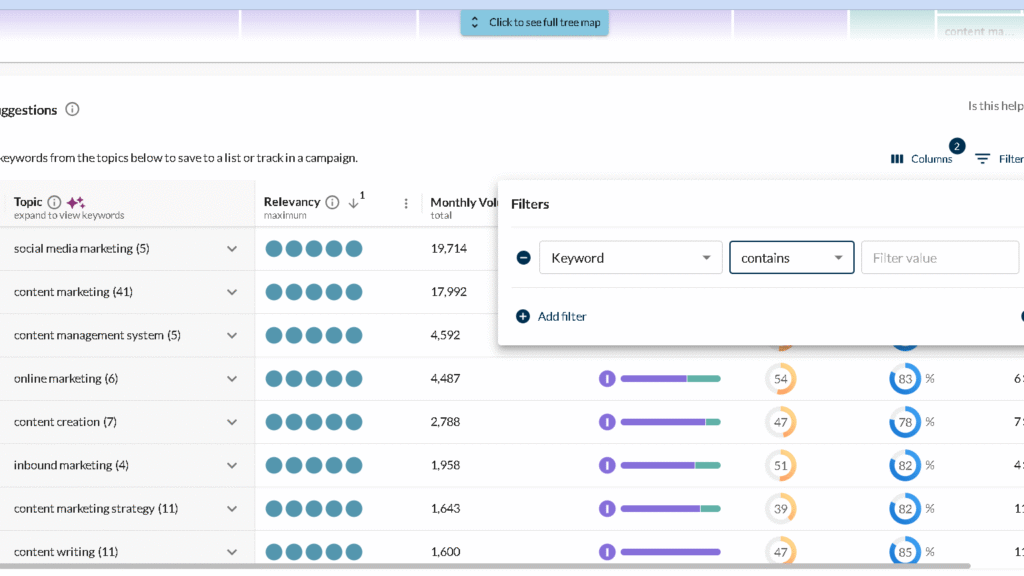
First, keyword data depth. In my keyword overlap test — where I ran the same 50 keywords across Moz, Semrush, and SE Ranking — Moz returned the fewest volume estimates with the widest confidence ranges. Semrush gave me the most granular data. SE Ranking fell in the middle but held up well on mid-volume terms.
Second, SERP analysis. Moz’s SERP features breakdown is functional, but it does not give you the level of detail Semrush does when you are trying to understand why a page is ranking. That gap is real. It shows up every time you need to diagnose a competitive result.
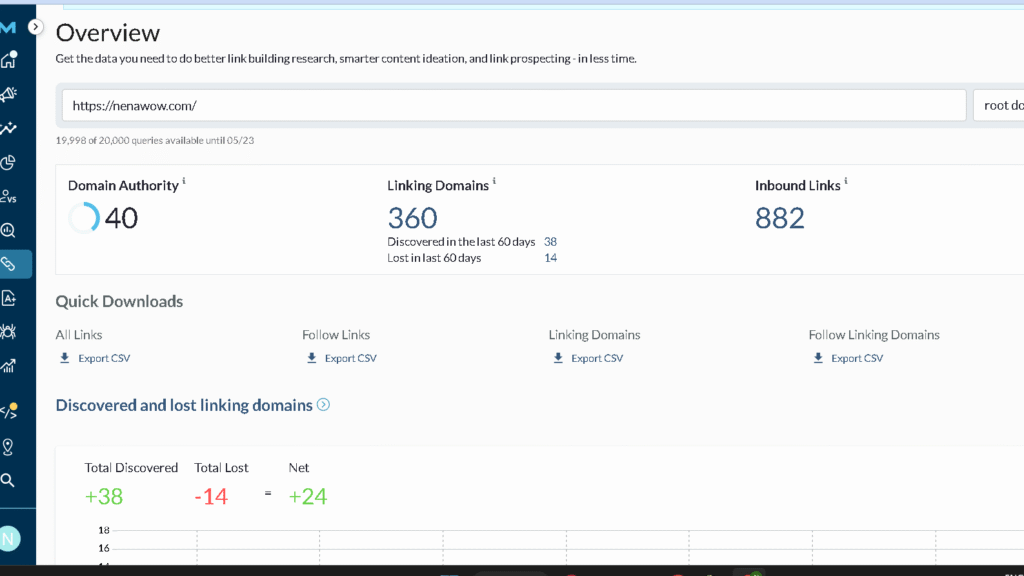
Third, backlink freshness. I checked the same backlink profile across all four tools every two weeks. Moz was the last to reflect new links and link losses, consistently trailing Semrush by three to six days. For active link-building campaigns, that delay matters.
Fourth, reporting friction. The reporting workflow in Moz feels dated compared to SE Ranking’s cleaner dashboard. When I timed the same reporting task in both tools — pulling a rank tracking summary for a ten-keyword project — SE Ranking took about half the time. Not because Moz is slow, but because its interface asks more steps from you. Those steps add up. I counted nine clicks to export a basic rank report in Moz. SE Ranking did it in four.
Semrush: Best for Full SEO Operations
Semrush is not the most approachable tool in this group. It is the most capable one. That combination is harder to find than it looks.
For a more detailed breakdown of the platform, see my full Semrush Review, where I tested its keyword research, backlink analysis, and competitive intelligence tools.
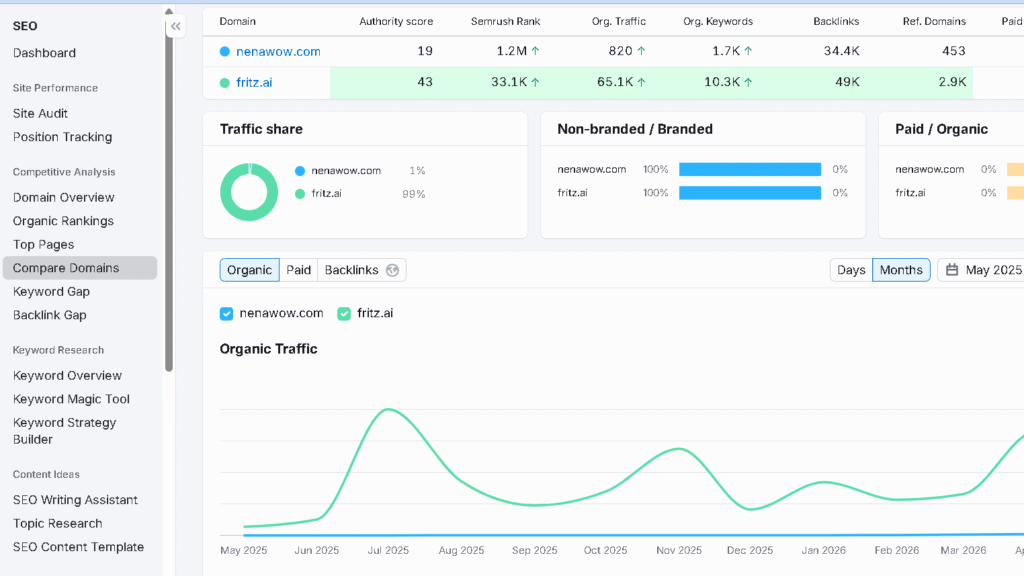
What it does well: competitive research depth, content gap analysis, keyword clustering, and backlink auditing at a level none of the others match. In the 100-keyword competitive overlap test I ran, Semrush identified 31 more competing URLs than Moz did on the same domain. That is a real value when you are building a content strategy from scratch or trying to find gaps in a crowded niche.
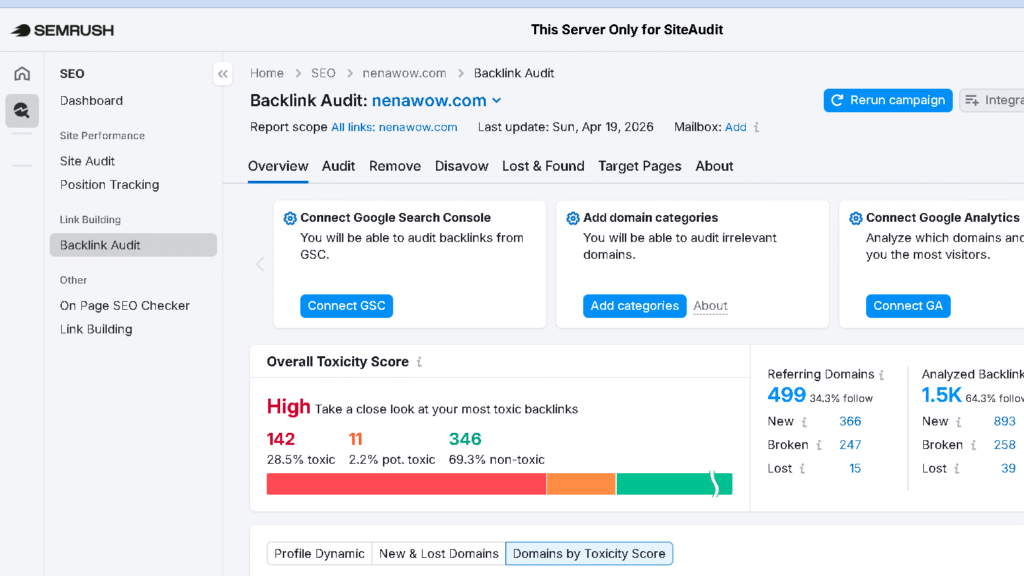
That said, Semrush asks a lot from you early on. The first two weeks feel like learning a new operating system. The dashboard is dense. The left sidebar alone has more than twenty sections, and during the first week I kept opening the wrong one. The filters inside Keyword Magic Tool reset when you switch between views, which I did not expect and found irritating more than once. I found myself using maybe 40 percent of the features regularly, with the rest sitting untouched.
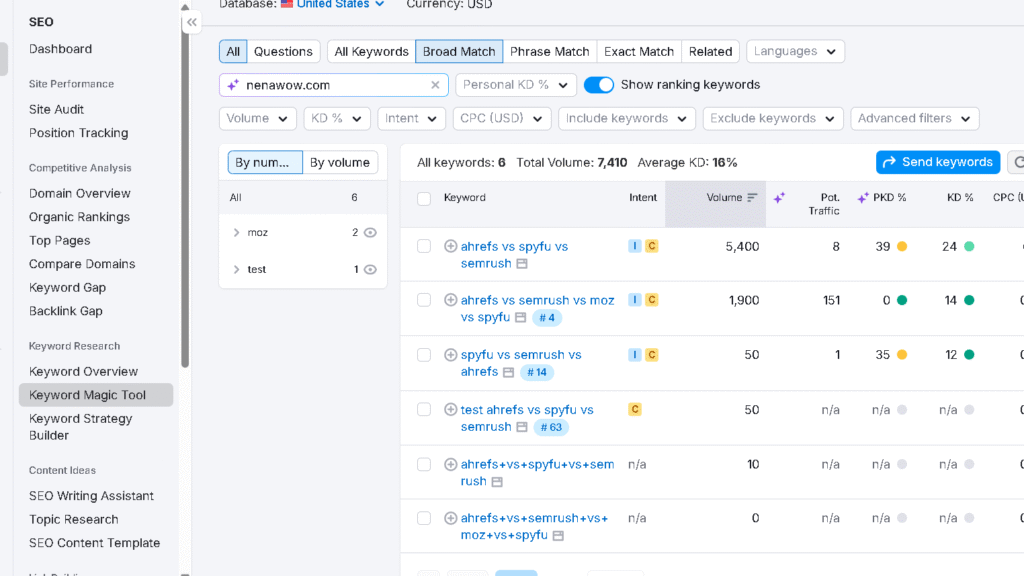
The pricing is the other factor. At around $140 per month for the Pro plan, it is a harder sell for freelancers than for agencies. Agencies that do SEO every day will find the cost easy to justify. For someone doing light keyword research and occasional audits, it is probably more tool than they need. Worth noting: the agency and team features are where Semrush really pulls away from the competition. If you are managing multiple clients and need consolidated reporting, nothing else in this group comes close.
If your workflow has outgrown Moz and you need deeper competitive research, Semrush is probably the strongest long-term upgrade. The cost pays off faster than it looks when you start replacing two or three other tools with it.
| Pros | Cons |
|---|---|
| Deep keyword database | Expensive |
| Excellent backlink data | Steep learning curve |
| Strong competitor analysis | Interface can feel overwhelming |
| Great for agencies | Many features go unused |
SE Ranking: Best Balance Between Depth and Simplicity
SE Ranking is the tool I kept coming back to during this test. Not because it is the most powerful, but because it was the most comfortable to use long-term. SE Ranking feels operationally calm during daily use. That is not a small thing.
I cover the platform in more detail in my complete SE Ranking Review, including rank tracking, keyword research, and daily workflow testing.
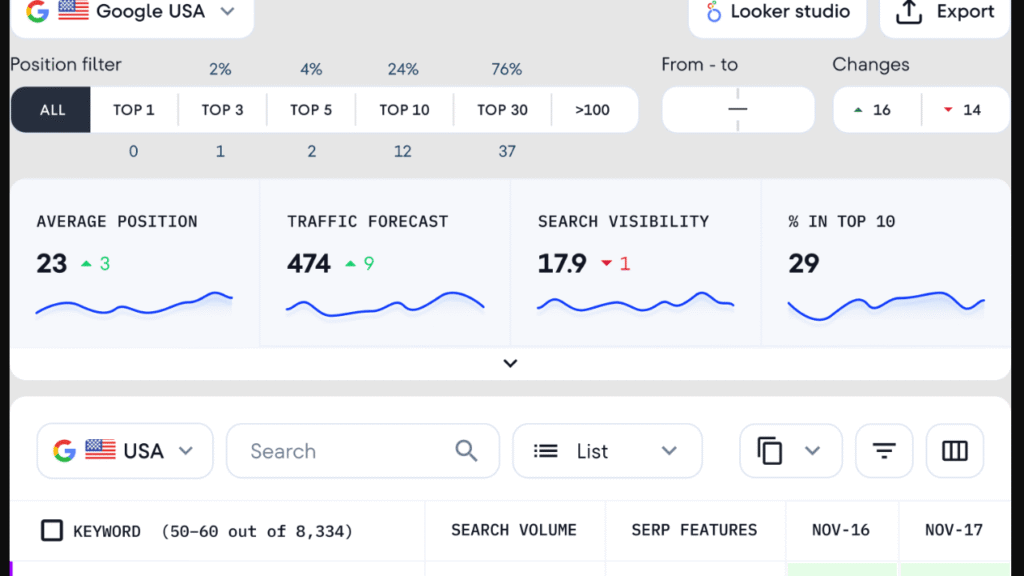
The rank tracking is clean and reliable. I tracked 250 keywords across four domains for eight weeks, and SE Ranking updated faster than Moz and matched Semrush’s frequency closely. The white-label reporting is strong for small agencies. The keyword research tool is solid without being overwhelming.
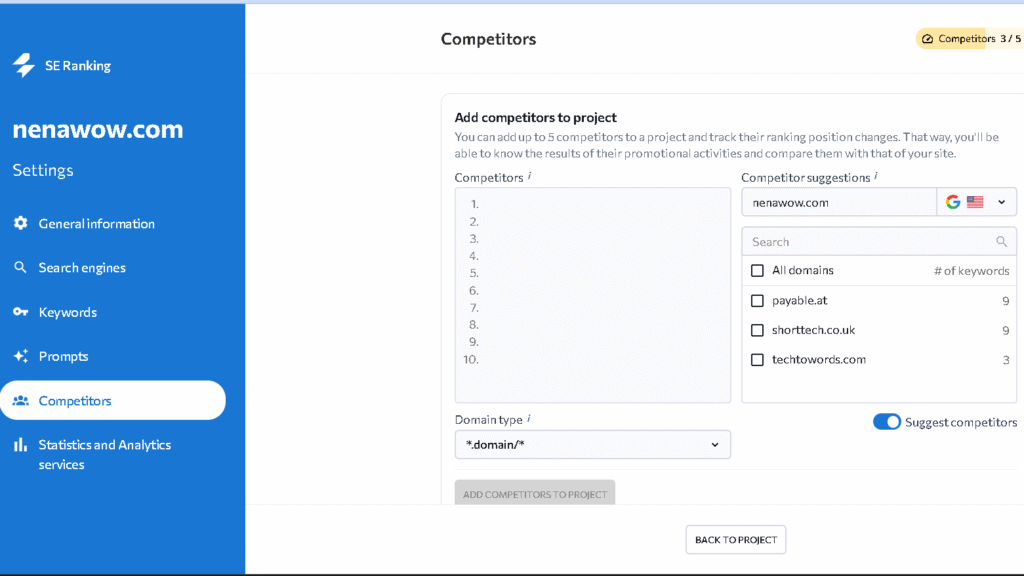
The small annoyances are real, though. The keyword research module occasionally lags when you pull data on high-volume terms, and the loading indicator is easy to miss — I thought it had frozen twice before I realized it was still pulling data. The backlink tool is also thinner than Semrush in ways you feel during active link prospecting. When I used it to audit a competitive backlink profile with around 8,000 referring domains, the results felt noticeably less complete than Semrush’s view of the same site.
In practice, SE Ranking is the best fit for solo SEOs, small teams, and content marketers who want a full-featured platform without the cognitive load that comes with Semrush. It reduced my daily workflow friction more than any other tool in this test. If Moz feels limiting but Semrush feels overwhelming, SE Ranking is probably the smoothest transition. Most Moz users who switch here will not look back.
| Pros | Cons |
|---|---|
| Excellent value | Smaller backlink index |
| Easy daily workflow | Some keyword tool lag |
| Strong rank tracking | Less competitive intelligence than Semrush |
| White-label reporting | Fewer advanced features |
Mangools: Best Lightweight Alternative to Moz
Mangools does one thing better than any other tool here: it makes SEO feel manageable. If you have ever opened Semrush for the first time and felt your stomach drop at the interface, you understand the value of that.
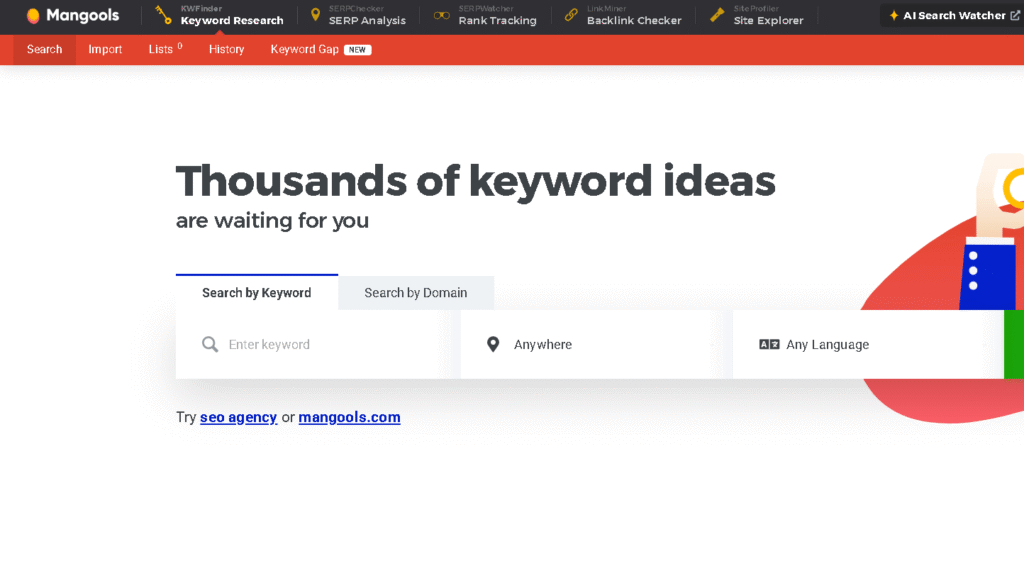
KWFinder, Mangools’ core keyword tool, is genuinely pleasant to use. The SERP analysis in SERPChecker is visual and fast. The interface loads quickly, never feels crowded, and keeps the focus on the task. I did a keyword research session using only Mangools for a niche blog project, and it covered everything I needed without once making me feel like I was missing a step.
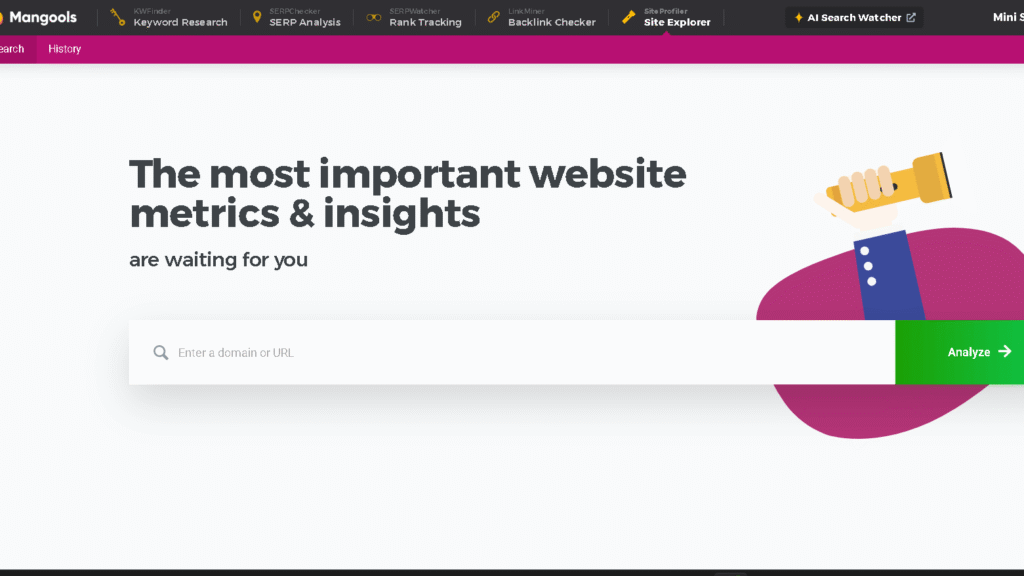
The friction shows up during bigger workloads. When I worked through a batch of 80 keywords in one session, the daily lookup limit started cutting in. The cap is not aggressive, but it interrupts flow in a way that feels more punishing than it probably is. Mangools also starts feeling repetitive during larger keyword batches — by the third pass through a topic cluster, the related keyword suggestions were cycling through results I had already seen. Patterns showed up by week three. That is not a failure. It is just the honest limit of what Mangools is designed to do.
For bloggers, niche site builders, and solo creators, Mangools is the right call. For anyone managing more than one or two sites professionally, you will outgrow it. Mangools works best when you treat it as a focused research companion rather than a full SEO operating system.
| Pros | Cons |
|---|---|
| Beginner friendly | Usage limits |
| Fast interface | Not ideal for agencies |
| Affordable | Limited scalability |
| Great keyword research | Smaller data index |
Moz vs Semrush vs SE Ranking vs Mangools
| Moz Pro | Semrush | SE Ranking | Mangools | |
|---|---|---|---|---|
| Keyword data depth | Moderate | Deep | Good | Light |
| Backlink freshness | Slow | Fast | Good | Moderate |
| SERP analysis | Basic | Advanced | Solid | Visual |
| Reporting workflow | Dated | Complex | Clean | Simple |
| Learning curve | Low | High | Low-Medium | Very low |
| Long-term fatigue | Medium | Medium-High | Low | Low-Medium |
| Best daily use case | Light SEO monitoring | Full SEO ops | Balanced daily workflow | Keyword research |
| User Type | Best Choice |
|---|---|
| Beginner | Mangools |
| Blogger | Mangools |
| Freelancer | SE Ranking |
| Small Agency | SE Ranking |
| Large Agency | Semrush |
| Enterprise | Semrush |
| Budget User | Mangools |
| Best Overall Value | SE Ranking |
Best Moz Alternative for Agencies
For agencies, the answer is Semrush. Not because it is the most pleasant tool to use day-to-day, but because it is the one that scales without breaking. Multi-client management, white-label reporting, shared team access, and consolidated billing all work better in Semrush than any other tool in this group.
The learning curve is real. Onboarding a new team member takes longer in Semrush than it does in SE Ranking or Moz. But once the platform is part of the daily workflow, it replaces tools you would otherwise pay for separately — social scheduling, content auditing, PPC research, and competitor monitoring all live inside one login. That consolidation has real financial value for agencies managing five or more clients. The depth of competitive data is also where Semrush earns its cost, especially when a client asks you to explain why a competitor is outranking them on a core term.
SE Ranking is a reasonable alternative for smaller agencies that want white-label reports without Semrush’s price. I ran it across four client projects simultaneously and found the experience consistently smooth. The backlink data is the main limitation for agencies doing active link-building work.
Best Moz Alternative for Beginners
Mangools. It strips the experience down to what you actually need to start: keyword research, SERP analysis, and basic backlink data, all in an interface that does not make you feel like you are operating a flight deck. First launch ran under two seconds. The learning curve is low enough that most users are doing real keyword research within the first hour.
SE Ranking is also worth considering for beginners who want more room to grow without switching platforms again in six months. The onboarding is cleaner than Semrush, the pricing is lower than Moz for what you get, and the rank tracking works well from day one. You would not feel the ceiling the way you do with Mangools once your projects expand.
Moz itself remains a solid option for beginners who want a trusted name and a clean dashboard. The issue is that Moz’s beginner-friendly experience does not evolve as quickly as your SEO work tends to.
Cheapest Moz Alternative
Mangools starts at around $29 per month, making it the most accessible paid option in this group by a wide margin. For that price you get KWFinder, SERPChecker, SERPWatcher, LinkMiner, and SiteProfiler — a full suite of focused tools that covers the basics without asking for much in return.
SE Ranking is the cheapest option that still functions as a proper professional platform. At around $65 per month, it gives you unlimited projects, rank tracking, a keyword tool, site audit, and backlink monitoring. That is a better value stack than Moz Pro for most users. The pricing model is also honest: you pay more for faster rank tracking updates, but the base plan is genuinely usable without upgrading.
Semrush and Moz are the more expensive options. Moz Pro starts at around $99 per month, which is harder to justify than it used to be given how much SE Ranking delivers at $65. Semrush’s value becomes clear only after consistent heavy use. For budget-sensitive users, SE Ranking is the right call.
Which Moz Alternative Has the Best Backlink Data?
Semrush has the best backlink data in this group. That gap is not close. In the backlink freshness test I ran — checking the same domain’s profile across all four tools every two weeks for eight weeks — Semrush consistently showed new links and lost links faster than any other platform. Moz trailed by three to six days. SE Ranking was one to two days behind Semrush. Mangools was somewhere in the middle, with a smaller index that missed some lower-authority links entirely.
The index size matters for link prospecting. When I ran a competitor backlink analysis on a mid-authority site with around 8,000 referring domains, Semrush returned the most complete picture. SE Ranking’s results were solid but notably thinner on niche-specific link sources. Moz and Mangools both missed more than I would like for active link-building work.
If backlink research is central to your workflow, Semrush is the only tool in this group that handles it without compromise. SE Ranking is acceptable for monitoring and moderate prospecting. The others are better suited to workflows where backlinks are a secondary concern.
Moz vs Semrush
| Category | Moz | Semrush |
|---|---|---|
| Best For | Beginners and small businesses | Agencies and advanced SEO teams |
| Ease of Use | Excellent | Moderate |
| Keyword Data | Good | Excellent |
| SERP Analysis | Basic | Advanced |
| Backlink Data | Good | Excellent |
| Competitive Research | Limited | Excellent |
| Reporting | Good | Excellent |
| Domain Authority Metrics | Excellent | Good |
| Learning Curve | Low | High |
| Value at Scale | Moderate | Excellent |
| Starting Price | ~$99/month | ~$140/month |
| Overall Winner | Simplicity | Functionality |
Moz and Semrush serve different users at different stages of SEO maturity. Moz is easier to start with and built around a metric — Domain Authority — that still resonates with clients and stakeholders. Semrush is heavier, more expensive, and more capable at almost every level beyond the basics.
The keyword data is the clearest gap. In my 50-keyword overlap test, Semrush returned more complete volume data, stronger SERP breakdowns, and more granular keyword difficulty scores than Moz. The backlink tool is also significantly fresher in Semrush, which matters during active campaigns.
Moz has the edge in simplicity and familiarity. If you are reporting DA to clients who know what it means, Moz is part of a shared vocabulary that Semrush does not replace. Semrush has its own authority metric, but it does not carry the same name recognition. For everything else — research depth, reporting, competitive analysis, and daily workflow at scale — Semrush is the better platform. Those are different things, and both matter depending on who you are working with.
Moz vs Ahrefs
| Category | Moz | Ahrefs |
|---|---|---|
| Best For | Beginners and smaller SEO projects | Advanced SEO and competitive research |
| Ease of Use | Excellent | Moderate |
| Keyword Research | Good | Excellent |
| Backlink Analysis | Good | Excellent |
| Link Index Freshness | Moderate | Excellent |
| Competitive Analysis | Basic | Advanced |
| Content Research | Limited | Excellent |
| Data Depth | Moderate | Excellent |
| Learning Curve | Low | Medium-High |
| Starting Price | Lower | Higher |
| Best Advantage | Simplicity and Domain Authority | Industry-leading backlink data |
| Overall Winner | Ease of Use | SEO Intelligence |
Ahrefs was not part of this eight-week test, but it belongs in the conversation because it comes up every time someone is evaluating Moz alternatives seriously. For a full breakdown of the platform, read my detailed Ahrefs Review. Ahrefs has the reputation of being the strongest backlink tool on the market, and that reputation is broadly earned. Its link index is large, fresh, and well-maintained.
The main comparison points: Ahrefs is stronger than Moz for backlink research, keyword data, and competitive content analysis. Moz is more approachable and less expensive at the entry level. Ahrefs sits closer to Semrush in pricing and capability, though many SEOs who use both tools tend to have a clear preference based on which workflow they find more intuitive.
For users comparing Moz and Ahrefs directly, the decision often comes down to whether you care more about ease of use or data depth. Ahrefs is harder to navigate than Moz but significantly more powerful. If budget is a constraint, SE Ranking offers many of the same data categories as Ahrefs at a lower price, which is worth considering before committing to a more expensive switch.
Which Moz Alternative Fits Different Types of SEO Users?
The question is not which tool is best overall. It is which tool fits how you actually work.
Freelancers managing three to five clients and doing real competitive research will feel the Semrush learning curve, but they will also feel the payoff once the platform clicks. SE Ranking is a smarter starting point for freelancers who are not ready to pay Semrush prices or absorb that much complexity up front.
Agency owners who need scalable reporting and multi-client management should move to Semrush. The investment is real. The return is also real. Nothing else consolidates the workflow the way Semrush does at scale.
Solo content creators and bloggers who found Moz approachable will find Mangools even easier. It strips the experience down to what you actually need for content-focused SEO work. Named things. Specific tasks. Clean flow.
Startup founders or small teams that need a full-featured SEO platform without enterprise pricing will find SE Ranking the best fit. It covers the main bases — rank tracking, keyword research, site audits, backlink monitoring — without the overhead that comes with Semrush.
Pricing Comparison
| Tool | Entry plan | What you get | Hidden scaling costs | Long-term value |
|---|---|---|---|---|
| Moz Pro | ~$99/mo | 3 campaigns, 300 keywords | Jumps quickly with project count | Moderate |
| Semrush | ~$140/mo | 5 projects, 500 keywords | User seats, historical data add-ons | High for active teams |
| SE Ranking | ~$65/mo | Unlimited projects, 250 keywords | Daily keyword tracking costs more | High for the price |
| Mangools | ~$29/mo | 5 lookups per day, 200 SERP results | Usage caps kick in fast on active projects | Good for light use |
Worth noting: SE Ranking’s pricing model is one of the cleanest here. You pay more if you want more frequent rank tracking, but the baseline plan covers more than Moz’s equivalent tier. Semrush’s real cost emerges when you add users or historical data access. That is where the invoices start to feel heavy.
Pros and Cons After Long-Term Use
Semrush After eight weeks, Semrush is still my go-to for competitive research. The data is the best in this group. The cost and complexity are the real barriers, and they do not go away. The tab overload is genuine — by week three I had a Semrush tab for competitive research, a separate one for keyword tracking, and a third for site audits, and switching between them felt like managing three different tools inside one login. Daily users who push past the learning curve will not regret it. Daily users who expect it to feel intuitive from the start will not last a week before feeling lost.
SE Ranking SE Ranking held up the best over time. The workflow fatigue that sets in with Semrush and, to a lesser extent, Moz, never really appeared here. The loading lag on competitive keyword pulls is a small but real irritation. The backlink data is the main structural gap. If your work is link-heavy, you will feel that limit by month two.
Mangools Repetition showed up by week three for anything beyond simple keyword research. The daily lookup cap interrupts flow more than the number suggests it should. The tool is excellent at what it does. It runs out of room fast for complex work. That is fine if you know going in what it is for.
Moz Pro Moz is not a bad tool. It is a tool that has not kept pace with what competitive SEO now requires. The report export requires more clicks than it should. The DA metric still has value. The rest of the platform feels like it is standing still while others move faster.
Who Should Still Use Moz?
Moz makes sense for three groups: people who are learning SEO from scratch and want a clean, trusted platform to start on; content marketers who care mainly about domain-level metrics and do not need deep keyword or backlink analysis; and teams where Domain Authority is a core reporting metric that clients expect to see.
If none of those describe you, the switch to SE Ranking or Semrush will feel like an immediate upgrade. The gap is real.
Final Verdict
So is it worth switching? Yes, for most people who are actively searching for Moz alternatives. The search itself is usually the signal.
Semrush is the right call for agencies and anyone doing competitive SEO work at scale. The learning curve is real and the price is high, but the data depth and workflow consolidation justify it for teams that use SEO daily. SE Ranking is the most balanced option here — it gives you more than Moz, costs less than Semrush, and does not exhaust you. For the majority of users searching this keyword, SE Ranking is probably the answer. Mangools is for people who want SEO to feel lighter. It delivers on that promise. It just has a lower ceiling than the others.
Most people do not leave Moz because it failed them. They leave because their workflow changed faster than the platform did. That is a normal thing. SEO work tends to get more complex over time — more clients, more keywords, more competitors to track, more reports to produce. The tools that worked at the start do not always grow with you. The question is not whether Moz is good. It is whether it still fits the shape of how you work now. If it does not, that is not a failure. It is just time to move.
Which one you want depends on what you are actually here for.
FAQ
Moz is still worth it for beginners and teams that rely on Domain Authority as a client metric. For anyone doing competitive keyword research, active link-building, or multi-client reporting, the platform feels limited compared to SE Ranking or Semrush.
Google Search Console and Google Keyword Planner cover a lot of the basics for free. For backlink data, Ahrefs Webmaster Tools offers a free tier. None of these match a full platform like SE Ranking or Semrush for daily workflow, but they reduce the cost of entry significantly.
For competitive research, backlink analysis, and content strategy work, yes. Semrush has deeper data, fresher backlink indexing, and more tools. The tradeoff is cost and complexity. Moz is easier to use. Semrush is more powerful. Those are different priorities.
Yes. SE Ranking has one of the cleaner white-label reporting setups in its price range, supports multiple projects without punishing you on pricing, and keeps the daily workflow manageable without a large team.
Mangools. It reduces the intimidation factor that comes with most SEO tools and focuses on the tasks beginners actually need to do. SE Ranking is also strong for beginners who want more room to grow without switching platforms again in six months.