
This is Ubersuggest review after one month testing.
Let’s skip the fluff. Ubersuggest has one job: deliver SEO data at a price that doesn’t require a business case to justify. In a market where Ahrefs starts at $129/month and Semrush at $139.95/month, Ubersuggest charges $12/month — or $120 once, forever. That gap is either the most compelling offer in SEO software, or a sign of what you’re not getting. Probably both.
I spent 30 days running Ubersuggest alongside Ahrefs and Semrush on a real niche website: nenawow.com, 220 published posts, around 1,000 monthly organic visits. Same keywords tracked in all three. Same competitor domains run through each backlink tool. And, same crawl settings across every audit. No cherry-picking.
Here’s exactly what I found.
Disclaimer : Transparency is something I firmly believe in. I might receive a tiny commission if you use the links on this website to make a purchase without charging you anything extra. This enables me to continue writing frank reviews.
Table of Contents
Ubersuggest Review: Quick Verdict
Ubersuggest is a real SEO tool. Not a scam. But it has a defined ceiling — and if your site is growing past that ceiling, you’ll feel it.
For beginners, bloggers, and anyone who can’t justify $100+/month on tooling, Ubersuggest delivers real value. The lifetime pricing alone is a meaningful competitive advantage. The data gaps hurt when you start competing for serious keywords.
| Feature | Ubersuggest | Ahrefs | Semrush |
|---|---|---|---|
| Keyword research | ⚠️ Limited depth | ✅ Industry-leading | ✅ Broadest volume |
| Backlink database | 🥉 Smallest | 🥇 Largest | 🥈 Mid-range |
| Site audit | ⚠️ Basic | ✅ Prioritized | ✅ Most thorough |
| Rank tracking | ✅ Functional | ✅ Accurate | ✅ Accurate |
| Competitor analysis | ⚠️ Surface-level | ✅ Deep | ✅ Deep |
| AI Overviews tracking | ⚠️ Early-stage | ✅ Multi-engine | ✅ Google-focused |
| Ease of use | ✅ Beginner-friendly | ❌ Steep curve | ❌ Moderate curve |
| Lifetime deal | ✅ Yes | ❌ No | ❌ No |
| Starting price | $12/mo | $129/mo | $139.95/mo |
The short version: Ubersuggest earns its place as a starting tool. It does not compete at a professional level — and it doesn’t try to.
Ubersuggest Pros and Cons
Pros
- Lifetime pricing removes the recurring subscription burden entirely
- Cleanest interface in the market — built for people who are new to SEO
- Solid keyword research for low-competition niches and long-tail content planning
- Functional rank tracking at every plan level, including individual
- Content Ideas tool surfaces real content angles without requiring advanced knowledge
- Traffic Analyzer gives useful domain-level competitive benchmarking for smaller sites
Cons
- Smallest backlink index — found 358 referring domains on the test site vs. Ahrefs’ 1,300
- No backlink gap analysis — a dealbreaker for any active link-building strategy
- Keyword difficulty scores skew optimistic — consistently underestimated real SERP competition
- Site audit misses critical issues — the noindex tag and all 45 orphaned pages on nenawow.com were invisible to Ubersuggest
- AI Overview tracking is underdeveloped — this is becoming a defining SEO metric in 2026
- Competitor analysis is surface-level — high-level traffic estimates, but no keyword gap or backlink gap depth
Who Is Ubersuggest For? (And Who Should Avoid It)
Neil Patel built Ubersuggest for one type of user: someone who finds professional SEO tools either overwhelming, overpriced, or both. That philosophy runs through every part of the product.
Ubersuggest is the right fit if you are:
- New to SEO and still building your knowledge base
- Running a personal blog, niche content site, or early-stage small business
- Handling SEO yourself without a dedicated team or agency
- On a tight budget where $129/month isn’t realistic
- Looking for a one-time payment rather than a monthly commitment
Who Should NOT Buy Ubersuggest?
Skip it if you are:
- Competing in a high-authority keyword space where difficulty scoring accuracy matters
- Running an active link-building campaign that needs thorough backlink prospecting
- Making significant content investment decisions based on keyword data
- Managing SEO across multiple client sites at agency scale
- Relying on AI Overview tracking as generative search reshapes your organic strategy
The honest version: Ubersuggest is a great place to start. It’s not a great place to stay once SEO becomes a core revenue driver.
Ubersuggest Pricing 2026
This is where Ubersuggest genuinely differentiates itself — not just from Ahrefs and Semrush, but from every tool in the market.
Monthly Plans
| Plan | Price/Month | Sites | Keywords/Day |
|---|---|---|---|
| Individual | $12 | 1 | 150 |
| Business | $20 | 7 | 300 |
| Enterprise / Agency | $40 | 15 | 900 |
Lifetime Plans (One-Time Payment)
| Plan | One-Time Price | Sites | Keywords/Day |
|---|---|---|---|
| Individual | $120 | 1 | 150 |
| Business | $200 | 7 | 300 |
| Enterprise / Agency | $400 | 15 | 900 |
One month of Ahrefs Lite ($129) costs more than a lifetime Individual Ubersuggest plan ($120). Over three years, the gap between Ahrefs Standard and Ubersuggest Business exceeds $4,500.
Free option: Three searches per day. Enough to test the interface. Not enough for any real workflow.
The lifetime deal is Ubersuggest’s sharpest weapon. If budget is the binding constraint, this pricing model removes it.
👉 Verify current Ubersuggest pricing
How We Tested Ubersuggest
nenawow.com is a two-year-old niche site covering AI and SEO topics. 220 posts, no paid traffic, competing in a moderately crowded content space. Small enough to audit completely. Active enough to stress-test real data.
Over 30 days in April 2026, we:
- Tracked 30 identical target keywords across all three rank trackers simultaneously
- Ran the same seed keywords through each keyword research tool
- Analyzed the same three competitor domains through each backlink analyzer
- Ran full site audits on identical crawl settings across all platforms
- Used each tool’s content and keyword gap features against the same competitor set
Nothing was cherry-picked. Every number in this review came from that test.
Keyword Research Tool
Keyword research is where data quality gaps show up fastest. Volume estimates look similar across platforms right until you stress-test them against real SERPs.
What the Numbers Showed
When I ran “AI SEO tools” through all three tools:
- Ahrefs returned 18 keyword opportunities. Difficulty scores matched actual SERP competition when verified manually.
- Semrush surfaced 70+ opportunities with similar accuracy.
- Ubersuggest returned 5.
That’s not a small difference. For niche and long-tail terms, Ubersuggest surfaces the obvious cluster but misses the surrounding topical opportunities that actually drive content strategy.
Where Ubersuggest’s Keyword Tool Works
For basic volume estimation and seed keyword research, it delivers usable data:
- Monthly search volume
- SEO difficulty score (0–100)
- Paid difficulty and CPC estimates
- Basic SERP preview
- Related keyword suggestions
- Content ideas linked to keyword clusters
The difficulty score is the problem. It consistently scored competitive keywords as easier than they actually are in practice. If you build a content calendar around Ubersuggest’s difficulty numbers without cross-checking, you’ll target harder keywords than you realized.
What It Misses
No SERP history. No traffic potential by page. No parent topic identification. No click-through rate modeling. No deep seasonal trend data.
For someone learning keyword research, these gaps aren’t immediately painful. For someone allocating a content budget, they’re meaningful.
Keyword Research Verdict
Best for: Bloggers, affiliate sites, small businesses doing basic content planning Not suitable for: Enterprise research, advanced SERP intent analysis, competitive keyword strategy
Score: 6.5 / 10
Backlink Analysis
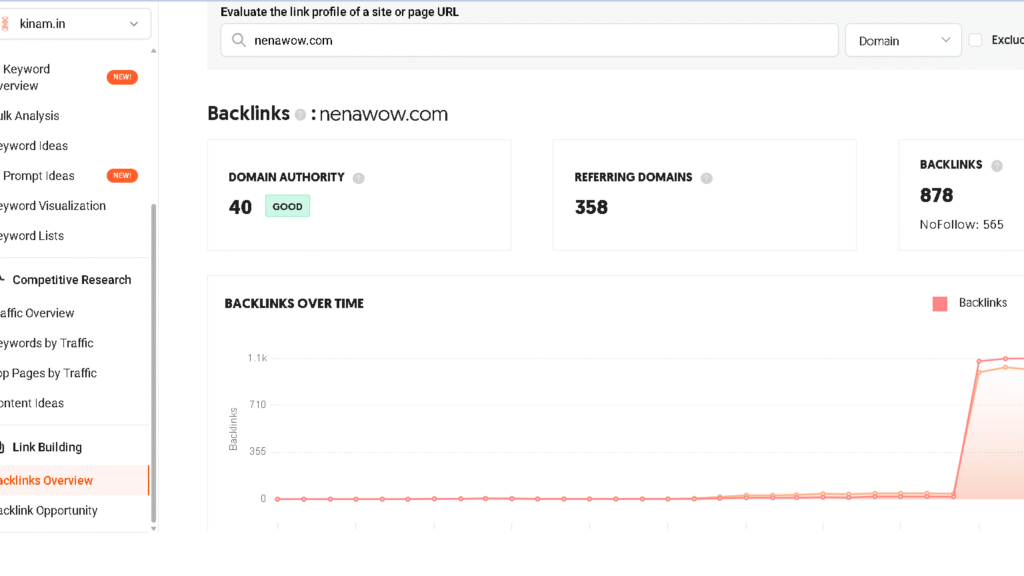
This is Ubersuggest’s clearest limitation. The numbers are not close.
Test Results: Same Domain, All Three Tools
| Metric | Ahrefs | Semrush | Ubersuggest |
|---|---|---|---|
| Referring domains found | 1,300 | 499 | 358 |
| Total backlinks found | 2,700 | 1,500 | 878 |
| Competitor backlink gaps surfaced | 67 unique domains | 41 unique domains | Not available |
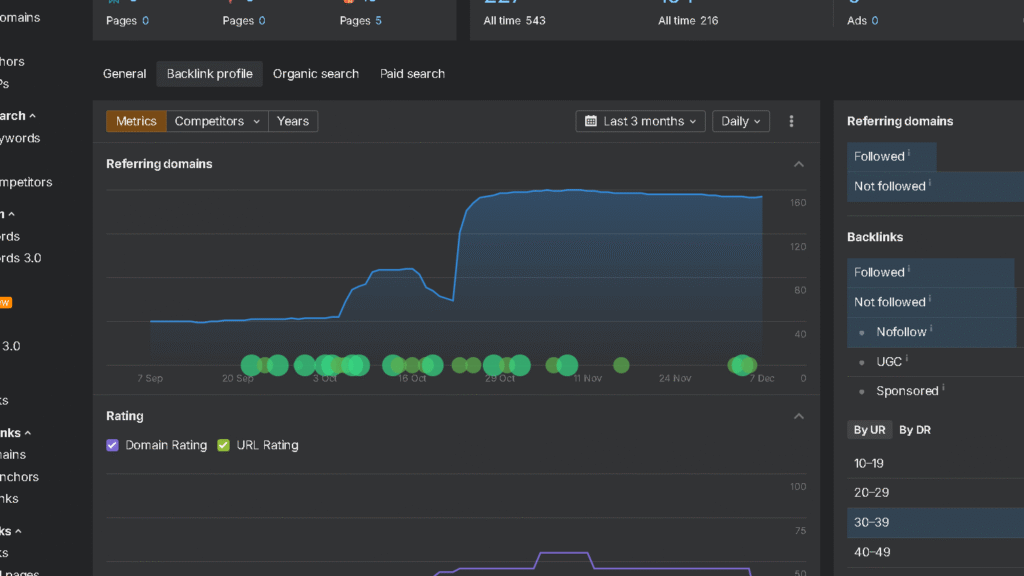
Ubersuggest found 358 referring domains. Ahrefs found 1,300 from the same site. That’s a 264% gap — not a rounding error. Every link-building decision you make on Ubersuggest data is being made on an incomplete picture.
The competitor backlink gap feature doesn’t exist in Ubersuggest. Ahrefs found 67 unique domains linking to competitors but not to nenawow.com. Semrush found 41. Those are prospecting opportunities. Ubersuggest had nothing.
What Ubersuggest’s Backlink Tool Does Offer
- Referring domain count with domain authority scores
- New and lost backlink tracking with dates
- Anchor text distribution
- Top pages by backlinks
- Basic competitor domain overview
It covers the basics. Just not with the index size or analytical depth that matters once you’re doing serious link work.
Backlink Analysis Verdict
Best for: Basic backlink auditing on your own site Not suitable for: Link building campaigns, competitive backlink research, gap analysis
Score: 5 / 10
Site Audit
Technical Issues: Side-by-Side Comparison
| Metric | Ahrefs | Semrush | Ubersuggest |
|---|---|---|---|
| Technical issues flagged | 173 | 1,485 errors + 2,333 warnings | 72 |
| Orphaned pages identified | 45 | 92 | 0 |
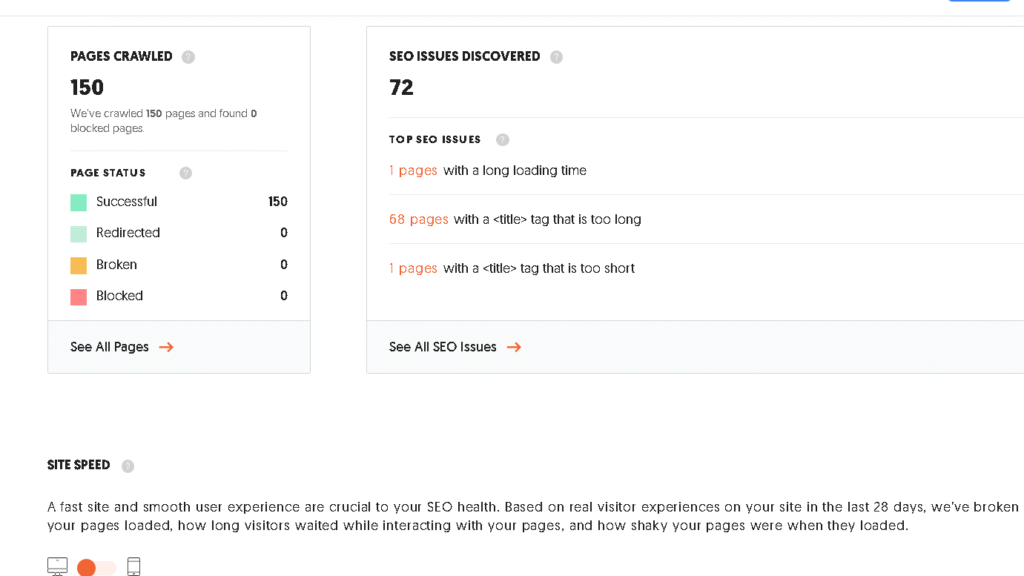
Ubersuggest found 72 issues. Every single one appeared in the other two audits as well — so the data wasn’t inaccurate, it was just incomplete.
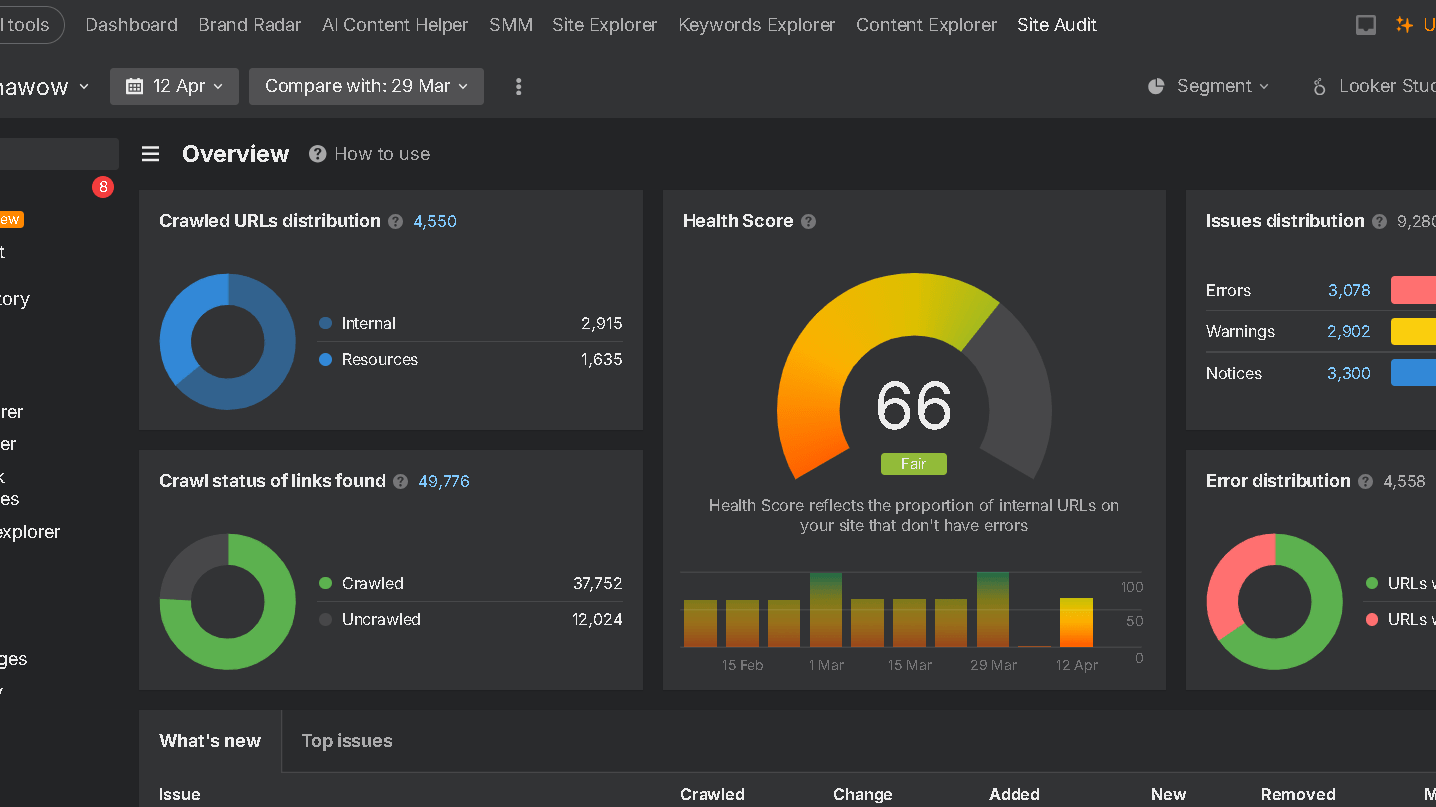
The missed items weren’t minor. Ahrefs flagged an accidental noindex tag blocking 6 posts from Google’s index entirely. Ubersuggest missed it completely. A noindex tag silently killing traffic to 6 posts is exactly the kind of issue an audit tool is supposed to catch. Ubersuggest didn’t.
Orphaned pages — content with no internal links pointing to it, essentially invisible to crawlers — were flagged 45 times by Ahrefs, 92 times by Semrush. Ubersuggest found zero.
What Ubersuggest’s Audit Does Cover
For a small, well-maintained site, the coverage is reasonable:
- Broken internal and external links
- Missing or duplicate meta descriptions and title tags
- Page speed and Core Web Vitals flags
- Basic crawl health overview
- Fix recommendations in plain language
The interface is genuinely good. Clear, readable, actionable for a beginner. The problem isn’t the UX — it’s what’s missing underneath it.
Site Audit Verdict
Best for: First-time audits, small sites with basic technical health checks Not suitable for: Enterprise audits, sites with complex technical architecture, catching silent indexation issues
Score: 5.5 / 10
Rank Tracking
This is one of Ubersuggest’s genuinely competitive areas.
| Metric | Ahrefs | Semrush | Ubersuggest |
|---|---|---|---|
| Accuracy vs. Google Search Console | Within 1–2 positions | Within 1–2 positions | Within 1–3 positions |
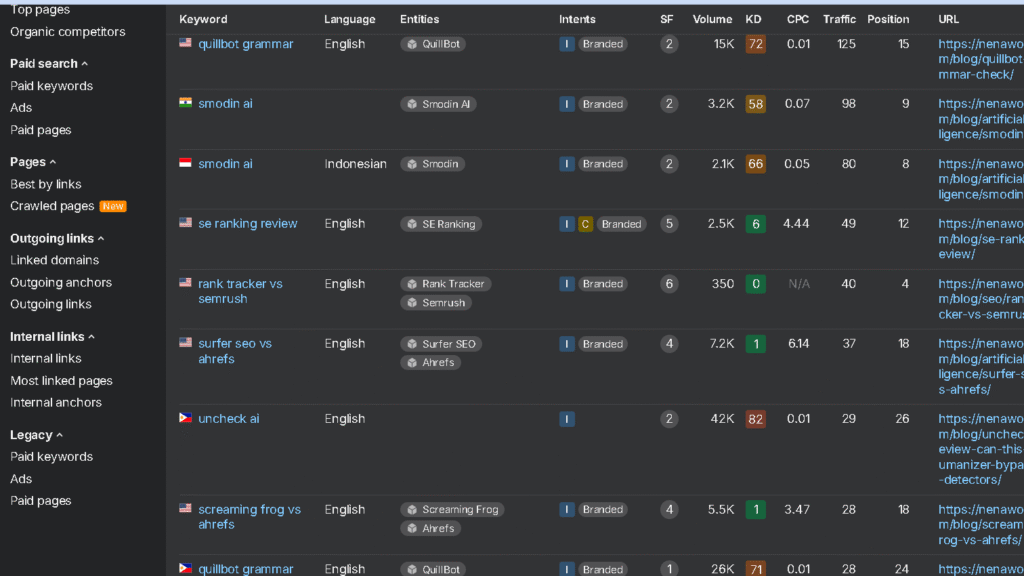
All 30 keywords tracked cleanly. Positional data landed within 1–3 spots of GSC — slightly less precise than Ahrefs and Semrush, but acceptable for most real-world use cases. Updates are daily on paid plans. The dashboard is clean and visualizes ranking trends without friction. Device and location segmentation works without issues.
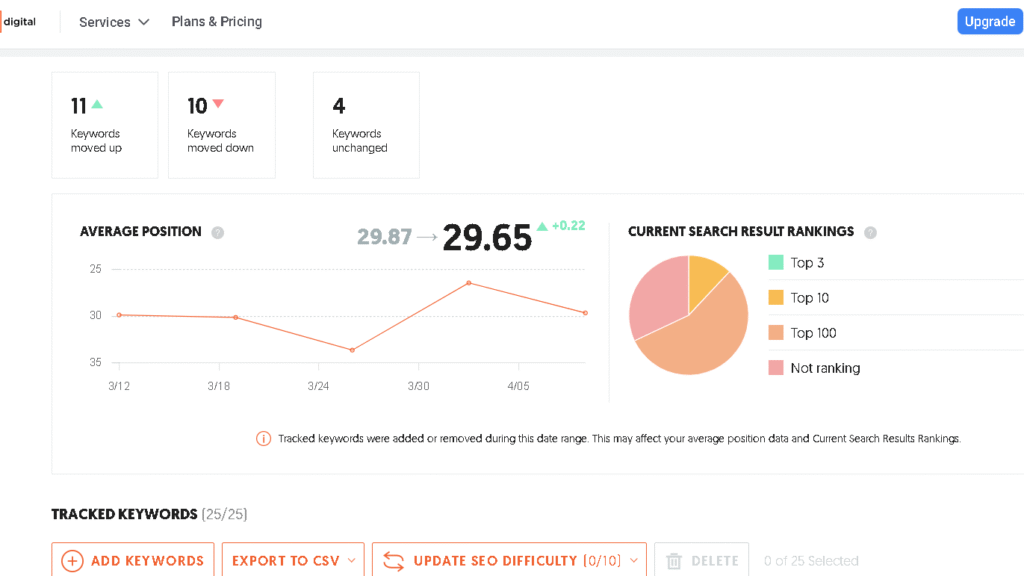
The limitation is competitive context. Ubersuggest tells you where your keywords rank. It doesn’t tell you who’s moving around you, which SERP features are appearing, or how your tracked competitors are trending. That’s fine for a blogger watching their own 30 keywords. It’s limiting for anything more complex.
Rank Tracking Verdict
Best for: Individual site owners tracking their own keyword portfolio Not suitable for: Agency-level multi-domain tracking, competitive SERP monitoring
Score: 7.5 / 10
Competitor Analysis
Competitor research requires data breadth. That’s where Ubersuggest’s smaller index creates real friction.
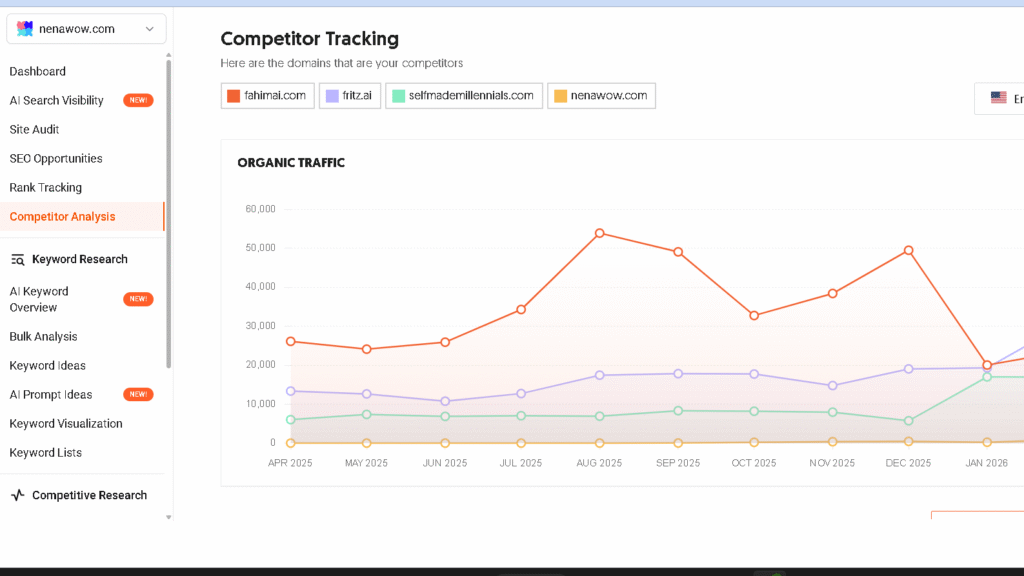
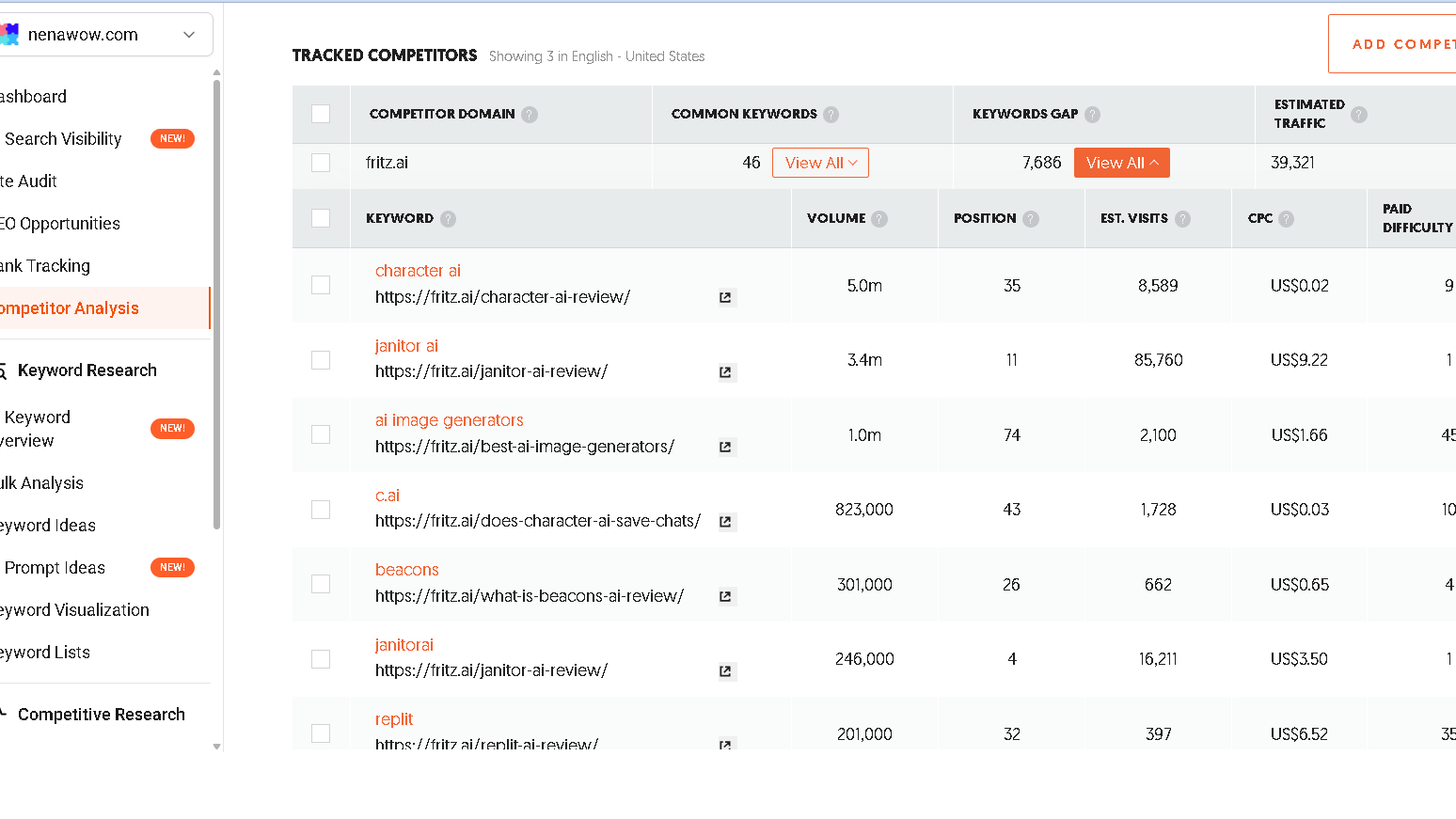
Running the same three competitor domains through all three platforms, Ubersuggest delivered high-level traffic estimates and top-ranking page data. It couldn’t match either Ahrefs or Semrush on the features that actually drive strategic decisions.
What Ubersuggest Offers
- Traffic estimates by domain
- Top pages by estimated organic traffic
- Keyword list a competitor ranks for
- Basic domain authority metrics
What’s Missing
- Keyword gap analysis (competitor keywords you don’t rank for)
- Backlink gap prospecting
- Historical competitor rank position data
- Paid search competitive intelligence
Quick sanity checks before publishing a post? Ubersuggest works. Building a six-month content roadmap based on competitive intelligence? The gaps will cost you.
Competitor Analysis Verdict
Best for: Surface-level competitor benchmarking Not suitable for: Strategic content gap analysis, link prospecting, competitive intelligence at depth
Score: 5.5 / 10
AI Overviews and Generative Search
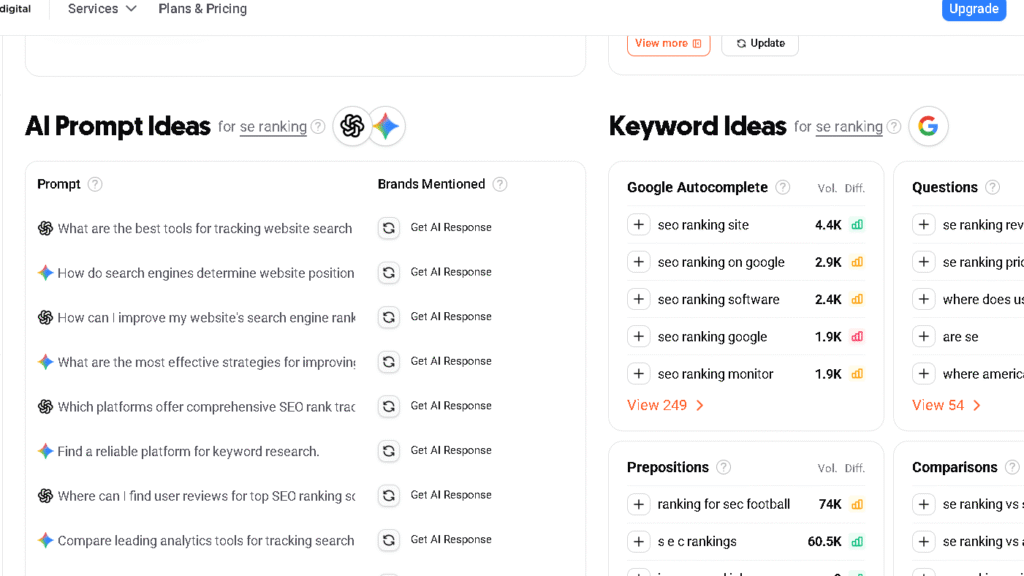
This is the fastest-moving category in SEO right now. It’s also Ubersuggest’s sharpest weak point in 2026.
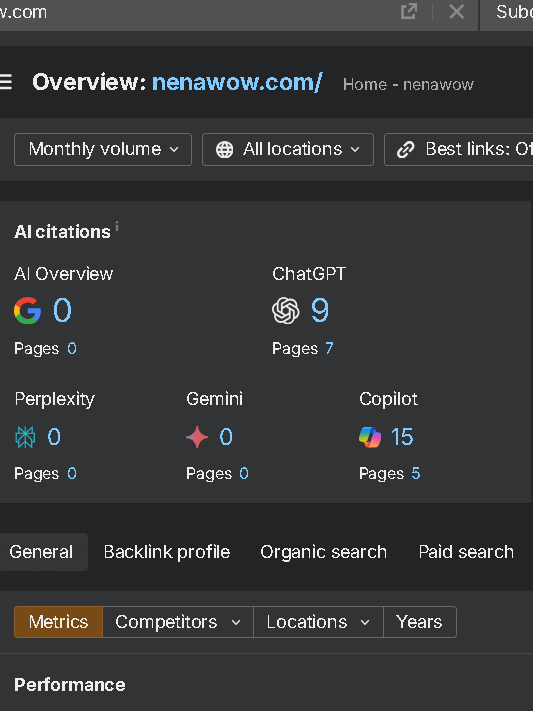
Google’s AI Overviews are reshaping where organic traffic actually goes. A keyword that reliably drove clicks to your article six months ago can now be answered in the SERP by a generated summary — with your content either cited inside it or completely bypassed. Knowing which keywords trigger AI Overviews, and whether you appear in them, is increasingly critical.
| Tool | AI Overview Coverage |
|---|---|
| Ahrefs | Multi-engine: Google, Bing Copilot, and others |
| Semrush | Google-focused, strong coverage |
| Ubersuggest | Early-stage, limited surfacing |
During the 30-day test, Ahrefs identified 6 keywords on nenawow.com that triggered AI Overview appearances. Semrush flagged comparable data. Ubersuggest didn’t surface this in any usable form.
This gap is going to widen, not narrow. AI Overview tracking is becoming a differentiating feature across SEO tools, and Ubersuggest appears to be treating it as a future priority rather than a current one.
AI Overviews Verdict
Best for: Nothing meaningful yet Not suitable for: Any site where generative search traffic monitoring matters
Score: 3 / 10
Content Ideas and Traffic Analyzer
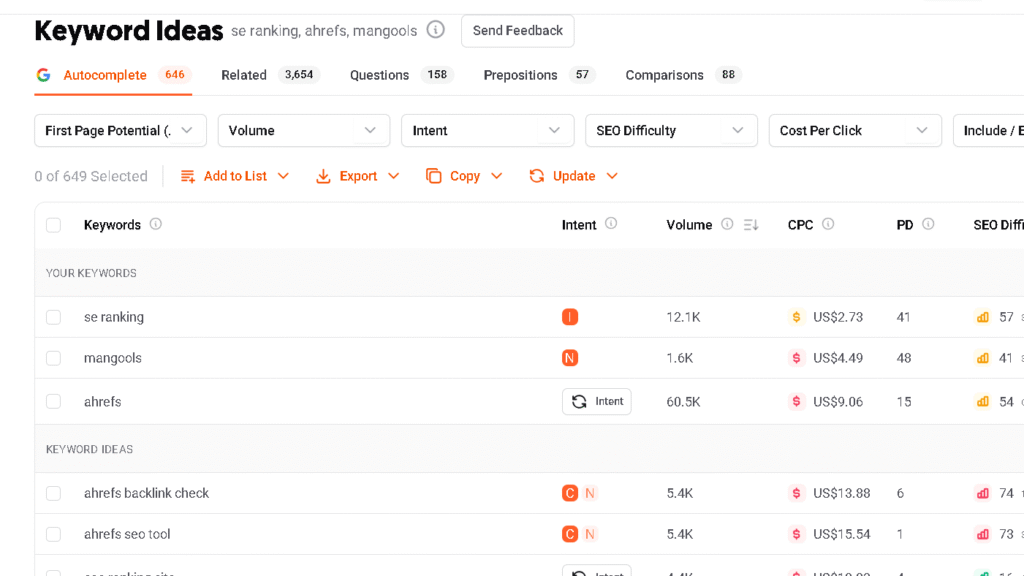
This is one of the few areas where Ubersuggest doesn’t feel like it’s playing catch-up.
Enter any keyword or domain, and you get a list of top-performing content across the web sorted by social shares, backlinks, and estimated traffic. It’s not as deep as Semrush’s Topic Research tool, but for a blogger generating content angle ideas, it genuinely delivers.
The Traffic Analyzer gives you a domain-level overview of any site’s estimated organic performance — top pages, traffic trends, and the keywords driving that traffic. Accuracy varies. But directionally it’s useful for benchmarking yourself against smaller competitors in your niche.
Together, these two features represent some of Ubersuggest’s best value relative to price. They’re accessible, clearly presented, and useful enough to inform a basic content calendar without needing to understand the deeper SEO mechanics behind them.
Ease of Use
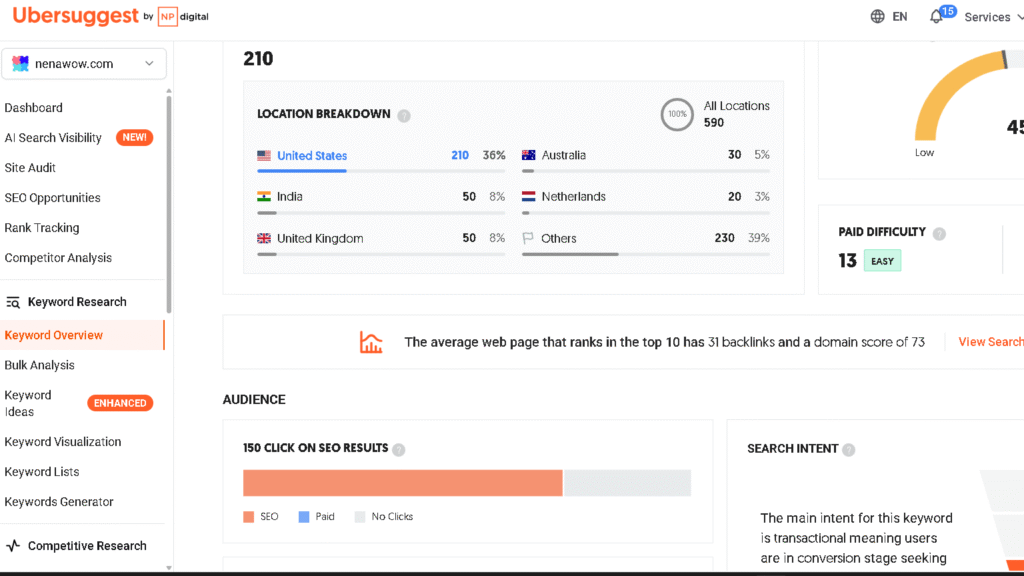
Ubersuggest wins this category without contest. It was designed for beginners, and that intent is visible in every part of the interface.
Navigation is clean. Technical terms are either simplified or accompanied by plain-English tooltips. Running a keyword search, connecting a domain, and reading through an audit report all take minutes — not hours of onboarding.
Compare that to Ahrefs, which assumes substantial prior SEO knowledge and has a steep ramp. Or Semrush, which layers so many tools and modules into the dashboard that new users frequently report feeling lost in the first session.
For someone who wants to start doing SEO without a tutorial series, Ubersuggest is the most frictionless entry point on the market.
Real Test Results: 30 Days on nenawow.com
Baseline vs. Day 30
Important context: 30 days is a short SEO window. Some traffic lift reflects natural fluctuation. The improvements were primarily driven by fixes surfaced through Ahrefs and Semrush.
| Metric | Day 1 | Day 30 | Change |
|---|---|---|---|
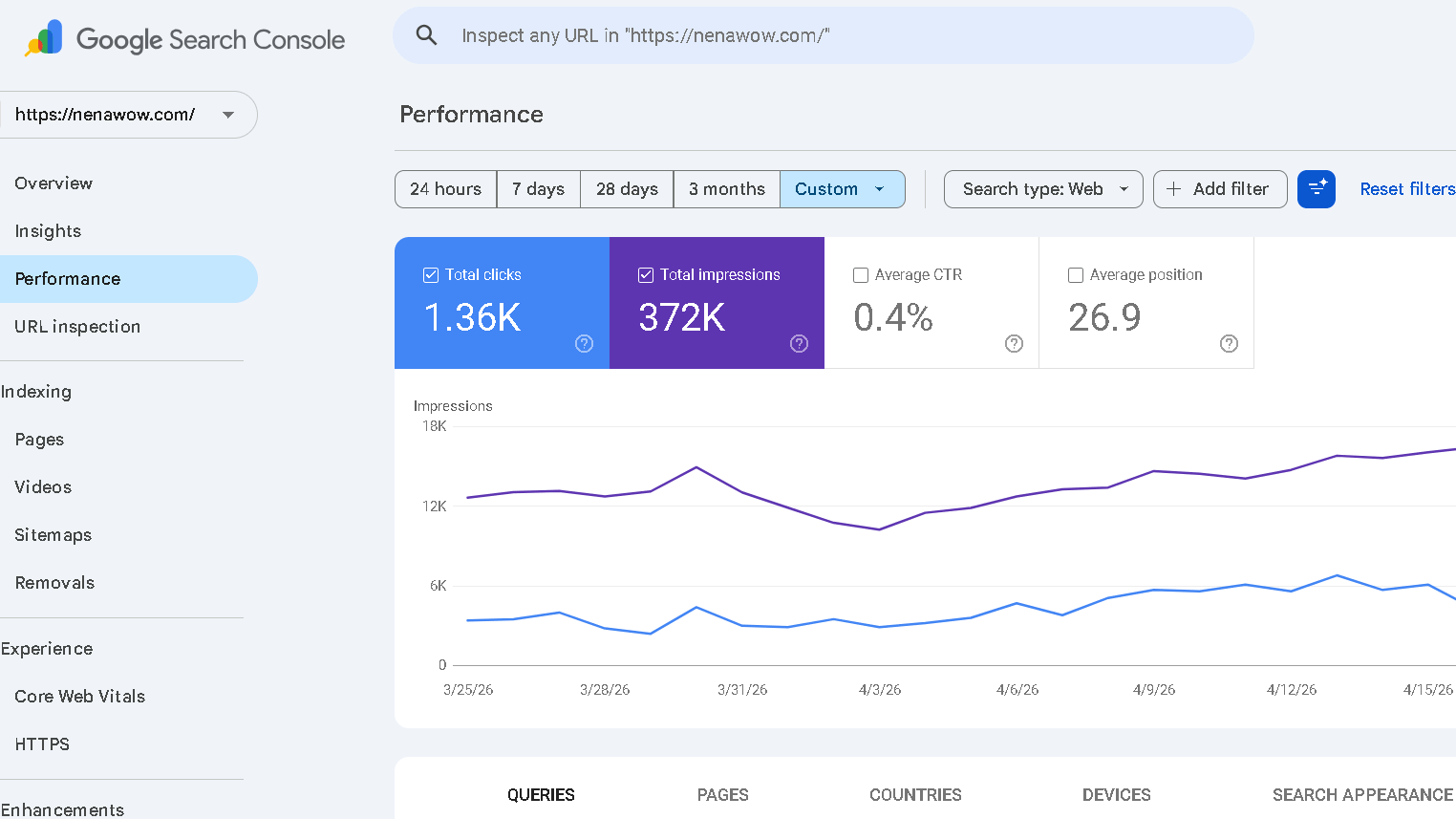
| Monthly organic visits | ~1,000 | ~1,340 | +34% |
| Keywords in top 10 | 18 | 27 | +9 keywords |
| Keywords in top 3 | 4 | 7 | +3 keywords |
| Crawl errors | 173 | 41 | −132 resolved |
| Referring domains | 358 | 371 | +13 new |
| AI Overview appearances | Not tracked | 6 keywords | New data point |
What Ubersuggest Specifically Contributed
Ubersuggest’s audit flagged 72 issues. Every single one of them appeared in the Ahrefs and Semrush audits as well. There was no unique, actionable insight from Ubersuggest that wasn’t already captured elsewhere.
Its keyword data confirmed what Ahrefs had already identified. Its rank tracking aligned closely with the other two tools, slightly less precisely. The noindex tag blocking 6 posts from Google? Ubersuggest didn’t catch it. The 45 orphaned pages? Invisible.
This isn’t a full condemnation. Ubersuggest found real issues and reported real data. It just didn’t add anything the premium tools missed. For a site relying on Ubersuggest alone, those gaps would have compounded silently over months.
Alternatives to Ubersuggest and Competitors
Ubersuggest vs. Ahrefs
Ahrefs has the largest backlink index, most accurate keyword difficulty data, and the strongest AI Overview tracking available in 2026. It costs roughly 10x more per month. The data quality gap is real — but whether it matters depends entirely on how competitive your SEO environment is. A site generating $500/month has different requirements than one where ranking improvements drive $10,000/month in revenue.
Ubersuggest vs. Semrush
Semrush is a full marketing platform. Paid search, social, PR, and content marketing all sit alongside its organic SEO tools. The keyword gap feature is one of the best in the industry. It’s also the most expensive entry point of the three and has a steeper learning curve than either Ubersuggest or Ahrefs. These two tools are built for completely different users.
If you’re considering a full-scale marketing suite, check out my in-depth Semrush review where I analyze its keyword data, backlink index, and competitive research tools.
Ubersuggest vs. Mangools
Mangools (KWFinder + four companion tools) starts around $29/month. KWFinder has a specific reputation for keyword difficulty accuracy — which is precisely where Ubersuggest struggles most. For a blogger whose primary need is keyword research, Mangools is actually a sharper direct competitor to Ubersuggest than either Ahrefs or Semrush.
If you’re deciding between affordable keyword research and enterprise-level data depth, read my detailed Mangools vs Ahrefs comparison to see which tool actually fits your SEO goals.
Ubersuggest vs. SE Ranking
SE Ranking sits between Ubersuggest and the premium tools in both price and capability. Solid rank tracking, dependable audit coverage, and keyword research at approximately $44–$87/month depending on plan. If Ubersuggest feels too limited but Ahrefs isn’t accessible yet, SE Ranking is the most credible middle-ground option.
For a closer look at a stronger mid-range alternative, read my detailed SE Ranking review where I break down its keyword accuracy, backlink tools, and audit depth.
Alternatives Worth Considering
| Situation | Best Pick |
|---|---|
| Professional backlink and keyword data | Ahrefs |
| Full marketing suite including paid search | Semrush |
| Tightest budget, just getting started | Ubersuggest (lifetime deal) |
| Mid-budget freelancer or small agency | SE Ranking |
| Blogger focused primarily on keyword research | Mangools |
| Zero budget, own site only | Ahrefs Webmaster Tools (free) |
One worth calling out specifically: Ahrefs Webmaster Tools is permanently free, requires no credit card, and delivers real Ahrefs data — site audit, backlink monitoring, organic keyword reporting — for any domain you verify. It’s not a replacement for a paid subscription. But as a starting point, it outperforms most paid entry-level tools and pairs well with Ubersuggest’s lifetime plan as a starter stack.
Final Verdict: Should You Buy Ubersuggest in 2026?
After 30 days running all three platforms simultaneously on a real site, the decision framework is clear.
Buy Ubersuggest if:
- You’re new to SEO and building foundational knowledge
- Your site isn’t yet competing in high-authority, high-competition keyword spaces
- Budget is a real constraint and a $120 lifetime payment is more practical than $129/month recurring
- You want a clean, beginner-accessible interface without a steep learning curve
- You’re managing a single personal blog or small-business site
Don’t Buy Ubersuggest if:
- Keyword difficulty accuracy matters to your content investment decisions
- You’re running an active link-building strategy that needs deep backlink data
- Catching every technical issue — indexation problems, orphaned pages, crawl errors — is critical
- You need to monitor AI Overview appearances as generative search reshapes your traffic
- You’re managing multiple client domains at an agency or professional level
The Hybrid Approach Worth Considering
Ubersuggest lifetime deal + Ahrefs Webmaster Tools (free).
For $120 once, you get Ubersuggest’s content workflow and research features for one domain. Add free Ahrefs data for your own verified site at zero ongoing cost, and you have a functional starter stack with essentially no monthly commitment.
When your site reaches the point where competitive backlink data and precise difficulty scoring start influencing real revenue decisions — and it will — upgrading to a paid Ahrefs or Semrush plan is a much clearer calculation from that position.
Ubersuggest isn’t trying to be the best SEO tool. It’s trying to be the most accessible one. For the user it was built for, it keeps that promise. Just know what you’re getting — and what you’re not.
👉 Compare with Ahrefs Webmaster Tools (Free)
Frequently Asked Questions
For beginners and early-stage sites, yes. The lifetime deal removes recurring cost pressure entirely. The data ceiling becomes a real constraint in competitive environments — but for someone learning SEO fundamentals on a tight budget, Ubersuggest delivers what it promises.
One-time payments starting at $120 for the Individual plan. You pay once and access the tool indefinitely with no further charges. It’s a legitimate offer and the primary reason many solopreneurs and bloggers choose Ubersuggest over subscription-based alternatives.
Directionally useful. Volume estimates are broadly reasonable for head terms. The difficulty score skews optimistic — competitive keywords regularly scored easier than real SERP conditions turned out to be.
Not favorably. Ubersuggest found 358 referring domains on nenawow.com. Ahrefs found 1,300 from the same site. Ubersuggest also lacks backlink gap analysis entirely.
Functionally, yes. It includes basic local keyword research and country/region filtering. For checking local search volumes, basic site audits, and tracking local rankings, it’s usable. For detailed local pack analysis or multi-location campaign management, the coverage is too limited.