
If you’re deciding between Ahrefs vs Ubersuggest, this side-by-side comparison breaks down pricing, keyword accuracy, backlink data, rank tracking, and real-world results.
Good news. I actually ran both of them at the same time on a real website for a full month, so this isn’t just a spec-sheet comparison. We’re talking real data, real gaps, and some surprises I honestly didn’t see coming.
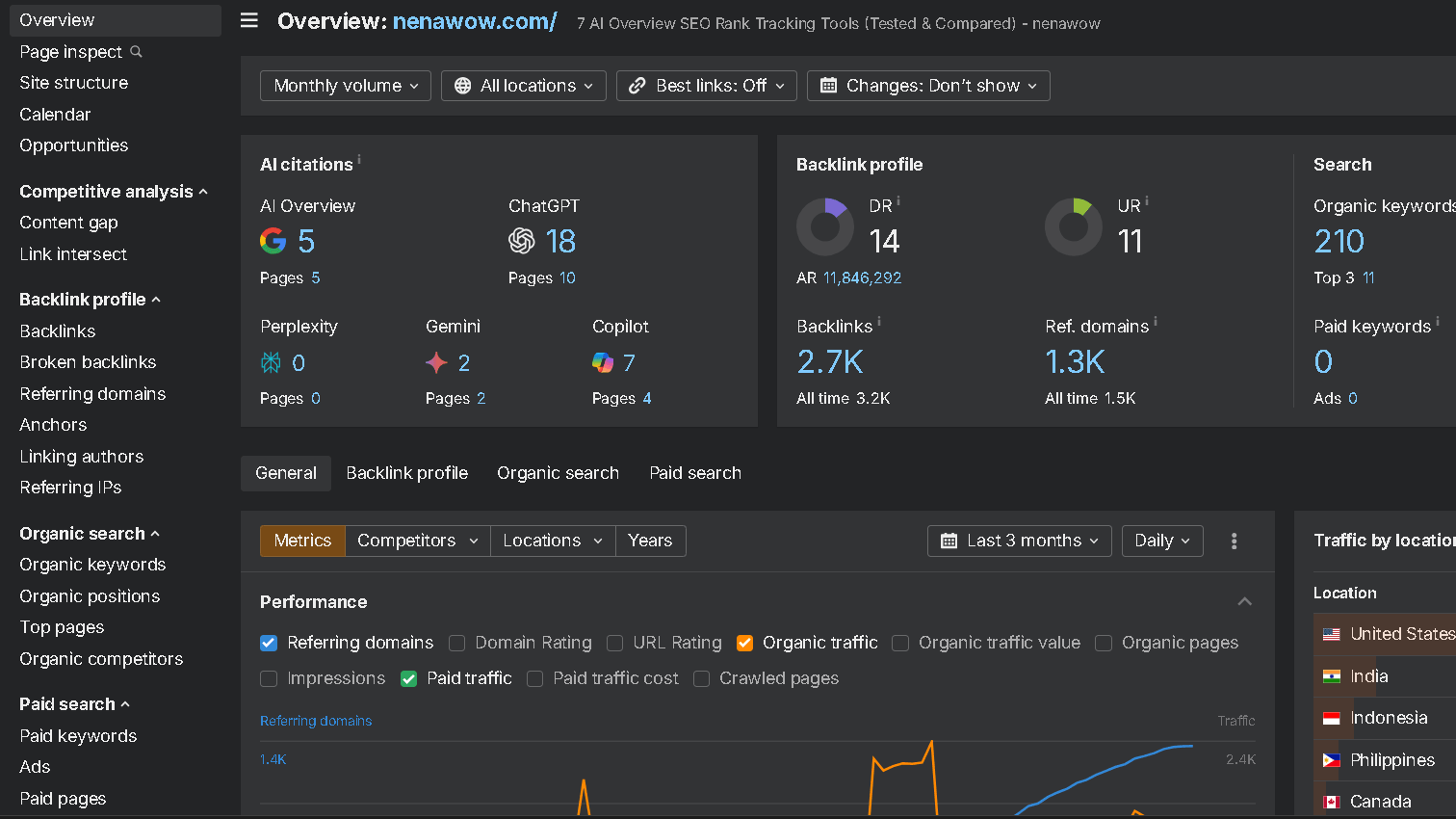
I tested both tools simultaneously on nenawow.com (220 posts, ~1,000 monthly organic visits) to compare:
- Keyword research accuracy
- Backlink database size
- Technical SEO auditing
- Rank tracking reliability
- Competitor analysis depth
Here’s what actually happened.
Disclosure: This article contains affiliate links. If you purchase through these links, I may earn a commission at no additional cost to you. All tools were tested independently over 30 days on a real website. Opinions are entirely my own.
Table of Contents
Ahrefs vs Ubersuggest:Quick Verdict
Ubersuggest is a totally legitimate starting point if you’re newer to SEO. The lifetime deal takes the financial pressure off, the interface won’t overwhelm you, and the core features get the job done.
Ahrefs offers? It’s operating on a completely different level for anyone who’s serious about SEO as a growth strategy. The data quality gap isn’t just a little better — it’s fundamentally different in how it’s built.
Ahrefs and Ubersuggest: Quick Comparison
| Category | Winner |
|---|---|
| Best for professionals | Ahrefs |
| Best for beginners | Ubersuggest |
| Backlink database | Ahrefs (significantly larger) |
| Ease of use | Ubersuggest |
| Price | Ubersuggest (lifetime deal available) |
| Data depth | Ahrefs |
| Keyword accuracy | Ahrefs |
| Content creation tools | Ubersuggest |
What I Tested and How
Over 30 days, I ran nenawow.com through both platforms simultaneously.
- Tracked the same target keywords in both rank trackers
- Pulled keyword suggestions for identical seed terms
- Ran the same competitor domains through both backlink analyzers
- Compared what each tool reported about my own site’s health and traffic
nenawow.com is a niche site. 220 published posts, two years old, sitting at roughly 1,000 monthly organic visits. Not a huge site. But, it is real, active, and competitive enough to stress-test both tools in ways that actually matter.
Pricing Comparison
Ahrefs Pricing
| Plan | Monthly | Annual (per month) |
|---|---|---|
| Lite | $129 | $108 |
| Standard | $249 | $208 |
| Advanced | $449 | $374 |
| Enterprise | Custom | Custom |
Free option: Ahrefs Webmaster Tools is permanently free. No trial, no credit card needed. You get basic site auditing and backlink monitoring for your own verified domains — indefinitely.
👉 Verify current Ahrefs pricing
Ubersuggest Pricing
| Plan | Monthly | Lifetime (one-time) |
|---|---|---|
| Individual | $12 | $120 |
| Business | $20 | $200 |
| Enterprise | $40 | $400 |
The lifetime deal is genuinely Ubersuggest’s biggest selling point. Pay once, you’re done. No recurring charges, no cancellation anxiety, no annual renewal quietly hitting your credit card.
👉 Verify current Ubersuggest pricing
The cost reality: For what you’d pay for a single month of Ahrefs Lite, you could own Ubersuggest’s Individual plan for life. That gap tells you a lot about who each tool is actually built for.
Ubersuggest vs Ahrefs :Head-to-Head
1. Which SEO Tool is Better for Keyword Research?
This is honestly where the difference hits you the hardest.
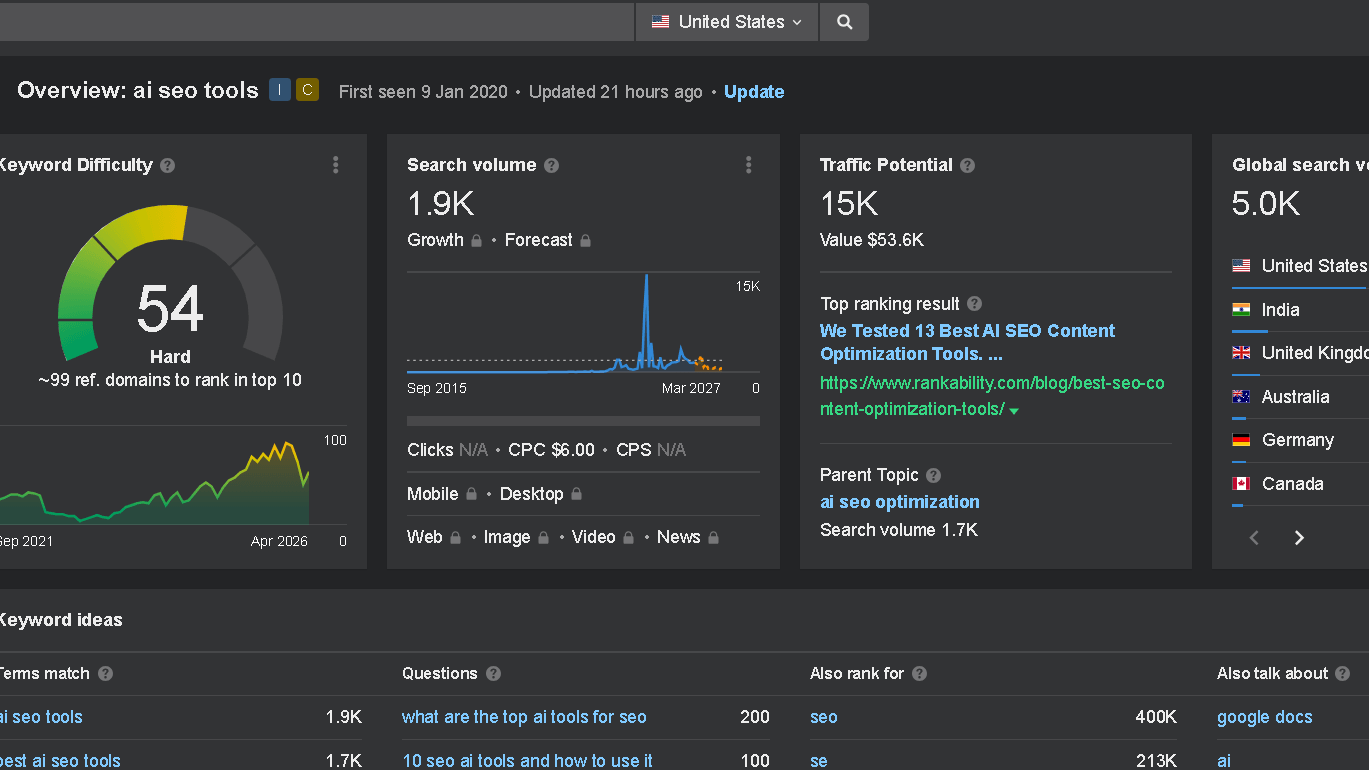
Ahrefs Keywords Explorer pulls from a database of billions of keywords across 170+ countries. For any seed term, you’re getting search volume, keyword difficulty based on real backlink data, clicks data, traffic potential, SERP history, and a full breakdown of what’s actually ranking — including estimated traffic each URL is pulling in.
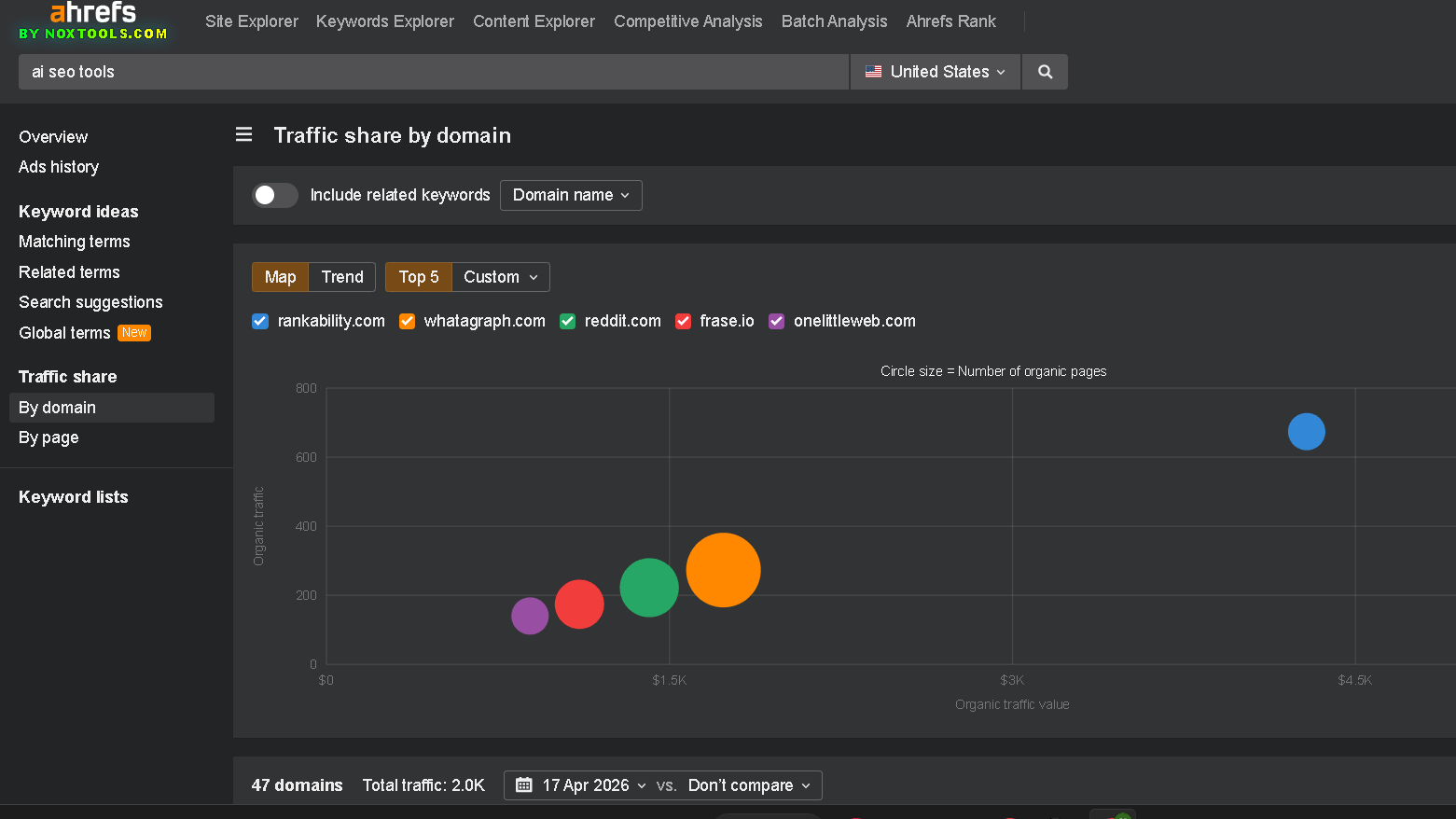
When I searched “AI SEO tools” in Ahrefs, here’s what came back:
- Accurate monthly search volume with seasonal trends
- A SERP overview of the top 10 with domain ratings, backlink counts, and estimated traffic
- Related keyword clusters I genuinely hadn’t thought about
- Parent topic identification — which broader term is actually driving the most traffic
- Click-through rate estimates
Ubersuggest’s Keyword Overview gives you search volume, SEO difficulty, paid difficulty, and CPC. It surfaces related keywords, question-based variations, and comparison terms. The interface is clean and genuinely easy to read.
But the depth just isn’t there.
Difficulty scores in Ubersuggest felt consistently optimistic throughout my testing. Several keywords it labeled “medium” difficulty were completely dominated by high-authority domains when I checked the actual SERP in Ahrefs. For a beginner making real content investment decisions, that miscalibration is a serious problem. You end up chasing keywords you realistically can’t rank for yet, burning weeks on content that was never going to compete.
Winner: Ahrefs.
Ready to start keyword research properly?
👉 Try Ahrefs | 👉 Try Ubersuggest
2. Ahrefs or Ubersuggest for Backlink Analysis?
Backlinks are still one of the most important ranking signals out there. The quality of a tool’s backlink index directly determines how useful its link analysis actually is.
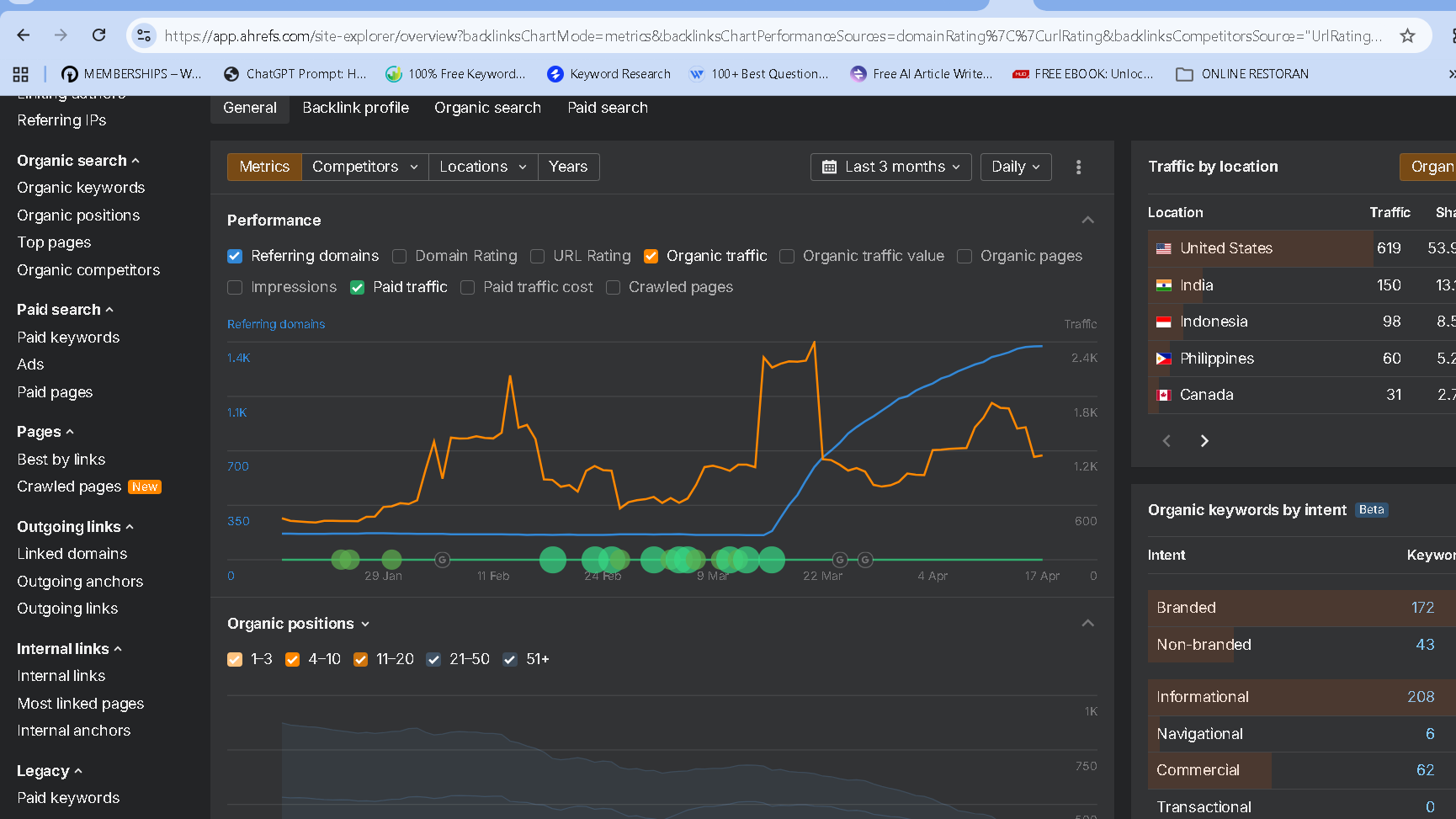
Ahrefs’ backlink index is widely considered the most comprehensive in the industry. Running nenawow.com through Site Explorer surfaced backlinks I could independently verify links I knew existed because I’d built or earned them myself. Ahrefs provides also:
- Anchor text distribution
- Referring domain growth over time
- New vs. lost links
- Link type breakdowns (dofollow vs. nofollow)
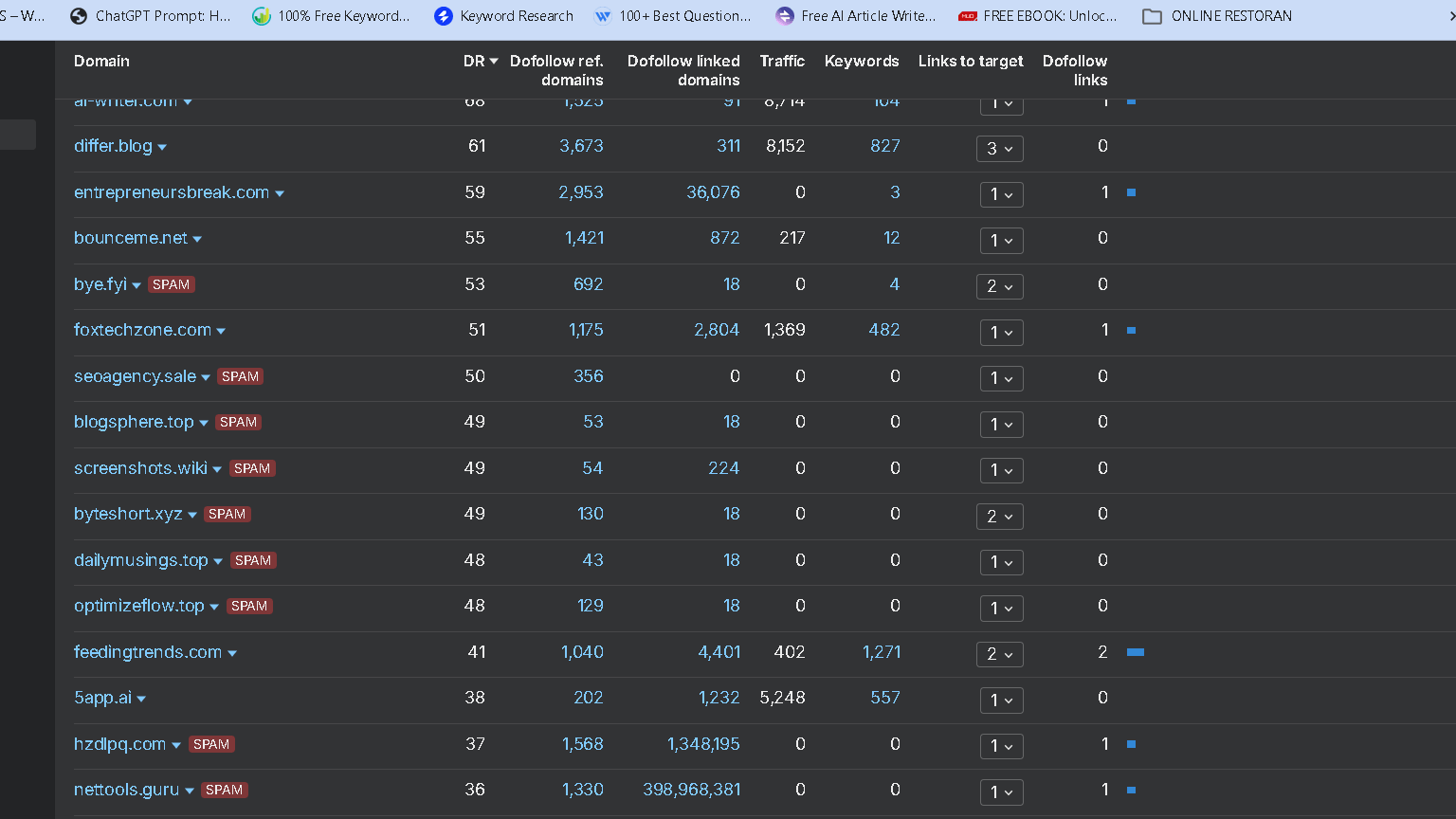
The historical view was particularly useful. I could see exactly when my site picked up or dropped referring domains, which helped me connect ranking movements to specific link acquisition events. That kind of correlation is genuinely hard to do without accurate, reliable data.
Ubersuggest’s backlink data was noticeably thinner. Running the same domain through both tools, Ubersuggest returned fewer referring domains and missed several links I could confirm existed. For competitive analysis, trying to understand what’s actually powering a competitor’s rankings, that gap really does matter.
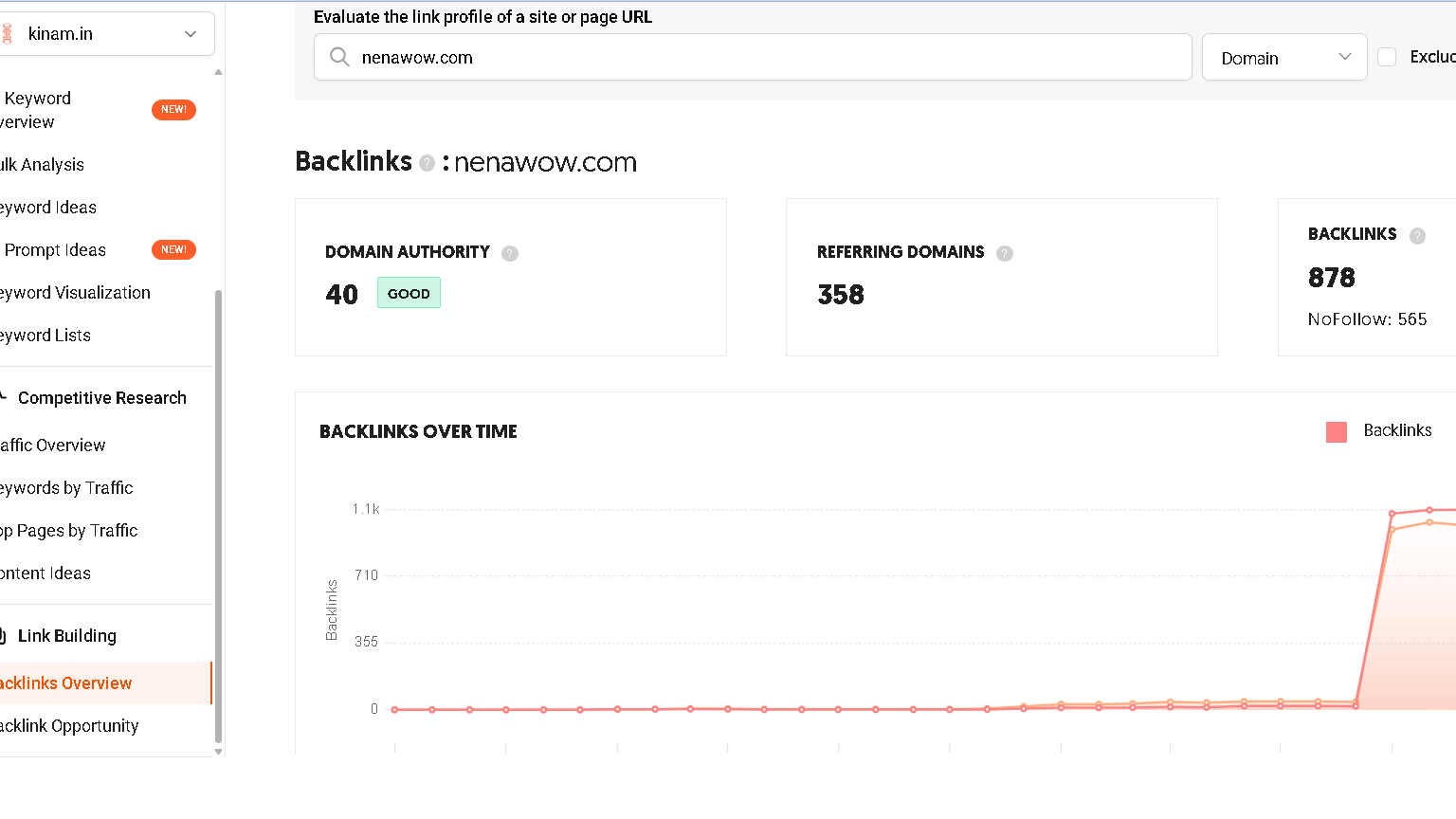
| Tool | Total Backlinks Found | Referring Domains Found |
|---|---|---|
| Ahrefs | 2,700 | 1,300 |
| Ubersuggest | 878 | 358 |
If you’re a beginner just checking whether a guest post opportunity has any real authority behind it, Ubersuggest will give you a rough signal. But if you’re making serious link-building decisions, you need Ahrefs’ index depth.
Winner: Ahrefs.
3. Ubersuggest or Ahrefs for Site Audit?
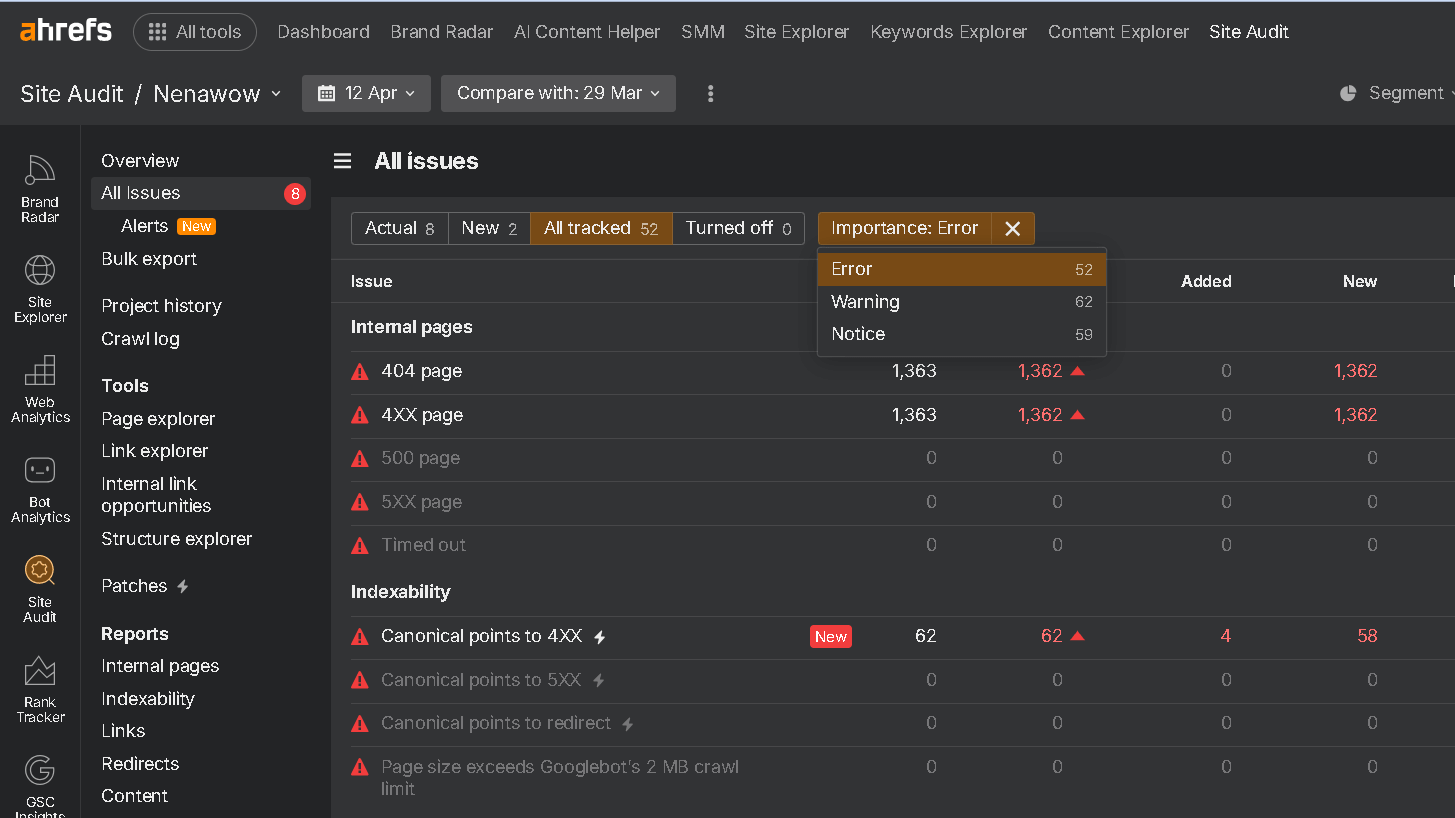
Both tools offer technical SEO auditing, but the experience of actually using them is pretty different.
Ahrefs Site Audit crawls your site and organizes issues into errors, warnings, and notices. It covers:
- Broken links and redirects
- Duplicate content and canonicalization issues
- Page speed signals
- Missing or malformed meta tags
- Crawlability and indexability problems
- Core Web Vitals data
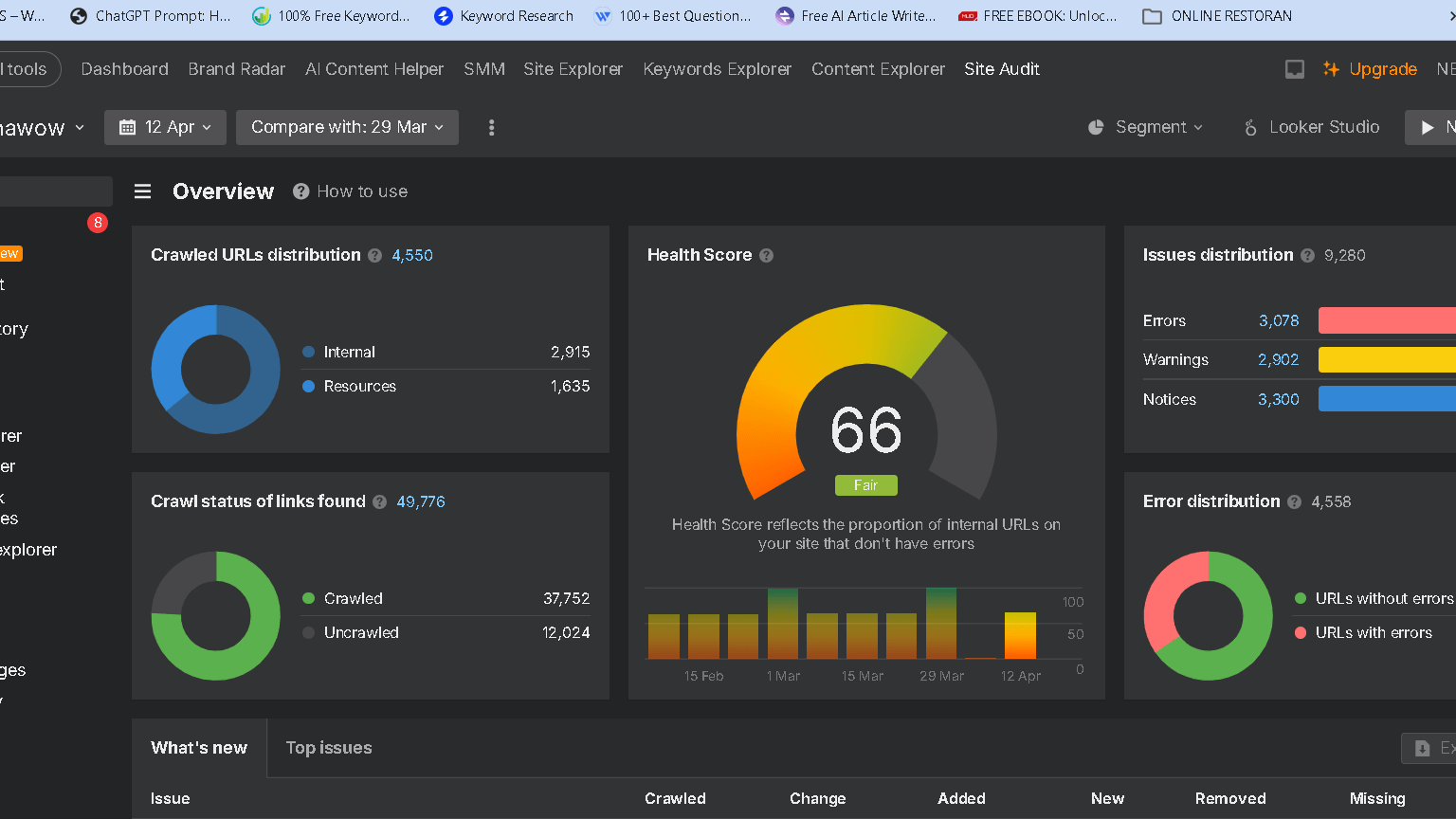
| Tool | Total Issues Flagged | Errors | Warnings | Notices | Notes |
|---|---|---|---|---|---|
| Ahrefs | 173 | 52 | 62 | 59 | Full breakdown available |
| Ubersuggest | 72 | — | — | — | All issues were also identified by Ahrefs |
The reporting is detailed. For nenawow.com, it surfaced 173 issues I hadn’t caught manually. 52 of which were legitimate errors that were actually affecting crawl efficiency. The internal linking visualization was particularly eye-opening, showing me which pages were receiving the most internal link equity and which ones were sitting in orphan status with no links pointing to them.
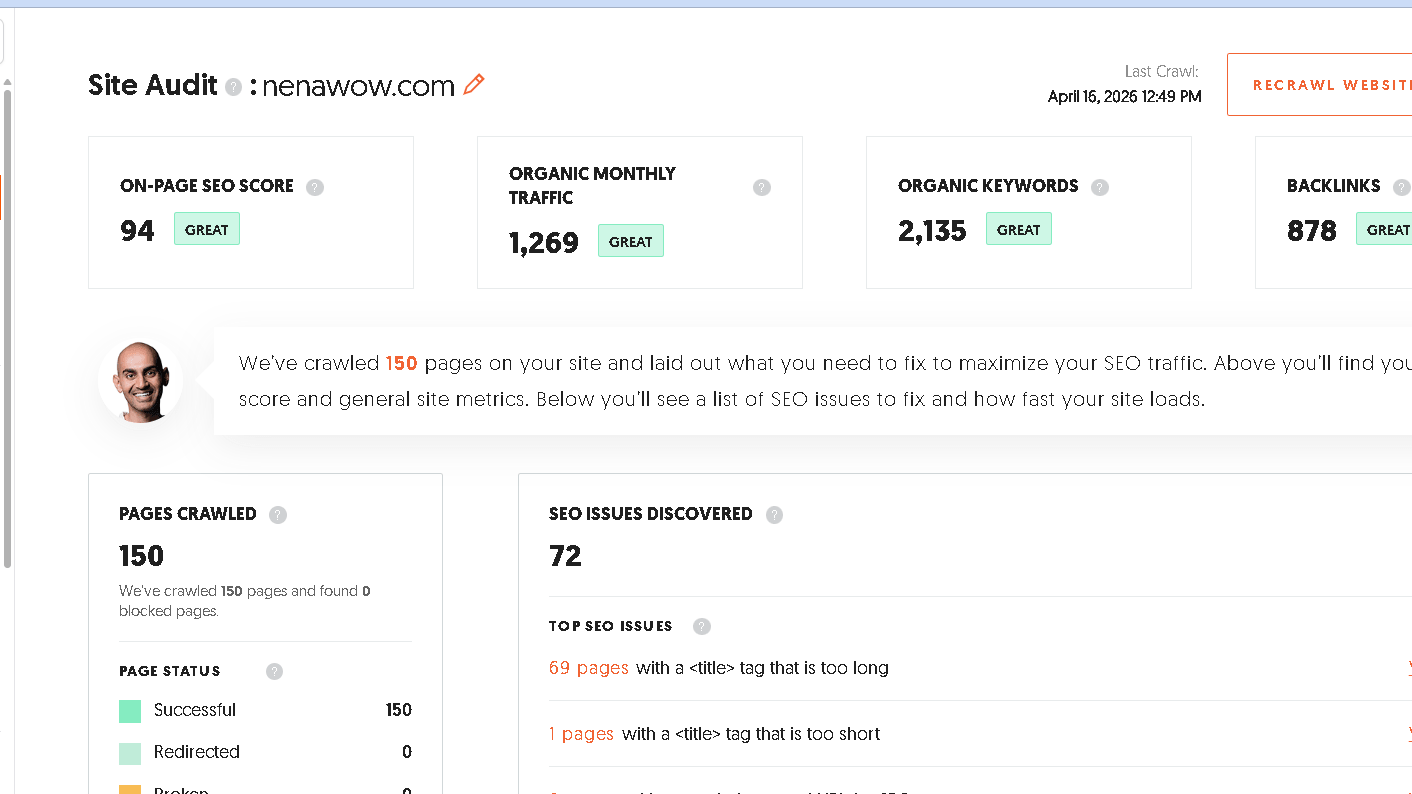
Ubersuggest’s site audit is functional and beginner-friendly. It flags the most common issues in plain language with clear, actionable recommendations. If you just launched a site and want to know whether anything is obviously broken, it genuinely does the job. But it doesn’t go as deep, and the internal linking analysis isn’t nearly as developed.
Winner: Ahrefs.
4. Compare Ahrefs and Ubersuggest for Rank Tracking
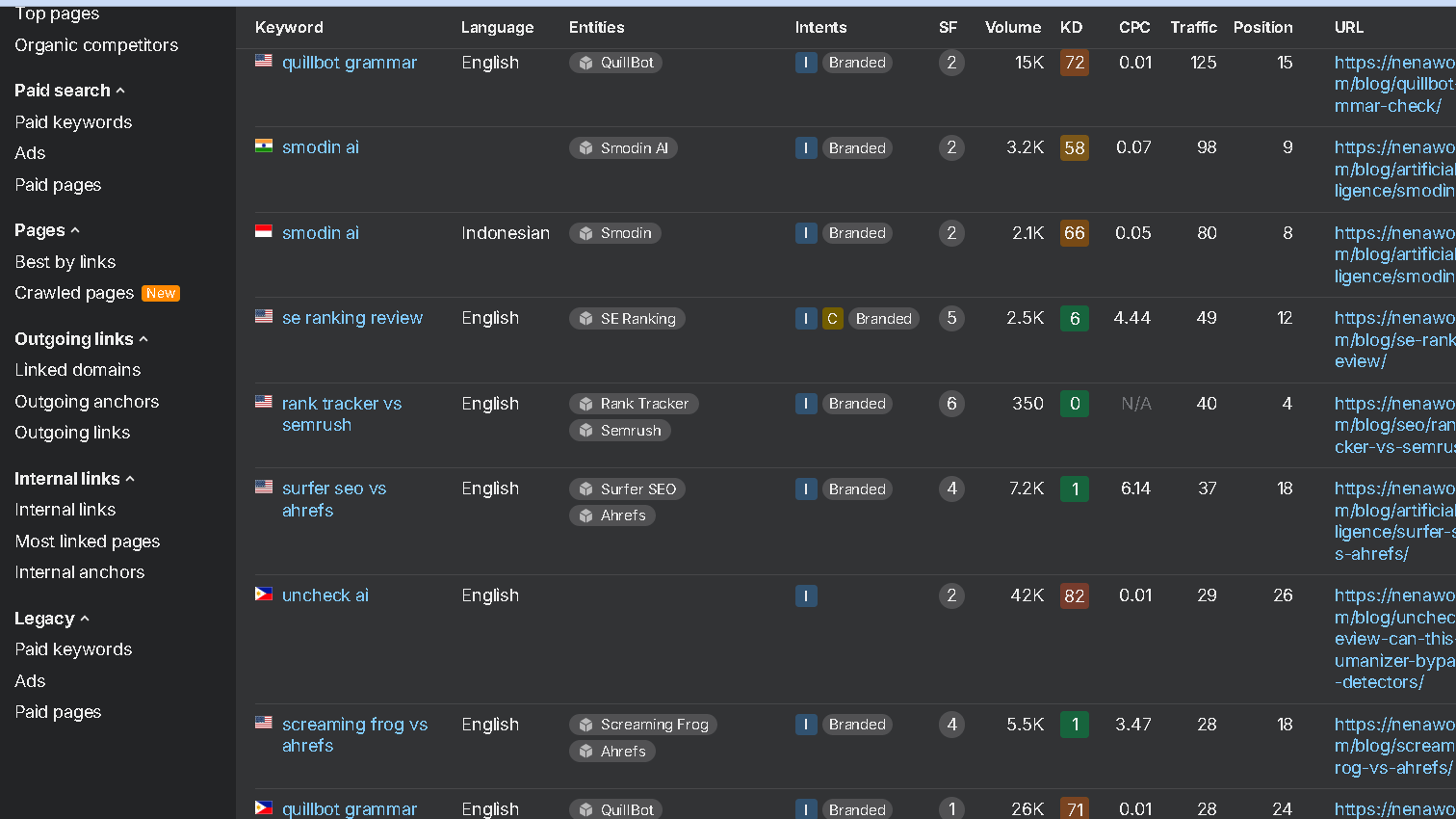
I tracked 30 identical keywords in both tools simultaneously across the full 30-day test period.
| Metric | Ahrefs | Ubersuggest |
|---|---|---|
| Update frequency | Daily | Every 3–7 days |
| SERP feature tracking | ✅ Yes | ❌ Limited |
| Agreement with GSC | Within 1–2 positions | Within 1–3 positions |
| Keywords tracked | 30 | 30 |
Ahrefs’ rank tracker updated daily. The data matched what I could verify manually using incognito searches. It also tracked SERP features — if a keyword had a featured snippet, People Also Ask box, or video carousel, Ahrefs flagged it. This matters more than it sounds, because ranking #3 behind a featured snippet and three PAA boxes has very different traffic implications than ranking #3 in a clean SERP with nothing above it.
Ubersuggest’s rank tracker updated less frequently on the entry-level plan. The core data — position, movement direction, visibility score — was generally accurate, but I noticed occasional delays. For broad trend monitoring, that’s totally fine. For day-to-day tactical decisions, it creates real friction.
Winner: Ahrefs.
5. Competitor Analysis
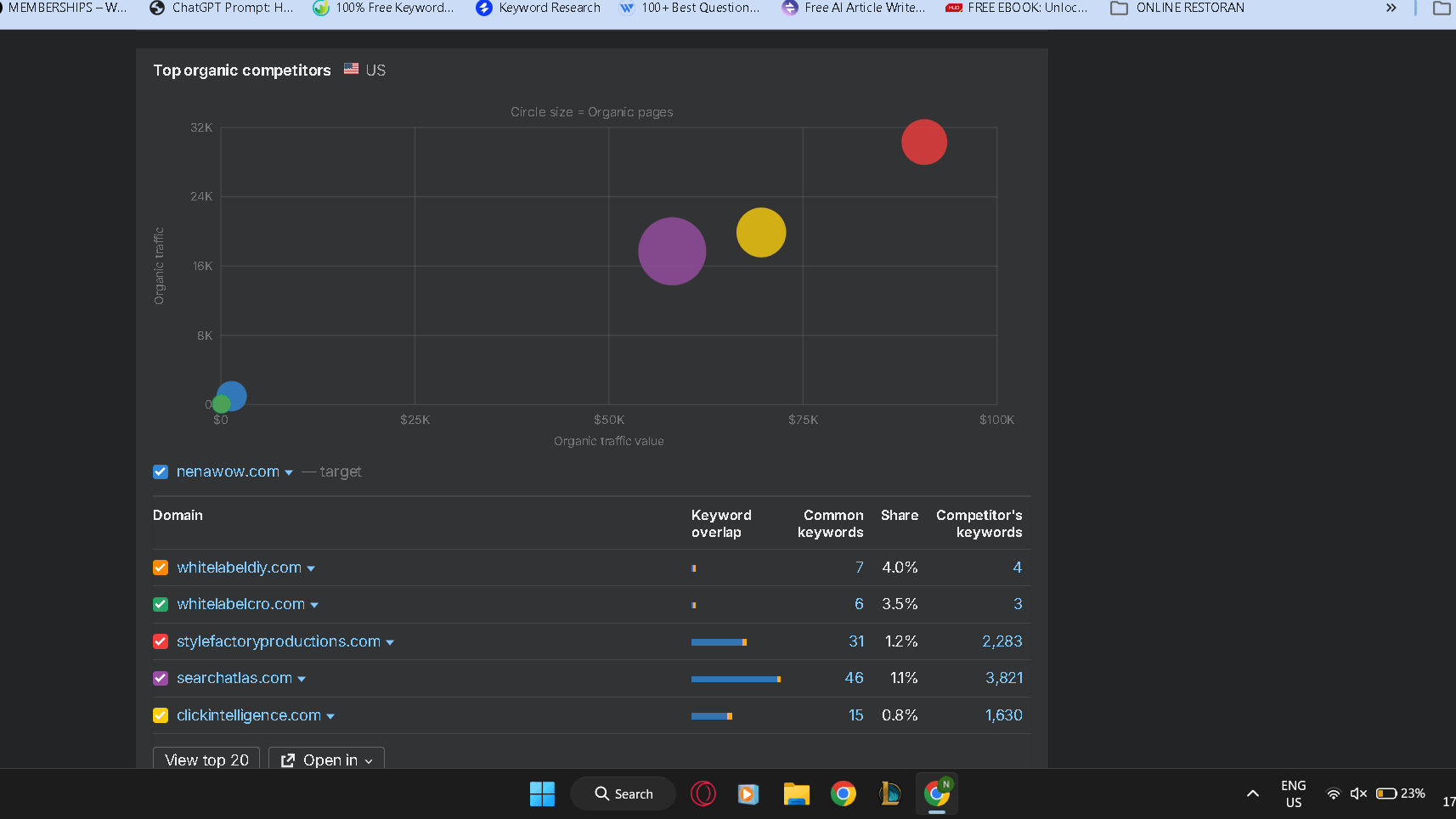
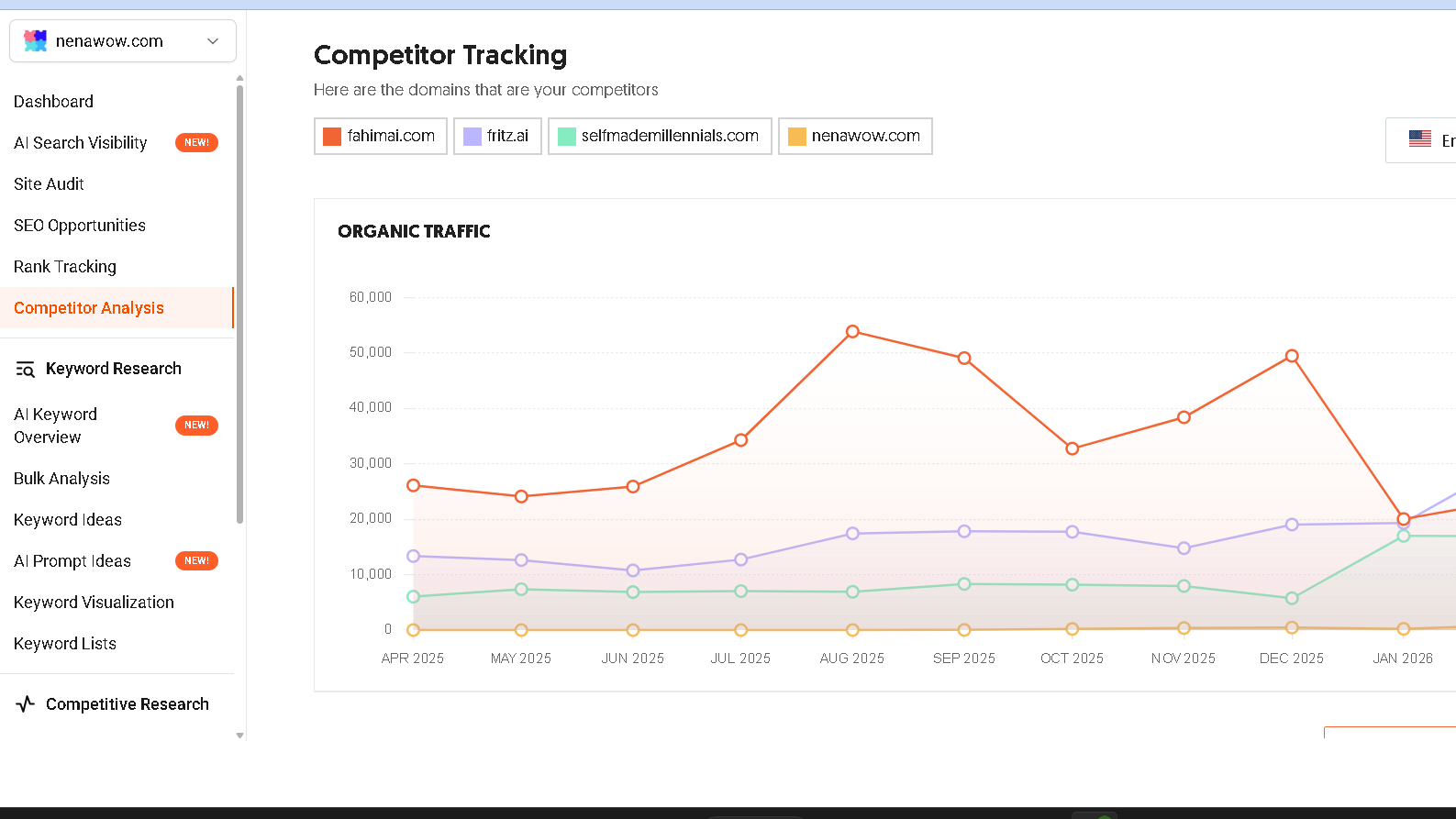
This is honestly one of Ahrefs’ strongest areas, and it showed clearly during testing.
Site Explorer lets you drop in any competitor URL and immediately see:
- Estimated organic traffic
- Top pages by traffic
- Keywords those pages rank for
- Full backlink profile
- Traffic value (what that traffic would cost to replicate in paid ads)
- Content gaps — keywords competitors rank for that you don’t
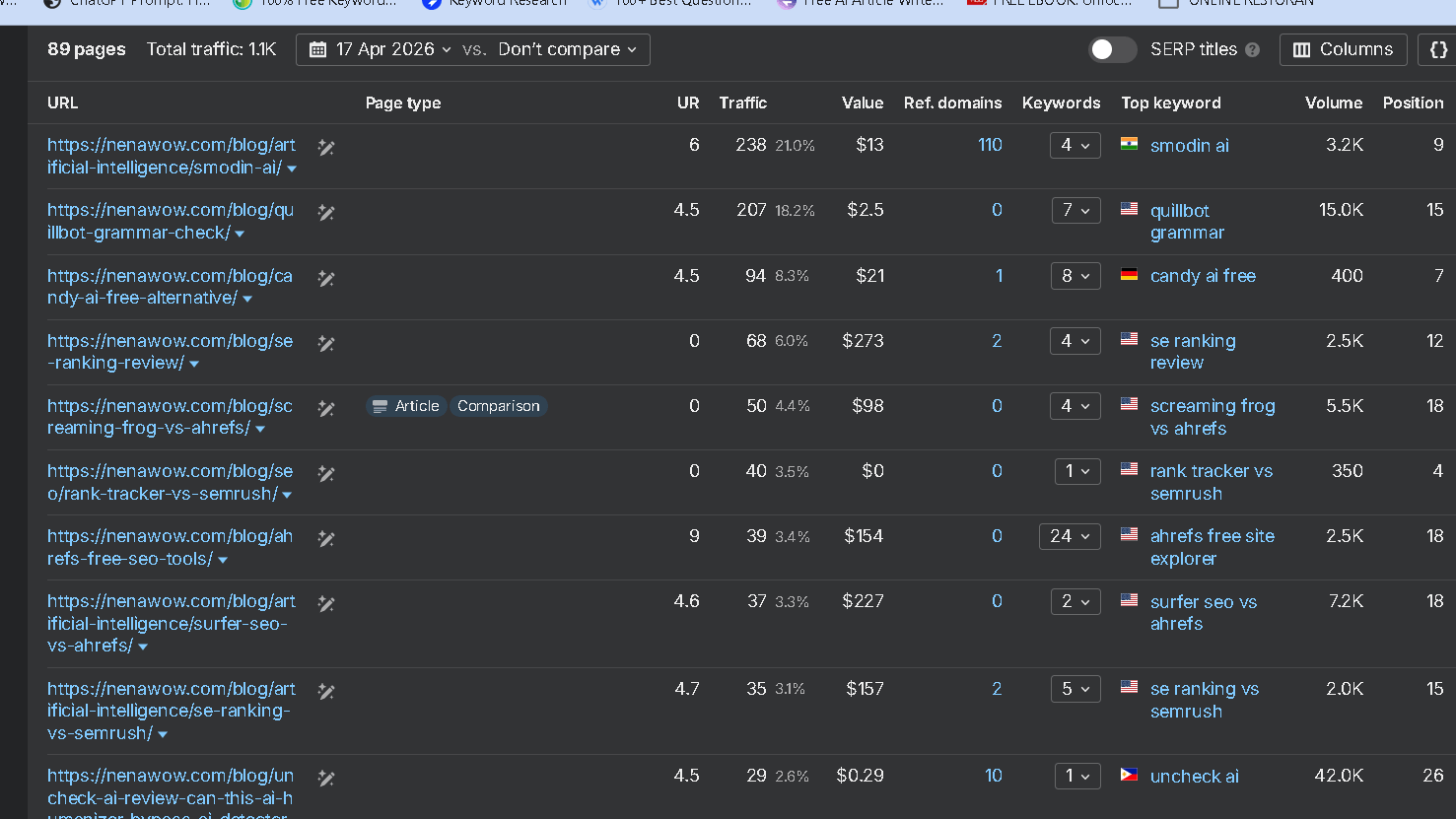
The Content Gap tool became one of my most-used features during the 30 days. I ran nenawow.com against three competitors and surfaced 200+ keyword opportunities I hadn’t previously thought about. Several of those turned into published posts before the testing period was even over.
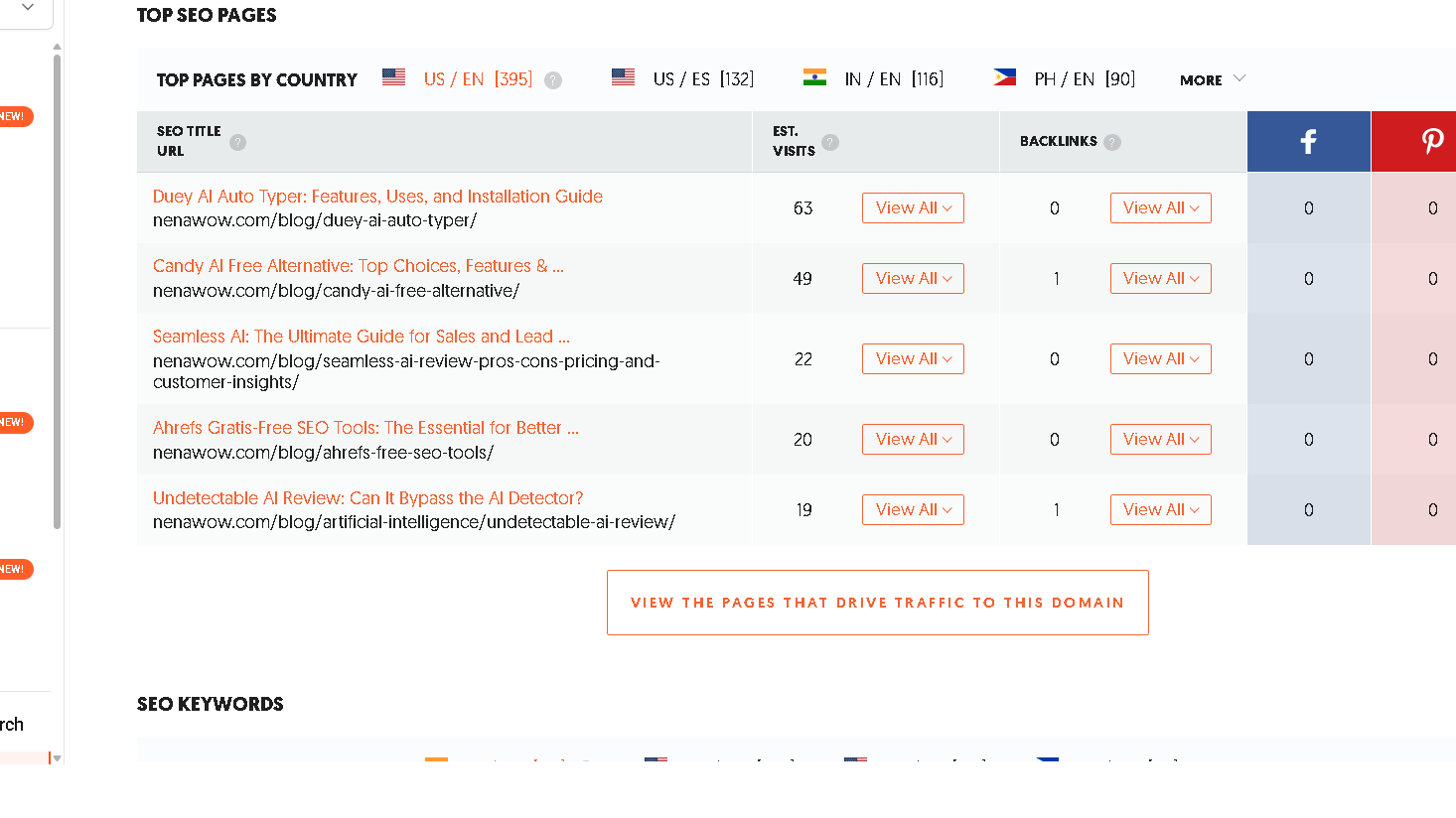
Ubersuggest has a competitor analysis module too. It shows top pages, estimated traffic, and keyword overlap. For beginners putting together their first content plan, it’s genuinely useful. But the data depth doesn’t match Ahrefs, and the content gap analysis is less nuanced.
Winner: Ahrefs.
6. Content Tools & Content Ideas & AI Overviews Tracking
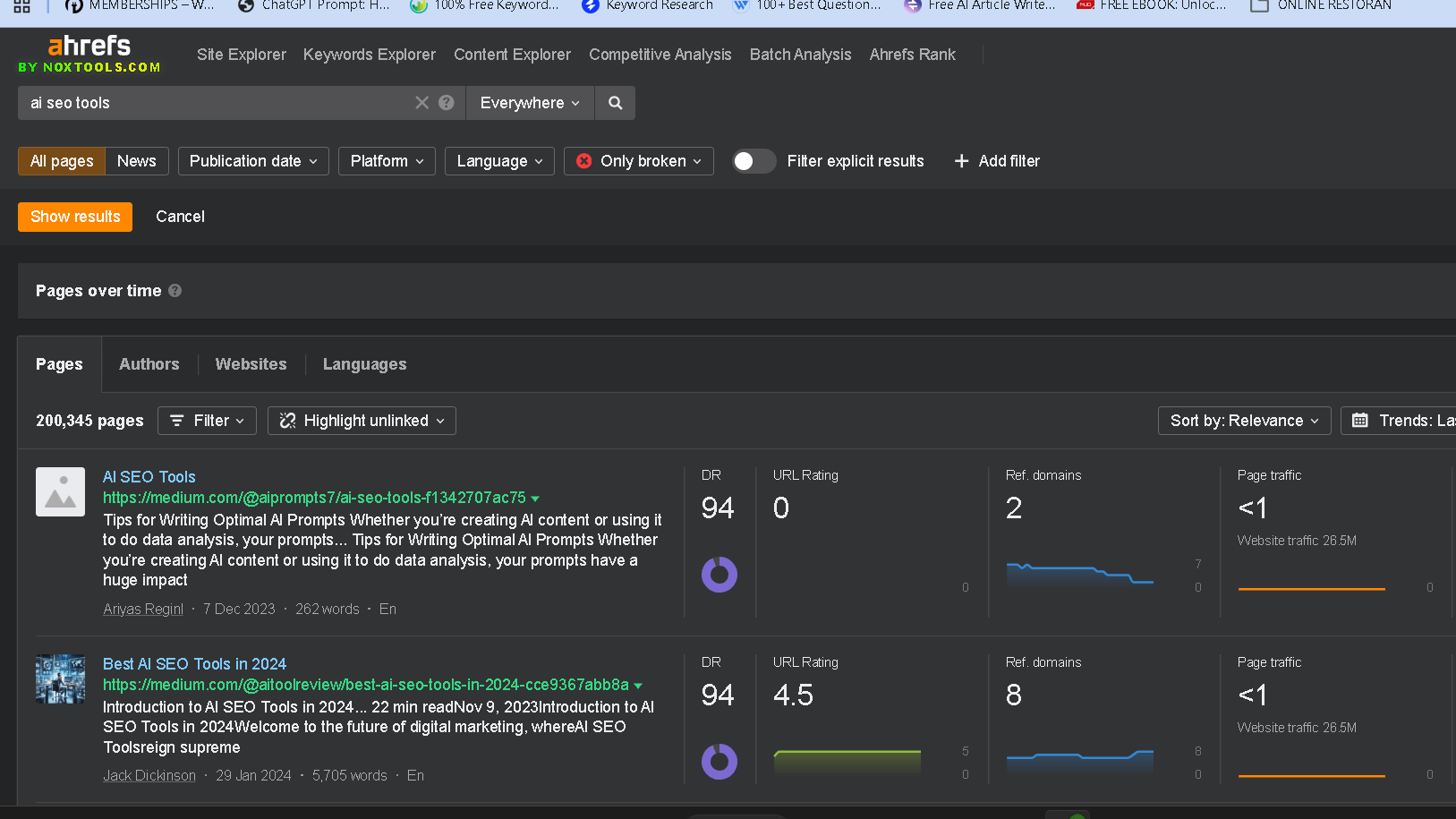
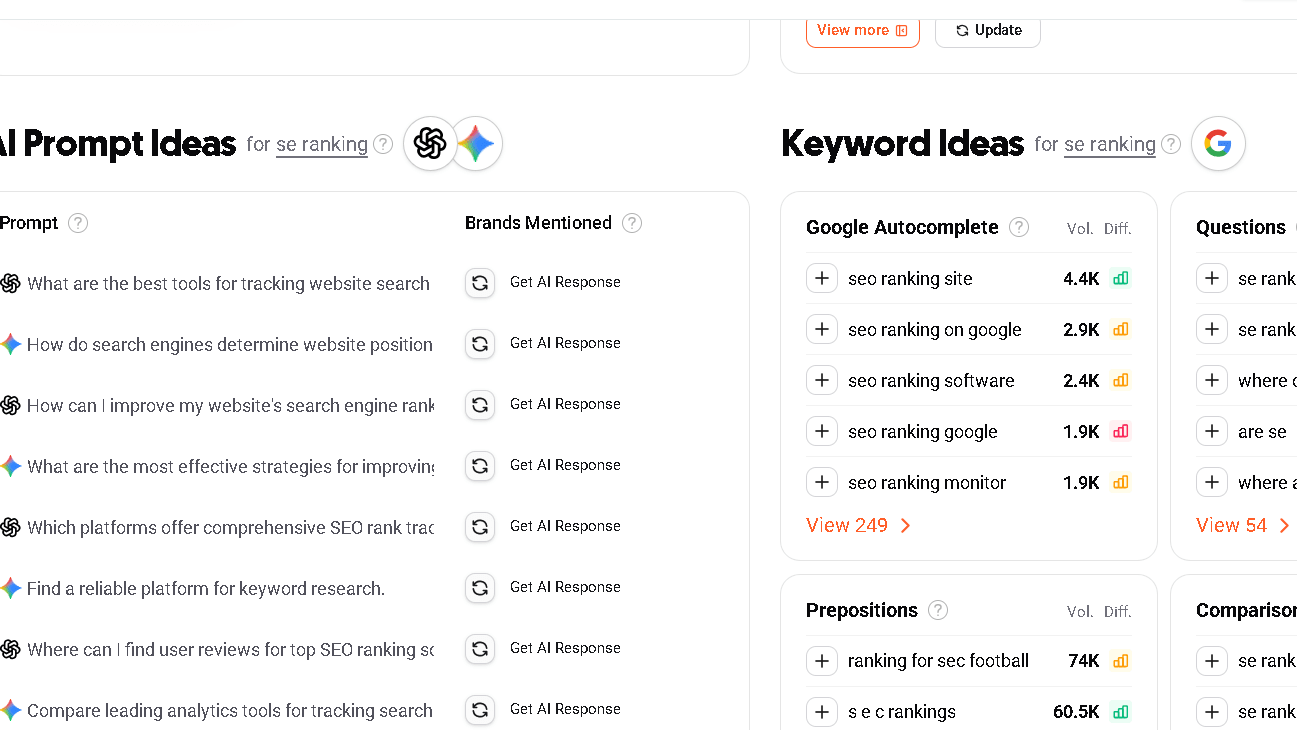
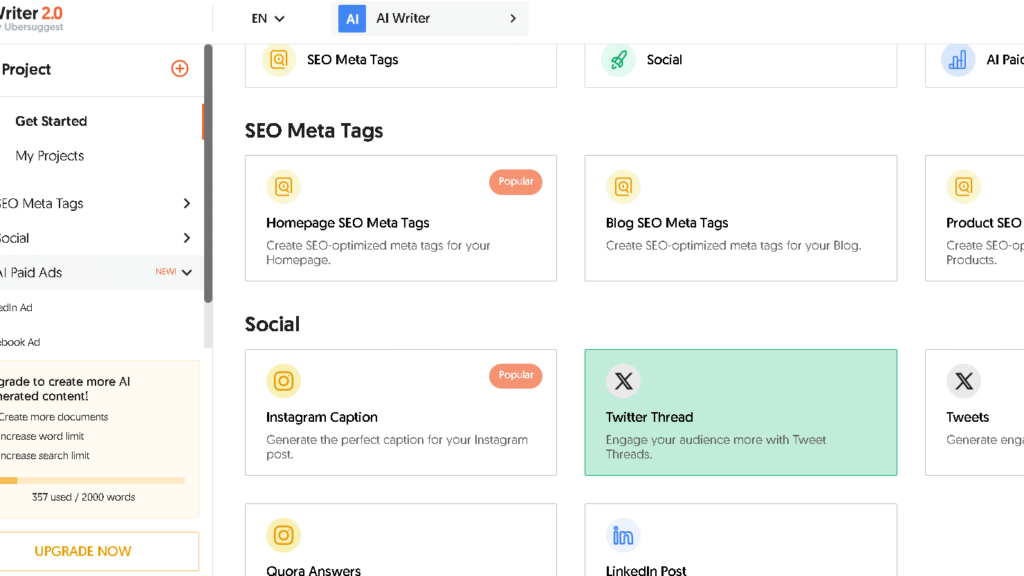
This is where things get interesting, and Ubersuggest actually closes the gap in some areas while pulling ahead in others. Ubersuggest offers an AI Writer tool that generates content outlines and drafts directly inside the platform. There’s also a Content Ideas section surfacing popular topics based on social shares and search performance. For anyone wanting an integrated workflow, that’s genuinely convenient.
But here’s where Ahrefs fights back hard. Ahrefs now tracks AI Overviews across multiple AI-powered search engines — including Google AI Overviews, Bing Copilot, and emerging generative search experiences. You can see exactly which keywords trigger AI-generated snippets and whether your content gets cited inside them. That’s powerful. Ubersuggest? It’s still catching up here. Basic AI Overview visibility exists, but it lacks the depth and multi-engine coverage that serious SEOs need.
Ahrefs doesn’t have native AI writing tools. Its content angle stays purely analytical. Content Explorer searches billions of pages filtered by Domain Rating, traffic, backlinks, and social engagement.
So here’s the real breakdown.
Winner: Split.
Need integrated content creation? Go with Ubersuggest.
Need deep AI Overviews tracking across Google, Bing, and beyond? Ahrefs dominates. This matters more than ever in 2026. Go with Ahrefs.
7. Ubersuggest vs Ahrefs: Ease of Use
Open Ahrefs for the first time and you’ll find a powerful but dense interface. There’s a learning curve. Not because the tool is poorly designed, but because the depth of data available requires some navigation. Most serious users spend weeks before they feel fully comfortable.
Open Ubersuggest and you can run your first keyword search within two minutes. The interface is clean, the terminology is explained, and the workflow is intuitive.
For nenawow.com, I was comfortable in both tools by the end of the month. in week one, Ubersuggest required almost no adjustment period while Ahrefs required deliberate learning, highlighting the ease of use in Ubersuggest vs Ahrefs.
Winner: Split. Ubersuggest wins on accessibility — you can be productive within minutes. Ahrefs rewards the investment in learning with significantly more powerful outputs once you’re past the curve.
Real Results: What Each Tool Found on nenawow.com
To make this concrete, here’s a summary of what each tool surfaced when analyzing nenawow.com over the test period.
Data collected April 2026 during 30-day test period.
| Finding | Ahrefs | Ubersuggest |
|---|---|---|
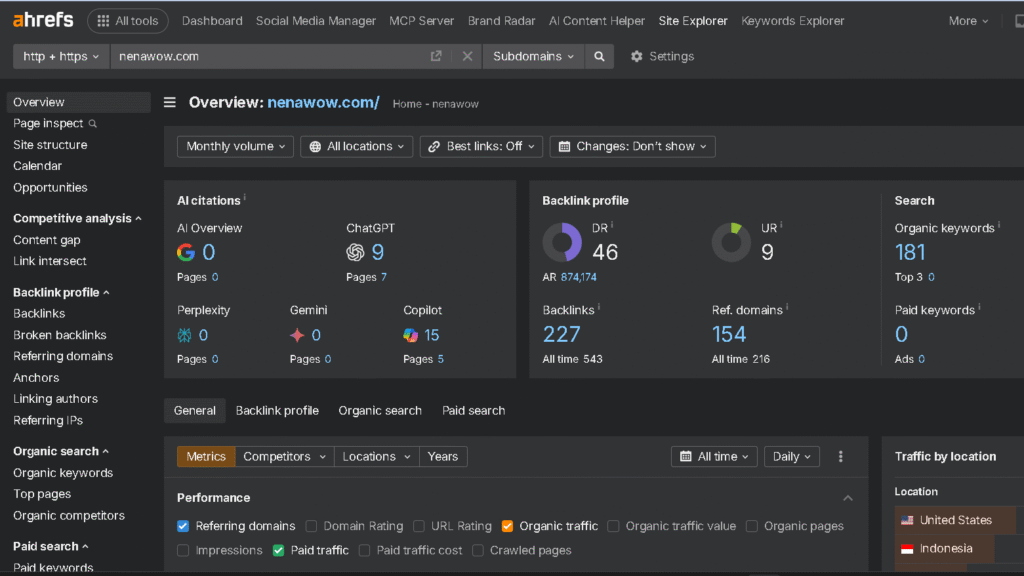
| Referring domains found | 1300 | 358 |
| Backlinks found | 2700 | 878 |
| Technical issues flagged | 173 | 72 |
| Orphaned pages identified | 45 | 0 |
| Keyword opportunities for AI SEO tools | 18 | 5 |
| Competitor backlink gaps found | 67 unique domains | Not available |
| Rank tracking accuracy vs. GSC | Within 1–2 positions | Within 1–3 positions |
| Organic traffic estimate | 1200 | 1269 |
Keyword Opportunities
Ahrefs surfaced 47 keyword opportunities I felt confident enough to act on, based on realistic difficulty scoring and traffic potential. Of those, I prioritized 12 for immediate content creation.
Ubersuggest surfaced more raw keyword suggestions overall, but the difficulty scores weren’t something I could trust at face value. After manually verifying the SERPs, I trimmed the actionable list down significantly.
Backlink Discovery
- Ahrefs found 1300 referring domains to nenawow.com
- Ubersuggest found 358
That 942 domain gap wasn’t just noise. Several of the links Ahrefs found that Ubersuggest missed were from meaningful sites in my niche. This is exactly the kind of data that matters when you’re trying to understand link velocity and competitive positioning.
Technical Issues
- Ahrefs flagged 173 issues: 52 errors, 62 warnings, 59 notices
- Ubersuggest flagged 72 issues — all of which were included in Ahrefs’ findings
Ahrefs caught everything Ubersuggest caught, and then a whole lot more. The most important catches were three crawl efficiency issues that Ubersuggest completely missed. These weren’t minor housekeeping items — they were affecting how efficiently Googlebot was moving through the site.
Rank Tracking Accuracy
Across the 30 keywords I tracked in both tools simultaneously, Ahrefs and Ubersuggest agreed on position within one or two spots for about 80% of them. The disagreements tended to cluster around keywords where ranking positions were fluctuating — exactly the moments when accurate, up-to-date data matters most. Ahrefs consistently reflected position changes faster.
What Actually Changed After 30 Days of Using Both Tools on a Real Site
Okay, so here’s the part most comparison articles skip entirely.
It’s easy to show you screenshots of dashboards and tell you which tool has more features. But what I really wanted to know — and what I suspect you want to know too — is whether any of this actually moved the needle.
So let me walk you through what happened on nenawow.com over the 30 days I ran this test. Not just what the tools showed me, but what I did with that information, and whether it worked.
The Starting Point (Day 1 Baseline)
Just to recap where the site stood when I began:
- ~1,000 monthly organic visits
- 220 published posts
- Ranking for a handful of low-competition keywords, mostly in positions 8–20
- No structured keyword research process in place — most content had been published based on gut feel and general topic knowledge
- Moderate technical issues I was mostly unaware of
Neither tool had been used systematically on this site before. This was a clean slate.
Week 1–2: What the Tools Told Me to Fix
The first two weeks were mostly about data gathering and diagnosis rather than action.
From Ubersuggest, I got a quick overview of my site’s health score and a list of SEO issues. It flagged 72 problems — mostly missing meta descriptions, a few broken internal links, and some thin content warnings. Nothing earth-shattering, but useful to have in one place.
From Ahrefs, the picture was more detailed and, honestly, a little more alarming. It flagged 173 issues across the site — including crawlability problems I hadn’t noticed, pages being accidentally blocked from indexing, and a cluster of posts that were cannibalizing each other for the same keyword.
The keyword cannibalization finding alone was worth the price of admission. I had four separate posts all targeting slight variations of the same “AI SEO tools” search term, and they were competing against each other instead of consolidating authority on one strong page.
I also used Ahrefs’ Content Gap tool to compare nenawow.com against three competitors. This surfaced 40+ keyword opportunities my site wasn’t targeting at all — topics where competitors were getting consistent traffic and I had zero presence.
From those 40+ gaps, I shortlisted 12 topics that matched my site’s niche and had realistic ranking potential (KD under 30, monthly search volume between 500–3,000).
Week 2–3: The Work I Actually Did
Armed with both tools’ data, here’s what I acted on:
Technical fixes (based on Ahrefs audit):
- Fixed the accidental noindex tag blocking 6 posts from Google
- Resolved 3 broken internal links
- Merged two of the cannibalistic “AI SEO tools” posts into one consolidated, stronger piece and redirected the old URLs
- Added missing meta descriptions to 34 posts flagged as high-priority
Content actions (based on both tools):
- Published 3 new posts targeting keywords identified through Ahrefs’ Content Gap analysis
- Updated and expanded 2 existing posts that Ubersuggest flagged as thin but that already had some ranking traction
- Optimized internal linking to push authority toward the consolidated “AI SEO tools” post
What I didn’t get to:
- The remaining 9 keyword gap opportunities are on my content calendar but weren’t published during the 30-day window
- Several technical issues flagged by Ahrefs were lower priority and left for a future sprint
Day 30: What the Numbers Actually Showed
Here’s where it gets interesting.
| Metric | Day 1 | Day 30 | Change |
|---|---|---|---|
| Monthly organic visits | ~1,000 | ~1,340 | +34% |
| Keywords in top 10 | 18 | 27 | +9 keywords |
| Keywords in top 3 | 4 | 7 | +3 keywords |
| Crawl errors | 173 | 41 | -132 issues resolved |
| Referring domains | 358 | 371 | +13 new links |
| AI Overview appearances | Not tracked | 6 keywords | New data point |
Important: 30 days is a short window in SEO. Some of these gains, particularly the traffic increase, may reflect seasonal patterns, Google’s natural fluctuation, or the delayed effect of work done before this test began. I’m not claiming Ahrefs caused a 34% traffic increase in a month. What I can say is that the fixes I made based on its data were directionally correct.
Ubersuggest and Ahrefs Alternatives Worth Considering
Before you commit to either tool, it’s worth knowing what else is in the market. Depending on your situation, one of these might actually be a better fit.
Semrush vs Ahrefs
Semrush is the most direct Ahrefs competitor in terms of scope and pricing. It’s stronger on paid search data and includes a broader suite of marketing tools beyond pure SEO — social media scheduling, content marketing workflows, PR monitoring. If your role covers more than just organic search, Semrush’s breadth might justify the price. The tradeoff is that Ahrefs’ backlink index and keyword data are generally considered more accurate by the SEO community.
👉 Read my full Ahrefs vs Semrush comparison
Moz Pro
Moz Pro sits in a similar price range to Ahrefs but with a smaller user base and a more beginner-friendly reputation. Its Domain Authority metric is widely referenced across the industry, though it’s a Moz-proprietary score rather than a direct Google signal. Moz’s keyword and backlink databases are smaller than Ahrefs’, but the platform is genuinely approachable for people earlier in their SEO journey.
SE Ranking
SE Ranking has been gaining serious traction as a mid-market option. It offers solid rank tracking, site auditing, and keyword research at a price point that sits comfortably between Ubersuggest and Ahrefs. If your budget doesn’t stretch to Ahrefs but Ubersuggest’s data depth feels limiting, SE Ranking is worth a serious look.
👉 Read my full SE Ranking vs Semrush comparison
Mangools
Mangools bundles five tools — KWFinder, SERPChecker, SERPWatcher, LinkMiner, and SiteProfiler — into a single subscription starting around $29/month. KWFinder in particular has a strong reputation for keyword difficulty accuracy, which is one area where Ubersuggest consistently fell short in my testing. If keyword research is your primary use case and budget is a constraint, Mangools is a genuinely strong option.
👉 Read my full Mangools vs Ahrefs comparison
Ahrefs Webmaster Tools (Free)
Worth calling out separately: if you’re not ready to pay for anything yet, Ahrefs Webmaster Tools gives you real Ahrefs data for your own verified domains at no cost, permanently. Site audit, backlink monitoring, and organic keyword reporting — all free, indefinitely. It’s not a replacement for a full subscription, but it’s a legitimate starting point that beats most paid alternatives at the entry level.
Quick Reference: Which Tool Fits Your Situation?
| Your Situation | Best Pick |
|---|---|
| Need the most accurate backlink & keyword data | Ahrefs |
| Tightest budget possible, just getting started | Ubersuggest |
| Managing paid search + SEO in one platform | Semrush |
| Beginner who finds Ahrefs overwhelming | Moz Pro |
| Mid-budget freelancer or small agency | SE Ranking |
| Blogger focused purely on keyword research | Mangools |
| Want real Ahrefs data before paying anything | Ahrefs Webmaster Tools (Free) |
👉 Read my full SpyFu vs Semrush vs Ahrefs vs Moz comparison
Final Verdict and Decision Guide
After 30 days of running both tools on a real site with real data, here’s how I’d break down the decision.
Choose Ahrefs if:
- SEO is a primary part of your work or business strategy
- You’re making content investment decisions that need accurate difficulty scoring
- You’re doing serious competitive analysis and need reliable data
- You’re building or monitoring links and need the most comprehensive index available
- You can justify $129/month or more based on the value of ranking improvements
Ahrefs is not cheap. But if SEO is genuinely moving the needle for your business, the data quality difference pays for itself. The cost of targeting the wrong keywords, misreading your competitive landscape, or missing technical issues that suppress your rankings is almost always higher than the subscription fee.
Choose Ubersuggest if:
- You’re newer to SEO and still building foundational knowledge
- You want to explore SEO without a significant recurring financial commitment
- Your site is early-stage and you’re not yet competing in high-stakes keyword battles
- The lifetime deal pricing makes it a financially sensible starting point
- You want integrated content creation tools alongside your research
Ubersuggest is a legitimate tool. The criticism it sometimes gets from advanced SEO practitioners is more about what it isn’t than what it is. For someone who needs a low-pressure entry point into SEO tooling, it does exactly what it promises.
The hybrid approach worth considering:
Start with Ubersuggest’s lifetime deal plus Ahrefs Webmaster Tools (free). You get Ubersuggest’s content and keyword features alongside real Ahrefs data for your own site at essentially no ongoing cost. When your site grows to the point where you need deeper competitive intelligence and keyword accuracy, upgrading to a full Ahrefs subscription makes sense and by that point, the ROI calculation is usually pretty clear.
Frequently Asked Questions
For basic keyword volumes and rank tracking, it’s reasonably accurate. Its backlink database is significantly smaller than Ahrefs’, which means backlink data and competitor analysis are less reliable.
If SEO drives meaningful traffic or revenue for your site, yes. The data quality justifies the cost. If you’re running a hobby blog or just starting out, the free Ahrefs Webmaster Tools plus a cheaper tool like Ubersuggest is a more sensible entry point.
Yes, Ubersuggest has a limited free plan that allows a small number of searches per day. It’s enough to explore the tool but not enough for regular use.
Ahrefs removed its $7 trial in 2022. The permanently free Webmaster Tools is the best way to test the platform without paying.
Ubersuggest. The interface is simpler, the price is lower, and the learning curve is minimal.
Ahrefs. The backlink index size, update frequency, and competitor link gap analysis make it the industry standard for link building research.
As of this writing, yes. Ubersuggest has continued to offer lifetime pricing at the Individual, Business, and Enterprise tiers. Always verify current pricing directly on their site as deals and terms can change.