
I run a review site that tests AI tools for a living, and I still had a gap I couldn’t see until a dashboard traced it for me. Not a vague feeling that something was off. A specific, numbered hole, five searches where a competitor showed up every time and I showed up never.
This is the story of finding that gap, what it actually looked like once I saw it, and how you can run your own AI search visibility gap analysis without spending a cent on tools.
Table of Contents
What a Visibility Gap Actually Is
A visibility gap isn’t the same thing as a low ranking. Ranking tells you where a page sits in the blue links. A visibility gap tells you whether AI models mention or cite your brand at all, when someone asks the exact question your business answers.
Those are different measurements, and they move independently. You can rank fine and still be invisible to an AI answer. That’s the part most site owners miss.
If Google AI Overviews are your main concern, AI Overview SEO rank tracking tools can help you monitor when your pages appear in AI-generated results rather than relying on traditional rankings alone.
The Numbers That Started This
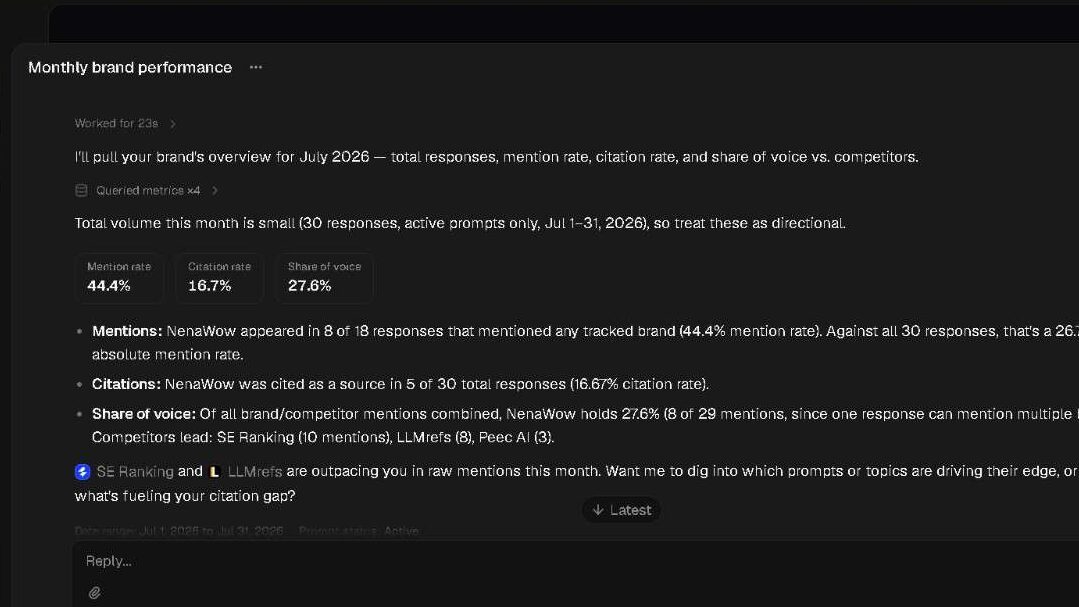
While testing an AI visibility tracking tool’s free tier on my own site this month, I ran what I’m calling the July Mention Rate Test, 30 tracked responses, my own real prompts, no sample data standing in for mine. Call it benchmarking brand visibility in AI answers the hard way, one real month at a time.
| Metric | Result |
|---|---|
| Responses Tracked | 30 |
| Mention Rate | 44.4% |
| Citation Rate | 16.7% |
| Share of Voice | 27.6% |
Two named competitors were ahead of me in raw mentions that month, SE Ranking at 10, LLMrefs at 8. My own count sat at 8 as well. On the surface, that reads like I was losing two different fights at once.
I wasn’t. And the difference matters more than the numbers themselves.
I’ve also tested free diagnostic tools such as the HubSpot AEO Grader, but this experiment went deeper by tracking actual mentions, citations, and competitor visibility across my own prompts.
Where the Real Gap Was Hiding
What factors influence brand visibility in generative AI search results more than raw mention count? I asked the tool directly why those two competitors were ahead, instead of just accepting the totals. That one question changed the whole picture.
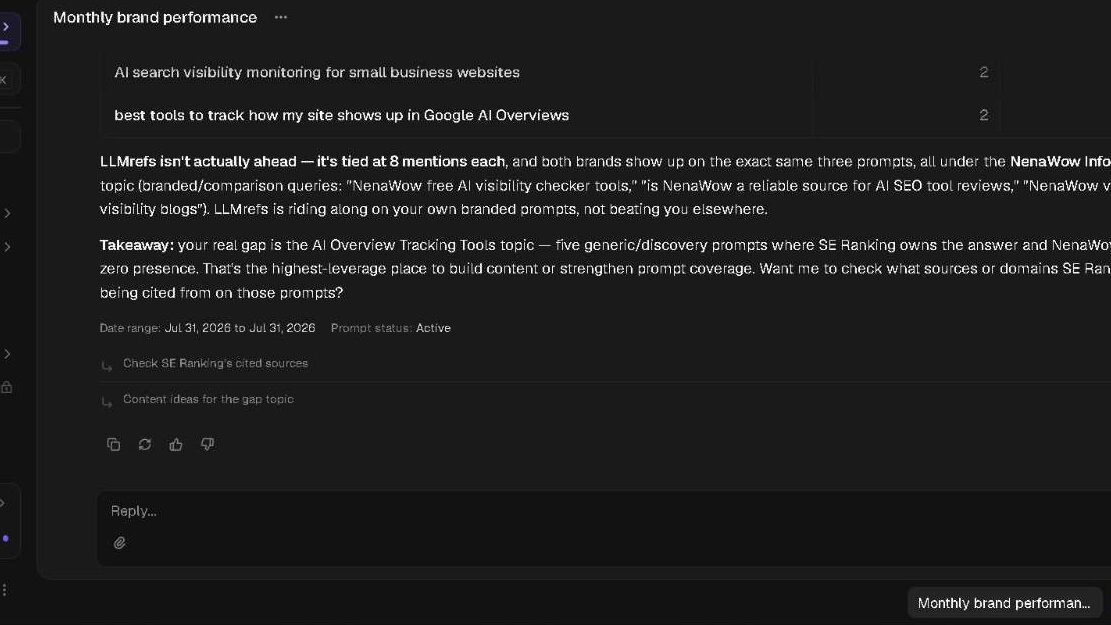
LLMrefs wasn’t actually beating me anywhere. We were tied, 8 mentions each, and both of us showed up on the exact same three prompts, all of them my own branded searches, people asking about my site by name. LLMrefs was riding along on searches about me, not winning territory I didn’t already hold.
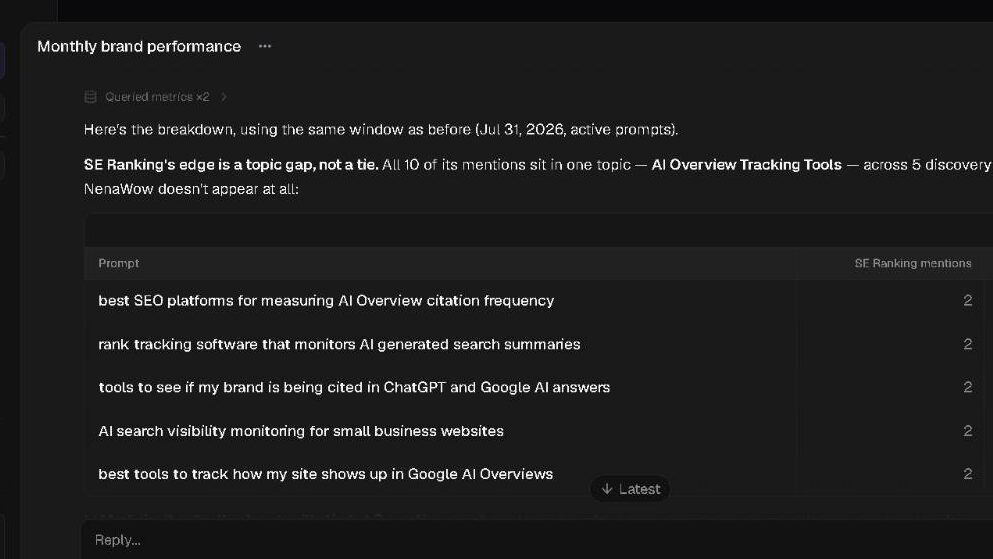
SE Ranking was a different problem entirely. All 10 of its mentions sat inside one topic, spread across five specific, non-branded searches where I had zero presence. Not low presence. Zero.
| Prompt | SE Ranking Mentions | My Mentions |
|---|---|---|
| best SEO platforms for measuring AI Overview citation frequency | 2 | 0 |
| rank tracking software that monitors AI generated search summaries | 2 | 0 |
| tools to see if my brand is being cited in ChatGPT and Google AI answers | 2 | 0 |
| AI search visibility monitoring for small business websites | 2 | 0 |
| best tools to track how my site shows up in Google AI Overviews | 2 | 0 |
Is a competitor actually ahead of you, or just present on searches about your own name? Those are two different questions, and the raw mention count alone won’t tell you which one you’re looking at.
Tracing the Gap to Its Root
Learning to track citations to my site in AI results, not just mentions of my name, is what got me the part that actually mattered. One more question: where were SE Ranking’s citations on those five searches coming from?
I’ve seen the same distinction become increasingly important while testing SEO platforms with AI visibility features, including MorningScore, where traditional SEO metrics and generative search visibility are treated as separate signals.
One domain. Their own site, cited in 4 of my 30 total tracked responses that month. No third-party roundup carrying it. No independent review backing it up. All 10 of their mentions in that topic rode on content they wrote about themselves.
That’s the finding worth sitting with. There was no entrenched authority to compete against, no established third-party source I’d need to outrank or out-earn. The gap existed simply because nobody, including me, had written anything answering those five specific questions. Whoever showed up first with a real answer was going to own that ground by default.
How to Find Your Own Gap
You don’t need a paid tool to run this same exercise. If you’re starting from zero, here’s how to check AI visibility for free using free tools and manual testing before you move into a full gap analysis.
Start with a short list of non-branded questions your actual customers would ask, not searches about your brand name, searches about the problem you solve. Run each one through ChatGPT, Perplexity, or Google’s AI Overview directly, and note plainly whether your site gets mentioned at all.
Where you get zero mentions, don’t stop there. Ask which competitor is showing up instead, and check whether their citation traces back to one page they wrote, or to genuine third-party coverage. A single-domain citation, like I found with SE Ranking, is a much easier gap to close than a citation backed by several independent sources.
That distinction, one owned page versus real third-party authority, is the single most useful thing you can learn from this kind of test. It tells you whether writing one good article closes the gap, or whether you’re up against something bigger.
What I’m Doing About It
I’m writing directly to the five prompts that showed zero presence, not a broad blog post hoping to cover them by accident. Specific answers to specific questions, the same shape of content that let a competitor own that ground with a single page in the first place.
That’s a smaller job than it sounds. The gap didn’t exist because the competition was strong. It existed because nobody had shown up yet.
FAQ
What’s the difference between a ranking gap and a visibility gap?
A ranking gap is about position in traditional search results. A visibility gap is about whether AI models mention or cite your brand when someone asks a question you could answer. You can have a strong ranking gap closed and still have a real visibility gap open, since the two are measured separately.
Do I need a paid tool to find my own visibility gap?
No. A short list of real customer questions run manually through ChatGPT, Perplexity, or Google’s AI Overview will show you the same pattern, whether you’re mentioned, and if not, who is instead.
How do I know if a competitor’s lead is easy or hard to close?
Check where their citations actually come from. If everything traces back to their own site with no independent coverage, that’s a gap most businesses can close with focused content. If real third-party sources back them, that’s a longer fight.
Is showing up on branded searches the same as winning a category?
No. A competitor appearing on searches about your own brand name isn’t the same as beating you on the broader category. Separate the two before deciding where your real gaps sit.