
It is possible to automate major aspects of SEO by through AI SEO tools. This can save time and give you more precise strategies to increase organic traffic.
AI content writer can help teams create content faster while ensuring high quality. When you incorporate AI technology with workflow automation and marketing into your everyday routine, you’ll be much more efficient.
The ability to automatize SEO using AI tools allows your company to grow and improve your technical SEO while simultaneously. Integrating the tools you use to improve your SEO as well as content strategy sets the stage for growth over time.
AI can manage keyword discovery and content outline, as well as regular audits so that you can concentrate on the quality of your.
You can now scale your work that was previously a huge amount of manual work, yet maintain control over your voice and precision. Scalability for growing agencies is an enormous advantage.
AI improves research speed and suggests content that is compatible with the intent of your search and flags issues with technical aspects that require fixing. Utilize these tools to track the performance of your site, identify the competition, and update content to ensure your website keeps growing without the need for manual reviews.
Key Takeaways
- Automate the repetitive SEO tasks to free time for strategy.
- Utilize AI to find content that matches your search intention and help optimize your content.
- Prioritize fixes and track them so improvements will be noticed.
Table of Contents
The Role of AI in Modern SEO

AI marketing platforms accelerate tasks, identify patterns in massive datasets, and recommend specific actions such as keywords to focus on. SEO optimization lets you concentrate on the things that move the needle.
AI allows for an extensive analysis of competitors possible by analysing the data of thousands in a matter of minutes. Managers can improve their SEO strategies in real-time market changes.
Teams are finally able to move away from guesswork and instead towards automated SEO workflows that are repeatable and increase visibility. These systems ensure that the user’s intent is match across all of the digital resources you have.
How AI Transforms Search Engine Optimization
AI analyses user behavior as well as ranking signals and competitor information on a massive size. The tools scan thousands of pages to identify gaps, highlight important keywords, and suggest adjustments, like headings to include or queries that focus on.
Teams utilize AI for automated audits, and prioritization. For instance an AI audit could flag weak content or schemas that are not properly implemented and then prioritize the improvements based on estimated traffic gains.
This helps you save time and keeps your attention on what is important. AI can also tailor results to local and specific queries.
It identifies which websites best satisfy specific needs and makes sure companies to be featured when they appear in AI overviews that provide key information for customers.
Core Concepts: NLP, Machine Learning, and LLMs
Natural language processing (NLP) analyzes and scores text for its relevance, entity, and intention. These data make the content more user-friendly and are more beneficial for users.
NLP aids tools to classify queries and map content according to the search intent, so that writers are aware of what they should be focusing on. Machine learning (ML) finds patterns in ranking data as well as user-generated signals.
ML models can predict which keywords will generate clicks, or which pages will gain the most by updates, based on previous performance as well as signals such as dwell time and click-through rates.
Large language models (LLMs) create outline, meta tags and content drafts based on prompts. If used properly, LLMs speed up drafting and ideas generation.
However, marketers must make sure they are comparing facts with the tone and ensure that your content aligns with SEO objectives like E-E A-T and user intention.
Enhancing SEO Strategies Using AI-powered Information
AI changes the strategy of content from general strategies to specific strategies. As opposed to “write more,” teams are given a targeted list. They can refresh the five pages on topic X, include internal links from A to B or follow backlinks from other appropriate sources.
AI-driven clustering group relevant terms into hubs of content. This produces clear pillar-and-spoke strategies with suggested formats, targets goals as well as internal link maps.
It assists websites in building the depth of their content, which both search engines as well as AI search engines like. In the event that AI search engines become more popular and more popular, establishing authority in the topic is crucial to increase visibility.
Dashboards will reveal which optimizations have improved rankings, which queries received impressions, and also where is not in alignment. Teams can iterate rapidly and observe gains in both conversions and traffic.
Automated Keyword Research and SERP Analysis

AI tools help speed up the process of researching content by locating the right keywords and analyzing SERP signals quicker. They uncover high-potential keywords and cluster similar queries.
These tools can reveal the intent of users directly from results of searches and feature information.
Finding Keywords of High Value using AI
Keyword research tools that are powered by AI such as Semrush, SE Ranking, and Perplexity scour large data sets along with Google’s search console. Perplexity is able detect emerging trending keywords before they become increasingly competitive.
They perform deep SERP analysis, which combines factors such as CPC, search volume and ranking difficulty, using live SERP information to rank potential possibilities.
Effective content research begins with these data-driven findings. Filter domain authority and intent to convert to concentrate on the those terms that really matter.
The best tools can flag “low-competition, high-intent” phrases and display how pages rank on the internet to help you determine whether you should concentrate on that phrase by creating an entirely new site or improve an existing page.
Updated SERP data keeps your keywords in line with what’s actually being ranked. Export lists help teams prioritize based on estimated traffic gains and not only volume.
The integration of these lists into trackers for projects accelerates the process.
Long-Tail Keywords and Clustering Techniques
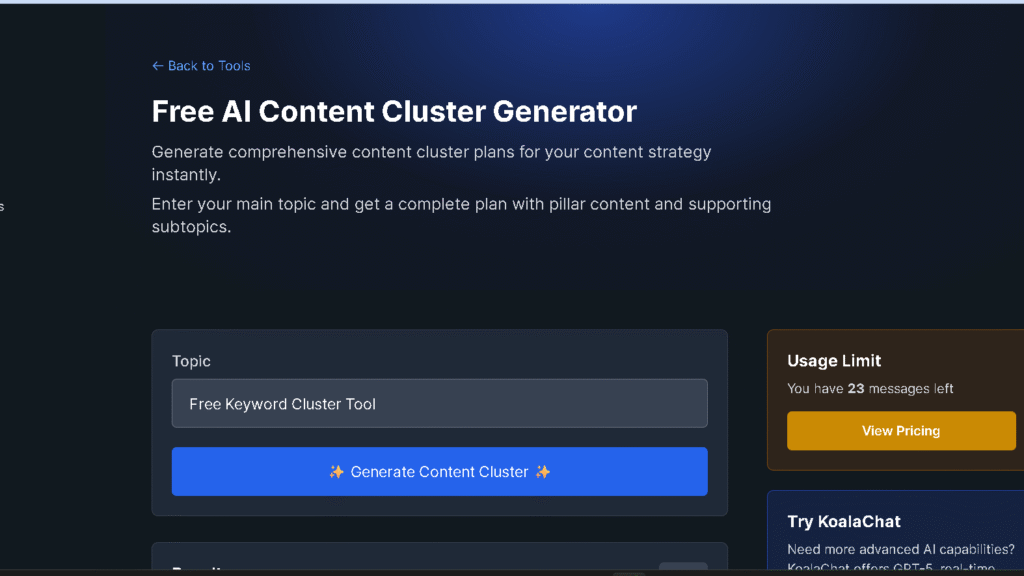
Long-tail keywords generally perform better and have less competition than broad-head terms. AI connects long-tail keywords through the semantic similarity of their terms and intent.
These groups form topical groups that which you can target using single page, complete or hub-and-spoke pages. Typically, you get the raw data from search engines and run clustering algorithms and label clusters according to the intent of the cluster as well as funnel stages.
Clusters highlight areas in your website’s content authority, which is what guides your the creation of content briefs. Utilizing the Keyword Magic Tool helps maximize the authority of your topic across your entire website.
Understanding Search Intent Using AI Tools
Modern AI models analyze SERP features like featured snippets People Also Ask photos, and even local packs — to determine the primary intention behind an inquiry. Tools can tell whether users are looking to purchase, study how to compare or purchase something that is local.
Marketers must use this intent signal to influence the page’s layout such as headings, schema, and adverbial descriptions. For instance, transactional intent demands that product pages have simple CTAs and pricing information and informational intent functions best when you have long-form guides and how-to guides.
Combining intent-based classification from AI combined with SERP analysis of competitors determines which content types actually rank on, so you can design pages that align with intent and the layout of SERPs currently in use.
AI-Driven Content Creation and Optimization
AI tools help speed up the process of creating content, assist teams to stay consistent and help to identify specific keywords and structure suggestions. They create ideas, design briefs, edit text to improve clarity and perform optimization tests against search engine intent and competitors.
Streamlining Content Generation and Ideation
An AI writer such as ChatGPT, Jasper, or Koala AI can help teams think up ideas quicker. Making use of ChatGPT for research into content as well as writing can reduce the initial production time by a good amount.
This speeds up the process by creating AI-generated content for blog posts, title choices and angle concepts. The brainstorming process that was once taking hours is now a matter of minutes, and the text stays current.
Teams should feed clear instructions and examples to the AI to obtain useful results. Include your desired audience, keyword and the desired actions (subscribe purchase, buy, and learn).
Review the outputs to ensure quality and originality prior to editing. Make use of AI to design variations for tests of A/B, including several Meta titles and H2 sets as well as intro hooks.
Monitor which versions get more engagement and clicks to improve the next suggestions.
Automated Content Briefs and Outlines
Tools such as Frase, Surfer SEO, Surfer AI, NeuronWriter, and Clearscope produce briefs of content that reduce the time needed to plan. The briefs typically include the keywords of your choice and also the structure of competitor headings.
This strategy gives writers the information needed to satisfy the requirements of search engines. A concise list of both secondary and primary keywords, the top ranking URL examples, as well as an H2/H3 outline that can be used as a guideline.
Writers have clearer objectives and less revisions. Utilizing Surfer AI can automate the creation of text that is optimized and make briefs uniform across freelancers and teams.
Automate the creation of your brief by connecting tools for keyword research and your generator for briefs. Create rules for the minimal keyword coverage as well as required signals from competitors.
This ensures that briefs are constant and focused on what is important for ranking.
Improving Readability and SEO-Friendly Content
AI writing assistants can edit sentences to align with readability objectives and tone. Tools such as Ink or Jasper simplify complicated sentences and assist teams in maintaining a the same brand tone while scaling production.
Ink also aids in maintaining the correct keyword density, and also improves the flow of articles. These changes help make articles easier to read on mobile devices and more relevant to search engines.
Combine AI edits and a tool for optimizing content such as Surfer SEO or Clearscope to verify the semantic coverage. The optimizer compares your work with the top-ranked pages and highlights the terms that are missing and recommends depth.
Always check with a human for accuracy, E-E A-T signals, and claims that are factual. A high level of accuracy in data is required when publishing research using AI.
AI assists with flow and structure, but the subject matter checks and citations are crucial to avoid hallucinations and ensure credibility.
Content Optimization Workflows
Create an optimization workflow for key places: draft, pre-publish and post-publish. Make use of the AI Content Optimizer to evaluate drafts on keyword coverage and SERP intention prior to editing.
Automated content analysis ensures to ensure that each page meets the quality standards before it goes live. It can also help identify areas that need to be more detailed.
After that, run check for plagiarism and readability. After publication Schedule automated audits using tools such as Surfer SEO or NeuronWriter to check rankings, traffic as well as content decay and internal linking.
Return the feed audit results into short templates to be used for refresh tasks. Create a checklist to follow for each optimization run: update information and keywords, modify the headings, enhance internal links, then run the optimizer.
Automate the sending of notifications to the owner of the content when a page is losing traffic or fails to meet goals for KPIs.
Automating On-Page SEO and Technical Enhancements
Automation accelerates routine work on the page and can fix technical issues faster than manual inspections. It ensures that the meta tag, links to internal pages and schemas consistent, ensuring that pages remain usable and crawlable.
Meta Descriptions and Title Tag Automation
AI tools create meta descriptions and titles tags on a massive the scale of. They make use of the page’s content, targeted keywords and SERP intent to design tags that correspond with the user’s queries.
Make sure that titles are at 60 characters or less and meta descriptions below the 155 mark. Utilize templates such as Primary Keyword — Page Type to maintain consistency of branding.
Automated workflows look the site for missing or duplicate tags or length-related issues. Utilizing Alli AI allows you to optimize bulk elements on your page across your entire website.
Alli AI can automatically update title and meta descriptions of pages to thousands of web addresses. This accelerates the process of SEO enhancements and ensures that metadata is updated across the entire site.
Internal Linking to AI Solutions
AI-powered linking tools analyze your pages to identify relevant connections and suggest anchor texts. They identify pages that are not being crawled and suggest links to increase crawl depth as well as distribute PageRank.
Use the tool to select natural but keyword-rich anchors and limit the number of links per page. Link Whisper automates internal link inserting to improve the structure of your site.
It detects pages that have been abandoned and recommends anchor texts that are relevant that help you build a authority in your field. Link Whisper uses AI to suggest connections between posts, thereby saving time and effort.
Combining automated suggestions along with regular audits that catch broken links and ensure that links lead to high-value websites.
Schema Markup and Structured Data Automation
Automated schema markup tools generate structured information for products, articles events, local business information by using the page fields. They can fill in the mandatory properties and can also add additional details such as author ratings.
Verify output using your Rich Results Test before deploying. Automate schema injection with CMS template or API call, and establish fallbacks in case of missing data to ensure that the markup is not invalid.
This simplifies the management of content for the thousands of web pages. Audits can be used to identify pages that aren’t schema-compliant or have broken markup.
An accurate schema helps search engines comprehend your content and provides powerful results that improve the visibility of your site.
Automated SEO Audits, Performance Tracking, and Analytics
AI tools perform fast site audits, conduct constant checks on technical issues and track the position of keywords and draw data from Google. Utilize these signals to prioritize improvements and demonstrate outcomes.
Technical Audits and Ongoing Site Monitoring
In-continuing technical SEO audits go through thousands of web pages in order to avoid mistakes or slow sites. The audit report identifies issues by severity, allowing teams to focus on the urgent issues.
This constant monitoring keeps the health of your site maintained without constant manual effort. Tools such as Deepcrawl or SE Ranking automate recurring scans and alerts whenever something new appears.
They also monitor site performance and mobile issues as time passes. Continuous monitoring can detect regressions after updates to plugins or deployments and is a lifesaver when you’re dealing with many things.
Create crawl schedules, user agents and limits so that you don’t overburden your server. Prioritize fixes that affect multiple pages or the core templates.
Maintain an audit log to allow engineers to examine and reverse changes as needed. This is a little bit of work however you’ll be happy to have it if something goes wrong.
Rank Tracking and Keyword Rankings Automation
Automated rank tracking performs every day or every week to check for keywords that are targeted. It tracks changes in position as well as search volume and SERP features.
Tools such as Ahrefs”Rank Tracker as well as SE Ranking let teams segment keywords based on intent and their landing pages to provide better reporting. Utilize automated alerts for sudden gains or drops to allow you to react swiftly.
Use rank data in conjunction with conversions and traffic to stay clear of chasing low-value keywords. Monitor featured snippets of content local packs, local snippets as well as zero-click metrics because they can affect the visibility of your site even if you’re at the top of the list.
Automate the comparison of rank between competitors to find content gaps and quickly win. Export rank history to dashboards so that people can track trends without having to fiddle with spreadsheets.
Leveraging Google Analytics and Google Search Console
Google Analytics and Google Search Console provide the data you need to make accurate SEO-related choices. Automate data collection through APIs, and then connect them to dashboards or auditing tools for single-pane reportage.
Google Search Console shows indexing issues, crawl stats and search queries relating to pages. Analytics shows conversions, behavior and performance of landing pages.
Utilize both to see whether audit fixes have a positive effect on the bounce rate, organic session or even goals. Remove internal traffic and repair UTM tags to ensure your data is free of clutter.
High accuracy in data means that accuracy in data means that your SEO method is founded on actual data rather than speculations. Make sure you conduct regular checks on data integrity and maintain a changelog whenever analytics or site tracking changes take place.
Data-Driven Insights for SEO Performance
Combine the findings of an audit along with rank tracking analysis into reports that highlight the impact and return on investment. AI will provide insights into the areas where technical fixes or content changes will likely improve the situation However, don’t trust its words.
Utilize automated prioritization rules that influence x effort x certainty. As an example, improve a slow template that serves 10,000 pages prior to tweaking the speed of a single page with low traffic.
Create dashboards that highlight organic sessions and conversions, indexation rates and the most pressing technical problems. Verify AI suggestions with controlled tests, staged modifications, A/B or MVT If you are able as well as before and after measurement windows.
Human review should remain involved to identify false positives and ensure the fixes are in line with the company’s objectives. There is no way that an AI software can replace human judgment, at a minimum as of yet.
Automating Competitor Analysis and SEO Strategy Development
This section focuses on how to determine the pages that rank for keywords of your choice look at what the pages are doing better than the others and transform those results into regular SEO processes and content. The focus is on tools specifically executing actions, as well as scaling operations using automation.
Competitive Research using AI
AI-powered tools perform an analysis of competitors that is structured and based on a variety of keywords. Platforms such as Semrush offer modules to help with this, which show which domains hold the most of the search real estate.
This data can help teams prioritize their own updates to content based on what’s effective for their competitors. Make use of the AI agent to collect the most popular organic URLs for every key word (SERP fetch) and then scrape the entire page content using an extractor for content.
Keep each page’s text, headers, meta tags and schema together in a single document for comparison side-by-side. Request the AI to produce a brief summary of the competitor’s profile, including Word count, format of content and key headings, as well as unique assets (charts or tools) as well as backlink signal.
Find patterns that are repeated across the top pages. Concentrate on competitors that have strong content and a an obvious topical focus. They’re typically the most effective to learn from.
SERP Gap and Content Gap Analysis
Run a two-step gap analysis: SERP gap first, content gap second. SERP gap determines the keywords on that websites are ranked, while competitors don’t or is not ranked higher.
Use automated queries through the SERP API to collect areas, featured snippets, as well as People Also Asked results for each keyword you’d like to focus on. To fill the gap in content and fill in the content gap, let the AI analyze your website against the most popular five results.
One way to stand out from your rivals is to discover new angles they’ve not considered. This technique targets the established players with more knowledge, and not just some more words.
A thorough analysis of SERPs reveals the essential elements needed for a successful outcome of an internet search. The result will be organized, labeled by impact, and then modified to make specific changes or adding new sections or responding to specific concerns from users.
Your updates will be precise and relevant. Be sure to verify your ideas by conducting an instant review by a human to confirm that the brand’s image is a good match and is accurate.
Make sure to report any suggestion that could alter the tone, claims regarding products, or the details of conformity, so that editors can verify before releasing. It’s easy for you to go off-brand when you’re not vigilant.
Building and Scaling Content and SEO Workflows
Make one-off analysis into a process using two different agents. The first to search for potential keywords, the second for page-level audits and make recommendations. Automate these steps to: ingestion GSC keywords, retrieve SERP results and scrape pages. Then, you can create an organized Google Doc, and generate prioritised improvements.
Make use of tools for workflow automation (n8n, Zapier, or native orchestration) to plan weekly or daily runs. Set rules to limit the scope of your work–only keywords that have over 100 hits or ranked between positions 6-20, to minimize noise tasks.
Follow the implementation process using simple spreadsheets or a project board with URL Keyword owner, priority and the status. The audit should be re-run after any adjustments to gauge rank movements.
If multiple pages have similar gaps, combine them together into one template for content to make it easier to work at a larger scale without sacrificing quality. It’s not always ideal however it can save lots of time.
Scaling Link Building, Local SEO, and Ongoing Optimization
This section outlines practical steps to build backlinks to manage local listings and maintain pages that improve in time. It’s all about the tools specifically designed for specific tasks, as well as the measurable results you can utilize.
Automated Link Prospecting and Outreach
AI tools aid in identifying highly valuable backlink targets by analyzing domains by relevance, authority, as well as their relevance. Tools analyze competitor backlinks find broken links, and show brand mentions not linked.
Prospect lists exported to the public include email addresses for contact and the specific page to send a pitch. For outreach, design several personal templates, then integrate the templates into a platform to promote outreach.
The platform will send out a series of emails, tracks open and responses, and then pauses the outreach once a human response arrives. Subject lines are tested using A/B and body length variations to boost the response rate.
Check link quality after purchase. Monitor the quality of your referrals, anchor text, ratings for the domain and ranking changes for the keywords you want to target.
If a hyperlink is not of much value, block similar sites and adjust your prospect filtering. It is not always worth it to click on every single link.
Local SEO Automation
Make sure local listings are consistent with the citation management software that releases NAP (name address, address, telephone) updates across all major directories. The tool checks for duplicates and flags entries that are inconsistent for review by a manual.
The synchronization of hours, services, and images decreases friction in ranking when it comes to local packages. Review management relies on automations which invite customers to purchase via text message or email following purchase.
Positive reviews are published and distributed. A negative review triggers an email to Support.
Establish rules to spot suspicious patterns of review and then stop automated invitations when abuse is evident. Local content is regularly audited including service pages, location sites, schema for business along with Google Business Profile signals.
The process includes checks every month for visibility of keywords as well as local citations and the positions of map-packs. Alerts warn you of abrupt drops, so you can respond quickly.
Continuous Content and Landing Page Optimization
Perform regular site audits using artificial intelligence-based SEO platforms to discover technical issues, poor pages and slow pages on landing pages. The audit gives you the most important tasks: repair crawl errors reduce images, and redesign headlines with low engagement.
Each task is assigned an time frame and an owner. For content, you can use automated briefs on content that include top-ranked competitors, relevant questions and headings that are recommended.
Writers are then able to add personal experiences and data to satisfy E-E-A-T. After publication A/B tests headlines and calls-to-action in landing pages, to increase conversions.
Optimization should be tied to KPIs like Organic sessions, conversion rates as well as time on page and backlinks that are earned. Automated reports indicate the pages to refresh as well as which topics to increase along with which landing page require fresh offers.
This helps keep the site growing and helps align the marketing of content with business objectives. It’s a loop that never ends however, it is always evolving.
Frequently Asked Questions
This section answers common, practical questions about tools, content, workflows, and link building. It focuses on specific tool types, concrete steps, and guardrails for using AI without losing quality or credibility.
What are the most effective AI tools for automating SEO tasks?
Teams usually use different tools for content research, research optimization, on-page optimization as well as technical auditing and reporting.Examples consist of Semrush as well as Ahrefs for competitor and keyword analysis; Surfer SEO, Clearscope or MarketMuse to optimize content; Screaming Frog or DeepCrawl (Lumar) for auditing technical aspects as well as Jasper or content creators from vendor for the generation of drafts.
Select tools that work into the CMS as well as analytics. They which support real-time optimization and let human review of the results.
Prioritize platforms that provide the ability to analyze intent, clustering of keywords and automatic prioritization of solutions.
Can AI help in optimizing content for better search engine rankings?
Yes. AI can generate outlines, suggest related topics and questions, and recommend keyword usage based on top-ranking pages.
It is also able to score the readability of the text, highlight missing subtopics and flag the possibility of internal linkage.
Human editors should include unique experience professional quotes, expert opinions, and verify to ensure that they meet E-E-A-T and avoid sloppy or boring content.Use AI drafts as a beginning point, and then edit them for accuracy, clarity and value.
What are the best practices when using AI for SEO optimization?
Start with clear instructions and templates for AI outputs to keep brand voice consistent.
Make sure you verify the facts, use sources whenever possible, and then add your own personal experiences to establish credibility.
Run AI suggestions through an SEO checklist that includes intent suitability, topical depth schema, internal links and mobile performance.Keep the quality-assurance of a human and record changes so that you know how AI-driven modifications actually improve the conversion rate and traffic.
How can automation and AI improve SEO workflow?
Automation handles repetitive tasks like rank tracking, keyword clustering, and basic audits so teams can focus on strategy.
AI boosts the speed of ideas by scanning SERPs as well as competitors’ pages to uncover opportunities and gaps.
Automated systems can help prioritize fixes based on estimates of impact, and then allocate humans to work on the most valuable items.That split improves output but without sacrificing the professional review necessary for trust and relevancy.
Are there any free AI-powered SEO automation tools available?
Yes. A number of freemium programs offer basic AI features suitable for smaller projects.Examples include restricted tiers that include Surfer as well as Clearscope integrations as well as the free version of Screaming Frog, and free keyword tools offered by major vendors.
Free plans typically limit the number of pages crawled, queries or optimization capabilities.
They are great as small sites and testing however they are not scalable to meet the needs of larger enterprises.