
The first thing I noticed during this WriterZen review was how quickly I stopped paying attention to the tool itself. That sounds insignificant, but it changed how often I actually published. Instead of spending hours bouncing between reports, I was moving from keyword research to content planning and then straight into writing.
I came to WriterZen after two years inside Ahrefs, and I was not looking for a simpler tool. I was looking for a way to stop spending three hours on keyword research before I felt ready to write. The first week inside WriterZen did not feel like an upgrade. It felt like a reduction. Narrower. Quieter. Less data everywhere. I was not sure if that was a feature or a warning.
By week three, I had published more content than in any comparable period in the previous six months. The calm was the feature.
Table of Contents
WriterZen Review: Quick Verdict
| Category | Verdict |
|---|---|
| Best for | Bloggers, niche site owners, solo content creators, small content teams |
| Worst for | Agencies needing full SEO intelligence, technical SEOs, link builders |
| Biggest strength | Keyword clustering speed and publishing workflow clarity |
| Biggest weakness | Weak backlink data, limited competitive depth |
| Starting price | ~$39/month |
| Free trial | Yes |
| Overall verdict | Excellent for publishing-focused SEO workflows, limited for full SEO management |
WriterZen will not replace a full SEO platform. For a large share of content-focused publishers, it does not need to.
WriterZen Review After 30 Days
The onboarding is fast. You connect a project, enter a seed keyword, and the clustering tool returns a structured topic map in under two minutes. I ran my first cluster in the morning and had a full content plan drafted before lunch. That loop is not available in most SEO tools without significant manual work.
The first week felt productive in a specific way I had not felt in a while. I was not auditing. I was not monitoring rank movement. I was not pulling competitor backlink reports. I was planning content and then writing it. That shift sounds simple and it is the whole product.
By week two I had published four articles, all based on clusters from WriterZen. In my 30-day publishing output test I tracked time from keyword entry to published draft across both WriterZen and my previous Ahrefs workflow. The WriterZen sessions averaged 22 minutes from seed keyword to a complete content plan. My Ahrefs sessions averaged 54 minutes for the same scope of work. That gap did not close over the month.
The emotional shift also showed up around week two. I noticed I was opening WriterZen without dread. That is not something I had felt about an SEO tool before. The tool was not making me feel powerful. It was making me feel clear. Those are different things.
What WriterZen Actually Feels Like During Daily Use
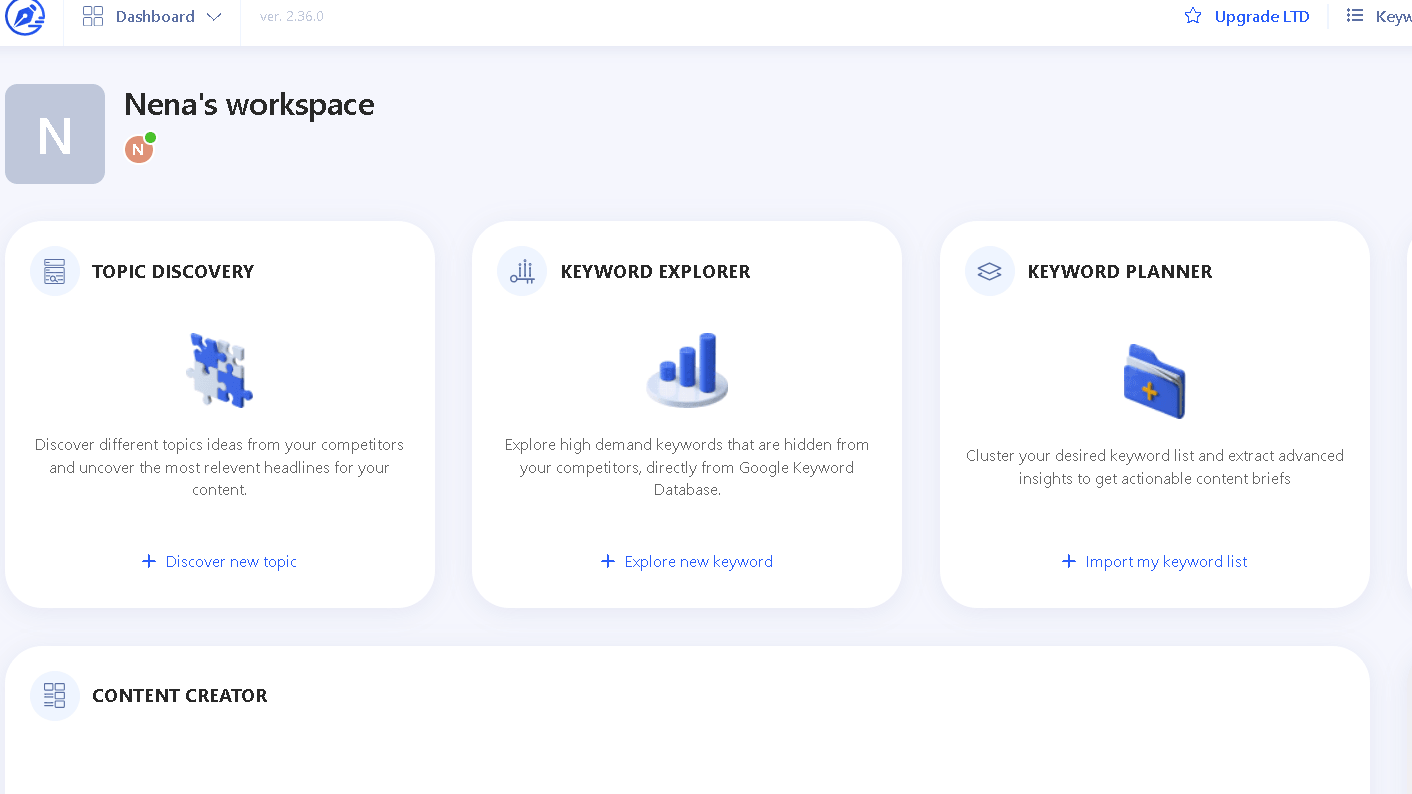
The cluster workflow is the center of the product and it earns that position. You enter a seed keyword, set your location and language, and the tool returns a map of related keywords organized by topic clusters. Each cluster represents a content angle with supporting keywords grouped around a primary term. You pick the clusters that fit your site’s focus and move straight into a content brief.
The workflow stays contained. That is the right word for it. In Ahrefs, a keyword research session can branch into competitor analysis, backlink gaps, SERP history, and traffic potential before you have committed to writing anything. In WriterZen, the path from keyword to brief is short by design. You do not have the option to get lost in data.
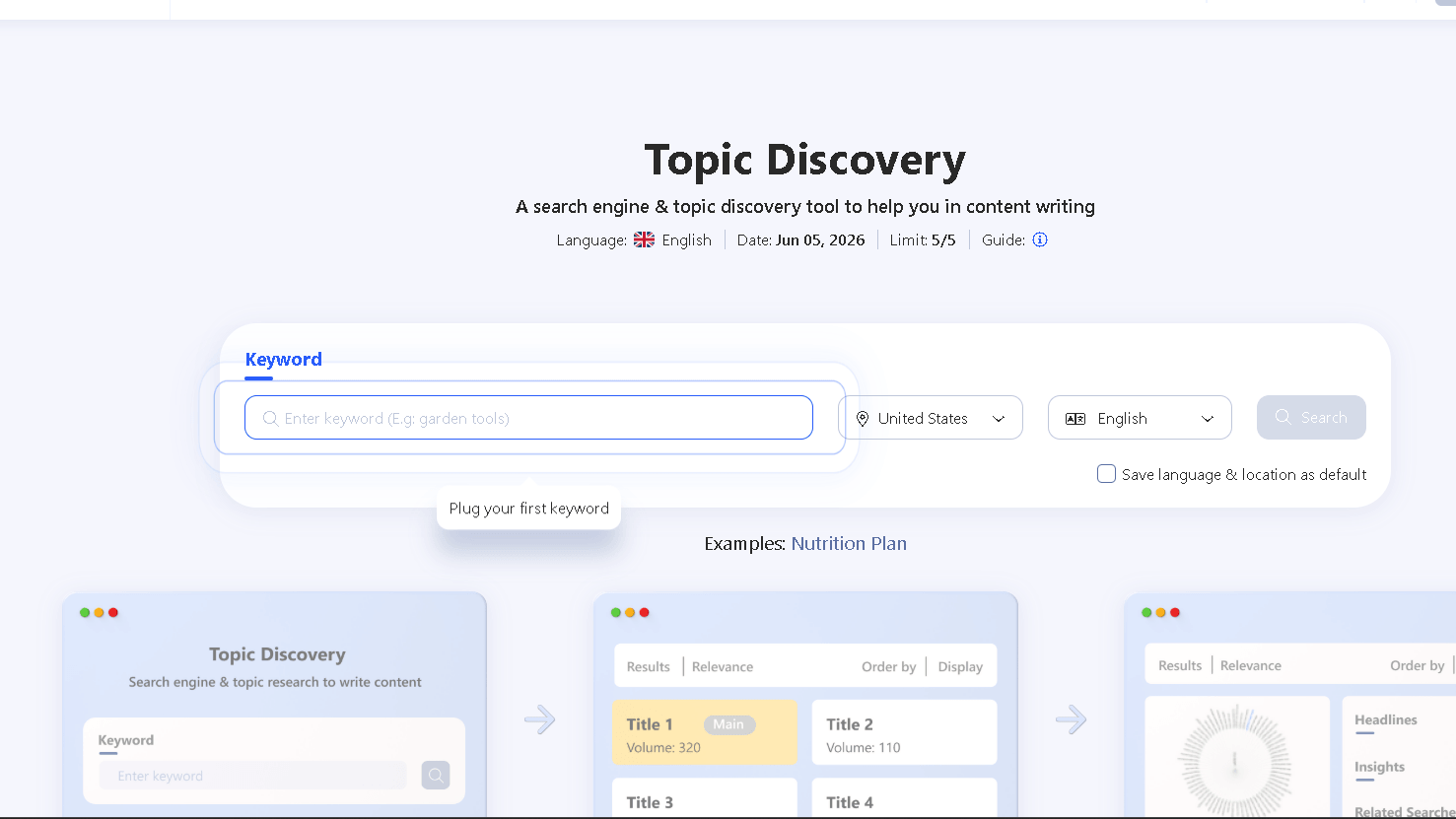
The topic discovery tool is underrated. I used it mostly to find angles I had not thought of, and it delivered on that more often than I expected. You put in a broad subject and it returns related topic clusters with search volume context. In practice, I found three content angles in my first session that I had missed entirely in months of Ahrefs keyword research. They were not hidden. I had just never followed the right cluster path to find them.
Worth noting: the interface is genuinely clean. No cluttered sidebar. No overlapping dashboards. No modal windows asking if I want to set up another report. It just drops you in.
The Problem That Appears After Week Two
The ceiling shows up around the ten to fourteen day mark, and it is specific. You will be inside a content brief, thinking about how a piece fits competitively, and you will want to know who links to the top-ranking pages. WriterZen cannot tell you that.
I hit this three times in the first month. Once when I was planning a piece in a mid-competition niche and needed to understand what kind of link profile the top results had. Once when a client asked whether a target keyword was dominated by sites with high authority or mixed results. Once when I wanted to find link opportunities in a topic cluster I had just mapped. All three times, I opened Ahrefs.
That is not a failure of WriterZen. It is the correct scope of the tool. But it matters for how you plan your stack. WriterZen works best when you already have a sense of the competitive landscape in your niche and need a faster path to publishing, not when you are building that picture for the first time.
The SERP analysis is also lighter than I would like. You can see keyword difficulty and estimated search volume, but the SERP overlay that tells you why a specific page ranks is not there in the depth Ahrefs provides. For beginners who do not need that depth, it is fine. For anyone with competitive content ambitions, it eventually becomes a gap.
WriterZen Features That Actually Matter
The keyword clustering tool is the reason to buy WriterZen, and it is good enough to justify the price on its own for the right user. The clusters are clean, the groupings are logical, and the export to a content plan format is fast. I used it on every article I planned during the 30-day test. It held up across niches.
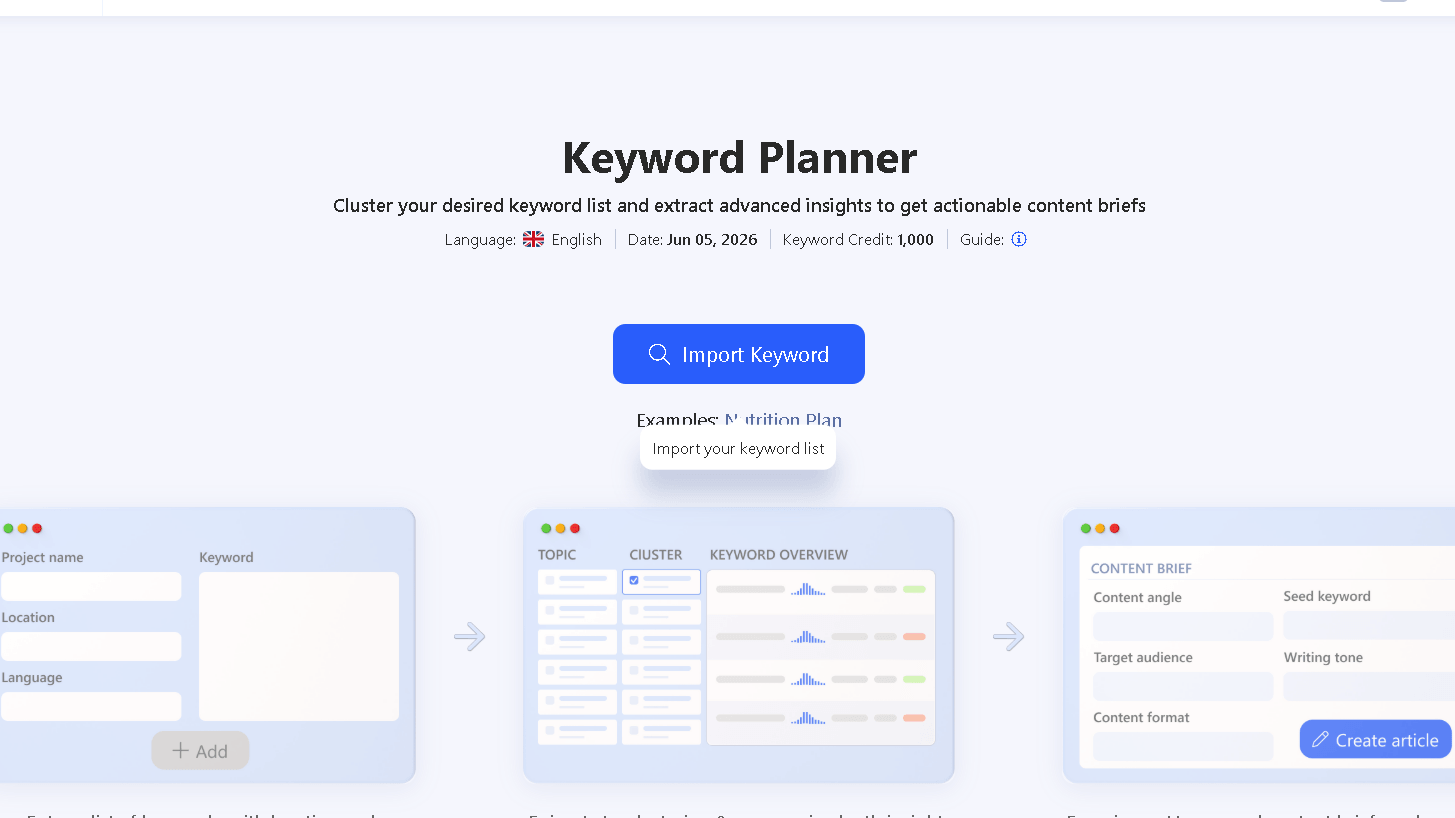
The content brief builder is where the workflow clicks into place. Once you have a cluster selected, the brief tool organizes your target keywords, related terms, and suggested structure into a single working document. You hand that to a writer or open a draft and the brief is already built. That saves 20 to 30 minutes per article compared to assembling the same information from an Ahrefs data export.
The AI writer is functional and I would not rely on it heavily. It is useful for generating section outlines and fleshing out rough ideas, but the output quality does not stand up against dedicated AI writing tools. I used it for skeleton drafts on three articles and edited all three down to around 40 percent of what the tool produced. It is a helper, not a writer.
If AI writing is a bigger priority than keyword research, you may be better served by dedicated writing platforms. I recently tested several options in my guide to the Best Writesonic Alternatives.
The topic discovery flow is worth spending time in. Not just for finding keywords, but for understanding the shape of a subject before you commit to covering it. I found it most useful at the start of a new niche project where I needed a map of the content landscape fast.
Where WriterZen Starts Feeling Limited
Backlink analysis is the clearest gap. WriterZen does not offer meaningful backlink data. If your SEO strategy depends on understanding link profiles, monitoring your own link growth, or identifying competitor backlink gaps, you will need a second tool. There is no version of WriterZen that closes this gap.
Technical SEO is also outside the scope. No site audits. No crawl reports. No broken link detection. No Core Web Vitals tracking. If any of those are part of your regular workflow, WriterZen does not replace them. It was not built to.
The competitive intelligence available through WriterZen is enough for beginner and intermediate content work. It is not enough for aggressive competitive positioning in high-authority niches. When you need to understand why a domain is winning a SERP and build a specific counter-strategy, the data depth is too shallow to work from.
Agencies will feel this ceiling early. Managing multiple client sites, each with its own competitive landscape, link profile, and technical health, requires a broader toolset than WriterZen provides. The tool does not scale to that kind of multi-surface SEO work.
WriterZen Pricing — Is It Worth Paying For?
| Plan | Monthly Price | Best For | Main Limitation |
|---|---|---|---|
| Basic | ~$39/month | Solo bloggers, niche sites | Limited advanced SEO depth |
| Standard | ~$59/month | Growing publishers, small teams | Still weaker than Ahrefs for intelligence |
| Advanced | Higher tier | Content teams, higher volume | Not a full enterprise SEO replacement |
The price is one of WriterZen’s clearest advantages. At $39 a month, the barrier to entry is low enough that a blogger or niche site operator can justify the spend without needing to run a detailed ROI calculation first. That psychological accessibility is part of the product.
The thing that surprised me most was how the pricing changed my relationship with the tool. Ahrefs at $129 a month creates a quiet pressure to justify the cost. You pull reports to feel like you are getting value. You run analyses that feed into monitoring loops rather than publishing decisions. WriterZen at $39 does not create that pressure. The tool does its job and you move on to writing. That difference in pressure is worth money in itself.
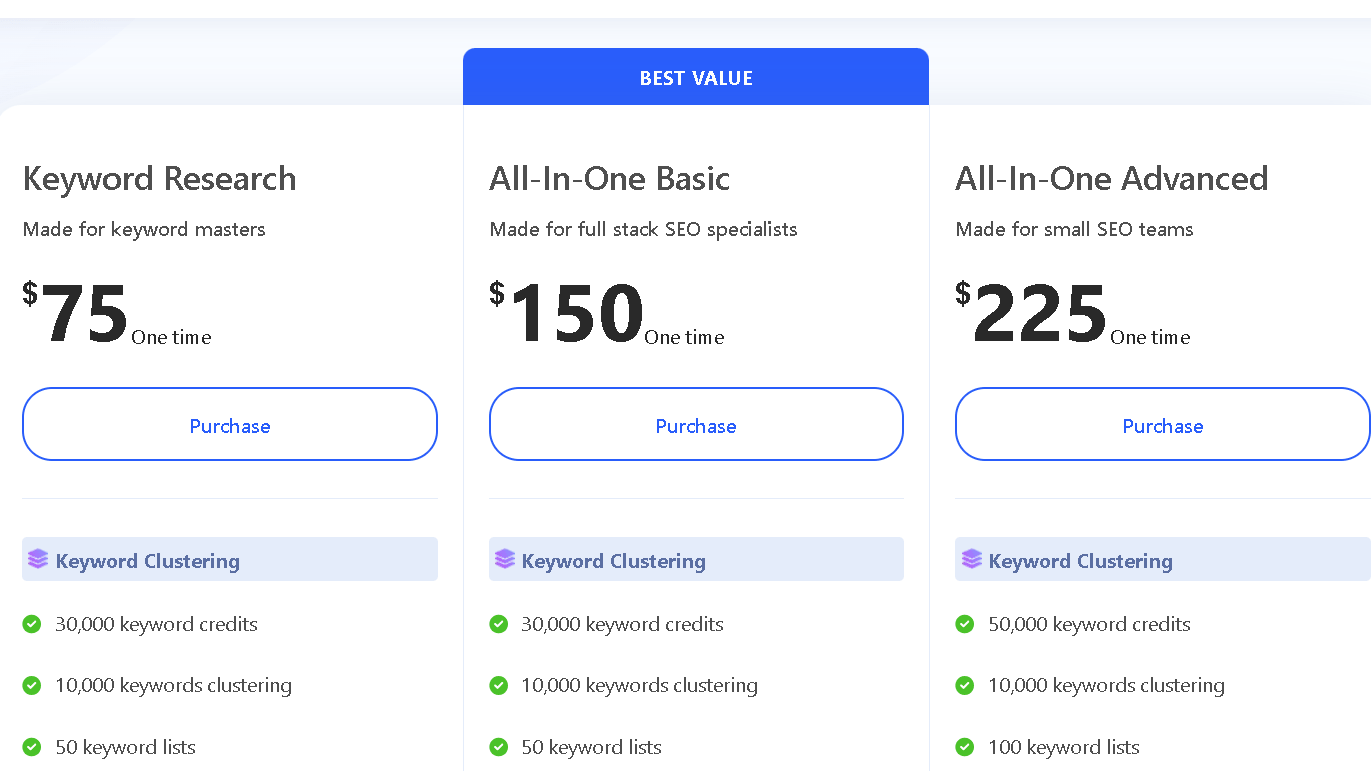
So is it worth paying for? For bloggers and content teams publishing three or more pieces a week, yes. The time saved on content planning alone covers the cost in the first month. For lower-volume publishers, the free trial is worth running before committing.
Pros and Cons
| Pros | Cons |
|---|---|
| Fast keyword clustering workflow | No meaningful backlink data |
| Clean, low-friction interface | Limited competitive depth |
| Strong topic discovery | No technical SEO tools |
| Low cognitive load per session | Can feel restrictive at scale |
| Affordable entry price | Smaller data ecosystem than Ahrefs |
| Faster path from keyword to brief | AI writer needs heavy editing |
WriterZen vs Ahrefs
| Category | WriterZen | Ahrefs |
|---|---|---|
| Primary Focus | Content workflow and publishing | SEO intelligence and research |
| Keyword Research | Good | Excellent |
| SERP Analysis | Basic | Excellent |
| Backlink Analysis | No | Excellent |
| Competitor Research | Limited | Excellent |
| Content Planning | Excellent | Good |
| Publishing Speed | Excellent | Moderate |
| Data Depth | Moderate | Excellent |
| Best For | Content creators and bloggers | SEO professionals and agencies |
| Biggest Advantage | Faster path to publishing | Deeper SEO insights |
The comparison between these two tools is almost a category error. Ahrefs is an SEO intelligence platform. WriterZen is a content workflow tool. They overlap in keyword research and very little else.
Ahrefs gives you more data, better SERP analysis, real backlink intelligence, and the tools to build a full SEO strategy from the ground up. If you want a deeper breakdown of its strengths and weaknesses, read my Ahrefs Review. WriterZen gives you a faster path from a topic idea to a publishable content plan. In my sessions with both tools, Ahrefs produced more insight per session. WriterZen produced more articles per month.
That trade-off is the whole decision. If you need to understand the SEO landscape deeply before you publish, Ahrefs is the right tool. If you need to publish consistently without getting pulled into analysis loops, WriterZen fits the workflow better. Many serious publishers should have both. For solo creators choosing one, the question is which bottleneck hurts you more right now.
WriterZen vs Semrush
| Category | WriterZen | Semrush |
|---|---|---|
| Best For | Content planning and publishing | Full SEO and digital marketing |
| Keyword Clustering | Excellent | Good |
| Publishing Workflow | Excellent | Good |
| Keyword Research | Good | Excellent |
| Competitor Analysis | Limited | Excellent |
| Backlink Analysis | No | Excellent |
| Technical SEO Audits | No | Excellent |
| PPC Research | No | Excellent |
| Ease of Use | Simple and focused | Powerful but more complex |
| Best Choice For | Bloggers and content creators | Agencies, SEO professionals, and marketing teams |
Semrush is broader than Ahrefs in some ways and feels heavier in daily use. The dashboard has more surfaces, more reports, and more data types competing for your attention. The keyword data is strong. The PPC and advertising intelligence is a genuine advantage for anyone in paid search. The content workflow, though, is not where Semrush shines.
If you’re considering Semrush as an alternative, check out my detailed Semrush Review, where I tested the platform against Ahrefs and Ubersuggest using real website data.
WriterZen beats Semrush on publishing speed and cluster clarity. Semrush beats WriterZen on everything else. For a solo content publisher who has no interest in paid search, technical audits, or deep competitive monitoring, WriterZen is the more focused choice. For anyone whose SEO work goes beyond content creation, Semrush covers more of the job.
WriterZen for Bloggers
This is the strongest use case and the one the product is most clearly built for. Bloggers who are trying to build topical authority across a niche will find the cluster workflow maps directly onto that goal. You identify a broad subject, generate the cluster, and see exactly which content you need to produce and in what order to cover the topic well.
The publishing momentum effect is real for bloggers specifically. The shorter path from keyword research to draft means the gap between planning and publishing shrinks. I have spoken with bloggers who moved from Ahrefs to WriterZen and reported publishing twice as many articles per month without working more hours. The time was always there. It was going into tool management instead of writing.
That combination is harder to find than it looks.
WriterZen for Agencies
To be honest, WriterZen does not serve most agency workflows well at scale. The backlink data gap is a real problem for agencies whose clients need competitive link analysis. The lack of site audits and technical reporting means you still need a full SEO platform alongside it. The single-project focus of the interface does not map well to managing ten or twenty client sites with different needs.
Where WriterZen can fit inside an agency workflow is at the content production stage. If an agency has a separate Ahrefs or Semrush subscription for strategy and competitive work, WriterZen can accelerate the brief-building and content planning phase for content writers who should not need to navigate a full SEO platform to do their jobs. As a brief generation tool for content teams, it earns its place. As a primary agency SEO tool, it does not.
Why Some Users Eventually Stop Using WriterZen
The most common reason is that their SEO work outgrows what WriterZen was built for. A blogger who starts on WriterZen and builds a successful site into a competitive niche will eventually need backlink intelligence, competitive gap analysis, and site-level health monitoring. WriterZen cannot provide those. When the content strategy matures beyond topic clustering, users migrate toward Ahrefs or Semrush.
The second reason is agency or client work. As soon as a creator starts managing SEO for other people, the reporting and analysis needs shift. WriterZen does not have the client-facing output that professional SEO work typically requires.
Neither reason reflects a flaw in WriterZen. They reflect the product’s honest scope. The tool works best during the growth phase of a content site, when publishing velocity and topical clarity matter more than deep competitive intelligence. When you grow past that phase, you grow past the tool. That is fine. Not every tool needs to scale to every stage.
Best WriterZen Alternatives
| Tool | Better for | Worse for |
|---|---|---|
| Ahrefs | Full SEO intelligence, backlink analysis | Workflow simplicity, publishing speed |
| Semrush | Enterprise SEO breadth, PPC data | Calm publishing workflows |
| LowFruits | Low-competition keyword targeting | Full content planning |
| Surfer SEO | On-page content optimization | Keyword clustering |
| Clearscope | Premium content briefs, NLP optimization | SEO research breadth |
Ahrefs is the natural next step when WriterZen’s scope becomes limiting. The data depth is far beyond what WriterZen provides, and for any serious competitive or link-focused SEO work, it is the right platform to move toward.
LowFruits is worth testing alongside WriterZen for niche site builders specifically. It specializes in finding low-competition targets that standard keyword tools miss. Used together, the two tools cover topic discovery and competition filtering faster than either one alone.
Surfer SEO rounds out the content workflow for users who want stronger on-page optimization guidance. You can also read my full Surfer SEO Review to see how it performs in daily publishing workflows. WriterZen handles the planning phase well. Surfer handles the optimization phase. They work together without much overlap.
Another alternative worth considering is NeuronWriter, especially for publishers who care more about content optimization scores and semantic coverage than keyword clustering. I cover the differences in my full NeuronWriter Review.
FAQ
For bloggers and content-focused publishers producing three or more pieces a week, yes. The keyword clustering speed and brief-building workflow save enough time to justify the cost in the first month. For lower-volume publishers or anyone who needs full SEO intelligence including backlinks and technical analysis, the value depends on whether you also have a broader SEO tool in your stack.
No. The tools cover different ground. WriterZen handles keyword clustering and content planning well. Ahrefs handles backlink analysis, competitive intelligence, site audits, and deep SERP analysis that WriterZen does not offer. Writers and bloggers who do not need that depth may find WriterZen sufficient on its own.
Yes, it is one of the clearest fits for the product. The cluster workflow maps directly onto topical authority building, which is the primary SEO strategy for most content blogs. The publishing momentum effect is real and the price is accessible enough that the ROI shows up fast for bloggers publishing consistently.
It depends on the stage of your site and the depth of your strategy. For early to mid-stage content sites focused on topical authority, it is enough to drive real results. For competitive niches where link profile and domain authority matter, WriterZen will eventually feel like it is missing the data you need to make confident decisions.
The most common answer is the reduction in analysis time before publishing. Users come from heavier platforms where keyword research becomes a multi-hour process and find that WriterZen shortens that to under 30 minutes.
Backlink data is the clearest one. No meaningful link analysis, no competitor link profiles, no link gap tools. Technical SEO is the second. No audits, no crawl data, no Core Web Vitals tracking. Competitive SERP intelligence is the third. The difficulty scores are usable but the depth of SERP analysis falls short of Ahrefs or Semrush for anything beyond surface-level topic assessment.