
Search engine optimization in the modern age is based heavily on generative artificial intelligence machines and machine learning along with large language models (LLMs). Implementing a flexible content strategy and implementing smart SEO techniques is all you need to do in order to remain ahead of the competition. Its AI SEO roadmap for startups provides an approach to achieve dominance over search engine results webpages (SERPs) as well as AI-generated summary reports.
If you’re a growing SaaS business, these strategies create a consistent content engine that can grow. Combining AI tools with traditional SEO best methods, startups can get the attention of search engines quickly even with a limited budget.
Incorporating digital PR to the mix could boost domain authority. A comprehensive strategy for content marketing makes sure that every piece of content is used at an exact stage in the process.
Utilizing a specific startup SEO strategy can help new businesses establish themselves in a competitive market. This strategy focuses on actions that will have a high impact for the upcoming six months of expansion.
Table of Contents
AI SEO Roadmap for Startups at a Glance
| Step | Key Focus |
| 1. Semantic Keyword Research | Identify AI terms and search intent. |
| 2. Technical SEO | Fix crawl errors and Core Web Vitals. |
| 3. On-Page Elements | Optimize headers, tags, and metadata. |
| 4. EEAT Content | Produce expert-driven, helpful content. |
| 5. Internal Linking | Build a hub-and-spoke site architecture. |
| 6. Backlink Outreach | Secure high-authority editorial links. |
| 7. Schema Markup | Implement JSON-LD for rich snippets. |
| 8. Local SEO | Optimize Google Business Profile. |
| 9. Metrics & Tracking | Monitor LLM visibility and traffic. |
| 10. Competitor Analysis | Identify content gaps and link prospects. |
| 11. Content Refresh | Update old posts to keep data fresh. |
1.Conduct Semantic Keyword Research
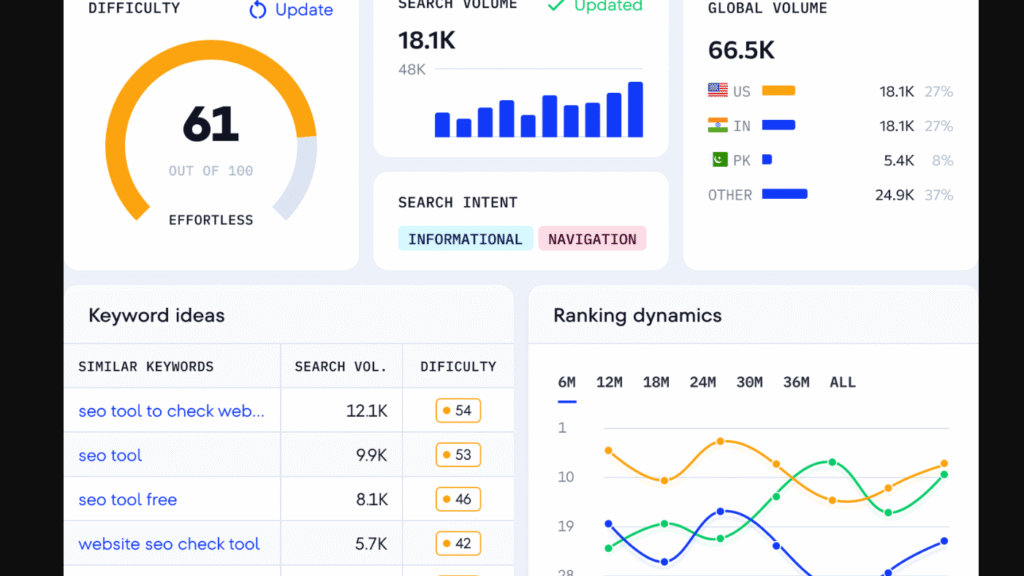
Begin by identifying the most important AI-related SEO terms and long-tail terms that correspond to the real-world intention of the searcher. Concentrate specifically on “problem-solution” clusters, like “AI customer support for startups” or “automated SEO tools for e-commerce.”
Provide educational guides that help users through challenges in the industry. Utilize tools such as ChatGPT, Gemini, or exa to come up with Latent Semantic Indexing (LSI) synonyms and keywords.
Take a look at the discussions of community members on Reddit to discover high-intent keywords that traditional keyword tools may not be able to detect. Utilize these tips to map topics and explore topics from all angles.
Check out The “people also ask” section on Google for ideas. Implementing these in your marketing strategy helps keep things fresh for the long run.
The latest AI-powered SEO tools can automate most of the process. Check your suggestions against search volume tools such as Semrush as well as Ahrefs to ensure that you’re targeting relevant terms that have the potential for real traffic.
The data can help you improve your strategy for content as time passes. Predictive analytics also can aid in identifying new trends in keywords before they become increasingly competitive.
Every keyword should be mapped to a user’s intent: informational, transactional, as well as navigational. If you are able to identify user intent, your content will answer exactly the questions AI search engines seek to answer.
2.Resolve Technical SEO and Core Web Vitals
AI search engines give preference to websites that provide users with a seamless experience. Perform an audit of SEO’s technicality using Screaming Frog and Google Search Console to identify crawl-related mistakes.
This is the most important step in any new SEO strategy. By fixing these issues, you make your site more accessible to crawlers.
Maintain a clear URL structure to allow bots to be able to understand the site’s architecture. Keep a neat XML sitemap to improve indexability and crawlability.
Look for duplicate content. It could cause confusion for search engines. Make it easier to optimize your Core Web Vitals by compressing images and reducing code.
Be aware of LCP and CLS to have a stable and rapid loading experience. A fast site keeps users on the site and boosts the rankings of your site.
Use canonical tags in order to inform search engines what version of a webpage to include in their index. Check that your mobile optimization and usability are in line.
The responsiveness of your website is vital for AI crawlers that use mobile-first indexing. A responsive design and the right tap targets are crucial in ensuring mobile accessibility.
Certain developers continue to use AMP to ensure fast loading of content-heavy websites. While it’s certainly not ideal for all, in some cases it can be helpful.
3.Optimize On-Page Elements for Semantic Search

In titles, tags, meta descriptions, and H1/H2 headers, organically use the keywords you wish to target. Limit descriptions to less than 150 characters and titles to 60 characters.
With voice search becoming more and more popular, you may record conversations with a long tail by using natural language and question-based titles. Avoid using too many keywords. To find natural language and related entities, use AI.
This gives search engines a better grasp of the topic of your website. The most recent algorithms can still access and utilize your website.
Make sure to regularly update your metadata to reflect how well your content is performing. AI systems may detect even small changes in click-through rate (CTR) as a hint that your content is highly relevant.
This type of SEO on-page improves the experience for both bots and users. The consistency across all elements on the page is essential, but don’t worry about the little things too much.
4.Generate AI-Enhanced, EEAT-Driven Content.
Make sure the content you post exhibits authority, trust, and experience (E-E-A-T). Your marketing plan should be built around high-quality blog material.
Evergreen content keeps your website up to date for a very long period. The content you offer is pertinent to search engine requirements as well as the needs of your audience.
Use quotes from experts to add depth and authenticity to your presentation. Researching Reddit conversations could reveal the language and demands of your audience.
This data can be sorted to match your search objectives with the use of tools like ChatGPT. Utilize AI to generate outlines and allow human specialists to offer fresh perspectives.
Original case studies create confidence and demonstrate the real-world results. For questions about information, provide precise, concise answers at the very top.
You can share your knowledge across different platforms like LinkedIn and YouTube to increase engagement across multiple channels. This increases the chances of appearing as a part of AI search summary reports.
Secure featured snippets of content in search results can significantly increase the organic click-through rate. Make use of AI to discover what content formats work best for each search term, and alter your production strategies.
5.Build a Logic-Based Internal Link Architecture
Install the hub-and-spoke (pillar-cluster) internal linking method. Link page pillars to specific blog posts of the cluster to increase link equity.
Pillar pages can help you organize your website for users as well as search engines. Utilize the descriptive anchor text, which is rich in keywords, to demonstrate to search engines the relationship between your pages to one another and establish the authority of your site.
Be on the lookout for redirect chain links that are broken and for any other issues. Clean site architecture helps AI crawlers discover and index new content more quickly.
6.Execute AI-Driven Backlink Outreach
Find websites with high authority in your field by using AI techniques. The foundation of successful link-building is the establishment of alliances, connections, and valuable assets.
Make sure the websites you select have a high domain authority. Although it takes time, domain authority is essential for long-term rankings.
Combine the power of digital media with link development to establish your business as a thought leader. To boost response rates, use AI to create customized outreach emails.
Provide something of value, such as a special data set or a guest article. Create “link-magnet” material by using free AI tools or unique research and infographics.
Advertise these resources on sites such as Product Hunt to drive early traffic and gain high-authority backlinks. These assets are likely to draw backlinks for editorial content from reliable news sites and blogs.
7.Implement JSON-LD schema and structured data.
Use schema markup (JSON-LD) to help AI models and search engines analyze the content on your website. Utilize categories such as the Product, FAQ, Article, and Review.
Your chances of appearing on knowledge panels or rich snippets can be raised by using structured data. These rich results offer AI search engines with the “facts” they need to provide consumers clear replies.
Use the Google Rich Results Test to evaluate your code. To stay visible in improved search results, make sure your markup is clean.
8.Leverage Local SEO and Google Business Profile
Even startups that are digital-first shouldn’t overlook local SEO. Use geo-modifications to your content to attract customers at specific locations.
Targeting a geolocation helps you focus your marketing spend. Make sure to keep your Google Business Profile up-to-date to establish trust and create a new avenue for discovery.
9.Track AI SEO Metrics and LLM Visibility
Monitor the monthly growth of organic traffic and impressions. The increase in organic traffic is an important indicator that your plan is functioning.
Monitor your keyword rankings and conversion rates to ensure your visitors actually generate income. Examine Google Search Console data to find out which pages are losing the most.
Connect search engine rankings to lead quality. Utilizing an AI-powered CRM, your team will be able to determine which organic channels are delivering the highest worth.
Find out the percentage in voice to determine the share of voice AI search results. Check user engagement metrics such as bounce rate to determine whether users find your content valuable.
An excessive bounce rate could indicate that your site isn’t meeting users’ expectations. Utilize heatmaps to determine how visitors interact with your site and identify areas that could be improved.
Heatmaps are often a source of information about navigation issues, which can affect conversion rates. Machine learning can assist you to discover patterns in user behavior that would otherwise go unnoticed.
Make use of predictive analytics to anticipate future growth in traffic. Monitor how often your brand appears in AI-generated solutions and then compare it to rivals.
If a topic cluster is not performing when it is performing poorly, make use of AI insights to improve the content or improve the technical aspects of those pages.
10.Examine Gaps in Competitors’ Performance using AI.
Utilize AI tools and search engine optimization platforms like Semrush as well as Ahrefs to study the strategies of your competition. Find keywords are ranked for, but that you’ve never noticed, as well as look to find “content gaps” where their information isn’t accurate or has been altered.
Review the profiles of your competitors’ backlinks to find new ways to reach out. If a site is linked to a competitor it is likely that they’ll connect to your more important and valuable AI-enhanced source.
The 6-Month Roadmap Summary
First month: Basics. developing KPI benchmarks, mapping keywords, and conducting technological audits.
Optimization in months two and three. Use a Google Business Profile to manage local SEO, generate schema, and speed up your website.
Scaling in Month Four. After the pillar content is released, an internal link program can be started.
Months five and six: Power. extensive backlink outreach and content improvement based on performance data.
Frequently Asked Questions
How can AI alter SEO for startups?
AI helps startups compete with established companies by automating tedious tasks such as content creation and keyword research. The focus shifts not just to keywords but also to their semantic significance and user intention.
The most vital element in an AI SEO strategy?
The technical base along with organized data is crucial. Without a responsive website and the correct schema markup, AI search engines won’t be able to accurately understand or recommend your content.
Do I have to rely on AI-generated material?
Not at all. AI can write documents, yet you require human editors to identify mistakes, preserve your voice consistently, and ensure that you meet E-E-A-T standards.
Truthfully, content that comes straight from AI typically doesn’t have the special insights that can aid in ranking well. The problem is that it’s not there yet.