
What is the best AI novel writing software?
You want a tool that helps you shape ideas, stay organized, and move from outline to finished scenes without losing momentum.
I’ll show you which AI novel writing tools fit different styles and goals so you can pick one that saves time and improves your work.
You’ll see how tools handle plotting, character tracking, tone, and long-form continuity.
I’ll walk you through options like fiction-focused assistants, general writing AIs, and editors so you can decide what AI novel writing software fits your next manuscript.
Table of Contents
Best AI Novel Writing Software-Quick Overview Table
Here’s a clean overview table summarizing the article and comparing each tool at a glance:
| Tool | Best Use Case | Key Strengths | Pricing Model | Limitations / Notes |
|---|---|---|---|---|
| Sudowrite | Brainstorming, scene development, sensory detail | Excellent “what if” ideas, scene expansion, Story Bible for consistency. | Subscription-based | Best value if you write frequently; focused on drafting rather than final editing |
| Jasper | Long-form creative writing and fast scene drafting | Long-Form Assistant retains context, many templates and prompts, tone controls. | Tiered plans based on features and context length | More structured and plan-based; better for writers with a defined workflow |
| Rytr | Brainstorming, rough drafts, writer’s block | Simple prompts, uncluttered UI, easy voice switching, fast drafts | Free plan + paid plans with character limits | Not ideal for deep long-form continuity or advanced editing |
| NovelAI | Long-form fiction and deep worldbuilding | Strong style control, memory system, narrative flow templates, image + text generation | Feature-based tiers, limited free option | Requires hands-on customization; steeper learning curve |
| QuillBot | Sentence-level rewriting and editing | Paraphrasing, grammar and fluency tools, tone control, plagiarism checker (paid) | Free tier + paid upgrades | Not for drafting or plot development; complements other tools |
| Sassbook | Fast idea generation and scene scripting | Low learning curve, style and tone templates, quick switching between writing stages | Free plan with limits + paid/API plans | Not a full editor; best used before transferring to another tool |
| Squibler | Planning and drafting long novels | Combines AI with project management, chapter goals, versions, book view | Plan-based pricing, usually free trial | More structure than pure writing tools; best for complex projects |
| Novelcrafter | Plotting, character, and world development | Strong revision tracking, AI-assisted scene drafts. | Tiered plans with project and token limits | Initial learning curve; more powerful than lightweight tools |
| AI Dungeon | Interactive storytelling and experimentation | Sandbox storytelling, branching choices, player-driven narratives | Free + paid subscriptions | Weak long-term continuity; not ideal for polished manuscripts |
| ShortlyAI | Brainstorming and writer’s block | Minimal interface, expand/rewrite commands, good pacing and tone | Simple, low-cost pricing | Limited for large-scale worldbuilding or continuity management |
1) Sudowrite
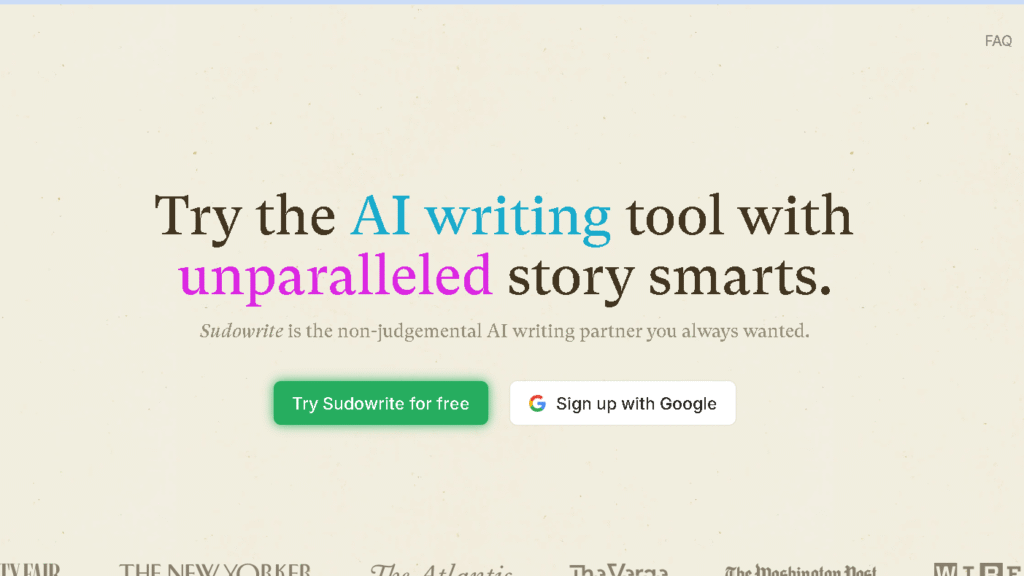
I turn to Sudowrite when I need quick ideas and to aid in scene work.
It’s best at brainstorming, offering new ‘what if’ ideas and bits of sensory information that will pull a flabby passage along .
I use it for character notes and I have a Story Bible which is used to keep changeling facts etc.. consistent across chapters.
The navigation from plot outline to full paragraphs without losing the context is relatively seamless.
I don’t even think about the cost, pricing is hidden behind a subscription, I just determine if it’s worth it based on the amount that I write.
This cost is justifiable for most types of novel job since you save time writing drafts and having rewrites.
For those who want to try it out, the official Sudowrite page has features and plans as well as a sandbox option and pricing.
2) Jasper AI Novel Writing Software
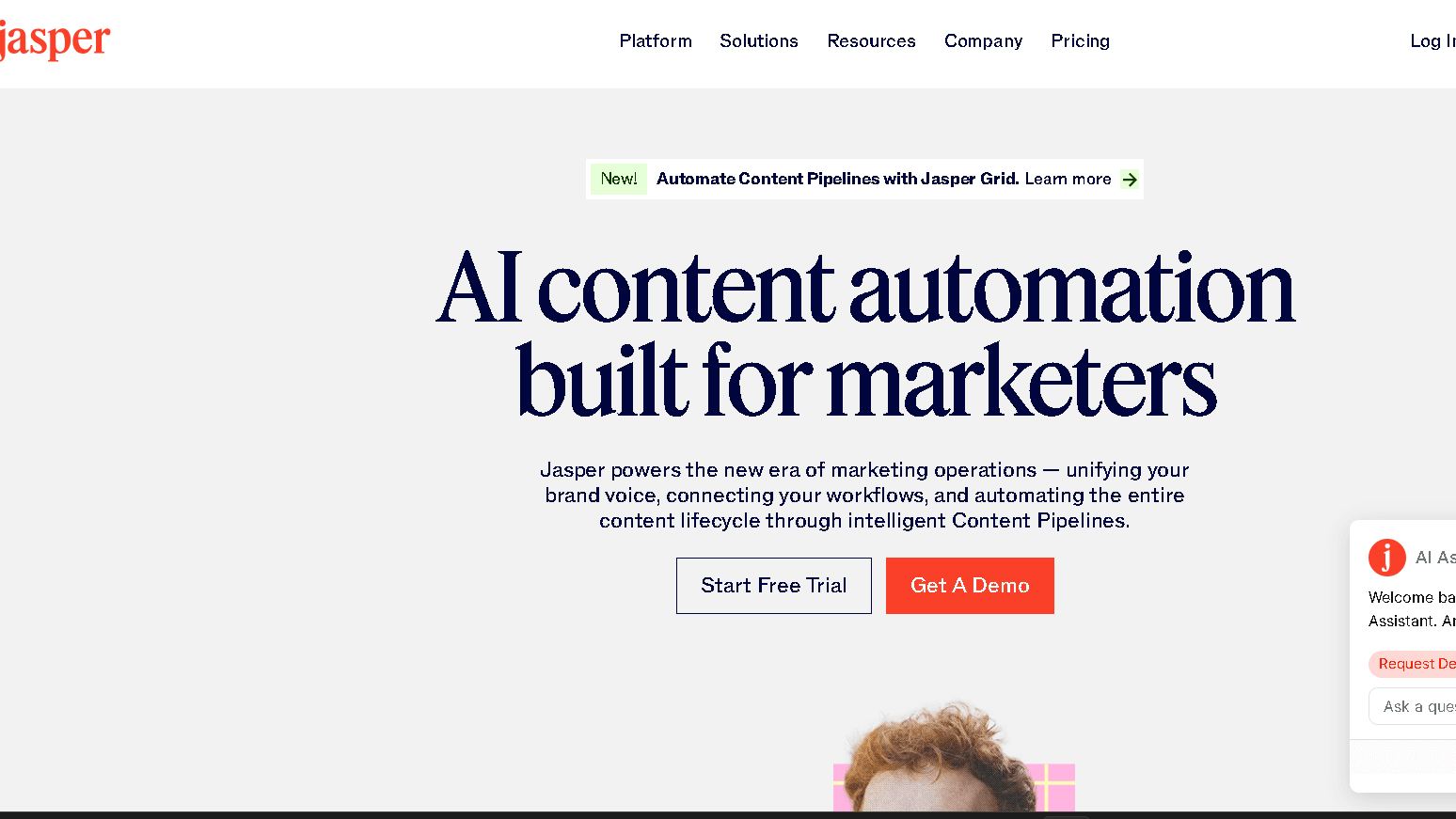
I used Jasper for my long forms creative writing, and I found it useful in writing scenes quickly.
Its Long-Form Assistant retains context over many pages, which I found useful when I was trying to save time on rewrites.
I appreciate the variety of templates and creative prompts.
They free up the creative process so that you don’t have to create a new plot idea and character beats from scratch.
Pricing is less expensive be plan, specially models and contextual length features.
After cost-value considerations I selected a plan that accommodated my writing process and level of revision.
The editor comes with tone controls, a view that shows just an outline of the content, and also has options to export manuscript drafts.
Those were useful tools in that they allowed me to maintain a level of consistency, and move the text into my manuscript app.
3) Rytr
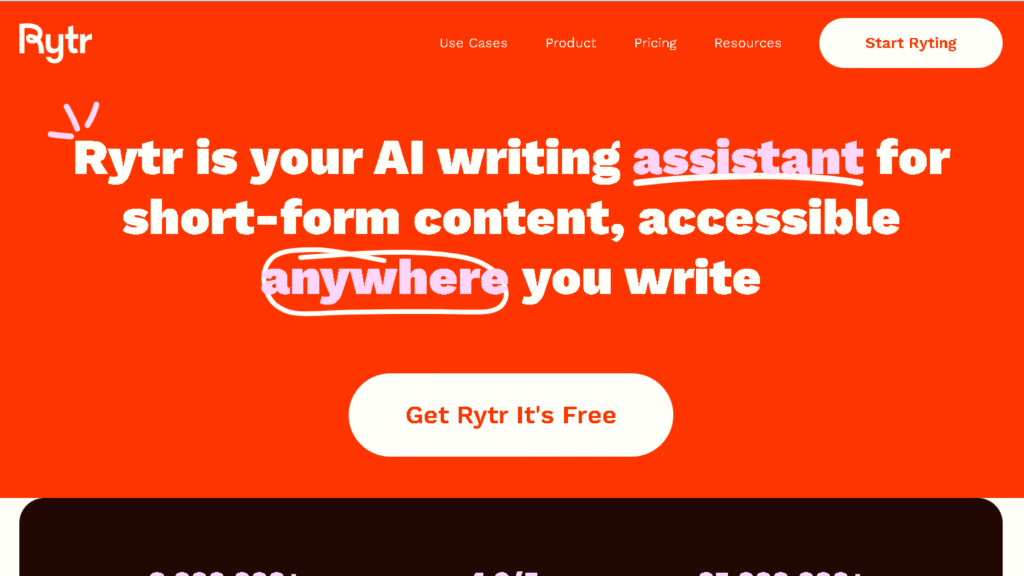
I do all my brainstorming and rough drafts on Rytr .
And it cranks out scenes, character notes, and dialogue with simple prompts which I can quickly edit.
Its interface remains uncluttered, so that I may concentrate on writing rather than settings.
I honestly preferred it as it was easier to switch voices without much setup, I think.
Rytr has a free version, and paid plans with monthly character limits.
That’s not expensive if I need a simple, cheap tool before investing in a more robust platform .
I use Rytr as a way to get past writer’s block, and to experiment with alternative plot movement .
It advances the revision process, saving time on repetitive prose and allowing time to think at the structure level.
For the most up-to-date pricing and limitations explore Rytr directly, by visiting Rytr’s homepage.
4) NovelAI
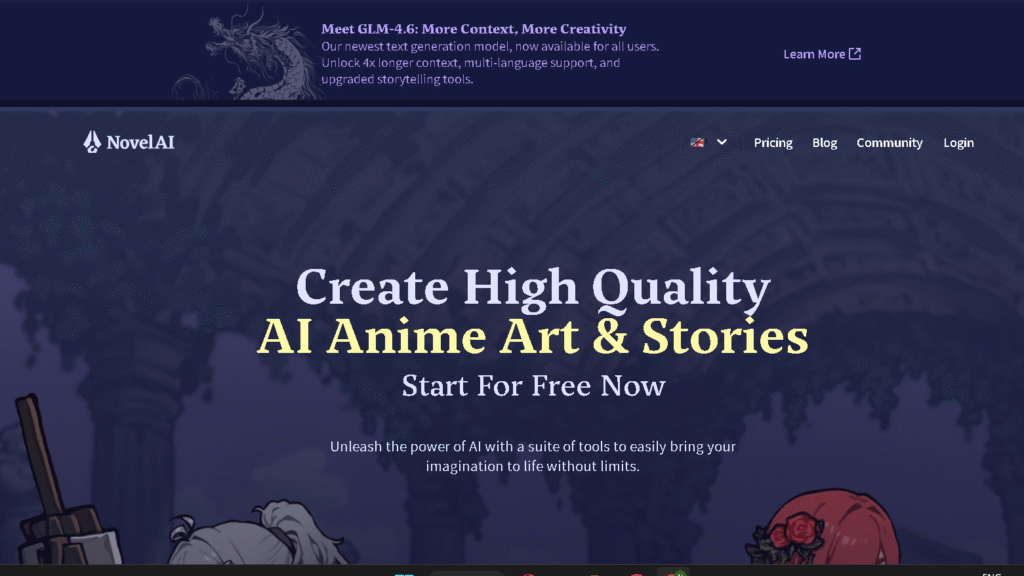
I use NovelAI and think it is particularly good for long-form fiction and for worldbuilding.
Its templates highlight narrative flow and style management, allowing me to maintain consistent voice and pacing between chapters .
This AI Novel Writing Software includes image tools as well text generation, so I am able to generate character art as well as prose.
I like the templates for memories and prompts to save and recall information about a character.
Pricing is based on features and levels of access.
Premium versions give access to better models, more memories storage, and rendering credits.
There is a free option, but it does not provide advanced controls or outputs.
I would use NovelAI if you prefer very detailed, and hands on customization.
Applies to writers who would rather influence the output of AI, rather than rely on ‘one click fixes’.
For a more thorough review and feature list, check out this NovelAI review.
5) QuillBot
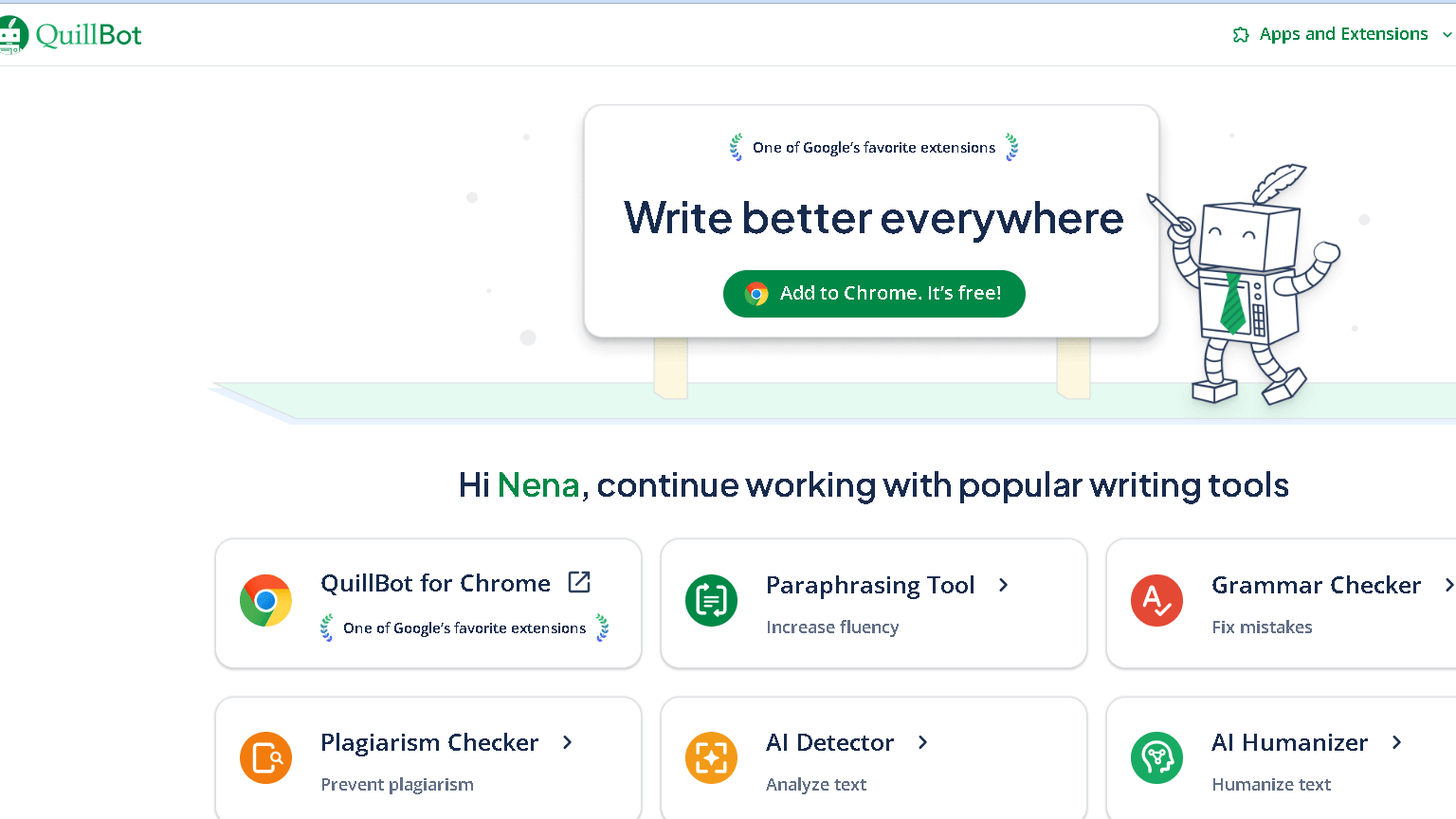
QuillBot is my go to for quick rewriting and obvious grammar corrections in lengthy scenes .
The paraphrasing capability also allows the paraphraser to paraphrase statements while maintaining its meaning to avoid creating redundancy of expressions across chapters.
I use the Grammar and Fluency tools to pick up tiny errors and streamline my prose.
The ability to adjust tone and formality allows me to align scenes with character voice, no manual tweaking needed.
QuillBot has a free version with simpler paraphrased output and a daily usage cap.
Besides this, the paid version offers higher limits, all available modes, and a plagiarism checker to polish manuscripts.
QuillBot is one I’d recommend writers who want a solid sentence-level writing/editing assistant.
It also complements tools for tracking plot continuity and character development that are focused on individual novels.
6) Sassbook
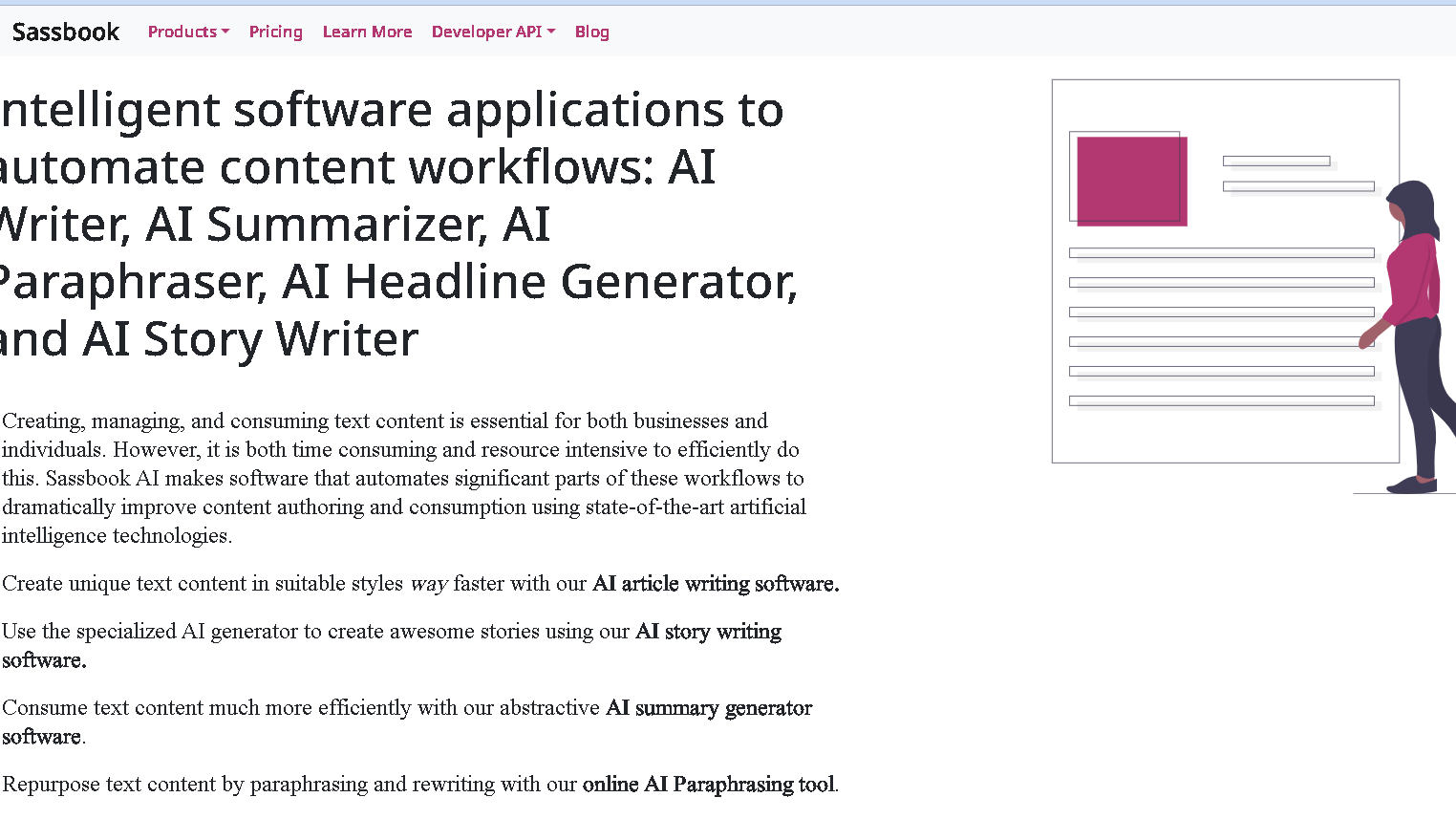
I’ve personally dabbled with Sassbook for content automation and used it to script scenes and beats quickly.
It provides a relatively low learning-curve, straightforward text generation interface so that I can just think and not worry too much about how to make the program do what I want.
I appreciate that Sassbook provides various styles of writing and templates to control tone and pacing.
This makes it easier to flip back-and-forth between brainstorming, expanding, and polishing a chapter.
Free plan available with limited monthly generation, paid plans for increased generation and for API access.
For the most updated plans and any API or team functionality that is relevant to your workflow I would suggest to look at Sassbook’s website.
I do not use it as a complete editor.
My process is to write first in Sassbook as a way of drawing and storing ideas.
Then, I transfer content to my primary writing instrument where I write for organization, continuity, and final editing.
7) Squibler
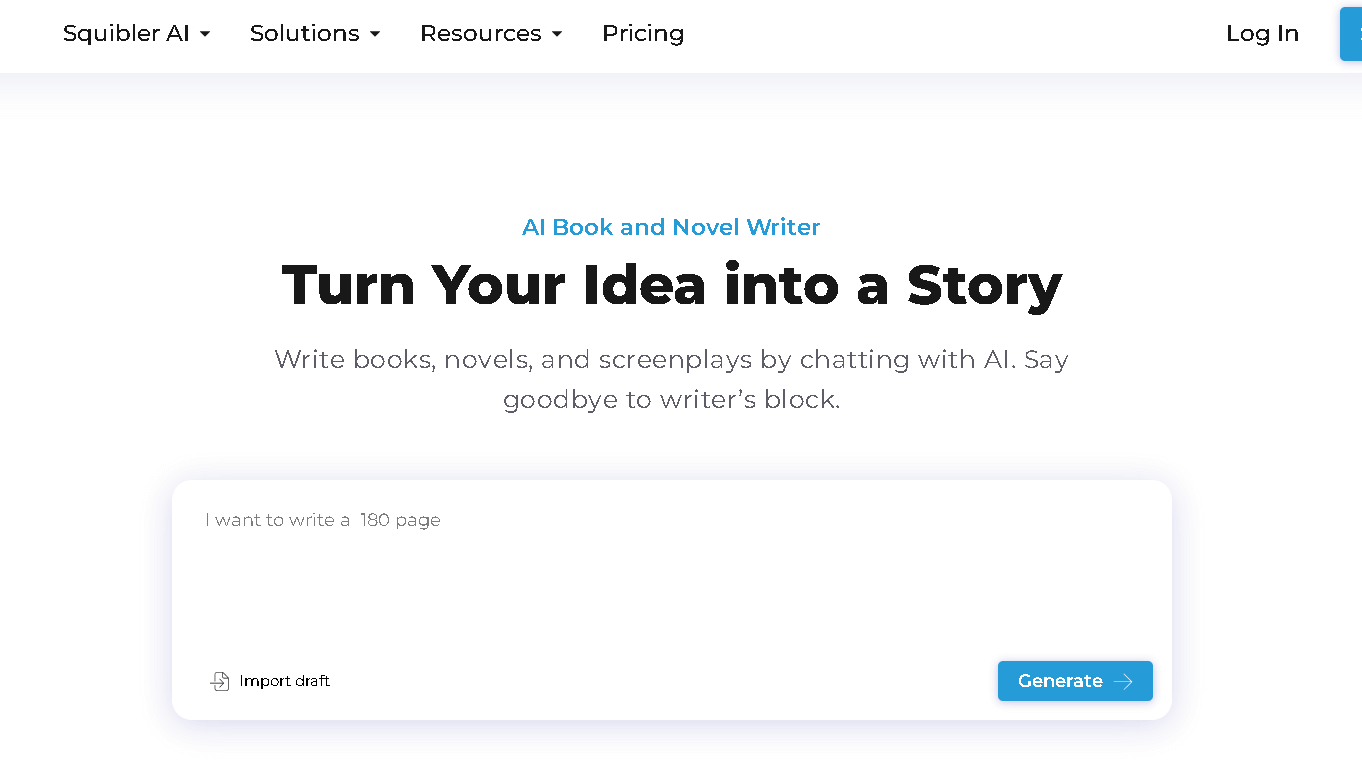
Squibler appeals to me as both a planning and drafting tool for novels, because it combines AI writing help with project tools.
It is the series editor who provides me with chapter ranges, goals and versions, to ensure that I also have a guide and a clear sense of direction in a very long book.
Its AI can brainstorm scene ideas, elongate a passage or assist with dialogue . I used it to begin drafts and also to get myself unstuck in a scene without letting go of voice and pacing.
In addition to the previously mentioned features Squibler also has templates and a book view that I use to set chapter priorities, due dates, and status.
It is also this structure that allows me to function under time pressures and stay on top of a complex project as it moves forward.
Prices vary by plan, and most have free trial or limited free levels.
If you would like to know the differences in functionality, read a recent review of Squibler features and pricing.
8) Novelcrafter AI Novel Writing Software
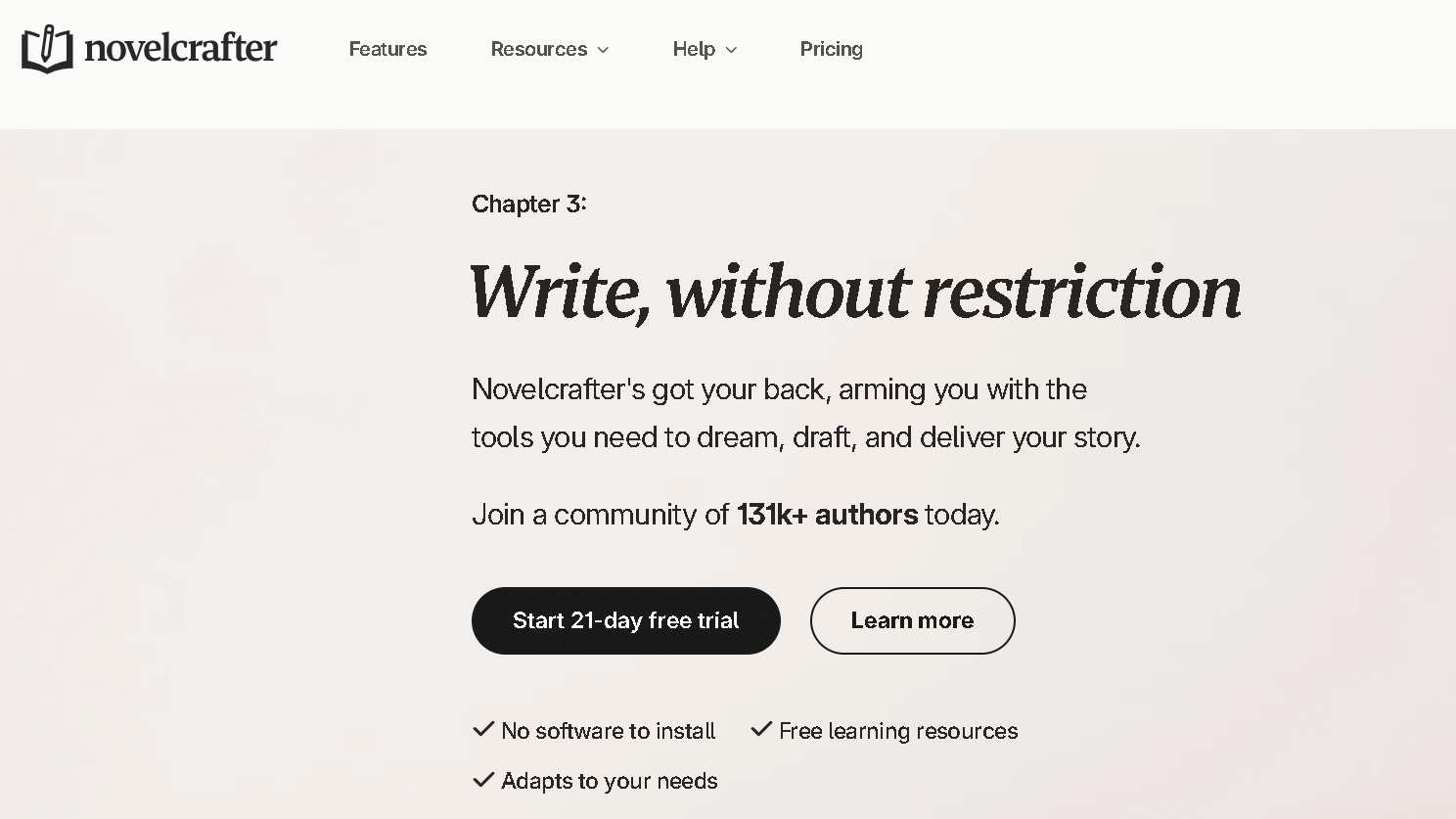
I enjoy Novelcrafter for its specific plotting, character and world development tools.
The revision interface helps me keep track of long works more efficiently, so that I spend less time tracking down notes and more time writing.
I use its AI to come up with scene drafts and beat ideas, and edit the product to maintain my tone.
It can work with several different models and also allow me to combine AI assistance with my own manual outlining.
The pricing includes plans in tiers of project limitations and AI tokens so I may opt for a plan that would adjust to the amount of work that I have.
I can also try a few features for free or as a trial sometimes and this also helps me to have a sense of what I really need.
A bit of a learning curve but nothing major, if you give yourself an hour to play around with the template and settings.
Novelcrafter is ideal to add to your writing arsenal if you are searching for profound world building as well as a more step by step writing process.
9) AI Dungeon
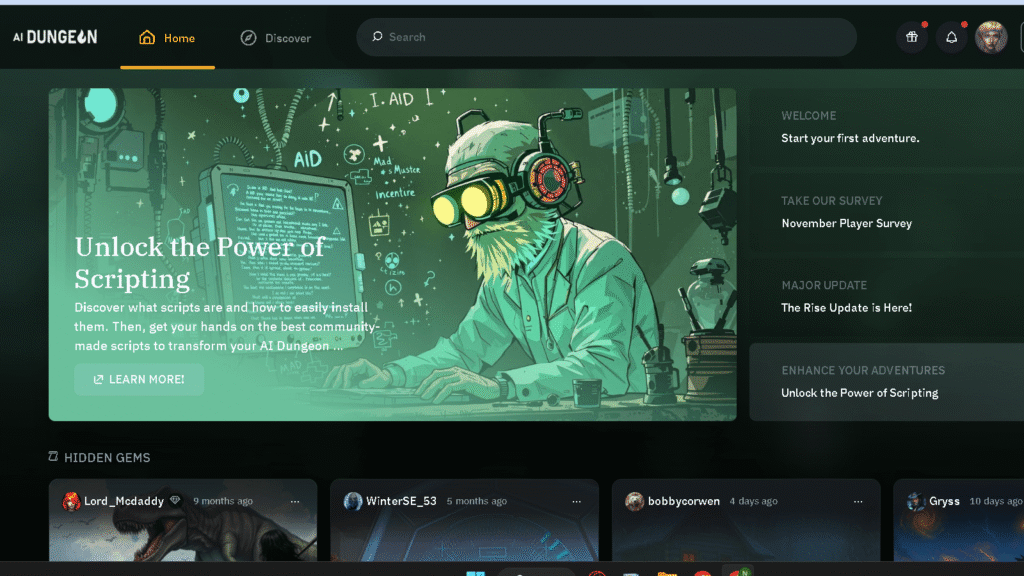
When I just want to encounter an open sandbox interactive story generator that responds to my cues, I go to AI Dungeon.
It’s great for off the cuff storytelling, and creating scenes on the spot so I can get weird quick.
It is available with free or paid subscriptions.
The paid tiers give me quicker response time, more memory, and personal worlds I control for larger projects.
I particularly enjoy AI Dungeon’s approach to issues of branching choices and player-authored storylines.
It has difficulty maintaining continuity over very long stretches, so I use it in conjunction with other software when I require very tight continuity.
AI Dungeon is good for informal writing or creating or testing scenes .
I would also perhaps recommend using it in conjunction with something like NovelAI or Sudowrite, if you need polished drafts and/or rigid structure.
10) ShortlyAI
I enjoy ShortlyAI for brainstorming and overcoming writers block.
It has a minimal interface, which allows me to concentrate on the scene and the dialogue.
I employ the ‘expand’ and ‘rewrite’ commands to elaborate on short prompts to transform them into paragraphs.
It manages pacing effectively and maintains a tone on the sections I produce.
ShortlyAI is a good fit for novelists seeking a quick, low-friction assistant.
Pricing is simple and usually so much less than full-suite writing platforms that I was able to try it without much investment.
But obviously I do not anticipate it to tackle the laborious, city-sized world building and tangled continuity by itself.
I use it in combination with tools for tracking characters, as well as tools for tracking plot threads for longer projects.
How AI Novel Writing Software Works
I describe these tools as ways to translate concepts into potential scenes and in developing plot and characters.
I concentrate on the pieces of the technology you will touch and interact with and the models that are working in the background.
Key Technologies Behind AI Novel Writing
My research demands that I reference several key technologies of the novel-writing tool that I am analyzing.
The script uses natural language processing (NLP) to dissect and analyze your commands and text.
This allows the software to pick up on tone, tense, and character voices. NLP is also used in spelling fixes, style corrections, and semantic search.
Vector databases and embeddings allow the AI to figure out where in your manuscript or resource implicit passages lie.
This helps the tool to rapidly retrieve context so that the tool keeps to the scene.
User interfaces are important.
I have control and that means I can do the drag-and-drop beat sheets, and scene cards, and revision history I want.
These easily connect with cloud storage, and export as EPUB and DOCX, enabling a smooth transition of drafts to the editing and publishing stages.
Understanding Machine Learning Models
Finally, I examine both the model type and the training data to assess the quality of the output.
They are based on large language models (LLMs) trained on a variety of texts.
The input also provides the context on which these models base their predictions for the next word, thus generating coherent sentences and plot beats.
Fine-tuning and prompt engineering define how the model deviates from your guidance.
Fine-tuning is a process that customizes a ‘base model’ with a particular genre or author’s text.
Prompt engineering involves providing instruction in the form of templates for the content and tone of the AI’s sentence responses or example scenes so the AI learns to match voice and pacing.
Safety-layers screen out hallucinations and copyrighted text.
I look for both temperature and length controls, allowing me to have output that is either more focused or more wildly creative.
The number of tokens determines how much context of my manuscript the model is able to grasp at any time.
Benefits of Using AI for Novel Writing
I’ve employed AI applications to generate new ideas, to assist in writing at a faster pace, and to track and organize plots and character details.
Those are concrete tools, they tell me lines, they say suggest this scene, they help me to not get stuck halfway through a draft.
Boosting Creativity and Idea Generation
AI is who I consult when I need fresh beats, character quirks or setting details.
In seconds, AI can output perhaps dozens of unique opening lines, conflict prompts, or details pertaining to some sense .
I choose the ones that work with my story voice and remix them.
I frequently use very brief lists from A.I. to get scenes started.
Ex:
Three motives options for a villain.
Sensory images for a storm scene.
Four alternative “catalyst” events.
AI also allows me to experiment fast tweak or “what if” experiments.
I can ask it to reframe a moment from a different perspective, or to up the stakes by altering one event.
It saves me time and forces me to be more original.
Improving Writing Efficiency
I use AI to automate the mundane so that I can practice my craft.
The AI writes scene scaffolds, propose transition sentences, and generates alternative dialogue.
Some of the ways I have been able to cut down on time are:
- Batch-generate chapter outlines to map pacing.
- Transform 200-400 word scene drafts into bullet notes.
- Create consistent character bios and timeline checks.
I manipulate it by editing and re-wording.
AI quickens the mechanical processes of composition but I still make the ultimate choices about tone, theme, and character.
If you want to learn more, you can read my article about AI Book Writer Tools.
Frequently Asked Questions
I cover which tools lead in 2026, how to pick the right one for your project, what storytelling help they give, free options with strong features, value for beginners, and legal risks when publishing.
What are the top-rated AI novel writing tools available in 2026?
I found and tested leading tools that focus on long-form fiction: Sudowrite for creative idea work, Jasper for broad content workflows, Rytr for fast drafting, NovelAI for fiction-focused generation, and QuillBot for rewrites and editing.
Each tool has different strengths in worldbuilding, prose quality, speed, and control.
Learn more about Best AI Writing Tools for Authors: 2026 Guide.
How do I choose the best AI software for writing my novel?
I match tools to whatever stage I’m in. For idea generation and character arcs, I like Sudowrite or NovelAI.
When it’s time to polish or paraphrase, I switch to QuillBot. If I need a fast draft, Rytr or Jasper usually does the trick.
I care about features, cost, and how steep the learning curve feels. Before I commit, I test story coherence, custom prompts, export options, and whether the tool keeps my voice intact.
Can AI writing software help improve the storytelling aspects of my novel?
Absolutely. I use AI to expand scenes, toss in sensory detail, tweak pacing, and even throw out plot twists.
AI sometimes spots continuity gaps or offers fresh alternatives when I’m stuck. Still, I edit every suggestion—blending AI ideas with my own style gets the best results.
Are there any free AI novel writing programs that offer professional-grade features?
Some tools have free tiers, so I can test drafting or rewriting. Usually, though, they limit output, model power, or advanced controls.
Free plans work for short tests, but they rarely fill the gap for full-novel projects. I like trying free versions first, then only upgrading if the advanced stuff actually helps my speed or quality.
Which AI writing tool provides the best value for novice writers?
For beginners, I look for tools that mix ease of use with templates and coaching. Rytr feels right for low cost and simple prompts.
Sudowrite helps new writers pick up craft with creative features. QuillBot offers solid editing help for learning style and grammar. I’d say try the trials—see which interface and guidance fit how you like to work.
What are the legal considerations when publishing a novel written with the assistance of AI?
I always check each tool’s terms for copyright and output ownership before I even think about publishing. Some services hand over full rights to whatever text you generate.
I try to avoid using copyrighted training text. Usually, I double-check that my prompts and edits lead to something original.
If I’m planning to sell the book or go for wider distribution, I talk to a lawyer. They help with contracts, trademark stuff, and making sure I really own the rights.
