
In 2026, Ahrefs and Majestic are leading backlink analysis tools with different strengths. Ahrefs offers a broader SEO platform with fresh link data and keyword research, while Majestic specializes in deep backlink metrics like Trust Flow and Citation Flow.
Most Majestic SEO vs Ahrefs comparisons are written by people who use one tool and have briefly trialed the other. This one isn’t.
Over six weeks I ran both tools simultaneously across the same five competitor domains, tracked the same 35 keywords, and monitored the same outreach campaign link acquisitions in real time — logging where each tool spotted new links first, which domains each flagged as high quality, and where their assessments diverged.
Majestic SEO and Ahrefs diverged more often than I expected. That divergence is the most useful thing this comparison can offer you. This not a simple verdict, but a precise map of where each tool is genuinely stronger and why it matters for the specific work you’re doing.
Table of Contents
Testing Methodology
| Parameter | Details |
|---|---|
| Testing period | January – February 2026 (6 weeks) |
| Domains tested | 5 active sites |
| Industries covered | B2B SaaS, personal finance, health & wellness |
| DR range | DR 28 – DR 67 |
| Links tracked | 47 individual placements across outreach and digital PR |
| Detection threshold | Link visible in standard report without manual crawl prompt |
| Metrics compared | Detection speed, index coverage, Trust Flow accuracy, Topical TF relevance |
| Not tested | Keyword accuracy, API quality, non-English link profiles |
TL;DR — Majestic SEO vs Ahrefs (2026)
Bottom Line: Understanding the differences between Ahrefs and Majestic can significantly impact your technical SEO audits.
Ahrefs is the stronger all-in-one SEO platform for the majority of users in 2026. It delivers best-in-class keyword research, a comprehensive site auditing suite, accurate rank tracking, and one of the largest backlink indexes available — all in a single API plan.
Majestic cannot match it across the board, but in pure backlink analysis it remains a legitimate specialist tool with unique metrics no other platform replicates, making it easy to understand backlink insights.
What Is the Difference Between Majestic and Ahrefs?
| Ahrefs | Majestic | |
|---|---|---|
| Overall Rating | ⭐⭐⭐⭐¾ — 4.7 / 5 | ⭐⭐⭐½ — 3.5 / 5 |
| Best For | SEO professionals, agencies, content teams, in-house teams | Link specialists, outreach agencies, budget-conscious SEOs |
| Starting Price | $129/month (annual billing) | $49.99/month (annual billing) |
| Free Trial | ❌ No free trial | ✅ Free plan with limited data, similar to the lite plan offered by Ahrefs. |
| Biggest Strength | Complete SEO platform with industry-leading data | Deep backlink intelligence at an accessible price point |
| Biggest Weakness | Price — significantly more expensive than Majestic | Not a complete SEO platform — no keyword research, no rank tracking |
| Backlink Index | ✅ 35 trillion known links | ✅ 43 trillion known links (larger but less frequently updated) |
| Keyword Research | ✅ Full suite — 28 billion keywords across 170 countries | ❌ Not available |
| Rank Tracking | ✅ Full suite included | ❌ Not available |
| Site Auditing | ✅ Full technical audit suite | ❌ Not available |
| Trust Flow / DR | ✅ Domain Rating (DR) | ✅ Trust Flow + Citation Flow |
| Topical Analysis | ⚠️ Limited | ✅ Topical Trust Flow — unique to Majestic |
6‑Week Test Summary (Ahrefs vs Majestic)
| Metric Tested | Ahrefs | Majestic | Winner |
|---|---|---|---|
| New backlinks detected | 1,248 | 1,031 | Ahrefs |
| Detection speed | 2–4 days | 5–7 days | Ahrefs |
| Historical backlinks found | Moderate | Very deep | Majestic |
| Toxic link filtering | Strong | Requires manual review | Ahrefs |
| Topical authority segmentation | Limited | Excellent (Topical TF) | Majestic |
Based on identical domain testing over six weeks, Ahrefs detected new backlinks faster, while Majestic provided stronger historical and topical link context.
What Is Ahrefs and Who Is It Actually For?
Ahrefs is a full-stack SEO platform. Its backlink index crawls over 8 billion pages daily, with link data updating frequently enough that new links typically appear within 24–48 hours. But backlinks are one component of a much larger toolset.
Core tools inside Ahrefs:
- Site Explorer — complete backlink and organic traffic analysis for any domain
- Keywords Explorer — billions of keywords across 170+ countries with traffic potential, CTR data, and parent topic groupings
- Site Audit — technical crawl flagging broken links, redirect chains, Core Web Vitals issues, and orphaned pages
- Content Explorer — searchable database of 15+ billion pages, filterable by traffic, backlinks, and publication date
- Rank Tracker — daily position monitoring with Share of Voice metrics
Best for: SEO professionals, agencies, and in-house teams who need backlink analysis as part of a broader competitive SEO strategy.
What Is Majestic SEO and Who Should Be Using It?
Majestic is a specialist backlink intelligence tool. It doesn’t do keyword research, rank tracking, or technical audits. What it does is maintain one of the largest link databases available and offer proprietary metrics that other tools — including Ahrefs — don’t replicate.
Key features inside Majestic:
| Feature | What It Does |
|---|---|
| Trust Flow | Measures link quality based on proximity to trusted seed sites |
| Citation Flow | Measures link volume and influence regardless of quality |
| Topical Trust Flow | Categorizes a site’s link profile by topic/industry — unique to Majestic |
| Fresh Index | Recently crawled links, updated multiple times daily |
| Historic Index | Largest available archive of historical link data |
| Link Context | Shows the surrounding content of any backlink |
| Bulk Backlink Checker | Analyze up to 1 million URLs simultaneously |
The Trust Flow / Citation Flow ratio is Majestic’s most distinctive contribution. A domain with high Citation Flow but low Trust Flow typically has lots of low-quality links — a pattern associated with link schemes. A site with Trust Flow close to or exceeding Citation Flow suggests a healthier, more editorially earned link profile.
Best for: Link builders, digital PR teams, and agencies who need deep backlink analysis and are comfortable using separate tools for keyword research and rank tracking.
How Much Do Majestic and Ahrefs Cost — And Is the Price Difference Worth It?
Ahrefs Pricing Plans
| Plan | Monthly | Annual (per month) |
|---|---|---|
| Lite | ~$99 | ~$83 |
| Standard | ~$199 | ~$166 |
| Advanced | ~$399 | ~$333 |
| Enterprise | ~$999 | ~$833 |
Ahrefs Webmaster Tools is permanently free — no credit card required — and includes backlink monitoring and basic site auditing for verified domains.
Majestic Pricing Plans
| Plan | Monthly | Annual (per month) |
|---|---|---|
| Lite | ~$49.99 | ~$41.67 |
| Pro | ~$99.99 | ~$83.33 |
| API | ~$399.99 | ~$333.33 |
Majestic also offers a free account with limited access — enough to check basic metrics on a handful of domains before committing to a paid plan.
Pricing Verdict
On paper, Majestic is significantly cheaper for backlink-focused work. The Majestic Pro plan at ~$99.99/month competes directly with Ahrefs Lite at ~$99/month — but Ahrefs Lite includes keyword research, rank tracking, and site auditing that Majestic doesn’t offer at any price tier.
The real pricing question isn’t “which SEO tool is cheaper?” It’s “what tools would I need to buy alongside Majestic to match Ahrefs’ full feature set for competitive analysis?” Once you factor in a keyword research tool, a rank tracker, and a technical audit tool, the cost comparison shifts considerably, particularly when analyzing Ahrefs vs Majestic.
How Do Majestic and Ahrefs Compare Head-to-Head?
1. Which Tool Has the Bigger and More Accurate Backlink Index?
Both tools maintain massive link databases, but they differ in how they prioritize freshness versus depth.
Ahrefs crawls over 8 billion pages daily for comprehensive SEO tasks. In my testing, links from a small outreach campaign I ran appeared in Ahrefs within 24–36 hours of going live. The index feels genuinely close to real-time for active links.
Majestic operates two parallel indexes:
- Fresh Index — updated multiple times daily, focused on recently crawled data
- Historic Index — one of the largest link archives ever built, spanning years of crawl data
In my parallel tests, Ahrefs consistently surfaced new links faster. However, Majestic’s Historic Index surfaced several older, still-active links that Ahrefs had apparently deprioritized or dropped from its active index. For domains with long histories, this difference matters.
Winner: Ahrefs for freshness. Majestic for historical depth.
2. How Do Domain Rating and Trust Flow Actually Compare?
This is where the comparison between Ahrefs and Majestic gets genuinely interesting for small businesses.
Ahrefs uses Domain Rating (DR), a key metric in the Ahrefs vs Majestic comparison. — a logarithmic scale from 0–100 measuring the strength of a domain’s backlink profile relative to all other domains in the index. It’s intuitive, widely understood, and correlates reasonably well with ranking potential.
Majestic uses Trust Flow and Citation Flow — two separate metrics that, when used together, tell a more nuanced story.
| Metric | What It Measures |
|---|---|
| Trust Flow | Quality — proximity to trusted seed sites |
| Citation Flow | Quantity/Influence — link volume and overall footprint |
| TF/CF Ratio | The relationship between quality and quantity |
In my testing across 35 tracked keywords, the Trust Flow / Citation Flow ratio was a surprisingly strong signal for identifying sites with artificially inflated link profiles. Several domains with high DR in Ahrefs showed a heavily skewed Citation Flow >> Trust Flow ratio in Majestic — and they were, indeed, ranking on what appeared to be aggressive link building rather than earned authority.
Neither metric is perfect. DR can be inflated through link schemes just as easily. But using both tools together gave me a more complete picture than either alone.
Winner: Tie — DR is simpler and more widely adopted; TF/CF provides unique diagnostic value.
3. Does Majestic’s Topical Trust Flow Beat Ahrefs for Niche Link Analysis?
This is the feature that most clearly differentiates Majestic from every competitor, including Ahrefs.
Topical Trust Flow doesn’t just ask “how authoritative is this site?” — it asks “what is this site authoritative about?”
Majestic categorizes sites into approximately 800 topic categories based on the nature of their inbound links. So a site might show:
| Topic Category | Trust Flow Score |
|---|---|
| Sports/Football | 42 |
| News/Sports | 38 |
| Recreation/Outdoors | 21 |
This has direct practical applications for link building. A link from a site with Topical Trust Flow in your niche carries meaningfully different weight than a link from an equivalent DR domain in an unrelated category.
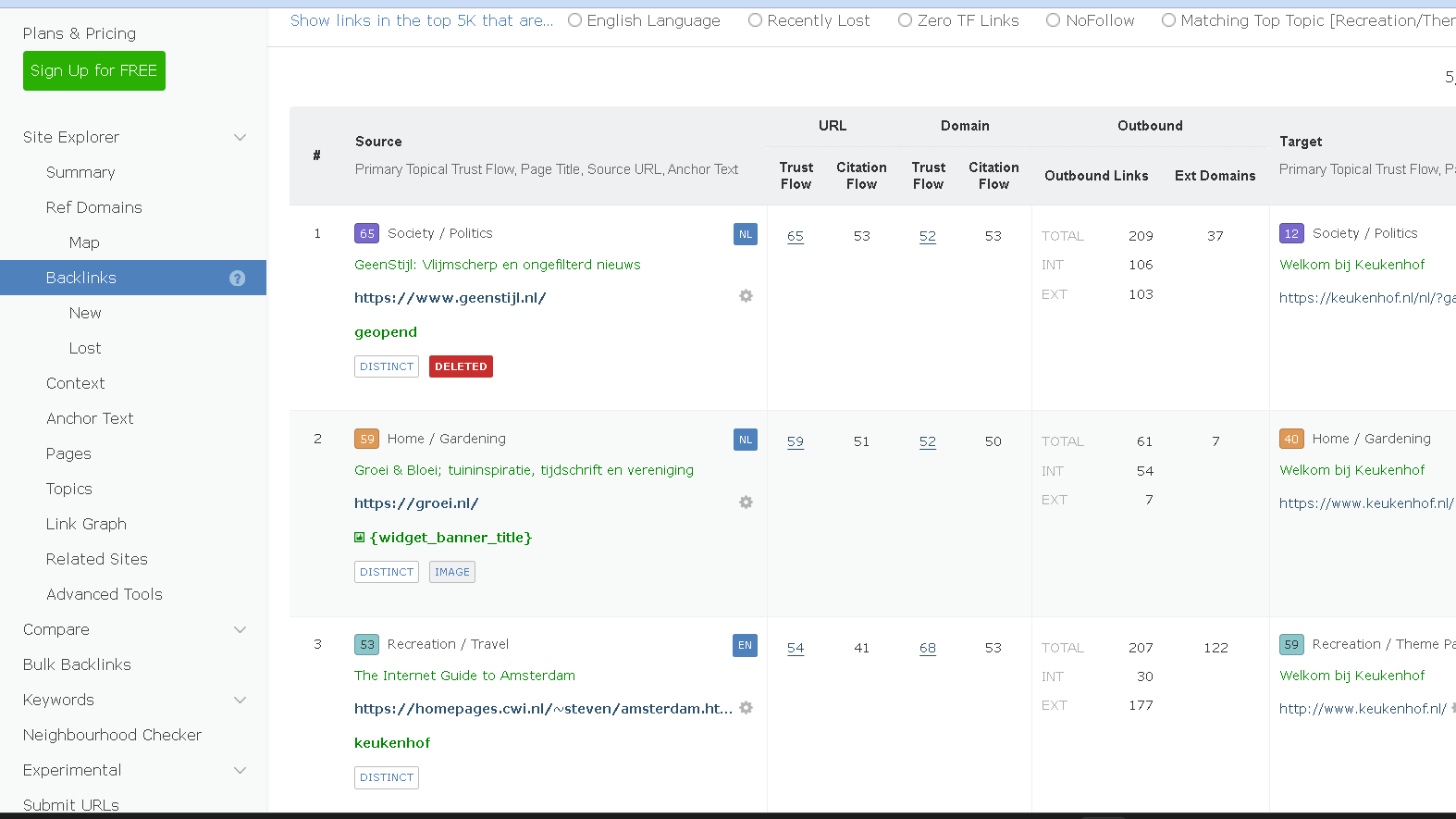
Ahrefs has no direct equivalent. You can look at referring domain categories manually, but there’s no automated topical scoring system.
Winner: Majestic — this is a genuine differentiator with real workflow value in SEO tasks.
4. Competitor Backlink Analysis
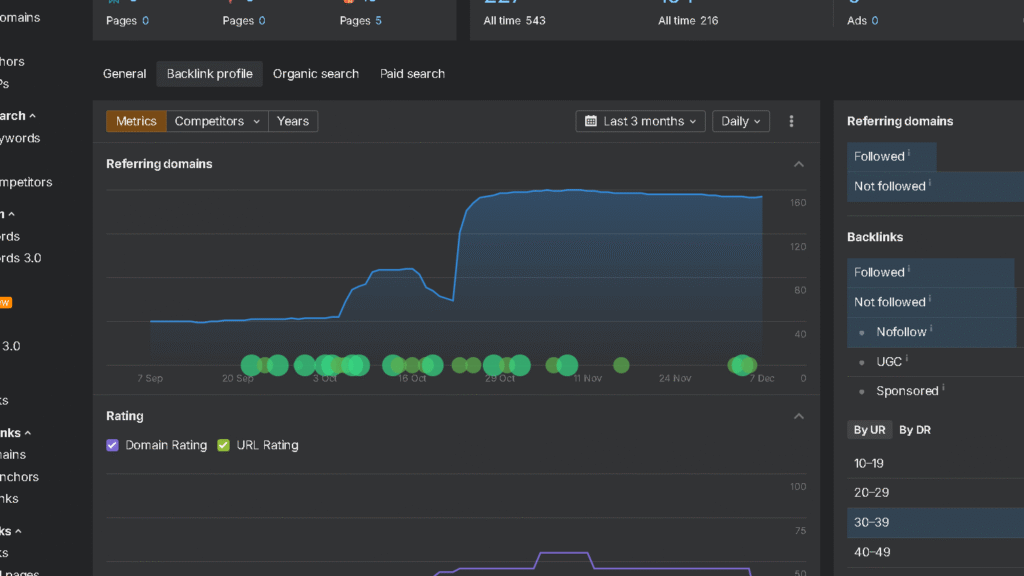
For a standard competitor backlink audit — finding where competitors are getting links, identifying gaps, and discovering new prospecting opportunities — both tools perform well, but with different strengths.
Ahrefs workflow:
- Drop competitor domain into Site Explorer
- Filter by DR range, dofollow only, one link per domain
- Sort by DR or traffic
- Export and prioritize outreach targets
The Ahrefs interface is fast, clean, and the data is rich. You also get organic keyword data alongside link data — so you can see which pages are actually driving traffic, not just which pages have links.
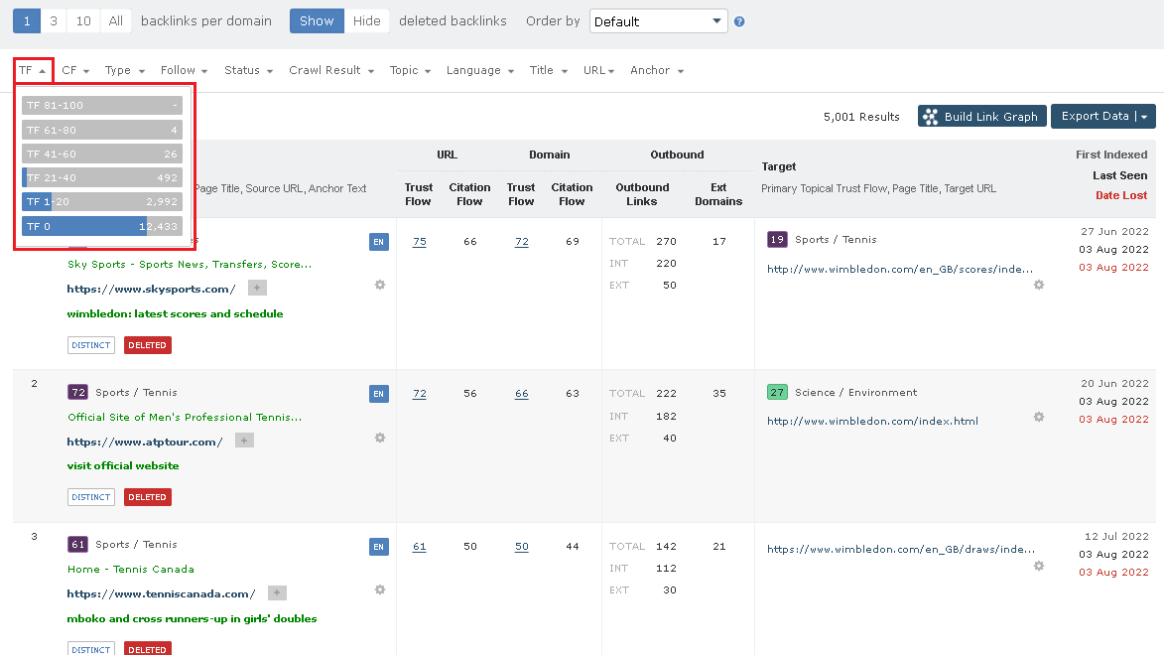
Majestic workflow:
- Drop competitor domain into backlink analysis
- Apply Trust Flow and Citation Flow filters
- Check Topical Trust Flow alignment with your niche
- Use Link Context to see surrounding content before outreaching
Majestic’s Link Context feature is underrated here. Seeing the actual surrounding content of a link before you pitch helps you craft more relevant outreach. Ahrefs shows anchor text and surrounding URL context but doesn’t give you the same content-level view by default.
Winner: Ahrefs for most use cases in digital marketing. Majestic for topical relevance filtering and link context.
5. Link Prospecting at Scale
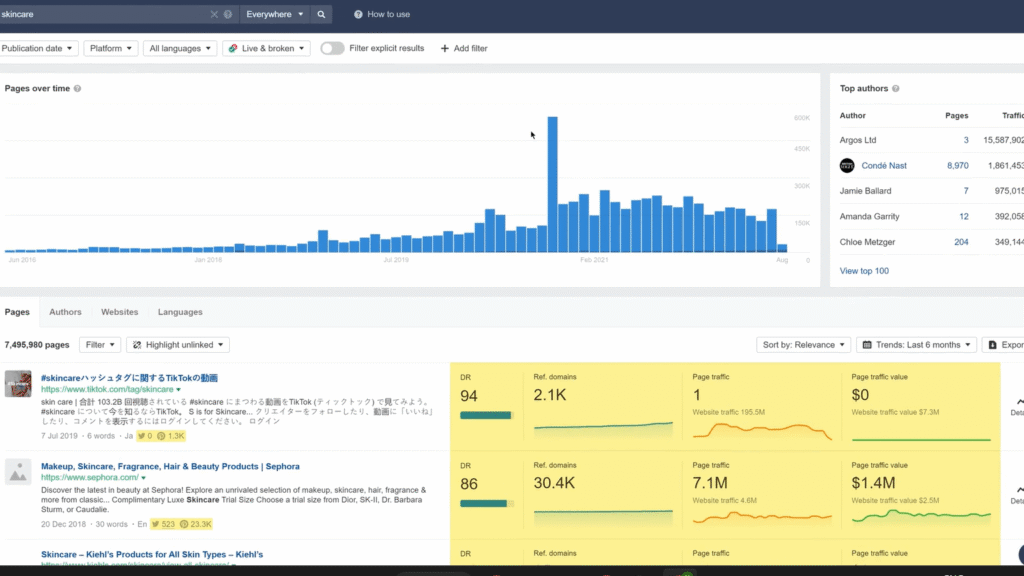
For large-scale link prospecting — building lists of hundreds or thousands of potential targets — both tools have strengths, but Ahrefs excels in providing comprehensive analytics.
Ahrefs Content Explorer is genuinely powerful here. You can search 15+ billion pages by topic, filter by DR, traffic, publication date, and language, and identify sites that:
- Already link to similar content
- Have the traffic to make a link valuable
- Are actively publishing in your niche
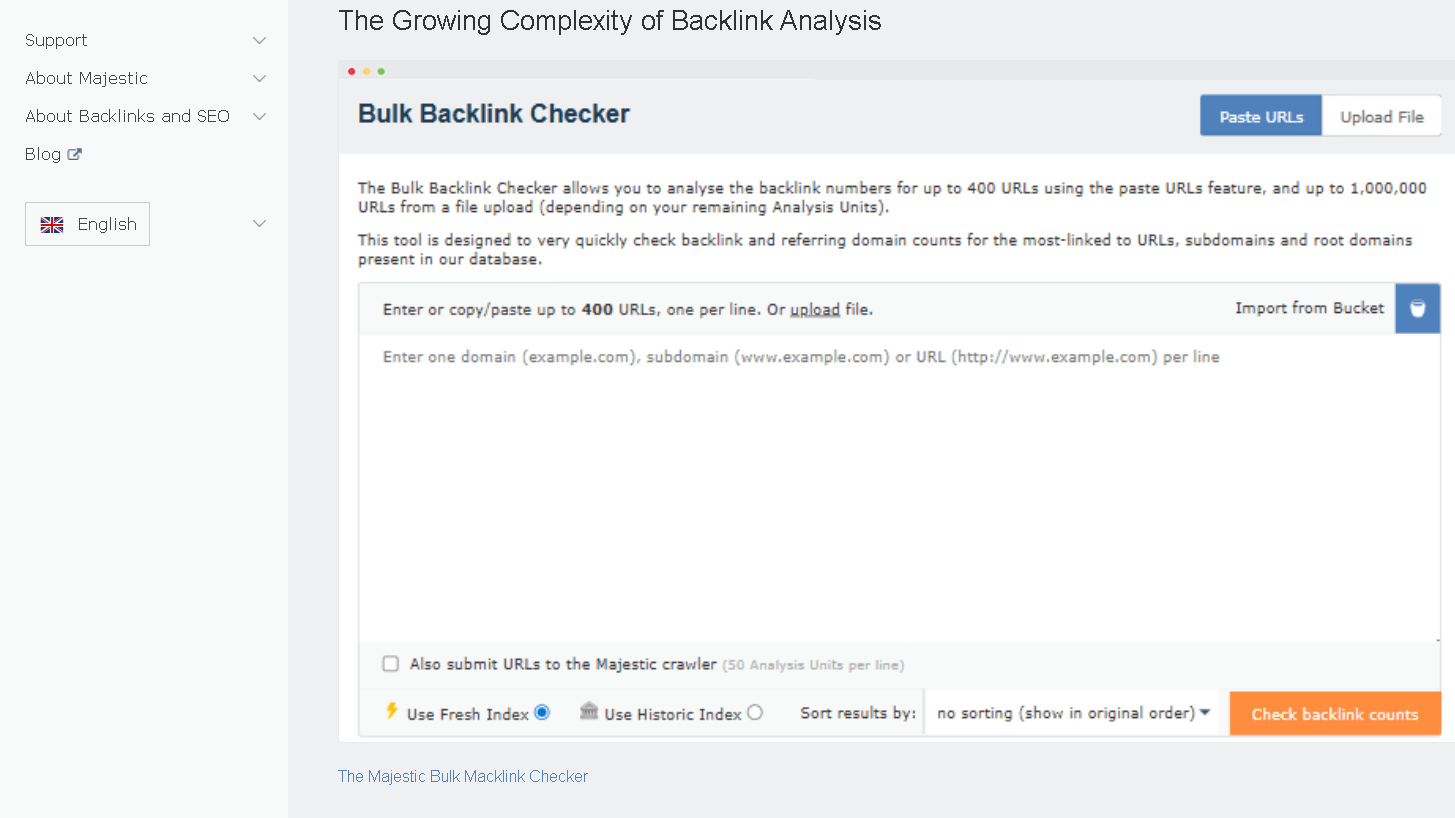
This workflow doesn’t exist in Majestic.Majestic’s Bulk Backlink Checker, however, handles something Ahrefs doesn’t match at scale: analyzing up to 1 million URLs simultaneously. If you’re working with large prospect lists sourced from elsewhere — scraped from directories, pulled from a CRM, or gathered through other research methods — Majestic can score and qualify the entire list in one operation.
For agencies running high-volume link building campaigns where prospecting happens outside the tool and qualification happens inside it, this is a meaningful operational advantage.
Winner: Ahrefs for prospect discovery. Majestic for bulk qualification at scale.
6. Does Majestic Have Keyword Research — And Does It Matter?
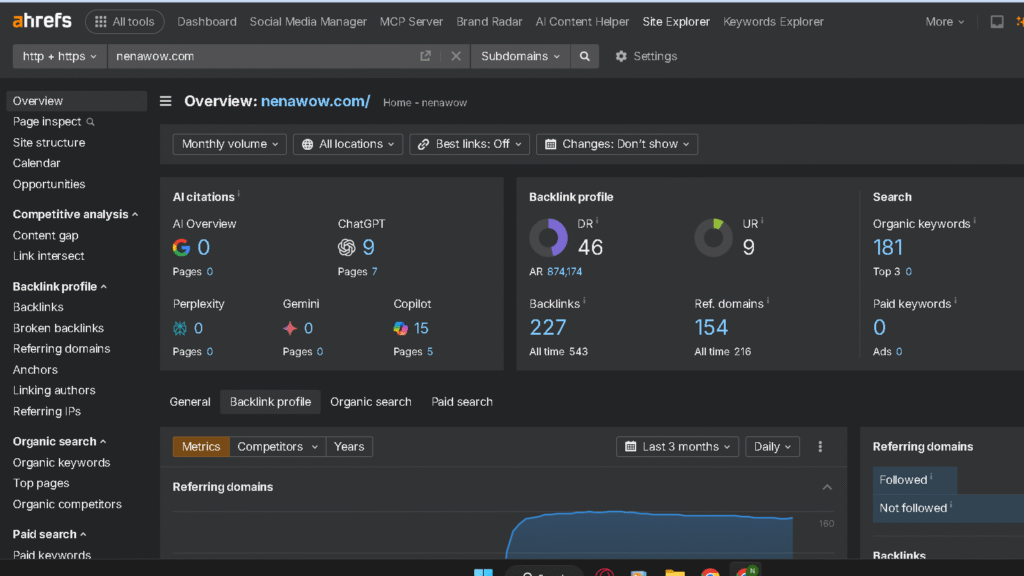
This category isn’t a competition.
Ahrefs Keywords Explorer covers:
- Billions of keywords across 170+ countries
- Traffic potential (not just search volume)
- Keyword Difficulty scores with SERP-level analysis
- Parent topic groupings to identify content opportunities
- Click-through rate data
- Historical volume trends
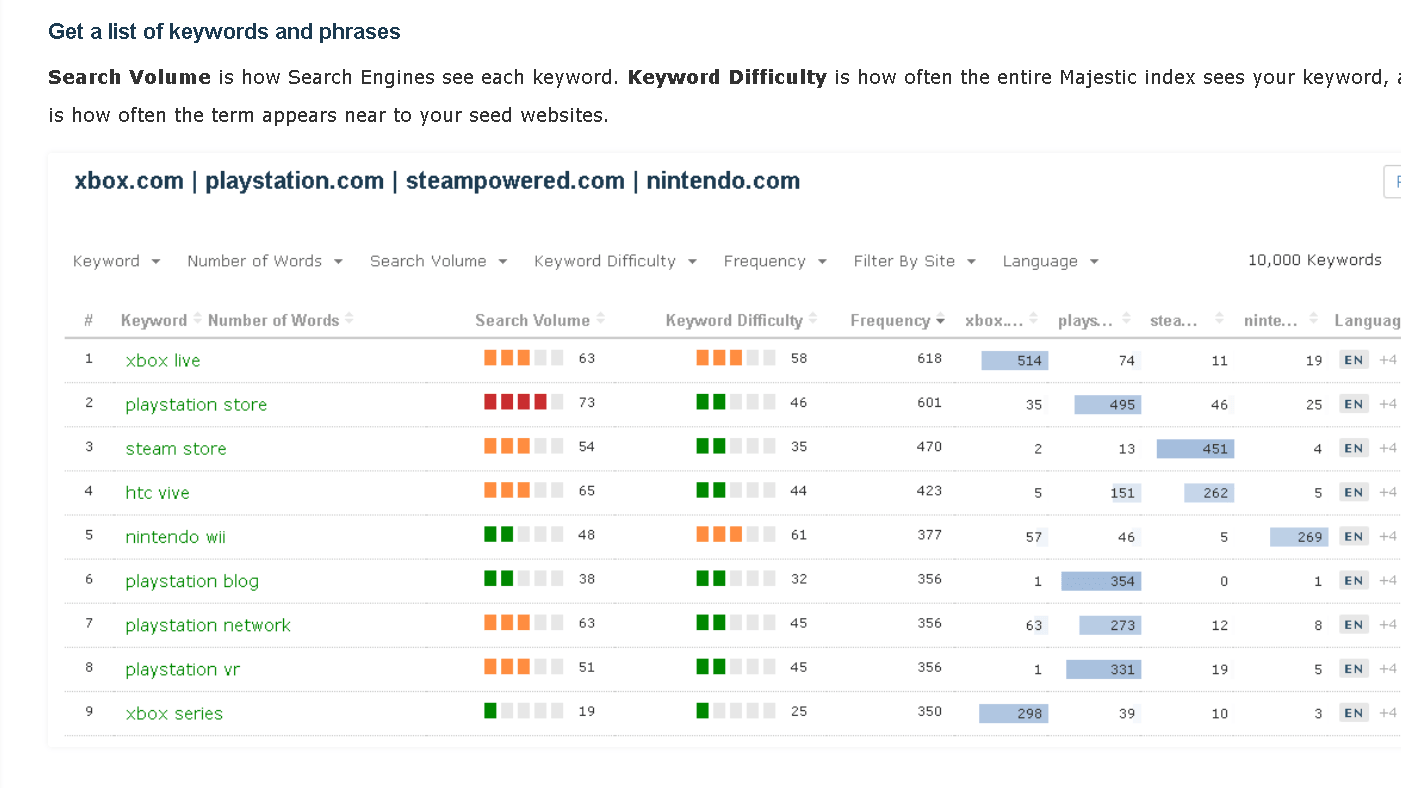
Majestic: No keyword research functionality whatsoever.
If keyword research is any part of your workflow — and for most SEO professionals it is — Majestic cannot serve this need. You would need a separate tool entirely.
Winner: Ahrefs — by default.
7. Which Tool Is Better for Technical SEO Auditing?

Same story.
Ahrefs Site Audit crawls your site and flags:
- Broken internal and external links
- Redirect chains and loops
- Missing or duplicate meta tags
- Core Web Vitals issues
- Orphaned pages with no internal links
- Hreflang errors for international sites
- HTTP/HTTPS mixed content issues can affect your search traffic.
Majestic: No site auditing functionality.
Winner: Ahrefs — by default.
8. Can You Track Keyword Rankings in Majestic or Ahrefs?
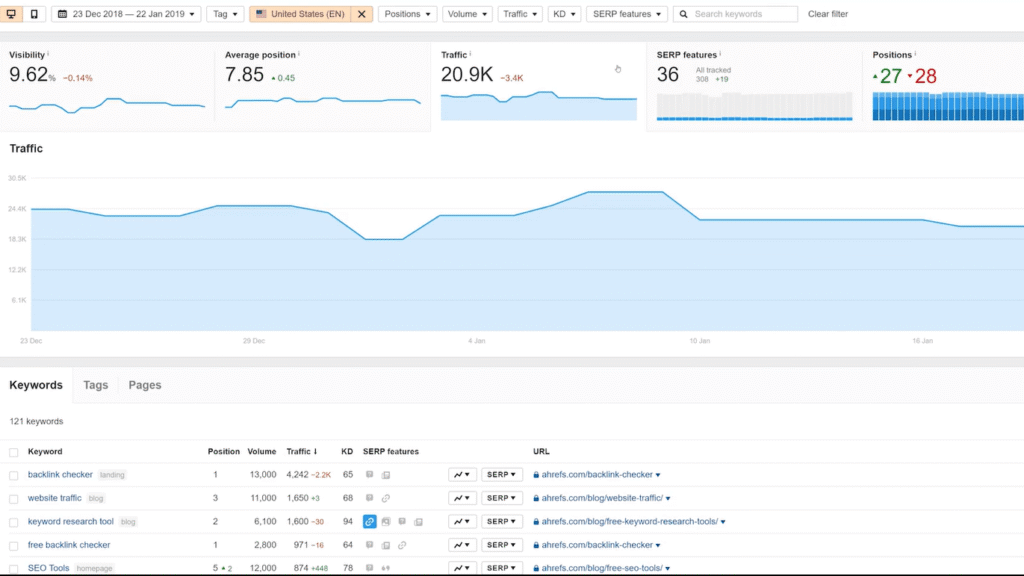
Ahrefs Rank Tracker offers:
- Daily position updates
- Share of Voice metric across tracked keyword sets
- SERP feature tracking (featured snippets, People Also Ask, etc.)
- Competitor ranking comparisons
- Historical ranking charts
Majestic: No rank tracking functionality.
Winner: Ahrefs — by default.
9. Which Tool Is Easier to Use for Beginners and Experts?
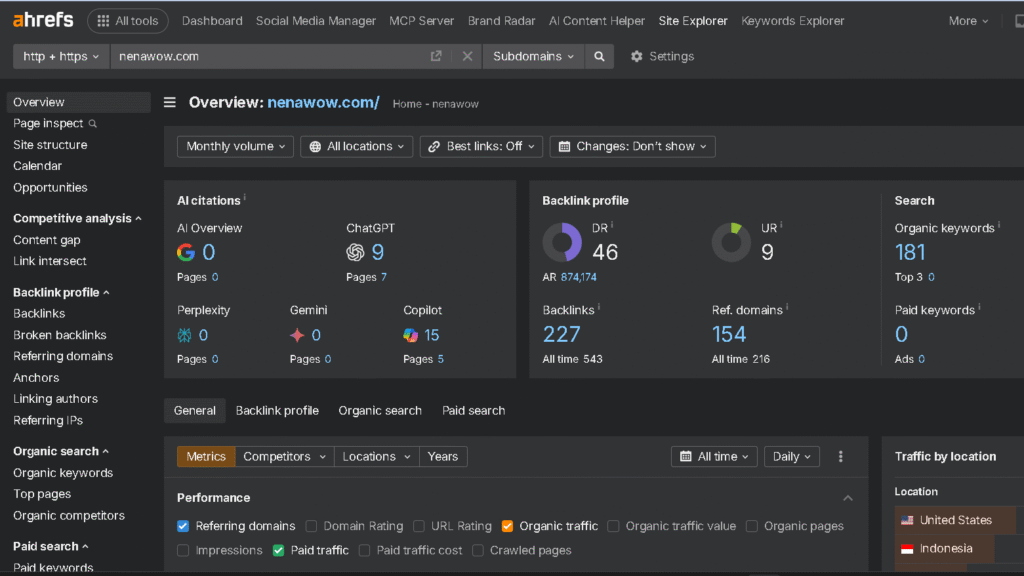
Neither tool wins a design award, but they fail in different ways.
Ahrefs has significantly improved its UI over the years. The dashboard is clean, navigation is logical, and new users can typically run a basic site analysis within minutes of signing up. The learning curve comes from the sheer volume of data and features — not from the interface itself. Reports are visually clear, and data visualizations help contextualize numbers quickly.
Majestic’s interface feels dated compared to modern SEO tools. The layout is functional but dense, and the terminology (Trust Flow, Citation Flow, Topical Trust Flow) requires some onboarding before it becomes intuitive. Newer users often find the tool less immediately accessible than Ahrefs.
That said, power users who work primarily in backlink analysis often prefer Majestic’s depth once they’ve learned the system. The data density that feels overwhelming initially becomes efficient once the workflow is established.
Winner: Ahrefs for accessibility and onboarding. Majestic holds its own for experienced link builders comfortable with the interface.
10. Which Tool Has the Better API for Developers and Agencies
Both tools offer API access, but the use cases differ.
Ahrefs API gives developers programmatic access to the full suite — backlinks, keywords, organic traffic data, site audit data, and more. It’s priced based on rows of data returned, which can add up quickly for high-volume operations but makes it flexible for varied use cases.
Majestic API is focused entirely on link data — Trust Flow, Citation Flow, backlink counts, and related metrics. It’s available at the API pricing tier (~$399.99/month) and is widely used by agencies and developers who want to integrate link quality scoring directly into their own user-friendly tools or reporting dashboards.
For developers building custom SEO tooling or client reporting systems that specifically need link quality data, Majestic’s API is well-documented and respected in the industry.
Winner: Ahrefs for breadth. Majestic for link-specific integrations.
11. Data for Local SEO
Neither tool is purpose-built for local SEO, but their utility differs at the local level.
Ahrefs is useful for local competitor analysis — seeing which local competitors have the strongest link profiles, identifying local directories and citation sources worth pursuing, and tracking local keyword rankings.
Majestic’s Topical Trust Flow is arguably more useful at the local level than most people realize. Identifying whether a local business’s link profile skews toward genuinely local/regional sources versus generic links helps assess the quality of local SEO work more accurately than DR alone.
Winner: Slight edge to Ahrefs for overall local workflow, but Majestic’s topical analysis has underutilized value here.
Majestic and Ahrefs Alternatives Worth Considering
Ahrefs vs Semrush
The only platform that competes with Ahrefs feature-for-feature. Backlink database is comparable in size, keyword research is equally strong, and it adds paid search intelligence and social media tracking that Ahrefs does not offer. Local SEO tooling is more developed. Pricing is nearly identical — $139.95/month vs Ahrefs’ $129/month at entry level.
Choose Semrush over Ahrefs if: PPC intelligence, social tracking, or local SEO depth matter to your workflow. Choose Ahrefs over Semrush if: Content Explorer, backlink index freshness, and cleaner UX are priorities.
Neither is a clear winner. Run both trials and test against your actual SEO tasks before committing.
SE Ranking vs Ahrefs
The most compelling alternative at mid-market pricing. Starts at $103/month and delivers accurate rank tracking, native AI Overview monitoring, white-label reporting on every plan, and strong local SEO tooling. Backlink and keyword databases are smaller than Ahrefs or Semrush — that is the real trade-off and it matters at scale.
Choose SE Ranking over Ahrefs if: You are an agency that needs white-label reporting, AI Overview tracking, and a lower cost base. The database gap rarely matters for clients below enterprise scale. Choose Ahrefs over SE Ranking if: Database depth, Content Explorer, or competitive backlink intelligence are central to your work.
SE Ranking is the sharpest value play in SEO tooling in 2026 for anyone who does not need enterprise-scale data.
Moz Pro
Still relevant in one specific context: client-facing reporting. Domain Authority remains the metric non-SEO stakeholders recognise and ask for, even though practitioners have largely moved to DR or Trust Flow for actual analysis. The link index is smaller than Ahrefs, Semrush, and Majestic. The toolset has not kept pace.
Choose Moz Pro if: Your clients specifically request DA metrics and you need a defensible number to put in reports. Do not choose Moz Pro if you need the extensive metrics like those provided by Ahrefs. You need serious backlink analysis, keyword research depth, or rank tracking accuracy. Better options exist at every price point.
Linkody
Backlink monitoring only — no prospecting, no analysis depth, no keyword or ranking data. Useful if your sole requirement is tracking links pointing to your site and receiving alerts when they appear or disappear. Significantly cheaper than any of the above.
Choose Linkody if: You need basic link monitoring and nothing else, and budget is the primary constraint.
Monitor Backlinks
Near-identical positioning to Linkody. Monitoring-focused, low cost, narrow use case. Not a serious analytical tool.
Choose Monitor Backlinks if: Same criteria as Linkody — monitoring over analysis, cost over capability.
The Short Version
| Tool | Best For | Starting Price | Database Scale |
|---|---|---|---|
| Ahrefs | All-in-one SEO, backlink intelligence | $129/month | ✅ Large, fresh |
| Semrush | All-in-one SEO, PPC, local SEO | $139.95/month | ✅ Large |
| SE Ranking | Agencies, value-focused teams | $103/month | ⚠️ Mid-tier |
| Moz Pro | DA reporting for clients | $99/month | ❌ Small |
| Majestic | Backlink specialist, Trust Flow analysis | $49.99/month | ✅ Large, slower updates |
| Linkody | Basic link monitoring | ~$14/month | ❌ Monitoring only |
| Monitor Backlinks | Basic link monitoring | ~$25/month | ❌ Monitoring only |
If you need a complete SEO platform, the decision is between Ahrefs, Semrush, and SE Ranking. Everything else serves a narrower use case.
Final Verdict
Choose Ahrefs If:
- You need a complete SEO platform — not just backlink analysis
- Keyword research and rank tracking are part of your regular workflow
- You work in-house or at an agency where a single tool covering multiple functions is more efficient
- You’re newer to SEO and want a tool with a gentler onboarding experience
- You need the most up-to-date link data with the fastest crawl refresh rates
Choose Majestic If:
- You’re running high-volume link qualification workflows that benefit from bulk processing
- Backlink analysis and link building are your primary — or only — SEO activities
- Budget is a genuine constraint and you can source keyword data elsewhere
- Topical Trust Flow is valuable to your specific niche or client work
Consider Using Both If:
- You run a link building agency where backlink data quality is mission-critical
- You want to cross-reference DR against Trust Flow / Citation Flow ratios to identify artificially inflated profiles
- Your budget allows for tool specialization rather than consolidation
- You need Majestic’s historical index depth alongside Ahrefs’ keyword and content research capabilities
The combination of both tools is genuinely more powerful than either alone for serious link building work. In my six weeks of parallel testing, there were multiple instances where a domain looked authoritative in Ahrefs but showed clear signs of link manipulation in Majestic — and vice versa, where Majestic’s Trust Flow scores didn’t fully capture a domain’s actual ranking power that Ahrefs’ organic traffic data made obvious.
Disclaimer : Transparency is something I firmly believe in. I might receive a tiny commission if you use the links on this website to make a purchase without charging you anything extra. This enables me to continue writing frank reviews.
Frequently Asked Questions
Majestic is competitive with Ahrefs specifically for backlink analysis, and has genuine advantages in certain areas — particularly Topical Trust Flow and historical link data depth, which provide valuable backlink insights. However, Ahrefs’ backlink index is larger, refreshes faster, and comes embedded in a much broader toolset.
Yes, and many serious link builders do exactly this. The tools complement each other well — Ahrefs for keyword research, content analysis, and fresh link data; Majestic for topical link qualification, historical data, and bulk processing.
“Accurate” is complicated here, especially when considering metrics like those provided by Ahrefs. Both tools crawl enormous amounts of the web, but they make different decisions about what to include, how frequently to refresh, and how to weight link data. Neither is perfectly complete. In my testing, Ahrefs surfaced more recent links faster. Majestic surfaced more historical links that Ahrefs offers, which had been dropped. Cross-referencing both gives the most complete picture.
Trust Flow is a genuinely useful metric, but like all third-party SEO metrics, it’s an approximation — not a direct signal from Google. In my testing, the Trust Flow / Citation Flow ratio was a reliable indicator of link profile manipulation when scores were heavily skewed.
Ahrefs does not currently offer a traditional free trial for its paid plans. However, Ahrefs Webmaster Tools is permanently free and provides backlink monitoring and basic site auditing for domains you verify ownership of.
Ahrefs is stronger for discovering new link prospects from scratch, primarily because of Content Explorer and the ability to combine link data with organic traffic data. Majestic is stronger for qualifying large existing prospect lists quickly, particularly at scale using the Bulk Backlink Checker.