

GPTZero is a tool for detection of writing that tries to know if a text came from a human or an artificial intelligence model such as ChatGPT. In that respect, it tests the text for randomness and sentence variety in order to detect AI -generated content
This gives teachers, employers, and content creators a way to examine whether it is authentic written work. GPTZero was created by a Princeton student, an AI student, because people worried about the dangers of AI plagiarism and misuse in schools and workplaces.
The tool can scan text and score the quality of its origin. As AI-generated content spreads everywhere, that’s become handy.
Some critics argue that sometimes GPTZero gets trampled by super-clean or formulaic writing and throws out false positives. But it’s still one of the most used free detectors at work, especially when it comes to schools and hiring, where honesty matters.
What Is GPTZero?
GPTZero is a software tool to find if a text was written by a human or by AI models such as ChatGPT. It looks at the writing that conveys AI-generated content patterns.
It is used by people in education and other fields that value content authenticity. GPTZero is designed to help teachers and others detect AI-generated writing by using two main measures: perplexity and burstiness.
Perplexity is evaluated by indicating random or predictable text for an AI model. It considers how much sentence length changes between lines. Humans can alter sentence lengths more, while AI writing is less predictable and more symmetrical.
With these methods, GPTZero claims to spot AI-written content with over 98% accuracy. The tool is free and was intended as a way to fight cheating, but people use it for other uses where it’s important to tell real writing from AI output when it’s necessary to tell it from the script.
History and Development
Edward Tian, a graduate student in computer science at Princeton University, created GPTZero. He gathered it during the winter break after ChatGPT closed and worried about AI-fueled cheating among students.
Before GPTZero was made, Tian worked in a natural language processing laboratory exploring AI language detection. His background helped him design a machine-generated writing detector that detected signs of machine-generated writing. Since its inception, GPTZero has drawn more than 20,000 teachers globally and even won national media attention for being effective and easy to use.
Comparison with Other AI Detection Tools
A few AI detectors, for example, are driven by matching patterns or by learning AI behaviors; GPTZero’s focus lies on language features, most importantly perplexity and burstiness. It also serves as an alternative to traditional false positives, which cause them to fail.
Its false-positive rate is a little below 2%, so it’s well-suited for first-pass checks. But it’s still not ideal and has the potential to suffer from mixed human and AI writing. Other tools like ZeroGPT employ different detection techniques, which may sometimes overlap GPTZero.
GPTZero is constantly updating and always free, making it more relevant as AI language models become smarter.
How GPTZero Detects AI-Generated Content
GPTZero uses some of the above techniques to spot AI-generated text. The tests some of the features of writing and compares patterns in human and AI text.
The system relies on machine learning algorithms to identify features that can help narrow the content of ChatGPT and Gemini models.
Detection Metrics: Perplexity and Burstiness

GPTZero looks at two main topics: perplexity and burstiness.
Perplexity checks the likelihood of the text.
What is bad: AI tends to produce more predictable word strings in the way that AI-generated things are generally more reliable.
The burstiness measures the amount of complexity of a sentence. Humans are more prone to the burstiness of varying sentence styles and lengths. I like the darker and more dark aspects of AI writing.
By doing this, GPTZero determines how likely the text might have come from a machine and not from a human.
Analyzing Writing Patterns
Besides those metrics, GPTZero analyzes more general writing patterns. It checks fidelity, coherence, and structure for hints of AI authorship.
The tool is looking for evenness in phrasing and word choice, which occurs in AI text so much. It also looks for the kind of variety and creative quirks that people normally use.
Machine learning compares all this to examples of AI and human writing. This is why GPTZero identifies texts that seem to be made more by machine than human.
Supported AI Models
GPTZero can read text from several AI models. It works well with stuff like ChatGPT, GPT-4, Gemini, and Claude.
The algorithms are trained to capture the writing style of these larger models of language. That support ensures that GPTZero, in addition to new fancier AI models, will be useful as new, fancier AI models become available in 2025 and beyond.
Using GPTZero: Step-by-Step Guide
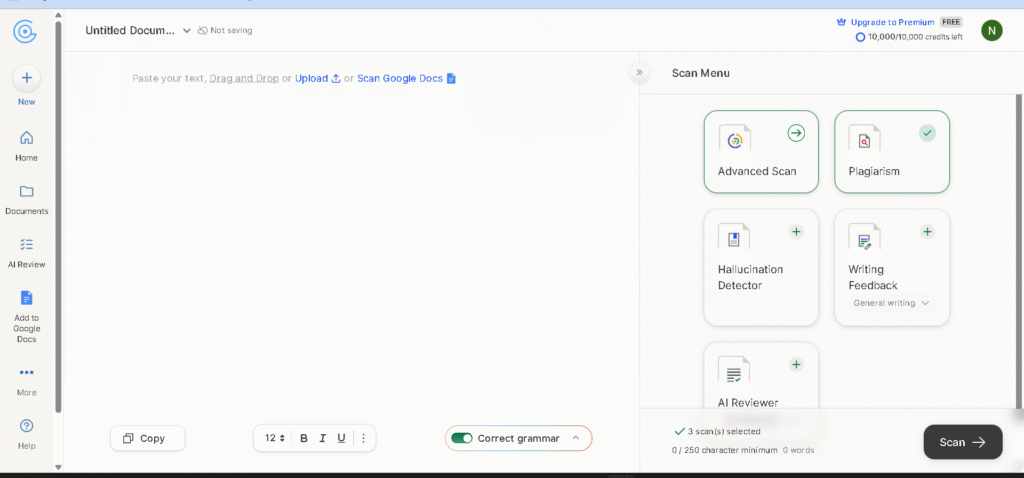
GPTZero provides a fairly straightforward process to submit text, find AI detection results, and check for detailed reports. You can upload your content or paste it. The tool flags AI-generated text with scores and explanations to help you understand things.
Submitting Content for Analysis
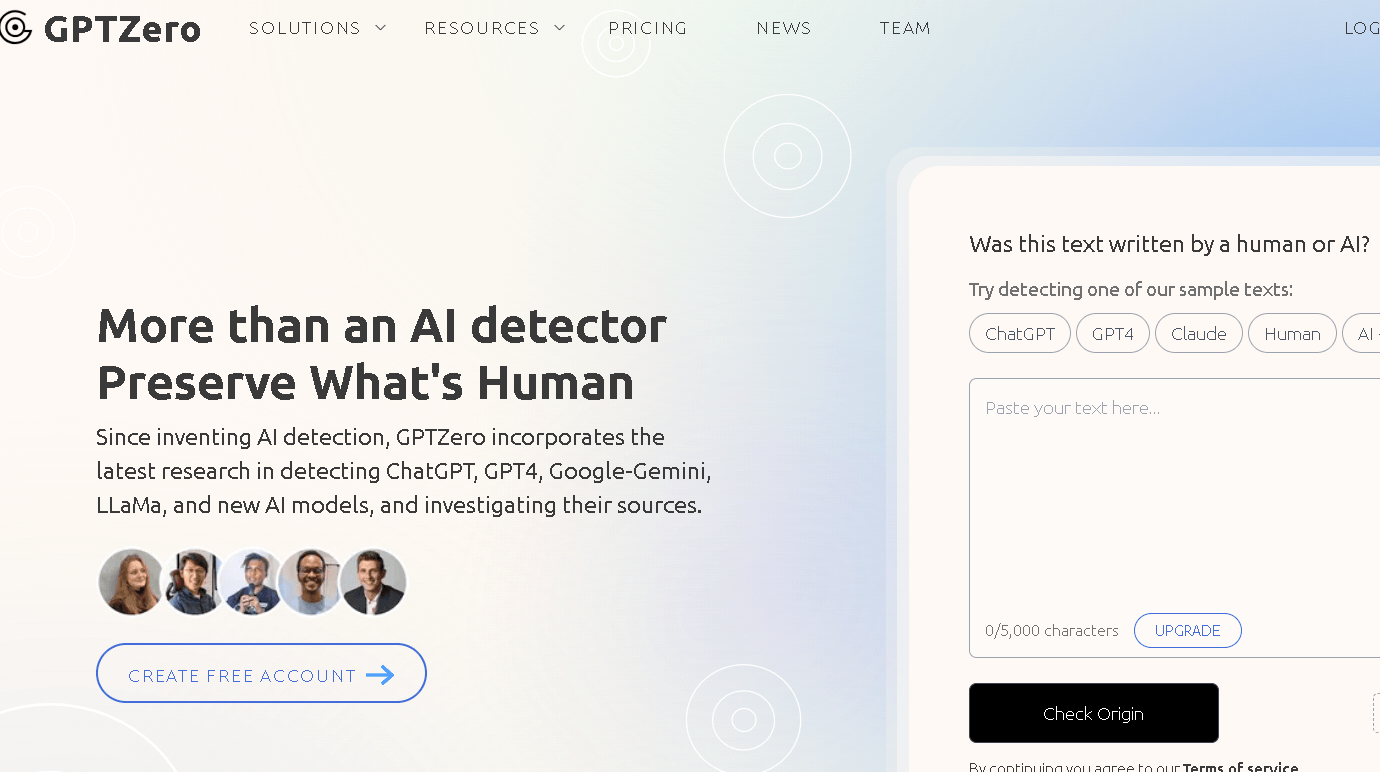
First, go to the GPTZero site. You can either write the text in a box or add a file or print it out from a file, such as .pdf, .docx, or .txt.
Check Origin when you add your content, and then hit “Check Origin” to start the analysis. But, you only need GPTZero to scan your text for AI patterns. In the most efficient manner, use clean, unaltered text for best results.
With the availability of content in other AI models, GPTZero is available for stuff created by ChatGPT, GPT-4, and Bard. That means that things are accurate across all AI-generated content.
Interpreting Detection Results
Once the scan is completed, GPTZero provides a probability score, which means how much probability it believes the content is AI-generated content. Scores are higher because the text is more confident when AI reads it.
It also includes an example of one particularly AI-like sentence. In fact, you can focus on the sketchy portions rather than worry about the whole document.
The results page may report perplexity and burstiness. These numbers show how complex and varied the writing is so you can tell whether it’s human or AI. This will allow you to see the text more closely by looking at the metrics.
Understanding Writing Reports
The report explains what these are. It lists suspicious sentences and gives a quick explanation for each flagged bit.
Some reports include checking online to see if online sources are being checked for plagiarism connected to AI content. That is really a bonus for teachers and creators who need to double-check their originality.
You can get a copy or share the report for your records or for someone to review. The format makes writing more straightforward and makes it possible to examine if the text is authentic or not.
Key Features and Benefits
GPTZero helps to combine accuracy, ease of use, and practical tools for many people. Among the goals of the design is to provide reliable, solid AI content detection and reporting for educational and work users.
Accuracy and Reliability
GPTZero uses advanced algorithms to find AI-generated text. It checks for unpredictability and sentence variety in order to determine whether the writing is by a human or a machine. This detection rate is close to 99% for clearly AI texts.
On top of that, there’s GPTZero Shield for finding potential tricks to trick the detector. But it might be lost if a human edits AI text so much. Reports are a useful guide, but they’re not the final word.
User Interface and Experience
This platform is simple and has a simple dashboard as well as an easily understandable side menu. It is quick to scan through documents and check your history.
It shows that the content is AI-generated and that confidence levels are “Highly Confident” for AI-generated content. These sentences are marked with AI-written text, so you can see what is important.
Educational and Professional Applications
GPTZero is an AI writing testing tool designed to be used by teachers. It keeps things honest within the school environment and takes on an efficient role in keeping AI involved.
Recruiters and content managers are using this tool to confirm authenticity. It works with TXT, DOCX, and PDF and is flexible for many circumstances. This makes GPTZero useful in many areas that require content authenticity.
Limitations and Challenges

GPTZero relies on machine learning to identify text from AI, but it has its own headaches. Plus, new AI models, misclassifications, and hideous defenses against detection are all challenges. These should be taken into consideration before you settle for a perfect result.
Detecting Content from Advanced AI Models
GPTZero will get slower as AI grows smarter. For example, better models can match human writing, which blurs the lines in perplexity and burstiness.
While GPTZero analyzes text from these newer models, accuracy decreases. Sometimes their algorithms misrepresent content because they were trained on older data. This means that GPTZero might miss AI-generated stuff or flag it wrong, especially if the writing is subtle.
But updates help, but they don’t solve everything. GPTZero has to do its work on very few issues because it’s very late in the development.
Potential for False Positives or Negatives
In particular, GPTZero calls human-written text AI-generated. This usually happens with formal or repetitive writing that looks much like AI output. False negatives are when the content of AI is spread thin.
These problems also arise when short texts and specialized writing complicate them. The system has less data and difficulty predicting patterns. The algorithm may go from misunderstanding to mistakes if it is trickier or unclear.
The errors can shake your faith in the tool. For the best results, it’s best to double-check results manually, especially if you have large stakes. Knowing about negative and positive positives and negatives is helpful in not putting too much trust in automation.
Undetectable AI and Evasion Techniques
Some AI content is designed to be hard to spot. This also includes mixes where humans edit AI versions or AI tools add a level of human writing. These blends deflect the standard clues that machine learning looks for.
AI models are also evolving ways of dodging detectors such as GPTZero and Turnitin. They’ll change sentence length and structure or make it look more human by usingmore human words.
These tricks are difficult. GPTZero can’t promise to find all AI-generated or hybrid content. If there is a skepticism about results, it might also be worth thinking about them in more practical terms and maybe even using more than one instrument of peace of mind.
GPTZero in the AI Detection Landscape
GPTZero, the most intelligent text detection machine in AI, uses artificial intelligence to separate human writing from machine-generated data. It competes with its accuracy, user-friendliness, and, as AI writing changes, its detection mechanisms evolve.
Comparison with ZeroGPT and Other Tools
GPTZero and ZeroGPT both try to identify AI-generated text but do it differently.
GPTZero uses deep learning and layers of analysis—complexity, burstiness, and curriculum-specific modules—to test teaching. Probability scores and highlighted sentences can be given in the results.
ZeroGPT takes away the stress of human-editing texts but can also fall short when dealing with texts that humans tend to edit heavily. GPTZero’s wider language support and detailed reporting make it better for teachers and professionals requiring reliable analysis.
Some other AI detectors differ in support and depth levels. GPTZero will handle text, PDFs, and images, making it more flexible. Its approach to blocking workarounds helps it emerge ahead of many of its competitors.
Evolving Trends in AI Plagiarism Detection
AI text generators keep improving, and the tools like GPTZero need to keep up. These new models sound like real people, and catching them is more difficult.
Detection is now based on algorithms focusing on sentence flow and whether the writing has a genuine originality. Instead of scanning for keywords and simple patterns, tools go deeper into larger datasets of student work in order to detect AI plagiarism.
One change is that GPTZero is no longer a single version of English. It’s begun to work with French, Spanish, and other languages to meet global needs.
Another change? In order to reduce false alarms and get more accurate results, detection is combined with manual review in order to reduce false alarms. GPTZero’s deep learning model continues to change as new AI writing tricks come to light.
Frequently Asked Questions
GPTZero uses a mix of methods to determine if AI had a hand in a piece of writing. It has its use in education, employment, and more. It will work for free, but that depends on the type of text it is in and the length of the text. Some things you need to consider if it flags your writing as AI-generated: Don’t panic.
How does GPTZero detect text generated by AI?
GPTZero examines perplexity and burstiness, as well as the nature of how predictable or surprising the writing might be. The human language has a certain rhythm, and AI sometimes comes to be random.
It doesn’t just search all the pages; it zooms in on paragraphs and sentences. It can identify some weird spots where AI might have been stuck.
What purposes is GPTZero typically used for?
A majority use it to figure out whether a piece of writing originated from an AI. This is useful in classrooms, job applications, publishing, and reviewing content online.
It can handle multiple languages and notes on where it thinks AI was coming from and is less likely to speak over or double-check things.
Can GPTZero be utilized by educational institutions for academic integrity?
Yeah, many teachers use GPTZero to catch assignments from AI. If it does, it is an ideal starting point for conversations about originality and the proper use of AI.
But it certainly shouldn’t be the only factor that will determine whether someone plagiarized. The truth is not just what a tool tells us.
Is the GPTZero platform accessible without charge?
The AI detection utility of GPTZero is free. If you want to know more information about larger text, or if you want to unlock features, you need to add a free account or browser extension.
This makes it somewhat easy for teachers, students, and professionals alike.
What is the accuracy level of GPTZero in identifying AI-generated content?
The accuracy ranges between 80% and 98% depending on the quality of food you feed it. The longer documents are generally better than short blurbs.
This works best with English prose that’s been edited or written for the general public; it might struggle if there’s too much editing done or if it’s a hugely structured text that isn’t really prose.
Are there any implications for students when GPTZero identifies their work as AI-generated?
The detection results should not be automatically rewarded. False positives and false negatives are there—it is not foolproof.
The ability to check to see what the teacher knows and make sure it is clear is an important skill for teachers to take in writing reports and follow-up assessments. This can make a good difference when deciding whether or not to make big decisions.


