


Making topic clusters using AI helps speed up your research and links. AI aids you in selecting the most appropriate foundation, identify 8-12 specific subtopics and then create internal links that ensure your website has real authority on the topic.
This method changes the focus of your SEO strategy away from simple search engine optimization to a complete content ecosystem. Utilizing AI to identify topic clusters can increase your ranking and organic visibility. There’s no need to hunt every keyword any longer.
Let AI analyze the web for intent to search, locate typical questions, and create outline documents that reflect what people actually want. The AI will focus on content and not be competing with your peers and build clusters quicker than manually.
Effective content marketing is based on clusters in order to establish credibility across a variety of related search results.
Key Takeaways
- Choose a pillar topic with a focus on several subtopics.
- Let AI discover gaps and intent to create each page for the cluster.
- Make sure your internal links are clear so that AI and other search engines can recognize your authority and increase SEO.
Understanding AI for Topic Clusters
AI interprets information differently from humans or traditional search engines. It appreciates clarity of structure, a thorough coverage of subtopics that are related and clear hyperlinks that demonstrate how concepts are connected.
AI topic clustering helps simplify the complicated process of organizing information. It is more thorough than traditional methods typically do. Natural processing of language can let AI find references and surface responses from your website.
What Are Topic Clusters and Pillar Pages
Topic clusters are collections of similar content arranged around a solid pillar. The pillar is the entire topic, and also connects to the cluster pages which focus on specific subtopics.
Cluster pages are geared towards narrow topics or tasks. Think “how-to” guides, comparisons or cases research. The pillar serves as the primary reference point that outlines the whole subject, highlighting the key subtopics and a link to each cluster.
This design makes your website more logical to readers and simpler to crawl. SEO benefits result from lesser keyword cannibalization and a better intent mapping.
To setup: choose an pillar that can support 8-12 cluster pages. Then, you write the pillar in the first place, and ensure that each cluster links back. Utilize a keyword map to see connections. Include descriptive anchor text and put key links in those first 200 to 300 words on every page in the cluster.
How AI Changes Topic Cluster Development
AI seeks completeness in its semantics. When AI responds to a question it breaks the question into smaller questions and searches for sources that address each of them.
A well-designed topic cluster provides numerous passages on various pages, which means that AI can refer to your website for a variety of sub-answers. The developers should create clusters that be in line with the AI’s research processes. This includes definitions, step-bystep instructions and comparisons, FAQs and other examples throughout the cluster.
The pillar should be used as an overview, whereas clusters offer the more detailed passages AI might be able to pull. Monitor AI visibility by observing the appearances of AI-generated overviews and also whether the pages of clusters contain passages in the model outputs.
Fill in gaps in the areas where AI is looking for missing subtopics, or examples.
Semantic Relationships and Topical Authority

Semantic relations show how different entities and concepts are connected across your website. Topic clusters are a clear graph of the entity: the pillar represents the central entity, and the clusters are associated concepts and entities.
This graph aids AI and other search engine understand the topical authority. Topical authority increases when content is broad and depth with clear definitions, numerous subtopics, and cross-linked proof such as case studies or data.
Internal linking signals that indicate which pages are the core of and support. The consistency of headings and URL structures, as well as schema markup are a great way to strengthen these semantic signals.
To establish authority, concentrate on content within the cluster that can answer important subquestions and connect tightly in the same pillar. Make use of an FAQ schema for frequently asked questions. Ensure that every cluster has an individual goal to avoid any overlap.
As time passes, your website will become a more reliable source of AI ranking and citations.
AI-Driven Research and Cluster Creation
AI helps speed up vast-scale research, locates similar keywords, and identifies gaps in content. It matches keywords to the intent of the user, assists you to identify cluster pages and identifies the most effective SEO techniques, such as internal linking.
Keyword Research using AI Tools
AI tools such as Semrush and Ahrefs analyze thousands of queries to find significant keywords and trends in search. They group terms by intent–informational, commercial, transactional–so you can target the right stage of the funnel.
The tools calculate keyword difficulty and probable positions in the rankings. This helps you determine the keywords you should target on the pillar pages and clusters.
Make use of AI to create keyword lists Then filter them according to the relevance, intent, and traffic. Then export the lists to a calendar of content and add both primary and secondary keywords on every page to ensure that they are targeted clearly.
Mapping Content Gaps and Related Keywords
AI-powered SEO gap analysis analyzes your website’s contents against those of other sites and also the internet in general. It flags pages that aren’t clustered and keywords related to them that rank well for, but you don’t.
The process of creating high-performing clusters begins by gathering this data. Utilize these insights to answer specific questions from users. AI tools analyse million of information points in order to predict what topics will generate the greatest AI web traffic for your company.
Diagrams for entities and queries that fan-outs reveal nearby topics and keywords. Marketers are provided with a ranking of gaps, along with suggestions for topics and search volumes to justify the need for new pages.
Convert gaps into specific cluster pages, and connect them to an foundation. Then, map keywords so that each page serves a specific purpose. Utilize AI suggestions and double-check the relevance and EEAT prior to hitting publish.
Leveraging Search Behavior and Intent Analysis
AI models study real-time searches as well as intent-based signals in order to improve topics and organize. They detect patterns, such as emerging trends, changes to the query’s phrasing, as well as changes in how search results are ranked.
Intent research will guide you on how to optimize a webpage for commercial comparison, the best way to assistance with navigation, or. AI can identify the queries and reveal what intent types are driving conversions.
Utilize intent-based insights for meta tags, internal linking and the content format. This way, the pages of clusters conform to what search engines want, thereby increasing relevancy for both AI search and traditional SEO.
Optimizing and Implementing AI for Topic Clusters

This article will show you how to utilize AI to build pillars that are focused or cluster websites, design the correct linking structure and increase user signals that improve AI exposure and traffic organically.
Construction of Pillar as well as Cluster Pages using AI
Utilize AI to create outline templates and identify content gaps and produce short sections for pages for clusters and pillars. Begin with a pillar that provides the general topic that includes a table contents, as well as hyperlinks to every cluster.
Use AI create separate briefs so that each one addresses a distinct idea or question. Make content more readable and SEO by using short sentences, concise headings and meta descriptions that are descriptive.
AI-driven optimization guarantees that each page within the cluster has an individual value. Make use of AI to suggest keywords, headings and FAQ items that are reflective of the user’s needs. AI assists in keeping things relevant without keyword stuffed.
Manually refine outputs to prevent repetition. When using AI to draft, include new examples and data to ensure that the quality is maintained. This will speed the process of creating content and keeps the authority of your topic.
Internal Linking and Site Architecture Tips
Make sure that your site’s pillar is just one click away from the homepage, and each cluster links in the initial 200 to 300 words. Utilize anchor text that is compatible with the intent of your search and make anchors change seamlessly across the pages.
Clusters that crosslink when subjects meet to form an intricate web that gives credibility in the eyes of AI as well as search engines. Keep your URL structure and navigation clear: /pillar-topic/ for the pillar and /pillar-topic/cluster-name/ for clusters.
Find out the distribution of internal links using an automated crawler tool to ensure you don’t have abandoned pages. Prioritize links on pages that are popular to give authority where it is important for visibility and AI the number of citations.
User Experience and Engagement Signals
Make sure you focus on the readability, load speed and layout for mobile devices to keep your visitors interested. This improves your SEO in general. Break up your content into shorter paragraphs Use bullet lists and then add clear CTAs to help you navigate the next step.
Let AI help you create on-page elements such as TL;DR overviews and examples inline to simplify the process of reading. Monitor engagement using the time spent on a page scroll depth, scroll depth, as well as the conversion event.
Use these signals to alter the content and internal linking. Make sure you have better the meta description and title to increase click-through rates from searches or AI results. Monitoring your AI search results is a brand new, but essential element of SEO right now.
A clear and consistent user experience as well as a solid structure increase the likelihood that AI will refer to your site and generate steady traffic.
Best Tools and Future Trends in AI Topic Clusters
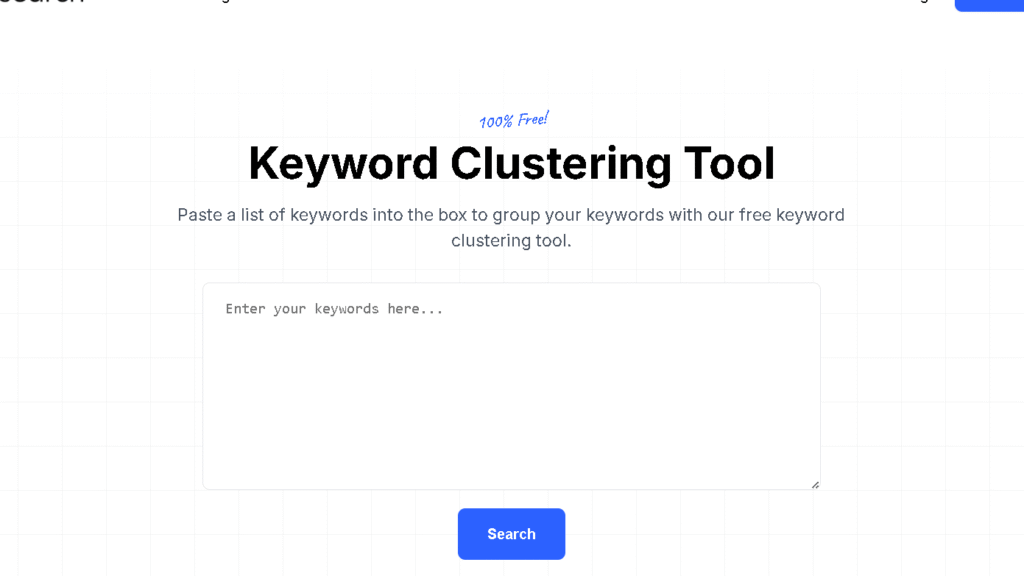
Here’s a brief overview of the tools used by teams today and the trends that are shaping the way SERP analysis, content maps and generative searches will perform. Human judgement, CMS links, and real-time measurement are still important significantly.
Top AI Platforms for Topic Clustering
Teams usually choose tools that combine search engine optimization, intent labeling as well as exports for CMS. Semrush and MarketMuse are the most prominent among large websites: Semrush scales to tons of keywords and connects clusters of keywords to insights on competitive and market research, while MarketMuse utilizes entity models to reduce the amount of cannibalization.
Gemini as well as ChatGPT (via API or plugin) aid in determining goals and produce draft outline or pillar pages quickly. Budget-friendly tools such as SEO.AI, RyRob, and Answer Socrates offer CSV-friendly, low-cost clustering to facilitate rapid AI-powered workflows.
Checklist of key features:
- SERP-driven clustering and check for overlap
- Intent labels (informational, transactional, navigational)
- CSV/CSV-toCMS export APIs, and team seats
- Multimodal content support is available for videos and images
The volume of your keyword is matched according to your plan’s limitations. Use tools that will automate briefs and highlight content gaps and develop links within the internal map.
Emerging Trends in AI SEO and Generative Search
Generative AI and generative search have changed the way that clusters feed AI overviews or search outcomes. Large language models are now pulling out clustered content in order to build single-answer surfaces as well as citations, therefore your content must be organized to be attributed.
Multimodal content, including video, images and transcripts are more important as platforms provide more sophisticated AI-driven solutions.
Important shifts:
- SeRP-first model: the cluster decision-making are based on live SERP signals.
- AI content citations: the content has to provide clear information and sources for generative search.
- Automated internal linking pipelines link pages of pillars to spokes in order to provide better crawl signals.
- Predictive gap-finding tools: they can predict the topics likely to be mentioned as topics in AI Overviews.
It’s sensible to think of clusters as a part of a content ecosystem that is beneficial to both models that generate content and people.
Human Expertise and Continuous Optimization
AI increases clustering speed However, human oversight helps prevent errors and helps keep the strategy aligned with the business’s goals. Editors must scrutinize intent labels, improve the pillar framing process, and verify the accuracy of the content to ensure AI references.
SEO experts conduct competitor analysis, confirm the intent of SERPs, and fine tune the granularity of clusters.
- Re-clustering regularly in response to SERP shifts as well as analytics.
- Clear guidelines for governance: labeling regulations and style guides, as well as timing for updates.
- Human-in the-loop checks for authenticity and voice of the brand.
- Measurement: Track direct-answer traffic organic traffic for the pages of clusters and pillars as well as bounce/time-on page.
Mixing human knowledge together with LLMs and Generative AI and platform automation results in faster processes and more reliable SEO results.
Frequently Asked Questions
This section addresses practical questions regarding the use of AI to create, plan and analyze the effectiveness of topic clusters. It outlines step-by-step methods as well as paid and free tools, online learning sources, how pillar pages connect to clusters, real-world examples and the best SEO tools to generate clusters.
What are the most effective ways of the use of AI to create topics clusters?
Utilize AI to generate ideas for seed and then double-check using intent and keyword data. Start with a subject matter that is able to be able to support 8-12 pages for clusters.
Write brief sentences, two to three sentences leading answers to cluster pages, so that answer engines can find passages. Add links to facts and citations to back up those answers.
Map internal links: pillars to clusters Clusters back to pillars as well as lateral links between similar clusters. Be sure to keep anchor text concise and put key links in those first 200 to 300 words.
Update each month. Update cluster pages with fresh statistics, examples and internal links to ensure AI as well as search engines are aware of the accuracy and reliability of the cluster.
What is the most trustworthy and affordable AI tool to create topic clusters?
Begin by looking for free programs which allow you to collect subjects and create briefs of content. Certain keyword research tools as well as AI content assistants can provide these functions for free.
Be sure that the tool provides you related searches, search intent or subtopic ideas. It’s useful to export your lists into CSV and then your team can evaluate ideas against actual keywords.
Check out reviews and read the latest comments from users. Tools that are free tend to change quickly and you should test them in a small test cluster before committing too long time.
What do you think of the online AI tools can be used for creating topic clusters that work?
SEO-related blogs as well as GEO (Generative Engine Optimization) guides are excellent for framework concepts and actual examples. They generally include templates for pillar cluster setups including internal links as well as ways to gauge the outcomes.
The documentation provided by providers covers topics such as schema and FAQ markup, which will increase your AI chances of citation. Video tutorials can help you follow while you design your pillar pages and design your hyperlinks.
Case study and forum libraries will provide examples of how other brands constructed their clusters as well as the metrics they tracked, for example organic page visibility, and groupings of pages.
How do topics clusters and pillar sites collaborate in the how do you plan your content strategy?
The pillar page is the primary topic, and then provides links to pages of clusters which answer more specific questions. Imagine the pillar as a central hub, while clusters delve into the specifics.
Each cluster should be focused on a specific subtopic and connect to the pillar earlier. This will help search engines as well as AI systems identify your authority on the topic.
Are there any examples of successful implementation of topic clusters?
Imagine an B2B SaaS firm with a pillar titled “Complete Guide to Remote Project Management.” Clusters may be based on tools, async meeting along with time zones and monitoring metrics. Each cluster connects back to the pillar, and also to the other clusters where it is logical.
An online retailer could include one of the pillars like “Choosing the Right Area Rug,” featuring clusters of the materials cleaning tips, sizing and other specific advice for rooms. These clusters can also be used to support the product pages and aid in organic search.
Brands that maintained their internal links in order and updated regularly in clusters, were more likely to experience steady organic traffic, and more frequent appearances on AI-generated responses.
Which are the best and most efficient methods to create topic clusters for SEO?
Try using keyword tools like Ahrefs or SEMrush. They’re excellent for finding related questions or intent indicators. These tools can map keyword clusters and then display the volume and difficulty of searches which can be quite helpful.
Use them in conjunction with AI short builders that throw out suggestions for headings and leads to answer. In the end, arranging the relationships between clusters and pillars in either a spreadsheet or an mind-mapping application makes life easier.
If you’re looking to gauge impact, look into analytics platforms that monitor organic traffic and referrals via AI sources. It’s also important to keep an the eye on page engagement metrics.
After publishing cluster updates, take time to look over citations or ranking modifications. This will help you understand which changes are effective and what’s not.


