


The keyword clustering and this sort of thing is very important in developing an intelligent SEO plan. It groups similar keywords together so it can be easier to develop targeted content that aligns with search intent. I picked 5 free AI keyword clustering tools for you.
They do save time and their use tends to bolster the outcome. The top free AI keyword clustering tools allow you to create them quickly even if you’re not an expert, or don’t want to use expensive software .
They help you plan content more easily and also prevent you from engaging in keyword cannibalization. Here are five tools for doing SEO that I believe are user-friendly and effective.
Free AI Keyword Clustering Tools List
1) KoalaWriter Free AI Keyword Clustering Tool
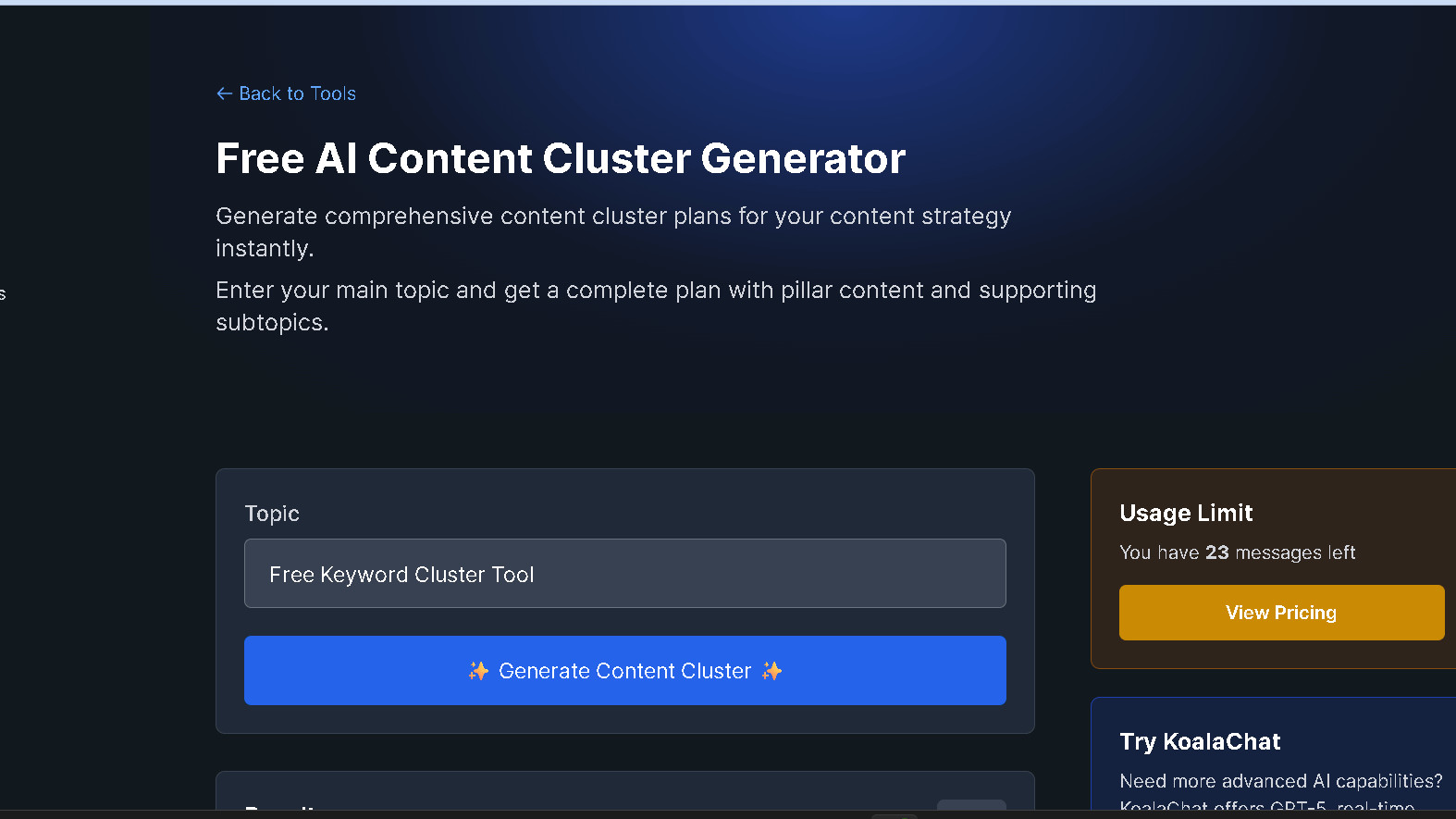
I turn to Koala AI when I want to get content clusters out quickly. It provides me with an entire plan with pillar topics and sub topics.
The beginning is easy. I type in my main topic, and it spits out a simple layout of clustered keywords. That way I don’t have to scratch my head about it in research.
KoalaWriter’s AI will find the similarities of keywords and create dense clusters. It also helps to structure my content, aid with SEO without too much of the nitty gritty.
It is free and easy to use, so this should be your first option if you are new into keyword grouping. I also like that it is minimal but provides with useful keywords.
Koala AI has more free tools. If you are interested to learn more about this tool, you can read my Koala AI Review.
2) SEO Scout Free Keyword Grouping Tool
For really long keyword lists I often turn to this Free Keyword Grouping Tool. It also identifies related keywords based off word similarity, which assists in preventing duplicates and finding closer clusters.
This is an useful tool for creating topic clusters from a central theme. It teaches me about the relationship between keywords , so that my SEO work feels less like voodoo and more like a process.
It’s completely free, and it’s no harder to use than this – you cut and paste your keywords and it will sort them in a matter of seconds. It’s certainly quicker than writing by hand.
If you are looking for a way to better optimize the structure of your content as far as keyword relevance is concerned, this tool is pretty straight forward in terms of not having a lot of settings to be confused with. It’s a good choice for beginners.
3) Keyword Clarity Interactive Cluster Visualization
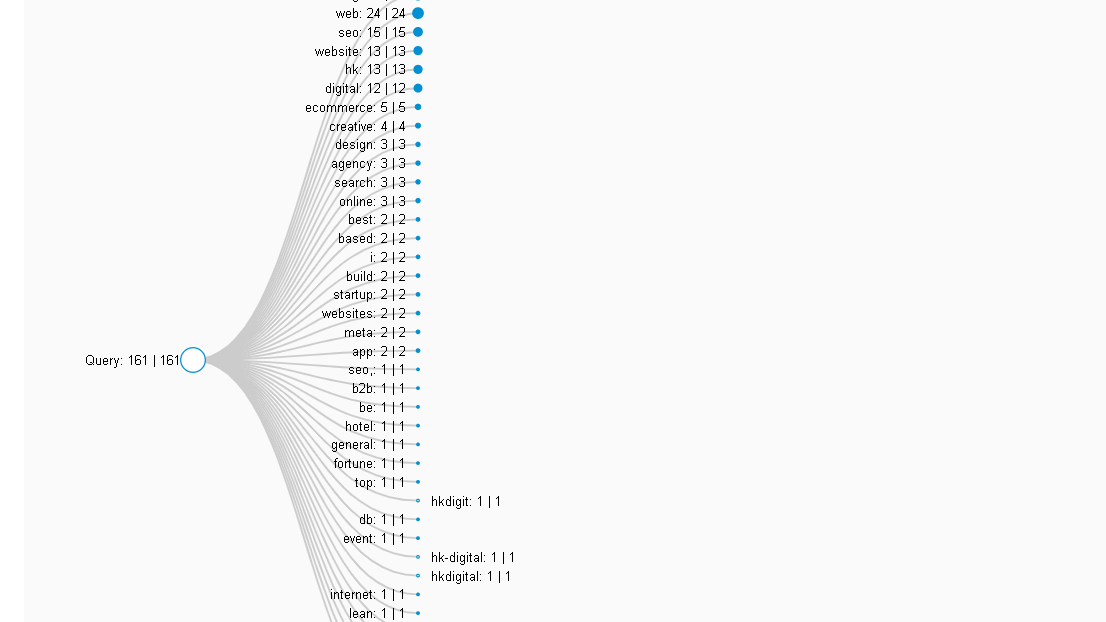
Keyword Clarity Interactive Cluster Visualization Example
The main unique feature of Keyword Clarity is that it displays keyword groups in an interactive tree. It allows me to see the relation in keywords at a glance, without having to wade through the mess of a spreadsheet.
The keywords are automatically clustered into similar categories. No formulas or manual sorting, thankfully.
I have control over the way the clusters appear, so changing the combinations of keywords is also simple to do. This makes it easy for me to find the ideal ones for my text.
This is particularly useful for large lists of keywords. The point-click visual format of it all helps me to stay on track with the big topics and the subcategories, thus SEO planning doesn’t seem so overwhelming.
4) KeySearch Free Keyword Clustering Tool
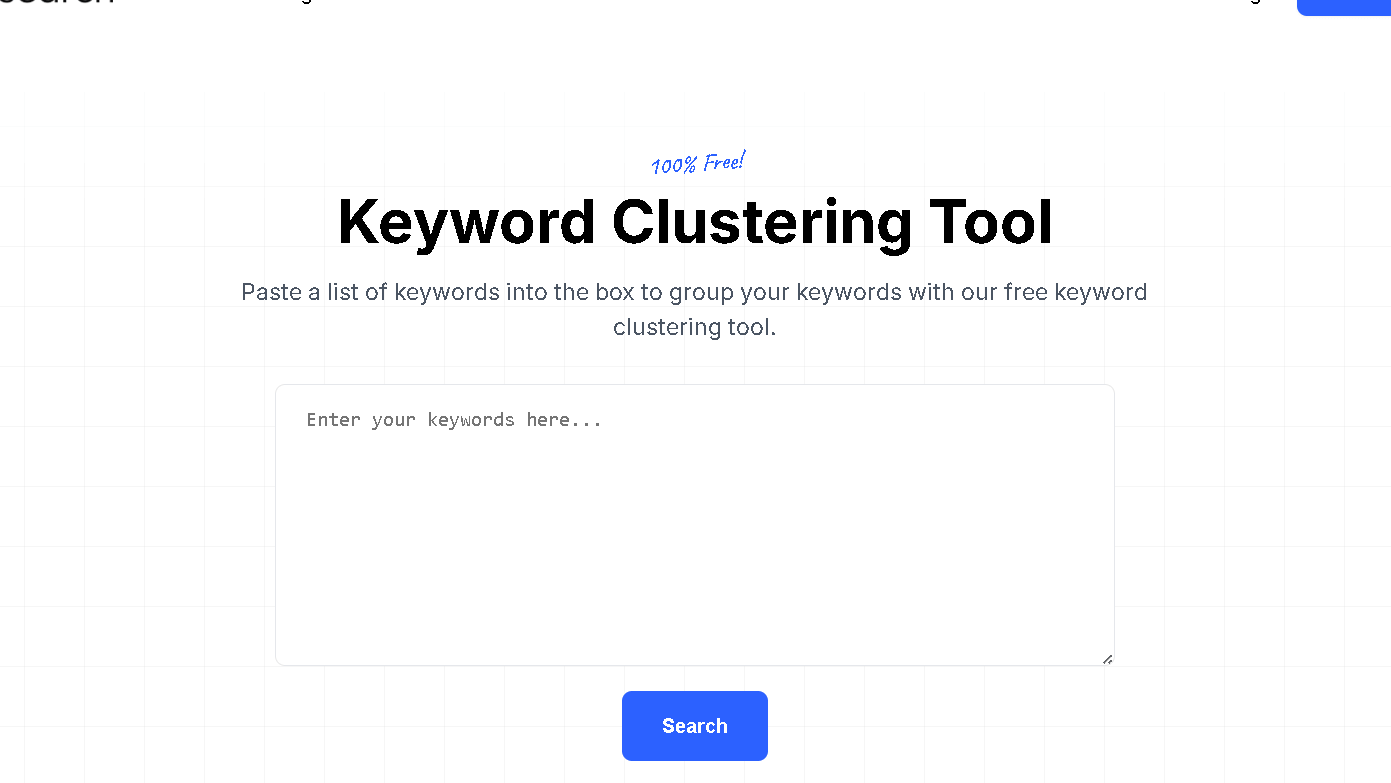
KeySearch’s free keyword clustering tool is straightforward and does the job just fine. It groups long lists of keywords into clear ‘clusters’ based on what appears to be similar.
Simply import your list of keywords, and it analyses and sorts them for you quickly. It saves me a ton of time when I’m doing content planning or working on SEO strategies.
They do have paid options but, to be honest, the free version is all I really need. It is more about clustering keywords to prevent redundancy and also for improved search rankings.
They are pretty simple, there is nothing to learn. For those who want to make it more simple, this is a decent approach for getting started with keyword clustering.
5) Zenbrief AI-Powered Keyword Clustering
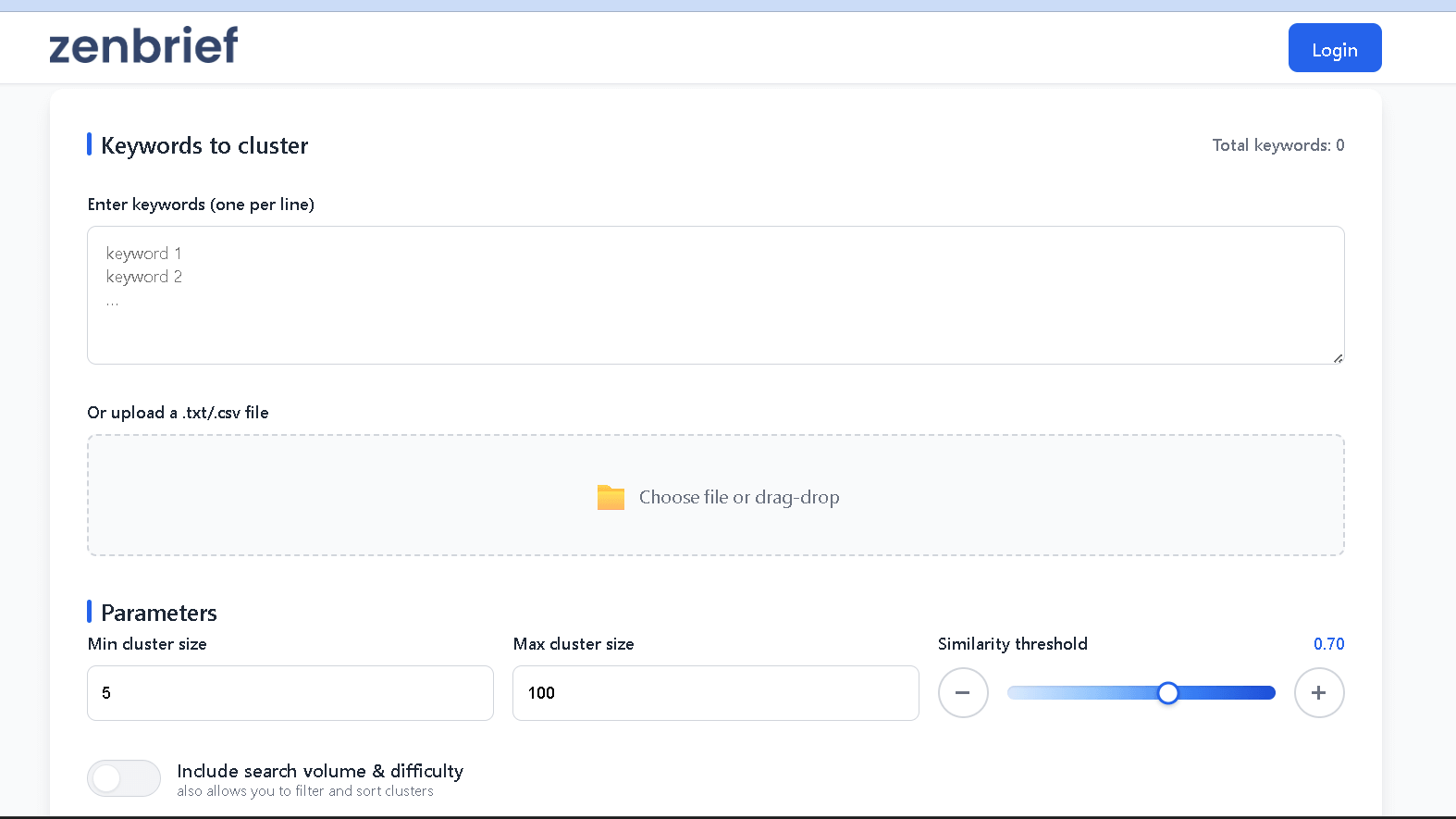
Zenbrief employs AI to rapidly identify categories of keywords, which helps me to more easily identify topics and content clusters in my list. That saves me hours of time sorting by hand.
Importing keyword lists is a breeze, and the tool will analyze and group them for SEO in a way that literally “makes sense”.
Zenbrief allows more cluster settings adjustments, but lets you import keywords. It is useful in that it offers me flexibility to work on different projects and adapt as necessary my research.
It also has a content brief, and helps with SEO analysis, so I suppose I’m getting a bunch of SEO stuff done all at once by doing this. Honestly, that’s actually made my workflow a lot easier.
How Free Keyword Grouper Tools Work
Keyword cluster tools categorize huge lists of keywords into clusters. They are sneaky in how they find connections, and then explain how the grouping of content can facilitate pre-planning.
Automated Algorithms
Many of these tools operate keywords sorting on an algorithm basis. They attempt to apply some kind of logic on keywords, looking at homonymy, synonymy or polysemy in order to cluster keywords.
Its extensive use of n-gram analysis aims to harvest keywords with popular phrases or pieces of words. Another approach is to use semantic grouping to group similar semantic topics together.
You simply upload your list of keywords and the tool sorts them into groups. It’s also largely automatic, saving time and reducing the probability of mistakes, such as introducing unrelated keywords into the mix .
Some tools allow you to control how closely keywords are grouped, so you can look at either very broad topics or very narrow ones.
Benefits of AI SEO Grouping Keywords

The groupings also provide me with more easily categorizable topics for content. It’s just a way of formatting everything neatly and in a way that search engines can easily navigate.
It also prevents keyword cannibalization, which is when you have similar keywords battling against each other and thus negatively impacting your ranking.
They are helpful in identifying which words relate to main topics so that pillar pages and sub articles can be created. That way I can prepare content that aligns more with what people are looking for.
The use of clusters allows me to focus on such areas of broad and specific levels of terms. And it helps me to guide better writing to the readers that can use it.
Integrating Keyword Groups Into Your AI SEO Strategy

Keyword clusters help me focus on user needs and help keep my site organized. They also facilitate easy linking between pages, which search engines seem to favor.
Optimizing Content For Search Intent
By clustering keywords by intent, I am able to generate content relevant to the searchers desire. When I receive informational keywords I am encouraged to look for how-to guides, and when I receive transactional keywords I am encouraged to focus on product pages.
I listen to what comes out of each cluster and let the cluster lead me in terms of what type of content and in what tone. This means my content remains relevant and compelling and I don’t concern myself with keyword stuffing.
I then consider the following to ensure optimization:
- Questions and problems of the user.
- Their position in the buyer’s journey.
- Areas where the competitors have no content.
This is largely a good thing for me as it means my content is what people actually need, as it will likely perform slightly better.
Improving Internal Linking Structure
My internal linking also does depend on keyword clusters. I aim these related pages at each other within the same cluster to exchange authority and amplify SEO signals.
I created a clear structure that linked large “pillar” pages to specific “cluster” pages. It is a way to distribute link value and help search engines to recognize relevance.
- Is easily crawled by search engines.
- Allows multiple keyword supports ranking in a topic.
I also find keyword clusters to be a useful way of charting the internal links within the blog so that everything hangs together properly.
Frequently Asked Questions
Here I compiled a bit of information of some of the best AI SEO free keyword clustering tools are, and how to use them. Each with its own strengths including accuracy, integration, and big lists.
What are the top-rated free tools for keyword clustering?
The KoalaWriter Keyword Cluster Tool and SEO Scout Free Keyword Grouping Tool, Keyword Clarity Interactive Cluster Visualization, KeySearch Free Keyword Clustering Tool, and Zenbrief AI-Powered Keyword Clustering are some of the best examples. They organize keywords by relevance and intent of searches.
Which free keyword grouping tools offer the best accuracy and efficiency?
Zenbrieff is unique in its use of AI and real time Google SERP data. Also useful is KoalaWriter, having user-friendly interfaces for quick analysis.
How can I effectively use free keyword grouper tools for SERP keyword clustering?
Simply upload your list of keywords and allow the system to analyze search queries and ranking data. Pair clusters with some planning for focused content and better SEO.
Are there any free keyword clustering tools that integrate with content briefs?
Yes – KoalaWriter and Zenbrief both link keyword clusters straight to the content brief. This is useful as it can help guide writing for content producers, but also limit relevancy of clusters to specific writing instructions.
What free resources are available for bulk keyword clustering and analysis?
KeySearch is able to manage large lists of keywords. Their use of data aggregation by n-gram similarity or SERP patterns makes it possible to scale research without elaborate coding.
Can I perform content-driven keyword grouping with any free software?
Yes, you can. Keyword Clarity and Zenbrief also allow to organize keywords by associating them to topics that are suitable for search intent.
The benefit of this is that you then can create grouping that is relevant to how your content is structured and how you plan to optimize it.


