

Are you trying to choose between Search Atlas vs Semrush? If you’re seeking the most efficient all-in-one SEO tool and SEO software to boost your brand’s presence, take a look at the way Search Atlas excels.
Finding the ideal SEO tools is your first move to success with AI-powered SEO.
Integrating AI and SEO in your marketing strategy is crucial to remain in the race. The majority of marketers begin their search by comparing the volume of searches and difficulty of keyword metrics with these tools in order to estimate possible organic traffic.
Although well-known brands like Ahrefs as well as SE Ranking are often in the discussion, both platforms provide distinct AI capabilities, SEO and AI workflows, as well as sophisticated SEO automation.
A majority of users also compare them with Ubersuggest in search of cheaper alternatives, but they usually come across Semrush over Search Atlas as being more efficient.
You might be having one of these concerns:
- Which one of these tools provides more precise SEO information?
- Is Search Atlas a cheaper alternative to Semrush?
- Which is the better platform to use for the needs of an SEO company, Semrush vs. Search Atlas?
- How deep will the analysis of competitors run with each tool?
- Who will win the race for AI tracking of visible light?
- Is Semrush worth the price?
This guide will answer all of those questions in detail, with tips regarding the use of Otto to boost performance.
We’ve examined the features such as workflows and pricing; AI capabilities such as backlink data, keyword databases, and local SEO instruments; and stable and real-world usage cases to help you pick the best option in 2026.
Table of Contents
TL;DR: Search Atlas vs Semrush
| Category | Winner |
|---|---|
| Overall Stability is crucial for any SEO specialist evaluating different platforms. | Semrush |
| Local SEO | Search Atlas |
| Enterprise SEO | Semrush |
| Budget-Friendly Option | Search Atlas |
| Backlink Database | Semrush |
| AI Share-of-Voice Tracking | Search Atlas |
| Citation Share and AI Detail | Semrush |
| Historical Data Depth | Semrush |
| Ease of Use | Search Atlas dashboard (user-friendly interface) designed for AI-powered SEO automation platform built for efficiency. |
| Position Tracking | Semrush |
If you’re looking for the shortest answer:
- Select Semrush to increase scale as well as reliability and competitive intelligence.
- Choose Search Atlas because it was made to meet the requirements of the modern SEO experts. for affordability, local SEO bundles, and AI-assisted workflows.
Let’s break things down into 300 AI insights.
1.Company Positioning & Philosophy
Understanding the way each tool is constructed with Search Atlas’ unique features will help you understand the reason they differ so greatly. Both let you start with a free trial and determine which one best suits the needs of your team.
Semrush: The Enterprise SEO Powerhouse
In 2008, the company was founded. Semrush has grown to become one of the most powerful SEO and marketing software suites around the globe.
It provides a wide array of tools that include AI-enhanced models and in-page SEO tools and insight from Otto Pixels.
- Keyword research
- The analysis of backlinks has been improved through the integration of Semrush into Search Atlas, providing more extensive insight.
- PPC research and paid search tracking and other SEM strategies
- Technical SEO audits
- Competitive analysis
- Content marketing tools and optimization
- Social media tools
- AI’s visibility tracking
Scale and maturity are essential to the creation of tools such as Search Atlas and Otto Pixels. Unified platforms such as Semrush One was designed to serve organizations, SaaS companies, and companies that manage vast digital ecosystems, like the vast toolsets available in Ahrefs.
Search Atlas: The AI-First SEO Platform
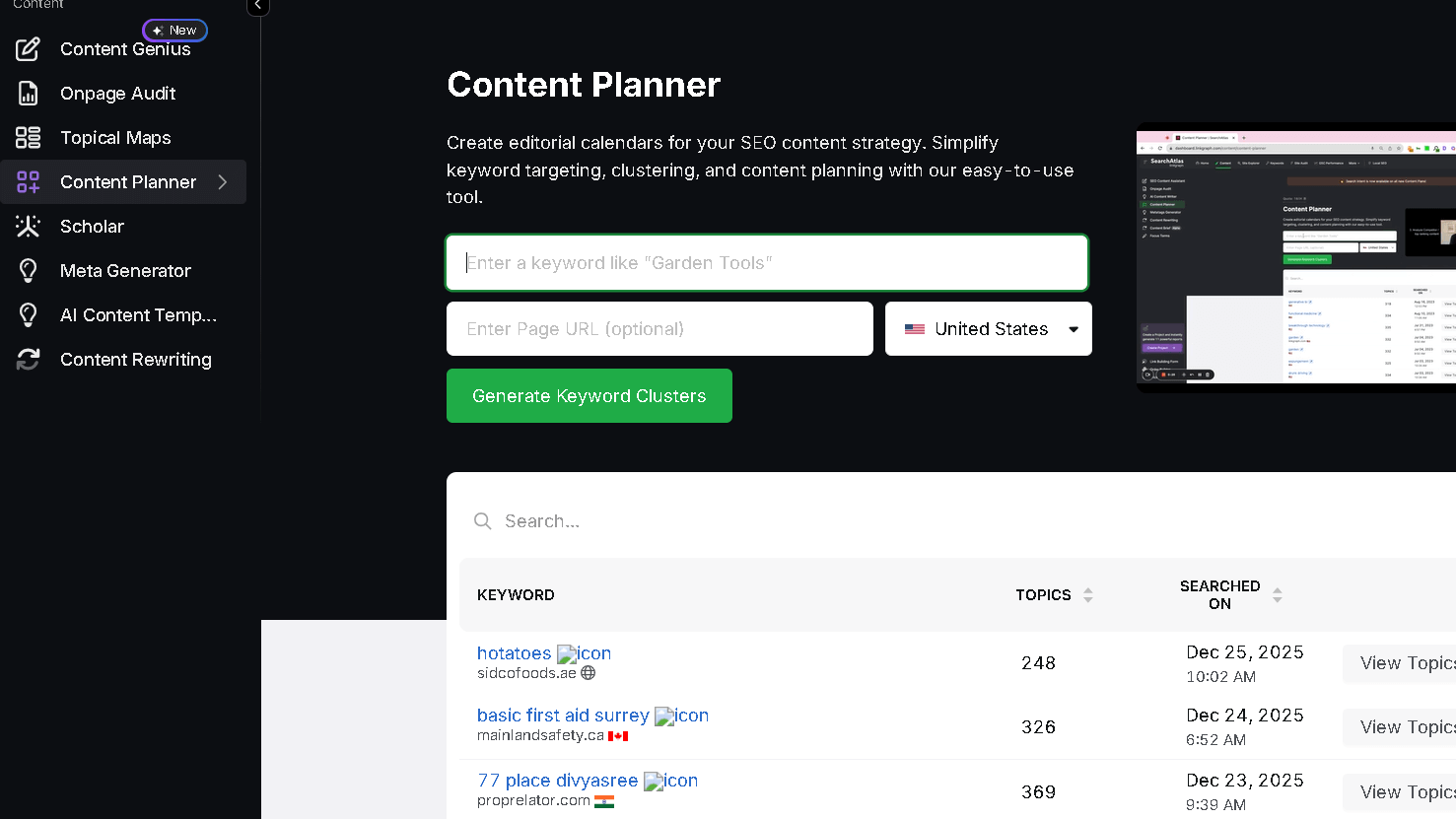
As a contemporary SEO platform, SearchAtlas is a newer entry that is focused on AI-powered SEO. It uses the brain of the Atlas as an AI agent that can streamline difficult tasks by AI automation, like the ones seen in the Otto Pixel.
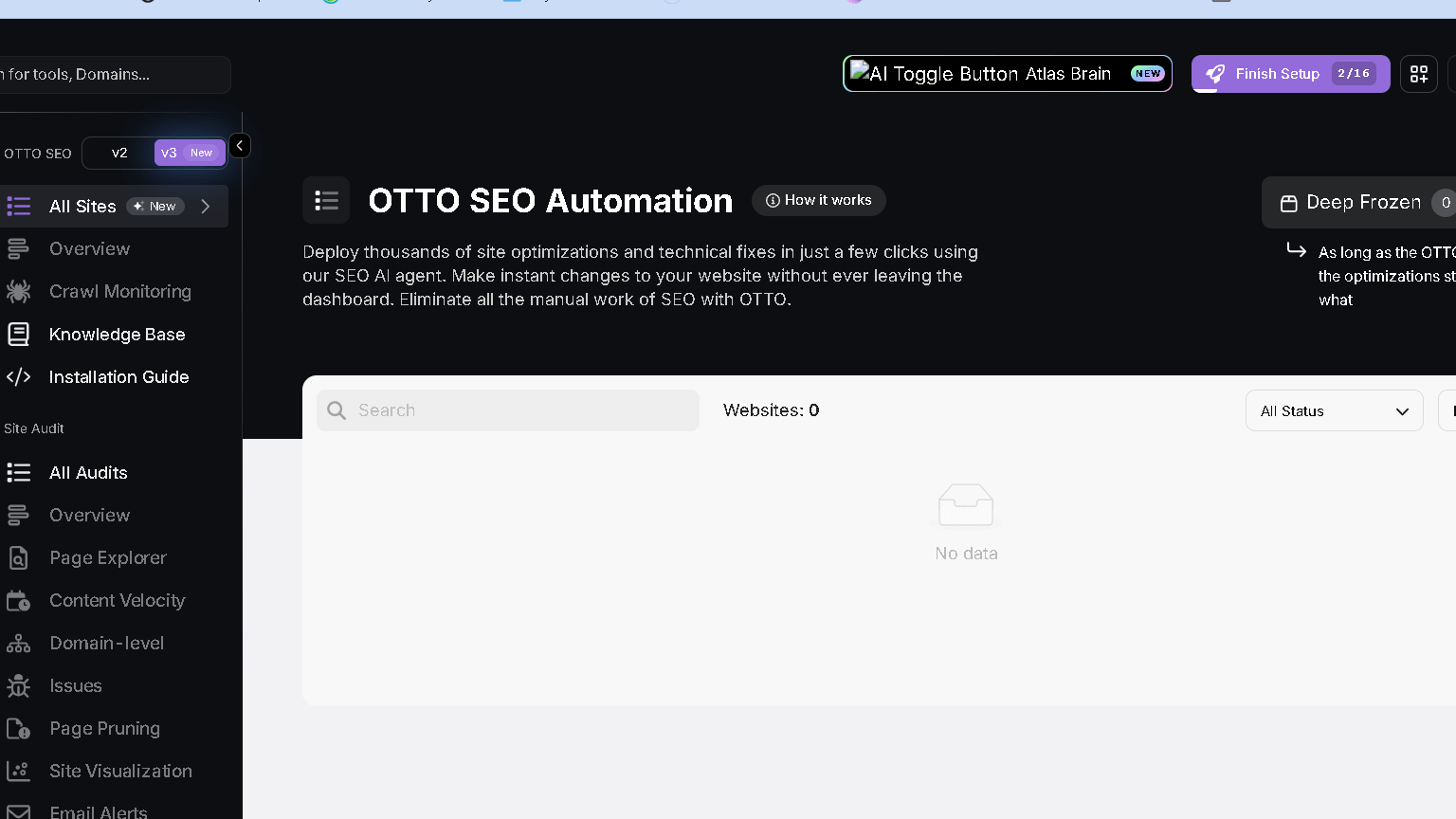
- Otto SEO AI workflows, SEO automation, and content automation
- Automated link construction
- Local SEO bundling and Google management of your business profile
- Accelerate the implementation process
- Lower pricing levels in Search Atlas are designed to be able to accommodate different budgets.
Instead of focusing on the size of databases, Search Atlas emphasizes the following:
- Speed
- AI integration
- Visibility tracking for cross-LLM across different platforms such as Claude and SearchGPT
- Workflows that are simplified
It is advertised as a more modern alternative to the older, heavier SEO suites.
2.Data Sources & Database Depth
Data is the base of every SEO tool. Utilizing Search Atlas can enhance your analytical capabilities. Top-quality keyword difficulty scores as well as search volume metrics are crucial for determining your strategy for organic traffic.
Where Semrush Gets Its Data
Semrush collects information from
- Third-party SERP scraping companies
- The infrastructure that it owns crawls
- The massive backlinking indexing system for backlinks is an integral part of Search Atlas’ capabilities
- Historic ranking archives, as well as an extensive backlink profile for every domain
It analyzes the share of voice metrics of competitors to give insight into SEO effectiveness.
- Millions of keywords to track organic search and analysis of data on keywords are accessible through Semrush’s scales.
- Trillions of backlinks
- 140+ countries
- Top 100 results for search results for each keyword
Update cadence:
- Global database updates every month
- Updates to tracking tools every day as well as consistent daily data updates for keywords with high priority
- The regular updating of backlink indexes is vital to keep an edge over competitors in Semrush and Search Atlas.
What This Means
Semrush is extremely powerful in features such as keyword rank tracker and backlink analysis.
- Analyzing historical trend patterns is a crucial aspect in Search Atlas, allowing SEO professionals to make informed choices.
- Research on competitiveness in the enterprise can be significantly enhanced by using the tools of search atlas.
- Long-term SEO forecasting
- Large-scale rank tracking
Where Search Atlas Gets Its Data
Search Atlas combines the following:
- External crawling sources
- Google Search Console integrations can be easily managed using the two tools, Semrush and Search Atlas, leveraging their key capabilities.
- AI-enhanced model design can dramatically improve the efficiency of on-page SEO strategies.
- Custom-designed crawling systems
It states:
- Billions of keywords are used for organic search tracking as well as keyword analysis.
- 200+ countries covered
- Fast backlink indexing claims
- A 3-day refresh cycle and frequent updates in certain features. Regular updates are essential for assessing the impact of the latest changes to websites, particularly for SEO experts.
What This Means
Search Atlas prioritizes automated SEO features that improve the user experience.
- Data-driven insights from the Bragging of databases in raw form.
- Real-time integration
- AI-driven interpretation of SEO’s core metrics
- Automated generation of AI content
Winner: Database Depth
Semrush is a winner because of its sheer size along with historical richness.
Search Atlas is competitive; however, Semrush’s data archive is more powerful for large campaigns.
3.Keyword Research Comparison
Selecting the right Keyword research software is among the most crucial steps to developing your SEO toolkit. Both platforms offer important SEO tools to discover new possibilities.
Both tools offer solid historical data; however, search atlas offers unique insights through Otto.
- Search volume
- Keyword difficulty metrics.
- Search intent classification that is comprehensive as well as geo-specific targeted are the two aspects in which Search Atlas excels, giving SEO experts insightful insight.
- Keyword clustering
- Analyzing the gap between competitor and customer
But execution differs.
Semrush Keyword Research Strengths
- Global keyword database with huge scale
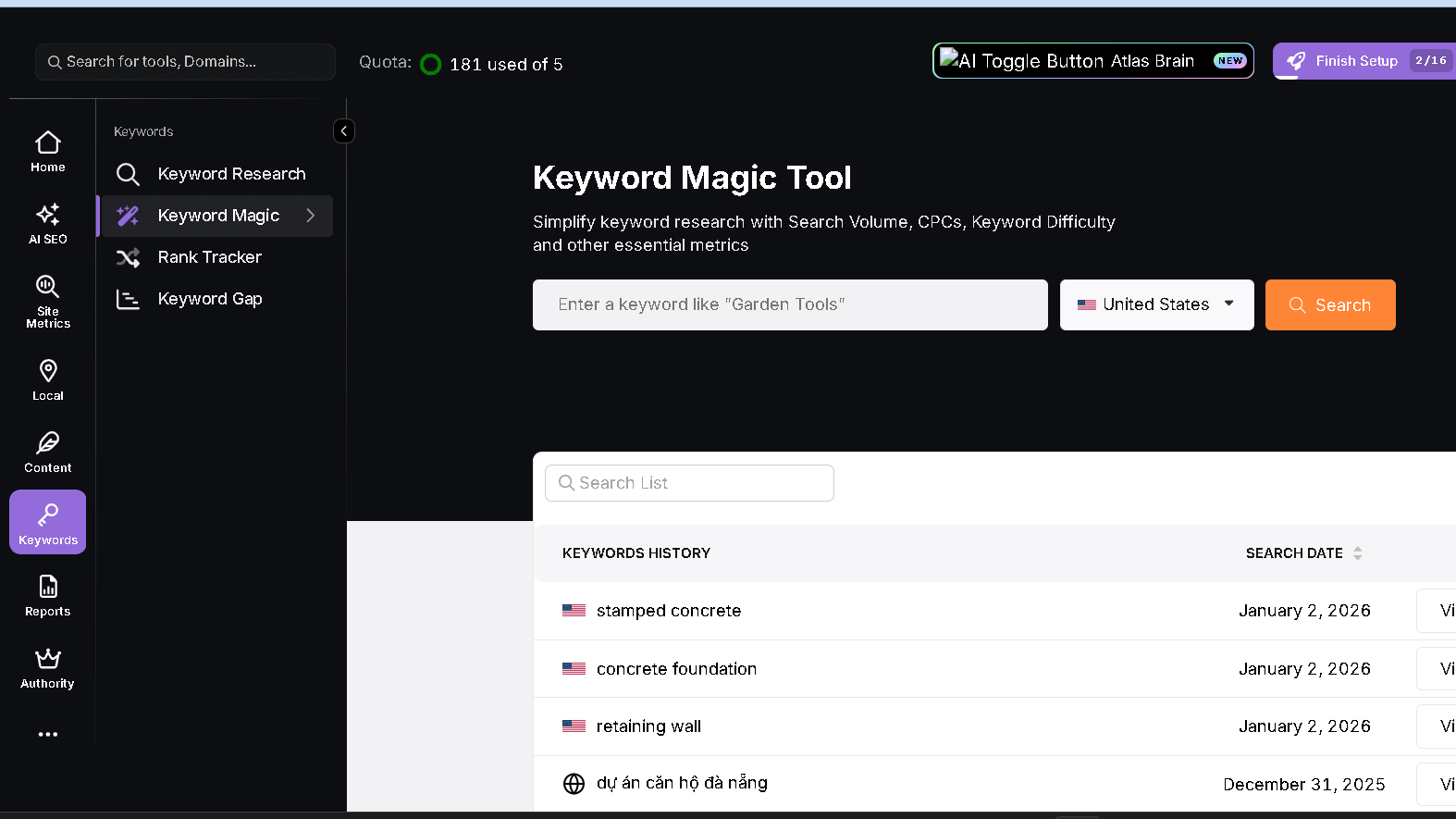
- The magic word tool that can be used to help build lists
- An in-depth SERP analysis
- Historical Keyword Data
- Strong keyword gap tool for deep competitor analysis
- PPC keyword overlap data can be accurately analyzed with Semrush against Search Atlas.
- CPC, filtering by intent SERP features
Ideal for:
- SaaS
- E-commerce is growing rapidly with platforms designed to be efficient and user-friendly.
- Enterprise campaigns
- Competitive industries
Search Atlas keyword research strengths.
- AI clustering is integrated into workflows.
- A built-in content planner for strategy
- Content-first keyword mapping
- Comprehensive scores for optimizing content and meta description tools
- Templates for rapid content creation are vital to optimize your plan for 2025.
- The ability to group topics faster into clusters is among many methods Search Atlas excels at.
- Simplified UX for teams working on content
- Direct integration into content tools
The best for:
- Agents who create blog content at a scale
- Local SEO campaigns
- Teams prioritizing speed
Winner: Keyword Research
Semrush is a winner for the depth of its research and competitive analysis.
Search Atlas wins for the speed of workflow and the ability to cluster content.
If you’re conducting high-risk keyword research in highly competitive industries, SEMrush is stronger. If, however, you’re transitioning from SE Ranking, you may discover it easier to navigate the Search Atlas interface more intuitively, particularly thanks to the AI SEO features.
If you’re creating SEO content in a short time, Search Atlas may feel more efficient. It has a larger range of features that are more advanced as opposed to a more basic tool such as Ubersuggest, but with a more efficient process. It is possible to test the features during an ordinary trial.
4.AI Visibility Tracking (LLM SEO)
AI search and how brands show up on different AI platforms are among the major differences between platforms. These tools allow you to monitor the way your organic traffic could shift when users switch from traditional search results to AI solutions.
Semrush AI Visibility Tools
Brand presence is tracked across a variety of platforms, including Semrush as well as Search Atlas.
- ChatGPT
- Google AI Reviews can help you improve your knowledge of the AI aspect of SEO.
- Gemini is a different tool that certain SEO experts consider using along with Search Atlas, but SEMrush is superior in specific areas.
- The confusion in SEO can be solved with artificial intelligence SEO tools.
- Microsoft Copilot
The capabilities of the Search Atlas include advanced analysis of keyword difficulty.
- Daily updates
- Interactive AI assistant queries
- Citation-level attribution
- Tracking of page-level citations
- Tracking of influence from external domains
- AI checks during technical audits
- MCP connector for LLM data feeds
Semrush differentiates its services in a clear manner, whereas Search Atlas is designed for more of a unified approach, making use of 300 AI technologies.
- Mentions
- Citations within the context of the positions of search atlases are essential for the success of SEO strategies.
- Source URLs
This allows for reporting to be precise.
Search Atlas LLM Visibility Tracking
Brand presence is tracked across:
- ChatGPT
- Gemini
- Perplexity
- Microsoft Copilot
- Grok
- Google AI Mode
The toolkit for AI visibility provides the following features that are powered by an Otto Pixels:
- Comparison of voice using Share-of-Voice Search Atlas positions
- Cross-platform tracking
- Analysis of sentiment
- More prompt limits and faster tracking using Search Atlas offer enhanced capabilities to optimize search performance by using the AI system.
- 3-day refresh cycle
Search Atlas focuses more on the integration of 300 AI capabilities into its capabilities.
- Platform-level visibility
- It provides tools for tracking the various elements of performance in search as well as analysis of competition.
Winner: AI Visibility
Semrush gets top marks for clarity in citations and reporting.
Search Atlas wins for simple share-of-voice across platforms and performance in search.
5.Backlink Analysis Comparison
Backlinks are still a major factor for SEO. Maintaining the health of your backlink profile is vital to rankings. Both platforms let you examine the backlink profile of your competition to identify new opportunities.
Semrush Backlink Tools
- Massive Backlink Database
- Toxic link detection
- Link gap tool
- Broken backlink discovery
- Backlink tracking in the past
- Analysis of anchor text
- Scores for authority
Highly recommended for: searching Atlas’ comprehensive features that are particularly beneficial for SEO professionals.
- Research on competitive backlinks
- Enterprise link audits
- Link Profile Trend Analysis
Search Atlas Backlink Tools
- Large index of backlinks
- Rapid discovery claims
- Competitive link analysis
- A workflow that integrates link building
Strengths: The use of the Otto Pixel improves the accuracy of data.
- Simpler UI
- AI-assisted interpretation
- Google Business Profile integration
- Rapid filtering
Winner: Backlink Database
Semrush is a winner for deepness, depth, historical track, and auditing sophistication, in contrast to Search Atlas, which focuses exclusively on AI and the visibility of search results.
Search Atlas is competitive, but it isn’t quite as deep as Semrush’s backlink tracking depth. In the past, that was frequently contrasted with the benchmarks set by Ahrefs.
6.Site Audit & Technical SEO
Semrush
- Deep technical crawling
- Checks for structured data
- Web Vitals reporting is a core feature. Web Vitals Reporting
- Audits of internal linking and architectural checks are crucial aspects in Search Atlas, designed to aid SEO experts.
- AI-related technicalities and searches
- Customized crawl limits are crucial to optimize the performance of a search atlas.
Enterprise-ready.
Search Atlas
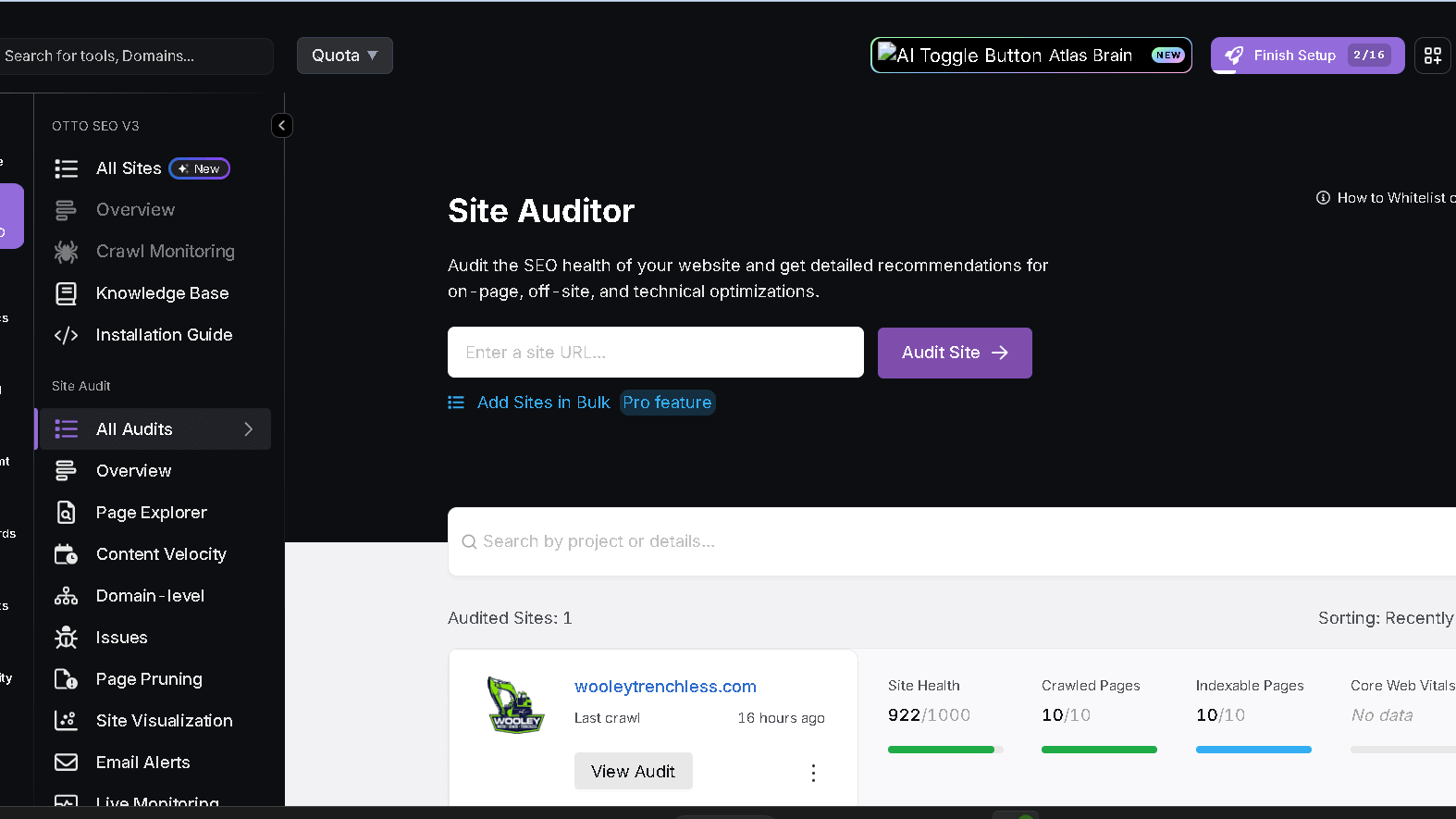
- Site audits and recommendations with priority
- Automatic suggestions get enhanced through the AI-powered SEO automation platform integrated into Search Atlas
- Otto SEO AI, along with Otto SEO AI and the JS application system, forms both integral components of the Otto implementation process.
- Internal linking and local schema suggestions.
A few users report:
- Runtime JS injection issues
- CMS conflict
Winner: Technical SEO
Semrush has the edge in the stability and depth of its features; however, Search Atlas excels in user-friendly features designed for SEO experts.
Search Atlas is innovative but less well-established. For those who are focused on content-specific audits, it has features that are similar to those of Surfer SEO to optimize the on-page elements.
7.Rank Tracking
Both tools include:
- Daily monitoring
- Device segmentation
- Tracking of the geographic area
- SERP has tracking capabilities for local results from searches.
Semrush:
- The importance of having reliable historical data is for SEO experts to make well-informed decisions.
- Enterprise reporting
- The ability to segment your geo with a device is crucial to achieve SEO results using tools like Search Atlas.
Search Atlas:
- Faster dashboards
- Ideal for smaller agencies.
- Local tracking that is strong, such as Google Business Profile performance, is crucial to improve the visibility of your search results.
Semrush has precise location monitoring tools that track the visibility of any device or geographical area and make it a solid option to implement the SEO strategy. This will ensure that you do not lose a ranking change.
Winner: Rank Tracking
A slight edge towards Semrush for business security.
8.Organic Traffic Estimates
A crucial fact: Semrush focuses on comprehensive analytics to help with SEO strategy planning.
- Google Search Console = actual clicks
- SEO tools = estimated metrics based on the volume of searches and rank
Both platforms:
- Overestimate the amount of traffic that a page can receive at times.
- Are there any directions that can be useful?
- Do not substitute for GSC data.
Both tools have a significant benefit here.
9.Pricing Comparison (2026)
Search Atlas
- The basic plan starts at $99/month.
- 7-day trial for free
- Support for multi-sites and the possibility of additional seats for users
- A strong local SEO bundle is a benefit that can assist local businesses in gaining SEO success.
| Plan | Monthly Price | Key Features |
| Starter | $99 | 1 Domain, AI Content Tools, Local SEO |
| Pro | $199 | 5 Domains, Advanced Keyword Tracking |
| Enterprise | $499+ | 25+ Domains, White-labeling, API Access |
The best for:
- SEM specialists, freelancers, and online marketers.
- Small-sized agencies
- Local businesses can take advantage of the AI system offered through Search Atlas for better visibility.
Semrush
- Limited free tier
- The standard subscription plan starts at $199/month. The business plan caters to larger businesses.
- Options for scaling up an enterprise
- Extensive add-ons
| Plan | Monthly Price | Key Features |
| Pro | $139.95 | 5 Projects, 500 Keywords, Basic Reports |
| Guru | $249.95 | 15 Projects, 1,500 Keywords, Historical Data |
| Business | $499.95 | 40 Projects, 5,000 Keywords, API Access |
The best for:
- Agencies
- SaaS
- Enterprise SEO
Winner: Pricing
| Pricing Metric | Search Atlas | Semrush |
| Starting Price | Budget-friendly | Premium / Higher entry cost |
| User Seats | Multiple seats included | Additional cost per seat ($45-$100) |
| Additional Fees | Bundled AI and SEO tools | Scaling costs for projects and users |
| Free Trial | 14 days | 7 days |
Search Atlas Wins for cost-effectiveness when compared to Semrush information services.
Semrush is a great value due to its capacity and reliability. Although other SEO tools such as Ubersuggest, SE Ranking, or Serpstat offer alternative choices, these two are the most popular choices for users who want to be more advanced.
11. Pros & Cons Summary
Search Atlas
Pros
- Lower price entry
- AI-first workflows
- Locally-focused SEO and Google Business Profile integration
- Tracking of Cross-LLM
- The integration of Search Atlas pixels allows digital marketers to accurately track and attribute conversions across all search channels.
Cons
- Occasional instability
- Smaller historical archive
- JS-based implementation risks
- AI content needs editing
Semrush
Pros
- Massive databases allow for deeper analysis of backlinks and boost your SEO results.
- Stable platform
- Enterprise ready
- Deep competitor insight
- A reliable reporting system is an essential aspect of the analytics.
Cons
- Costs are higher
- Limits to the plan can be crucial to optimizing the benefits of searching for atlas growth.
- Feels complicated
12.Migration Considerations
Moving to another tool? Many users begin by signing up to try the platform for a period of time to verify that the new platform meets the requirements for data.
Export:
- Keywords
- Backlinks
- Lists of rank tracking
- Reports
Rebuild:
- Dashboards are enriched with the addition of 300 AI analytics.
- Automated reports
- API integrations are an essential tool to monitor performance metrics within the Search Atlas environment.
Semrush provides more advanced API access.
Search Atlas is easier for smaller teams to make the transition into.
This guide includes affiliate links, which means we may receive a commission if you make a purchase through them, at no additional cost to you. Our recommendations are based solely on tools we trust to deliver real results for our readers.
Final Verdict: Search Atlas vs. Semrush
There isn’t one universal winner.
If you value security, stability and data on competitiveness at the enterprise level -choose Semrush.
If you are looking to prioritize affordability and local SEO and AI efficiency in workflow-choose Search Atlas.
For a conservative, long-term SEO infrastructure:
Semrush is the best choice for analysis of competitors’ depth in addition to historical analysis.
Local campaigns:
Search Atlas is both compelling and affordable for teams that want to leverage SEO and AI workflows.
Frequently Asked Questions
Is Search Atlas a good Semrush alternative?
Yes, especially for local SEO and smaller teams.
Is Semrush worth the higher price?
Yes, if you need scale, historical data, and enterprise reliability.
Which tool is better for AI SEO?
Semrush for citation-level tracking.
Search Atlas for cross-platform share-of-voice.
Which is better for beginners?
Search Atlas has a simpler workflow.


