

Picking a tool for competitive intelligence and SEO isn’t always straightforward. Similarweb vs Ahrefs-which one is better?
If you want broad market data and multi-platform traffic insights, Similarweb often wins.
If you need deep backlink analysis and hands-on SEO tools, Ahrefs performs better.
This Similarweb vs Ahrefs guide breaks down what each platform actually does best.
Do you want to research market trends, keyword tracking, backlinks?
The goal?
Help you match the tool to your workflow and budget, without the fluff.
Overview of Similarweb vs Ahrefs
One is an SEO search engine and the other focuses on market and traffic intelligence.
They provide perspective, but they aren’t collecting the same data and examples.
What Is Similarweb?
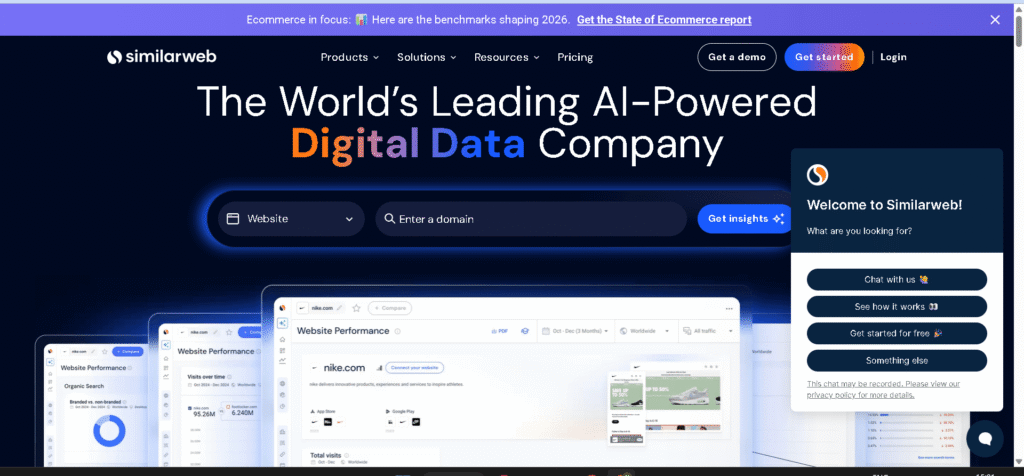
Similarweb is a digital intelligence platform for website and app traffic, referral sources, and audience interests.
You see total visits, geographic breakdowns, and which sites or social channels send the most people.
This helps you spot market trends, compare against competitors, and decide where to spend on paid or organic campaigns.
Marketers use Similarweb for market sizing and channel mix decisions.
The platform blends direct measurement, panel data, and ISP-level sources to estimate traffic.
It’s stronger for high-level market intelligence than for granular backlink lists or keyword positions.
Expect features like traffic overview, audience demographics, industry benchmarks, and cross-platform comparisons.
Pricing starts near other enterprise tools, so you’ll see tiered plans for teams and agencies.
What Is Ahrefs?
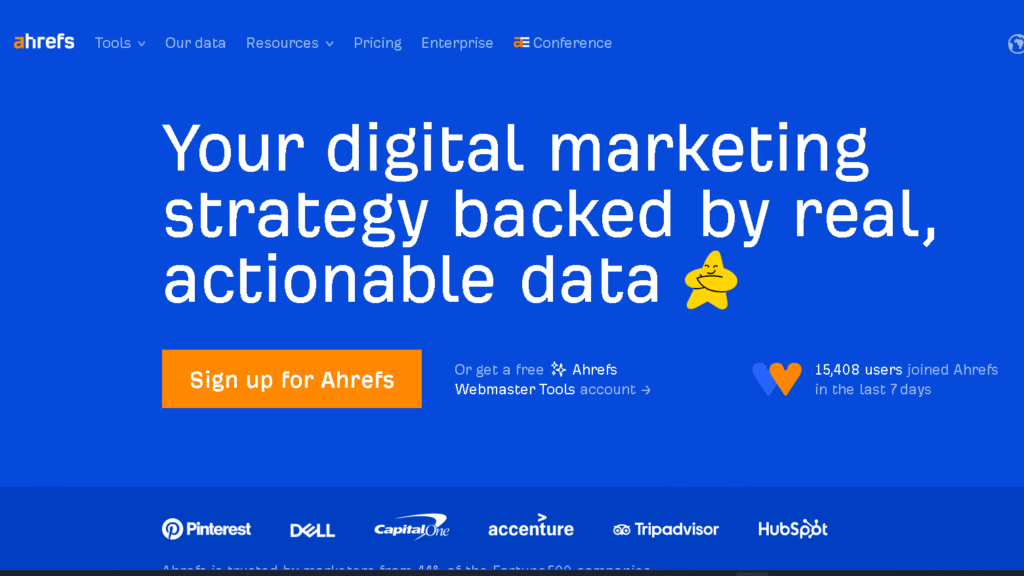
Ahrefs is built for SEO: backlink analysis, keyword research, and site audits.
You use it to find backlink opportunities, track rankings, and analyze keyword difficulty.
Ahrefs crawls the web with its own bots and maintains a huge backlink index. That’s perfect for link-building and technical SEO work.
SEO teams rely on Ahrefs for precise data: top pages by organic traffic, anchor text, and keyword lists for content planning.
It also has an on-site audit tool that flags crawl errors, broken links, and optimization gaps.
Key features are Site Explorer, Keywords Explorer, Rank Tracker, and Site Audit.
Are improving rankings and building authoritative backlinks your main goal?
Then pick Ahrefs.
Key Differences Between Similarweb vs Ahrefs
Data focus is really the main difference.
Similarweb emphasizes market intelligence and user behavior across sites and apps, giving you broader traffic estimates and channel breakdowns.
Ahrefs emphasizes SEO signals: backlinks, organic keywords, and on-page issues.
Use Similarweb for traffic benchmarking, audience insights, or market share estimates.
Use Ahrefs for link-building, keyword targeting, or technical site fixes.
Similarweb combines panel data, direct measurements, and ISP inputs for high-level trends.
Ahrefs uses its crawlers and index for detailed backlink and keyword data.
Marketers doing cross-channel strategy lean toward Similarweb.
SEO specialists focused on organic growth usually choose Ahrefs.
Core Features and Use Cases
Let’s see how each tool handles website traffic, backlinks, and competitor benchmarking.
One gives you broad market-level insights, the other digs into link data and SEO signals.
Market Intelligence and Traffic Analysis
Similarweb zeroes in on traffic estimation and market trends.
You can view traffic sources by channel :direct, search, social, referral, paid.
Also, you can see traffic share across competitors.
Its dashboards show country-level and category-level market trends, helping you spot seasonality and shifts in audience behavior.
You can also compare multiple sites side-by-side to track market share and top referral sites.
Similarweb shines at high-level competitive analysis and audience overlap, not raw keyword rankings.
Use it when you want quick, visual traffic maps and competitor breakdowns for strategy or pitch decks.
Similarweb vs Ahrefs- Backlink Analysis and Link Index
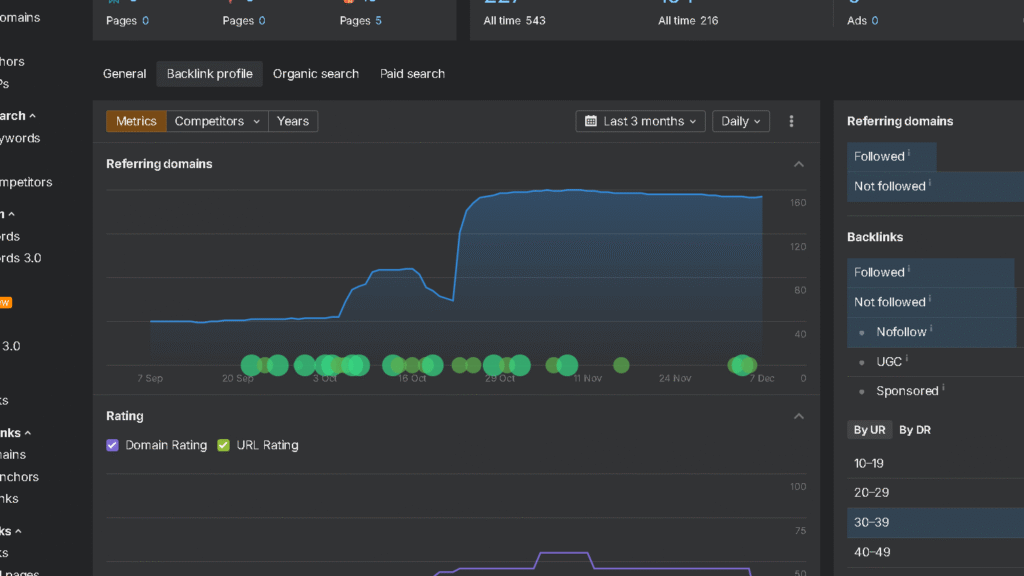
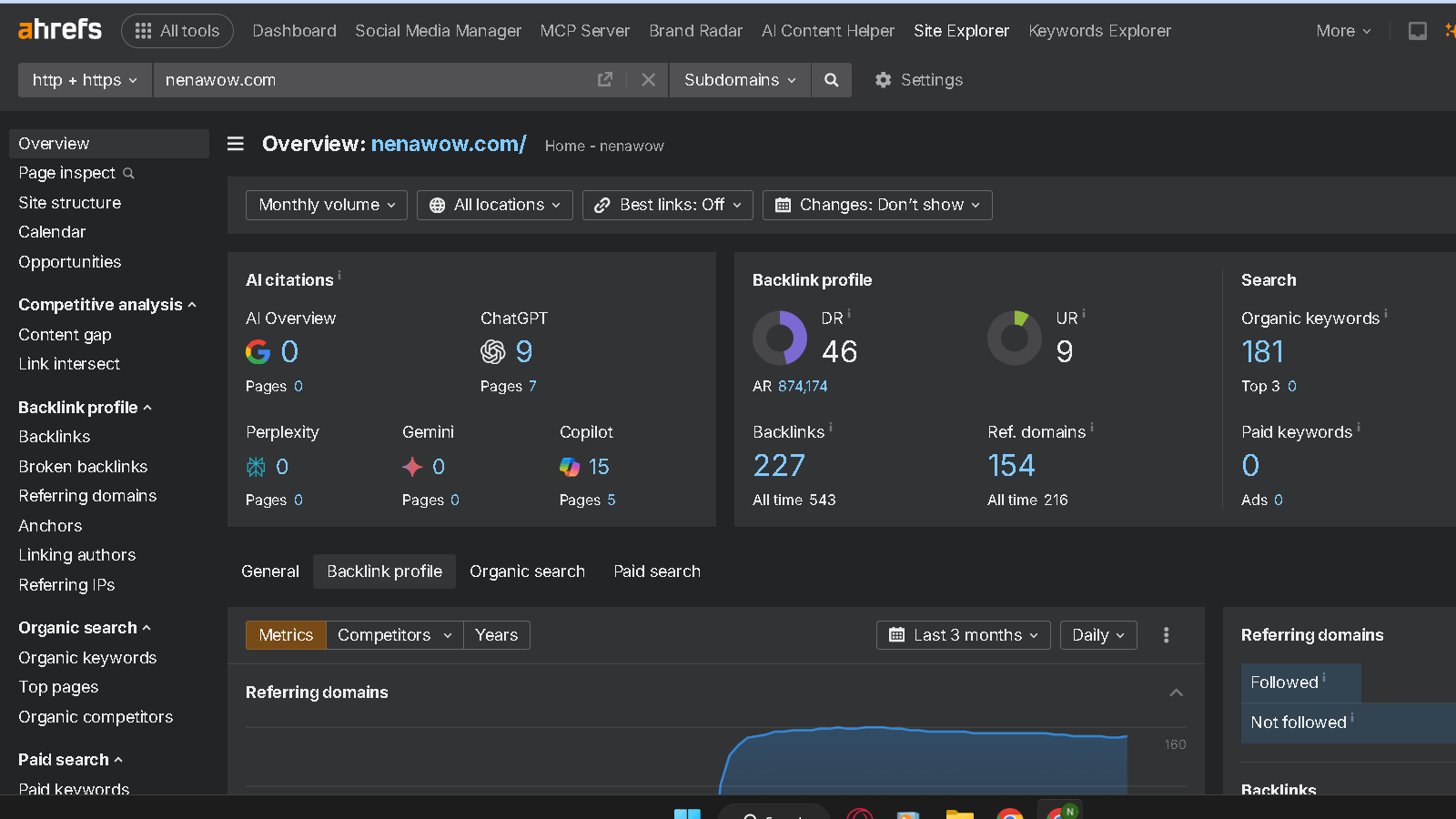
Ahrefs is all about backlink analysis and its massive link index.
You can inspect a site’s backlink profile, see referring domains, anchor text, new vs. lost links, and link growth over time.
The link index updates frequently, which really matters if you’re tracking fast changes or cleaning up toxic links.
You get detailed lists of linking pages and metrics like Domain Rating and UR to judge link quality.
Use Ahrefs to get link intel for outreach, disavow planning, or sizing up the SEO value of particular backlinks.
It’s not about market-level traffic estimates, but about link-level evidence.
Competitor Benchmarking and Research
Both tools also allow for competitor benchmarking, though for different purposes.
Analyze competitors’ website traffic, sources, and geography of the audience via Similarweb.
It’s fast for general market intelligence or picks of which competitors to watch.
Ahrefs allows for comparison of organic search, top pages, and the overlap of keywords.
You can see which pages get organic traffic and what keywords they rank for relative to competitors.
By using Ahrefs for organic specifics, and Similarweb for traffic estimates, you get a well-rounded view of your competitors.
You are able to monitor both “search visibility” and “overall website traffic”.
SEO Capabilities
You get both broad market signals and deep SEO metrics here.
One tool excels at cross-platform keyword data and trends, the other at granular keyword metrics, backlinks, and classic SEO signals.
Keyword Research and Analysis

Similarweb brings fresh new keyword data on Google, YouTube, Amazon.
It presents recent trends, the SERP presence, and topic clusters so you can target queries using channels that really users are using.
This is useful for timely keyword lists and for determining which competition does get the attention.
You can use Ahrefs’ Keywords Explorer to find more specific metrics: Search Volume, Keyword Difficulty, Traffic Potential, and click numbers.
The child-topic grouping and strong international coverage are a combination for local keyword planning.
Analyze a precise difficulty estimate, competitor SERP snapshot, and keyword lists on Content workflows using Ahrefs.
Both platforms support exports and cluster keywords.
In order to have deep keyword scoring and direct SERP context, go with Similarweb for market breadth and quick topic-level insight and Ahrefs for deep keywords scoring and direct SERP context.
Rank Tracking and Position Monitoring
The daily rankings can be tracked with both tools, but they do not focus on the same things.
Similarweb’s rank tracker emphasizes topic-level visibility, and the influence that SERP features (including AI Overviews), change traffic share over time.
It provides heat maps and competitor comparisons so you can see where pages gain visibility or lose visibility at a glance.
If you want, you may read more about Similarweb alternatives in my article.
Ahrefs Rank Tracker offers precise position data across devices and 190+ countries.
It also displays the owner’s list of fragments, site links and average position, visibility trends and shares-of-voice comparisons against the competitor.
Use Ahrefs for precise geo or device-level monitoring and historical position charts.
Like competitors, you can monitor export reports.
Use Similarweb for wide-range visibility checks, Ahrefs for specific location-specific rank analysis, or Ahrefs for detailed, daily-level rank checking.
Technical SEO and Site Auditing
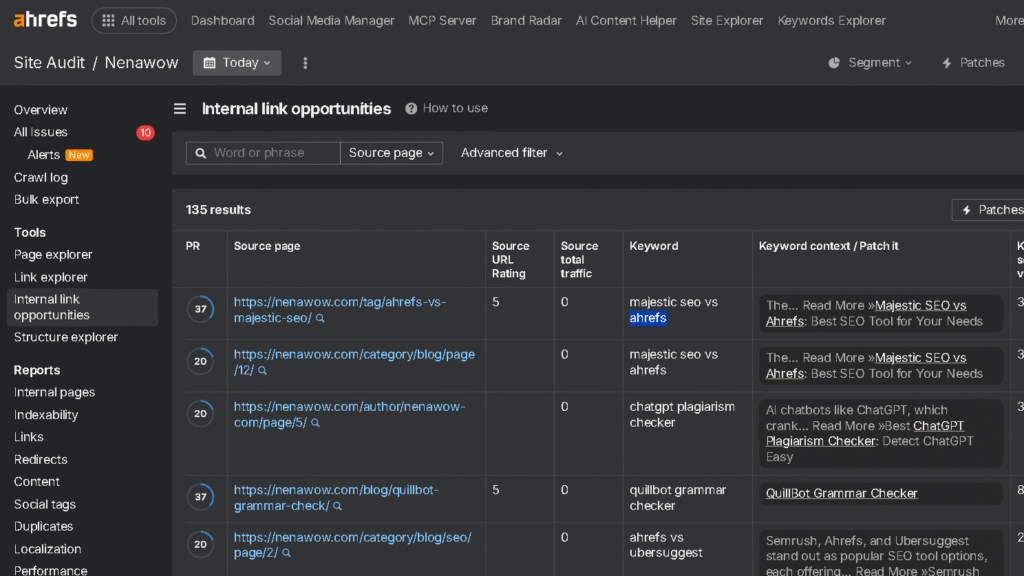
But the scope of the site audit is limited to the one platform.
In fact, Similarweb’s Site Audit scrutinizes many factors and prioritizes fixes by impact.
It highlights indexability, crawlability, performance and site-to-site problems and compares site health against other competitors.
This works for large sites and teams that need server-side crawling and highly-prioritized priority.
Ahrefs Site Audit detects speed problems, broken links, duplicate content, meta issues, and scores and visual dashboards.
Identify crawls by subdomain or folder and follow remediation over time.
When you are looking for clear issues lists, severity ratings, and a step by step check in technical SEO audits, use Ahrefs.
Audit tools export issues as well as your SEO toolkit.
Similarweb provides business-scale, impact-ranked audits; Ahrefs are for detailed, tracked technical remediation at a glance.
AI and Automation in Digital Marketing
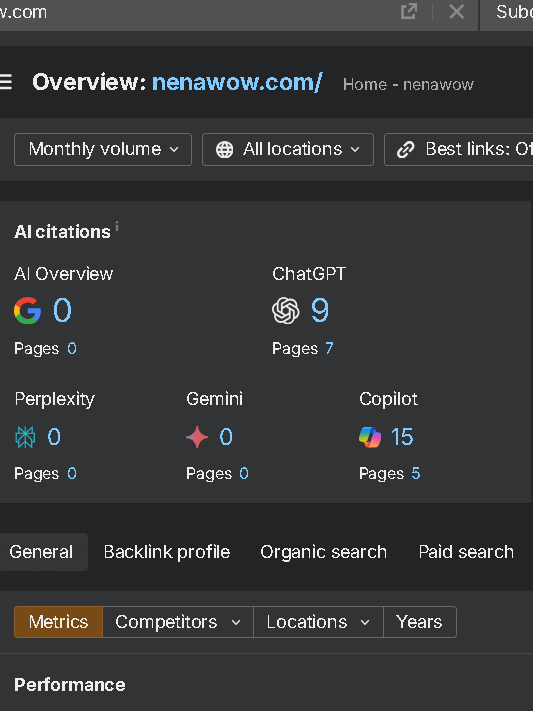
AI can automate tasks, track brand presence in AI answers, and build data-driven content plans.
These tools focus on traffic sources from generative AI and automating routine SEO work.
You can get answers where your brand appears in AI-generated responses.
AI Tools in Similarweb
Similarweb offers several AI-driven tools for monitoring origin traffic and crafting strategy.
The AI Traffic tool calculates how much traffic sites gain from generative AI and notes which landing pages get those visits.
This helps you see which content benefits from AI referrals and where to improve.
The AI Brand Visibility feature checks how often your brand appears in AI-generated answers and compares that to competitors.
It also includes topic-level visibility scores, prompt analysis and citation reports for the best ways to compare mention prompts or sources.
The SEO Strategist Agent helps to analyze keywords gap, group keywords into topic clusters and recommends an content roadmap based on competitor and site data.
Use it to turn data into a prioritized content plan without doing all the manual work yourself.
AI Integrations in Ahrefs
Ahrefs bakes AI into core workflows to increase accuracy and the efficiency of work.
Use an AI that identifies your pages to find keyword suggestions and content briefs.
So it minimizes the number of lines, and finding gaps.
Ahrefs also automates technical checks and simple fixes, such as meta tags suggestions, and the possibility of AI-generated content on your site if it is found on your site.
Localization features translate keyword lists into 40+ languages making scaling campaigns easier without manual translation.
For brand monitoring, Ahrefs also provides AI-assisted citation reports to show when and where AI systems cite your site.
These reports can be used to prioritize outreach or updates on pages with citations that draw AI attention.
Brand Visibility and AI-Driven Insights
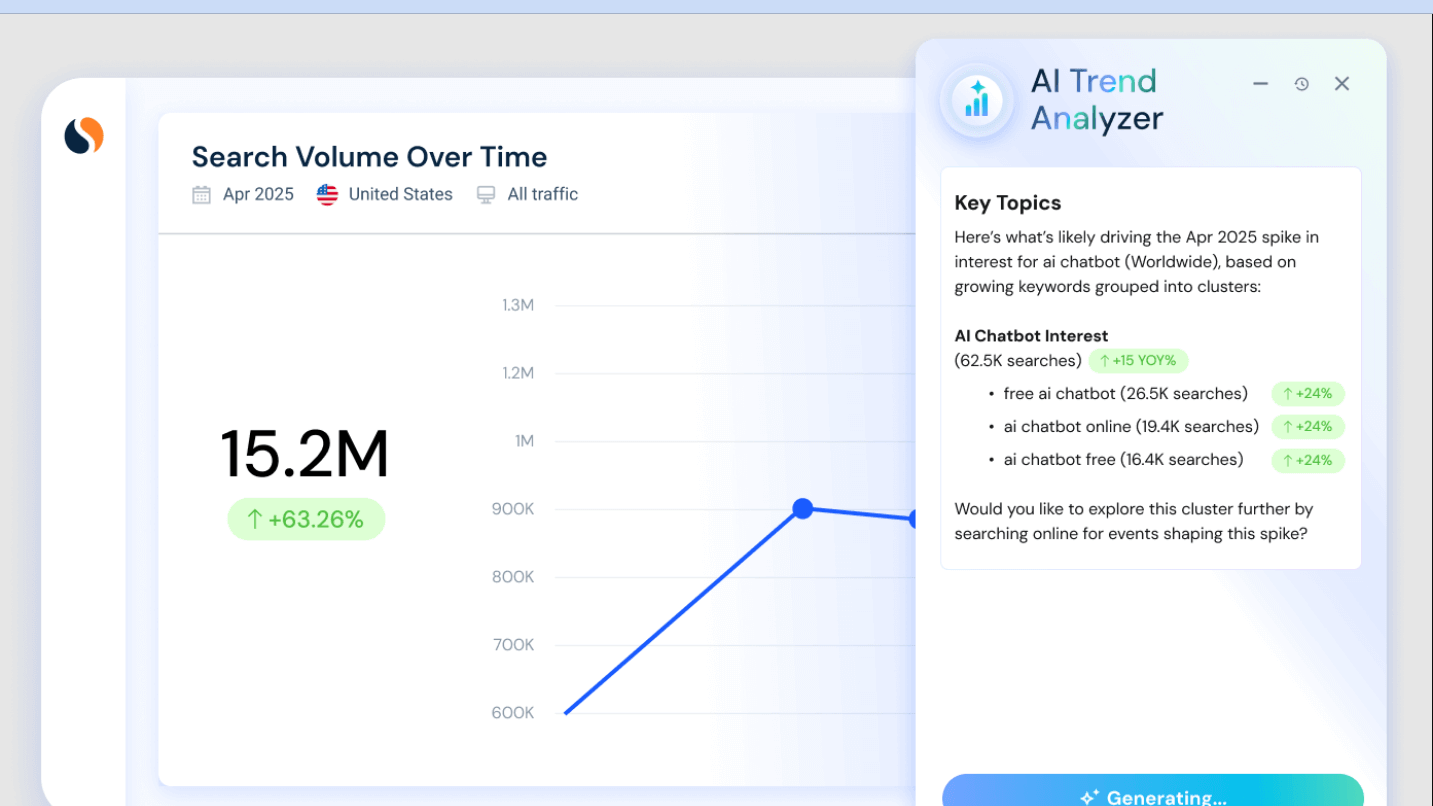
This leads to brand visibility in AI output.
It drives non-click traffic and can influence discovery.
Observe both brand mention share and citation sources to determine where AI platforms have answer sources.
You know which pages get authority in AI answers.
To identify which questions you use to inspire your brand, track the prompt level data.
That helps improve headings, snippets, and data sets to increase your chances of being noted.
In addition, note the visibility gains, whether they are sustained or just temporary or linked to short-term prompt changes.
Identify fixes that increase your chances to be selected as a source of AI answers using site audits, backlink checks and AI citation reports.
Comparing Data Accuracy and Methodologies
You need to know how each tool gathers and models traffic.
Here’s a look at where data comes from, how traffic estimates and clickstream feed models differ.
Data Collection Methods
Similarweb rely heavily on clickstream data from panel providers, ISP affiliations and optional tracking scripts.
So, the mix provides an overview of visit totals, referral paths, and demographics.
The combined number of users usually suggests strong estimates for large or mainstream sites.
Ahrefs measures data by crawling search queries, and a powerful backlink index.
It takes organic traffic from the mapping of keywords and estimated click volumes to pages.
Ahrefs is full of SEO signals but it does not have direct clickstream inputs for non-search traffic.
Require the panel-based numbers as probabilistic samples and Ahrefs’ keywords driven numbers as model estimates.
Both measure sample data in place of site-level figures.
There will be variability, particularly for small or niche sites.
Traffic Estimates and Clickstream Data
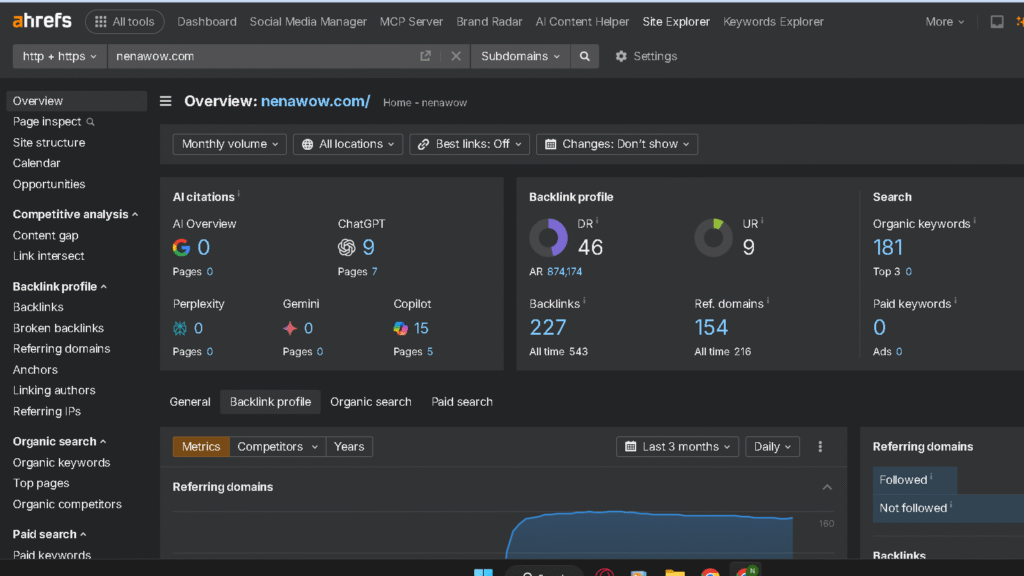
The following comparisons of total visits, referral splits, and time-on-site in Similarweb are computed from clickstream data.
I don’t know what these raw click data is, but this raw click data makes it more clear that paid versus organic versus social mixes.
In a site, with larger size clickstream samples, estimates loosen, and historical trends seem more reliable.
Ahrefs measures traffic numbers by their volume and rank positions in order to determine organic clicks traffic estimates.
It doesn’t capture direct or referral clicks unless they appear in search behavior.
If you want to get click estimates for keywords, Ahrefs is a better and more actionable tool.
It will take more non-search sources to count for total traffic or multi channel mixes.
Compare both numbers to your server logs or Google Analytics.
A common direction over- or underestimate is not exactly parity, unless it is consistent.
Use clickstream-friendly tools to validate channel splits and keywords models to improve organic projections.
Reliability for Different Use Cases
When your SEO campaign operates, Ahrefs organic click estimates and keyword-level breakdowns inform you about content and the keywords you need to focus on.
The information is clearer about the most likely clicks being driven by these queries and what rank changes affect traffic.
To manage multi-channel marketing, Similarweb’s clickstream-based view of paid, social, and referral performance provides an easier understanding of performance over competition.
That makes it useful for budgeting and cross-channel benchmarking.
Both models work well for competitive studies on big publishers.
Similarweb provides a full analysis of traffic, and Ahrefs provides insights into organic share and backlink growth.
If you’re looking at small sites or niche sites, you should expect an error margin with either tool.
Before making big decisions, use your own analysis.
Pricing, Value, and Ideal Scenarios
You’ll find a trade-off between breadth of market data and depth of SEO signals.
Pricing Models and Plans
Similarweb provides tied plans that differ by level of data and by domain number.
Free access has high-level traffic estimates and limited reports.
Paid plans go up to monthly or annual billing and gain new market share, referral sources, and industry-level dashboards.
If you want to get API access, big data quotas, or whitelabel reporting, you’ll probably end up with a custom enterprise quote.
Ahrefs uses subscription tiers with fixed feature sets.
Site explorer, keywords, rank tracker, and site audit limits are set in each plan.
There is no full-featured tier, but some limited tools and trials.
Increased query limits, backlink refreshes, and expanded keyword databases are priced extra.
Both products tend to require enterprise quotes if you need team seats, SSO or high API usage.
Best Use Cases for Marketers and SEO Professionals
Similarweb is better for cross-site market research, industry trends and competitor channel mix.
That’s good for estimating market share, traffic split splitting, and high-level competitive analysis on display, search, and social.
Marketers use it to plan media buys or product categories.
If you are interested in organic growth, backlink profiles, keyword difficulty and technical SEO repair, Ahrefs would be the best choice.
It is used by SEO professionals as link building tool, content gap analysis tool, and time lapse tracking tool.
Ahrefs lists keywords, anchor-text data, and crawl-based audits you can actually read to use everyday.
Choosing the Right Tool for Your Needs
You will determine by primary goal and budget.
For marketing information, competitor strategies, and market research, choose Similarweb.
It suits product marketers, market analysts and teams measuring share or campaign reach.
If you focus on a hands-on SEO job, such as link outreach, content optimization, and keyword targeting, choose Ahrefs.
It’s best for SEO experts and agencies who require query quotas, Detailed backlink information, and frequent site checks.
A combination might just make sense.
This might not include what market trends were in a marketplace but it does include what was being used on-page SEO and link work.
Comparison of trial limits, API costs, and compare each tool to see how well it fits your workflow before you commit.
Frequently Asked Questions
This section compares feature focus, pricing ranges, traffic accuracy, competitor signals, data credibility, and keyword tools so you can pick the right tool for specific SEO or market research tasks.
What are the main differences in features between Similarweb and Ahrefs?
Similarweb explores website and app traffic sources, audience behavior, channel mix, and market-level trends. It provides more information on site-specific market and industry information across sites and apps.
Ahrefs includes SEO details such as backlink profiles, organic keywords, rank tracking, and site audits. It provides deeper backlink data and on page SEO signals.
The APIs offered here are the same, some of which overlap in traffic estimations and export options. Likeweb for market research and Ahrefs for technical SEO will probably be more useful.
How do pricing models for Similarweb and Ahrefs compare?
They both offer subscription pricing with tiered plans that target individuals, teams and businesses. Enter-level plans differ in the mid-100s-per-month range, with premium features and more data allowances contributing up.
In general, you’ll pay more for enterprise access, large query volumes or API credits. You should look at the features and data limits you actually need to be able to choose a plan.
Which is more accurate for traffic analysis, Similarweb or Ahrefs?
Similarweb focuses on total site and app traffic estimates and provides detailed channel breakdowns, which often match market-level trends. Its accuracy improves for larger sites and well-sampled markets.
Ahrefs estimates organic search traffic and keyword-driven visits, so it can underreport non-search channels. Its traffic metrics suit SEO-focused analysis, not full traffic source breakdowns.
Use Similarweb for broad traffic and channel mixes. Ahrefs works best for organic-search-specific estimates.
Can Similarweb or Ahrefs provide better competitor insights?
Similarweb offers better competitor understanding at the market and channel level, ranging from audience overlap, top reference sites, and display or social ad activity at a market and channel level. It allows you to map competitors along the channel.
Ahrefs provides much more detail to competitors’ search strategies, backlink profiles, and ranking keywords. It makes it easy to replicatelink and content tactics that drive organic traffic.
Similarweb for multi-channel competitor research. Ahrefs is more useful for SEO and link building intelligence.
What is the public perception regarding the credibility of Similarweb’s data?
While some users and analysts find Similarweb credible as a source of high-level market and traffic trends. People also note its strength in cross-site comparisons and breakdowns of channel.
Critics point out that estimates vary on small or low traffic sites and sampling can make errors. If possible, you should assume the numbers as estimates and then verify these with first party analysis.
How do Similarweb and Ahrefs differ in their keyword research capabilities?
You can view detailed keyword descriptions and search volume estimates in Ahrefs. This also provides a description of keywords difficulty scores and an explanation of SERP analysis, all focused on organic rankings.
There are tons of markets to track and study the gap in keywords. It’s a great toolkit for anyone who really loves SEO.
Both similarweb and similarweb also link keywords to the overall site traffic and breakdowns paid and organic channel share. The platform emphasizes that each keyword contributes to traffic, which is more useful for market research and paid-search planning, than for deep SEO work.
If you want to be granular in terms of organic keywords or link-based strategies, Ahrefs is the best choice. But if you want to see keywords interacting across channels and campaigns, Similarweb might work for you.


