

You want your site to be the go-to source in your niche, not just another page chasing a keyword. Long-term SEO takes more than technical tweaks. AI speeds things up by finding topic gaps, building topical authority, drafting content, and suggesting smart internal links. Let AI map topic clusters, help you create deep content, and keep those connections strong to build real topical authority.
This article explores the impact of AI on authority building, from identifying opportunities and writing optimized content to assessing effectiveness and adding variety. You will learn how to leverage AI for topic optimization, content writing, internal linking, and ethical AI SEO scaling while maintaining quality.
Key Takeaways
- AI-Driven Strategy: Leverage AI to identify topic clusters and semantic gaps to ensure timely and efficient content coverage.
- Content Hierarchy: Establish authority by using a content pillar and cluster strategy, as well as logical internal linking.
- Human Oversight: Ensure E-E-A-T by using AI for efficiency and humans for fact-checking, original insights, and brand voice.
- Continuous Auditing: Utilize AI SEO tools to monitor content performance, create new content, and fill content gaps.
What Is Topical Authority and Why It Matters
Topical authority is when your site becomes the trusted source for a specific subject. It builds trust with both search engines and users, boosting rankings and bringing steady traffic.
The Shift from Keywords to Topics
Search engines are now organizing searches by intent and topic, not just individual keywords. The idea of creating a single page for a single keyword is no longer sufficient.
Websites must now provide a complete topic with multiple interlinked pages. AI and semantic search allow search queries to be matched with content that demonstrates real depth.
Pages that answer lots of related questions will rank for more keywords and get more impressions. This is a move towards content clusters, in-depth hub pages, and regular publishing, rather than sporadic posting.
It also benefits the user, who will receive more complete answers to their questions in one place. This is an improvement in engagement metrics, such as time on page and return visits, which search engines can detect as a sign of authority.
Topical Authority vs. Domain Authority
Domain authority is about a site’s backlinks and overall strength. Topical authority is about depth and coverage on a specific subject.
Even a high domain authority site can lack topical authority if its content is thin or scattered. On the flip side, a smaller site can outrank bigger ones in a narrow topic by publishing thorough content and linking it well.
The trick is focused coverage: lots of pages on subtopics, hub pages that summarize and link, and steady updates. Marketers should zero in on priority business areas first. It’s a faster path to durable rankings than trying to cover every possible topic.
Authority Signals Search Engines Value
Search engines search for quality, complete content that can answer the most frequently asked questions. Internal linking that reveals the structure of a topic helps search engines determine the most important pages.
E-E A-T signals, such as clear bios of the author personal experience, firsthand knowledge, and citations to reliable sources– build confidence. External links and mentions on websites that are niche can be more helpful than standard backlinks.
The technical aspects are also important speedy pages, correct schema markup and regular publishing can help search engines find and index your website’s content. All of these signals are in place to make your website an authoritative voice in SEO and also for the users.
How AI Transforms Topical Authority Building
AI accelerates research, refines topic maps, and assists writers in aligning with searchers’ intent. It identifies semantic links, points out gaps in content, and points out facts that require reevaluation.
AI-Powered Research and Insights
AI models examine thousands of pages and point out patterns that may escape human notice. They extract questions that are commonly asked, related concepts, and entity relationships to create a topic map of what to write next.
You get precise AI insights like keyword clusters, related entities, and semantic signals that fuel semantic SEO plans. Teams can run batch queries to find content gaps and rank opportunities.
AI SEO tools highlight where competitors rank, which subtopics lack depth, and which pages need more original examples. Fact-checking layers compare claims to cited sources to reduce errors before publishing.
Enhancing Content Strategy with AI
AI-powered tools turn topic maps into action. They create content briefs with target keywords, recommended headings, and semantic terms to include.
Writers get a clear brief: which questions to answer, which concepts to link, and which examples to add. AI also suggests internal linking based on semantic relationships, improving crawl paths and helping search engines understand site authority.
Teams can use AI to generate drafts, then layer in human editing to add firsthand experience and E-E-A-T signals. This keeps things fast but still trustworthy.
Overcoming Traditional SEO
Another benefit of AI technology is the reduction of time required for research, outlining, and editing. The topic mapping, which would previously take weeks to complete along with cluster building, now takes just a few hours with AI technology.
The ability to scale content without compromising quality is achievable if human beings are given the chance to review and edit the AI technology.
AI technology will help monitor the content by detecting performance issues and suggesting refreshes according to emerging trends.
The team will be able to respond to the data quickly and keep the authority up to date without exhausting the editorial team.
Creating a Topic Cluster Strategy with AI
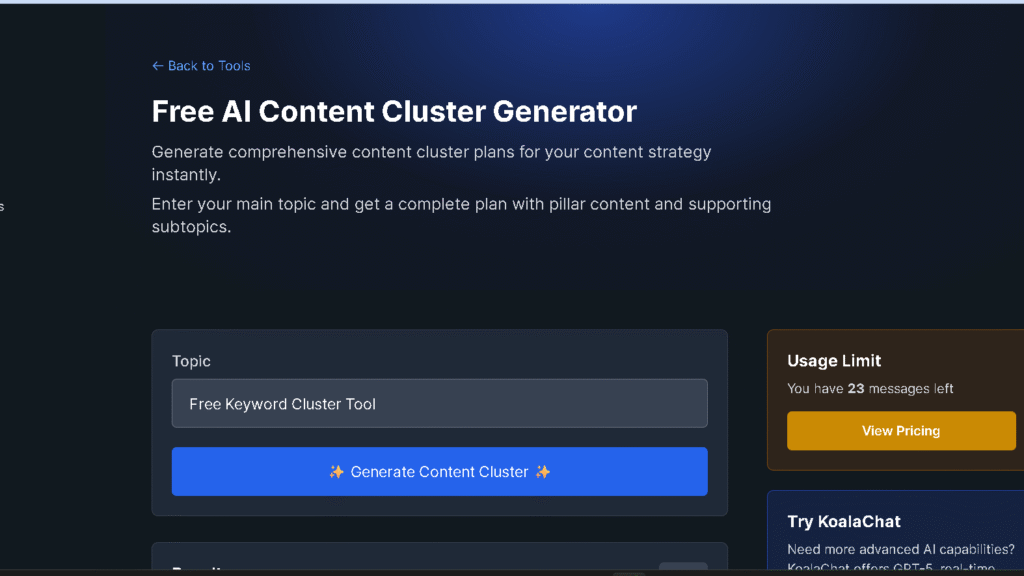
This section will discuss how to choose the primary pillar topic, and then branch out using the technique of topic clustering. You will also learn how to arrange the pages in a content plan that meets the intent of the search.
Identifying Core Pillar Topics
Choose a single page that is your primary knowledge. Utilize data on your audience and business goals to pick topics that drive revenues or leads in addition to traffic.
An agency, for instance, could pick “AI in content marketing” as a pillar since it is directly connected to their products. Conduct targeted keyword research using AI tools to gauge the level of demand.
Seed terms are fed in the AI keyword tool to determine relevant questions, search volume and commercial intentions. Select topics that have high potential and relevant queries to form the cluster.
Also, check where your site is already ranked. If you’ve got pages on similar terms, choose an pillar that is able to leverage these. This will save you time and speed the process of building authority.
Mapping Topic Clusters and Keyword Variations
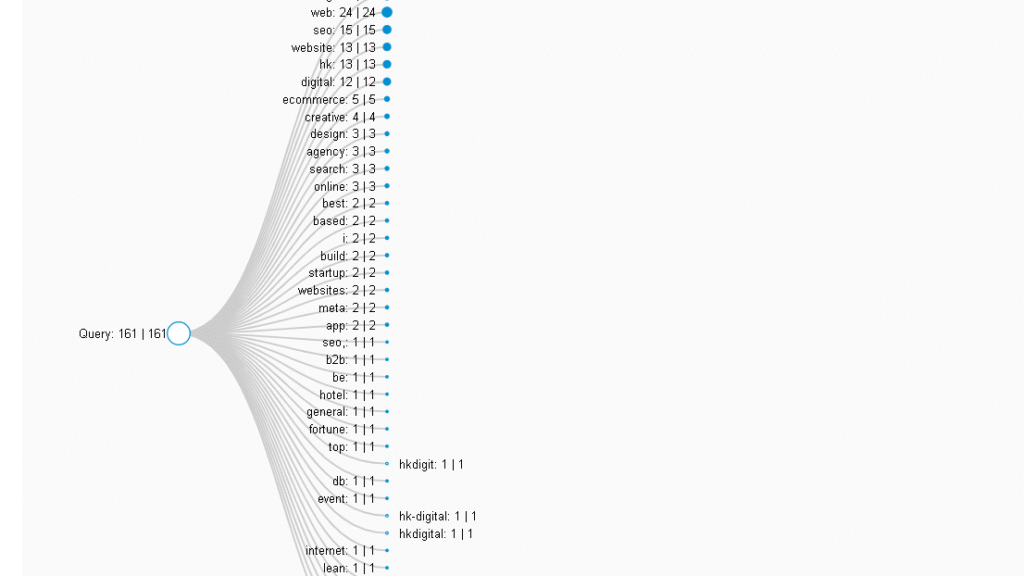
Utilize AI to come up with cluster ideas based on your pillar’s topic. Enter the title of your pillar into a topic-clustering tool, or LLM prompt to generate list of subtopics, FAQs, as well as keywords that can be used in different ways.
Capture long-tail questions such as how-to terms, query types for cluster pages. Sort the outputs into tables that includes columns such as Cluster Title, Target Keyword, Search Intent and Suggested URL and the Content Type.
This table is your content roadmap as well as a content table for the group. Find similar keywords by using an algorithm for clustering or semantic grouping using AI tools. This prevents duplicate pages, and ensures that each page in the cluster has specific goals.
Include a priority column and publish times so that the map can be used for action.
Organizing the Content Hierarchy
Transform the map into a structure for your site that signals the authority of the topic. The pillar page appears on top and it links to every page in the cluster.
Pages in clusters link back to cluster related articles creating an interconnected internal linking network. Define URL paths that reflect hierarchy. Like /ai-content-marketing/ (pillar) and /ai-content-marketing/prompt-templates/ (cluster).
Use consistent headings as well as an integrated table of contents across pages of the cluster to ensure coverage. Choose the length and type of content in accordance with the intent of the page such as long-form pillar pages to provide overviews, how-to pages for how-to guides and FAQs with short, quick responses.
Set up an editorial calendar with publishing order, internal link tasks. Update checkpoints to keep the strategy on track.
AI-Driven Content Creation and Optimization
AI assists in creating deep and connected content, personalizing pages for actual users, and optimizing content to rank higher. It accelerates research, identifies gaps in content, and provides suggestions for improvement in relevance, readability, and conversion.
Drafting Pillar and Cluster Pages
AI SEO tools such as ChatGPT, Jasper, and Ink accelerate drafting by creating structured outline and drafts based on prompts. Teams can use prompt engineering to request subheadings, topic clusters and Q&A blocks that are in line with the user’s intention.
- Conduct topic research using MarketMuse as well as Surfer SEO to find content gaps and keywords to target.
- Utilize the AI software to write an exhaustive draft that covers every subtopic.
- Include secondary sources of data, primary sources and firsthand knowledge to enhance E-E-A-T.
Editors refine the voice, include external links and develop a the content plan that maps the pillar pages with 8-12 articles.
Personalization, E-E-A-T, and User Experience
AI can produce content variations for various user segments or intent signals, which increase engagement and conversion rates. For instance, you could create an FAQ that is short for mobile users as well as a lengthy how-to for those who read on desktops.
Always make sure to include E-E A-T Include bios of the authors along with primary research as well as cases studies. Utilize AI to locate evidence, and then confirm and reference it.
Pay attention to page user experience The page should have clear headings, speedy loading images, and clear internal links that guide users between cluster and pillar pages. These steps help build trust and confidence for both users and search engines
Content Optimization with AI Tools
Tools like Clearscope, Surfer SEO, and MarketMuse evaluate drafts against top-ranking pages and suggest concrete edits: missing subtopics, target terms, and ideal word counts. Use those recommendations to make content more comprehensive and semantically relevant.
Practical Optimization Steps:
- Optimize the draft using an optimization tool to get a keyword and topic checklist.
- Add keywords naturally to headings, content gaps, etc.
- Readability checks can be performed with A/B testing for meta titles and CTAs.
This approach allows the best of both worlds, AI assistance and human oversight. You are eliminating errors and duplication while improving SERPs.
Strategic Internal Linking for Maximum Topical Relevance
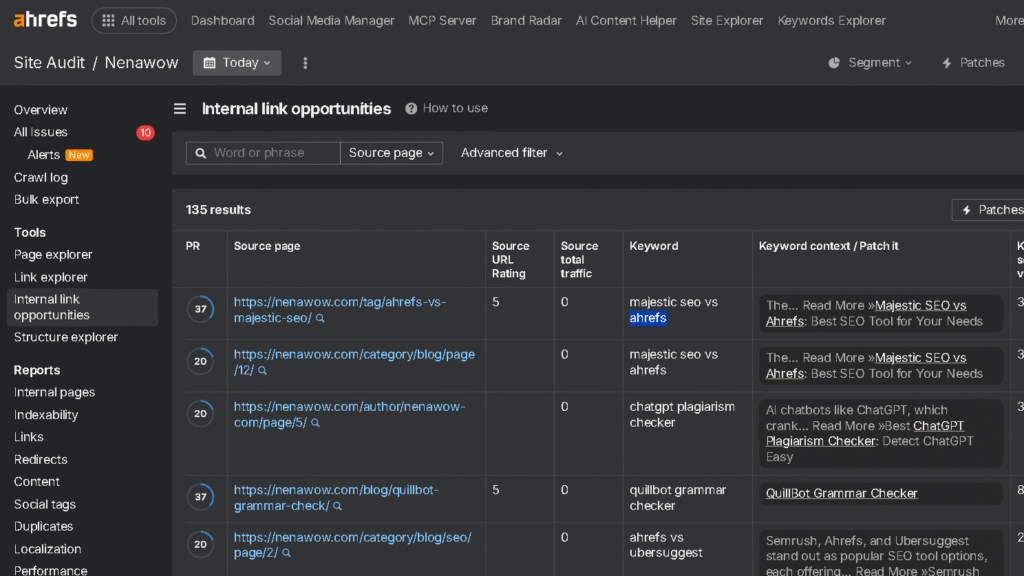
Internal linking should demonstrate content relationships, reinforce the content hierarchy, and help users and AI systems navigate topic clusters. The next sections will discuss how to build link structures, select anchors for these structures, and leverage AI to identify the best link opportunities.
Building Logical Internal Link Structures
Internal link structures should reflect site structure and real topic boundaries. The first step is to identify one hub page for each topic and list 8-12 cluster pages for each hub.
The next step is to link these clusters to the hub and connect related clusters to each other where possible. Avoid building hubs for the same topic. The structure should be simple: Home > Hub > Cluster > Subtopic.
This structure will help concentrate power and make it clear which pages are answering which questions. Contextual internal links should be embedded within the content rather than just within the sidebar and footer. At least two inbound links should be added to orphan pages to fix them.
Link structure should be tracked using a spreadsheet or site crawler and checked quarterly to rebalance power and eliminate noise and irrelevant links.
Optimizing Anchor Text
They should describe intent in plain words and stay consistent without exact-match stuffing.
Use one primary anchor for each concept and one to three close variations. Anchors should be short, ideally under five words long, and embedded in sentences that illustrate the reason for the connection.
Anchors should be matched to the page’s purpose. Definitional anchors are used for informational pages, comparative anchors for evaluative pages, and product-based anchors for commercial pages. Do not use the same exact match anchor from dozens of pages; this is over-optimization.
Uncovering Linking Opportunities with AI
You should use AI to analyze content relationships and find gaps at scale.
Execute a topic cluster model that includes page content embedding and groups pages based on semantic similarity. This allows the AI to rate how well a page matches a hub and even identify missing topics for the clusters.
Discover new links using prompts with a list of target hubs. The model can return suggested source pages, suggested text for the link, and the optimal placement for the link (in the intro, body, conclusion).
Validate the suggestions with a human editor to avoid irrelevant links.
Prioritize links with the AI based on potential traffic gain, intent match, and current impressions.
Add the links with the highest priority first and monitor the change in topic impressions and cluster stability.
Measuring and Maintaining Topical Authority
Maintaining topical authority means tracking how clusters perform, fixing holes in coverage, using AI SEO tools to audit work, and growing the content model over time. The sections that follow explain specific steps, tools, and metrics to keep authority strong and sustainable.
Tracking Topic Cluster Performance
Organic traffic, keyword visibility, and engagement metrics for each pillar and cluster. Google Search Console will help you monitor impressions and clicks for each page.
With this information, you can use analytics metrics such as sessions, bounce rate, and time spent on each page. This will help you identify which of the cluster pages are actually moving users towards conversion.
Monitor featured snippets and other search engine results page (SERP) features for your target queries. It is a good idea to perform weekly or monthly keyword position checks using tools like Semrush.
Develop a simple tracker that includes page, target keyword, current position, impressions, clicks, and snippet presence. If a page is seeing a loss in traffic, review that page first. Look for content decay, competitor updates, or new search trends.
Establish KPI thresholds, such as a 10% decrease in traffic over a month. This will help you identify when you should review your content.
If you are working on a local SEO project, you can use location filters in Google Search Console and Google Analytics to see how you are performing in specific areas.
Finding and Filling Content Gaps
Map all existing cluster topics against user intent and search behavior. Start with a content inventory: list your pillar pages, cluster pages, target queries, and published dates.
Perform topic gap analysis in MarketMuse, Semrush, or your favorite keyword tool. Identify the subtopics and long-tail questions that are not covered. Rank the gaps based on potential traffic and conversion value.
Start with high-intent gaps—how-to, pricing, local service questions, and so on. For each gap, write up a brief: target keyword, user intent, internal links to create, and suggested format (FAQ, guide, checklist).
Use internal linking to link new pages to the pillar topic and other clusters. Freshen up old pages by adding new information, new sections, or local information.
Measure the effect of each fill on organic traffic and ranking. Review quarterly to identify changes in search behavior and new subtopics.
Using AI-Driven SEO Tools for Auditing
AI tools speed up audits and help surface priorities. MarketMuse, Semrush, and similar tools can run content quality checks, topic coverage scores, and semantic gap reports.
Use these results to build an action list: pages to expand, merge, or prune. AI can also suggest headings, entities, and related questions for improved semantic coverage.
Use high-performing pages as input for the tool to identify patterns that succeed in your space. Create notifications for dramatic traffic losses or lost featured snippets to take immediate action.
Use human judgment to validate AI suggestions. Review facts, local context, and tone before applying changes.
Use the tools for regular audits, whether monthly or quarterly, and connect recommendations to specific actions in your content planning calendar.
Scaling and Expanding Your Authority
Scale methodically by repeating what works. Create a content calendar that adds cluster pages at a steady pace—one to three per pillar each month, depending on resources.
Use templates and AI-assisted outlines to speed up production, but don’t sacrifice experience or trust for speed. Hire or train writers on the pillar’s voice and local specifics.
Set internal linking rules so every new page links into the pillar and at least two related clusters. Track ROI by measuring organic traffic lifts, snippet wins, and conversions per pillar.
When expanding, test new adjacent topics before committing a lot of resources. Use small pilots to validate search demand.
For local SEO expansion, create city-specific cluster variants that keep core content but add local signals like regulations, suppliers, or case studies.
Responsible and Ethical AI Use in SEO
Using AI in SEO takes care and a steady hand. The team needs to protect accuracy, keep human oversight, and avoid shortcuts that could harm trust or rankings.
Ensuring Accuracy and Trust
While AI is great at generating text quickly, it sometimes “hallucinates” facts. All claims must be fact-checked, primary sources cited, and incorrect information corrected before publication.
For health, finance, or legal topics, it is important to have the content reviewed by subject matter experts. Reputable sources should be linked to the content as well.
Automated tests for citations, dates, data tables, plagiarism, and factual consistency are important.
This will help establish your voice as trustworthy and show your website as having expertise in the field.
Balancing AI Scale with Human Expertise
AI helps scale pillar pages and cluster content, but humans set the strategy. Subject experts should define core topics, approve content briefs, and edit drafts for nuance and brand tone.
Editors should prioritize firsthand experience, interviews, case studies, or original research to set the site apart. Set clear roles: AI generates outlines and first drafts; writers add context, examples, and verification; SEO specialists map internal links to reinforce topic clusters.
This workflow keeps the site’s trusted voice intact and strengthens topical authority.
Avoiding Common AI SEO Mistakes
Don’t publish AI drafts without review.Frequent mistakes include factual errors, inadequate content, and overusing keywords, which can negatively impact user trust and rankings.
Steer clear of repetitive content across your cluster pages. Search engines, as well as users, can easily recognize inadequate or low-quality content.
Focus on other metrics apart from rankings, such as user engagement, time spent on pages, and conversions. Periodically audit your pages to update them and remove any factual errors.
Follow the guidelines set by the search engines and avoid any manipulative tactics. Earn your authority from providing quality content, not from using tricks.
Frequently Asked Questions
This section offers concrete steps and examples to build and measure topical authority with AI. It covers content practices, AI tool use, key SEO metrics, trust signals, and ways to track changing search behavior.
What are the best practices for enhancing content to establish domain expertise in a niche?
Develop pillar pages that provide in-depth content on specific topics with subtopics that link to specific subpages. The content should aim to answer real questions posed by users, provide original data or first-hand experience, and use credible sources to support any claims made in the content.
Editors should verify facts used in the content, use quotes from experts or case studies to support the content, and regularly update the content to maintain its accuracy.
Internal link structure should follow the hub-and-spoke model to distribute link equity from the pillar page to the subpage. There should be no overlinking of unrelated content.
How can implementing AI tools improve the effectiveness of content marketing strategies?
With AI, topic clusters can be identified through the analysis of search queries and related queries asked. This helps in accelerating the identification of gaps and planning of content creation for pillars and support content.
For creating content, AI assistants can help in creating outlines, headings, and even FAQ sections based on the intent of the searches. However, the content needs to be reviewed for accuracy, tone, and even originality before publishing.
For optimizing content, tools can be used to analyze the top-ranking pages for a given topic and provide suggestions for word count, headings, and even semantic keywords. This helps in creating content for intent, not for copying others.
What are the key metrics to track when assessing the influence of topical authority on SEO?
Track organic impressions and clicks for the whole topic cluster, not just single pages. Growth across related queries shows rising topical relevance.
Watch ranking spread: how many keywords within the cluster rank on page one versus page two. A spread moving toward page one means stronger authority.
Engagement signals like time on page, bounce rate, and scroll depth matter for pillar and subpages. Also, track conversions from organic traffic to see business impact.
How can businesses leverage artificial intelligence to stay ahead in SEO rankings?
Use AI to spot rising questions and new keyword angles. Automating that monitoring saves time and reveals timely content opportunities.
AI can suggest refreshes by flagging pages that lost traffic or miss emerging subtopics. Schedule updates based on those signals to stay relevant.
Combine AI recommendations with human strategy. Editors and subject-matter experts should control accuracy and bring unique insights that AI can’t provide.
What role does user trust play in building topical authority, and how can AI help?
Trust is the factor that leads to engagement activities like visits, shares, and conversions. These, in turn, increase the authority signals. Trust can be established if the content reflects real-life experience, uses primary sources as references, and mentions who the authors are.
Although AI can be used in the detection of factual errors, outdated information, and inconsistencies in citations, it is the experts who verify the information and add their firsthand experience.
Although AI can be used in the detection of errors in sensitive areas such as medicine, it is the experts who verify the information and add their firsthand experience.
What are the innovative ways AI can be used to analyze and adapt to the latest SEO trends?
It can dig through massive piles of SERP features and answer boxes. It will identify format changes, such as if you start seeing more featured snippets or more videos appearing in search results for a specific topic.
With that in mind, you can adjust those formats and types of content accordingly. It’s a bit of a moving target, if you will.
AIs can handle A/B tests for headlines, descriptions, and structured data. This will speed up the process of determining what actually works in terms of getting users to click and engage.
AIs can also monitor search intent over time. This will help you identify trends in specific subtopics that are gaining traction and those that are dying out.
This way, you can focus on content that aligns with actual trends instead of assumptions.


