

AI search engines such as ChatGPT, Google AI Overviews, and Perplexity offer billions of searches every month. These engines provide more than just ranking pages. They directly cite content within their responses, changing the game of AI SEO and AI search optimization. answering engine optimization.
AI optimization of content can help your work be referenced in these tools.You’ll have to think about the way you write, structure, and mark up your webpages so that AI engines are able to easily locate the information, comprehend, and refer to your data.
This is a huge change due to the fact that AI systems only cite 2-7 domains per answer. This is significantly less than the previous 10 blue links.
Brands are now required to offer the most obvious and direct value in case they wish to see their content chosen. The competition is tougher; however, when your content is selected and is rewarded, it’s more than ever before.
Following the AI Learning an AI Optimization Step-by-Step Guide will help you understand the way AI engines assess content. If you are able to optimize for AI, your brand will remain present even when search trends shift.
This guide explains how structured content is important and outlines steps to improve AI visibility. The guide focuses on how to structure content with clearly defined headings with schema markup and tracking the performance.
These strategies work alongside traditional SEO to help businesses remain prominent as AI-driven search advances.
Key Takeaways
- Visibility over Ranking: AI search values citations above all; focus on acquiring one of the scarce positions in AI-generated results
- Structured Readability: Leverage semantic HTML, tables, and brief list formats to enable AI systems to better consume your content.
- Schema is Vital: Implement FAQ schema types, such as FAQPage, JSON-LD, to offer clear signals for AI parsing and retrieval.
- Authority is Key: Enhance E-E-A-T signals through unique research, expert bylines, and extensive topic clusters.
- Direct Answers: Apply the BLUF (Bottom Line Up Front) method to satisfy conversational search queries immediately
What Is AI Content Optimization?
AI content optimization employs artificial intelligence to improve the way content performs on traditional search engines and artificial intelligence-powered answer engines. This strategy is focused on the clarity of semantics and structured content.
Through AI search optimization, massive language models can precisely interpret your message. This technique, also known as AI SEO, isn’t just about ranking keywords anymore.
This is about the way AI systems gather, comprehend, and communicate information to the user.
Key Benefits of AI Content Optimization
- Greater AI Search visibility: Boosts your chances of being mentioned in tools such as ChatGPT, Perplexity, and Google AI Overviews.
- Direct Authority Your brand is established as a leading provider of LLMs by providing reliable and structured information.
- Future-proof SEO Makes sure your website remains current while search behaviour shifts towards the use of AI.
- Competitive Advantage This helps to secure one of few places for citation that are available for AI responses.
- Improved User Experience Simple and clear content helps AI engines as well as humans better.
How AI Content Optimization Differs From Traditional SEO

Traditional SEO is about placing websites on the top of search results by focusing on keywords, gaining backlinks, and making tweaks to the technical aspects. Writers typically write content around keywords and optimize meta tags to get into the top rankings.
AI content optimization is a different approach too. Now, it’s all about making your content easier for AI platforms like ChatGPT, Perplexity, and Google’s AI Overviews to comprehend and reference.
It’s about becoming the primary source of AI tools to address questions. Writers must structure information clearly, utilize natural language, and give complete solutions.
AI systems analyze content in a different way. They search for reliable information they can synthesize and then present directly to users.
The goal is to make the content more accessible for large language models to comprehend while providing value to real-world users.
The Rise of Generative Engine Optimization (GEO)
Generative Engine Optimization (GEO) is a new area of study focused on optimizing content to be optimized for AI-powered searches. These systems provide answers, not just pages of links.
GEO methods allow your content to appear in the AI-generated responses of platforms such as ChatGPT, Claude, Gemini, and Copilot. By focusing on GEO, this gives AI assistants reasons to consider your site as a prime source.
Users are now able to ask questions directly to AI assistants instead of entering keywords into Google. This is called generative AI search—AI-driven search that provides answers to complicated, multi-layered questions.
Content should answer questions clearly and concisely. AI systems gather information from trusted sources and are able to comprehend easily.
Well-organized content that is clear with headings, bullets, and factual information performs better. Writers need to be thinking about the ways in which AI models are able to process and retrieve information.
Content must stand on its own as a resource and serve as a source of AI-generated summaries. It’s about balancing depth and clarity; it’s not always easy.
Why AI Visibility Now Trumps Ranking

Being cited in AI responses is more important than just being number three or five in the ranking. AI systems typically cite just one or three sources in response.
Being a part of these sources increases brand recognition and trustworthiness. Traditional rankings are still relevant; however, AI Overviews and AI Mode appear over organic results.
Users first get answers from AI. If they’re good enough, they will not look further.
This is a complete change. A website could be ranked number one but still receive zero clicks if AI Overviews can answer the question fully.
It’s also relevant when someone uses voice search. If someone asks their smart speaker to play music, do you have the content to be the one it chooses to use? When conversations with AI are becoming the norm, voice search optimization will assist your content in becoming the first option for queries.
The Role of Large Language Models and Retrieval-Augmented Generation
Large language models (LLMs) drive most AI search experiences. They are able to recognize context, produce human-like reactions, and combine information from various sources.
LLMs require information they can analyze and refer to easily. The Retrieval Augmented Generation (RAG) blends LLMs with real-time data retrieval.
If a user has the question, RAG systems search for recent information and then apply LLMs to come up with an answer. This determines what material is used.
The best RAG-optimized content should contain:
- Straight, factual assertions that AI can quickly draw out
- structured data like tables, lists, and definitions
- Information that is authentic with a solid basis
- The language of nature that is in line with the way people answer questions.
AI optimization techniques for content allow content to be found by the systems. Writers arrange information so that RAG systems can quickly find relevant areas and provide precise information to users.
How AI Search Engines Evaluate and Cite Content
AI search engines such as ChatGPT and Perplexity do not just crawl and rank content the way Google did in the past. They break down data to provide clear answers. They also select which sources to cite according to the authority of the source, its structure, and whether the content meets user expectations.
Key AI Search Engines You Need to Optimize For

The major actors in AI search include Google AI Overviews, ChatGPT, Perplexity, Gemini, Claude, and Copilot. Gemini is a product developed by Google that is a perfect fit in their search ecosystem, so it’s an ideal one to be targeting.
Each platform is home to millions of people who want quick, reliable answers. Google AI Overviews reaches over 2 billion monthly users and is in the middle of the search results.
ChatGPT has 800 million users per week, which makes it one of the largest information hubs available. Perplexity answered 780 million requests in just one month.
These platforms vie with each other in their own unique ways. Google AI Overviews mix traditional search and AI-generated summaries.
ChatGPT and Claude serve as chat-based AI assistants that can answer any questions you might have. Gemini firmly integrates into Google’s ecosystem.
Perplexity is an answering engine that references sources directly. The battle for citations is fierce. AI indexing engines list only 2-7 domains per query on average, which is far less than the 10 blue hyperlinks.
AI Discovery: How AI Crawlers and Bots Parse Content
All AI platforms employ specialized bots that search and analyze content. GPTBot searches the OpenAI models. Googlebot now provides traditional search results as well as AI overviews.
Each bot looks at the content in a structured way, identifies the most important facts, and determines whether the data is worthy of using. The crawlers search for clear, structured pages. Pages that have descriptive H2 headers to help AI to understand the content of each section.
Bullet points and lists with numbers help to make information easier to find. The way you structure your content determines the likelihood that AI systems are able to process it properly.
Enhancing the efficiency of AI discovery requires an orderly flow that crawlers are able to follow. A lot of paragraphs without structure don’t work. Formats for Q&A are the best; they correspond to the way users are asked questions.
Tables and charts that show information clearly increase the likelihood of being quoted. These features allow bots to access information confidently.
AI systems break down content into pieces and study the ways in which ideas are connected. They look for quotes that are able to stand on their own as solutions.
Each paragraph should have worth on its own without needing additional context.
Citation Signals: E-E-A-T, Authority, and Off-Page Trust
Google’s E-E-A-T framework—experience, expertise, authoritativeness, and trustworthiness—still matters a lot for AI citation. AI engines look for these factors when choosing which sources to cite.
Experience is when real people wrote the content on the basis of what they have experienced firsthand. Credentialed author bios demonstrate an understanding.
The detailed bylines for each piece of writing help identify the author and explain what they’re qualified to write about. Expertise is a result of deep and precise coverage.
AI algorithms favor content written by known experts. If you consistently publish on a particular topic, you will build authority on the topic.
Authoritativeness appears in the citations of other reliable sources. If trusted websites connect to your work, AI engines are aware of it.
Original data and research increase AI visibility, with pages that feature original data tables, which are gaining more citations.
The trustworthiness of HTML0 is dependent on the transparency, accuracy, and sameness. Citing authoritative sources from outside builds confidence.
Links to studies that have been peer reviewed, data from the government, and reports from industry strengthen the credibility of. Also, keeping information current is helpful. Recently revised content receives more citations than outdated content.
Understanding User and Search Intent in AI Search
The user’s intent determines the way AI assistants assess and deliver content. If someone is asking ChatGPT or Perplexity an inquiry, the AI needs to determine what type of answer they are looking for.
Are you looking for a simple detail, a concise explanation, step-by-step instructions, or perhaps a comparison? AI search engines match content with intention by analyzing patterns of queries and features such as People Also Ask blocks.
Informational queries need clear explanations. Transactional queries require information about the product and pricing. Navigational queries require direct links to specific webpages or tools.
Content that addresses questions quickly and immediately is frequently referenced. In the opening paragraphs, those that give the main answer right away are more effective than content that waits until the close.
This is consistent with how users utilize AI search: they want answers right immediately, not after going through an endless amount of information. The nature of conversation in AI search affects the way that the intent of the search is displayed.
Users are able to ask questions in the language of conversation, not only keywords. Content written in a conversational style that resembles an individual increases the likelihood of being selected as a source.
If you are using technical terms, make sure you define them in a clear manner. Your sentences should read as if someone wrote them to someone else.
Structuring Content for AI Readability and Extraction

AI systems require content that is easy to comprehend and read. Clear headings, organized formats, and appropriate technical signals help AI tools to extract and cite your data accurately.
Clear Headings, Semantic HTML, and Modular Sections
Headings function as a guideline to AI tools. Each H2 or H3 must answer a specific query or provide a clear and concise issue.
This makes it easy for AI to match user-generated queries with the correct section. Semantic HTML aids AI in recognizing the hierarchy of content and the most crucial aspects.
Tags that are similar to
,, and
demonstrate AI systems for which data is crucial the most. Regular tags don’t provide this context.
Modular sections are best when they stand on their own. Begin with a clear answer in a sentence or two under each heading. Then include additional details.
This technique helps AI get information out without the need for additional context. Beware of the client-side JavaScript rendering. Most AI systems aren’t able to deal with dynamically loaded content; therefore, they’ll be unable to find important information on your website.
Bullet Points, Numbered Lists, and Tables
Lists make the most complex information easier to understand for readers as well as AI. They break down features, steps, or comparisons into easily digestible pieces that AI tools can quickly collect and use.
The lists with numbers work best for ranking or sequences. They’re ideal for step-by-step instructions or top lists of tools or recommendations that are prioritized.
Bullet points On the other hand fitting features, benefits,hand, or any other irrelevant information. You’ve got the idea.
Tables? They’re the most popular method of organizing the data in a comparative manner. Tables aid AI (and humans, in truth) in recognizing the relationships between choices, specifications, features, or features. Make sure that the headers are clear and clear.
When to make use of every format
- Lists with numbers Steps in the process that are ranked, items in sequence, instructions
- Bullet points Highlights and advantages, examples, non-ordered information
- Table comparisons of product pricing feature matrices, tiers of pricing
Short paragraphs that only comprise two sentences increase comprehension between elements formatted. They provide context without overwhelming the reader or making it difficult for AI parsers.
Chunking and Standalone Content Sections
The breaking down of content into smaller chunks can help AI recognize where one topic ends and the next one starts. Each section must answer an entire question, without the need to have readers search through the entire page.
Include key takeaways below headings before getting into the specifics. This will help AI tools identify the main elements even if they only go through the initial few paragraphs.
For answers with a definition Try to compose paragraphs that are between 40 and 60 words. This is in line with the way AI formats responses and can boost the chances of being mentioned.
Internal linking links sections and aids in establishing an authority on a particular topic. Linking from general pages to more detailed guides by using the descriptive anchor texts. This tells AI which pages provide in-depth information on specific subjects.
Metadata, Alt Text, and Crawlability Signals
Metadata informs AI what your website is about before looking into the text. Meta descriptions, title tags, and structured data such as FAQPage or the HowTo schema help to clarify the purpose of your content.
Alt text is used to describe images in AI tools to process images. Utilize precise, rich, keyword-rich descriptions rather than generic descriptions. Good alt text will help computers comprehend how images relate to the text. It also gives AI engines the complete picture.
Crawlability determines whether AI is able to view your content. Examine the robots.txt file to ensure important pages aren’t being blocked by AI crawlers. If you’d like robots such as GPTBot to be able to access your most valuable content, make sure that you have the Robots.txt file properly configured.
Critical crawlability checks:
- robots.txt gives access to the most important content pages
- No noindex tags accidentally placed on critical articles
- XML sitemaps include all pages you’d like to visit. AI to locate
- INP scores and page speed are up-to-date performance standards.
If AI isn’t able to crawl your website efficiently, the perfect layout will not matter.
Step-by-Step AI Content Optimization Framework
AI models love content that can answer specific questions by providing precise, verified information. To create this type of content, it is necessary to understand what people actually need, provide them with no unnecessary fluff, and support your assertions with facts that AI models can verify.
Mapping User Intent and Building a Question Inventory
It is essential to understand what the people are asking before AI tools are able to reference your content. Begin by collecting queries from support calls and sales calls and also the People Are Also Asking box that appears in search results.
Create a spreadsheet that contains 50 to 100 questions from buyers. Then, list them in plain language, which is how people speak. For each question, verify whether your article already addresses the question and identify any inconsistencies.
Modern research on keywords for AI is focused on natural language queries and not just the terms used in head-to-head research. The tracking of these queries will help to determine what questions users are likely to have to ask.
Concentrate on questions that have actual answers:
- “What’s the best [product type] for [specific use case]?”
- “How much does [solution] cost per user?”
- “What’s the difference between [Option A] and [Option B]?”
These types of questions prompt AI-generated responses with references. The answers are immediate and reduce the friction between the question and an answer.
Opinion-based queries? They receive fewer citations. AI prefers actual facts over arbitrary interpretations. If you’re looking for more citations, look for authentic information.
Examine your questions using various LLMs such as ChatGPT, Claude, Gemini, and Perplexity. Find out how often your competitors show on the AI summary and in what position they are given. This provides you with a baseline to find out where you’re missing and how search behavior shifts across platforms.
Optimizing for Direct and Concise Answers
AI models look through thousands of pages to discover the most concise solution to use. Your task is to make the answer clear within the initial one or two sentences.
You can try to use the BLUF approach (Bottom Line Up Front). Answer the entire question immediately, and then add the details to back it up. Transferring answers from paragraph 8 to paragraph one could increase the frequency of citations within a few weeks.
Structure is the answer to:
- Lists with numbers to allow ranked comparisons or step-by-step procedures
- Bullet point for benefits, features, or information that is not ordered
- Tables with clear headers to facilitate price tiers or product comparisons.
A table of comparison usually beats the equivalent of three paragraphs. AI systems extract information from tables without having to process all of the text, making them a magnet for answers that are direct.
Name entities directly. Avoid using “our platform” or “this solution”—use the real company’s and product’s names. AI models require clear subject-verb-object structures to comprehend what you’re talking about.
Incorporating Original Data, Research, and Citations
AI models place content that has certain, reliable information above vague assertions. Every fact should be identified with an identifier and source.
Switch “most marketers” for “67% of B2B marketers in a 2025 survey of 850 professionals. “Directly link to the source of data. AI systems check claims against various sources; therefore, external citations have an enormous amount of importance.
Add three different types that are verified:
- Data on statistics, including percentages, sample sizes, and dates
- Results for customers using real-time measurements from actual implementations
- A third-party validation through review site forums, review sites, or industry reports
Your own research, whether through tests or surveys, makes your content the main source. It isn’t enough to repackage existing data and expect AI references. Conduct your own tests and ask your customers for feedback, or examine data that you have compiled to discover unique insight.
Include customer testimonials that have quantifiable outcomes. “We reduced onboarding time by 40%.” surpasses “Customers love how fast it is.” Specific numbers derived from research and data offer AI something tangible to prove and reference.
Schema Markup, Structured Data, and Entity Optimization
AI systems require explicit signals to be able to access your content noticed by AI systems. Schema markup will go from being a nice SEO benefit to an essential necessity for visibility by 2026. Marked content that is properly marked has a 2.5x greater chance of appearing in AI-generated responses.
Implementing Schema.org for FAQ Schema, Article, Product, and HowTo
Schema.org provides standard formats that AI can easily study and reference. The most powerful kinds to increase AI visibility include FAQPage, HowTo Article, and Product schemas.
FAQ schema is ideal to answer questions in articles as well as on FAQ pages. Answers should be between 40 and 60 words to maximize AI extraction. AI platforms utilize FAQ schemas to provide precise responses that correspond to the user’s questions directly.
The HowTo schema provides step-by-step instructions in a manner that AI could process. Each step is numbered and keeps the sentences short, preferably just a few sentences. This is an essential schema for process guides and tutorials.
The schema for articles defines the type of content and authorship, thereby enhancing the expertise signals AI seeks. Publishers must include information about the author and credentials in order to enhance E-E A-T signals.
The product schema is vital for online shopping. It assists AI in pulling specifications, prices, availability, and specifications in a precise manner.
| Schema Type | Best Use Case | Key Requirement |
| FAQPage | Q&A sections | 40-60 word answers |
| HowTo | Tutorials | Numbered steps |
| Article | Blog posts | Author credentials |
| Product | E-commerce | Complete specifications |
Using JSON-LD for Clarity and AI Parsing
JSON-LD (JavaScript Object Notation for Linked Data) is the top format for schema. It separates structure from content, making things easier for machines to parse without messing up readability.
Google and all major AI systems prefer JSON-LD over microdata and RDFa. It doesn’t clutter your HTML and you can drop it anywhere in the doc. Maintenance and updates are way simpler too.
Here’s what proper JSON-LD looks like for an FAQ:
{
  "@context": "https://schema.org",
  "@type": "FAQPage",
  "mainEntity": [{
    "@type": "Question",
    "name": "What is JSON-LD?",
    "acceptedAnswer": {
      "@type": "Answer",
      "text": "JSON-LD is a structured data format that helps AI systems understand content meaning through explicit definitions rather than context interpretation."
    }
  }]
}
Always validate your schema before publishing using Google Rich Results Test and Schema.org Validator. Invalid schema can be worse than none—AI might ignore broken markup entirely.
Entity-Centric Content and Building Knowledge Graphs
Entities are defined as specific individuals or things, locations, and concepts that AI systems can identify and can connect. Optimizing for entities can help AI to understand how your company connects to other topics.
Organization schema creates a brand identity across all your websites. Include your logo along with your social profiles, as well as information about your location.
A consistent schema can help AI identify your company from the competition. In the process of helping AI systems develop a knowledge of relationships between entities, the structured data makes connections crystal clear.
A solid knowledge graph presence increases the likelihood that AI will recognize and believe in your brand as a trusted authority.
Establish recognition of entities through:
- The same schema is used across all pages.
- Clear attribute definitions
- Links between similar entities
- Cross-platform data consistency
Every page doesn’t need each schema kind. The schema should be matched to the purpose of the content and avoid marking things that the user can’t view.
Building Topical Authority and Authoritativeness
Search engines prefer sites with the highest level of expertise in particular subjects. In order to do this, you must have well-organized content that covers subjects well and provides clear indications of who is responsible for the content.
Pillar Pages and Topic Clusters
A pillar page is the central page for any broad topic. Topic clusters are the articles that explore subtopics in depth.
This structure lets search engines understand the extent of the coverage. The page that is a pillar should focus on broad keywords and provide a broad overview.
The content in the cluster is linked directly to the main pillar and provides more specific questions or concepts. For instance, the pillar page for “email marketing” might cover fundamentals, benefits, and the main strategies.
The pages of the cluster could be a dive into:
- Email automation workflows
- Optimization of subject lines
- List segmentation strategies
- Email deliverability best practices
Each cluster page bolsters your authority in the field by demonstrating in-depth understanding. The trick is to include every pertinent aspect within a subject instead of switching between irrelevant topics.
The authorship of the original author is established with author bios as well as bylines.
Clear authorship indicators aid search engines and readers in identifying the author of the article. Authorship bylines should be on the front of an article with a link to a full bio page.
The bio of the author should demonstrate the author’s credentials and experience. The bios should contain:
- Experience and qualifications of professionals
- Many years of experience in the field
- Publications or previous work
- Contact details or social profiles
The bio should be able to explain the reason why the author is an expert in their subject matter. A well-written bio for an author helps fulfill requirements for the “expertise” part of E-E-A-T and helps build trust with readers.
It is also possible to include author schema markups to help search engines recognize authorship throughout your web pages.
Leveraging Internal Linking and Backlinks
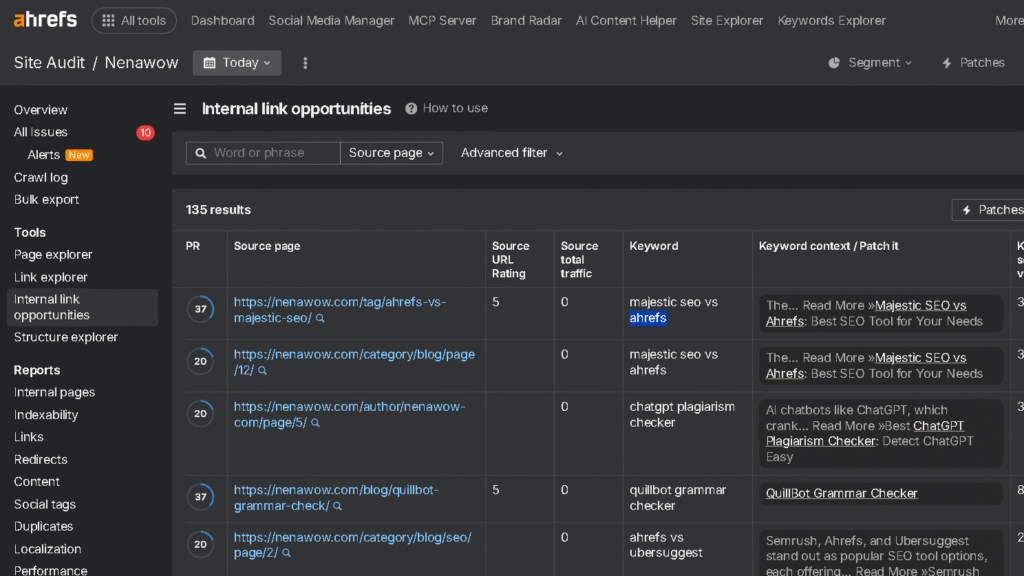
Internal linking links related web pages. This assists search engines in understanding the way your subjects are linked.
Linking from the pillar page to group pages and providing a clear structure for topics. Internal links that are strategic should:
- Use descriptive anchor text that explains what the page you linked is about.
- Connect related articles in the same subject area
- Link to pages of pillars from relevant cluster content
- Don’t use generic phrases such as “click here” or “read more.”
The presence of backlinks from reputable websites indicates credibility in search engine results. The most effective backlinks are from companies in your industry.
Brand mentions with no links can help in strengthening your credibility. Digital PR can have your name and brand featured on reputable websites, increasing your chances of being quoted by major models of language.
These mentions create trust, which is essential for achieving high rankings.
AI Evaluation, Monitoring, and Continuous Improvement
The success of AI content is about tracking how your content is performing when compared to traditional results. You’ll need to keep track of the performance of your content using metrics such as AI click-throughs, citations, and engagement. You can also use tools to detect potential issues and problems.
Tracking AI Visibility, Inclusion, and Citations
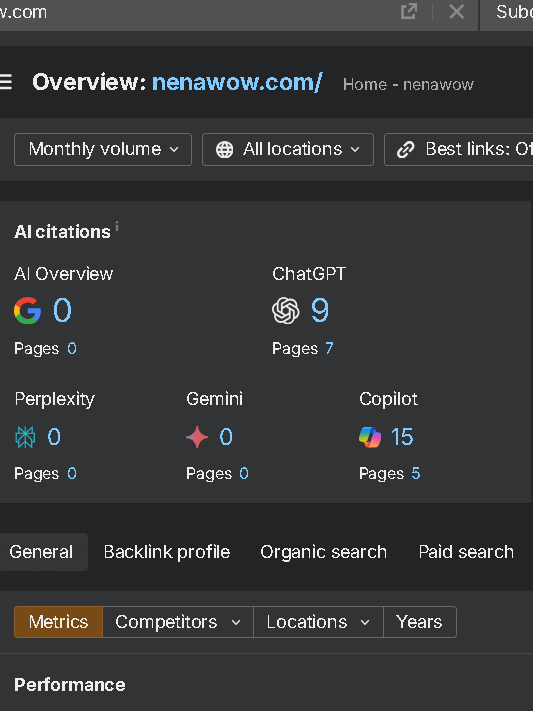
AI visibility determines the frequency at which your content appears as AI-generated responses. This is important since AI search engines such as ChatGPT or Google’s AI Overviews pull information from web pages to provide answers.
Verify whether AI tools use your content in the creation of a summary of pertinent questions. Check it by asking AI platforms questions that your content is able to answer.
Keep track of how often your website is included in the list and whether the links back are to your site. Important metrics to keep track of:
- How often do you see AI responses?
- The quality of the citations (direct attribution as opposed to. paraphrased)
- Your position regarding AI-generated answers
- Click-through rates derived from AI citations
Create a system that will examine the same questions each week. Record which content is referenced and which content isn’t.
This allows you to see what’s working and what’s not. Create a spreadsheet to keep track of AI visibility data. Include columns for each question, the AI platform, whether your content was cited, and the kind of citation.
Optimizing for CTR, Engagement, and Traditional SEO Metrics
CTR (click-through rate) is the number of people who click on your hyperlink after seeing the link in the search results. If your CTR falls, then your titles and descriptions may require revision, even if your site ranks well.
You can boost CTR by creating titles that are in line with search intent. Test various formats to see which one gets more clicks.
Include numbers, questions, or words that grab the attention of your visitors. Check engagement metrics such as the time spent on a page, bounce rates, and the number of pages per session. These metrics tell you whether your content is meeting the requirements of your users.
A high bounce rate means that your content isn’t necessarily what the users are looking for. The most important metrics to monitor:
- CTR for targeted keywords
- Average time per page
- Rate of bounce based on type of content
- Pages per session
- Conversion rates derived from organic traffic
The speed of a page affects the user experience as well as rankings. Sites that are slow to load lose visitors before they can load anything.
Utilize tools to determine what’s causing your computer to slow down: large images or scripts that are too numerous, or a bad host are all common reasons. It’s also important to readability.
Break long paragraphs up. Use headings, break them up into smaller paragraphs, and write at around the 8th grade level so that people are able to comprehend your message.
Leveraging Tools Like Search Console, Semrush, and Ahrefs
AI SEO tool, Semrush allows you to track the rankings of keywords and AI visibility to determine if your strategy is effective. It also provides tools to track how often your content is featured in snippets of AI-generated content.
Search Console gives you direct information from Google regarding the performance of your website. It provides information on which queries lead to your pages, your typical place in the search results, and any issues with indexing.
Make sure to check Search Console every week for any of the latest issues. Google could flag pages for security, mobile usability, or structured data errors. You need to fix them quickly so that they remain evident.
Utilize the performance report to identify pages that are in the second position. These are easy wins. With a few tweaks, you can get them to the top of the list to get a huge boost in traffic.
What should you be looking for in the Search Console?
- Coverage report for indexing errors
- Performance data to help CTR trends
- Usability issues with mobile devices
- Web Vitals and INP scores. Web Vitals as well as INP score

Semrush, along with Ahrefs, aids you in tracking rankings, evaluating competitors, and discovering new keywords. Both tools track changes in rankings over time, and you can track your improvement.
Check your content frequently. Find pages that have lost ranking or traffic and discover the reason.
Find out what your competitors are doing better than you. Maybe it’s their content length as well as backlinks or on-page SEO. Automated reports can be set up for regular reports on ranking and brand-new backlinks, as well as technical problems.
Examine your metrics prior to and after adjusting to make use of AI. If you don’t see any improvement within 30 days, adjust your approach according to what the data suggests.
Frequently Asked Questions
AI content optimization isn’t just technical—it takes strategy, measurement, and a good sense of how it impacts your business. Here are some advanced tactics, ways to measure success, and tips for building quality and trust.
What advanced techniques can further enhance content relevancy for search engine algorithms?
Start with semantic keyword clustering. Group related keywords and create content that covers entire topic clusters, not just single keywords.
Entity optimization makes it easier for algorithms to understand your content. Use clear references to people, places, brands, and concepts tied to your topic.
Structured data markup like Schema.org helps search engines spot these entities. Co-occurrence patterns matter for AI visibility.
If your brand shows up near relevant keywords in training data, AI learns to associate you with the topic. Internal linking with descriptive anchor text also builds topical authority by showing how your content connects.
How can one measure the impact of content optimization on user engagement and retention?
Track time on page and scroll depth to see if visitors stick with your content. Higher engagement means you’re delivering value.
Changes in bounce rate show if improvements keep people around. A lower bounce rate after optimization usually means a better fit.
Return visitor rates tell you if people come back. Good content builds loyalty and repeat traffic over time.
Click-through rates from search results show if your title and description tweaks work. Higher CTRs mean more people pick your listing.
Event tracking captures things like video plays, downloads, or tool use. These actions reveal how deeply visitors interact with your content.
What are the latest strategies for incorporating E-E-A-T principles into content creation?
Add detailed author bios with real credentials and experience. Named authors with clear expertise build trust with users and search engines.
Include original research, proprietary data, or expert quotes. Firsthand data and insights strengthen authority signals that AI systems look for when picking citations.
Cite credible external sources to back up your claims. Linking to authoritative research shows you’ve done your homework.
Show clear publication and update dates. Freshness matters, especially in fast-changing fields where old info loses trust fast.
Add editorial review and fact-checking steps. Some sites use “Expert Reviewed” badges or editorial disclosures to show quality control.
What role does firsthand experience play in improving content strategy for better SEO results?
Firsthand experience separates generic content from insights users just can’t find anywhere else. It’s the extra “E” that Google added to E-A-T in 2022.
When you base content on direct experience, you answer questions competitors usually miss. Real-world testing, case studies, and practical results bring unique value to the table.
Screenshots, custom diagrams, and annotated examples actually prove hands-on knowledge. These visuals show, rather than just tell, and that kind of demonstration builds credibility fast.
Personal insights and lessons learned add a depth that AI-generated or outsourced stuff usually lacks. This kind of authenticity resonates with people and, honestly, seems to work well with search algorithms too.
Experience-driven content tends to include specific details, observations, and tips you won’t get from a generic article. That makes it more useful—and sometimes even citation-worthy for AI search tools.
In what ways can content optimization influence conversions, brand authority, and revenue generation online?
Optimized content attracts qualified traffic that actually converts. If visitors find exactly what they searched for, they’re just more likely to take action.
Higher rankings mean more visibility and brand recognition. Landing those top spots and showing up in AI-generated answers makes your brand look like an industry leader.
Featured snippets and AI citations can generate traffic even if people don’t click. Even zero-click searches build awareness and help establish authority.
Quality content supports the entire customer journey. Educational pieces build trust early on, while comparison or solution-focused content nudges decisions later.
Consistently optimizing content gives you compounding returns. Every improved page adds to your domain authority, which eventually lifts all your content and helps drive sustained revenue growth.
Beyond basic SEO practices, what steps can be taken to achieve significant search ranking improvements?
Try targeting question-based keywords that trigger AI overviews and featured snippets. Questions that trigger these features are strong candidates for inclusion in AI-generated summaries.
Structure your content for AI extraction with short paragraphs and bullet points. Give direct answers under clear headings—make it easy for large language models to parse and cite your info.
Cover subjects thoroughly across multiple articles to build topical authority. Deep dives into a topic show expertise much better than a bunch of scattered posts ever could.
Go after backlinks and brand mentions from trusted, topic-relevant sources. External authority still matters a lot, whether you’re dealing with traditional or AI-powered search.
Don’t just crank out new pages—update your existing content regularly. Freshening up established URLs keeps your link equity intact and gives you that extra relevance boost.


